


Judges 1:30
Bible text: King James Version (1769 Blayney text) · Public domain
Bible text: King James Version with Strong's numbers · Public domain
Bible text: Berean Standard Bible · Public domain
Bible text: American Standard Version (1901) · Public domain
Bible text: World English Bible, Messianic edition · Public domain
Bible text: Geneva Bible (1599) · Public domain
Bible text: Young's Literal Translation · Public domain
- זְבוּלֻןze·vu·LunZebulunH2074N-proper-mNoun Proper Masculine
- לֹאlo'notH3808NegParticle Negative
- הוֹרִישׁho·Rishit dispossessedH3423V-Hiphil-Perf-3msVerb Hiphil Perfect 3rd Singular Masculine
- אֶת'et<obj.>H853DirObjMParticle Object Indicator
- יוֹשְׁבֵיyo·she·Vei[the] inhabitants ofH3427V-Qal-Prtcpl-mpVerb Qal Participle Plural Masculine Construct
- קִטְרוֹןkit·RonKitronH7003N-properNoun Proper Location
- וְאֶתve·'Etand <obj.>H853Conj-w ¦ DirObjMParticle Object Indicatorוְandאֶת<obj.>
- יוֹשְׁבֵיyo·she·Vei[the] inhabitants ofH3427V-Qal-Prtcpl-mpVerb Qal Participle Plural Masculine Construct
- נַהֲלֹלna·ha·LolNahalolH5096N-properNoun Proper Location
- וַיֵּשֶׁבvai·Ye·shevand it dweltH3427Conj-w ¦ V-Qal-ConsecImperf-3msVerb Qal Consecutive Imperfect 3rd Singular Masculineוַandיֵּשֶׁבit dwelt
- הַכְּנַעֲנִיha·ke·na·'a·Nithe Canaanite[s]H3669Art ¦ N-msNoun Gentilic Singular Masculine AbsoluteהַtheכְּנַעֲנִיCanaanite[s]
- בְּקִרְבּוֹbe·kir·Boin its midstH7130Prep-b ¦ N-msc ¦ 3msNoun Singular Masculine Constructבְּinקִרְבּmidstוֹits
- וַיִּהְיוּvai·yih·Yuand they becameH1961Conj-w ¦ V-Qal-ConsecImperf-3mpVerb Qal Consecutive Imperfect 3rd Plural Masculineוַandיִּהְיוּthey became
- לָמַסla·Mas<into> forced laborH4522Prep-l ¦ N-msNoun Singular Masculine Absoluteלָ<into>מַסforced labor
English is a literal word-by-word gloss of the Hebrew, not the KJV's wording. Why?
This is the original text the KJV's translators worked from — each Hebrew word with its own literal English meaning in this verse, prepared by scholars at Tyndale House, Cambridge. The KJV translates whole sentences, not word by word, so its wording differs: one Hebrew word can become several English words, and the KJV may choose “the LORD” where the gloss reads “Yahweh”. Both are faithful — they answer different questions. For the KJV's own rendering, switch to the KJV text.
Details
See on the biblical-era maps
Study this verse
Public-domain commentary
Matthew Henry
From his Commentary on the Whole Bible. Henry comments on passages, not single verses — this entry covers Judges 1:21–36. His four-level outline is real structure in the source text, so it is rendered as structure.
We are here told upon what terms the rest of the tribes stood with the Canaanites that remained.
I.Benjamin neglected to drive the Jebusites out of that part of the city of Jerusalem which fell to their lot, Jdg 1:21.
Judah had set them a good example, and gained them great advantages by what they did (Jdg 1:9), but they did not follow the blow for want of resolution.
II.The house of Joseph,
1.Bestirred themselves a little to get possession of Beth-el, Jdg 1:22. That city is mentioned in the tribe of Benjamin, Jos 18:22. Yet it is spoken of there (Jdg 1:13) as a city in the borders of that tribe, and, it should seem, the line went through it, so that one half of it only belonged to Benjamin, the other half to Ephraim; and perhaps the activity of the Ephraimites at this time, to recover it from the Canaanites, secured it entirely to them henceforward, or at least the greatest part of it, for afterwards we find it so much under the power of the ten tribes (and Benjamin was none of them) that Jeroboam set up one of his calves in it. In this account of the expedition of the Ephraimites against Beth-el observe,
(1.)Their interest in the divine favour: The Lord was with them, and would have been with the other tribes if they would have exerted their strength. The Chaldee reads it here, as in many other places, The Word of the Lord was their helper, namely, Christ himself, the captain of the Lord's host, now that they acted separately, as well as when they were all in one body.
(2.)The prudent measures they took to gain the city. They sent spies to observe what part of the city was weakest, or which way they might make their attack with most advantage, Jdg 1:23. These spies got very good information from a man they providentially met with, who showed them a private way into the town, which was left unguarded because, being not generally known, no danger was suspected on that side. And here,
[1.]He is not to be blamed for giving them this intelligence if he did it from a conviction that the Lord was with them, and that by his donation the land was theirs of right, any more than Rahab was for entertaining those whom she knew to be enemies of her country, but friends of God. Nor,
[2.]Are those to be blamed who showed him mercy, gave him and his family not only their lives, but liberty to go wherever they pleased: for one good turn requires another. But, it seems, he would not join himself to the people of Israel, he feared them rather than loved them, and therefore he removed after a colony of the Hittites, which, it should seem, had gone into Arabia and settled there upon Joshua's invasion of the country; with them this man chose to dwell, and among them he built a city, a small one, we may suppose, such as planters commonly build, and in the name of it preserved the ancient name of his native city, Luz, an almond-tree, preferring this before its new name, which carried religion in it, Bethel - the house of God.
(3.)Their success. The spies brought or sent notice of the intelligence they had gained to the army, which improved their advantages, surprised the city, and put them all to the sword, v. 25. But,
2.Besides this achievement, it seems, the children of Joseph did nothing remarkable (1.) Manasseh failed to drive out the Canaanites from several very considerable cities in their lot, and did not make any attempt upon them, Jdg 1:27. But the Canaanites, being in possession, were resolved not to quit it; they would dwell in that land, and Manasseh had not resolution enough to offer to dispossess them; as if there was no meddling with them unless they were willing to resign, which it was not to be expected they ever would be. Only as Israel got strength they got ground, and served themselves, both by their contributions and by their personal services, Jdg 1:28, Jdg 1:35. (2.) Ephraim likewise, though a powerful tribe, neglected Gezer a considerable city, and suffered the Canaanites to dwell among them (Jdg 1:29), which, some think, intimates their allowing them a quiet settlement, and indulging them with the privileges of an unconquered people, not so much as making them tributaries.
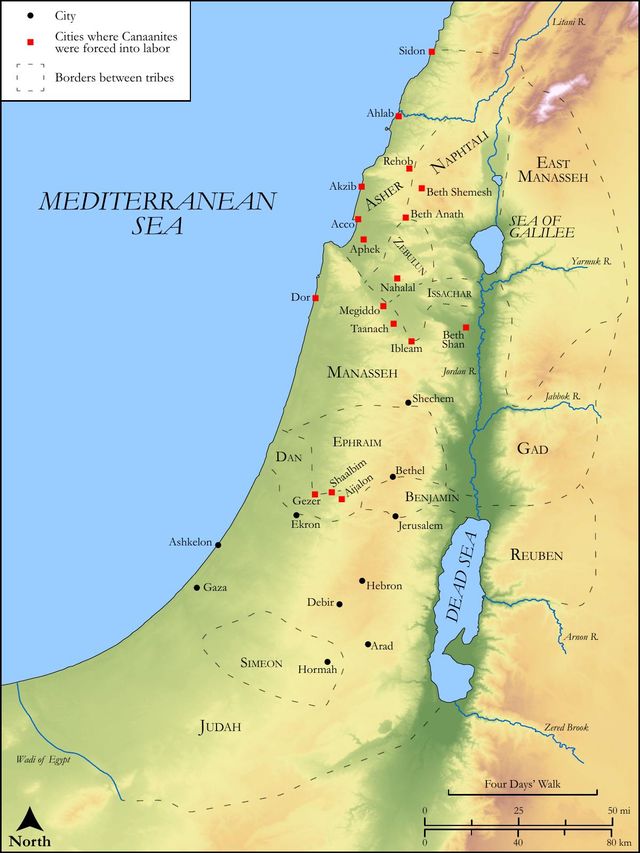
III.Zebulun, perhaps inclining to the sea-trade, for it was foretold that it should be a haven for ships, neglected to reduce Kitron and Nahalol (Jdg 1:30), and only made the inhabitants of those places tributaries to them.
IV.Asher quitted itself worse than any of the tribes (Jdg 1:31, Jdg 1:32), not only in leaving more towns than any of them in the hands of the Canaanites, but in submitting to the Canaanites instead of making them tributaries; for so the manner of expression intimates, that the Asherites dwelt among the Canaanites, as if the Canaanites were the more numerous and the more powerful, would still be lords of the country, and the Israelites must be only upon sufferance among them.
V.Naphtali also permitted the Canaanites to live among them (Jdg 1:33), only by degrees they got them so far under as to exact contributions from them.
VI.Dan was so far from extending his conquests where his lot lay that, wanting spirit to make head against the Amorites, he was forced by them to retire into the mountains and inhabit the cities there, but durst not venture into the valley, where, it is probable, the chariots of iron were, Jdg 1:34. Nay, and some of the cities in the mountains were kept against them, Jdg 1:35. Thus were they straitened in their possessions, and forced to seek for more room at Laish, a great way off, Jdg 18:1, etc. In Jacob's blessing Judah is compared to a lion, Dan to a serpent; now observe how Judah with his lion-like courage prospered and prevailed, but Dan with all his serpenting subtlety could get no ground; craft and artful management do not always effect the wonders they pretend to. What Dan came short of doing, it seems, his neighbours the Ephraimites in part did for him; they put the Amorites under tribute, Jdg 1:35.
Upon the whole matter it appears that the people of Israel were generally very careless both of their duty and interest in this thing; they did not what they might have done to expel the Canaanites and make room for themselves. And, 1. It was owing to their slothfulness and cowardice. They would not be at the pains to complete their conquests; like the sluggard, that dreamed of a lion in the way, a lion in the streets, they fancied insuperable difficulties, and frightened themselves with winds and clouds from sowing and reaping. 2. It was owing to their covetousness; the Canaanites' labour and money would do them more good (they thought) than their blood, and therefore they were willing to let them live among them, that they might make a hand of them. 3. They had not that dread and detestation of idolatry which they ought to have had; they thought it a pity to put these Canaanites to the sword, though the measure of their iniquity was full, thought it would be no harm to let them live among them, and that they should be in no danger from them. 4. The same thing that kept their fathers forty years out of Canaan kept them now out of the full possession of it, and that was unbelief. Distrust of the power and promise of God lost them their advantages, and ran them into a thousand mischiefs.
Continue studying Judges 1:30 across the web’s major study libraries — every link below opens this exact verse, chapter, or book on the destination site.
Read & Compare
 BibleGatewayThis verse in more than 200 translations and 70 languages.
 Bible.comThe YouVersion reader — hundreds of translations, reading plans, and highlights.
 ESV.orgCrossway's official English Standard Version reader.
 NET BibleThe NET translation with 60,000+ translators' notes on every rendering decision.
 STEP BibleTyndale House's free study tool — original text, vocabulary, and scholarly resources.
 BibliaLogos Bible Software's free web reader.
 USCCBThe New American Bible (Revised Edition) with the U.S. bishops' study notes.
Commentaries
 BibleHub CommentariesDozens of classic commentaries on this verse, gathered on one page.
 StudyLightMore than 100 commentary sets — the largest collection on the web.
 BibleRefPlain-English commentary on what this verse means, verse by verse.
 Enduring WordDavid Guzik's free commentary on this chapter, widely used by Bible teachers.
 Bible Study ToolsVerse commentary alongside Greek and Hebrew study aids.
Original Language & Research
- BibleHub InterlinearThe verse word by word — original language, transliteration, and English.
- BibleHub LexiconEvery word's original-language definition and Strong's entry.
 Blue Letter BibleDeep-study tools — Strong's numbers, concordance, and word studies.
 SefariaThe Hebrew text with Rashi and centuries of Jewish commentary.
Sermons, Hymns & Audio


TrulyRandomVerse is not affiliated with these sites and doesn’t control their content. They’re linked because they’re genuinely useful.
Summary
Judges 1:30 meticulously records the disheartening failure of the tribe of Zebulun to fully obey God's command to dispossess the indigenous Canaanite inhabitants from their divinely allotted territories of Kitron and Nahalol. Instead of complete expulsion, Zebulun permitted the Canaanites to remain within their borders, subjugating them and compelling them to pay tribute or perform forced labor. This partial obedience stands as yet another poignant example within the opening chapter of Judges, illustrating Israel's pervasive pattern of compromise and setting the theological stage for the spiritual decline, moral decay, and cyclical oppression that tragically define the period of the Judges.
Context
ShowHideLiterary Context
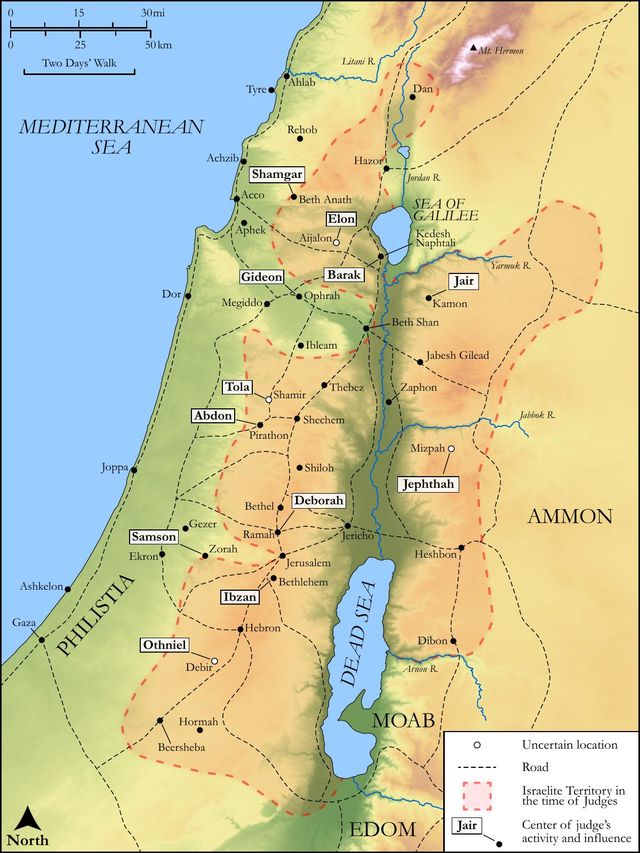
Judges 1 serves as an indispensable theological and narrative bridge between the unified conquest under Joshua and the fragmented, disobedient era of the Judges. Following Joshua's death, this chapter details the individual tribal efforts to secure their inheritances, presenting a stark and repetitive litany of failures to fully dispossess the Canaanites, despite some initial victories. Judges 1:30 fits squarely within this grim pattern, specifically highlighting Zebulun's compromise. The recurring refrain, "neither did X drive out..." (e.g., Judges 1:21, Judges 1:27, Judges 1:29), functions as a literary device underscoring a pervasive national problem. This consistent disobedience stands in direct contrast to God's clear and repeated directives found in earlier covenant texts like Deuteronomy 7. Thus, Judges 1 establishes the foundational premise for the entire book: Israel's spiritual and societal decline is a direct consequence of their covenant unfaithfulness and pragmatic compromises, leading inevitably to the oppressive cycles described from Judges 2:11 onward.
Historical & Cultural Context
The period immediately following Joshua's death marked a critical transition for Israel, moving from a unified, divinely-led military campaign to a more decentralized, tribal settlement. God's unwavering command to utterly dispossess the Canaanites (e.g., Deuteronomy 7:1-5) was not merely a territorial directive but a profound spiritual imperative. Canaanite culture was deeply steeped in polytheism, particularly the worship of Baal and Asherah, characterized by fertility cults, ritual prostitution, and abhorrent practices such as child sacrifice. Allowing these populations to remain, even in a subjugated state, posed an existential threat of religious syncretism and moral corruption to the nascent Israelite nation. Kitron and Nahalol were towns located within the fertile territory allotted to Zebulun, likely situated in or near the strategically vital Jezreel Valley, an area renowned for its agricultural richness and trade routes. The decision to make the Canaanites "tributaries" (forced laborers or payers of tribute) was a seemingly pragmatic economic choice, offering immediate benefits like cheap labor and resources without the perceived arduousness and cost of total military expulsion. However, this humanly expedient solution came at an incalculable spiritual price, preserving a potent source of idolatrous temptation and cultural contamination within the very heart of God's covenant people.
Key Themes
ShowHideThis verse powerfully encapsulates several foundational themes that resonate throughout the book of Judges. First, Incomplete Obedience is paramount; Zebulun's actions, mirroring those of other tribes documented in Judges 1, vividly illustrate a pervasive pattern of partial compliance rather than radical and unwavering faithfulness to God's explicit commands to drive out the inhabitants. Second, it profoundly highlights the theme of Compromise. Rather than fully trusting in God's power for complete victory and the preservation of their spiritual purity, Zebulun chose a path of coexistence for perceived economic advantage, reducing the Canaanites to "tributaries." This compromise, while appearing pragmatic in the short term, created a persistent and insidious spiritual vulnerability. Third, the verse serves as a potent Foreshadowing of Consequences. The continued presence of the Canaanites, even in a subjugated state, would inevitably become a constant "snare" and "thorn" to Israel, leading directly to the adoption of their idolatrous practices and subsequent divine judgment, precisely as warned in passages like Numbers 33:55 and Joshua 23:12-13.
Exposition and Analysis
ShowHideKey Word Analysis
ShowHideThis verb (H3423) signifies "to occupy (by driving out previous tenants, and possessing in their place); by implication, to seize, to rob, to inherit; also to expel, to impoverish, to ruin." In the context of the conquest, it refers to the divine mandate for Israel to completely dispossess and remove the existing inhabitants from the land God had promised them. Zebulun's explicit failure to "drive out" signifies a direct and profound disobedience to this fundamental command, indicating a critical lack of full commitment to God's comprehensive plan for the purity of the land and the distinctiveness of His people.
This verb (H3427) means "properly, to sit down; by implication, to dwell, to remain; causatively, to settle, to marry." Its use here highlights the direct and lamentable consequence of Zebulun's failure to dispossess: the Canaanites were permitted to "remain" or "settle" within Israelite territory. This phrase underscores the persistent and problematic presence of the very people God commanded to be removed, setting the stage for future spiritual, social, and cultural challenges that would plague Israel.
This noun (H4522) refers to "a burden (as causing to faint), i.e. a tax in the form of forced labor." It implies that the Canaanites were not merely allowed to coexist peacefully but were subjugated and compelled to serve Israel, likely through forced labor (corvée) or the payment of goods/taxes. While this arrangement might have been perceived as a practical display of Israelite dominance or an economic benefit, it represented a significant deviation from God's command for complete separation, tragically transforming a spiritual failure into a pragmatic, yet spiritually perilous, economic arrangement.
Verse Breakdown
ShowHide"Neither did Zebulun drive out the inhabitants of Kitron, nor the inhabitants of Nahalol;"
This initial clause serves as a direct and unambiguous indictment of Zebulun's disobedience. The emphatic negative "Neither did" underscores their failure to fulfill the divine mandate to completely dispossess the Canaanites from their allotted territory, specifically naming the towns of Kitron and Nahalol. This highlights a deliberate and consequential choice not to execute the full extent of God's command, placing them among the tribes who compromised rather than those who achieved more complete victories (e.g., Judges 1:4).
"but the Canaanites dwelt among them,"
This clause presents the immediate and ongoing consequence of Zebulun's inaction and partial obedience. Instead of being expelled, the Canaanites were permitted to remain, living in close proximity and interaction with the Israelites. This cohabitation, in direct defiance of God's explicit warnings, exposed Israel to the deeply entrenched idolatrous and immoral practices of the Canaanites, thereby creating a constant and insidious spiritual and cultural threat within their own divinely appointed borders.
"and became tributaries."
This final clause elucidates the specific nature of the relationship established between Zebulun and the remaining Canaanites. The term "tributaries" (Hebrew maç) indicates that the Canaanites were subjected to forced labor or regular tribute payments. While this arrangement might have been viewed as a practical victory or an economic advantage, it was a profound compromise that allowed the "enemy" to persist, albeit in a subjugated state, thus perpetuating the very spiritual danger and source of temptation that God had sought to eliminate through complete expulsion.
Literary Devices
ShowHideJudges 1:30 employs several powerful literary devices to convey its significant theological and historical message. Juxtaposition is prominently evident in the stark contrast between what Zebulun should have done—"drive out" the inhabitants—and what they did do—allowing the Canaanites to "dwell among them" and become "tributaries." This sharp opposition effectively highlights their profound disobedience and the resulting compromise. The repetition of the phrase "neither did X drive out" throughout Judges 1 creates a pervasive and cumulative sense of national failure, functioning as a lament and foreshadowing the inevitable spiritual decline that will plague Israel. There is also a subtle yet potent irony in the fact that by making the Canaanites "tributaries," Zebulun gained a short-term economic benefit but simultaneously sowed the seeds of long-term spiritual decay and moral corruption, demonstrating a short-sighted pragmatism that fundamentally undermined their covenant faithfulness. Ultimately, this verse functions as a form of foreshadowing, hinting at the ongoing struggles with idolatry, foreign oppression, and cycles of judgment that will define the entire period of the Judges.
Theological and Thematic Connections
ShowHideZebulun's failure to fully dispossess the Canaanites, instead reducing them to tributaries, is a profound theological statement on the nature of obedience, compromise, and the consequences of spiritual pragmatism. God's command to drive out the inhabitants was not arbitrary; it was an essential prerequisite for Israel's spiritual purity, covenant faithfulness, and distinct identity as His holy nation. The continued presence of the Canaanites, even as subjugated peoples, represented a persistent spiritual snare, allowing their idolatrous practices, immoral ways, and ungodly worldview to inevitably seep into and corrupt Israelite society. This partial obedience reflects a critical lack of trust in God's sovereign power to grant complete victory and a dangerous preference for humanly devised expediency over unwavering divine instruction. It underscores the timeless biblical principle that incomplete obedience is, in essence, disobedience, and that any compromise with sin or worldly influences inevitably leads to spiritual decline, moral decay, and ultimately, divine judgment.
Reflection and Application
ShowHideZebulun's experience in Judges 1:30 serves as a potent and challenging spiritual mirror for believers in every generation. Just as the Canaanites were to be completely dispossessed from the promised land to preserve Israel's spiritual integrity, so too are we called to utterly eradicate sin, worldly influences, and ungodly patterns from our lives. The insidious temptation to "make them tributaries"—to merely manage sin, to allow certain compromises to remain for perceived comfort, economic benefit, or social acceptance, or to simply subjugate sinful habits rather than completely expelling them—is a subtle but profoundly dangerous trap. Any area of our lives where we permit spiritual "Canaanites" to dwell, even if seemingly under our control, becomes a potential stronghold for future temptation, idolatry, and spiritual stagnation. This verse powerfully challenges us to engage in a rigorous self-examination: are there areas where we are practicing partial obedience, holding onto things that God has unequivocally called us to completely surrender, crucify, or eliminate? True spiritual freedom, flourishing, and the abundant life in Christ come not from managing sin, but from radical, uncompromising, and Spirit-empowered obedience to God's transformative commands.
Questions for Reflection
ShowHideFAQ
ShowHideWhat was the specific command God gave regarding the Canaanites, and why was it so strict?
ShowHideGod explicitly commanded Israel to utterly destroy or drive out all the inhabitants of the land of Canaan, including the Hittites, Girgashites, Amorites, Canaanites, Perizzites, Hivites, and Jebusites (e.g., Deuteronomy 7:1-2). This command was not given out of arbitrary cruelty but out of divine holiness and a profound desire to protect Israel's spiritual purity and covenant fidelity. The Canaanite cultures were deeply steeped in abhorrent idolatry, including the worship of Baal and Asherah, and practiced morally repugnant rituals like child sacrifice and ritual prostitution (e.g., Leviticus 18:24-28). God knew with certainty that if these nations remained, they would inevitably lead Israel astray into idolatry and moral corruption, thereby defiling the sacred covenant relationship and the very land itself (e.g., Deuteronomy 7:4).
Why did Zebulun, and other tribes, choose to make the Canaanites tributaries instead of driving them out?
ShowHideThe decision to make the Canaanites "tributaries" (meaning forced laborers or those paying tribute) was likely a pragmatic and humanly expedient choice driven by a complex combination of factors. It offered immediate economic benefits, providing a readily available source of cheap labor and resources without the perceived ongoing cost, effort, and bloodshed of complete military conquest and expulsion. It might also have been seen as a less demanding alternative to continued warfare, especially if the Canaanites were well-fortified or numerically superior in certain areas. However, this choice fundamentally represented a profound failure of faith and obedience. Instead of fully trusting God to grant complete victory and to provide for their needs, the tribes opted for a humanly rationalized solution that ultimately compromised their spiritual integrity, prioritizing material gain and ease over complete adherence to God's clear and holy command.
What were the long-term consequences of this partial obedience for Israel?
ShowHideThe long-term consequences of Israel's pervasive partial obedience, vividly exemplified by Zebulun's actions, were devastating and are meticulously portrayed throughout the entire book of Judges. The continued presence of the Canaanites led directly to widespread religious syncretism, where Israelites began to intermarry with the remaining inhabitants and tragically adopt their idolatrous practices, particularly the worship of Baal and Asherah (e.g., Judges 2:11-13). This spiritual apostasy broke their sacred covenant with God, leading inevitably to divine judgment in the form of oppression by foreign enemies. The tragic cycle of sin, oppression, crying out to God, deliverance by a judge, and then a swift return to sin became the defining characteristic of the entire period, demonstrating unequivocally that incomplete obedience inevitably leads to spiritual decline, moral decay, and recurring cycles of suffering (e.g., Judges 2:16-19).
Christ-Centered Fulfillment
ShowHideJudges 1:30, with Zebulun's disheartening failure to fully dispossess the Canaanites, powerfully foreshadows the profound and ultimate need for a perfect deliverer who would accomplish what Israel, in its own strength and partial obedience, could never achieve. Israel, as God's chosen covenant people, was called to be a holy nation, set apart, utterly driving out all ungodly influences and idolatry from their midst. Their repeated and pervasive failure to do so, culminating in the spiritual and moral decay so vividly depicted throughout the book of Judges, underscores humanity's inherent inability to achieve complete victory over sin and evil through its own compromised efforts. This pervasive human inadequacy points directly to Jesus Christ, who perfectly fulfilled God's will and accomplished a complete conquest where Israel tragically failed. He did not merely subjugate sin or make it tributary; He utterly disarmed and triumphed decisively over the powers of darkness on the cross (e.g., Colossians 2:15). Through His perfect obedience, His sinless life, and His sacrificial death, Christ secured a complete and decisive victory over sin, death, and the devil, providing a true and lasting rest that the incomplete conquest of Canaan could only symbolize (e.g., Hebrews 4:8-10). For believers today, our spiritual warfare is not against mere flesh and blood, but against powerful spiritual forces (e.g., Ephesians 6:12), and our victory is found solely in Christ, who empowers us to "drive out" the spiritual "Canaanites" of sin from our lives through His indwelling power, not through our own compromised or partial efforts. He is the Lamb of God who truly takes away the sin of the world, not merely makes it tributary (e.g., John 1:29).