


Jeremiah 7:6
Bible text: King James Version (1769 Blayney text) · Public domain
Bible text: King James Version with Strong's numbers · Public domain
Bible text: Berean Standard Bible · Public domain
Bible text: American Standard Version (1901) · Public domain
Bible text: World English Bible, Messianic edition · Public domain
Bible text: Geneva Bible (1599) · Public domain
Bible text: Young's Literal Translation · Public domain
- גֵּרger[the] sojournerH1616N-msNoun Singular Masculine Absolute
- יָתוֹםya·Tom[the] fatherlessH3490N-msNoun Singular Masculine Absolute
- וְאַלְמָנָהve·'al·ma·Nahand [the] widowH490Conj-w ¦ N-fsNoun Singular Feminine Absoluteוְandאַלְמָנָה[the] widow
- לֹאlo'notH3808NegParticle Negative
- תַעֲשֹׁקוּta·'a·Sho·kuyou must oppressH6231V-Qal-Imperf-2mpVerb Qal Imperfect 2nd Plural Masculine
- וְדָםve·Damand bloodH1818Conj-w ¦ N-msNoun Singular Masculine Absoluteוְandדָםblood
- נָקִיna·KiinnocentH5355Adj-msAdjective Singular Masculine Absolute
- אַל'almay notH408NegParticle Negative
- תִּשְׁפְּכוּtish·pe·Khuyou shedH8210V-Qal-Imperf-2mpVerb Qal Imperfect 2nd Plural Masculine
- בַּמָּקוֹםba·ma·Komin the placeH4725Prep-b ¦ N-msNoun Singular Masculine Absoluteבַּin theמָּקוֹםplace
- הַזֶּהha·Zeh<the> thisH2088Art ¦ PrtParticle Demonstrativeהַ<the>זֶּהthis
- וְאַחֲרֵיve·'a·cha·Reiand afterH310Conj-w ¦ Adj-mpcAdjective Numerical Plural Masculine Constructוְandאַחֲרֵיafter
- אֱלֹהִים'E·lo·HimgodsH430N-mpNoun Plural Masculine Absolute
- אֲחֵרִים'a·che·RimotherH312Adj-mpAdjective Plural Masculine Absolute
- לֹאlo'notH3808NegParticle Negative
- תֵלְכוּte·le·Khuyou must walkH1980V-Qal-Imperf-2mpVerb Qal Imperfect 2nd Plural Masculine
- לְרַעle·Ra'for harmH7451Prep-l ¦ Adj-msAdjective Singular Masculine Absoluteלְforרַעharm
- לָכֶםla·Khemof youPrep-l ¦ 2mpSuffix Personal 2nd Plural Masculineלָofכֶםyou
English is a literal word-by-word gloss of the Hebrew, not the KJV's wording. Why?
This is the original text the KJV's translators worked from — each Hebrew word with its own literal English meaning in this verse, prepared by scholars at Tyndale House, Cambridge. The KJV translates whole sentences, not word by word, so its wording differs: one Hebrew word can become several English words, and the KJV may choose “the LORD” where the gloss reads “Yahweh”. Both are faithful — they answer different questions. For the KJV's own rendering, switch to the KJV text.
Details
See on the biblical-era map
Study this verse
Public-domain commentary
Matthew Henry
From his Commentary on the Whole Bible. Henry comments on passages, not single verses — this entry covers Jeremiah 7:1–15. His four-level outline is real structure in the source text, so it is rendered as structure.
These verses begin another sermon, which is continued in this and the two following chapters, much to the same effect with those before, to reason them to repentance. Observe,
I.The orders given to the prophet to preach this sermon; for he had not only a general commission, but particular directions and instructions for every message he delivered. This was a word that came to him from the Lord, Jer 7:1. We are not told when this sermon was to be preached; but are told,
1.Where it must be preached - in the gate of the Lord's house, through which they entered into the outer court, or the court of the people. It would affront the priests, and expose the prophet to their rage, to have such a message as this delivered within their precincts; but the prophet must not fear the face of man, he cannot be faithful to his God if he do.
2.To whom it must be preached - to the men of Judah, that enter in at these gates to worship the Lord; probably it was at one of three feasts, when all the males from all parts of the country were to appear before the Lord in the courts of his house, and not to appear empty: then he had many together to preach to, and that was the most seasonable time to admonish them not to trust to their privileges. Note,
(1.)Even those that profess religion have need to be preached to as well as those that are without.
(2.)It is desirable to have opportunity of preaching to many together. Wisdom chooses to cry in the chief place of concourse, and, as Jeremiah here, in the opening of the gates, the temple-gates.
(3.)When we are going to worship God we have need to be admonished to worship him in the spirit, and to have no confidence in the flesh, Phi 3:3.
II.The contents and scope of the sermon itself.
It is delivered in the name of the Lord of hosts, the God of Israel, who commands the world, but covenants with his people. As creatures we are bound to regard the Lord of hosts, as Christians the God of Israel; what he said to them he says to us, and it is much the same with that which John Baptist said to those whom he baptized (Mat 3:8, Mat 3:9), Bring forth fruits meet for repentance; and think not to say within yourselves, We have Abraham to our father. The prophet here tells them,
1.What were the true words of God, which they might trust to. In short, they might depend upon it that if they would repent and reform their lives, and return to God in a way of duty, he would restore and confirm their peace, would redress their grievances, and return to them in a way of mercy (Jer 7:3): Amend your ways and your doings. This implies that there had been much amiss in their ways and doings, many faults and errors. But it is a great instance of the favour of God to them that he gives them liberty to amend, shows them where and how they must amend, and promises to accept them upon their amendment: "I will cause you to dwell quietly and peaceably in this place, and a stop shall be put to that which threatens your expulsion." Reformation is the only way, and a sure way to ruin. He explains himself (Jer 7:5-7), and tells them particularly,
(1.)What the amendment was which he expected from them. They must thoroughly amend; in making good, they must make good their ways and doings; they must reform with resolution, and it must be a universal, constant, preserving reformation - not partial, but entire - not hypocritical, but sincere - not wavering, but constant. They must make the tree good, and so make the fruit good, must amend their hearts and thoughts, and so amend their ways and doings. In particular,
[1.]They must be honest and just in all their dealings. Those that had power in their hands must thoroughly execute judgment between a man and his neighbour, without partiality, and according as the merits of the cause appeared. They must not either in judgment or in contract oppress the stranger, the fatherless, or the widow, nor countenance or protect those that did oppress, nor refuse to do them justice when they sought for it. They must not shed innocent blood, and with it defile this place and the land wherein they dwelt.
[2.]They must keep closely to the worship of the true God only: "Neither walk after other gods; do not hanker after them, nor hearken to those that would draw you into communion with idolaters; for it is, and will be, to your own hurt. Be not only so just to your God, but so wise for yourselves, as not to throw away your adorations upon those who are not able to help you, and thereby provoke him who is able to destroy you." Well, this is all that God insists upon.
(2.)He tells them what the establishment is which, upon this amendment, they may expect from him (Jer 7:7): "Set about such a work of reformation as this with all speed, go through with it, and abide by it; and I will cause you to dwell in this place, this temple; it shall continue your place of resort and refuge, the place of your comfortable meeting with God and one another; and you shall dwell in the land that I gave to your fathers for ever and ever, and it shall never be turned out either from God's house or from your own." It is promised that they shall still enjoy their civil and sacred privileges, that they shall have a comfortable enjoyment of them: I will cause you to dwell here; and those dwell at ease to whom God gives a settlement. They shall enjoy it by covenant, by virtue of the grant made of it to their fathers, not by providence, but by promise. They shall continue in the enjoyment of it without eviction or molestation; they shall not be disturbed, much less dispossessed, for ever and ever; nothing but sin could throw them out. An everlasting inheritance in the heavenly Canaan is hereby secured to all that live in godliness and honesty. And the vulgar Latin reads a further privilege here, Jer 7:3, Jer 7:7. Habitabo vobiscum - I will dwell with you in this place; and we should find Canaan itself but an uncomfortable place to dwell in if God did not dwell with us there.
2.What were the lying words of their own hearts, which they must not trust to. He cautions them against this self-deceit (Jer 7:4): "Trust no in lying words. You are told in what way, and upon what terms, you may be easy safe, and happy; now do not flatter yourselves with an opinion that you may be so on any other terms, or in any other way." Yet he charges them with this self-deceit arising from vanity (Jer 7:8): "Behold, it is plain that you do trust in lying words, notwithstanding what is said to you; you trust in words that cannot profit; you rely upon a plea that will stand you in no stead." Those that slight the words of truth, which would profit them, take shelter in words of falsehood, which cannot profit them. Now these lying words were, "The temple of the Lord, the temple of the Lord, the temple of the Lord are these. These buildings, the courts, the holy place, and the holy of holies, are the temple of the Lord, built by his appointment, to his glory; here he resides, here he is worshipped, here we meet three times a year to pay our homage to him as our King in his palace." This they thought was security enough to them to keep God and his favours from leaving them, God and his judgments from breaking in upon them. When the prophets told them how sinful they were, and how miserable they were likely to be, still they appealed to the temple: "How can we be either so or so, as long as we have that holy happy place among us?" The prophet repeats it because they repeated it upon all occasions. It was the cant of the times; it was in their mouths upon all occasions. If they heard an awakening sermon, if any startling piece of news was brought to them, they lulled themselves asleep again with this, "We cannot but do well, for we have the temple of the Lord among us." Note, The privileges of a form of godliness are often the pride and confidence of those that are strangers and enemies to the power of it. It is common for those that are furthest from God to boast themselves most of their being near to the church. They are haughty because of the holy mountain (Zep 3:11), as if God's mercy were so tied to them that they might defy his justice. Now to convince them what a frivolous plea this was, and what little stead it would stand them in,
(1.)He shows them the gross absurdity of it in itself. If they knew any thing either of the temple of the Lord or of the Lord of the temple, they must think that to plead that, either in excuse of their sin against God or in arrest of God's judgment against them, was the most ridiculous unreasonable thing that could be. [1.] God is a holy God; but this plea made him the patron of sin, of the worst of sins, which even the light of nature condemns, Jer 7:9, Jer 7:10. "What," says he, "will you steal, murder, and commit adultery, be guilty of the vilest immoralities, and which the common interest, as well as the common sense, of mankind witness against? Will you swear falsely, a crime which all nations (who with the belief of a God have had a veneration for an oath) have always had a horror of? Will you burn incense to Baal, a dunghill-deity, that sets up as a rival with the great Jehovah, and, not content with that, will you walk after other gods too, whom you know not, and by all these crimes put a daring affront upon God, both as the Lord of hosts and as the God of Israel? Will you exchange a God of whose power and goodness you have had such a long experience for gods of whose ability and willingness to help you you know nothing? And, when you have thus done the worst you can against God, will you brazen your faces so far as to come and stand before him in this house which is called by his name and in which his name is called upon - stand before him as servants waiting his commands, as supplicants expecting his favour? Will you act in open rebellion against him, and yet herd among his subjects, among the best of them? By this, it should seem, you think that either he does not discover or does not dislike your wicked practices, to imagine either of which is to put the highest indignity possible upon him. It is as if you should say, We are delivered to do all these abominations." If they had not the front to say this, totidem verbis - in so many words, yet their actions spoke it aloud. They could not but own that God, even their own God, had many a time delivered them, and been a present help to them, when otherwise they must have perished. He, in delivering them, designed to reduce them to himself, and by his goodness to lead them to repentance; but they resolved to persist in their abominations notwithstanding. As soon as they were delivered (as of old in the days of the Judges) they did evil again in the sight of the Lord, which was in effect to say, in direct contradiction to the true intent and meaning of the providences which had affected them, that God had delivered them in order to put them again into a capacity of rebelling against him, by sacrificing the more profusely to their idols. Note, Those who continue in sin because grace has abounded, or that grace may abound, do in effect their idols. Note, Those who continue in sin because grace has abounded, or that grace may abound, do in effect make Christ the minister of sin. Some take it thus: "You present yourselves before God with your sacrifices and sin-offerings, and then say, We are delivered, we are discharged from our guilt, now it shall do us no hurt; when all this is but to blind the world, and stop the mouth of conscience, that you may, the more easily to yourselves and the more plausibly before others, do all these abominations." [2.] His temple was a holy place; but this plea made it a protection to the most unholy persons: "Has this house, which is called by my name and is a standing sign of God's kingdom of sin and Satan - has this become a den of robbers in your eyes? Do you think it was built to be not only a rendezvous of, but a refuge and shelter to, the vilest of malefactors?" No; though the horns of the altar were a sanctuary to him that slew a man unawares, yet they were not so to a wilful murderer, nor to one that did aught presumptuously, Exo 21:14; Kg1 2:29. Those that think to excuse themselves in unchristian practices with the Christian name, and sin the more boldly and securely because there is a sin-offering provided, do, in effect, make God's house of prayer a den of thieves, as the priests in Christ's time, Mat 21:13. But could they thus impose upon God? No: Behold, I have seen it, saith the Lord, have seen the real iniquity through the counterfeit and dissembled piety. Note, Though men may deceive one another with the appearances of devotion, yet they cannot deceive God.
(2.)He shows them the insufficiency of this plea adjudged long since in the case of Shiloh.
[1.]It is certain that Shiloh was ruined, though it had God's sanctuary in it, when by its wickedness it profaned that sanctuary (Jer 7:12): Go you now to my place which was in Shiloh. It is probable that the ruins of that once flourishing city were yet remaining; they might, at least, read the history of it, which ought to affect them as if they saw the place. There God set his name at the first, there the tabernacle was set up when Israel first took possession of Canaan (Joh 18:1), and thither the tribes went up; but those that attended the service of the tabernacle there corrupted both themselves and others, and from them arose the wickedness of his people Israel; that fountain was poisoned, and sent forth malignant streams; and what came of it? No; God forsook it (Psa 78:60), sent his ark into captivity, cut off the house of Eli that presided there; and it is very probable that the city was quite destroyed, for we never read any more of it but as a monument of divine vengeance upon holy places when they harbour wicked people. Note, God's judgments upon others, who have really revolted from God while they have kept up a profession of nearness to him, should be a warning to us not to trust in lying words. It is good to consult precedents, and make use of them. Remember Lot's wife; remember Shiloh and the seven churches of Asia; and know that the ark and candlestick are moveable things, Rev 2:5; Mat 21:43.
[2.]It is as certain that Shiloh's fate will be Jerusalem's doom if a speedy and sincere repentance prevent it not. First, Jerusalem was now as sinful as ever Shiloh was; that is proved by the unerring testimony of God himself against them (Jer 7:13): "You have done all these works, you cannot deny it:" and they continued obstinate in their sin; that is proved by the testimony of God's return and repent, rising up early and speaking, as one in care, as one in earnest, as one who would lose no time in dealing with them, nay, who would take the fittest opportunity for speaking to them early in the morning, when, if ever, they were sober, and had their thoughts free and clear; but it was all in vain. God spoke, but they heard not, they heeded not, they never minded; he called them, but they answered not; they would not come at his call. Note, What God has spoken to us greatly aggravates what we have done against him. Secondly, Jerusalem shall shortly be as miserable as ever Shiloh was: Therefore I will do unto this house as I did to Shiloh, ruin it, and lay it waste, Jer 7:14. Those that tread in the steps of the wickedness of those that went before them must expect to fall by the like judgments, for all these things happened to them for ensamples. The temple at Jerusalem, though ever so strongly built, if wickedness was found in it, would be as unable to keep its ground and as easily conquered as even the tabernacle in Shiloh was, when God's day of vengeance had come. "This house" (says God) "is called by my name, and therefore you may think that I should protect it; it is the house in which you trust, and you think that it will protect you; this land is the place, this city the place, which I gave to you and your fathers, and therefore you are secure of the continuance of it, and think that nothing can turn you out of it; but the men of Shiloh thus flattered themselves and did but deceive themselves." He quotes another precedent (Jer 7:15), the ruin of the kingdom of the ten tribes, who were the seed of Abraham, and had the covenant of circumcision, and possessed the land which God gave to them and their fathers, and yet the idolatries threw them out and extirpated them: "And can you think but that the same evil courses will be as fatal to you?" Doubtless they will be so; for God is uniform and of a piece with himself in his judicial proceedings. It is a rule of justice, ut parium par sit ratio - that in similar cases the same judgment should proceed. "You have corrupted yourselves as your brethren the seed of Ephraim did, and have become their brethren in iniquity, and therefore I will cast you out of my sight, as I have cast them." The interpretation here given of the judgment makes it a terrible one indeed; the casting of them out of their land signified God's casting them out of his sight, as if he would never look upon them, never look after them, more. Whenever we are cast, it is well enough, if we be kept in the love of God; but, if we are thrown out of his favour, our case is miserable though we dwell in our own land. This threatening, that God would make this house like Shiloh, we shall meet with again, and find Jeremiah indicted for it, Jer 26:6.
Historical interpretation
Two Centuries of Reception
5 surviving comments on this verse. Each one is dated, so this reads as a timeline rather than a list.
Select a marker to jump to its quote. Markers stagger vertically where authors wrote within a few decades of each other.
Wash! Make yourselves clean! Put away evil from your hearts. Learn to do well. Seek judgment, protect the oppressed, judge the fatherless, plead for the widow. Come, let us reason together, says the Lord. And again: “Keep your tongue from evil, and your lips that they speak no guile. Depart from evil, and do good. Seek peace, and pursue it.” In preaching these things, the prophets sought the fruits of righteousness.
“Do not put your hope in deceptive words that say, ‘Here is the temple of the Lord,’ ” that imply you are his temple. They are only trying to assure you that you will never be left by God as though God would decide to preserve his blessed temple and would save his priests even though they are wicked. No! Do not find hope in those who flatter you with these words. If you have not corrected what you are doing, then you are no temple of God, and God will not save you on account of the sacredness of his temple that is desecrated by you. His soul is disgusted by the multitude of your sacrifices that you offer in your wickedness.
(Verse 4 and following) Do not trust in deceitful words, saying: The temple of the Lord, the temple of the Lord, the temple of the Lord is here. For if you will bless (or direct) your ways and your pursuits, if you will administer justice between a man and his neighbor (or his), if you will not commit injustice (or oppress them) against strangers, orphans, and widows, if you will not shed innocent blood in this place, and if you will not walk after foreign gods to your own harm; then I will dwell with you (or make you dwell) in this place, in the land which I gave to your fathers from the age to age. What the Seventy added to the beginning of this chapter: 'In words of falsehood, which will not benefit you at all,' is not found in the Hebrew. And at that time he commanded both the people of Judah and us who seem to be established in the Church, not to place our trust in the splendor of buildings, in gilded ceilings, and in walls adorned with marble crusts. And let us not say, 'The temple of the Lord, the temple of the Lord, the temple of the Lord.' For that is the temple of the Lord, in which true faith dwells, holy conversation, and the chorus of all virtues. Finally, it brings forth: If you walk in the right paths, and your thoughts do not stray after error, and if you follow justice and do not commit evil, nor shed innocent blood, nor cause the simple to stumble, and if you do not walk after foreign gods and worship perverse doctrines, which you have imagined in your hearts for your own harm; then I will dwell with you in this place, which you call the Temple of God, and in the land that I have given to your fathers, to the Apostles, namely, and to the Apostolic men; or certainly I will make you dwell securely from the beginning to the end. This can apply to those virgins who boast of their chastity and present their chastity with an impudent countenance, when their conscience holds something else and they do not understand the Apostle's definition of virginity: that it should be holy in body and spirit. For what good is the chastity of the body to a mind corrupted, if it does not possess the other virtues described by the prophetic discourse?
He instructs both the people of Judea of that time and us today, who are seen to be constituted as the church. We are not to put our faith in the splendor of its buildings. Nor are we to put faith in its golden ceilings and decorated walls of marble. We are not to say “this is the temple of the Lord, the temple of the Lord, the temple of the Lord.” For the temple of the Lord is there where the true faith dwells, in holy living and the chorus of all the virtues. Then he infers, “If you make your ways straight and if your thoughts do not follow error, and if you will do justice and refrain from evil, nor shed innocent blood or scandalize the little ones. If you do not walk after alien gods, honoring perverse doctrines that you simulate in your own hearts for evil purposes. I will dwell with you in that place that you call the temple of God and in the land that I gave to your ancestors, who were obviously apostles and apostolic men. Or at least I will cause you to dwell there from beginning to end in security.” This can be compared with the virgin who spreads modesty and freely prefers chastity, who has another conscience and knows only that virginal purpose of the apostle that “she be holy in body and in spirit.” For what good is a chaste body to a corrupt spirit that does not have the other virtues that this prophetic word describes?
If heaven and earth must pass away, obviously all things that are earthly must also pass away. Therefore the spots that witnessed the crucifixion and the resurrection profit those only who bear their several crosses, who day by day rise again with Christ and who thus show themselves worthy of an abode so holy. Those who say, “the temple of the Lord, the temple of the Lord,” should give ear to the words of the apostle: “you are the temple of the Lord,” and the Holy Spirit “dwells in you.” Access to the courts of heaven is as easy from Britain as it is from Jerusalem, for “the kingdom of God is within you.”
Continue studying Jeremiah 7:6 across the web’s major study libraries — every link below opens this exact verse, chapter, or book on the destination site.
Read & Compare
 BibleGatewayThis verse in more than 200 translations and 70 languages.
 Bible.comThe YouVersion reader — hundreds of translations, reading plans, and highlights.
 ESV.orgCrossway's official English Standard Version reader.
 NET BibleThe NET translation with 60,000+ translators' notes on every rendering decision.
 STEP BibleTyndale House's free study tool — original text, vocabulary, and scholarly resources.
 BibliaLogos Bible Software's free web reader.
 USCCBThe New American Bible (Revised Edition) with the U.S. bishops' study notes.
Commentaries
 BibleHub CommentariesDozens of classic commentaries on this verse, gathered on one page.
 StudyLightMore than 100 commentary sets — the largest collection on the web.
 BibleRefPlain-English commentary on what this verse means, verse by verse.
 Enduring WordDavid Guzik's free commentary on this chapter, widely used by Bible teachers.
 Bible Study ToolsVerse commentary alongside Greek and Hebrew study aids.
Original Language & Research
- BibleHub InterlinearThe verse word by word — original language, transliteration, and English.
- BibleHub LexiconEvery word's original-language definition and Strong's entry.
 Blue Letter BibleDeep-study tools — Strong's numbers, concordance, and word studies.
 SefariaThe Hebrew text with Rashi and centuries of Jewish commentary.
Sermons, Hymns & Audio


TrulyRandomVerse is not affiliated with these sites and doesn’t control their content. They’re linked because they’re genuinely useful.
Summary
Jeremiah 7:6 serves as a foundational declaration within the prophet's Temple Sermon, articulating God's non-negotiable requirements for true covenant faithfulness and the continued privilege of dwelling in the land. It directly challenges Judah's misguided reliance on the physical Temple, asserting that genuine worship is inextricably linked to righteous conduct—specifically, protecting the stranger, the fatherless, and the widow, upholding the sanctity of human life by refraining from shedding innocent blood, and maintaining exclusive devotion to Yahweh without turning to idolatry, lest they bring harm upon themselves. This verse encapsulates the ethical demands of the Mosaic Covenant, highlighting that outward religious observance is meaningless without inward transformation and just action, a warning Christ Himself took up when He cleansed a temple made a den of robbers.
Context
ShowHideLiterary Context
Jeremiah 7:6 is a pivotal component of the "Temple Sermon" (Jeremiah 7:1-15), a confrontational message delivered by Jeremiah at the very gate of the Lord's house. This sermon directly assails the people of Judah's dangerous and misplaced confidence in the Jerusalem Temple as an inviolable charm against divine judgment, despite their pervasive idolatry and oppression. Jeremiah's urgent warning in this passage is that merely uttering the phrase, "The temple of the Lord, The temple of the Lord, The temple of the Lord, are these!" (Jeremiah 7:4) offers no protection from the impending consequences of their unfaithfulness. Verse 6, specifically, lays out the moral and spiritual prerequisites that, if genuinely met, would allow them to "dwell in this place" (Jeremiah 7:7)—a direct contrast to the litany of abominations detailed in the subsequent verses, which include theft, murder, adultery, false swearing, and the worship of Baal (Jeremiah 7:9). It functions as a clear statement of God's expectations before detailing their failures.
Historical & Cultural Context
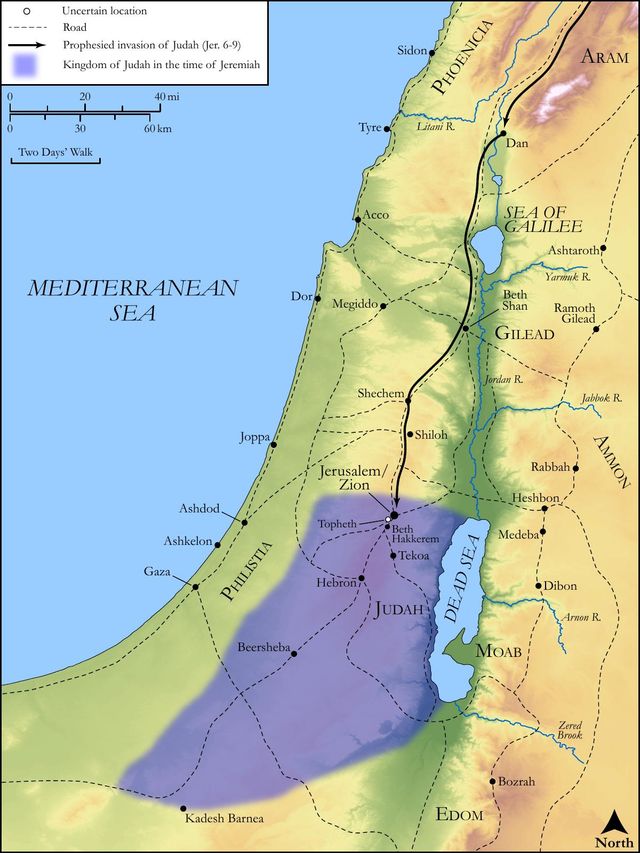
During Jeremiah's prophetic ministry in the late 7th to early 6th century BCE, the kingdom of Judah faced imminent destruction at the hands of the rising Babylonian Empire. Despite this existential threat, a significant portion of the populace, particularly under King Jehoiakim's reign, clung to a superstitious and nationalistic belief that Jerusalem and its Temple were divinely protected, largely due to God's covenant promises to David. This fostered a profound spiritual complacency, where outward religious rituals coexisted with widespread oppression and rampant idolatry. The "stranger, the fatherless, and the widow" represented the most vulnerable and unprotected segments of ancient Near Eastern society, lacking the familial and tribal networks that provided security. Their exploitation was a direct and egregious violation of the Mosaic Law, which repeatedly commanded their protection as a reflection of Yahweh's own character and Israel's historical experience as "strangers in the land of Egypt" (Exodus 23:9). The shedding of "innocent blood" encompassed not only general murder but also judicial corruption leading to wrongful executions and, horrifyingly, the practice of ritual child sacrifice, often associated with the worship of foreign deities like Molech, a practice explicitly condemned in other parts of Jeremiah (Jeremiah 7:31). Such acts profoundly defiled the land and provoked divine wrath.
Key Themes
ShowHideJeremiah 7:6 powerfully contributes to several overarching themes that permeate the book of Jeremiah. Firstly, it underscores the critical theme of Covenant Obedience and Disobedience, emphasizing that God's covenant with Israel was fundamentally conditional upon their faithfulness, not merely their ethnic identity or the possession of sacred objects. Secondly, it highlights the profound importance of Justice, demonstrating unequivocally that true worship of Yahweh is inextricably linked to the ethical and compassionate treatment of one's neighbor, especially the lowly and defenseless. This aligns with the consistent prophetic call for justice found throughout the Old Testament, as exemplified in the writings of Amos and Micah. Thirdly, the verse directly confronts the pervasive problem of Idolatry, illustrating how turning to "other gods" (Jeremiah 7:9) inevitably leads to self-inflicted "hurt" or calamity, a recurring consequence of apostasy throughout Israel's history, as vividly warned in the blessings and curses of Deuteronomy. Finally, it serves as a potent challenge to Empty Ritualism, asserting that God desires genuine, holistic heart-obedience over mere external religious performance or a superficial adherence to religious forms.
Exposition and Analysis
ShowHideKey Word Analysis
ShowHide(guwr); properly, a guest; by implication, a foreigner. In ancient Israelite society, the gêr was a resident alien, a non-native who had left their homeland and settled among the Israelites. Unlike a transient visitor, they were semi-permanent residents who lacked the tribal and familial protections afforded to native Israelites. The Mosaic Law consistently commanded compassion, fair treatment, and justice for the gêr, often grouping them with the fatherless and widow, reflecting God's own care for the vulnerable and Israel's historical memory of being strangers in Egypt.
(damam); blood (as that which when shed causes death) of man or an animal; by analogy, the juice of the grape; figuratively (especially in the plural) bloodshed. In this context, "innocent blood" refers to the life force of a blameless person, emphasizing the sanctity of human life. The shedding of innocent blood signifies murder, unjust execution, or violence against the defenseless, a grave defilement of the land and a direct violation of God's moral law.
Plural of H433 (ʼeloah); gods in the ordinary sense; but specifically used (in the plural thus, especially with the article) of the supreme God; occasionally applied by way of deference to magistrates; and sometimes as a superlative. Here, it refers to foreign deities or idols worshipped by the people of Judah, such as Baal or Molech. "Walking after other gods" implies a lifestyle of devotion, reliance, and adherence to these false deities, which constituted the ultimate breach of the covenant, demanding exclusive loyalty to Yahweh.
Verse Breakdown
ShowHide"If ye oppress not the stranger, the fatherless, and the widow,"
This opening conditional clause presents the first set of ethical requirements for Judah's continued dwelling in the land. It directly confronts the pervasive oppression within the nation, highlighting God's particular and profound concern for the most vulnerable members of society. To "oppress" (H6231, ʻâshaq') means to defraud, exploit, or violate their rights, often through economic manipulation, legal corruption, or abuse of power. God's covenant law consistently commanded active protection and justice for these groups, recognizing their inherent powerlessness and dependence, thereby reflecting God's own righteous character.
"and shed not innocent blood in this place,"
This second condition underscores the absolute sanctity of human life and the strict prohibition against murder or unjust killing. "Innocent blood" (H5355, nâqîy' + H1818, dâm') refers to the life of those who are blameless, without guilt, or defenseless, whose lives are taken unjustly. The specific phrase "in this place" (H4725, mâqôwm') likely refers to the land of Judah itself, and particularly Jerusalem, which was being defiled by such acts. This defilement rendered the land unfit for the continued holy presence of God and warranted divine judgment.
"neither walk after other gods to your hurt:"
The final condition addresses the profound spiritual infidelity of idolatry, which was the root cause of many of Judah's social ills. To "walk after" (H3212, yâlak' + H310, ʼachar') "other gods" (H312, ʼachêr' + H430, ʼĕlôhîym') signifies active devotion, allegiance, and lifestyle choices that follow and serve false deities rather than Yahweh. This constitutes the ultimate breach of the first commandment. The concluding phrase, "to your hurt" (H7451, raʻ'), emphasizes that idolatry is not merely an offense against God but is inherently self-destructive, bringing calamity, suffering, and divine judgment upon those who pursue it, as the consequences are a natural outgrowth of the transgression itself.
Literary Devices
ShowHideJeremiah 7:6 masterfully employs several impactful literary devices to convey its urgent message. The verse is structured as a Conditional Clause ("If ye oppress not... and shed not... neither walk..."), which establishes a clear cause-and-effect relationship between the people's obedience (or lack thereof) and their continued dwelling in the land. This structure is fundamental to covenant theology, where blessings are contingent upon faithfulness. There is a strong use of Parallelism, listing three distinct categories of prohibited actions (oppression of the vulnerable, shedding innocent blood, and idolatry). Each prohibition represents a fundamental breach of the covenant, creating a rhythmic and emphatic declaration of God's core demands for righteousness. The specific phrase "stranger, fatherless, and widow" functions as a Merism or Synecdoche, representing the entire class of vulnerable, overlooked, and unprotected people in society, thereby highlighting the comprehensive nature of God's concern for justice. Finally, the concluding phrase "to your hurt" acts as a powerful Consequence Statement, underscoring the inherent self-destructive nature of sin and idolatry, where the punishment is not an arbitrary imposition but an intrinsic and inevitable outcome of the transgression itself.
Theological and Thematic Connections
ShowHideJeremiah 7:6 profoundly articulates the foundational principle that true worship of God is inseparable from righteous living and justice. It shatters the illusion that mere ritualistic adherence, ethnic identity, or the physical presence of sacred institutions can substitute for genuine, heartfelt obedience to God's moral and spiritual law. This verse underscores the holistic nature of the covenant, demonstrating that ethical conduct towards one's neighbor and exclusive devotion to God are not peripheral concerns but are central and indispensable to a right relationship with Yahweh. The prophet insists that God's character demands both personal piety and societal righteousness, and a failure in either area invites severe divine judgment, ultimately leading to self-inflicted harm and national calamity. This passage is a timeless reminder that God prioritizes justice and mercy alongside worship.
Reflection and Application
ShowHideJeremiah 7:6 stands as a timeless and convicting mirror, inviting believers across generations to critically examine the authenticity and depth of their faith. It powerfully challenges the common human tendency to compartmentalize spirituality, separating religious observance and personal devotion from how we treat others day by day. True faith, as revealed in this verse, is not merely about attending religious services, performing rituals, or professing belief, but about actively embodying God's justice, compassion, and holiness in every sphere of life. It calls us to honestly identify and dismantle any "idols" in our lives—whether they manifest as materialism, self-interest, the pursuit of power, comfort, or even approval—that subtly divert our ultimate allegiance from the one true God. Furthermore, this verse compels us to actively champion the cause of the lowly, the defenseless, and the vulnerable in our contemporary communities, reflecting God's profound heart for justice and mercy towards those who are often overlooked. This passage serves as a powerful reminder that our walk with God is inextricably linked to how we treat others and where our ultimate loyalties lie, urging us toward a whole-hearted faith that transforms both our devotion and our dealings.
Questions for Reflection
ShowHideFAQ
ShowHideWhat is the "Temple Sermon" and why is Jeremiah 7:6 so important within it?
ShowHideThe "Temple Sermon" (Jeremiah 7:1-15) is a powerful, confrontational message delivered by the prophet Jeremiah at the gate of the Jerusalem Temple. It directly addresses the people of Judah's dangerous and false security in the Temple, as they believed its mere presence would protect them from divine judgment, despite their widespread sin and moral decay. Jeremiah 7:6 is crucial because it precisely outlines the specific moral and spiritual conditions God requires for their continued dwelling in the land. It shatters their illusion, stating unequivocally that true security comes not from a physical building, but from genuine covenant obedience: specifically, refraining from oppressing the vulnerable, shedding innocent blood, and worshipping other gods. It serves as a concise summary of the ethical and theological failures that would ultimately lead to their exile and the destruction of the very Temple they trusted.
How does Jeremiah 7:6 relate to the broader Old Testament understanding of justice and righteousness?
ShowHideJeremiah 7:6 is deeply rooted in and perfectly encapsulates the Old Testament's consistent emphasis on justice and righteousness as core components of God's character and the covenant relationship He established with Israel. The Mosaic Law repeatedly commands care for the "stranger, fatherless, and widow" (Deuteronomy 24:17-22), reflecting God's own compassion and Israel's historical experience as oppressed sojourners in Egypt. The prohibition against shedding innocent blood is a reiteration of the Sixth Commandment (Exodus 20:13) and underscores the profound sanctity of human life, which is created in God's image. The warning against idolatry is the very first commandment (Exodus 20:3), demanding exclusive loyalty to Yahweh as the one true God. Thus, Jeremiah 7:6 synthesizes these fundamental ethical and spiritual requirements found throughout the Torah and passionately championed by all the prophets, demonstrating that true worship is holistic and involves both vertical devotion to God and horizontal justice towards humanity.
Christ-Centered Fulfillment
ShowHideJeremiah 7:6, while a stern warning to ancient Judah, finds its ultimate fulfillment and deeper meaning in the person and work of Jesus Christ. The verse's call for profound justice, diligent protection of the vulnerable, and exclusive devotion to God is perfectly embodied in Christ's life and ministry. Jesus consistently championed the lowly and outcasts of society, healing the sick, feeding the hungry, and extending grace to those rejected by others, thereby demonstrating God's heart for the "stranger, fatherless, and widow" with a compassion and fullness that transcended any legalistic adherence (Matthew 25:35-40). He perfectly upheld the sanctity of life, not only by refraining from shedding innocent blood but by offering His own innocent blood as the ultimate, atoning sacrifice for the sins of humanity, thereby fulfilling the demands of divine justice and reconciling us to God (Hebrews 9:14). Furthermore, Jesus perfectly demonstrated exclusive devotion to the Father, resisting every temptation to "walk after other gods" or succumb to worldly power and glory (Matthew 4:1-11). In Christ, the conditions of Jeremiah 7:6 are not merely met; they are transcended, transformed, and made possible for believers. Through faith in Him, believers are now called to live out these righteous requirements not by legalistic striving, but by the empowering presence of the Holy Spirit, reflecting the very character of Christ who lives within them (Galatians 2:20), and striving for justice and righteousness as an organic outflow of their new identity and purpose in Him (Ephesians 2:10).