


Revelation 19:13
- καὶkaiandG2532CONJConjunction
- περιβεβλημένοςperibeblēmenoshaving clothed themselves withG4016V-RMP-NSMVerb Perfect Middle Participle Nominative Singular Masculine
- ἱμάτιονhimationa garmentG2440N-ASNNoun Accusative Singular Neuter
- βεβαμμένονbebammenondippedG911V-RPP-ASNVerb Perfect Passive Participle Accusative Singular Neuter
- αἵματιaimatiin bloodG129N-DSNNoun Dative Singular Neuter
- καὶkaiAndG2532CONJConjunction
- κέκληταιkeklētaihas been calledG2564V-RPI-3SVerb Perfect Passive Indicative 3rd Singular
- τὸtotheG3588T-NSNDefinite article Nominative Singular Neuter
- ὄνομαonomanameG3686N-NSNNoun Nominative Singular Neuter
- αὐτοῦautouof HimG846P-GSMPersonal pronoun Genitive Singular Masculine
- ὁhoTheG3588T-NSMDefinite article Nominative Singular Masculine
- λόγοςlogosWordG3056N-NSMNoun Nominative Singular Masculine
- τοῦtou<the>G3588T-GSMDefinite article Genitive Singular Masculine
- θεοῦtheouof GodG2316N-GSM-TNoun Genitive Singular Masculine Title
English is a literal word-by-word gloss of the Greek, not the KJV's wording. Why?
This is the original text the KJV's translators worked from — each Greek word with its own literal English meaning in this verse, prepared by scholars at Tyndale House, Cambridge. The KJV translates whole sentences, not word by word, so its wording differs: one Greek word can become several English words, and the KJV may choose “charity” where the gloss reads “love”. Both are faithful — they answer different questions. For the KJV's own rendering, switch to the KJV text.
Details
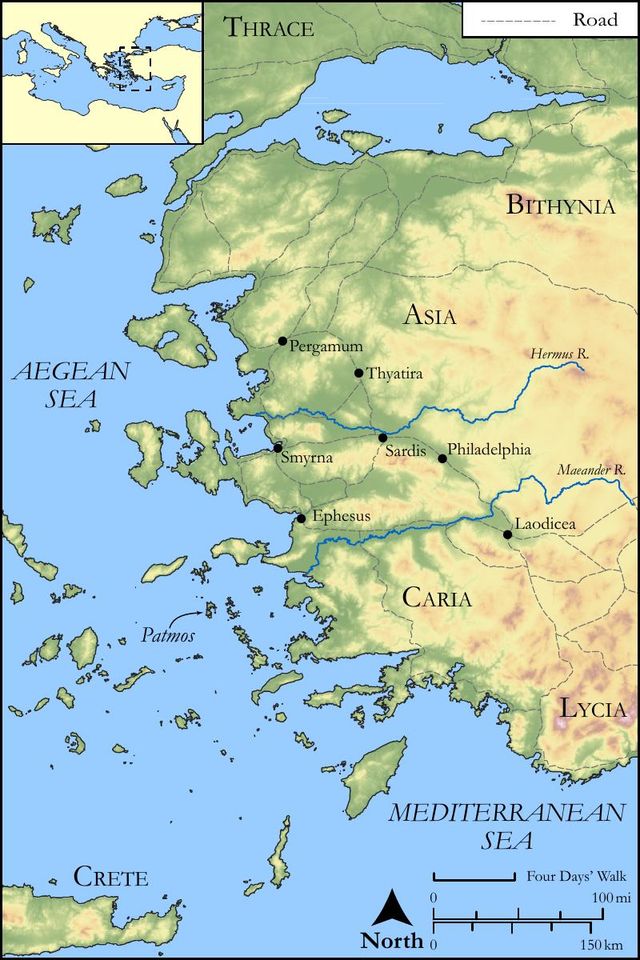
See on the biblical-era map

Study this verse
Public-domain commentary
Matthew Henry
From his Commentary on the Whole Bible. Henry comments on passages, not single verses — this entry covers Revelation 19:11–21. His two-level outline is real structure in the source text, so it is rendered as structure.
No sooner was the marriage solemnized between Christ and his church by the conversion of the Jews than the glorious head and husband of the church is called out to a new expedition, which seems to be the great battle that was to be fought at Armageddon, foretold Rev 16:16. And here observe,
I.The description of the great Commander,
1.By the seat of his empire; and that is heaven; his throne is there, and his power and authority are heavenly and divine.
2.His equipage: he is again described as sitting on a white horse, to show the equity of the cause, and certainty of success.
3.His attributes: he is faithful and true to his covenant and promise, he is righteous in all his judicial and military proceedings, he has a penetrating insight into all the strength and stratagems of his enemies, he has a large and extensive dominion, many crowns, for he is King of kings, and Lord of lords.
4.His armour; and that is a vesture dipped in blood, either his own blood, by which he purchased this mediatorial power, or the blood of his enemies, over whom he has always prevailed.
5.His name: The Word of God, a name that none fully knows but himself, only this we know, that this Word was God manifest in the flesh; but his perfections are incomprehensible by any creature.
II.The army which he commands (Rev 19:14), a very large one, made up of many armies; angels and saints followed his conduct, and resembled him in their equipage, and in their armour of purity and righteousness - chosen, and called, and faithful.
III.The weapons of his warfare - A sharp sword proceeding from his mouth (Rev 19:15), with which he smites the nations, either the threatenings of the written word, which now he is going to execute, or rather his word of command calling on his followers to take a just revenge on his and their enemies, who are now put into the wine-press of the wrath of God, to be trodden under foot by him.
IV.The ensigns of his authority, his coat of arms - a name written on his vesture and thigh, King of kings, and Lord of lords, asserting his authority and power, and the cause of the quarrel, Rev 19:16.
V.An invitation given to the fowls of heaven, that they should come and see the battle, and share in the spoil and pillage of the field (Rev 19:17, Rev 19:18), intimating that this great decisive engagement should leave the enemies of the church a feast for the birds of prey, and that all the world should have cause to rejoice in the issue of it.
VI.The battle joined.
The enemy falls on with great fury, headed by the beast, and the kings of the earth; the powers of earth and hell gathered, to make their utmost effort, Rev 19:19.
VII.The victory gained by the great and glorious head of the church:
The beast and the false prophet, the leaders of the army, are taken prisoners, both he who led them by power and he who led them by policy and falsehood; these are taken and cast into the burning lake, made incapable of molesting the church of God any more; and their followers, whether officers or common soldiers, are given up to military execution, and made a feast for the fowls of heaven. Though the divine vengeance will chiefly fall upon the beast, and the false prophet, yet it will be no excuse to those who fight under their banner that they only followed their leaders and obeyed their command; since they would fight for them, they must fall and perish with them. Be wise now therefore, O you kings, be instructed, you rulers of the earth; kiss the Son, lest he be angry, and you perish from the way, Psa 2:10, Psa 2:12.
Historical interpretation
Seven Centuries of Reception
6 surviving comments on this verse. Each one is dated, so this reads as a timeline rather than a list.
Select a marker to jump to its quote. Markers stagger vertically where authors wrote within a few decades of each other.
John does not see the Word of God mounted on a horse naked. He is clothed with a garment sprinkled with blood, since the Word who became flesh, and died because he became flesh, is invested with traces of that passion, since his blood also was poured forth upon the earth when the soldier pierced his side. For perhaps, even if in some way we attain the most sublime and highest contemplation of the Word and of the truth, we shall not forget completely that we were introduced to him by his coming in our body.
If no one is allowed to know his name, why is he now openly called the “Word of God”? When we read, “No one has ascended into heaven, but he who has descended from heaven, the Son of man who is in heaven,” we are to understand that whoever of his members will ascend is allowed to ascend in the Head himself and through him. By promising this to his members, he has granted them hope, and by fulfilling this, he will give to them the possibility [to receive this]. So here, the Son alone is said to know what is allowed to his bride to know in him, through whom and in whom the church is instructed. In speaking of the robe sprinkled with blood, it is indicating the tokens of his passion, whether this be in the Head himself or in his body, which is the church. For this reason, the apostle teaches the Hebrews that from the beginning in the animal sacrifices demanded by the law there was no remission of sins with the shedding of blood. Concerning the church he says, “that in my flesh I might complete what is lacking in Christ’s sufferings,” remembering the words which he heard, “Saul, Saul, why do you persecute me?” For whatever the church suffers, Christ also truly suffers, and of him Paul says, “he suffered once to take away the sins of many,” however, he suffers frequently in his members. Isaiah spoke of the appearance of this robe in this way, “Who is this that comes from Edom, in crimsoned garments from Bozrah? He is glorious in his apparel, marching in the greatness of his strength. It is I who speaks righteousness and who am a fighter for salvation. Why then is your garment red, and your apparel as though freshly trodden in a winepress? I alone have trodden the winepress, and from the peoples no one was with me.”
How is it that he who is without name and is unknown to all is here named “Word”? This is either to demonstrate his filial personhood and his impassible generation from the Father, just as our speech comes from our minds [impassibly], or his name suggests that he bears within himself the causes of all things, or that he is the interpreter of the wisdom and power of the Father.
And his name is called the Word of God. Because he who appeared as a man to suffer for a time was in the beginning with God (John 1). He is called the Word because there is nothing visible or corporeal in the substance of his nature, or because the Father created all things through him. The complete knowledge of whose nature, as he said above, is known only to himself and the Father. For the peace of God surpasses all understanding (Phil. 4), that is, the peace by which God himself is at peace transcends all the understanding of creatures, whether human or even angelic. For his wisdom is without number. What is said: And no one knows the Son except the Father, and no one knows the Father except the Son and anyone to whom the Son chooses to reveal him (Matt. 11), refers to the manner of the creature.
He is clothed in a robe dipped in blood. The robe of Christ should be understood according to the context. Here, it seems to indicate the very work of the passion, so that on the white horse signifies the incorruptible birth, and in the blood-stained robe, the innocent death.
He says he was clothed with a garment sprinkled with blood; for in the vision the Lord also bore the symbols of the Passion and showed the all-holy body stained only with his precious blood.
And his name is called the Word of God. Do you see how, fleeing the divine name in the heavens above, the vision has now set a nominative in its place, saying "the Word of God"?
Continue studying Revelation 19:13 across the web’s major study libraries — every link below opens this exact verse, chapter, or book on the destination site.
Read & Compare
 BibleGatewayThis verse in more than 200 translations and 70 languages.
 Bible.comThe YouVersion reader — hundreds of translations, reading plans, and highlights.
 ESV.orgCrossway's official English Standard Version reader.
 NET BibleThe NET translation with 60,000+ translators' notes on every rendering decision.
 STEP BibleTyndale House's free study tool — original text, vocabulary, and scholarly resources.
 BibliaLogos Bible Software's free web reader.
 USCCBThe New American Bible (Revised Edition) with the U.S. bishops' study notes.
Commentaries
 BibleHub CommentariesDozens of classic commentaries on this verse, gathered on one page.
 StudyLightMore than 100 commentary sets — the largest collection on the web.
 BibleRefPlain-English commentary on what this verse means, verse by verse.
 Enduring WordDavid Guzik's free commentary on this chapter, widely used by Bible teachers.
 Bible Study ToolsVerse commentary alongside Greek and Hebrew study aids.
Original Language & Research
- BibleHub InterlinearThe verse word by word — original language, transliteration, and English.
- BibleHub LexiconEvery word's original-language definition and Strong's entry.
 Blue Letter BibleDeep-study tools — Strong's numbers, concordance, and word studies.
 CNTR CollationThe earliest Greek manuscripts of this verse, collated letter by letter.
Sermons, Hymns & Audio


TrulyRandomVerse is not affiliated with these sites and doesn’t control their content. They’re linked because they’re genuinely useful.
Summary
Revelation 19:13 presents a powerful and awe-inspiring vision of Jesus Christ's triumphant return, depicting Him as a divine warrior and the ultimate executor of God's righteous judgment. He is portrayed clothed in a robe "dipped in blood," symbolizing His decisive victory over His enemies, rather than His own suffering. Crucially, He is identified by the profound title "The Word of God," underscoring His eternal deity, His role as the divine revealer, and His absolute authority in the coming cosmic conflict. This verse serves as a climactic revelation of Christ's identity and mission as He prepares to establish His sovereign reign.
Context
ShowHideLiterary Context
Revelation 19:13 is situated within a grand prophetic vision detailing the climactic events leading to Christ's second coming and the establishment of His kingdom. The chapter begins with heavenly praise for God's judgment on "Babylon the Great" (Revelation 19:1-10), symbolizing the world system opposed to God. Immediately preceding this verse, John sees "heaven opened, and behold a white horse; and he that sat upon him was called Faithful and True, and in righteousness he doth judge and make war" (Revelation 19:11). Verses 11-16 provide a detailed description of this Rider, unequivocally identified as Jesus Christ, as He prepares for the final battle against the beast and his armies. Verse 13 specifically describes His appearance and one of His most significant titles, setting the stage for the decisive victory that follows in the subsequent verses.
Historical & Cultural Context
The book of Revelation was written during a period of intense persecution of Christians under the Roman Empire, likely during the reign of Emperor Domitian (c. AD 95). Believers were facing immense pressure to conform to imperial cult worship and were suffering greatly. In this context, the apocalyptic imagery served to provide hope, assurance, and a call to endurance. The depiction of a conquering king with blood-stained garments would evoke familiar imagery from ancient warfare, where a victor's robes might be splattered with the blood of his vanquished foes. This imagery would have been particularly resonant with Old Testament prophetic descriptions of God's divine warrior, such as those found in Isaiah 63:1-6, where the Lord's garments are stained from treading the winepress of His wrath. The title "The Word of God" would also resonate with both Jewish concepts of Memra (God's active word) and Hellenistic philosophical ideas of Logos, but here applied uniquely and supremely to the person of Jesus Christ as the divine, pre-existent Son.
Key Themes
ShowHideThis verse powerfully contributes to several overarching themes in Revelation and the broader biblical narrative. Firstly, it emphasizes Christ's absolute sovereignty and divine authority as the King of kings and Lord of lords, who returns not as a suffering servant but as a triumphant warrior. Secondly, it highlights the theme of divine judgment and justice, portraying Christ as the righteous executor of God's wrath against all evil and rebellion. The blood on His robe is a stark symbol of this decisive victory. Thirdly, the title "The Word of God" reinforces Jesus' unique identity as the ultimate revelation of God, linking Him directly to the eternal Logos described in John 1:1. This theme underscores His pre-existence, His role in creation, and His inherent deity, confirming that the one who judges is none other than God Himself, fully revealed in Christ. This vision offers profound assurance to persecuted believers that God's ultimate plan of redemption and justice will prevail, as seen throughout the prophetic narrative of Revelation and in passages like Psalm 2.
Exposition and Analysis
ShowHideKey Word Analysis
ShowHideThis term refers to a garment, specifically an outer robe or cloak. In this context, it signifies the royal and warrior attire of the returning Christ, visibly marked by His triumph. The choice of "vesture" emphasizes its ceremonial and significant nature, appropriate for a King preparing for battle and judgment.
This primary verb means "to whelm, i.e., cover wholly with a fluid; by implication, to stain (as with dye)." The use of báptō here conveys the complete saturation of the vesture, indicating a decisive and thorough victory where the blood of His enemies has fully stained His garments, rather than a mere sprinkling. It suggests an overwhelming and conclusive act of judgment.
This profound theological term, derived from legō ("to speak"), signifies "something said (including the thought); by implication, a topic... reasoning... the Divine Expression (i.e., Christ)." In this context, it identifies Jesus as the ultimate revelation, embodiment, and active agent of God's will and power. It points to His pre-existence, His role as the Creator, and His function as the ultimate communicator of God's truth and judgment.
Verse Breakdown
ShowHide"And he was clothed with a vesture dipped in blood:"
This clause presents a striking visual image of the returning Christ. The "vesture" (outer robe) is not merely sprinkled but "dipped" (saturated) in "blood." This blood is not His own sacrificial blood (which was shed for atonement, as in Revelation 1:5), but rather the blood of His vanquished enemies. This imagery powerfully signifies His overwhelming victory and the execution of divine judgment. It directly alludes to Old Testament prophecies, particularly Isaiah 63:2-3, where God's garments are stained from treading the winepress of His wrath upon His adversaries. Thus, the blood-dipped robe symbolizes Christ's fierce and righteous conquest over all forces of evil.
"and his name is called The Word of God."
This second clause reveals a profound and significant title for the triumphant Rider. "The Word of God" (Greek: ho Logos tou Theou) connects the returning Christ directly to the eternal Logos introduced in John 1:1. This title emphasizes His divine nature, His pre-existence with God, and His role as the ultimate revelation of God's character, will, and truth. As "The Word," He is the active agent through whom God creates, speaks, and judges. This name underscores His inherent power, authority, and deity, confirming that the one who comes to execute judgment is none other than the divine Son, the full and final embodiment of God's communication and plan.
Literary Devices
ShowHideRevelation 19:13 employs several powerful literary devices to convey its message. Symbolism is paramount, with the "vesture dipped in blood" serving as a potent symbol of Christ's decisive victory in judgment, rather than His suffering. This visual imagery evokes the ancient practice of a conquering warrior's garments being stained with the blood of his vanquished foes, signifying complete triumph. The "white horse" upon which He rides (mentioned in the preceding verse) is also highly symbolic, representing purity, righteousness, and conquest. Furthermore, the title "The Word of God" functions as a profound Metaphor for Christ's identity, linking Him to divine revelation, power, and authority. The verse also utilizes Allusion, specifically to Old Testament prophecies like Isaiah 63:2-3, where God's garments are described as stained from treading the winepress of His wrath. This allusion enriches the meaning by connecting the New Testament vision to established prophetic themes of divine judgment and vengeance.
Theological and Thematic Connections
ShowHideRevelation 19:13 is a pivotal verse that powerfully integrates several profound theological truths. It presents Jesus Christ not only as the Lamb who was slain for the sins of the world but also as the Lion of Judah, the triumphant warrior-king who returns to execute righteous judgment. The imagery of His robe dipped in the blood of His enemies signifies the completion of God's justice, where all rebellion against His sovereignty is decisively crushed. This portrayal underscores God's unwavering commitment to holiness and His ultimate victory over evil, fulfilling numerous Old Testament prophecies concerning the day of the Lord and divine vengeance. Furthermore, His title "The Word of God" establishes His eternal deity and His essential role as the active agent of God's revelation, creation, and judgment. This connection reinforces the unity of God's plan throughout history, from creation to consummation, all centered on the person of Christ.
Reflection and Application
ShowHideRevelation 19:13 offers both immense comfort and a solemn warning. For believers, it provides profound assurance that Jesus Christ is indeed sovereign, that He will ultimately triumph over all evil, and that His justice will prevail. In a world often characterized by injustice, suffering, and the apparent triumph of wickedness, this vision reminds us that God is actively working out His perfect plan and that the King of kings will return to set all things right. This should inspire unwavering hope, courage in the face of persecution, and steadfastness in our faith. It calls us to live lives worthy of His coming, to align ourselves with His righteous reign, and to eagerly anticipate the day when every knee will bow and every tongue confess His Lordship. For those who oppose Christ, this verse serves as a stark warning of the inevitable judgment that awaits all who stand against the King of kings. It is a call to repentance and submission to His authority before the day of His wrath.
Questions for Reflection
ShowHideFAQ
ShowHideWhy is His robe dipped in blood if He is the Lamb of God who shed His own blood for us?
ShowHideThe "blood" on Christ's robe in Revelation 19:13 symbolizes the blood of His vanquished enemies, not His own atoning blood. While Jesus' own blood was shed as the sacrificial Lamb of God to atone for sins (Revelation 1:5), His return in Revelation 19 is as the conquering Lion of Judah, the divine warrior coming to execute righteous judgment and wage war against the forces of evil. This imagery directly alludes to Old Testament prophecies like Isaiah 63:1-6, where God's garments are stained from treading the winepress of His wrath upon His adversaries. Thus, the blood on His robe signifies His decisive victory and the complete triumph of His justice over all rebellion.
What does "The Word of God" mean as a name for Jesus?
ShowHide"The Word of God" (Greek: ho Logos tou Theou) is a profound theological title that identifies Jesus Christ as the ultimate and complete revelation of God. It connects Him to the eternal Logos described in John 1:1-3, where "In the beginning was the Word, and the Word was with God, and the Word was God. All things were made through Him." This title signifies Jesus' divine nature, His pre-existence with God, and His active role in creation. Furthermore, as "The Word," He is the one through whom God speaks, reveals Himself, and acts in history, culminating in His incarnation (John 1:14). Therefore, when He returns as "The Word of God," it underscores His inherent power, absolute authority, and His identity as the embodiment of God's truth, judgment, and ultimate plan.
Christ-Centered Fulfillment
ShowHideRevelation 19:13 stands as a powerful Christ-centered fulfillment, bringing together diverse strands of biblical prophecy and theology into a climactic revelation of Jesus' identity and mission. His title "The Word of God" points directly to His pre-existent deity, echoing John 1:1 where He is revealed as the eternal Logos, distinct from yet one with God. This Word, through whom "all things were made" (John 1:3), is the very one who "became flesh and dwelt among us" (John 1:14), fully revealing God to humanity (Hebrews 1:1-3). The imagery of His vesture "dipped in blood," while signifying judgment here, is only possible because of His prior, foundational work as the Lamb of God, whose own blood was shed to secure salvation and reconcile all things to God (Colossians 1:19-20). His return as the triumphant warrior, executing righteous judgment, is the culmination of His redemptive plan, bringing to completion the victory won at the cross and resurrection. He comes to fully establish His kingdom, putting all enemies under His feet (1 Corinthians 15:25), and ensuring that "every knee should bow... and every tongue confess that Jesus Christ is Lord" (Philippians 2:9-11), thus fulfilling the ultimate purpose of God's redemptive history centered in His Son.