


Revelation 19:17
Bible text: King James Version (1769 Blayney text) · Public domain
Bible text: King James Version with Strong's numbers · Public domain
Bible text: Berean Standard Bible · Public domain
Bible text: American Standard Version (1901) · Public domain
Bible text: World English Bible, Messianic edition · Public domain
Bible text: Geneva Bible (1599) · Public domain
Bible text: Young's Literal Translation · Public domain
- ΚαὶKaiAndG2532CONJConjunction
- εἶδονeidonI sawG1492V-2AAI-1SVerb 2nd Aorist Active Indicative 1st Singular
- ἕναhenaoneG1520A-ASMAdjective Accusative Singular Masculine
- ἄγγελονangelonangelG32N-ASMNoun Accusative Singular Masculine
- ἑστῶταhestōtastandingG2476V-RAP-ASMVerb Perfect Active Participle Accusative Singular Masculine
- ἐνeninG1722PREPPreposition
- τῷtōtheG3588T-DSMDefinite article Dative Singular Masculine
- ἡλίῳhēliōsunG2246N-DSMNoun Dative Singular Masculine
- καὶkaiandG2532CONJConjunction
- ἔκραξενekraxenhe cried outG2896V-AAI-3SVerb Aorist Active Indicative 3rd Singular
- φωνῇphōnēaa voiceG5456N-DSFNoun Dative Singular Feminine
- μεγάλῃmegalēloudG3173A-DSFAdjective Dative Singular Feminine
- λέγωνlegōnsayingG3004V-PAP-NSMVerb Present Active Participle Nominative Singular Masculine
- πᾶσινpasinto allG3956A-DPNAdjective Dative Plural Neuter
- τοῖςtoistheG3588T-DPNDefinite article Dative Plural Neuter
- ὀρνέοιςorneoisbirdsG3732N-DPNNoun Dative Plural Neuter
- τοῖςtoiswhoG3588T-DPNDefinite article Dative Plural Neuter
- πετομένοιςpetomenoisare flyingG4072V-PNP-DPNVerb Present Middle Or Passive Deponent Participle Dative Plural Neuter
- ἐνeninG1722PREPPreposition
- μεσουρανήματι·mesouranēmatimid-heavenG3321N-DSNNoun Dative Singular Neuter
- δεῦτεdeuteComeG1205INJInterjection
- καὶkaiandG2532CONJConjunction
- συνάχθητεsunachthētedo be gatheredG4863V-APM-2PVerb Aorist Passive Imperative 2nd Plural
- εἰςeisuntoG1519PREPPreposition
- τὸtotheG3588T-ASNDefinite article Accusative Singular Neuter
- δεῖπνονdeipnonsupperG1173N-ASNNoun Accusative Singular Neuter
- τὸto<the>G3588T-ASNDefinite article Accusative Singular Neuter
- μέγαmegagreatG3173A-ASNAdjective Accusative Singular Neuter
- τοῦtou<the>G3588T-GSMDefinite article Genitive Singular Masculine
- θεοῦtheouof GodG2316N-GSM-TNoun Genitive Singular Masculine Title
English is a literal word-by-word gloss of the Greek, not the KJV's wording. Why?
This is the original text the KJV's translators worked from — each Greek word with its own literal English meaning in this verse, prepared by scholars at Tyndale House, Cambridge. The KJV translates whole sentences, not word by word, so its wording differs: one Greek word can become several English words, and the KJV may choose “charity” where the gloss reads “love”. Both are faithful — they answer different questions. For the KJV's own rendering, switch to the KJV text.
Details
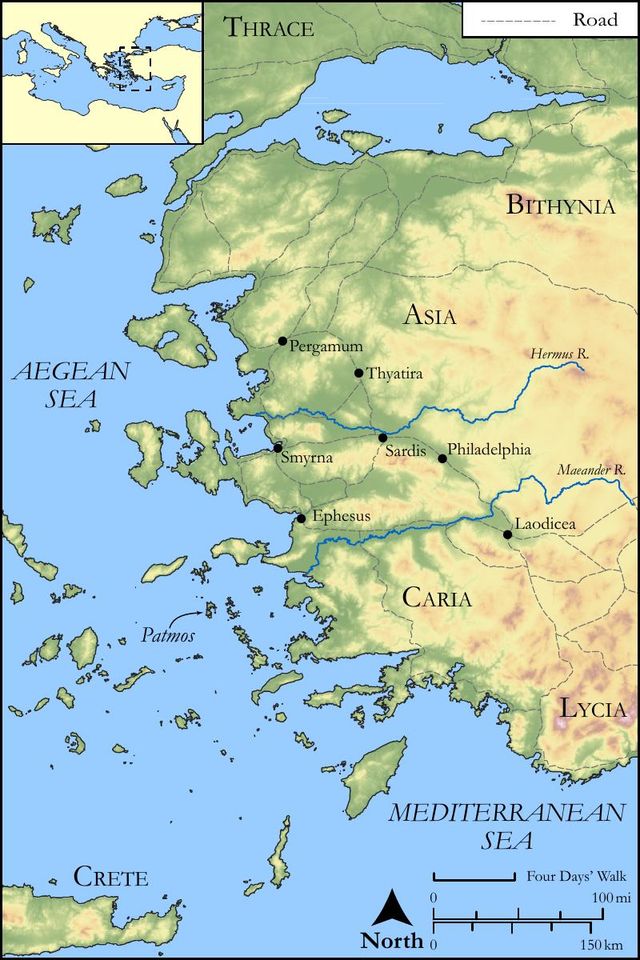
See on the biblical-era maps

Study this verse
Public-domain commentary
Matthew Henry
From his Commentary on the Whole Bible. Henry comments on passages, not single verses — this entry covers Revelation 19:11–21. His two-level outline is real structure in the source text, so it is rendered as structure.
No sooner was the marriage solemnized between Christ and his church by the conversion of the Jews than the glorious head and husband of the church is called out to a new expedition, which seems to be the great battle that was to be fought at Armageddon, foretold Rev 16:16. And here observe,
I.The description of the great Commander,
1.By the seat of his empire; and that is heaven; his throne is there, and his power and authority are heavenly and divine.
2.His equipage: he is again described as sitting on a white horse, to show the equity of the cause, and certainty of success.
3.His attributes: he is faithful and true to his covenant and promise, he is righteous in all his judicial and military proceedings, he has a penetrating insight into all the strength and stratagems of his enemies, he has a large and extensive dominion, many crowns, for he is King of kings, and Lord of lords.
4.His armour; and that is a vesture dipped in blood, either his own blood, by which he purchased this mediatorial power, or the blood of his enemies, over whom he has always prevailed.
5.His name: The Word of God, a name that none fully knows but himself, only this we know, that this Word was God manifest in the flesh; but his perfections are incomprehensible by any creature.
II.The army which he commands (Rev 19:14), a very large one, made up of many armies; angels and saints followed his conduct, and resembled him in their equipage, and in their armour of purity and righteousness - chosen, and called, and faithful.
III.The weapons of his warfare - A sharp sword proceeding from his mouth (Rev 19:15), with which he smites the nations, either the threatenings of the written word, which now he is going to execute, or rather his word of command calling on his followers to take a just revenge on his and their enemies, who are now put into the wine-press of the wrath of God, to be trodden under foot by him.
IV.The ensigns of his authority, his coat of arms - a name written on his vesture and thigh, King of kings, and Lord of lords, asserting his authority and power, and the cause of the quarrel, Rev 19:16.
V.An invitation given to the fowls of heaven, that they should come and see the battle, and share in the spoil and pillage of the field (Rev 19:17, Rev 19:18), intimating that this great decisive engagement should leave the enemies of the church a feast for the birds of prey, and that all the world should have cause to rejoice in the issue of it.
VI.The battle joined.
The enemy falls on with great fury, headed by the beast, and the kings of the earth; the powers of earth and hell gathered, to make their utmost effort, Rev 19:19.
VII.The victory gained by the great and glorious head of the church:
The beast and the false prophet, the leaders of the army, are taken prisoners, both he who led them by power and he who led them by policy and falsehood; these are taken and cast into the burning lake, made incapable of molesting the church of God any more; and their followers, whether officers or common soldiers, are given up to military execution, and made a feast for the fowls of heaven. Though the divine vengeance will chiefly fall upon the beast, and the false prophet, yet it will be no excuse to those who fight under their banner that they only followed their leaders and obeyed their command; since they would fight for them, they must fall and perish with them. Be wise now therefore, O you kings, be instructed, you rulers of the earth; kiss the Son, lest he be angry, and you perish from the way, Psa 2:10, Psa 2:12.
Historical interpretation
Four Centuries of Reception
10 surviving comments on this verse. Each one is dated, so this reads as a timeline rather than a list.
Select a marker to jump to its quote. Markers stagger vertically where authors wrote within a few decades of each other.
[The angel in the sun] is the preaching that takes place in the church.… Depending on the context, we interpret birds or beasts to represent the good or the wicked. For example, “The wild beast will bless me,” or, “The Lion from the tribe of Judah.” In the present passage the birds flying in mid-heaven are the churches that, being considered as one body, it had said was an eagle flying in mid-heaven.
We know that this in fact happens in the church. For when all nations are incorporated in the church, they are spiritually devoured. Indeed, those who have been devoured by the devil become the body of the devil, while those who have been received by the church are made to be members of Christ.
The angel refers to the church in her preaching. Rightly it adds “one,” for “my dove is only one.” In this manner the mystery of unity is preserved. [The angel] is “in the sun,” where it may be already brightly visible and not further hidden because of fear. “And with a loud voice it called out.” In the loud voice we recognize the liberty of a great trust.… In some contexts birds are interpreted by the qualities of evil birds, in other contexts they are interpreted by the qualities of good birds. As earlier the form of an eagle in flight was mentioned, so in this passage those who are spiritual are invited to the feast. Peter, who bore the image of the present church, was told of this feast when it was said to him, “Kill and eat.” Since they kill what they had been so that they might become what he is, that is, faithful, they are transformed into the body of the church, and having been planted with the members of the Christ, they reign with them. For whatever we eat, we bring over into our body.
He saw an angel standing upon the sun. The sun upon which this angel is standing is the Faith of the catholic church. Concerning this angel also Daniel spoke as follows: “At that time shall arise Michael, the great prince who stands before the sons of your people.” For just as then this holy archangel stood in the sight of God on behalf of the sons of the ancient people, so now he unceasingly intervenes for the people of the whole catholic church. “And there shall be a time, such as never has been since there was a nation till that time.” In the Revelation the holy John says that in that time the birds of the earth shall gather to consume the bodies of the impious.
That will of God is to be regarded as foremost which is called both his “good pleasure” and the supper most desired by him, namely, that “people be saved and come to the knowledge of the truth” and that they turn and live. But second, it is his will that those who have trusted in themselves suffer punishment. Therefore, Christ said that his food was the will of the Father. In this passage he calls this the “supper of God,” since each of those who are present desired through their works either the supper of the kingdom or the supper of torment. Through the eating of flesh it indicates the destruction of everything fleshly and the end of kings and rulers on the earth. It mentions horses, not because they will rise again, but through them it signifies either the excessive desire for women or those who have submitted to evil, or perhaps both. In the riders it symbolizes those who are especially wicked. A little further on it further clarifies, saying, “both free and slave, both great and small.” By the free and great it refers to those who sinned freely and willingly, and by the slave and small it indicates those who transgressed in a lesser manner, either because of their intent or because of their age or because of weakness.
We think that this angel is one of the highest of the angels and exhorts the others to rejoice over the punishment of the sinners and the cessation of sin. He has called the angels “birds” due to the exalted and sublime nature that they have in comparison with ours. In imitation of Christ, their food is the fulfilling of the divine will. They are “in mid-heaven” so that they might share their ascent and joy, just mentioned, with those people who are similar to the angels. For through their mediation there is a way up from the things below, and through them the saints “are caught up to meet the Lord.”
And I saw an angel standing in the sun, etc. That is, the proclamation in the Church, which the more it is oppressed, the more it shines clearly and resounds more freely.
Come, gather for the great supper of God, etc. Come, he says, those who hunger and thirst for righteousness (Matt. 5), to the feast of the coming kingdom, where, with the fury of the proud subdued, you may be satisfied with the light of divine justice.
Saying to all the birds, etc. He calls the saints birds, living in the life of heaven: Wherever the corpse is, there the eagles will gather (Matt. 24). Bringing them together into one body, he referred to them as an eagle flying in mid-heaven.
I believe this holy angel about whom the speech now is to be some sort of military herald of the divine host. And that he commands all the holy angels in heaven, whom he conventionally calls birds because of their elevation and ability to fly through the air, to share in the slaughter against the enemies; not that a single angel were unable to destroy the whole host of enemies, for that was clearly shown by him who in one night struck down one hundred and eighty-five thousand of the Assyrians (see 2 Kings 19:35), but so that all might become participants in the joy over the enemies. For I think he even says with the prophet, "Did I not hate those who hate you, O Lord, and was I not hostile to your enemies? I utterly hated them; they became enemies to me." (Ps. 139:21)
And when he commissioned the angels flying in midheaven, he himself also stood in midheaven and proclaimed; for the sun is set in the midst of the seven planets, having three above it and three below it. Either therefore this, or that the proclamation was made in the light as in a spirit, and he was speaking of the doom of those murders about to be, for the spirit is an intelligible light toward God, as the prophet teaches; and making his words a father and saying, "In your light we shall behold light," (Ps. 138:21-22) that is, we will see the Spirit in the Son.
Continue studying Revelation 19:17 across the web’s major study libraries — every link below opens this exact verse, chapter, or book on the destination site.
Read & Compare
 BibleGatewayThis verse in more than 200 translations and 70 languages.
 Bible.comThe YouVersion reader — hundreds of translations, reading plans, and highlights.
 ESV.orgCrossway's official English Standard Version reader.
 NET BibleThe NET translation with 60,000+ translators' notes on every rendering decision.
 STEP BibleTyndale House's free study tool — original text, vocabulary, and scholarly resources.
 BibliaLogos Bible Software's free web reader.
 USCCBThe New American Bible (Revised Edition) with the U.S. bishops' study notes.
Commentaries
 BibleHub CommentariesDozens of classic commentaries on this verse, gathered on one page.
 StudyLightMore than 100 commentary sets — the largest collection on the web.
 BibleRefPlain-English commentary on what this verse means, verse by verse.
 Enduring WordDavid Guzik's free commentary on this chapter, widely used by Bible teachers.
 Bible Study ToolsVerse commentary alongside Greek and Hebrew study aids.
Original Language & Research
- BibleHub InterlinearThe verse word by word — original language, transliteration, and English.
- BibleHub LexiconEvery word's original-language definition and Strong's entry.
 Blue Letter BibleDeep-study tools — Strong's numbers, concordance, and word studies.
 CNTR CollationThe earliest Greek manuscripts of this verse, collated letter by letter.
Sermons, Hymns & Audio


TrulyRandomVerse is not affiliated with these sites and doesn’t control their content. They’re linked because they’re genuinely useful.
Summary
Revelation 19:17 presents a stark and solemn vision of divine judgment, immediately following the joyous celebration of the Marriage Supper of the Lamb. John witnesses an angel standing prominently in the sun, crying out with a loud voice to all the scavenging birds in mid-heaven. This angelic summons invites them to "the supper of the great God," a gruesome feast of carrion resulting from the impending, decisive battle against God's enemies, underscoring the absolute certainty and comprehensive nature of God's final justice.
Context
ShowHideLiterary Context
This verse serves as a dramatic and chilling interlude in the climactic nineteenth chapter of Revelation. It immediately follows the glorious portrayal of the Marriage Supper of the Lamb and the triumphant return of Christ as the King of Kings and Lord of Lords. The shift from the joyous union of Christ and His bride to this grim summons for judgment is abrupt and intentional, highlighting the dual destinies awaiting humanity. Verse 17 sets the stage for the final confrontation where the Beast, the false prophet, and their armies are utterly defeated, their bodies becoming the "supper" for the fowls. This juxtaposition underscores the profound contrast between the blessedness of the redeemed and the terrifying fate of those who oppose God.
Historical & Cultural Context
The imagery of scavenging birds feasting on the slain is deeply rooted in the warfare and prophetic literature of Scripture. In Scripture, leaving bodies unburied for birds of prey is a profound dishonor and a sign of utter defeat and divine curse. It signified the complete obliteration of an enemy, denying them a proper burial and erasing their memory. This grim picture would have been immediately recognizable to John's original audience. Furthermore, the concept of a "feast" prepared by God for birds of prey echoes specific Old Testament prophecies of judgment, such as Ezekiel 39:17-20, which describes a similar scenario concerning the armies of Gog. The angel standing "in the sun" suggests a public, undeniable, and universally visible proclamation, indicating that this judgment is not hidden but openly declared and executed by divine authority.
Key Themes
ShowHideRevelation 19:17 powerfully contributes to several overarching themes within the book of Revelation and biblical theology. Firstly, it underscores the theme of Divine Judgment and Sovereignty, asserting God's absolute control over history and His unwavering commitment to justice. No opposition can withstand His ultimate power, and the wicked will face certain retribution. Secondly, the verse establishes a profound Contrast of Destinies, creating a stark parallel between the blessed Marriage Supper of the Lamb for the faithful and this horrifying "supper of the great God" for the ungodly. This duality emphasizes the critical importance of one's allegiance to Christ. Thirdly, it serves as a vivid depiction of the Eschatological Conflict, signaling the imminent and decisive defeat of all forces arrayed against God and His Christ. This prepares the reader for the final battle described in the subsequent verses of Revelation 19.
Exposition and Analysis
ShowHideKey Word Analysis
ShowHideThis primary verb (G1492) signifies not merely a casual glance but a direct, authoritative perception. John's use of "I saw" consistently throughout Revelation lends credibility and immediacy to his prophetic visions, emphasizing that these are not abstract ideas but divinely revealed realities. Here, it establishes the authenticity of the terrifying scene about to unfold.
The Greek word (G1173) refers to the chief meal, typically eaten in the evening. Its deliberate reuse here, having just appeared in the context of the Marriage Supper of the Lamb, creates a profound and terrifying irony. While one "supper" is a joyous celebration of union and salvation, this "supper" is a gruesome feast of judgment, where the bodies of the ungodly become the meal for scavenging birds, underscoring the absolute and horrifying finality of divine wrath.
This verb (G4863) means "to lead together" or "collect." In this context, it highlights the divinely orchestrated and purposeful nature of this grim assembly. The fowls are not just randomly appearing; they are summoned and gathered by divine command for a specific, dreadful purpose, emphasizing God's meticulous sovereignty even over the instruments of His judgment.
Verse Breakdown
ShowHide"And I saw an angel standing in the sun;"
John's vision begins with a striking image of an angel positioned prominently "in the sun." This placement is highly symbolic, indicating that the angel's message is not hidden but universally visible and proclaimed with divine authority. The sun, as the most powerful and visible celestial body, underscores the global reach and undeniable nature of the impending judgment. The angel acts as God's messenger, delivering a critical, public announcement.
"and he cried with a loud voice, saying to all the fowls that fly in the midst of heaven,"
The angel's "loud voice" signifies the urgency, importance, and far-reaching impact of his proclamation. It is a summons meant to be heard by all. The recipients of this call are "all the fowls that fly in the midst of heaven," specifically birds of prey. This detail immediately signals the gruesome nature of the "supper" to follow, as these birds are scavengers, indicating that the meal will consist of corpses. Their presence "in the midst of heaven" suggests their readiness to descend upon the earth.
"Come and gather yourselves together unto the supper of the great God;"
This is the direct, imperative invitation. The "supper of the great God" is a macabre inversion of a celebratory feast. It is a banquet of divine wrath, where the bodies of those who oppose God will be consumed. The phrase "of the great God" emphasizes the ultimate power, sovereignty, and holiness of the One orchestrating this judgment, ensuring its absolute certainty and overwhelming scale. It is God Himself who prepares this horrifying feast.
Literary Devices
ShowHideRevelation 19:17 is rich with Symbolism and Irony. The "angel standing in the sun" symbolizes the universal, undeniable, and divinely authorized nature of the proclamation. The "fowls that fly in the midst of heaven" are symbolic of scavenging birds of prey, representing the instruments of God's judgment and the utter dishonor and destruction awaiting His enemies. The central device is the profound Irony and Juxtaposition of the "supper of the great God" with the "Marriage Supper of the Lamb" described earlier in the chapter. Both are "suppers" (Greek deîpnon), but one is a feast of celebration and salvation, while the other is a feast of judgment and death. This stark contrast powerfully highlights the two ultimate destinies for humanity and the severity of God's justice. The scene also employs Hyperbole in its implied scale, suggesting an immense number of casualties to provide such a feast for "all the fowls." The angel's "loud voice" is a form of Auditory Imagery, emphasizing the forceful and public nature of the divine summons.
Theological and Thematic Connections
ShowHideRevelation 19:17 serves as a profound theological statement on the certainty and comprehensive nature of divine judgment. It underscores God's absolute sovereignty over all creation and all history, demonstrating that His justice will ultimately prevail against all rebellion. This "supper" is not a random act of violence but a divinely ordained consequence for those who have persistently rejected God's authority and opposed His Christ. It reveals God's holiness, which cannot tolerate unrighteousness indefinitely, and His power, which ensures that His will is perfectly executed. The verse also highlights the binary nature of ultimate human destiny: either participation in the blessed communion with Christ or consumption by the consequences of opposing Him. It is a stark reminder that God is not only a God of love and grace but also a God of righteous wrath and unyielding justice.
Reflection and Application
ShowHideRevelation 19:17 offers a solemn and sobering warning, compelling us to seriously consider the ultimate consequences of our choices and allegiances. It unequivocally declares that there will be a final, decisive judgment for those who align themselves against God and His Christ. This vision should instill a healthy fear of God, not as a tyrannical despot, but as the righteous and holy sovereign of the universe whose justice is as certain as His love. For believers, this verse reinforces the immense privilege and blessedness of being invited to the Marriage Supper of the Lamb, a destiny secured not by human merit but by God's grace through faith in Jesus Christ. It should deepen our gratitude for salvation and motivate us to live lives that honor God and share the Gospel message with urgency, knowing the alternative. This passage calls us to examine our hearts, ensuring our hope is firmly placed in Christ, for only then can we escape the terrifying "supper of the great God" and instead partake in the eternal feast of joy.
Questions for Reflection
ShowHideFAQ
ShowHideWhat is the significance of the angel standing "in the sun"?
ShowHideThe angel standing "in the sun" signifies the universal visibility and undeniable authority of the message being proclaimed. The sun is the most prominent and visible celestial body, ensuring that the angel's cry is seen and heard by all. It highlights that this judgment is not a hidden or secret event but a public, divinely orchestrated act, visible to all creation, underscoring the majesty and power of God in executing His final justice.
How does the "supper of the great God" relate to the "Marriage Supper of the Lamb"?
ShowHideThese two "suppers" (both using the Greek word deîpnon) are presented in stark, deliberate contrast within Revelation 19. The Marriage Supper of the Lamb is a joyous celebration of the union between Christ and His redeemed bride, representing salvation, communion, and eternal blessedness for those who have trusted in Him. In contrast, the "supper of the great God" is a gruesome feast of judgment, where scavenging birds consume the bodies of those who have opposed God and His Christ. It represents the ultimate, horrifying consequence of rebellion and the finality of divine wrath. The juxtaposition emphasizes the two ultimate and diametrically opposed destinies for humanity.
Are the "fowls" mentioned in the verse literal birds?
ShowHideYes, the "fowls" (Greek órneon) are literal scavenging birds of prey, such as vultures or ravens. However, their mention is highly symbolic and serves a specific theological purpose. In biblical prophecy (e.g., Ezekiel 39:17-20), birds feasting on unburied corpses signified utter defeat, dishonor, and divine curse upon the slain. Thus, while literal birds are involved, their role vividly illustrates the complete and public nature of God's judgment upon His enemies, leaving no doubt about the finality of their destruction.
Christ-Centered Fulfillment
ShowHideRevelation 19:17, while a scene of terrifying judgment, finds its ultimate Christ-centered fulfillment in the person and work of Jesus Christ. It is Christ, the Lamb who was slain, who now returns as the King of Kings and Lord of Lords, riding forth to execute this very judgment. The "supper of the great God" is the direct consequence of humanity's rejection of the gracious invitation to the Marriage Supper of the Lamb, an invitation made possible only through Christ's atoning sacrifice on the cross. His first advent was one of grace and salvation, but His second advent, as depicted in Revelation 19:11-16, is one of righteous judgment against those who refused His saving offer. The authority to summon the fowls and orchestrate this final, gruesome feast rests squarely on the shoulders of the resurrected Christ, to whom all authority in heaven and on earth has been given. This judgment ultimately vindicates Christ's suffering, establishes His righteous reign, and demonstrates His absolute victory over all forces of evil, fulfilling prophecies that depict Him as both Savior and Judge (John 5:22-27).