


Numbers 16:14
- אַף'afalsoH637PrtParticle Interjection
- לֹאlo'notH3808NegParticle Negative
- אֶל'elintoH413PrepPreposition
- אֶרֶץ'e·Retza landH776N-fsNoun Singular Feminine Absolute
- זָבַתza·Vatflowing ofH2100V-Qal-Prtcpl-fsVerb Qal Participle Singular Feminine Construct
- חָלָבcha·LavmilkH2461N-msNoun Singular Masculine Absolute
- וּדְבַשׁu·de·Vashand honeyH1706Conj-w ¦ N-msNoun Singular Masculine Absoluteוּandדְבַשׁhoney
- הֲבִיאֹתָנוּha·Vi·'o·Ta·nuyou have brought usH935V-Hiphil-Perf-2ms ¦ 1cpVerb Hiphil Perfect 2nd Singular Masculineהֲבִיאֹתָyou have broughtנוּus
- וַתִּתֶּןva·Ti·tenand you have givenH5414Conj-w ¦ V-Qal-ConsecImperf-2msVerb Qal Consecutive Imperfect 2nd Singular Masculineוַandתִּתֶּןyou have given
- לָנוּLa·nuto <the> usPrep-l ¦ 1cpSuffix Personal 1st Plural common genderלָto <the>נוּus
- נַחֲלַתna·cha·Latan inheritance ofH5159N-fscNoun Singular Feminine Construct
- שָׂדֶהsa·DehfieldH7704N-msNoun Singular Masculine Absolute
- וָכָרֶםva·Kha·remand vineyardH3754Conj-w ¦ N-msNoun Singular Masculine Absoluteוָandכָרֶםvineyard
- הַעֵינֵיha·'ei·Nei¿ [the] eyes ofH5869Interrog ¦ N-fdcNoun Dual Feminine Constructהַ¿עֵינֵי[the] eyes of
- הָאֲנָשִׁיםha·'a·na·Shimthe menH582Art ¦ N-mpNoun Plural Masculine Absoluteהָtheאֲנָשִׁיםmen
- הָהֵםha·Hem<the> thoseH1992Art ¦ Pro-3mpPronoun Personal 3rd Plural Masculineהָ<the>הֵםthose
- תְּנַקֵּרte·na·Kerwill you put outH5365V-Piel-Imperf-2msVerb Piel Imperfect 2nd Singular Masculine
- לֹאlo'notH3808NegParticle Negative
- נַעֲלֶהna·'a·Lehwe will come upH5927V-Qal-Imperf-1cpVerb Qal Imperfect 1st Plural common gender
English is a literal word-by-word gloss of the Hebrew, not the KJV's wording. Why?
This is the original text the KJV's translators worked from — each Hebrew word with its own literal English meaning in this verse, prepared by scholars at Tyndale House, Cambridge. The KJV translates whole sentences, not word by word, so its wording differs: one Hebrew word can become several English words, and the KJV may choose “the LORD” where the gloss reads “Yahweh”. Both are faithful — they answer different questions. For the KJV's own rendering, switch to the KJV text.
Details
See on the biblical-era map
Study this verse
Public-domain commentary
Matthew Henry
From his Commentary on the Whole Bible. Henry comments on passages, not single verses — this entry covers Numbers 16:12–22. His three-level outline is real structure in the source text, so it is rendered as structure.
Here is, I. The insolence of Dathan and Abiram, and their treasonable remonstrance. Moses had heard what Korah had to say, and had answered it; now he summons Dathan and Abiram to bring in their complaints (Num 16:12); but they would not obey his summons, either because they could not for shame say that to his face which they were resolved to say, and then it is an instance of some remains of modesty in them; or, rather, because they would not so far own his authority, and then it is an instance of the highest degree of impudence. They spoke the language of Pharaoh himself, who set Moses at defiance, but they forgot how dearly he paid for it. Had not their heads been wretchedly heated, and their hearts hardened, they might have considered that, if they regarded not these messengers, Moses could soon in God's name send messengers of death for them. But thus the God of this world blinds the minds of those that believe not. But by the same messengers they send their articles of impeachment against Moses; and the charge runs very high. 1. They charge him with having done them a great deal of wrong in bringing them out of Egypt, invidiously calling that a land flowing with milk and honey, Num 16:13. Onions, and garlick, and fish, they had indeed plenty of in Egypt, but it never pretended to milk and honey; only they would thus banter the promise of Canaan. Ungrateful wretches, to represent that as an injury to them which was really the greatest favour that ever was bestowed upon any people! 2. They charge him with a design upon their lives, that he intended to kill them in the wilderness, though they were so well provided for. And, if they were sentenced to die in the wilderness, they must thank themselves. Moses would have healed them, and they would not be healed. 3. They charge him with a design upon their liberties, that he meant to enslave them, by making himself a prince over them. A prince over them! Was he not a tender father to them? nay, their devoted servant for the Lord's sake? Had they not their properties secured, their order preserved, and justice impartially administered? Did they not live in ease and honour? And yet they complain as if Moses's yoke were heavier than Pharaoh's. And did Moses make himself a prince? Far from it. How gladly would he have declined the office at first! How gladly would he have resigned it many a time since! And yet he is thus put under the blackest characters of a tyrant and a usurper. 4. They charge him with cheating them, raising their expectations of a good land, and then defeating them (Num 16:14): Thou hast not brought us, as thou promisedst us, into a land that floweth with milk and honey; and pray whose fault was that? He had brought them to the borders of it, and was just ready, under God, to put them in possession of it; but they thrust it away from them, and shut the door against themselves; so that it was purely their own fault that they were not now in Canaan, and yet Moses must bear the blame. Thus when the foolishness of man perverteth his way his heart fretteth against the Lord, Pro 19:3. 5. They charge him in the general with unfair dealing, that he put out the eyes of these men, and then meant to lead them blindfold as he pleased. The design of all he did for them was to open their eyes, and yet they insinuate that he intended to put out their eyes, that they might not see themselves imposed upon. Note, The wisest and best cannot please every body, nor gain the good word of all. Those often fall under the heaviest censures who have merited the highest applause. Many a good work Moses had shown them from the Father, and for which of these do they reproach him?
II.Moses's just resentment of their insolence, Num 16:15.
Moses, though the meekest man, yet, finding God reproached in him, was very wroth; he could not bear to see a people ruining themselves for whose salvation he had done so much. In this discomposure,
1.He appeals to God concerning his own integrity; whereas they basely reflected upon him as ambitious, covetous, and oppressive, in making himself a prince over them, God was his witness,
(1.)That he never got any thing by them: I have not taken one ass from them, not only not by way of bribery and extortion, but not by way of recompence or gratuity for all the good offices he had done them; he never took the pay of a general, or the salary of a judge, much less the tribute of a prince. He got more in his estate when he kept Jethro's flock than when he came to be king in Jeshurun.
(2.)That they never lost any thing by him: Neither have I hurt any one of them, no, not the least, no, not the worst, no, not those that had been most peevish and provoking to him: he never abused his power to the support of wrong. Note, Those that have never blemished themselves need not fear being slurred by others: when men condemn us we may be easy, if our own hearts condemn us not.
2.He begs of God to plead his cause, and clear him, by showing his displeasure at the incense which Korah and his company were to offer, with whom Dathan and Abiram were in confederacy. Lord, says he, Respect not thou their offering. Herein he seems to refer to the history of Cain, lately written by his own hand, of whom it is said that to him and his offering God had not respect, Gen 4:5. These that followed the gainsaying of Korah walked in the way of Cain (these are put together, Jde 1:11), and therefore he prays that they might be frowned upon as Cain was, and put to the same confusion.
III.Issue joined between Moses and his accusers.
1.Moses challenges them to appear with Aaron next morning, at the time of offering up the morning incense, and refer the matter to God's judgment, Num 16:16, Num 16:17. Since he could not convince them by his calm and affectionate reasoning, he is ready to enter into bonds to stand God's award, not doubting but that God would appear, to decide the controversy. This reference he had agreed to before (Num 16:6, Num 16:7), and here adds only one clause, which bespeaks his great condescension to the plaintiffs, that Aaron, against whose advancement they excepted, though now advanced by the divine institution to the honour of burning incense within the tabernacle, yet, upon this trial, should put himself into the place of a probationer, and stand upon the level with Korah, at the door of the tabernacle; nay, and Moses himself would stand with them, so that the complainant shall have all the fair dealing he can desire; and thus every mouth shall be stopped.
2.Korah accepts the challenge, and makes his appearance with Moses and Aaron at the door of the tabernacle, to make good his pretensions, Num 16:18, Num 16:19. If he had not had a very great stock of impudence, he could not have carried on the matter thus far. Had not he lately seen Nadab and Abihu, the consecrated priests, struck dead for daring to offer incense with unhallowed fire? and could he and his accomplices expect to fare any better in offering incense with unhallowed hands? Yet, to confront Moses and Aaron, in the height of his pride he thus bids defiance to Heaven, and pretends to demand the divine acceptance without a divine warrant; thus wretchedly is the heart hardened through the deceitfulness of sin. They took every man his censer. Perhaps these were some of the censers which these heads of families had made use of at their family-altars, before this part of religious service was confined to the priesthood and the altar in the tabernacle (and they would bring them into use and reputation again); or they might be common chafing-dishes, which were for their ordinary use. Now to attend the solemn trial, and to be witness of the issue, one would have thought Moses should have gathered the congregation against the rebels, but it seems Korah gathered them against Moses (Num 16:19), which intimates that a great part of the congregation sided with Korah, were at his beck, and wished him success, and that Korah's hopes were very high of carrying the point against Aaron; for, had he suspected the event, he would not have coveted to make the trial thus public: but little did he think that he was now calling the congregation together to be the witnesses of his own confusion! Note, Proud and ambitious men, while they are projecting their own advancement, often prove to have been hurrying on their own shameful fall.
IV.The judgment set, and the Judge taking the tribunal, and threatening to give sentence against the whole congregation.
1.The glory of the Lord appeared, Num 16:19. The same glory that appeared to instal Aaron in his office at first (Lev 9:23) now appeared to confirm him in it, and to confound those that oppose him, and set up themselves in competition with him. The shechinah, or divine Majesty, the glory of the eternal Word, which ordinarily dwelt between the cherubim within the veil, now was publicly seen over the door of the tabernacle, to the terror of the whole congregation; for, though they saw no manner of similitude, yet probably the appearances of the light and fire were such as plainly showed God to be angry with them; as when he appeared, Num 14:10. Nothing is more terrible to those who are conscious of guilt than the appearances of divine glory; for such a glorious Being must needs be a formidable enemy.
2.God threatened to consume them all in a moment, and, in order to that, bade Moses and Aaron stand from among them, Num 16:21. God thus showed what their sin deserved, and how very provoking it was to him. See what a dangerous thing it is to have fellowship with sinners, and in the least to partake with them. Many of the congregation, it is likely, came only for company, following the crowd, or for curiosity, to see the issue, yet not coming, as they ought to have done, to bear their testimony against the rebels, and openly to declare for God and Moses, they had like to have been all consumed in a moment. If we follow the herd into which the devil has entered, it is at our peril.
V.The humble intercession of Moses and Aaron for the congregation, Num 16:22.
1.Their posture was importuning: they fell on their faces, prostrating themselves before God, as supplicants in good earnest, that they might prevail for sparing mercy. Though the people had treacherously deserted them, and struck in with those that were in arms against them, yet they approved themselves faithful to the trusts reposed in them, as shepherds of Israel, who were to stand in the breach when they saw the flock in danger. Note, If others fail in their duty to us, this does not discharge us from our duty to them, nor take off the obligations we lie under to seek their welfare.
2.Their prayer was a pleading prayer, and it proved a prevailing one. Now God would have destroyed them if Moses had not turned away his wrath (Psa 106:23); yet far be it from us to imagine that Moses was more considerate or more compassionate than God in such a case as this: but God saw fit to show his just displeasure against the sin of sinners by the sentence, and at the same time to show his gracious condescension to the prayers of the saints, by the revocation of the sentence at the intercession of Moses. Observe in the prayer,
(1.)The title they give to God: The God of the spirits of all flesh. See what man is; he is a spirit in flesh, a soul embodied, a creature wonderfully compounded of heaven and earth. See what God is; he is the God of the spirits of all mankind. He forms the spirit, Zac 12:1. He fathers it, Heb 12:9. He has an ability to fashion it (Psa 33:15), and authority to dispose of it, for he has said, All souls are mine, Eze 18:4. They insinuate hereby that though, as the God of the spirits of all flesh, he might in sovereignty consume this congregation in a moment, yet it was to be hoped that he would in mercy spare them, not only because they were the work of his own hands, and he had a propriety in them, but because, being the God of spirits, he knew their frame, and could distinguish between the leaders and the led, between those who sinned maliciously and those who were drawn in by their wiles, and would make a difference accordingly in his judgments.
(2.)The argument they insist on; it is much the same with that which Abraham urged in his intercession for Sodom (Gen 18:23): Wilt thou destroy the righteous with the wicked? Such is the plea here: Shall one man sin and wilt thou be wroth with all the congregation? Not but that it was the sin of them all to join in this matter, but the great transgression was his that first hatched the treason. Note, Whatever God may do in sovereignty and strict justice, we have reason to hope that he will not destroy a congregation for the sin of one, but that, righteousness and peace having kissed each other in the undertaking of the Redeemer, mercy shall rejoice against judgment. Moses knew that all the congregation must perish in the wilderness by degrees, yet he is thus earnest in prayer that they might not be consumed at once, and would reckon it a favour to obtain a reprieve. Lord, let it alone this year.
Continue studying Numbers 16:14 across the web’s major study libraries — every link below opens this exact verse, chapter, or book on the destination site.
Read & Compare
 BibleGatewayThis verse in more than 200 translations and 70 languages.
 Bible.comThe YouVersion reader — hundreds of translations, reading plans, and highlights.
 ESV.orgCrossway's official English Standard Version reader.
 NET BibleThe NET translation with 60,000+ translators' notes on every rendering decision.
 STEP BibleTyndale House's free study tool — original text, vocabulary, and scholarly resources.
 BibliaLogos Bible Software's free web reader.
 USCCBThe New American Bible (Revised Edition) with the U.S. bishops' study notes.
Commentaries
 BibleHub CommentariesDozens of classic commentaries on this verse, gathered on one page.
 StudyLightMore than 100 commentary sets — the largest collection on the web.
 BibleRefPlain-English commentary on what this verse means, verse by verse.
 Enduring WordDavid Guzik's free commentary on this chapter, widely used by Bible teachers.
 Bible Study ToolsVerse commentary alongside Greek and Hebrew study aids.
Original Language & Research
- BibleHub InterlinearThe verse word by word — original language, transliteration, and English.
- BibleHub LexiconEvery word's original-language definition and Strong's entry.
 Blue Letter BibleDeep-study tools — Strong's numbers, concordance, and word studies.
 SefariaThe Hebrew text with Rashi and centuries of Jewish commentary.
Sermons, Hymns & Audio


TrulyRandomVerse is not affiliated with these sites and doesn’t control their content. They’re linked because they’re genuinely useful.
Summary
Numbers 16:14 encapsulates the escalating rebellion of Dathan and Abiram, who, in concert with Korah, defiantly refuse Moses' summons. They hurl accusations of failed leadership, asserting Moses has not delivered them into the promised land of abundance nor granted them tangible inheritance, while cynically implying he seeks to deceive them. This verse powerfully illustrates their profound unbelief, ingratitude, and outright rejection of God's divinely appointed authority, setting the stage for the swift and severe divine judgment that follows.
Context
ShowHideLiterary Context
This verse is a pivotal moment within the dramatic and tragic narrative of Korah's rebellion, detailed in Numbers 16. Immediately prior, Moses, having heard of the challenge to his and Aaron's God-given authority, dispatches a summons to Dathan and Abiram, key Reubenite conspirators, aiming to confront their defiance directly. Their response in Numbers 16:12-14 is not merely a refusal to appear, but a venomous tirade of accusations against Moses. This outright insubordination elevates the conflict from murmuring and grumbling, which had been a recurring issue since the Exodus, to open rebellion against God's chosen leader and, by extension, against God Himself. This defiant stance irrevocably sets the stage for the unprecedented and severe divine judgment that swiftly follows, underscoring the perilous consequences of challenging God's established order and His appointed instruments.
Historical & Cultural Context
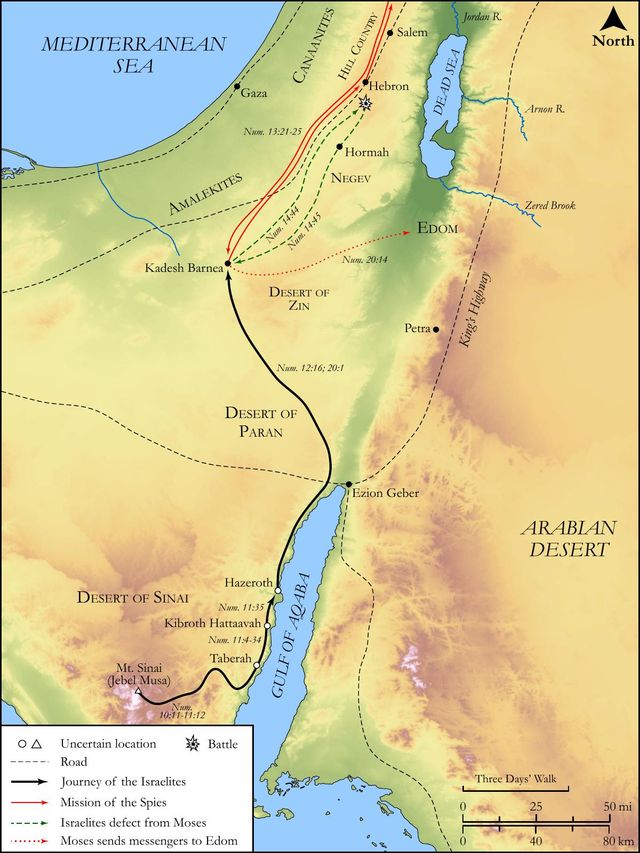
The Israelites, at this point, are deep in their wilderness wanderings, decades removed from their liberation from Egyptian bondage, yet still short of the Promised Land. The generation that exited Egypt, with the notable exceptions of Caleb and Joshua, has been condemned to perish in the wilderness due to their persistent unbelief and repeated acts of rebellion, most significantly after the incident at Kadesh Barnea, as recounted in Numbers 14. The "land that floweth with milk and honey" was not merely a geographical location but the quintessential symbol of God's covenantal promise of abundance, fertility, and divine blessing, standing in stark contrast to the harsh, barren wilderness. Dathan and Abiram's complaint strategically weaponizes this unfulfilled promise—a delay caused by their own generation's sin, not Moses' failure—to fuel their rebellion. The rhetorical question, "wilt thou put out the eyes of these men?", is a well-attested ancient Near Eastern idiom. It does not refer to physical blinding, but rather to an attempt to deceive, mislead, or prevent someone from perceiving the truth. It conveys a cynical accusation that Moses is attempting to manipulate them into believing his leadership is beneficial or legitimate, while they perceive it as oppressive, deceptive, and ultimately unfulfilling.
Key Themes
ShowHideThis verse serves as a potent microcosm of several critical themes woven throughout the book of Numbers. Firstly, it starkly highlights the severe danger and consequences of rebellion against God-appointed authority. Dathan and Abiram's direct defiance of Moses, God's chosen leader, mirrors and intensifies the broader challenge to divine order and leadership seen throughout Numbers 16. Secondly, the verse vividly exemplifies the distortion of truth and the pervasive act of blame-shifting. The rebels accuse Moses of failing to deliver the Promised Land, conveniently ignoring that their own generation's unbelief, grumbling, and direct disobedience were the actual, divinely ordained causes of their protracted wilderness wandering and exclusion from Canaan (Numbers 14:23). Thirdly, it underscores profound ingratitude and deep-seated discontent. Dathan and Abiram fixate solely on perceived unfulfilled promises, specifically the "inheritance of fields and vineyards," while entirely disregarding God's miraculous, daily provision of manna, water, and His guiding presence amidst them (Numbers 9:15-23). Finally, their cynical rhetorical question about "putting out eyes" reveals a deep-seated unbelief and a cynical accusation of deception leveled against Moses, contrasting sharply with Moses' transparent, faithful, and often self-sacrificing leadership, and foreshadowing the inevitable divine judgment awaiting those who willfully challenge God's truth and authority.
Exposition and Analysis
ShowHideKey Word Analysis
ShowHideThis iconic phrase (H2461 and H1706), recurring throughout the Pentateuch, is a powerful symbol of the fertility, abundance, and divine blessing promised for the land of Canaan. "Milk" (H2461, châlâb) refers to the richness of dairy, while "honey" (H1706, dᵉbash) signifies the sweetness and bounty of the land's produce, often referring to date syrup or wild honey. It represents God's covenantal promise of a rich, settled inheritance for His people, a stark contrast to the barren wilderness. Dathan and Abiram's bitter use of this phrase here is a direct accusation, implying Moses has utterly failed to deliver on this fundamental divine promise, thereby twisting the divine intention and conveniently ignoring their own culpability for the delay.
This vivid idiom (H5365, nâqar, meaning "to bore/pierce/put out," and H5869, ʻayin, meaning "eye") signifies to blind someone to the truth, to deceive, or to manipulate. It does not refer to physical blinding but to intellectual or spiritual obfuscation. The rebels are sarcastically implying that Moses believes he can fool them into thinking he has delivered on his promises, or that he is leading them correctly, when they perceive him as a trickster or deceiver. It reflects their profound distrust, contempt, and cynical view of Moses' leadership, believing he is attempting to obscure their vision of the "truth" as they see it.
The verb (H5927, ʻâlâh) literally means "to ascend," "to go up," or "to mount." In this specific context, "we will not come up" signifies a defiant refusal to obey Moses' summons to appear before him. It is an act of open insubordination and a direct rejection of his authority. This refusal demonstrates their complete unwillingness to engage in any form of reconciliation, accountability, or even dialogue, highlighting the depth of their rebellion and their unwavering commitment to their rebellious course, making any further negotiation or resolution impossible.
Verse Breakdown
ShowHide"Moreover thou hast not brought us into a land that floweth with milk and honey"
This clause forms the core of Dathan and Abiram's primary accusation. It is a direct, bitter charge against Moses for his perceived failure to fulfill the foundational promise of the Exodus—the entry into the Promised Land. Crucially, they conveniently ignore the fact that their own generation's persistent unbelief, repeated grumbling, and direct rebellion, particularly their refusal to enter Canaan at Kadesh Barnea as recounted in Numbers 14, were the actual, divinely ordained reasons for their prolonged wilderness wandering and the delay in entering the land. They thus completely shift the blame for their predicament from their own sin and God's just judgment onto Moses.
"or given us inheritance of fields and vineyards"
This clause provides specific, tangible details of the promised land's abundance that the rebels feel deprived of. "Fields and vineyards" represent the settled, prosperous agricultural life, permanent dwelling, and secure homeland that the wilderness journey inherently lacked. This highlights their deeply materialistic focus and their profound discontent with their current nomadic existence, despite God's miraculous and consistent provision of manna, quail, and water throughout their journey. It underscores their spiritual blindness to God's daily faithfulness.
"wilt thou put out the eyes of these men?"
This rhetorical question is a sarcastic, accusatory, and deeply cynical challenge directed at Moses. It implies that Moses is attempting to deceive them, to blind them to the harsh reality of their situation (as they perceive it), or to manipulate them into believing his false promises and leadership. This question reveals their profound distrust and contempt for Moses, portraying him not as God's faithful servant but as a cunning trickster who seeks to exploit their vulnerability. It's an accusation of calculated deception.
"we will not come up."
This short, emphatic, and decisive declaration is the climactic act of their defiance. Moses had specifically summoned them to appear before him (Numbers 16:12), likely to reason with them, to bring them to account, or to offer a chance for repentance. Their blunt refusal is an open act of insubordination, a complete and unequivocal rejection of Moses' authority as God's appointed leader. This statement signals their unyielding commitment to their rebellious course, making any further negotiation, reconciliation, or peaceful resolution utterly impossible.
Literary Devices
ShowHideNumbers 16:14 employs several potent literary devices to convey the profound depth of Dathan and Abiram's rebellion and their hardened hearts. The most prominent is the Rhetorical Question, "wilt thou put out the eyes of these men?" This question is not posed with any expectation of an answer but is designed to make a forceful, sarcastic accusation, implying Moses' attempts at deception and manipulation. There is profound Irony embedded within their accusations; they accuse Moses of failing to bring them into the land and of trying to blind them to the truth, when in reality, their own persistent unbelief, grumbling, and rebellion are the true impediments to entering Canaan, and their spiritual "eyes" are blinded by pride, self-interest, and deep-seated discontent. The phrase "land that floweth with milk and honey" functions as a powerful Metonymy or Symbolism, representing the entirety of God's covenantal promises of abundance, blessing, security, and a settled homeland. Their complaint leverages this cherished symbol to highlight their perceived deprivation and Moses' supposed failure. Furthermore, the entire statement can be seen as a form of Hyperbole, an exaggerated and disproportionate complaint that disregards God's miraculous and consistent provision in the wilderness, and Moses' faithful, albeit challenging, leadership.
Theological and Thematic Connections
ShowHideThis verse serves as a profound theological warning against the insidious dangers of human rebellion against divine authority and the destructive power of unbelief. Dathan and Abiram's accusations are not merely personal attacks against Moses; they are, implicitly, direct challenges to God Himself, who sovereignly appointed Moses and made the very promises of the land. Their deep discontent highlights the pervasive human tendency to blame others for self-inflicted consequences and to focus myopically on perceived lack rather than acknowledging God's unwavering faithfulness and miraculous provision. The passage underscores that true spiritual blindness often stems from a hardened heart, a willful refusal to accept God's sovereign plan or His chosen instruments, ultimately leading to catastrophic judgment. It reveals how quickly ingratitude can fester into open defiance, jeopardizing not only individual lives but the spiritual and physical well-being of the entire community. This rebellion against God's established order is a recurring theme demonstrating the severe consequences of rejecting divine leadership.
Reflection and Application
ShowHideNumbers 16:14 offers timeless and sobering lessons for believers today, serving as a stark reminder of the perils inherent in a rebellious spirit and the paramount importance of spiritual discernment. It challenges us to honestly examine our own hearts for any latent seeds of discontent, ingratitude, or even cynicism, especially when our circumstances are difficult, our prayers seem unanswered, or God's promises appear delayed. Are we quick to blame others, or even God Himself, for our own choices, our spiritual stagnation, or the consequences of communal sin? The passage profoundly urges humility, a spirit of teachability, and a willingness to submit to God-ordained authority, recognizing that challenging leadership without just cause, particularly when rooted in pride, envy, or self-interest, can have devastating spiritual and relational consequences. It calls us to cultivate a spirit of enduring faith and patient endurance, trusting in God's perfect timing and His unwavering faithfulness, even when our immediate desires for "fields and vineyards"—our earthly comforts or aspirations—are not yet realized. Ultimately, this verse compels us to vigilantly guard against the spiritual blindness that prevents us from truly seeing God's hand at work, His faithful provision, and His sovereign plan, even amidst the challenging and seemingly barren wilderness seasons of our lives.
Questions for Reflection
ShowHideFAQ
ShowHideWhy did Dathan and Abiram specifically mention "milk and honey" and "fields and vineyards" in their complaint?
ShowHideDathan and Abiram mentioned "milk and honey" and "fields and vineyards" because these phrases represent the quintessential promises of abundance, fertility, and settled life in the Promised Land, Canaan. The "land flowing with milk and honey" (Exodus 3:8) was not just a geographic description but the primary symbol of God's covenant blessing, prosperity, and the ultimate goal of their liberation from Egypt. By accusing Moses of failing to bring them into such a land and provide "inheritance of fields and vineyards," they were highlighting their deep discontent with the current wilderness existence and implying that Moses had utterly failed to deliver on the most fundamental promise of their Exodus. This accusation was a direct challenge to Moses' leadership and, by extension, to God's faithfulness, leveraging the people's deep longing for a secure and prosperous home. They were using the very language of God's promise to accuse His appointed leader of failure, despite their own rebellion being the cause of the delay.
Christ-Centered Fulfillment
ShowHideNumbers 16:14, with its stark depiction of rebellion against God's appointed leader and the rejection of a promised inheritance, finds profound Christ-centered fulfillment and resonance in the New Testament. Just as Dathan and Abiram defiantly rejected Moses, God's chosen prophet and deliverer, so too did the people of Israel, and indeed humanity at large, ultimately reject Jesus, the greater Moses and the true prophet sent from God (Deuteronomy 18:15). They accused Him of blasphemy, twisted His words, and refused to "come up" to His gracious call for repentance and faith, much as the rebels refused Moses' summons. Yet, unlike the temporal land of milk and honey, which was but a shadow of future realities, Christ offers the true spiritual inheritance—eternal life and a heavenly kingdom that "flows with milk and honey" in the sense of abundant spiritual blessings, everlasting peace, and an imperishable dwelling with God (Ephesians 1:3; Hebrews 12:22-24). The rebellion against Moses foreshadows humanity's universal rebellion against God's ultimate authority embodied in Christ, who was "despised and rejected by mankind" (Isaiah 53:3). However, for those who, unlike Dathan and Abiram, do not "put out their eyes" but rather open them to see and believe in Him, Jesus leads them not merely to a temporal land, but to a spiritual inheritance that is imperishable, undefiled, and unfading, securely kept in heaven (1 Peter 1:4), a fulfillment far surpassing any earthly promise.