


Luke 16:1
- ἜλεγενElegenHe was sayingG3004V-IAI-3SVerb Imperfect Active Indicative 3rd Singular
- δὲdenowG1161CONJConjunction
- καὶkaialsoG2532CONJConjunction
- πρὸςprostoG4314PREPPreposition
- τοὺςtoustheG3588T-APMDefinite article Accusative Plural Masculine
- μαθητάςmathētasdisciplesG3101N-APMNoun Accusative Plural Masculine
- αὐτοῦ·autouof himG846P-GSMPersonal pronoun Genitive Singular Masculine
- ἄνθρωπόςanthrōposA manG444N-NSMNoun Nominative Singular Masculine
- τιςtiscertainG5100X-NSMIndefinite pronoun Nominative Singular Masculine
- ἦνēnthere wasG1510V-IAI-3SVerb Imperfect Active Indicative 3rd Singular
- πλούσιοςplousiosrichG4145A-NSMAdjective Nominative Singular Masculine
- ὃςhoswhoG3739R-NSMRelative pronoun Nominative Singular Masculine
- εἶχενeichenhadG2192V-IAI-3SVerb Imperfect Active Indicative 3rd Singular
- οἰκονόμονoikonomona managerG3623N-ASMNoun Accusative Singular Masculine
- καὶkaiandG2532CONJConjunction
- οὗτοςhoutosheG3778D-NSMDemonstrative pronoun Nominative Singular Masculine
- διεβλήθηdieblēthēwas accusedG1225V-API-3SVerb Aorist Passive Indicative 3rd Singular
- αὐτῷautōunto himG846P-DSMPersonal pronoun Dative Singular Masculine
- ὡςhōsasG5613PRTParticle or Disjunctive
- διασκορπίζωνdiaskorpizōnwastingG1287V-PAP-NSMVerb Present Active Participle Nominative Singular Masculine
- τὰtatheG3588T-APNDefinite article Accusative Plural Neuter
- ὑπάρχονταhuparchontapossessionsG5225V-PAP-APNVerb Present Active Participle Accusative Plural Neuter
- αὐτοῦautouof himG846P-GSMPersonal pronoun Genitive Singular Masculine
English is a literal word-by-word gloss of the Greek, not the KJV's wording. Why?
This is the original text the KJV's translators worked from — each Greek word with its own literal English meaning in this verse, prepared by scholars at Tyndale House, Cambridge. The KJV translates whole sentences, not word by word, so its wording differs: one Greek word can become several English words, and the KJV may choose “charity” where the gloss reads “love”. Both are faithful — they answer different questions. For the KJV's own rendering, switch to the KJV text.
Details
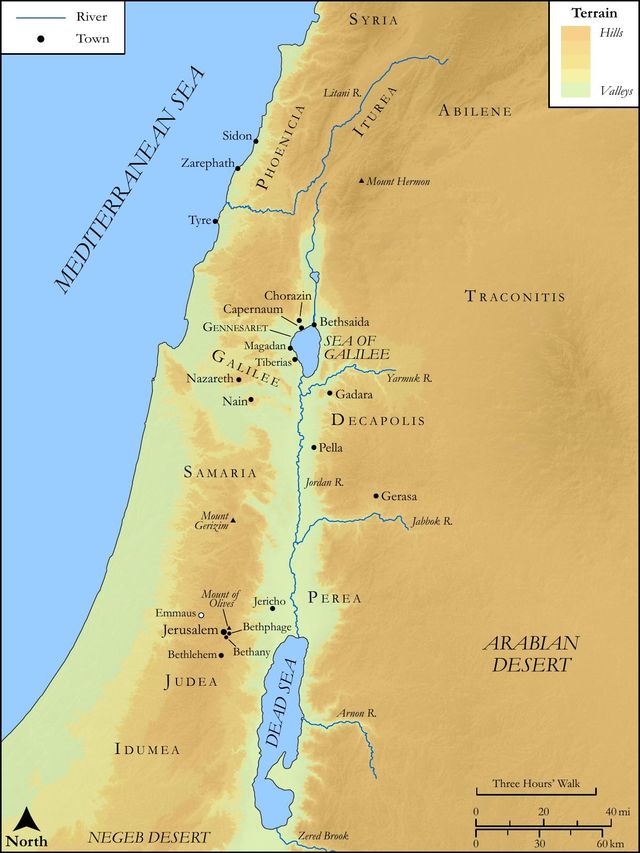
See on the biblical-era map
Study this verse
Public-domain commentary
Matthew Henry
From his Commentary on the Whole Bible. Henry comments on passages, not single verses — this entry covers Luke 16:1–18. His four-level outline is real structure in the source text, so it is rendered as structure.
We mistake if we imagine that the design of Christ's doctrine and holy religion was either to amuse us with notions of divine mysteries or to entertain us with notions of divine mercies. No, the divine revelation of both these in the gospel is intended to engage and quicken us to the practice of Christian duties, and, as much as any one thing, to the duty of beneficence and doing good to those who stand in need of any thing that either we have or can do for them. This our Saviour is here pressing us to, by reminding us that we are but stewards of the manifold grace of God; and since we have in divers instances been unfaithful, and have forfeited the favour of our Lord, it is our wisdom to think how we may, some other way, make what we have in the world turn to a good account. Parables must not be forced beyond their primary intention, and therefore we must not hence infer that any one can befriend us if we lie under the displeasure of our Lord, but that, in the general, we must so lay out what we have in works of piety and charity as that we may meet it again with comfort on the other side death and the grave. If we would act wisely, we must be diligent and industrious to employ our riches in the acts of piety and charity, in order to promote our future and eternal welfare, as worldly men are in laying them out to the greatest temporal profit, in making to themselves friends with them, and securing other secular interests. So Dr. Clarke. Now let us consider,
I.The parable itself, in which all the children of men are represented as stewards of what they have in this world, and we are but stewards.
Whatever we have, the property of it is God's; we have only the use of it, and that according to the direction of our great Lord, and for his honour. Rabbi Kimchi, quoted by Dr. Lightfoot, says, "This world is a house; heaven the roof; the stars the lights; the earth, with its fruits, a table spread; the Master of the house is the holy and blessed God; man is the steward, into whose hands the goods of this house are delivered; if he behave himself well, he shall find favour in the eyes of his Lord; if not, he shall be turned out of his stewardship." Now,
1.Here is the dishonesty of this steward. He wasted his lord's goods, embezzled them, misapplied them, or through carelessness suffered them to be lost and damaged; and for this he was accused to his lord, Luk 16:1. We are all liable to the same charge. We have not made a due improvement of what God has entrusted us with in this world, but have perverted his purpose; and, that we may not be for this judged of our Lord, it concerns us to judge ourselves.
2.His discharge out of his place. His lord called for him, and said, "How is it that I hear this of thee? I expected better things from thee." He speaks as one sorry to find himself disappointed in him, and under a necessity of dismissing him from his service: it troubles him to hear it; but the steward cannot deny it, and therefore there is no remedy, he must make up his accounts; and be gone in a little time, Luk 16:2. Now this is designed to teach us,
(1.)That we must all of us shortly be discharged from our stewardship in this world; we must not always enjoy those things which we now enjoy. Death will come, and dismiss us from our stewardship, will deprive us of the abilities and opportunities we now have of doing good, and others will come in our places and have the same.
(2.)That our discharge from our stewardship at death is just, and what we have deserved, for we have wasted our Lord's goods, and thereby forfeited our trust, so that we cannot complain of any wrong done us.
(3.)That when our stewardship is taken from us we must give an account of it to our Lord: After death the judgment. We are fairly warned both of our discharge and our account, and ought to be frequently thinking of them.
3.His after-wisdom. Now he began to consider, What shall I do? Luk 16:3. He would have done well to have considered this before he had so foolishly thrown himself out of a good place by his unfaithfulness; but it is better to consider late than never. Note, Since we have all received notice that we must shortly be turned out of our stewardship, we are concerned to consider what we shall do then. He must live; which way shall he have a livelihood?
(1.)He knows that he has not such a degree of industry in him as to get his living by work: "I cannot dig; I cannot earn by bread by my labour." But why can he not dig? It does not appear that he is either old or lame; but the truth is, he is lazy. His cannot is a will not; it is not a natural but a moral disability that he labours under; if his master, when he turned him out of the stewardship, had continued him in his service as a labourer, and set a task-master over him, he would have made him dig. He cannot dig, for he was never used to it. Now this intimates that we cannot get a livelihood for our souls by any labour for this world, nor indeed do any thing to purpose for our souls by any ability of our own.
(2.)He knows that he has not such a degree of humility as to get his bread by begging: To beg I am ashamed. This was the language of his pride, as the former of his slothfulness. Those whom God, in his providence, has disabled to help themselves, should not be ashamed to ask relief of others. This steward had more reason to be ashamed of cheating his master than of begging his bread.
(3.)He therefore determines to make friends of his lord's debtors, or his tenants that were behind with their rent, and had given notes under their hands for it: "I am resolved what to do, Luk 16:4. My lord turns me out of his house. I have none of my own to go to. I am acquainted with my lord's tenants, have done them many a good turn, and now I will do them one more, which will so oblige them that they will bid me welcome to their houses, and the best entertainment they afford; and so long as I live, at least till I can better dispose of myself, I will quarter upon them, and go from one good house to another." Now the way he would take to make them his friends was by striking off a considerable part of their debt to his lord, and giving it in his accounts so much less than it was. Accordingly, he sent for one, who owed his lord a hundred measures of oil (in that commodity he paid his rent): Take thy bill, said he, here it is, and sit down quickly, and write fifty (Luk 16:6); so he reduced his debt to the one half. Observe, he was in haste to have it done: "Sit down quickly, and do it, lest we be taken treating, and suspected." He took another, who owed his lord a hundred measures of wheat, and from his bill he cut off a fifth part, and bade him write fourscore (Luk 16:7); probably he did the like by others, abating more or less according as he expected kindness from them. See here what uncertain things our worldly possessions are; they are most so to those who have most of them, who devolve upon others all the care concerning them, and so put it into their power to cheat them, because they will not trouble themselves to see with their own eyes. See also what treachery is to be found even among those in whom trust is reposed. How hard is it to find one that confidence can be reposed in! Let God be true, but every man a liar. Though this steward is turned out for dealing dishonestly, yet still he does so. So rare is it for men to mend of a fault, though they smart for it.
4.The approbation of this: The lord commended the unjust steward, because he had done wisely, Luk 16:8. It may be meant of his lord, the lord of that servant, who, though he could not but be angry at his knavery, yet was pleased with his ingenuity and policy for himself; but, taking it so, the latter part of the verse must be the words of our Lord, and therefore I think the whole is meant of him. Christ did, as it were, say, "Now commend me to such a man as this, that knows how to do well for himself, how to improve a present opportunity, and how to provide for a future necessity." He does not commend him because he had done falsely to his master, but because he had done wisely for himself. Yet perhaps herein he did well for his master too, and but justly with the tenants. He knew what hard bargains he had set them, so that they could not pay their rent, but, having been screwed up by his rigour, were thrown behindhand, and they and their families were likely to go to ruin; in consideration of this, he now, at going off, did as he ought to do both in justice and charity, not only easing them of part of their arrears, but abating their rent for the future. How much owest thou? may mean, "What rent dost thou sit upon? Come, I will set thee an easier bargain, and yet no easier than what thou oughtest to have." He had been all for his lord, but now he begins to consider the tenants, that he might have their favour when he had lost his lord's. The abating of their rent would be a lasting kindness, and more likely to engage them than abating their arrears only. Now this forecast of his, for a comfortable subsistence in this world, shames our improvidence for another world: The children of this world, who choose and have their portions in it, are wiser for their generation, act more considerately, and better consult their worldly interest and advantage, than the children of light, who enjoy the gospel, in their generation, that is, in the concerns of their souls and eternity. Note,
(1.)The wisdom of worldly people in the concerns of this world is to be imitated by us in the concerns of our souls: it is their principle to improve their opportunities, to do that first which is most needful, in summer and harvest to lay up for winter, to take a good bargain when it is offered them, to trust the faithful and not the false. O that we were thus wise in our spiritual affairs!
(2.)The children of light are commonly outdone by the children of this world. Not that the children of this world are truly wise; it is only in their generation. But in that they are wiser than the children of light in theirs; for, though we are told that we must shortly be turned out of our stewardship, yet we do not provide as we were to be here always and as if there were not another life after this, and are not so solicitous as this steward was to provide for hereafter. Though as children of the light, that light to which life and immortality are brought by the gospel, we cannot but see another world before us, yet we do not prepare for it, do not send our best effects and best affections thither, as we should.
II.The application of this parable, and the inferences drawn from it (Luk 16:9):
"I say unto you, you my disciples" (for to them this parable is directed, Luk 16:1), "though you have but little in this world, consider how you may do good with that little." Observe,
1.What it is that our Lord Jesus here exhorts us to; to provide for our comfortable reception to the happiness of another world, by making good use of our possessions and enjoyments in this world: "Make to yourselves friends of the mammon of unrighteousness, as the steward with his lord's goods made his lord's tenants his friends." It is the wisdom of the men of this world so to manage their money as that they may have the benefit of it hereafter, and not for the present only; therefore they put it out to interest, buy land with it, put it into this or the other fund. Now we should learn of them to make use of our money so as that we may be the better for it hereafter in another world, as they do in hopes to be the better for it hereafter in this world; so cast it upon the waters as that we may find it again after many days, Ecc 11:1. And in our case, though whatever we have are our Lord's goods, yet, as long as we dispose of them among our Lord's tenants and for their advantage, it is so far from being reckoned a wrong to our Lord, that it is a duty to him as well as policy for ourselves. Note,
(1.)The things of this world are the mammon of unrighteousness, or the false mammon, not only because often got by fraud and unrighteousness, but because those who trust to it for satisfaction and happiness will certainly be deceived; for riches are perishing things, and will disappoint those that raise their expectations from them.
(2.)Though this mammon of unrighteousness is not to be trusted to for a happiness, yet it may and must be made use of in subserviency to our pursuit of that which is our happiness. Though we cannot find true satisfaction in it, yet we may make to ourselves friends with it, not by way of purchase or merit, but recommendation; so we may make God and Christ our friends, the good angels and saints our friends, and the poor our friends; and it is a desirable thing to be befriended in the account and state to come.
(3.)At death we must all fail, hotan eklipēte - when ye suffer an eclipse. Death eclipses us. A tradesman is said to fail when he becomes a bankrupt. We must all thus fail shortly; death shuts up the shop, seals up the hand. Our comforts and enjoyments on earth will all fail us; flesh and heart fail.
(4.)It ought to be our great concern to make it sure to ourselves, that when we fail at death we may be received into everlasting habitations in heaven. The habitations in heaven are everlasting, not made with hands, but eternal, Co2 5:1. Christ is gone before, to prepare a place for those that are his, and is there ready to receive them; the bosom of Abraham is ready to receive them, and, when a guard of angels carries them thither, a choir of angels is ready to receive them there. The poor saints that are gone before to glory will receive those that in this world distributed to their necessities.
(5.)This is a good reason why we should use what we have in the world for the honour of God and the good of our brethren, that thus we may with them lay up in store a good bond, a good security, a good foundation for the time to come, for an eternity to come. See Ti1 6:17-19, which explains this here.
2.With what arguments he presses this exhortation to abound in works of piety and charity.
(1.)If we do not make a right use of the gifts of God's providence, how can we expect from him those present and future comforts which are the gifts of his spiritual grace? Our Saviour here compares these, and shows that though our faithful use of the things of this world cannot be thought to merit any favour at the hand of God, yet our unfaithfulness in the use of them may be justly reckoned a forfeiture of that grace which is necessary to bring us to glory, and that is it which our Saviour here shows, Luk 16:10-14.
[1.]The riches of this world are the less; grace and glory are the greater. Now if we be unfaithful in the less, if we use the things of this world to other purposes than those for which they were given us, it may justly be feared that we should be so in the gifts of God's grace, that we should receive them also in vain, and therefore they will be denied us: He that is faithful in that which is least is faithful also in much. He that serves God, and does good, with his money, will serve God, and do good, with the more noble and valuable talents of wisdom and grace, and spiritual gifts, and the earnests of heaven; but he that buries the one talent of this world's wealth will never improve the five talents of spiritual riches. God withholds his grace from covetous worldly people more than we are aware of.
[2.]The riches of this world are deceitful and uncertain; they are the unrighteous mammon, which is hastening from us apace, and, if we would make any advantage of it, we must bestir ourselves quickly; if we do not, how can we expect to be entrusted with spiritual riches, which are the only true riches? Luk 16:11. Let us be convinced of this, that those are truly rich, and very rich, who are rich in faith, and rich towards God, rich in Christ, in the promises, and in the earnests of heaven; and therefore let us lay up our treasure in them, expect our portion from them, and mind them in the first place, the kingdom of God and the righteousness thereof, and then, if other things be added to us, use them in ordine ad spiritualia - with a spiritual reference, so that by using them well we may take the faster hold of the true riches, and may be qualified to receive yet more grace from God; for God giveth to a man that is good in his sight, that is, to a free-hearted charitable man, wisdom, and knowledge, and joy (Ecc 2:26); that is, to a man that is faithful in the unrighteous mammon, he gives the true riches.
[3.]The riches of this world are another man's. They are ta allotria, not our own; for they are foreign to the soul and its nature and interest. They are not our own; for they are God's; his title to them is prior and superior to ours; the property remains in him, we are but usufructuaries. They are another man's; we have them from others; we use them for others, and what good has the owner from his goods that increase, save the beholding of them with his eyes, while still they are increased that eat them; and we must shortly leave them to others, and we know not to whom? But spiritual and eternal riches are our own (they enter into the soul that becomes possessed of them) and inseparably; they are a good part that will never be taken away from us. If we make Christ our own, and the promises our own, and heaven our own, we have that which we may truly call our own. But how can we expect God should enrich us with these if we do not serve him with our worldly possessions, of which we are but stewards?
(2.)We have no other way to prove ourselves the servants of God than by giving up ourselves so entirely to his service as to make mammon, that is, all our worldly gain, serviceable to us in his service (Luk 16:13): No servant can serve two masters, whose commands are so inconsistent as those of God and mammon are. If a man will love the world, and hold to that, it cannot be but he will hate God and despise him. He will make all his pretensions of religion truckle to his secular interests and designs, and the things of God shall be made to help him in serving and seeking the world. But, on the other hand, if a man will love God, and adhere to him, he will comparatively hate the world (whenever God and the world come in competition) and will despise it, and make all his business and success in the world some way or other conducive to his furtherance in the business of religion; and the things of the world shall be made to help him in serving God and working out his salvation. The matter is here laid plainly before us: Ye cannot serve God and mammon. So divided are their interests that their services can never be compounded. If therefore we be determined to serve God, we must disclaim and abjure the service of the world.
3.We are here told what entertainment this doctrine of Christ met with among the Pharisees, and what rebuke he gave them.
(1.)They wickedly ridiculed him, Luk 16:14. The Pharisees, who were covetous, heard all these things, and could not contradict him, but they derided him. Let us consider this,
[1.]As their sin, and the fruit of their covetousness, which was their reigning sin, their own iniquity. Note, Many that make a great profession of religion, have much knowledge, and abound in the exercise of devotion, are yet ruined by the love of the world; nor does any thing harden the heart more against the word of Christ. These covetous Pharisees could not bear to have that touched, which was their Delilah, their darling lust; for this they derided him, exemuktērizon auton - they snuffled up their noses at him, or blew their noses on him. It is an expression of the utmost scorn and disdain imaginable; the word of the Lord was to them a reproach, Jer 6:10. They laughed at him for going so contrary to the opinion and way of the world, for endeavouring to recover them from a sin which they were resolved to hold fast. Note, It is common for those to make a jest of the word of God who are resolved that they will not be ruled by it; but they will find at last that it cannot be turned off so.
[2.]As his suffering. Our Lord Jesus endured not only the contradiction of sinners, but their contempt; they had him in derision all the day. He that spoke as never man spoke was bantered and ridiculed, that his faithful ministers, whose preaching is unjustly derided, may not be disheartened at it. It is no disgrace to a man to be laughed at, but to deserve to be laughed at. Christ's apostles were mocked, and no wonder; the disciple is not greater than his Lord.
(2.)He justly reproved them; not for deriding him (he knew how to despise the shame), but for deceiving themselves with the shows and colours of piety, when they were strangers to the power of it, Luk 16:15. Here is,
[1.]Their specious outside; nay, it was a splendid one. First, They justified themselves before men; they denied whatever ill was laid to their charge, even by Christ himself. They claimed to be looked upon as men of singular sanctity and devotion, and justified themselves in that claim: "You are they that do that, so as none ever did, that make it your business to court the opinion of men, and, right or wrong, will justify yourselves before the world; you are notorious for this." Secondly, They were highly esteemed among men. Men did not only acquit them from any blame they were under, but applauded them, and had them in veneration, not only as good men, but as the best of men. Their sentiments were esteemed as oracles, their directions as laws, and their practices as inviolable prescriptions.
[2.]Their odious inside, which was under the eye of God: "He knows your heart, and it is in his sight an abomination; for it is full of all manner of wickedness." Note, First, It is folly to justify ourselves before men, and to think this enough to bear us out, and bring us off, in the judgment of the great day, that men know no ill of us; for God, who knows our hearts, knows that ill of us which no one else can know. This ought to check our value for ourselves, and our confidence in ourselves, that God knows our hearts, and how much deceit is there, for we have reason to abase and distrust ourselves. Secondly, It is folly to judge of persons and things by the opinion of men concerning them, and to go down with the stream of vulgar estimate; for that which is highly esteemed among men, who judge according to outward appearance, is perhaps an abomination in the sight of God, who sees things as they are, and whose judgment, we are sure, is according to truth. On the contrary, there are those whom men despise and condemn who yet are accepted and approved of God, Co2 10:18.
(3.)He turned from them to the publicans and sinners, as more likely to be wrought upon by his gospel than those covetous conceited Pharisees (Luk 16:16): "The law and the prophets were indeed until John; the Old Testament dispensation, which was confined to you Jews, continued till John Baptist appeared, and you seemed to have the monopoly of righteousness and salvation; and you are puffed up with this, and this gains you esteem among men, that you are students in the law and the prophets; but since John Baptist appeared the kingdom of God is preached, a New Testament dispensation, which does not value men at all for their being doctors of the law, but every man presses into the gospel kingdom, Gentiles as well as Jews, and no man thinks himself bound in good manners to let his betters go before him into it, or to stay till the rulers and the Pharisees have led him that way. It is not so much a political national constitution as the Jewish economy was, when salvation was of the Jews; but it is made a particular personal concern, and therefore every man that is convinced he has a soul to save, and an eternity to provide for, thrusts to get in, lest he should come short by trifling and complimenting." Some give this sense of it; they derided Christ or speaking in contempt of riches, for, thought they, were there not many promises of riches and other temporal good things in the law and the prophets? And were not many of the best of God's servants very rich, as Abraham and David? "It is true," saith Christ, "so it was, but now that the kingdom of God is begun to be preached things take a new turn; now blessed are the poor, and the mourners, and the persecuted." The Pharisees, to requite the people for their high opinion of them, allowed them in a cheap, easy, formal religion. "But," saith Christ, "now that the gospel is preached the eyes of the people are opened, and as they cannot now have a veneration for the Pharisees, as they have had, so they cannot content themselves with such an indifferency in religion as they have been trained up in, but they press with a holy violence into the kingdom of God." Note, Those that would go to heaven must take pains, must strive against the stream, must press against the crowd that are going the contrary way.
(4.)Yet still he protests against any design to invalidate the law (Luk 16:17): It is easier for heaven and earth to pass, parelthein - to pass by, to pass away, though the foundations of the earth and the pillars of heaven are so firmly established, than for one tittle of the law to fail. The moral law is confirmed and ratified, and not one tittle of that fails; the duties enjoined by it are duties still; the sins forbidden by it are sins still. Nay, the precepts of it are explained and enforced by the gospel, and made to appear more spiritual. The ceremonial law is perfected in the gospel colours; not one tittle of that fails, for it is found printed off in the gospel, where, though the force of it is as a law taken off, yet the figure of it as a type shines very brightly, witness the epistle to the Hebrews. There were some things which were connived at by the law, for the preventing of greater mischiefs, the permission of which the gospel has indeed taken away, but without any detriment or disparagement to the law, for it has thereby reduced them to the primitive intention of the law, as in the case of divorce (Luk 16:18), which we had before, Mat 5:32; Mat 19:9. Christ will not allow divorces, for his gospel is intended to strike at the bitter root of men's corrupt appetites and passions, to kill them, and pluck them up; and therefore they must not be so far indulged as that permission did indulge them, for the more they are indulged the more impetuous and headstrong they grow.
Historical interpretation
Nine Centuries of Reception
7 surviving comments on this verse. Each one is dated, so this reads as a timeline rather than a list.
Select a marker to jump to its quote. Markers stagger vertically where authors wrote within a few decades of each other.
I HAVE often said to you in my discourses, that there is one fictitious and false conception prevalent among men, which multiplies their transgressions, and diminishes the good which we ought, each of us, to do. And this false conception is, that all that we have to enjoy in this life we possess as lords and masters. And on account of this notion we do fiercely fight and war and contend for it and protect it to the uttermost as a precious possession. Now the truth of the matter is not so, but quite otherwise. For none of those things which we have received is our own, nor do we as absolute possessors and lords dwell in this life as in a house of our own; but as sojourners, and strangers, and wanderers, and when we do not expect it, we are led whither we would not go. And when it seems good to the Lord we are deprived of the possession of our wealth. Wherefore the enjoyment of this perishable life is very liable to change. He who is to-day glorious, is to-morrow an object of pity, eliciting compassion and help. He who is now prosperous and flourishing in wealth, suddenly finds himself poor, without even bread to support life. In this respect especially does our God surpass mortals, in that he is always the same, and in the same state, and possesses life and glory and power inalienable.
Why I have thus begun my discourse, is perhaps already perceived by those who are attentive and intelligent. Luke has fashioned us a parable that, by way of preface, was just now read to us, in which he describes the steward of other men's goods as groaning and troubled, because, being luxurious and extravagant, he has heard from the master of the money and property, the words, "Give an account of thy stewardship and depart, for I will not suffer thee to revel in my possessions, as though they were thine own." Now this is not the narrative of a thing that really took place, but the fiction of a parable, which by obscure sayings inculcates moral virtue. Know then, that each one of you is an administrator of what belongs to another; cast off then the pride of authority, and put on the humility and prudence of a steward, accountable for his acts. Be always waiting for your Lord, to whom with fear you must render a strict account. For you are a sojourner who has received the privilege of only a temporary and fleeting use of the things in your possession. And if you are in doubt about this, observe what happens, and be taught by experience, that trustworthy teacher.
You possess an estate, having either inherited it from your fathers, or obtained it by some exchange. Call up therefore in memory and count over, if you can, all who have occupied it before you. And direct your mind also to the time to come, and think how many are to occupy it after you. Then tell me who owns it, and to whom does it especially belong; those who have had it, or those who now have it, or those who in the future are to have it? For if some one should in some way or other call them all together, the owners would be found more numerous than the clods. And, further, if you wish to see exactly what our life is like, call to mind if ever in summer, while traveling, you have seen a flourishing tree extending far enough in breadth and height to serve with its shadow the purpose of a shelter. You were glad to come under its shade, and there you remained as long as possible. And when it was necessary to move on, even as you were thinking of setting off again, another wayfarer appeared. And you took up your luggage while he laid his down and appropriated all your conveniences, the. bed of leaves, the fire, the shade of the tree, the water flowing by. And he began to recline and rest, while you resumed your walk. He, too, enjoyed the place and then left it. And that one tree was, in a single day, the temporary lodging-place for perhaps ten strangers. And that which was enjoyed by all belonged to but one owner. And thus also the abundance of our life here delights and supports many, while it belongs to God alone, who has imperishable and indestructible life.
You can call to mind an inn where, when traveling, you have put up. There, as you brought nothing with you, you were provided with many things, bed, table, drinking-cups, a plate and other dishes of all sorts. But perhaps before you had used them as long as you wished, another came, panting, covered with dust and hard after you, forcing you from the inn and demanding as though they were his own the things that really belonged to neither of you.
Such, brethren, is our life, and, if anything, it is still more transitory than the things I have mentioned. And I wonder at the way men say, "my estate," and "my house," and thus appropriate by an idle syllable things which are not theirs, and, with two deceptive letters, clutch things belonging to others. For as on the stage no one actor has exclusive right to any given character, but any actor may assume |53 it, so is it in the case of the earth and its material things. Men one after another put them on and off like garments. Tell me, is there anything more enduring than a kingdom? And yet, consider the palaces, search for the royal robes. You will find that many of these have covered the bodies of several successive kings. And in like manner also the crowns, and the clasps, and the girdles----all an unstable heritage, a property common to them all, passing over from those who go to those who remain. And of what worth are the possessions of magistrates, the canopy, the silver chariot, the golden wand? Do not these things always attend the magistrate, yet never the same one long, but each for a little season? For as the bier receives now one form, now another, so also the insignia of office pass from one magistrate to another. Hence, too, the apostle has uttered very many calls to us indicative of this thought. "For the fashion of this world passeth away"; and the phrase, "As having nothing, and yet possessing all things"; and again, "Who use it as not abusing it." For all these sayings have this one intent, that it becomes us to live as creatures of a day, awaiting the signal for our departure.
And that you may clearly see that you are subject to the laws and ordinances of the Lord, to which it is incumbent on you strictly to conform, first, learn from self-observation that both your body and soul are wholly subject to the commands of virtue, and you are not master even of yourself, but it behooves you to act as a steward both in word and deed, and in every movement of your life. You have received from the Creator a body composed of many members and endowed with five senses for the needs of life. And not even these are free and independent, but each is subject to law. And first, the eye is commanded, "Look upon nature and behold what it is right to see: the sun, illuminating all the world; the moon, shining upon the gloom and dusk of night; the stars also giving us of themselves no great or independent light, but reflecting the beauty they receive. Behold the earth, hairy with plants and herbs"; the sea when it lies fixed in perfect calm, spread out like a level plain. For the sight of these and similar things benefit us. But other sights, which through the eye introduce harm into the soul, shun and flee, and put a veil over your eyes that you may not see. For it is better to darken the sense of sight, when it affords occasion for "the deeds of darkness." On this account, the Lord said to us through Matthew in the lesson of yesterday: "Every one that looketh on a woman to lust after her hath committed adultery with her already in his heart." And it is better to cut out the eye than that it should look upon things inordinate and lustful. And the ear also has been forbidden to listen to anything that is evil. But it is right that it be alert to hear whatever is good, that it may transmit to the soul profitable words. But if any evil companion, ready to deal out plague and destruction approach it, and be on the point of pouring into it filth, one should flee from him as from a venomous beast. Let the tongue also, together with the mouth, exercise discretion. Let it say what is right; but let it refrain from forbidden things----reproaches, slanders, unjust accusation, evil speaking against the brethren, blasphemy against God; and let it utter those things that are of good report, and pious; let it counsel good works, and let every man repeat the words of the sacred Psalmist: "I said, I will set a watch over my ways, that I sin not with my tongue:" again, "With their tongues they deal treacherously:" and again, "Why gloriest thou in evil, O man mighty in iniquity? All the day has thy tongue discoursed injustice; as a sharpened razor thou hast wrought deceit." Let the tongue taste profitable things. Let the nose also exercise discretion, not always scenting luxury, nor drawing into the head fragrant odors of costly perfumes. For against such things Isaiah vehemently inveighs. Let the hand, too, remember the commandments, that it touch not all things indiscriminately. Let it be outstretched in almsgiving, not in plundering. Let it keep its own, not wickedly seize the things of others. Let it in beneficent visitation touch the bodies that are feeble and distressed, not those that are lustful and devoted to fornication.
This discourse has shown us that we are not our own masters, but stewards, for whoever is subject to laws and ordinances is a bond-servant and subject of the lawgiver. And if the members of our body are not free from authority, but regulated with reference to their functions, by the will of the Lord, what should be said to those who think that they have, without accountability, the possession of gold and silver and land and all other things? O man, nothing is your own. You are a slave and what is yours belongs to your Lord. For a slave has no property that is really his own.
For naked you were brought into this life. What you have you have received by the dispensation of your Lord; whether you inherited it from a father, since God has so commanded,----for parents, he says, shall divide their possessions among their children, or have acquired affluence by marriage,----for marriage also and the things connected with it are ordained by God, or by trade and agriculture and other agencies, God cooperating in them.
You see, then, it has been made evident that you have received things which are not your own. Let us now further observe what is incumbent on you, and what kind of control you have over them. Give to the hungry, clothe the naked, heal the afflicted, do not neglect the needy nor the outcast at the corners of the streets. Do not be anxious about yourself, nor stop to |60 consider how you will live to-morrow. If you do these things the Scripture says that you shall be honored by the Lawgiver. But if you do not heed the command, you shall be severely punished. These things I do not regard as characteristic of one who is irresponsible and lives in independence. But on the contrary, these numerous and repeated commands suggest to me a man strictly governed, subject to a master's laws, and rigidly accountable for his conduct as an administrator. But we, living how heedlessly, neglect the wretched and the poor, while they die in misfortune; and vying with each other in lavishness, spend our money on vanities, supporting a multitude of prodigal flatterers, and trailing after us hordes of ill-starred parasites; again, scattering our wealth to gladiators, and for wild beasts, and giving for horse-breeding |61 regardless of expense; and again, spending our abundance on jugglers and actors and persons equally worthless. And we have a fruitless experience, and one bordering on madness; for from expenditure that brings uncounted gain, and eternal salvation, we resolutely withhold our money, refusing to part with even a few obols; but where the expenditure is the occasion of sin and of countless pains and of the fiery punishment itself, of our own accord we let it flow. Prodigality anticipates the request, and opening all our doors, we lavish our wealth on those that are without. But this is not the mind of servants waiting for their lord, but of lusty, unbridled youths given over to revels.
But if you wish, my hearer, to see a steward administering with fear and wise discretion the things committed to him, open the book of David; find those words |62 where one inquiring concerning the appointed time of his end, says to God, "Lord, make me to know my end, and what is the number of my days, that I may know what I lack." You see in these words, as an image in a mirror, the attitude of the one who prays; you see that he is very fearful; he foresees that which is to come, and, expecting judgment, is concerned about the appointed time, that the signal for his departure may not find him unprepared. And he seeks to number and know how many days still remain to him, in order that he may zealously fulfil his task before his Lord comes. Now if we carefully compare what the dying man experiences, and what the man who is cast out of his stewardship endures, we shall find that the end of each one of us is like that of a steward.
For the dying man turns over his control of affairs to others, just as the steward does his keys; the latter on being cast out of an estate, the former on being cast out of the world. Deeply grieved, the steward retires from his own labors----from the estate rich in vineyards, gardens, houses. What then do you think the dying man experiences? Does he not bewail his possessions? Does he not piteously survey his house as, against his will, he is torn from it, and forced in spite of his attachments, to go far from his treasures and storehouses? And when he comes to the appointed place, when he hears the words, "Render the account of your stewardship, show how you have obeyed the commandments, how you have treated your fellow servants, whether properly and kindly or, on the contrary, grievously and tyrannically, smiting, punishing, and withholding the alms that mercy |64 dictates," then if he shall be able to render the master gracious, by showing that he has been a faithful servant, it shall be well with him. But if he cannot thus render him gracious there will remain for him not simply beating with rods, or the dark prison, and iron fetters, but fire unquenchable and eternal darkness, never illumined by a ray of light, and gnashing of teeth as the Gospel has plainly taught us. If indeed you are never to be cast out of your present possessions on the ground that they belong to another, revel in the world and with every sense let pleasure be unrestrained. But if these things are to be brought to an end and we are to enjoy them for no long time, let us, brethren, fear our removal hence, and live during the time of our sojourning as the Lord has commanded. Let us not be led away as prisoners for debt; but let us go as free men, taking with us an approving conscience, and such an account of our conduct as will not be condemned by the Lord.
That rich man whose land brought forth abundantly, was a wicked steward of the earthly life, since in the abundance of his fruits he purposed nothing useful, but, enlarging the belly's desire and the broad and vast pockets of greed, designed all for his own enjoyment, saying, "I will pull down my barns, and build greater, and will say to myself, Thou hast much goods laid up; take thine ease, eat, drink, and be merry." But while he was yet speaking, the death angel stood at his side, to conduct him from the earth. A dreadful fellow slave was come to drag him from his stewardship; and what profit was there in his plan for the gratification of his selfish desires? Now |66 this has been vividly portrayed for our admonition.
And what does experience teach us? Do not the events of each day loudly proclaim the truth of the parable? Do we not see the man in health at midday, dead ere the appearance of the evening star? And the man strong at evening, not alive to greet the beams of dawn? And another departing this life while eating? And who is so foolish as not to perceive at a glance that daily, now one, now another, we are being removed from our stewardship here? But the good and faithful steward, whose conscience approves his own administration of his stewardship, is of Paul's opinion. For Paul, though the Lord did not urge him, was in haste to go to his Master, and longed for his release, and of his own accord resigned his stewardship, saying somewhere, "Wretched man that I am! who shall deliver me from the body of this death," and again, "But for me it is well to depart and be with Christ." But one who is earthly in mind, and really akin to the clods, being confounded at the change which overtakes him, utters such lamentations as did the man of the parable, "What shall I do, because my Lord takes away the stewardship from me? I cannot dig, to beg I am ashamed." The lamentation of an idle and pleasure-loving man! For to weep at his departure, and to lament the sensuous enjoyments of the flesh, is proof that one is engrossed in his estate; and to be incapable of toil is the mark of an idle and supine life. For if he had been accustomed to industry, he would not have hesitated to dig.
But further, to carry out the meaning of the parable, after removal to the eternal |68 world there is no longer place for importunity. And therefore let no one of them there say, "I cannot dig." For even if he could, no one would give him the opportunity. To this life belongs the obedience of the commandments, and to the life to come the reward. So that if you have done nothing here, it will be useless for you to think of digging, since you will have left the vines behind. Nor will you benefit yourself at all by entreating. And we have a notable example of this in the story of the foolish virgins, who were delayed for lack of oil, and shamelessly asked it from those who were wise. But they got no help, and turned away unsuccessful; the narrative showing that, at the bridegroom's appearing, no one may use another's oil, that is, another's rectitude, for his own benefit. For each one is |69 clothed with his own conduct as with a garment, whether it be splendid and costly, or mean and like a beggar's cloak. But to put off this garment is not possible, nor to remove it and exchange it for another, nor to beautify and adorn it by the gift or loan of another in the time of judgment, but each one remains such as he is in truth, whether poor in good deeds or rich.
But what can we say concerning the remission of debts which the unjust steward contrived, that he might through his fellow servants secure relief for himself from the hardships of his downfall? For it is not easy to convert this into allegory consonant with Scripture, but after long reflection something like this occurred to me: All of us who busy ourselves about the rest to which we are destined, by giving what is another's, work to our own advantage; now by what is another's I mean what belongs to the Lord. For nothing is our own, but all things belong to him. When, therefore, any one anticipating his end and his removal to the next world, lightens the burden of his sins by good deeds, either by canceling the obligations of debtors, or by supplying the poor with abundance, by giving what belongs to the Lord, he gains many friends, who will attest his goodness before the Judge, and secure him by their testimony a place of happiness. Now they are called witnesses, who have secured for their benefactors favor from the Judge, not because they inform him of anything, as though he were ignorant, or did not know, but in the sense that what has been done for them relieves those who have helped them from the punishment of their sins. For just as the blood of Abel was said to cry unto God, in like manner the good deed, too, shall be said to testify on behalf of the upright in our Lord, Christ Jesus. Now to him be glory forever and ever. Amen.
From this we learn then, that we are not ourselves the masters, but rather the stewards of the property of others.
You proposed a little question about the Gospel of Luke (Chapter 16, verse 1 et seq.): Who is the steward of iniquity who is praised by the voice of the Lord? When I wanted to know the reason for this and from which source it came, I examined the volume of the Gospel, and I found among other things that, as the tax collectors and sinners approached the Saviour to hear him, the Pharisees and scribes murmured, saying, "Why does this one receive sinners and eat with them?" (Luke 15:2). He spoke to them the parable of one hundred sheep, and one that was lost, which was found and carried back on the shoulders of the shepherd. And when it was proposed, he immediately said: "I tell you, there will be more joy in heaven over one sinner repenting than over ninety-nine righteous people who have no need for repentance." He also proposed another parable about ten drachmas lost and found, and he completed it with a similar ending. So I tell you, there will be joy in the presence of the Angels of God over one sinner repenting. He also proposed a third parable about a man who had two sons, and who divided his wealth between them. And when the younger son had lost his faculties and began to eat the pods that the pigs ate, he returned to his father, who accepted him. The envious elder brother, too, was rebuked by his father's voice, and he should have rejoiced because his brother was dead and had come back to life; he was lost, and he has been found. He spoke three parables against the Pharisees and Scribes who did not want to receive the repentance of sinners and the salvation of Publicans. He said also, he said to his disciples (Ibid. 16.1), without doubt, that he used a parable, just as before to the Scribes and Pharisees: by which parable he would exhort the disciples to mercy and would say in other words: Forgive and you shall be forgiven (Luke 6:7), so that you may ask boldly in the Lord's Prayer, Forgive us our debts as we also forgive our debtors (Matthew 6:12). Therefore, what is the parable that urges the disciples towards mercy? There was a certain rich man who had a steward (Luke 16:1), or a manager, for this is what οἰκονόμος means. The steward is properly the governor of the estate, from which he is also called a steward. The οἰκονόμος, however, is a dispenser of both money and fruits and all that the master possesses. Therefore, the most beautiful book of Xenophon's Oeconomica is not about the management of the estate but the management of the entire household (interpreted by Cicero). Therefore, this steward was accused before his master because he was squandering his master's property. When he was called, [the master] said: "What is this I hear about you? Give an account of your management, for you can no longer be steward." What did he say to himself? "What shall I do, since my master is taking the stewardship away from me? I am not strong enough to dig; I am ashamed to beg." I know what I will do, so that when I am removed from management, people may receive me into their houses." He called each one of his master's debtors to him and said to the first, "How much do you owe my master?" He said, "A hundred measures of oil. He said to him: take your bill, and sitting down quickly, write fifty. Then he said to another: And how much do you owe? Who answered: A hundred quarters of wheat. He said to him: take your bill, and write eighty. And the lord commended the unjust steward, forasmuch as he had done wisely: for the children of this world are wiser in their generation than the children of light. And I say to you: make unto you friends of the mammon of iniquity; that when you shall fail, they may receive you into everlasting dwellings. He that is faithful in that which is least, is faithful also in that which is greater: and he that is unjust in that which is little, is unjust also in that which is greater. If then you have not been faithful in the unjust mammon, who will trust you with that which is the true? And if you have not been faithful in that which is another's; who will give you that which is your own? No servant can serve two masters: for either he will hate the one, and love the other; or he will hold to the one, and despise the other. You cannot serve God and mammon. Now all these things were heard by the Pharisees, who were greedy, and they ridiculed him. I have put the entire text of this parable so that we do not seek understanding from elsewhere and strive to find certain persons in the parable, but we should interpret it as a parable, that is, a comparison, which is called "parabolē" because it is "thrown beside" or compared, and is like the shadow of the pre-existent truth. Therefore, if the steward of unjust mammon is praised by the voice of the Lord because he has prepared justice for himself from an unjust matter, and the Lord, having suffered losses, praises the prudence of the steward, when he has acted fraudulently towards the Lord but wisely for himself, how much more will Christ, who cannot suffer any loss and is inclined to mercy, praise his disciples if they are merciful towards those who will believe ((or have believed)) in them? Finally, after the parable, he said: And I tell you, make friends for yourselves with unjust mammon. Mammon, however, in the language of the Syriacs, not the Hebrews, means wealth, because it has been collected unjustly. If, therefore, well-dispensed iniquity turns into justice: how much more will divine speech, in which there is no iniquity, and which is entrusted to the apostles, if it is well-dispensed, raise its dispensers to heaven? Therefore it follows: "He who is faithful in the least, that is, in earthly things, will also be faithful in many, that is, in spiritual things. But whoever is unjust in small things, so as not to give to his brothers for their use what has been created by God for all, he will also be unjust in dividing spiritual wealth, so that he may divide the doctrine of the Lord not for necessity, but for persons." But if, he says, you do not manage well the perishable riches of the flesh, who will trust you with the true and eternal riches of the doctrine of God? And if you have been unfaithful in what belongs to someone else (but everything that belongs to this age is someone else’s), who will give you what is yours? That is why he criticizes avarice and says that those who love money cannot love God. Therefore, even the Apostles, if they wish to love God, must hold money in contempt. So the scribes and Pharisees, who were greedy, understanding that the parable was directed at themselves, mocked Him, preferring the carnal things, which are certain and present, to the spiritual and future things, which are uncertain. Theophilus, the seventh Bishop of the Church of Antioch after the Apostle Peter, who compiled the sayings of the four Evangelists into one work, has spoken about this parable in his Commentaries. 'The rich man who had a steward, or manager, is Almighty God, who is richer than anything else. His steward is Paul, who learned the sacred Scriptures at the feet of Gamaliel (Act. 22. 3), and had received the Law of God to be dispensed.' When he had begun to persecute the believers in Christ, to bind them, to kill them, and to plunder all the substance of his Lord, he was rebuked by the Lord: Saul, Saul, why are you persecuting me? It is hard for you to kick against the pricks. (Acts 9:4-5). And he thought to himself: What should I do? Since I, who was a teacher and a steward, must become a disciple and a worker. I cannot dig. For I see that all the commandments of the Law, which were on the earth, are destroyed; and that the Law and the Prophets were fulfilled up to John the Baptist. I am ashamed to beg, that I, who was a teacher of the Jews, should be compelled to beg for instruction from a gentile and from the disciple Ananias. Therefore, I will do what I think is useful to me: so that after I am dismissed from my position, Christians will receive me into their homes. And those who formerly practiced the law, but had now believed in Christ, began to teach that the law was abolished, and that the prophets had foretold these things. And they taught that what had been done by those who kept the law, was worthy of nothing but contempt (Philippians 3:8). Then he called two of his debtors. The first owed him one hundred measures of oil, that is, those who had been gathered from the Gentiles and were in great need of God's mercy; and he made them write fifty in the document instead of one hundred, which was a special number for those who repented, and based on the Jubilee, and that parable in the Gospel in which one is forgiven five hundred denarii, and another fifty. However, he called the people of the Jews who were nourished on the wheat of God's commandments, and who owed him a hundred denarii, and he forced them to make eighty out of a hundred, that is, to believe in the resurrection of the Lord, which is contained in the number of the eighth day, and is completed in eight decades, so that he might pass from the Sabbath of the Law to the first Sabbath. For this reason, it is preached by the Lord that he did well, and that he was changed from the severity of the Law to the mercy of the Gospel for his salvation. And if you ask why he is called the steward of iniquity in the Law, which is from God, he was an unjust steward who indeed offered well, but did not divide well, believing in the Father, but persecuting the Son; having almighty God, but denying the Holy Spirit. Therefore, the Apostle Paul was wiser in transgressing the Law than the once children of light who, engaged in the observation of the Law, lost Christ who is the true light of God the Father. You can read what Ambrose, Bishop of Milan, thought about this place in his comments. I could not find an explanation of this parable in Origen and Didymus, and I am uncertain whether it has been abolished by the antiquity of the times or whether they did not write it themselves. To me, it seems according to my previous interpretation, that we ought to make friends for ourselves from the unjust mammon, not just any poor person, but those who can receive us into their homes and eternal dwellings, so that when we offer them small things, we may receive great things from them, and giving them what belongs to others, we may receive what belongs to us, and sow in blessing, so that we may reap blessings. For he who sows sparingly will also reap sparingly.
(Hom. de Divite.) There is a certain erroneous opinion inherent in mankind, which increases evil and lessens good. It is the feeling that all the good things we possess in the course of our life we possess as lords over them, and accordingly we seize them as our especial goods. But it is quite the contrary. For we are placed in this life not as lords in our own house, but as guests and strangers, led whither we would not, and at a time we think not of. He who is now rich, suddenly becomes a beggar. Therefore whoever thou art, know thyself to be a dispenser of the things of others, and that the privileges granted thee are for a brief and passing use. Cast away then from thy soul the pride of power, and put on the humility and modesty of a steward.
(ut sup.) Meanwhile he is taken and thrust out of his stewardship; for it follows, And he called him, and said unto him, What is this that I hear of thee? give an account of thy stewardship, for thou canst be no longer steward. Day after day by the events which take place our Lord cries aloud to us the same thing, showing us a man at midday rejoicing in health, before the evening cold and lifeless; another expiring in the midst of a meal. And in various ways we go out from our stewardship; but the faithful steward, who has confidence concerning his management, desires with Paul to depart and be with Christ. (Phil. 1:23.) But he whose wishes are on earth is troubled at his departing. Hence it is added of this steward, Then the steward said within himself, What shall I do, for my Lord taketh away from me the stewardship? I cannot dig, to beg I am ashamed. Weakness in action is the fault of a slothful life. For no one would shrink who had been accustomed to apply himself to labour. But if we take the parable allegorically, after our departure hence there is no more time for working; the present life contains the practice of what is commanded, the future, consolation. If thou hast done nothing here, in vain then art thou careful for the future, nor wilt thou gain any thing by begging. The foolish virgins are an instance of this, who unwisely begged of the wise, but returned empty. (Matt 25:8.) For every one puts on his daily life as his inner garment; it is not possible for him to put it off or exchange it with another. But the wicked steward aptly contrived the remission of debts, to provide for himself an escape from his misfortunes among his fellow-servants; for it follows, I am resolved what to do, that when I am put out of the stewardship, they may receive me into their houses. For as often as a man, perceiving his end approaching, lightens by a kind deed the load of his sins, (either by forgiving a debtor his debts, or by giving abundance to the poor,) dispensing those things which are his Lord's, he conciliates to himself many friends, who will afford him before the judge a real testimony, not by words, but by the demonstration of good works, nay moreover will provide for him by their testimony a resting-place of consolation. But nothing is our own, all things are in the power of God. Hence it follows, So he called every one of his Lord's debtors unto him, and said unto the first, How much owest thou unto my Lord? And he said, A hundred casks of oil.
He also said to his disciples: There was a rich man who had a steward, and this one was accused before him of wasting his goods. And he called him and said to him: What is this that I hear about you? Render an account of your stewardship, for you cannot be steward any longer. Then the steward said to himself: What shall I do? For my lord is taking away the stewardship from me. I am not strong enough to dig, and I am ashamed to beg. I know what I shall do, so that when I am removed from the stewardship, they may receive me into their houses. In this steward whom the Lord cast out from his stewardship and praised him for having looked out for himself in the future, we ought not to take everything for imitation. For we should not in any way deceive our Lord, so as to make alms from this very deception, nor should we consider those, by whom we wish to be received into the eternal tabernacles, to be debtors of God and our Lord, since it is understood in this place that the just and the holy will introduce those into the everlasting tabernacles who have shared their earthly goods with their needs. Of these also He says that whoever gives a cup of cold water to one of them in the name of a disciple, will not lose his reward (Matthew X). But these parables are also contrary, so that we may understand if the one who committed fraud could be praised by the Lord, how much more will those who do works according to His command please the Lord God. Just as He also made a comparison with the unjust judge who was appealed to by the widow, to the Judge God, to whom in no way could the unjust judge be compared. By the term steward, we call those who have money, no longer masters of their own, but rather dispensers of another’s property. If they, following the example of this servant, foresee the time of the end of stewardship and the rendering of accounts diligently, easily stripped of all delight and love for earthly things, will take care to gather more friends for themselves in the future than riches in the present. He, anxiously pondering many things to himself, said: What shall I do? I am not strong enough to dig, and I am ashamed to beg. For once stewardship is taken away, we cannot dig, because, with this life ended, in which only we are permitted to work, we are no longer able to seek the fruit of good conversation, with the spade of devoted compunction. To beg is shameful. Namely, with that worst kind of begging, in which those foolish virgins were said to have begged, who, when the time of the weddings came, and the oil of virtues was lacking, said to the wise: Give us some of your oil, for our lamps are going out (Matthew XXV). And of which Solomon says: Because of the cold, the sluggard would not plough, therefore he shall beg during the harvest, and it shall not be given to him (Proverbs XX).
Having rebuked in three parables those who murmured because He received penitents, our Saviour shortly after subjoins a fourth and a fifth on almsgiving and frugality, because it is also the fittest order in preaching that almsgiving should be added after repentance. Hence it follows, And he said unto his disciples, There was a certain rich man.
(ex Hieron.) The bailiff is the manager of the farm, therefore he takes his name from the farm. But the steward, or director of the household, (villicus œconomus) is the overseer of money as well as fruits, and of every thing his master possesses.
A cadus in Greek is a vessel containing three urns. It follows, And he said unto him, Take thy bill, and sit down quickly, and write fifty, forgiving him the half. It follows, Then said he to another, And how much owest thou? And he said, An hundred measures of wheat. A corus is made up of thirty bushels. And he said unto him, Take thy bill, and write fourscore, forgiving him a fifth part. It may be then simply taken as follows: whosoever relieves the want of a poor man, either by supplying half or a fifth part, will be blessed with the reward of his mercy.
Next, that when we exercise not the management of our wealth according to our Lord's pleasure, but abuse our trust to our own pleasures, we are guilty stewards. Hence it follows, And he was accused to him.
Continue studying Luke 16:1 across the web’s major study libraries — every link below opens this exact verse, chapter, or book on the destination site.
Read & Compare
 BibleGatewayThis verse in more than 200 translations and 70 languages.
 Bible.comThe YouVersion reader — hundreds of translations, reading plans, and highlights.
 ESV.orgCrossway's official English Standard Version reader.
 NET BibleThe NET translation with 60,000+ translators' notes on every rendering decision.
 STEP BibleTyndale House's free study tool — original text, vocabulary, and scholarly resources.
 BibliaLogos Bible Software's free web reader.
 USCCBThe New American Bible (Revised Edition) with the U.S. bishops' study notes.
Commentaries
 BibleHub CommentariesDozens of classic commentaries on this verse, gathered on one page.
 StudyLightMore than 100 commentary sets — the largest collection on the web.
 BibleRefPlain-English commentary on what this verse means, verse by verse.
 Enduring WordDavid Guzik's free commentary on this chapter, widely used by Bible teachers.
 Bible Study ToolsVerse commentary alongside Greek and Hebrew study aids.
Original Language & Research
- BibleHub InterlinearThe verse word by word — original language, transliteration, and English.
- BibleHub LexiconEvery word's original-language definition and Strong's entry.
 Blue Letter BibleDeep-study tools — Strong's numbers, concordance, and word studies.
 CNTR CollationThe earliest Greek manuscripts of this verse, collated letter by letter.
Sermons, Hymns & Audio


TrulyRandomVerse is not affiliated with these sites and doesn’t control their content. They’re linked because they’re genuinely useful.
Summary
Luke 16:1 introduces the Parable of the Unjust Steward, a teaching delivered by Jesus to His disciples immediately following a series of parables emphasizing God's joy over repentance. This verse sets the stage by presenting the main characters: a wealthy landowner and his steward, who is accused of squandering the master's assets. It establishes the central conflict of mismanagement and accountability, laying the groundwork for Jesus' deeper lessons on the wise use of worldly resources in light of eternal realities.
Context
ShowHideLiterary Context
This parable, often called "The Parable of the Unjust Steward" or "The Dishonest Manager," immediately follows the celebrated parables of the lost sheep, lost coin, and the prodigal son in Luke 15. While the preceding parables highlight God's grace and joy over the repentance of sinners, Luke 16:1 marks a thematic shift. Jesus now addresses His disciples directly, moving from the Father's welcoming heart to the practical implications of discipleship regarding wealth and stewardship. The audience shifts from a mixed crowd, including Pharisees and tax collectors, to primarily His disciples, indicating that the lessons on prudence and faithfulness with material possessions are specifically for those who follow Him. The parable itself is unique and challenging, often misunderstood, but its placement after stories of grace suggests a call to responsible living in response to that grace.
Historical & Cultural Context
In the Greco-Roman world and ancient Near East, a "steward" (Greek: oikonomos) was a highly trusted and powerful individual. Unlike a mere servant, a steward was typically a slave or freedman who managed the entire household, estate, or business affairs of a wealthy master. This included overseeing finances, managing servants, collecting rents, and making significant decisions. They had considerable autonomy and authority, acting as the master's proxy. The accusation that the steward "wasted his goods" (Greek: diaskorpizo) would have been a grave charge, implying gross negligence, squandering, or even embezzlement, which could lead to severe consequences, including dismissal and potential legal action. The rich man's "goods" (Greek: hyparchonta) refer to his entire property, possessions, and assets, underscoring the significant trust placed in the steward.
Key Themes
ShowHideLuke 16:1 introduces several key themes that permeate the entire parable and resonate with Jesus' broader teaching. Stewardship is paramount, emphasizing that all possessions are ultimately God's, and humans are merely managers entrusted with them. The theme of accountability is immediately evident, as the steward is called to account for his management. Wealth and possessions are central, not as ends in themselves, but as tools to be used wisely for eternal purposes. The parable also subtly introduces the theme of prudence or shrewdness, though in a worldly sense initially, which Jesus then reinterprets for spiritual application. This sets the stage for the contrast between worldly wisdom and kingdom wisdom, a concept further developed in Luke 16:8-9.
Exposition and Analysis
ShowHideKey Word Analysis
ShowHideThis verb signifies a systematic or set discourse, indicating that Jesus is delivering a formal teaching rather than a casual remark. It implies that the following parable is a deliberate instruction with significant theological weight for His disciples.
Derived from oikos (house) and nomos (law/management), an oikonomos was a "house-distributor" or manager. This term highlights a position of significant trust and responsibility, where an individual was entrusted with the oversight and management of another's property and affairs. The steward's role was crucial to the functioning of a large estate.
This word literally means "to scatter abroad," "disperse," or "squander." It implies a careless, irresponsible, or even destructive management of resources, resulting in their loss or diminution. The accusation suggests a failure to preserve or grow the master's assets, leading to financial detriment.
Verse Breakdown
ShowHide"And he said also unto his disciples"
This phrase is crucial as it explicitly identifies the audience of the parable as Jesus' disciples, distinguishing it from teachings directed at broader crowds or specific groups like the Pharisees. The "also" (kai) connects this teaching to the preceding parables in Luke 15, suggesting a continuation of themes related to the kingdom of God, but now with a specific focus on the disciples' responsibilities.
"There was a certain rich man, which had a steward"
This introduces the two primary characters of the parable. The "rich man" signifies a person of considerable wealth and authority, representing the ultimate owner of resources. The "steward" is his trusted manager, emphasizing a relationship of delegated authority and responsibility. This sets up the fundamental dynamic of stewardship – managing what belongs to another.
"and the same was accused unto him that he had wasted his goods"
This clause presents the central conflict and the steward's predicament. The accusation of "wasting" (diaskorpízō) implies severe mismanagement, squandering, or perhaps even embezzlement of the master's property. This immediate crisis drives the narrative, forcing the steward to confront his impending dismissal and consider his future.
Literary Devices
ShowHideThe opening verse of the Parable of the Unjust Steward employs several key literary devices. Most prominently, it is a Parable itself, a short, illustrative story used by Jesus to convey a moral or spiritual lesson. The characters, the "rich man" and the "steward," function as Character Archetypes, representing universal roles rather than specific individuals, allowing the audience to focus on the principles being taught about ownership, management, and accountability. The accusation of the steward having "wasted his goods" serves as Foreshadowing, immediately establishing the central conflict and setting in motion the steward's subsequent actions, which form the core of Jesus' challenging lesson on worldly prudence and eternal wisdom. The direct address to "his disciples" also highlights the Didactic Purpose of the parable, signaling that it contains specific instruction for those who follow Jesus.
Theological and Thematic Connections
ShowHideLuke 16:1 immediately plunges into the profound theological theme of stewardship, a concept foundational to biblical understanding of humanity's relationship with God and creation. It asserts that all possessions, resources, and even life itself are ultimately gifts from God, entrusted to humanity for faithful management. The steward's failure to manage the master's goods reflects a broader theological truth about human accountability before God for how we utilize the blessings and responsibilities He has given us. This parable, therefore, serves as a stark reminder that earthly wealth and opportunities are not for personal indulgence or squandering, but are meant to be leveraged for God's purposes and eternal gain. The impending judgment of the steward foreshadows the ultimate accountability each person will face before their divine Master.
Reflection and Application
ShowHideThe opening of the Parable of the Unjust Steward, though brief, offers immediate and profound points for reflection and application in the life of a disciple. We are all, in essence, stewards of the resources, talents, time, and opportunities God has entrusted to us. The accusation against the steward of "wasting his goods" should prompt us to honestly examine our own lives: Are we faithfully managing what God has given us, or are we squandering it on fleeting pleasures, personal comfort, or neglecting the needs of others and the advancement of God's kingdom? This verse calls us to a posture of accountability, recognizing that our lives are not our own, and every decision about our resources has eternal implications. It challenges us to consider whether our priorities align with our Master's will, urging us to cultivate a mindset of diligent and purposeful stewardship in all areas of our lives, living with an awareness that one day, we too will be called to give an account.
Questions for Reflection
ShowHideFAQ
ShowHideWhat was the role of a steward in Jesus' time, and why was the accusation so serious?
ShowHideIn Jesus' time, a steward (Greek: oikonomos) was a highly responsible and trusted manager of a wealthy household or estate. Often a slave or freedman, this individual oversaw all aspects of the master's affairs, including finances, property, and other servants. They had significant authority and autonomy, making decisions on behalf of the master. The accusation of "wasting his goods" (Greek: diaskorpízō) was extremely serious because it implied a profound breach of trust and a failure to protect or grow the master's assets. This could range from gross negligence and mismanagement to outright embezzlement, resulting in substantial financial loss for the master and leading to the steward's immediate dismissal and potential ruin. The gravity of the accusation in Luke 16:1 sets the stage for the steward's desperate, yet shrewd, actions in the rest of the parable.
Christ-Centered Fulfillment
ShowHideWhile Luke 16:1 does not explicitly mention Christ, it sets the stage for a parable that, when understood through a Christ-centered lens, illuminates the nature of discipleship and the urgency of responding to the Kingdom of God. Jesus, as the ultimate Master and Owner of all things (Colossians 1:16), entrusts His followers with resources—spiritual gifts, material possessions, time, and opportunities—to be managed for His glory and the advancement of His Kingdom. The steward's impending accountability foreshadows the day when every person will stand before Christ, the righteous Judge, to give an account of their stewardship (2 Corinthians 5:10). The "wasting of goods" can be seen as a metaphor for squandering the precious time and resources given to us without investing them in eternal purposes, a stark contrast to the wise investment in the "true riches" that Jesus speaks of later in the parable (Luke 16:11). Ultimately, the parable, introduced by this verse, calls disciples to a shrewd and urgent commitment to Christ's kingdom, using worldly means to secure eternal relationships, reflecting the ultimate wisdom found only in following Him (Matthew 6:33).