


Luke 16:7
- ἔπειταepeitaThenG1899ADVAdverb
- ἑτέρῳheterōto anotherG2087A-DSMAdjective Dative Singular Masculine
- εἶπεν·eipenhe saidG2036V-2AAI-3SVerb 2nd Aorist Active Indicative 3rd Singular
- σὺsuYou yourselfG4771P-2NSPersonal pronoun Nominative 2nd Singular
- δὲdenowG1161CONJConjunction
- πόσονposonhow muchG4214Q-ASNCorrelative or Interrogative pronoun Accusative Singular Neuter
- ὀφείλεις;opheileisowe?G3784V-PAI-2SVerb Present Active Indicative 2nd Singular
- ὁho<the>G3588T-NSMDefinite article Nominative Singular Masculine
- δὲdeAndG1161CONJConjunction
- εἶπεν·eipenhe saidG2036V-2AAI-3SVerb 2nd Aorist Active Indicative 3rd Singular
- ἑκατὸνhekatonA hundredG1540A-NUIAdjective
- κόρουςkorouscorsG2884N-APMNoun Accusative Plural Masculine
- σίτουsitouof wheatG4621N-GSMNoun Genitive Singular Masculine
- καὶkaiandG2532CONJConjunction
- λέγειlegeiHe saysG3004V-PAI-3SVerb Present Active Indicative 3rd Singular
- αὐτῷ·autōto himG846P-DSMPersonal pronoun Dative Singular Masculine
- δέξαιdexaido takeG1209V-ADM-2SVerb Aorist Middle Deponent Imperative 2nd Singular
- σουsouyourG4771P-2GSPersonal pronoun Genitive 2nd Singular
- τὰta<the>G3588T-APNDefinite article Accusative Plural Neuter
- γράμματαgrammatabillsG1121N-APNNoun Accusative Plural Neuter
- καὶkaiandG2532CONJConjunction
- γράψονgrapsondo writeG1125V-AAM-2SVerb Aorist Active Imperative 2nd Singular
- ὀγδοήκονταogdoēkontaeightyG3589A-NUIAdjective
English is a literal word-by-word gloss of the Greek, not the KJV's wording. Why?
This is the original text the KJV's translators worked from — each Greek word with its own literal English meaning in this verse, prepared by scholars at Tyndale House, Cambridge. The KJV translates whole sentences, not word by word, so its wording differs: one Greek word can become several English words, and the KJV may choose “charity” where the gloss reads “love”. Both are faithful — they answer different questions. For the KJV's own rendering, switch to the KJV text.
Details
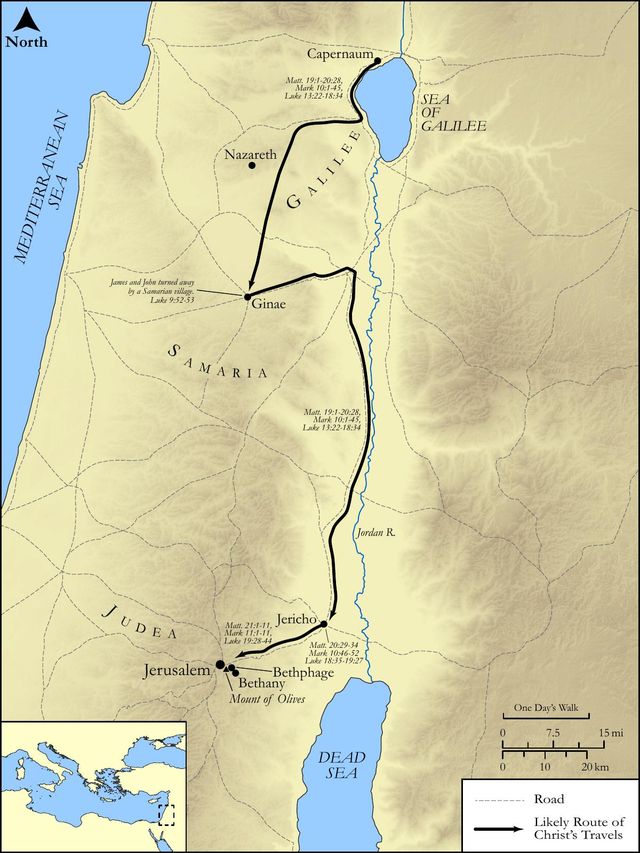
See on the biblical-era map


Study this verse
Public-domain commentary
Matthew Henry
From his Commentary on the Whole Bible. Henry comments on passages, not single verses — this entry covers Luke 16:1–18. His four-level outline is real structure in the source text, so it is rendered as structure.
We mistake if we imagine that the design of Christ's doctrine and holy religion was either to amuse us with notions of divine mysteries or to entertain us with notions of divine mercies. No, the divine revelation of both these in the gospel is intended to engage and quicken us to the practice of Christian duties, and, as much as any one thing, to the duty of beneficence and doing good to those who stand in need of any thing that either we have or can do for them. This our Saviour is here pressing us to, by reminding us that we are but stewards of the manifold grace of God; and since we have in divers instances been unfaithful, and have forfeited the favour of our Lord, it is our wisdom to think how we may, some other way, make what we have in the world turn to a good account. Parables must not be forced beyond their primary intention, and therefore we must not hence infer that any one can befriend us if we lie under the displeasure of our Lord, but that, in the general, we must so lay out what we have in works of piety and charity as that we may meet it again with comfort on the other side death and the grave. If we would act wisely, we must be diligent and industrious to employ our riches in the acts of piety and charity, in order to promote our future and eternal welfare, as worldly men are in laying them out to the greatest temporal profit, in making to themselves friends with them, and securing other secular interests. So Dr. Clarke. Now let us consider,
I.The parable itself, in which all the children of men are represented as stewards of what they have in this world, and we are but stewards.
Whatever we have, the property of it is God's; we have only the use of it, and that according to the direction of our great Lord, and for his honour. Rabbi Kimchi, quoted by Dr. Lightfoot, says, "This world is a house; heaven the roof; the stars the lights; the earth, with its fruits, a table spread; the Master of the house is the holy and blessed God; man is the steward, into whose hands the goods of this house are delivered; if he behave himself well, he shall find favour in the eyes of his Lord; if not, he shall be turned out of his stewardship." Now,
1.Here is the dishonesty of this steward. He wasted his lord's goods, embezzled them, misapplied them, or through carelessness suffered them to be lost and damaged; and for this he was accused to his lord, Luk 16:1. We are all liable to the same charge. We have not made a due improvement of what God has entrusted us with in this world, but have perverted his purpose; and, that we may not be for this judged of our Lord, it concerns us to judge ourselves.
2.His discharge out of his place. His lord called for him, and said, "How is it that I hear this of thee? I expected better things from thee." He speaks as one sorry to find himself disappointed in him, and under a necessity of dismissing him from his service: it troubles him to hear it; but the steward cannot deny it, and therefore there is no remedy, he must make up his accounts; and be gone in a little time, Luk 16:2. Now this is designed to teach us,
(1.)That we must all of us shortly be discharged from our stewardship in this world; we must not always enjoy those things which we now enjoy. Death will come, and dismiss us from our stewardship, will deprive us of the abilities and opportunities we now have of doing good, and others will come in our places and have the same.
(2.)That our discharge from our stewardship at death is just, and what we have deserved, for we have wasted our Lord's goods, and thereby forfeited our trust, so that we cannot complain of any wrong done us.
(3.)That when our stewardship is taken from us we must give an account of it to our Lord: After death the judgment. We are fairly warned both of our discharge and our account, and ought to be frequently thinking of them.
3.His after-wisdom. Now he began to consider, What shall I do? Luk 16:3. He would have done well to have considered this before he had so foolishly thrown himself out of a good place by his unfaithfulness; but it is better to consider late than never. Note, Since we have all received notice that we must shortly be turned out of our stewardship, we are concerned to consider what we shall do then. He must live; which way shall he have a livelihood?
(1.)He knows that he has not such a degree of industry in him as to get his living by work: "I cannot dig; I cannot earn by bread by my labour." But why can he not dig? It does not appear that he is either old or lame; but the truth is, he is lazy. His cannot is a will not; it is not a natural but a moral disability that he labours under; if his master, when he turned him out of the stewardship, had continued him in his service as a labourer, and set a task-master over him, he would have made him dig. He cannot dig, for he was never used to it. Now this intimates that we cannot get a livelihood for our souls by any labour for this world, nor indeed do any thing to purpose for our souls by any ability of our own.
(2.)He knows that he has not such a degree of humility as to get his bread by begging: To beg I am ashamed. This was the language of his pride, as the former of his slothfulness. Those whom God, in his providence, has disabled to help themselves, should not be ashamed to ask relief of others. This steward had more reason to be ashamed of cheating his master than of begging his bread.
(3.)He therefore determines to make friends of his lord's debtors, or his tenants that were behind with their rent, and had given notes under their hands for it: "I am resolved what to do, Luk 16:4. My lord turns me out of his house. I have none of my own to go to. I am acquainted with my lord's tenants, have done them many a good turn, and now I will do them one more, which will so oblige them that they will bid me welcome to their houses, and the best entertainment they afford; and so long as I live, at least till I can better dispose of myself, I will quarter upon them, and go from one good house to another." Now the way he would take to make them his friends was by striking off a considerable part of their debt to his lord, and giving it in his accounts so much less than it was. Accordingly, he sent for one, who owed his lord a hundred measures of oil (in that commodity he paid his rent): Take thy bill, said he, here it is, and sit down quickly, and write fifty (Luk 16:6); so he reduced his debt to the one half. Observe, he was in haste to have it done: "Sit down quickly, and do it, lest we be taken treating, and suspected." He took another, who owed his lord a hundred measures of wheat, and from his bill he cut off a fifth part, and bade him write fourscore (Luk 16:7); probably he did the like by others, abating more or less according as he expected kindness from them. See here what uncertain things our worldly possessions are; they are most so to those who have most of them, who devolve upon others all the care concerning them, and so put it into their power to cheat them, because they will not trouble themselves to see with their own eyes. See also what treachery is to be found even among those in whom trust is reposed. How hard is it to find one that confidence can be reposed in! Let God be true, but every man a liar. Though this steward is turned out for dealing dishonestly, yet still he does so. So rare is it for men to mend of a fault, though they smart for it.
4.The approbation of this: The lord commended the unjust steward, because he had done wisely, Luk 16:8. It may be meant of his lord, the lord of that servant, who, though he could not but be angry at his knavery, yet was pleased with his ingenuity and policy for himself; but, taking it so, the latter part of the verse must be the words of our Lord, and therefore I think the whole is meant of him. Christ did, as it were, say, "Now commend me to such a man as this, that knows how to do well for himself, how to improve a present opportunity, and how to provide for a future necessity." He does not commend him because he had done falsely to his master, but because he had done wisely for himself. Yet perhaps herein he did well for his master too, and but justly with the tenants. He knew what hard bargains he had set them, so that they could not pay their rent, but, having been screwed up by his rigour, were thrown behindhand, and they and their families were likely to go to ruin; in consideration of this, he now, at going off, did as he ought to do both in justice and charity, not only easing them of part of their arrears, but abating their rent for the future. How much owest thou? may mean, "What rent dost thou sit upon? Come, I will set thee an easier bargain, and yet no easier than what thou oughtest to have." He had been all for his lord, but now he begins to consider the tenants, that he might have their favour when he had lost his lord's. The abating of their rent would be a lasting kindness, and more likely to engage them than abating their arrears only. Now this forecast of his, for a comfortable subsistence in this world, shames our improvidence for another world: The children of this world, who choose and have their portions in it, are wiser for their generation, act more considerately, and better consult their worldly interest and advantage, than the children of light, who enjoy the gospel, in their generation, that is, in the concerns of their souls and eternity. Note,
(1.)The wisdom of worldly people in the concerns of this world is to be imitated by us in the concerns of our souls: it is their principle to improve their opportunities, to do that first which is most needful, in summer and harvest to lay up for winter, to take a good bargain when it is offered them, to trust the faithful and not the false. O that we were thus wise in our spiritual affairs!
(2.)The children of light are commonly outdone by the children of this world. Not that the children of this world are truly wise; it is only in their generation. But in that they are wiser than the children of light in theirs; for, though we are told that we must shortly be turned out of our stewardship, yet we do not provide as we were to be here always and as if there were not another life after this, and are not so solicitous as this steward was to provide for hereafter. Though as children of the light, that light to which life and immortality are brought by the gospel, we cannot but see another world before us, yet we do not prepare for it, do not send our best effects and best affections thither, as we should.
II.The application of this parable, and the inferences drawn from it (Luk 16:9):
"I say unto you, you my disciples" (for to them this parable is directed, Luk 16:1), "though you have but little in this world, consider how you may do good with that little." Observe,
1.What it is that our Lord Jesus here exhorts us to; to provide for our comfortable reception to the happiness of another world, by making good use of our possessions and enjoyments in this world: "Make to yourselves friends of the mammon of unrighteousness, as the steward with his lord's goods made his lord's tenants his friends." It is the wisdom of the men of this world so to manage their money as that they may have the benefit of it hereafter, and not for the present only; therefore they put it out to interest, buy land with it, put it into this or the other fund. Now we should learn of them to make use of our money so as that we may be the better for it hereafter in another world, as they do in hopes to be the better for it hereafter in this world; so cast it upon the waters as that we may find it again after many days, Ecc 11:1. And in our case, though whatever we have are our Lord's goods, yet, as long as we dispose of them among our Lord's tenants and for their advantage, it is so far from being reckoned a wrong to our Lord, that it is a duty to him as well as policy for ourselves. Note,
(1.)The things of this world are the mammon of unrighteousness, or the false mammon, not only because often got by fraud and unrighteousness, but because those who trust to it for satisfaction and happiness will certainly be deceived; for riches are perishing things, and will disappoint those that raise their expectations from them.
(2.)Though this mammon of unrighteousness is not to be trusted to for a happiness, yet it may and must be made use of in subserviency to our pursuit of that which is our happiness. Though we cannot find true satisfaction in it, yet we may make to ourselves friends with it, not by way of purchase or merit, but recommendation; so we may make God and Christ our friends, the good angels and saints our friends, and the poor our friends; and it is a desirable thing to be befriended in the account and state to come.
(3.)At death we must all fail, hotan eklipēte - when ye suffer an eclipse. Death eclipses us. A tradesman is said to fail when he becomes a bankrupt. We must all thus fail shortly; death shuts up the shop, seals up the hand. Our comforts and enjoyments on earth will all fail us; flesh and heart fail.
(4.)It ought to be our great concern to make it sure to ourselves, that when we fail at death we may be received into everlasting habitations in heaven. The habitations in heaven are everlasting, not made with hands, but eternal, Co2 5:1. Christ is gone before, to prepare a place for those that are his, and is there ready to receive them; the bosom of Abraham is ready to receive them, and, when a guard of angels carries them thither, a choir of angels is ready to receive them there. The poor saints that are gone before to glory will receive those that in this world distributed to their necessities.
(5.)This is a good reason why we should use what we have in the world for the honour of God and the good of our brethren, that thus we may with them lay up in store a good bond, a good security, a good foundation for the time to come, for an eternity to come. See Ti1 6:17-19, which explains this here.
2.With what arguments he presses this exhortation to abound in works of piety and charity.
(1.)If we do not make a right use of the gifts of God's providence, how can we expect from him those present and future comforts which are the gifts of his spiritual grace? Our Saviour here compares these, and shows that though our faithful use of the things of this world cannot be thought to merit any favour at the hand of God, yet our unfaithfulness in the use of them may be justly reckoned a forfeiture of that grace which is necessary to bring us to glory, and that is it which our Saviour here shows, Luk 16:10-14.
[1.]The riches of this world are the less; grace and glory are the greater. Now if we be unfaithful in the less, if we use the things of this world to other purposes than those for which they were given us, it may justly be feared that we should be so in the gifts of God's grace, that we should receive them also in vain, and therefore they will be denied us: He that is faithful in that which is least is faithful also in much. He that serves God, and does good, with his money, will serve God, and do good, with the more noble and valuable talents of wisdom and grace, and spiritual gifts, and the earnests of heaven; but he that buries the one talent of this world's wealth will never improve the five talents of spiritual riches. God withholds his grace from covetous worldly people more than we are aware of.
[2.]The riches of this world are deceitful and uncertain; they are the unrighteous mammon, which is hastening from us apace, and, if we would make any advantage of it, we must bestir ourselves quickly; if we do not, how can we expect to be entrusted with spiritual riches, which are the only true riches? Luk 16:11. Let us be convinced of this, that those are truly rich, and very rich, who are rich in faith, and rich towards God, rich in Christ, in the promises, and in the earnests of heaven; and therefore let us lay up our treasure in them, expect our portion from them, and mind them in the first place, the kingdom of God and the righteousness thereof, and then, if other things be added to us, use them in ordine ad spiritualia - with a spiritual reference, so that by using them well we may take the faster hold of the true riches, and may be qualified to receive yet more grace from God; for God giveth to a man that is good in his sight, that is, to a free-hearted charitable man, wisdom, and knowledge, and joy (Ecc 2:26); that is, to a man that is faithful in the unrighteous mammon, he gives the true riches.
[3.]The riches of this world are another man's. They are ta allotria, not our own; for they are foreign to the soul and its nature and interest. They are not our own; for they are God's; his title to them is prior and superior to ours; the property remains in him, we are but usufructuaries. They are another man's; we have them from others; we use them for others, and what good has the owner from his goods that increase, save the beholding of them with his eyes, while still they are increased that eat them; and we must shortly leave them to others, and we know not to whom? But spiritual and eternal riches are our own (they enter into the soul that becomes possessed of them) and inseparably; they are a good part that will never be taken away from us. If we make Christ our own, and the promises our own, and heaven our own, we have that which we may truly call our own. But how can we expect God should enrich us with these if we do not serve him with our worldly possessions, of which we are but stewards?
(2.)We have no other way to prove ourselves the servants of God than by giving up ourselves so entirely to his service as to make mammon, that is, all our worldly gain, serviceable to us in his service (Luk 16:13): No servant can serve two masters, whose commands are so inconsistent as those of God and mammon are. If a man will love the world, and hold to that, it cannot be but he will hate God and despise him. He will make all his pretensions of religion truckle to his secular interests and designs, and the things of God shall be made to help him in serving and seeking the world. But, on the other hand, if a man will love God, and adhere to him, he will comparatively hate the world (whenever God and the world come in competition) and will despise it, and make all his business and success in the world some way or other conducive to his furtherance in the business of religion; and the things of the world shall be made to help him in serving God and working out his salvation. The matter is here laid plainly before us: Ye cannot serve God and mammon. So divided are their interests that their services can never be compounded. If therefore we be determined to serve God, we must disclaim and abjure the service of the world.
3.We are here told what entertainment this doctrine of Christ met with among the Pharisees, and what rebuke he gave them.
(1.)They wickedly ridiculed him, Luk 16:14. The Pharisees, who were covetous, heard all these things, and could not contradict him, but they derided him. Let us consider this,
[1.]As their sin, and the fruit of their covetousness, which was their reigning sin, their own iniquity. Note, Many that make a great profession of religion, have much knowledge, and abound in the exercise of devotion, are yet ruined by the love of the world; nor does any thing harden the heart more against the word of Christ. These covetous Pharisees could not bear to have that touched, which was their Delilah, their darling lust; for this they derided him, exemuktērizon auton - they snuffled up their noses at him, or blew their noses on him. It is an expression of the utmost scorn and disdain imaginable; the word of the Lord was to them a reproach, Jer 6:10. They laughed at him for going so contrary to the opinion and way of the world, for endeavouring to recover them from a sin which they were resolved to hold fast. Note, It is common for those to make a jest of the word of God who are resolved that they will not be ruled by it; but they will find at last that it cannot be turned off so.
[2.]As his suffering. Our Lord Jesus endured not only the contradiction of sinners, but their contempt; they had him in derision all the day. He that spoke as never man spoke was bantered and ridiculed, that his faithful ministers, whose preaching is unjustly derided, may not be disheartened at it. It is no disgrace to a man to be laughed at, but to deserve to be laughed at. Christ's apostles were mocked, and no wonder; the disciple is not greater than his Lord.
(2.)He justly reproved them; not for deriding him (he knew how to despise the shame), but for deceiving themselves with the shows and colours of piety, when they were strangers to the power of it, Luk 16:15. Here is,
[1.]Their specious outside; nay, it was a splendid one. First, They justified themselves before men; they denied whatever ill was laid to their charge, even by Christ himself. They claimed to be looked upon as men of singular sanctity and devotion, and justified themselves in that claim: "You are they that do that, so as none ever did, that make it your business to court the opinion of men, and, right or wrong, will justify yourselves before the world; you are notorious for this." Secondly, They were highly esteemed among men. Men did not only acquit them from any blame they were under, but applauded them, and had them in veneration, not only as good men, but as the best of men. Their sentiments were esteemed as oracles, their directions as laws, and their practices as inviolable prescriptions.
[2.]Their odious inside, which was under the eye of God: "He knows your heart, and it is in his sight an abomination; for it is full of all manner of wickedness." Note, First, It is folly to justify ourselves before men, and to think this enough to bear us out, and bring us off, in the judgment of the great day, that men know no ill of us; for God, who knows our hearts, knows that ill of us which no one else can know. This ought to check our value for ourselves, and our confidence in ourselves, that God knows our hearts, and how much deceit is there, for we have reason to abase and distrust ourselves. Secondly, It is folly to judge of persons and things by the opinion of men concerning them, and to go down with the stream of vulgar estimate; for that which is highly esteemed among men, who judge according to outward appearance, is perhaps an abomination in the sight of God, who sees things as they are, and whose judgment, we are sure, is according to truth. On the contrary, there are those whom men despise and condemn who yet are accepted and approved of God, Co2 10:18.
(3.)He turned from them to the publicans and sinners, as more likely to be wrought upon by his gospel than those covetous conceited Pharisees (Luk 16:16): "The law and the prophets were indeed until John; the Old Testament dispensation, which was confined to you Jews, continued till John Baptist appeared, and you seemed to have the monopoly of righteousness and salvation; and you are puffed up with this, and this gains you esteem among men, that you are students in the law and the prophets; but since John Baptist appeared the kingdom of God is preached, a New Testament dispensation, which does not value men at all for their being doctors of the law, but every man presses into the gospel kingdom, Gentiles as well as Jews, and no man thinks himself bound in good manners to let his betters go before him into it, or to stay till the rulers and the Pharisees have led him that way. It is not so much a political national constitution as the Jewish economy was, when salvation was of the Jews; but it is made a particular personal concern, and therefore every man that is convinced he has a soul to save, and an eternity to provide for, thrusts to get in, lest he should come short by trifling and complimenting." Some give this sense of it; they derided Christ or speaking in contempt of riches, for, thought they, were there not many promises of riches and other temporal good things in the law and the prophets? And were not many of the best of God's servants very rich, as Abraham and David? "It is true," saith Christ, "so it was, but now that the kingdom of God is begun to be preached things take a new turn; now blessed are the poor, and the mourners, and the persecuted." The Pharisees, to requite the people for their high opinion of them, allowed them in a cheap, easy, formal religion. "But," saith Christ, "now that the gospel is preached the eyes of the people are opened, and as they cannot now have a veneration for the Pharisees, as they have had, so they cannot content themselves with such an indifferency in religion as they have been trained up in, but they press with a holy violence into the kingdom of God." Note, Those that would go to heaven must take pains, must strive against the stream, must press against the crowd that are going the contrary way.
(4.)Yet still he protests against any design to invalidate the law (Luk 16:17): It is easier for heaven and earth to pass, parelthein - to pass by, to pass away, though the foundations of the earth and the pillars of heaven are so firmly established, than for one tittle of the law to fail. The moral law is confirmed and ratified, and not one tittle of that fails; the duties enjoined by it are duties still; the sins forbidden by it are sins still. Nay, the precepts of it are explained and enforced by the gospel, and made to appear more spiritual. The ceremonial law is perfected in the gospel colours; not one tittle of that fails, for it is found printed off in the gospel, where, though the force of it is as a law taken off, yet the figure of it as a type shines very brightly, witness the epistle to the Hebrews. There were some things which were connived at by the law, for the preventing of greater mischiefs, the permission of which the gospel has indeed taken away, but without any detriment or disparagement to the law, for it has thereby reduced them to the primitive intention of the law, as in the case of divorce (Luk 16:18), which we had before, Mat 5:32; Mat 19:9. Christ will not allow divorces, for his gospel is intended to strike at the bitter root of men's corrupt appetites and passions, to kill them, and pluck them up; and therefore they must not be so far indulged as that permission did indulge them, for the more they are indulged the more impetuous and headstrong they grow.
Historical interpretation
Nine Centuries of Reception
7 surviving comments on this verse. Each one is dated, so this reads as a timeline rather than a list.
Select a marker to jump to its quote. Markers stagger vertically where authors wrote within a few decades of each other.
What the Gospel of "the unjust steward" says is also an image of this matter. He says to the debtor [of one hundred measures of wheat], "Take your bill, sit down, and write eighty," and the other things that are related. You see that he said to each man, "Take your bill." It is evident from this that the documents of sin are ours, but God writes documents of justice. The apostle says, "For you are an epistle written not with ink, but with the Spirit of the living God; not in tables of stone, but in the fleshly tables of the heart." You have in yourselves documents of God and documents of the Holy Spirit. If you transgress, you yourself write in yourselves the handwriting of sin. Notice that at any time when you have approached the cross of Christ and the grace of baptism, your handwriting is fastened to the cross and blotted out in the fountain of baptism. Do not rewrite later what has been blotted out or repair what has been destroyed. Preserve only the documents of God in yourself. Let only the scripture of the Holy Spirit remain in you.
From this we learn then, that we are not ourselves the masters, but rather the stewards of the property of others.
You proposed a little question about the Gospel of Luke (Chapter 16, verse 1 et seq.): Who is the steward of iniquity who is praised by the voice of the Lord? When I wanted to know the reason for this and from which source it came, I examined the volume of the Gospel, and I found among other things that, as the tax collectors and sinners approached the Saviour to hear him, the Pharisees and scribes murmured, saying, "Why does this one receive sinners and eat with them?" (Luke 15:2). He spoke to them the parable of one hundred sheep, and one that was lost, which was found and carried back on the shoulders of the shepherd. And when it was proposed, he immediately said: "I tell you, there will be more joy in heaven over one sinner repenting than over ninety-nine righteous people who have no need for repentance." He also proposed another parable about ten drachmas lost and found, and he completed it with a similar ending. So I tell you, there will be joy in the presence of the Angels of God over one sinner repenting. He also proposed a third parable about a man who had two sons, and who divided his wealth between them. And when the younger son had lost his faculties and began to eat the pods that the pigs ate, he returned to his father, who accepted him. The envious elder brother, too, was rebuked by his father's voice, and he should have rejoiced because his brother was dead and had come back to life; he was lost, and he has been found. He spoke three parables against the Pharisees and Scribes who did not want to receive the repentance of sinners and the salvation of Publicans. He said also, he said to his disciples (Ibid. 16.1), without doubt, that he used a parable, just as before to the Scribes and Pharisees: by which parable he would exhort the disciples to mercy and would say in other words: Forgive and you shall be forgiven (Luke 6:7), so that you may ask boldly in the Lord's Prayer, Forgive us our debts as we also forgive our debtors (Matthew 6:12). Therefore, what is the parable that urges the disciples towards mercy? There was a certain rich man who had a steward (Luke 16:1), or a manager, for this is what οἰκονόμος means. The steward is properly the governor of the estate, from which he is also called a steward. The οἰκονόμος, however, is a dispenser of both money and fruits and all that the master possesses. Therefore, the most beautiful book of Xenophon's Oeconomica is not about the management of the estate but the management of the entire household (interpreted by Cicero). Therefore, this steward was accused before his master because he was squandering his master's property. When he was called, [the master] said: "What is this I hear about you? Give an account of your management, for you can no longer be steward." What did he say to himself? "What shall I do, since my master is taking the stewardship away from me? I am not strong enough to dig; I am ashamed to beg." I know what I will do, so that when I am removed from management, people may receive me into their houses." He called each one of his master's debtors to him and said to the first, "How much do you owe my master?" He said, "A hundred measures of oil. He said to him: take your bill, and sitting down quickly, write fifty. Then he said to another: And how much do you owe? Who answered: A hundred quarters of wheat. He said to him: take your bill, and write eighty. And the lord commended the unjust steward, forasmuch as he had done wisely: for the children of this world are wiser in their generation than the children of light. And I say to you: make unto you friends of the mammon of iniquity; that when you shall fail, they may receive you into everlasting dwellings. He that is faithful in that which is least, is faithful also in that which is greater: and he that is unjust in that which is little, is unjust also in that which is greater. If then you have not been faithful in the unjust mammon, who will trust you with that which is the true? And if you have not been faithful in that which is another's; who will give you that which is your own? No servant can serve two masters: for either he will hate the one, and love the other; or he will hold to the one, and despise the other. You cannot serve God and mammon. Now all these things were heard by the Pharisees, who were greedy, and they ridiculed him. I have put the entire text of this parable so that we do not seek understanding from elsewhere and strive to find certain persons in the parable, but we should interpret it as a parable, that is, a comparison, which is called "parabolē" because it is "thrown beside" or compared, and is like the shadow of the pre-existent truth. Therefore, if the steward of unjust mammon is praised by the voice of the Lord because he has prepared justice for himself from an unjust matter, and the Lord, having suffered losses, praises the prudence of the steward, when he has acted fraudulently towards the Lord but wisely for himself, how much more will Christ, who cannot suffer any loss and is inclined to mercy, praise his disciples if they are merciful towards those who will believe ((or have believed)) in them? Finally, after the parable, he said: And I tell you, make friends for yourselves with unjust mammon. Mammon, however, in the language of the Syriacs, not the Hebrews, means wealth, because it has been collected unjustly. If, therefore, well-dispensed iniquity turns into justice: how much more will divine speech, in which there is no iniquity, and which is entrusted to the apostles, if it is well-dispensed, raise its dispensers to heaven? Therefore it follows: "He who is faithful in the least, that is, in earthly things, will also be faithful in many, that is, in spiritual things. But whoever is unjust in small things, so as not to give to his brothers for their use what has been created by God for all, he will also be unjust in dividing spiritual wealth, so that he may divide the doctrine of the Lord not for necessity, but for persons." But if, he says, you do not manage well the perishable riches of the flesh, who will trust you with the true and eternal riches of the doctrine of God? And if you have been unfaithful in what belongs to someone else (but everything that belongs to this age is someone else’s), who will give you what is yours? That is why he criticizes avarice and says that those who love money cannot love God. Therefore, even the Apostles, if they wish to love God, must hold money in contempt. So the scribes and Pharisees, who were greedy, understanding that the parable was directed at themselves, mocked Him, preferring the carnal things, which are certain and present, to the spiritual and future things, which are uncertain. Theophilus, the seventh Bishop of the Church of Antioch after the Apostle Peter, who compiled the sayings of the four Evangelists into one work, has spoken about this parable in his Commentaries. 'The rich man who had a steward, or manager, is Almighty God, who is richer than anything else. His steward is Paul, who learned the sacred Scriptures at the feet of Gamaliel (Act. 22. 3), and had received the Law of God to be dispensed.' When he had begun to persecute the believers in Christ, to bind them, to kill them, and to plunder all the substance of his Lord, he was rebuked by the Lord: Saul, Saul, why are you persecuting me? It is hard for you to kick against the pricks. (Acts 9:4-5). And he thought to himself: What should I do? Since I, who was a teacher and a steward, must become a disciple and a worker. I cannot dig. For I see that all the commandments of the Law, which were on the earth, are destroyed; and that the Law and the Prophets were fulfilled up to John the Baptist. I am ashamed to beg, that I, who was a teacher of the Jews, should be compelled to beg for instruction from a gentile and from the disciple Ananias. Therefore, I will do what I think is useful to me: so that after I am dismissed from my position, Christians will receive me into their homes. And those who formerly practiced the law, but had now believed in Christ, began to teach that the law was abolished, and that the prophets had foretold these things. And they taught that what had been done by those who kept the law, was worthy of nothing but contempt (Philippians 3:8). Then he called two of his debtors. The first owed him one hundred measures of oil, that is, those who had been gathered from the Gentiles and were in great need of God's mercy; and he made them write fifty in the document instead of one hundred, which was a special number for those who repented, and based on the Jubilee, and that parable in the Gospel in which one is forgiven five hundred denarii, and another fifty. However, he called the people of the Jews who were nourished on the wheat of God's commandments, and who owed him a hundred denarii, and he forced them to make eighty out of a hundred, that is, to believe in the resurrection of the Lord, which is contained in the number of the eighth day, and is completed in eight decades, so that he might pass from the Sabbath of the Law to the first Sabbath. For this reason, it is preached by the Lord that he did well, and that he was changed from the severity of the Law to the mercy of the Gospel for his salvation. And if you ask why he is called the steward of iniquity in the Law, which is from God, he was an unjust steward who indeed offered well, but did not divide well, believing in the Father, but persecuting the Son; having almighty God, but denying the Holy Spirit. Therefore, the Apostle Paul was wiser in transgressing the Law than the once children of light who, engaged in the observation of the Law, lost Christ who is the true light of God the Father. You can read what Ambrose, Bishop of Milan, thought about this place in his comments. I could not find an explanation of this parable in Origen and Didymus, and I am uncertain whether it has been abolished by the antiquity of the times or whether they did not write it themselves. To me, it seems according to my previous interpretation, that we ought to make friends for ourselves from the unjust mammon, not just any poor person, but those who can receive us into their homes and eternal dwellings, so that when we offer them small things, we may receive great things from them, and giving them what belongs to others, we may receive what belongs to us, and sow in blessing, so that we may reap blessings. For he who sows sparingly will also reap sparingly.
(de Qu. Ev. l. ii. qu. 34.) Or because out of the hundred measures of oil, he caused fifty to be written down by the debtors, and of the hundred measures of wheat, fourscore, the meaning thereof is this, that those things which every Jew performs toward the Priests and Levites should be the more abundant in the Church of Christ, that whereas they give a tenth, Christians should give a half, as Zaccheus gave of his goods, (Luke 19:8.) or at least by giving two tenths, that is, a fifth, exceed the payments of the Jews.
(Hom. de Divite.) There is a certain erroneous opinion inherent in mankind, which increases evil and lessens good. It is the feeling that all the good things we possess in the course of our life we possess as lords over them, and accordingly we seize them as our especial goods. But it is quite the contrary. For we are placed in this life not as lords in our own house, but as guests and strangers, led whither we would not, and at a time we think not of. He who is now rich, suddenly becomes a beggar. Therefore whoever thou art, know thyself to be a dispenser of the things of others, and that the privileges granted thee are for a brief and passing use. Cast away then from thy soul the pride of power, and put on the humility and modesty of a steward.
(ut sup.) Meanwhile he is taken and thrust out of his stewardship; for it follows, And he called him, and said unto him, What is this that I hear of thee? give an account of thy stewardship, for thou canst be no longer steward. Day after day by the events which take place our Lord cries aloud to us the same thing, showing us a man at midday rejoicing in health, before the evening cold and lifeless; another expiring in the midst of a meal. And in various ways we go out from our stewardship; but the faithful steward, who has confidence concerning his management, desires with Paul to depart and be with Christ. (Phil. 1:23.) But he whose wishes are on earth is troubled at his departing. Hence it is added of this steward, Then the steward said within himself, What shall I do, for my Lord taketh away from me the stewardship? I cannot dig, to beg I am ashamed. Weakness in action is the fault of a slothful life. For no one would shrink who had been accustomed to apply himself to labour. But if we take the parable allegorically, after our departure hence there is no more time for working; the present life contains the practice of what is commanded, the future, consolation. If thou hast done nothing here, in vain then art thou careful for the future, nor wilt thou gain any thing by begging. The foolish virgins are an instance of this, who unwisely begged of the wise, but returned empty. (Matt 25:8.) For every one puts on his daily life as his inner garment; it is not possible for him to put it off or exchange it with another. But the wicked steward aptly contrived the remission of debts, to provide for himself an escape from his misfortunes among his fellow-servants; for it follows, I am resolved what to do, that when I am put out of the stewardship, they may receive me into their houses. For as often as a man, perceiving his end approaching, lightens by a kind deed the load of his sins, (either by forgiving a debtor his debts, or by giving abundance to the poor,) dispensing those things which are his Lord's, he conciliates to himself many friends, who will afford him before the judge a real testimony, not by words, but by the demonstration of good works, nay moreover will provide for him by their testimony a resting-place of consolation. But nothing is our own, all things are in the power of God. Hence it follows, So he called every one of his Lord's debtors unto him, and said unto the first, How much owest thou unto my Lord? And he said, A hundred casks of oil.
Having rebuked in three parables those who murmured because He received penitents, our Saviour shortly after subjoins a fourth and a fifth on almsgiving and frugality, because it is also the fittest order in preaching that almsgiving should be added after repentance. Hence it follows, And he said unto his disciples, There was a certain rich man.
(ex Hieron.) The bailiff is the manager of the farm, therefore he takes his name from the farm. But the steward, or director of the household, (villicus œconomus) is the overseer of money as well as fruits, and of every thing his master possesses.
A cadus in Greek is a vessel containing three urns. It follows, And he said unto him, Take thy bill, and sit down quickly, and write fifty, forgiving him the half. It follows, Then said he to another, And how much owest thou? And he said, An hundred measures of wheat. A corus is made up of thirty bushels. And he said unto him, Take thy bill, and write fourscore, forgiving him a fifth part. It may be then simply taken as follows: whosoever relieves the want of a poor man, either by supplying half or a fifth part, will be blessed with the reward of his mercy.
Next, that when we exercise not the management of our wealth according to our Lord's pleasure, but abuse our trust to our own pleasures, we are guilty stewards. Hence it follows, And he was accused to him.
Continue studying Luke 16:7 across the web’s major study libraries — every link below opens this exact verse, chapter, or book on the destination site.
Read & Compare
 BibleGatewayThis verse in more than 200 translations and 70 languages.
 Bible.comThe YouVersion reader — hundreds of translations, reading plans, and highlights.
 ESV.orgCrossway's official English Standard Version reader.
 NET BibleThe NET translation with 60,000+ translators' notes on every rendering decision.
 STEP BibleTyndale House's free study tool — original text, vocabulary, and scholarly resources.
 BibliaLogos Bible Software's free web reader.
 USCCBThe New American Bible (Revised Edition) with the U.S. bishops' study notes.
Commentaries
 BibleHub CommentariesDozens of classic commentaries on this verse, gathered on one page.
 StudyLightMore than 100 commentary sets — the largest collection on the web.
 BibleRefPlain-English commentary on what this verse means, verse by verse.
 Enduring WordDavid Guzik's free commentary on this chapter, widely used by Bible teachers.
 Bible Study ToolsVerse commentary alongside Greek and Hebrew study aids.
Original Language & Research
- BibleHub InterlinearThe verse word by word — original language, transliteration, and English.
- BibleHub LexiconEvery word's original-language definition and Strong's entry.
 Blue Letter BibleDeep-study tools — Strong's numbers, concordance, and word studies.
 CNTR CollationThe earliest Greek manuscripts of this verse, collated letter by letter.
Sermons, Hymns & Audio


TrulyRandomVerse is not affiliated with these sites and doesn’t control their content. They’re linked because they’re genuinely useful.
Summary
Luke 16:7 is a specific moment within Jesus' Parable of the Unjust Steward, where the steward, facing dismissal, strategically reduces a debtor's bill from "an hundred measures of wheat" to "fourscore." This act is part of his calculated scheme to secure future favor and provision for himself by manipulating his master's accounts, highlighting his pragmatic, albeit ethically questionable, foresight in preparing for an uncertain future.
Context
ShowHideLiterary Context
This verse is embedded within the larger Parable of the Unjust Steward, found in Luke 16:1-13. The parable opens with a wealthy master accusing his steward of squandering his possessions. Upon learning of his impending dismissal, the steward devises a plan to ensure he has a place to go after losing his job. His strategy involves calling in his master's debtors and significantly reducing their outstanding bills. Luke 16:7 specifically details the steward's interaction with a second debtor, following a similar reduction of an oil debt in Luke 16:6. This action is not driven by generosity but by shrewd self-interest, aiming to create obligations and goodwill among those who would benefit from his "generosity."
Historical & Cultural Context
In the ancient Near East, stewards (οἰκονόμος, oikonomos) held significant responsibility, managing their master's entire estate, including finances, property, and business dealings. It was common practice for stewards to add their own commission or interest to the master's debts, which they would then collect. When the steward in the parable reduces the debts, he is likely foregoing his own commission or even part of the master's principal, effectively making the debtors beholden to him. The "measures of wheat" (κόρος, kóros) refer to a substantial unit of dry measure, equivalent to approximately 10-12 bushels or around 400-500 liters. "An hundred measures of wheat" was an enormous amount, representing a significant portion of a large estate's annual yield or a substantial commercial transaction. Reducing it to "fourscore" (eighty) meant a 20% reduction, a considerable favor that would certainly elicit gratitude and a sense of obligation from the debtor.
Key Themes
ShowHideLuke 16:7 contributes to several prominent themes within the parable and the broader Gospel of Luke. Firstly, it underscores the theme of Worldly Shrewdness and Foresight, as the steward demonstrates remarkable practical wisdom in securing his temporal future, even if through dishonest means. Secondly, it highlights the theme of Preparation for the Future, urging believers to apply similar diligence and strategic thinking to their spiritual and eternal lives, as Jesus commends the steward's foresight, not his dishonesty, in Luke 16:8. Thirdly, the verse implicitly touches on Stewardship of Resources, illustrating how resources (even ill-gotten influence or the master's assets) can be strategically used to achieve desired outcomes, prompting Jesus' exhortation in Luke 16:9 to use "unrighteous mammon" for eternal gain.
Exposition and Analysis
ShowHideKey Word Analysis
ShowHideMeaning "a writing, i.e. a letter, note, epistle, book, etc.; plural learning." In this context, it refers to the written document or promissory note detailing the debtor's obligation to the master. The steward's instruction to "take thy bill" implies that the debtor possessed a copy or a record of the debt, which was then to be altered.
Meaning "to 'grave', especially to write; figuratively, to describe." This verb indicates the physical act of altering the written record of the debt. The steward's command to "write fourscore" is a direct instruction to falsify the official record, demonstrating his bold and decisive action to secure his future by manipulating the accounts.
Referring to a "cor," a specific large measure. As discussed in the context, this unit denotes a substantial quantity, in this case, of wheat. The reduction from "an hundred measures" to "fourscore" (eighty) represents a significant 20% discount, underscoring the magnitude of the favor granted to the debtor and the steward's willingness to make a substantial impact to gain loyalty.
Verse Breakdown
ShowHide"Then said he to another, And how much owest thou?"
The steward, having already dealt with the oil debtor, moves on to a second individual. His question is direct and probing, initiating the process of debt reduction. This shows his methodical approach to securing multiple "friends" or benefactors for his post-employment future.
"And he said, An hundred measures of wheat."
The debtor's reply specifies the commodity and the exact quantity of his original debt. The "hundred measures of wheat" signifies a very large and valuable amount, indicating the debtor's significant financial obligation and the substantial nature of the favor the steward is about to bestow.
"And he said unto him, Take thy bill, and write fourscore."
The steward issues a clear, authoritative command. The instruction to "take thy bill" implies the debtor should retrieve his copy of the debt agreement. "Write fourscore" (eighty) is the directive to immediately alter the document, reducing the debt by twenty measures. This action is swift, decisive, and directly beneficial to the debtor, creating a strong sense of obligation towards the steward.
Literary Devices
ShowHideThe Parable of the Unjust Steward, in which Luke 16:7 is a key moment, is an extended Parable that uses a worldly scenario to teach a spiritual truth. Jesus employs Irony by commending the steward's shrewdness and foresight, not his dishonesty. The steward, a "son of this world," acts with greater strategic planning for his temporal future than many "sons of light" do for their eternal future. The "bill" and "measures" serve as Symbolism for earthly resources and obligations, which, though temporal, can be leveraged for eternal purposes. The steward's actions are a hyperbolic example of using present opportunities to secure future well-being, prompting Jesus' challenge to His disciples to be equally, if not more, proactive in their spiritual stewardship.
Theological and Thematic Connections
ShowHideLuke 16:7, within the broader parable, challenges believers to consider their stewardship of earthly resources in light of eternal realities. While Jesus does not endorse the steward's dishonesty, He praises his foresight and decisive action. The core theological message is not about condoning unethical behavior, but about learning from the strategic diligence of worldly individuals. If those focused on temporal gain are so astute in managing their affairs to secure their future, how much more should followers of Christ exercise wisdom, intentionality, and generosity with their material possessions and opportunities to build up spiritual treasures and secure an eternal inheritance. It's a call to prioritize eternal values over temporal comforts, using what we have now to invest in what truly lasts.
Reflection and Application
ShowHideThe shrewdness of the unjust steward in Luke 16:7 serves as a powerful, albeit counterintuitive, mirror for believers. It forces us to examine our own priorities and the intentionality with which we manage the resources God has entrusted to us—our time, talents, and finances. If a worldly man, facing a crisis, could so decisively leverage his present position to secure his earthly future, how much more should we, as "sons of light," strategically and generously use our earthly possessions and opportunities to advance God's kingdom and secure our eternal future? This verse challenges us to move beyond passive faith to active, strategic stewardship, recognizing that every resource we possess can be an instrument for eternal impact. It's a call to live with an eternal perspective, making wise choices today that will yield lasting spiritual dividends.
Questions for Reflection
ShowHideFAQ
ShowHideWhat was the significance of "an hundred measures of wheat" and its reduction to "fourscore"?
ShowHide"An hundred measures of wheat" refers to 100 koros (Greek: κόρος), a very large unit of dry measure, equivalent to roughly 10-12 bushels per measure, totaling a substantial quantity of grain. This amount represented a significant debt, indicative of a major transaction or a large portion of a harvest. The steward's reduction of this debt to "fourscore" (80 measures) meant a 20% discount. This was a considerable favor, effectively forgiving a substantial amount of money or goods. The significance lies in the magnitude of the steward's action: he was making a significant impact on the debtor's financial burden, thereby creating a strong sense of gratitude and obligation that he hoped to leverage for his own future benefit, as further explained in Luke 16:9.
Did Jesus condone the steward's dishonesty in this parable?
ShowHideNo, Jesus explicitly does not condone the steward's dishonesty. The parable's introduction in Luke 16:1 identifies him as "unjust." However, Jesus commends the steward's shrewdness and foresight in using his present opportunity to prepare for his future. As Luke 16:8 states, "the sons of this world are more shrewd in dealing with their own generation than the sons of light." The parable is an analogy, not an endorsement of unethical behavior. It challenges believers to apply similar strategic thinking, diligence, and urgency to their spiritual lives and the use of their earthly resources for eternal purposes, rather than being less wise in matters of eternal significance than worldly people are in temporal affairs.
Christ-Centered Fulfillment
ShowHideWhile Luke 16:7 and the Parable of the Unjust Steward do not offer a direct messianic prophecy, they powerfully illuminate principles that find their ultimate fulfillment and meaning in Christ. The steward's desperate, yet shrewd, attempt to secure his future by making "friends" through a reduction of debt foreshadows the ultimate, divine "debt reduction" offered through Jesus Christ. Humanity stood indebted to God, not by measures of wheat, but by the immeasurable weight of sin. Christ, through His sacrificial death, paid the debt we could not pay, offering a complete and eternal forgiveness that secures our future, not just for a few years, but for eternity (Romans 5:8). He is the true steward who, out of boundless love and wisdom, reconciled us to God, transforming us from enemies into "friends" and co-heirs (2 Corinthians 5:18-19). Our response to this ultimate act of grace is to live with the same urgency and intentionality that the steward displayed, but directed towards God's kingdom. We are called to be wise stewards of the "unrighteous mammon" and all our resources, not to secure our own earthly future, but to honor the One who secured our eternal future, seeking first His kingdom and righteousness (Matthew 6:33) and laying up treasures in heaven where Christ Himself resides (Colossians 3:1-2).