


Judges 4:11
Bible text: King James Version (1769 Blayney text) · Public domain
Bible text: King James Version with Strong's numbers · Public domain
Bible text: Berean Standard Bible · Public domain
Bible text: American Standard Version (1901) · Public domain
Bible text: World English Bible, Messianic edition · Public domain
Bible text: Geneva Bible (1599) · Public domain
Bible text: Young's Literal Translation · Public domain
- וְחֶבֶרve·Che·verand HeberH2268Conj-w ¦ N-proper-mNoun Proper MasculineוְandחֶבֶרHeber
- הַקֵּינִיha·kei·Nithe KeniteH7017Art ¦ N-msNoun Gentilic Singular Masculine AbsoluteהַtheקֵּינִיKenite
- נִפְרָדnif·Rad[was] separateH6504V-Niphal-Prtcpl-msVerb Niphal Participle Singular Masculine Absolute
- מִקַּיִןmi·Ka·yinfrom [the] Kenite[s]H7014Prep-m ¦ N-proper-mNoun Proper Masculineמִfromקַּיִן[the] Kenite[s]
- מִבְּנֵיmi·be·Neifrom [the] descendants ofH1121Prep-m ¦ N-mpcNoun Plural Masculine Constructמִfromבְּנֵי[the] descendants of
- חֹבָבcho·VavHobabH2246N-proper-mNoun Proper Masculine
- חֹתֵןcho·Ten[the] father-in-law ofH2859V-Qal-Prtcpl-msVerb Qal Participle Singular Masculine Construct
- מֹשֶׁהmo·ShehMosesH4872N-proper-mNoun Proper Masculine
- וַיֵּטvai·Yetand he had pitchedH5186Conj-w ¦ V-Qal-ConsecImperf-3msVerb Qal Consecutive Imperfect 3rd Singular Masculineוַandיֵּטhe had pitched
- אָהֳלוֹ'o·ho·Lohis tentH168N-msc ¦ 3msNoun Singular Masculine Constructאָהֳלtentוֹhis
- עַד'adtoH5704PrepPreposition
- אֵלוֹן'e·Lon[the] great treeH436N-msNoun Singular Masculine Absolute
- בְּצַעֲנַנִּיםbatz·'a·nimin ZaanannimH6815Prep-b ¦ N-properNoun Proper LocationבְּinצַעֲנַנִּיםZaanannim
- אֲשֶׁר'a·SherwhichH834RelParticle Relative
- אֶת'et[is] withH854PrepPreposition
- קֶדֶשׁKe·deshKedeshH6943N-properNoun Proper Location
English is a literal word-by-word gloss of the Hebrew, not the KJV's wording. Why?
This is the original text the KJV's translators worked from — each Hebrew word with its own literal English meaning in this verse, prepared by scholars at Tyndale House, Cambridge. The KJV translates whole sentences, not word by word, so its wording differs: one Hebrew word can become several English words, and the KJV may choose “the LORD” where the gloss reads “Yahweh”. Both are faithful — they answer different questions. For the KJV's own rendering, switch to the KJV text.
Details
See on the biblical-era maps
Study this verse
Public-domain commentary
Matthew Henry
From his Commentary on the Whole Bible. Henry comments on passages, not single verses — this entry covers Judges 4:10–16. His three-level outline is real structure in the source text, so it is rendered as structure.
Here, I. Barak beats up for volunteers, and soon has his quota of men ready, Jdg 4:10. Deborah had appointed him to raise an army of 10,000 men (Jdg 4:6), and so many he has presently at his feet, following him, and subject to his command. God is said to call us to his feet (Isa 41:2), that is, into obedience to him. Some think it intimates that they were all footmen, and so the armies of the Jews generally were, which made the disproportion of strength between them and the enemy (who had horses and chariots) very great, and the victory the more illustrious; but the presence of God and his prophetess was abundantly sufficient to balance that disproportion. Barak had his men at his feet, which intimates their cheerfulness and readiness to attend him whithersoever he went, Rev 14:4. Though the tribes of Zebulun and Naphtali were chiefly depended on, yet it appears by Deborah's song that some had come in to him from other tribes (Manasseh and Issachar), and more were expected that came not, from Reuben, Dan, and Asher, Jdg 5:14-17. But these are overlooked here; and we are only told that to make his 10,000 men effective indeed Deborah went up with him. The Jdg 4:11, concerning the removal of Heber, one of the families of the Kenites, out of the wilderness of Judah, in the south, where those families had fixed themselves (Jdg 1:16), into the northern country, comes in for the sake of what was to follow concerning the exploit of Jael, a wife of that family.
II.Sisera, upon notice of Barak's motions, takes the field with a very numerous and powerful army (Jdg 4:12, Jdg 4:13):
They showed Sisera, that is, it was shown to him. Yet some think it refers to the Kenites, mentioned immediately before, Jdg 4:11. They gave Sisera notice of Barak's rendezvous, there being peace at this time between Jabin and that family, Jdg 4:17. Whether they intended it as a kindness to him or no, it served to accomplish what God had said by Deborah (Jdg 4:7): I will draw unto thee Sisera. Sisera's confidence was chiefly in his chariots; therefore particular notice is taken of them, 900 chariots of iron, which, with the scythes fastened to their axle-trees, when they were driven into an army of footmen, did terrible execution. So ingenious have men been in inventing methods of destroying one another, to gratify those lusts from which come wars and fightings.
III.Deborah gives orders to engage the enemy, Jdg 4:14.
Josephus says that when Barak saw Sisera's army drawn up, and attempting to surround the mountain on the top of which he and his forces lay encamped, his heart quite failed him, and he determined to retire to a place of greater safety; but Deborah animated him to make a descent upon Sisera, assuring him that this was the day marked out in the divine counsels for his defeat. "Now they appear most threatening they are ripe for ruin. The thing is as sure to be done as if it were done already: The Lord hath delivered Sisera into thy hand." See how the work and honour of this great action are divided between Deborah and Barak; she, as the head, gives the word, he, as the hand, does the work. Thus does God dispense his gifts variously, Co1 12:4, etc. But, though ordinarily the head of the woman is the man (Co1 11:3), he that has the residue of the Spirit was pleased to cross hands, and to put the head upon the woman's shoulders, choosing the weak things of the world to shame the mighty, that no flesh might glory in his presence. It was well for Barak that he had Deborah with him; for she made up what was defective,
1.In his conduct, by telling him, This is the day.
2.In his courage, by assuring him of God's presence: "Has not the Lord gone out before thee? Darest not thou follow when thou hast God himself for thy leader?" Note,
(1.)In every undertaking it is good to be satisfied that God goes before us, that we are in the way of our duty and under his direction.
(2.)If we have ground to hope that God goes before us, we ought to go on with courage and cheerfulness. Be not dismayed at the difficulties thou meetest with in resisting Satan, in serving God, or suffering for him; for has not the Lord gone out before thee? Follow him fully then.
IV.God himself routs the enemy's army, Jdg 4:15.
Barak, in obedience to Deborah's orders, went down into the valley, though there upon the plain the iron chariots would have so much the more advantage against him, quitting his fastnesses upon the mountain in dependence upon the divine power; for in vain is salvation hoped for from hills and mountains; in the Lord alone is the salvation of his people, Jer 3:23. And he was not deceived in his confidence: The Lord discomfited Sisera. It was not so much the bold and surprising alarm which Barak gave their camp that dispirited and dispersed them, but God's terror seized their spirits and put them into an unaccountable confusion. The stars, it seems, fought against them, Jdg 5:20. Josephus says that a violent storm of hail which beat in their faces gave them this rout, disabled them, and drove them back; so that they became a very easy prey to the army of Israel, and Deborah's words were made good: "The Lord has delivered them into thy hand; it is now in thy power to do what thou wilt with them."
V.Barak bravely improves his advantage, follows the blow with undaunted resolution and unwearied diligence, prosecutes the victory, pursues the scattered forces, even to their general's head-quarters at Harosheth (Jdg 4:16), and spares none whom God had delivered into his hand to be destroyed: There was not a man left. When God goes before us in our spiritual conflicts we must bestir ourselves; and, when by grace he gives us some success against the enemies of our souls, we must improve it by watchfulness and resolution, and carry on the holy war with vigour.
Continue studying Judges 4:11 across the web’s major study libraries — every link below opens this exact verse, chapter, or book on the destination site.
Read & Compare
 BibleGatewayThis verse in more than 200 translations and 70 languages.
 Bible.comThe YouVersion reader — hundreds of translations, reading plans, and highlights.
 ESV.orgCrossway's official English Standard Version reader.
 NET BibleThe NET translation with 60,000+ translators' notes on every rendering decision.
 STEP BibleTyndale House's free study tool — original text, vocabulary, and scholarly resources.
 BibliaLogos Bible Software's free web reader.
 USCCBThe New American Bible (Revised Edition) with the U.S. bishops' study notes.
Commentaries
 BibleHub CommentariesDozens of classic commentaries on this verse, gathered on one page.
 StudyLightMore than 100 commentary sets — the largest collection on the web.
 BibleRefPlain-English commentary on what this verse means, verse by verse.
 Enduring WordDavid Guzik's free commentary on this chapter, widely used by Bible teachers.
 Bible Study ToolsVerse commentary alongside Greek and Hebrew study aids.
Original Language & Research
- BibleHub InterlinearThe verse word by word — original language, transliteration, and English.
- BibleHub LexiconEvery word's original-language definition and Strong's entry.
 Blue Letter BibleDeep-study tools — Strong's numbers, concordance, and word studies.
 SefariaThe Hebrew text with Rashi and centuries of Jewish commentary.
Sermons, Hymns & Audio


TrulyRandomVerse is not affiliated with these sites and doesn’t control their content. They’re linked because they’re genuinely useful.
Summary
Judges 4:11 introduces Heber the Kenite, a seemingly minor character whose specific relocation proves pivotal to the unfolding narrative of Israel's deliverance from Canaanite oppression. By detailing his lineage as a descendant of Hobab, Moses' father-in-law, and his unique decision to separate from the main Kenite tribe to settle in the plain of Zaanaim near Kedesh, the verse provides crucial geographical and relational context. This seemingly incidental piece of information masterfully sets the stage for the dramatic and unexpected climax where Heber's wife, Jael, plays a decisive role in Israel's victory over Sisera, revealing God's meticulous providence at work through ordinary individuals and seemingly random circumstances.
Context
ShowHideLiterary Context
This verse serves as a crucial narrative interlude immediately following the account of Deborah's prophecy to Barak and their preparations for battle against Sisera, the commander of Jabin's army, who had oppressed Israel for twenty years (Judges 4:1-10). Judges 4:11 provides the necessary background information that explains why Sisera, fleeing the battlefield, would seek refuge in Jael's tent later in the chapter (Judges 4:17). Without this detail, Jael's subsequent heroic act (Judges 4:21) would lack its narrative foundation and dramatic irony. It bridges the setup of the conflict with its surprising resolution, demonstrating the meticulous way the biblical narrative weaves together seemingly disparate elements.
Historical & Cultural Context
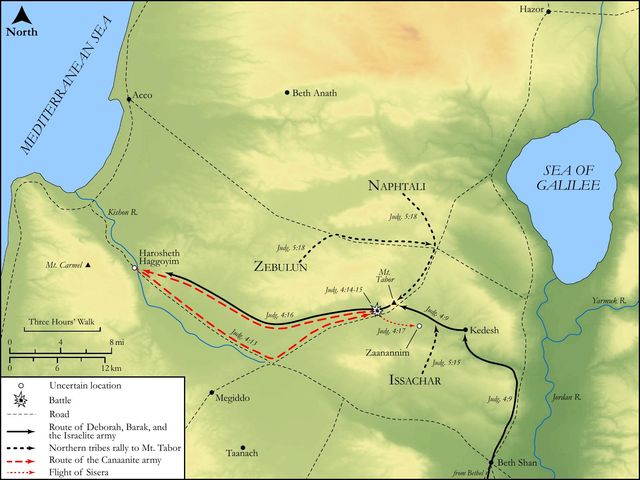
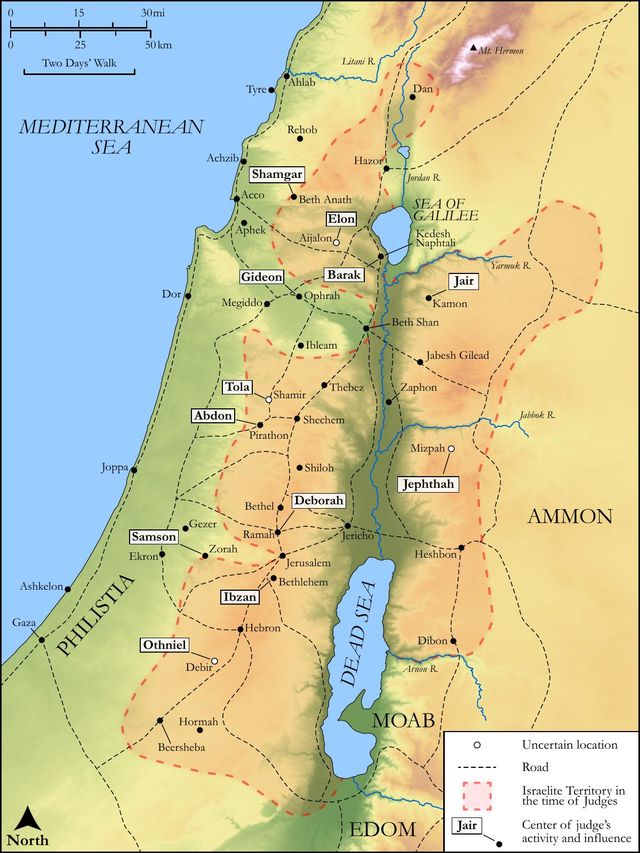
The Kenites were a nomadic Midianite clan, traditionally associated with metallurgy, who maintained a unique and generally amicable relationship with Israel. Their patriarch, Hobab (or Jethro), Moses' father-in-law, had accompanied Israel for a time in the wilderness, offering guidance and maintaining friendly ties (Numbers 10:29-32). This historical bond meant that the Kenites were generally considered neutral or friendly by both Israelites and Canaanites, making Heber's tent a plausible sanctuary for Sisera. The "plain of Zaanaim" (meaning "place of wanderings" or "oaks of the wanderers") near Kedesh in Naphtali was a strategic location in northern Israel, close to the battleground where Sisera's forces would be routed. Heber's individual "severing" from the main Kenite body suggests a deliberate, perhaps permanent, settlement in this specific area, highlighting his family's unique and opportune position.
Key Themes
ShowHideJudges 4:11 contributes significantly to several overarching themes within the book of Judges and the broader biblical narrative. Firstly, it underscores Divine Providence, demonstrating God's meticulous orchestration of events, even through seemingly insignificant details like a family's relocation. This detail is not random but divinely positioned to facilitate Sisera's ultimate demise. Secondly, it highlights the theme of God Using Unexpected Instruments. While the main conflict involves Deborah and Barak, the decisive blow comes from Jael, a Kenite woman, who is outside the direct Israelite military structure. Her family's strategic placement, detailed in this verse, is essential to her role. This foreshadows God's pattern of working through the weak or overlooked to accomplish His mighty purposes, a theme powerfully echoed elsewhere in Scripture, such as in 1 Corinthians 1:27-29.
Exposition and Analysis
ShowHideKey Word Analysis
ShowHideMeaning "community" or "association." This name is ironically juxtaposed with his action of "severing himself." His identity as "the Kenite" immediately links him to the nomadic tribe descended from Hobab, Moses' father-in-law. This lineage is crucial, establishing a historical and familial connection to Israel, yet also marking him as distinct from them, highlighting his neutral status in the conflict between Israel and Canaan.
A primitive root meaning "to break through, i.e., spread or separate (oneself)." This verb implies a deliberate act of separation or withdrawal from a group. It suggests Heber's independent decision to detach from the main body of the Kenites, who typically maintained their nomadic lifestyle. This act of separation is not presented as negative but as a unique, intentional move that places him and his family in a specific, divinely appointed location for the unfolding drama.
Meaning "an oak or other strong tree," often referring to a specific landmark or a cluster of large trees, which could indicate a settled area or a notable place. While translated "plain" in KJV, it often refers to a prominent grove of oaks. The "plain of Zaanaim" (H6815, meaning "removals" or "wanderings") is near Kedesh, a significant Israelite city. The description of this location underscores the strategic importance of Heber's new dwelling, placing his family firmly within the geographical sphere of the conflict.
Verse Breakdown
ShowHide"Now Heber the Kenite"
This introduces a specific individual, Heber, identified by his tribal affiliation as a Kenite. This immediately signals his non-Israelite identity but also hints at his potential significance due to the Kenites' historical ties to Israel. The "Now" serves as a narrative transition, drawing attention to this seemingly tangential detail.
"[which was] of the children of Hobab the father in law of Moses"
This clause provides crucial genealogical information, establishing Heber's direct lineage from Hobab, Moses' father-in-law. This connection is not merely incidental; it highlights the long-standing, albeit complex, relationship between the Kenites and the Israelites, setting the stage for the Kenites' unexpected involvement in Israel's deliverance.
"had severed himself from the Kenites"
This phrase describes Heber's unique and deliberate action. Unlike the majority of his nomadic tribe, Heber chose to separate or settle down. This independent decision is key to the narrative, as it explains why his family would be found in a fixed location and thus accessible to Sisera, who was fleeing the battle.
"and pitched his tent unto the plain of Zaanaim, which [is] by Kedesh"
This final clause specifies the precise location of Heber's new settlement. The "plain of Zaanaim" (or "oaks of Zaanaim") near Kedesh (specifically Kedesh-Naphtali) places his family firmly within the geographical sphere of the conflict, close to Barak's base and the future battleground, thereby providing the necessary physical context for Jael's subsequent actions.
Literary Devices
ShowHideJudges 4:11 is rich in Foreshadowing, subtly preparing the reader for the dramatic events to come. The seemingly mundane detail of Heber's specific relocation is, in fact, a crucial narrative setup, explaining why Sisera would later seek refuge in Jael's tent. The verse also employs Irony, particularly in the name "Heber" (companion) and "Zaanaim" (wanderings) contrasting with his act of "severing himself" and settling. This ironic tension highlights the unexpected nature of God's work. Furthermore, the meticulous detail about Heber's lineage and location serves as a narrative device to underscore Divine Providence, demonstrating how God orchestrates seemingly random human choices and movements to fulfill His greater redemptive plan, even through those outside the direct covenant community of Israel.
Theological and Thematic Connections
ShowHideJudges 4:11 profoundly illustrates the meticulous nature of God's providence, revealing that even the seemingly insignificant details of human lives are woven into His grand tapestry of redemption. Heber's decision to "sever himself" and settle in a specific location, while a personal choice, becomes a divinely orchestrated act that positions his family to play a pivotal role in Israel's deliverance. This verse reminds us that God's sovereignty extends beyond the grand movements of nations and armies, reaching into the individual choices and geographical placements of ordinary people. It underscores that God often uses unexpected individuals and circumstances, outside the conventional or powerful, to accomplish His purposes, thereby magnifying His power and wisdom rather than human strength. This detail, therefore, is not a mere geographical note but a profound theological statement about God's active, detailed involvement in human history.
Reflection and Application
ShowHideJudges 4:11, though brief, offers a profound spiritual lesson: God's hand is at work in the seemingly ordinary, the mundane, and even the seemingly random choices we make. Heber's decision to relocate, a personal and likely practical choice, became a strategic piece in God's plan for Israel's liberation. This encourages us to view our own lives, our daily decisions, our geographical locations, and our relationships not as isolated incidents but as potential elements within God's larger, providential design. We are called to faithfulness in the "small" things, trusting that God can use our seemingly insignificant actions or positions for His glory and the advancement of His kingdom. It fosters a posture of humility and expectancy, recognizing that we might be positioned, just like Heber and Jael, for a divine purpose we cannot yet fully comprehend, and that our obedience in seemingly minor matters can have eternal significance.
Questions for Reflection
ShowHideFAQ
ShowHideWho were the Kenites and why is their connection to Moses important?
ShowHideThe Kenites were a nomadic clan, distinct from the Israelites, often associated with the Midianites. Their significance stems from their ancestral connection to Hobab (also identified as Jethro), who was Moses' father-in-law. This relationship established a historical bond between the Kenites and the Israelites, with Hobab even accompanying Israel for a period in the wilderness and offering counsel (Numbers 10:29-32). This connection meant the Kenites were generally seen as friendly or neutral by Israel, and often by their adversaries as well, which is crucial for understanding why Sisera would seek refuge in Jael's tent.
Why did Heber 'sever himself' from the Kenites?
ShowHideThe text does not explicitly state Heber's reasons for "severing himself" (Hebrew: nip̄raḏ), but it implies a deliberate act of separation from the main body of his nomadic tribe. This could have been for various reasons: seeking better pasture, establishing a more settled lifestyle, or perhaps even a personal or familial disagreement. The theological significance, however, lies not in his personal motivation but in the consequence of his action: it strategically positioned his family in a fixed location near Kedesh, which became the precise spot where Sisera would flee, setting the stage for Jael's decisive intervention (Judges 4:17-21).
What is the significance of 'Zaanaim' and 'Kedesh' in this context?
ShowHide"The plain of Zaanaim" (or "oaks of Zaanaim") and its proximity "by Kedesh" are crucial geographical details. Kedesh-Naphtali was a prominent Israelite city, a city of refuge, and notably, the hometown of Barak, the Israelite commander (Judges 4:6). This places Heber's tent squarely within the region of conflict between Israel and Sisera's Canaanite forces. The specific location means that Sisera, fleeing the battle near the Kishon River, would find himself in the vicinity of Heber's tent, which, due to the Kenites' neutral reputation, would appear to be a safe haven. This precise geographical detail is essential for the narrative's dramatic climax and for understanding the providential hand of God at work.
Christ-Centered Fulfillment
ShowHideJudges 4:11, with its seemingly minor detail about Heber's relocation, provides a powerful illustration of God's meticulous providence, a theme that finds its ultimate fulfillment in Jesus Christ. Just as Heber's seemingly ordinary choice positioned his family for a decisive role in Israel's deliverance, so too did countless "insignificant" details throughout history perfectly align to bring about the Incarnation and redemption through Christ. The precise timing of His birth under Roman census (Luke 2:1-7), His lineage tracing back through seemingly obscure figures and unexpected turns (Matthew 1:1-17), and His upbringing in Nazareth, a town of no particular renown, all demonstrate God's sovereign orchestration. The "Lamb of God" who takes away the sin of the world (John 1:29) was not born into a position of worldly power or obvious strategic advantage, but into humble circumstances, fulfilling prophecies through seemingly ordinary human choices and historical events. This verse, therefore, points to a God who is intimately involved in every detail, working all things according to the counsel of His will (Ephesians 1:11), culminating in the perfect, divinely orchestrated plan of salvation through His Son, Jesus Christ, who came at the "fullness of time" (Galatians 4:4).