


Esther 5:13
Bible text: King James Version (1769 Blayney text) · Public domain
Bible text: Berean Standard Bible · Public domain
Bible text: American Standard Version (1901) · Public domain
Bible text: World English Bible, Messianic edition · Public domain
Bible text: Geneva Bible (1599) · Public domain
Bible text: Young's Literal Translation · Public domain
- וְכָלve·kholand allH3605Conj-w ¦ N-msNoun Singular Masculine Absoluteוְandכָלall
- זֶהzehthisH2088PrtParticle Demonstrative
- אֵינֶנּוּ'ei·Ne·nunot itH369N-msc ¦ 3msNoun Singular Masculine Constructאֵינֶnotנּוּit
- שֹׁוֶהsho·Veh[is] adequateH7737V-Qal-Prtcpl-msVerb Qal Participle Singular Masculine Absolute
- לִיLifor mePrep-l ¦ 1csSuffix Personal 1st Singular common genderלִforיme
- בְּכָלbe·kholat anyH3605Prep-b ¦ N-mscNoun Singular Masculine Constructבְּatכָלany
- עֵת'EttimeH6256N-csNoun Singular common gender Absolute
- אֲשֶׁר'a·SherwhenH834RelParticle Relative
- אֲנִי'a·NiIH589Pro-1csPronoun Personal 1st Singular common gender
- רֹאֶהro·'Eh[am] seeingH7200V-Qal-Prtcpl-msVerb Qal Participle Singular Masculine Absolute
- אֶת'et<obj.>H853DirObjMParticle Object Indicator
- מָרְדֳּכַיma·re·do·KhaiMordecaiH4782N-proper-mNoun Proper Masculine
- הַיְּהוּדִיhai·ye·hu·Dithe JewH3064Art ¦ N-msNoun Gentilic Singular Masculine AbsoluteהַtheיְּהוּדִיJew
- יוֹשֵׁבyo·ShevsittingH3427V-Qal-Prtcpl-msVerb Qal Participle Singular Masculine Absolute
- בְּשַׁעַרbe·Sha·'arat [the] gate ofH8179Prep-b ¦ N-mscNoun Singular Masculine Constructבְּatשַׁעַר[the] gate of
- הַמֶּלֶךְha·Me·lekhthe kingH4428Art ¦ N-msNoun Singular Masculine Absoluteהַtheמֶּלֶךְking
English is a literal word-by-word gloss of the Hebrew, not the KJV's wording. Why?
This is the original text the KJV's translators worked from — each Hebrew word with its own literal English meaning in this verse, prepared by scholars at Tyndale House, Cambridge. The KJV translates whole sentences, not word by word, so its wording differs: one Hebrew word can become several English words, and the KJV may choose “the LORD” where the gloss reads “Yahweh”. Both are faithful — they answer different questions. For the KJV's own rendering, switch to the KJV text.
Details
See on the biblical-era maps
Study this verse
Public-domain commentary
Matthew Henry
From his Commentary on the Whole Bible. Henry comments on passages, not single verses — this entry covers Esther 5:9–14. His three-level outline is real structure in the source text, so it is rendered as structure.
This account here given of Haman is a comment upon that of Solomon, Pro 21:24. Proud and haughty scorner is his name that deals in proud wrath. Never did any man more answer that name than Haman, in whom pride and wrath had so much the ascendant. See him,
I.Puffed up with the honour of being invited to Esther's feast.
He was joyful and glad of heart at it, Est 5:9. Observe with what a high gust he speaks of it (Est 5:12), how he values himself upon it, and how near he thinks it brings him to the perfection of felicity, that Esther the queen did let no man come with the king to the banquet but his mighty self, and he thought it was because she was exceedingly charmed with his conversation that the next day she had invited him also to come with the king; none so fit as he to bear the king company. Note, Self-admirers and self-flatterers are really self-deceivers. Haman pleased himself with the fancy that the queen, by this repeated invitation, designed to honour him, whereas really she designed to accuse him, and, in calling him to the banquet, did but call him to the bar. What magnifying glasses do proud men look at their faces in! And how does the pride of their heart deceive them! Oba 1:3.
II.Vexing and fretting at the slight that Mordecai put upon him, and thereby made uneasy to himself and to all about him.
1.Mordecai was as determined as ever: He stood not up, nor moved for him, Est 5:9. What he did was from a principle of conscience, and therefore he persevered in it, and would not cringe to Haman, no, not when he had reason to fear him and Esther herself complimented him. He knew God could and would deliver him and his people from the rage of Haman, without any such mean and sneaking expedients to mollify him. Those that walk in holy sincerity may walk in holy security, and go on in their work, not fearing what man can do unto them. He that walks uprightly walks surely.
2.Haman can as ill bear it as ever; nay, the higher he is lifted up, the more impatient is her of contempt and the more enraged at it.
(1.)It made his own spirit restless, and put him into a grievous agitation. He was full of indignation (Est 5:9) and yet refrained himself, Est 5:10. Gladly would he have drawn his sword and run Mordecai through for affronting him thus; but he hoped shortly to see him fall with all the Jews, and therefore with much ado prevailed with himself to forbear stabbing him. What a struggle had he in his own bosom between his anger, which required Mordecai's death immediately (O that I had of his flesh! I cannot be satisfied! Job 31:31), and his malice, which had determined to wait for the general massacre! Thus thorns and snares are in the way of the froward.
(2.)It made all his enjoyments sapless. This little affront which he received from Mordecai was the dead fly which spoiled all his pot of precious ointment; he himself owned in the presence of his wife and friends, to the everlasting reproach of a proud and discontented mind, that he had no comfort in his estate, preferment, and family, as long as Mordecai lived and had a place in the king's gate, Est 5:10-13. He took notice of his own riches and honours, the numerousness of his family, and the high posts to which he was advanced, that he was the darling of the prince and the idol of the court; and yet all this avails him nothing as long as Mordecai is unhanged. Those that are disposed to be uneasy will never want something or other to be uneasy at; and proud men, though they have much to their mind, yet, if they have not all to their mind, it is as nothing to them. The thousandth part of what Haman had would serve to make a humble modest man as much of a happiness as he expects from this world; and yet Haman complained as passionately as if he had been sunk into the lowest degree of poverty and disgrace.
III.Meditating revenge, and assisted therein by his wife and his friends, Est 5:14.
They saw how gladly he would dispense with his own resolution of deferring the slaughter till the time determined by the lot, and therefore advised him to take an earnest and foretaste of the satisfaction he then expected in the speedy execution of Mordecai; let him have that to please him at the moment; and having, as he thought, made sure the destruction of all the Jews, at the time appointed, he will not think scorn, for the present, to lay hands on Mordecai alone.
1.For the pleasing of his fancy they advise him to get a gallows ready, and have it set up before his own door, that, as soon as ever he could get the warrant signed, there might be no delay of the execution; he would not need so much as to stay the making of the gallows. This is very agreeable to Haman, who has the gallows made and fixed immediately; it must be fifty cubits high, or as near that as might be, for the greater disgrace of Mordecai and to make him a spectacle to every one that passed by; and it must be before Haman's door, that all men might take notice it was to the idol of his revenge that Mordecai was sacrificed and that he might feed his eyes with the sight.
2.For the gaining of his point they advise him to go early in the morning to the king, and get an order from him for the hanging of Mordecai, which, they doubted not, would be readily granted to one who was so much the king's favourite and who had so easily obtained an edict for the destruction of the whole nation of the Jews. There needed no feigned suggestion; it was enough if he let the king know that Mordecai, in contempt of the king's command, refused to reverence him. And now we leave Haman to go to bed, pleased with the thoughts of seeing Mordecai hanged the next day, and then going merrily to the banquet, and not dreaming of handselling his own gallows.
Continue studying Esther 5:13 across the web’s major study libraries — every link below opens this exact verse, chapter, or book on the destination site.
Read & Compare
 BibleGatewayThis verse in more than 200 translations and 70 languages.
 Bible.comThe YouVersion reader — hundreds of translations, reading plans, and highlights.
 ESV.orgCrossway's official English Standard Version reader.
 NET BibleThe NET translation with 60,000+ translators' notes on every rendering decision.
 STEP BibleTyndale House's free study tool — original text, vocabulary, and scholarly resources.
 BibliaLogos Bible Software's free web reader.
 USCCBThe New American Bible (Revised Edition) with the U.S. bishops' study notes.
Commentaries
 BibleHub CommentariesDozens of classic commentaries on this verse, gathered on one page.
 StudyLightMore than 100 commentary sets — the largest collection on the web.
 BibleRefPlain-English commentary on what this verse means, verse by verse.
 Enduring WordDavid Guzik's free commentary on this chapter, widely used by Bible teachers.
 Bible Study ToolsVerse commentary alongside Greek and Hebrew study aids.
Original Language & Research
- BibleHub InterlinearThe verse word by word — original language, transliteration, and English.
- BibleHub LexiconEvery word's original-language definition and Strong's entry.
 Blue Letter BibleDeep-study tools — Strong's numbers, concordance, and word studies.
 SefariaThe Hebrew text with Rashi and centuries of Jewish commentary.
Sermons, Hymns & Audio


TrulyRandomVerse is not affiliated with these sites and doesn’t control their content. They’re linked because they’re genuinely useful.
Summary
Esther 5:13 captures the profound and bitter confession of Haman, the powerful vizier of King Ahasuerus. Despite his immense wealth, numerous children, and the unprecedented honor of being invited to a private banquet with King Ahasuerus and Queen Esther, Haman declares that "all this availeth me nothing." His vast worldly success and adulation are rendered utterly meaningless and joyless by the persistent, public presence of Mordecai the Jew, who defiantly refuses to show him reverence at the king's gate. This verse starkly reveals the destructive, insatiable, and self-consuming nature of unchecked pride, hatred, and envy, demonstrating how internal spiritual maladies can nullify all external blessings.
Context
ShowHideLiterary Context
This verse is a pivotal moment in the narrative, immediately following Haman's boastful display to his wife Zeresh and his friends in Esther 5:10-12. Having just returned from the first of two exclusive banquets with the King and Queen, Haman recounts his immense wealth, his numerous sons, and his exalted position above all the king's officials. Yet, amidst this pinnacle of worldly achievement and adulation, his joy is completely poisoned by the sight of Mordecai. This confession sets the stage for Zeresh's suggestion to build gallows for Mordecai in Esther 5:14, which ironically becomes the instrument of Haman's own demise. The verse highlights the stark contrast between Haman's outward prosperity and his inner turmoil, emphasizing the destructive power of his singular obsession.
Historical & Cultural Context
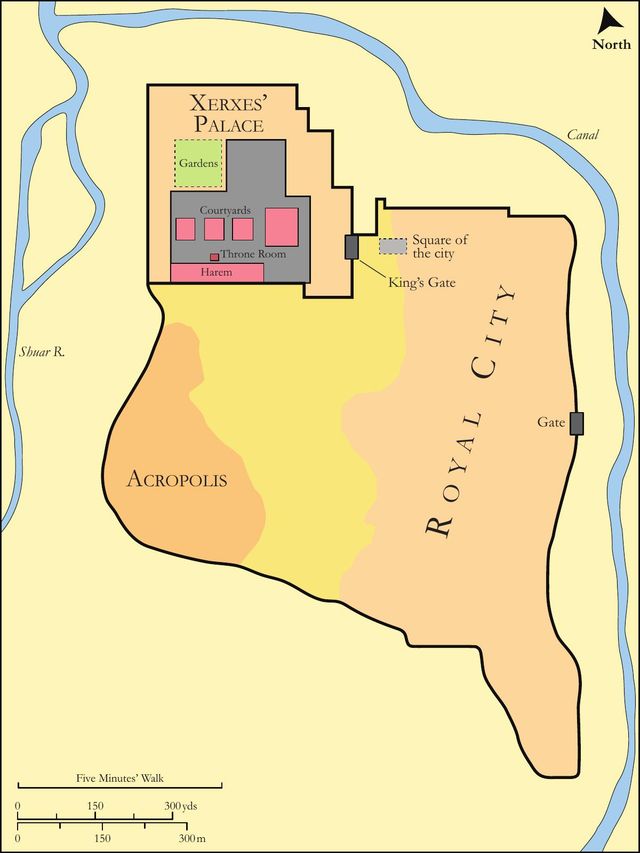
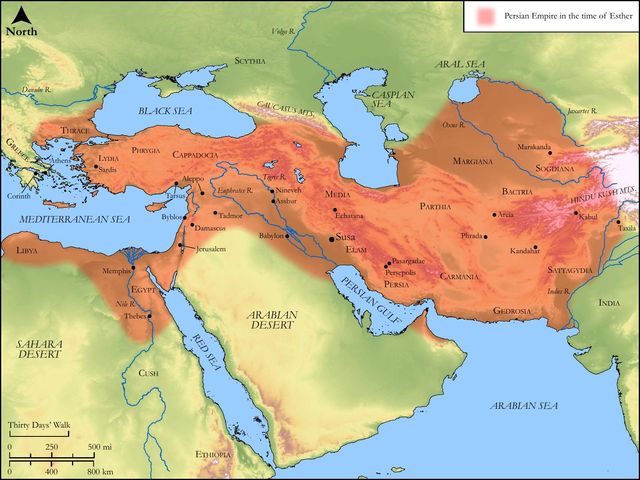
The setting is the Persian capital of Susa, a hub of imperial power and intrigue. The "king's gate" was a prominent public space where royal officials, dignitaries, and petitioners would gather, signifying a place of authority, administration, and public display. For Mordecai, a Jewish official, to sit there daily and refuse to bow to Haman (as noted in Esther 3:2), was a public and persistent affront to Haman's inflated ego and perceived supremacy. Bowing was a customary sign of respect and submission in the ancient Near East, but for Mordecai, his refusal likely stemmed from his Jewish identity, perhaps a conviction against bowing to anyone but God, or a specific defiance rooted in the historical enmity between Jews and Amalekites (from whom Haman was descended, as implied by his title "Agagite" in Esther 3:1). Haman's intense fury over this perceived slight is the direct catalyst for his genocidal plot against all Jews in the kingdom (see Esther 3:6).
Key Themes
ShowHideThis verse powerfully contributes to several overarching themes within the Book of Esther. Firstly, it vividly illustrates the destructive power of pride and envy, showing how unchecked arrogance can nullify all outward blessings and achievements, leading to profound inner misery. Haman's immense success is rendered meaningless by one man's defiance, highlighting the self-consuming nature of these sins. Secondly, it underscores the insatiable nature of sin and worldly ambition. No amount of honor, wealth, or material gain can satisfy a heart consumed by hatred and a craving for absolute control; Haman's desire is not just for respect, but for absolute, unquestioning submission, and anything less leads to his undoing. Finally, while not explicitly stated, the verse implicitly sets the stage for the sovereignty of God working behind the scenes. Haman's intense hatred and plot, though destructive to him, ultimately serve as the catalyst for God's miraculous deliverance of His people, demonstrating how divine purpose can unfold even through the wicked intentions of individuals. The narrative contrasts Haman's outward prosperity with his utter lack of inner peace, proving that true satisfaction does not come from external validation or power, a theme echoed throughout Ecclesiastes.
Exposition and Analysis
ShowHideKey Word Analysis
ShowHideThis word (H7737) means "to level, equalize; figuratively, to resemble; by implication, to adjust (i.e. counterbalance, be suitable, compose, place, yield, etc.); avail, behave, bring forth, compare, countervail, (be, make) equal, lay, be (make, a-) like, make plain, profit, reckon." In Haman's confession, "availeth me nothing" signifies that despite his vast material possessions, high status, and royal favor, none of it profits him or is of any use to him. It highlights the psychological torment and spiritual bankruptcy that can accompany unchecked pride and hatred, where even the greatest worldly successes cannot bring true satisfaction or utility in his own eyes.
The specific identification of Mordecai by his ethnic and religious identity is crucial. It underscores that Haman's hatred is not merely personal but extends to Mordecai's people. This phrase emphasizes the religious and ethnic dimension of Haman's animosity, transforming a personal slight into a broader, genocidal agenda. Mordecai's identity as "the Jew" becomes the singular, unbearable thorn in Haman's side, symbolizing everything Haman despises and cannot control.
This word (H8179) refers to "an opening, i.e. door or gate." In the context of the "king's gate," it refers to the main entrance of the royal palace, a highly visible and prominent public space where officials, dignitaries, and citizens would gather. It was a place of public administration, justice, and social interaction. Mordecai's presence here was a daily, unavoidable reminder of his defiance to Haman. The public nature of the "king's gate" intensifies Haman's humiliation; it's not a private annoyance but a constant, visible challenge to his authority and ego in the very heart of the kingdom.
Verse Breakdown
ShowHide"Yet all this availeth me nothing,"
This clause reveals the core of Haman's psychological torment. Despite an impressive list of achievements and blessings—wealth, family, honor, and unprecedented access to the king and queen—he declares them utterly worthless and unprofitable to him. This is a powerful statement about the human condition, illustrating that external success cannot compensate for internal spiritual emptiness or the corrosive effects of unchecked pride and hatred. His "all this" refers to the boasting of Esther 5:11.
"so long as I see Mordecai the Jew"
This phrase pinpoints the singular, specific source of Haman's misery. It highlights his obsessive focus on one individual who represents a perceived affront to his dignity and power. The phrase "Mordecai the Jew" emphasizes the ethnic and religious dimension of Haman's hatred, which soon escalates to a plot against an entire people, as seen in Esther 3:6.
"sitting at the king's gate."
This final clause describes Mordecai's persistent and public presence. Mordecai's refusal to bow, coupled with his daily visibility at a place of prominence, serves as a constant, inescapable reminder of Haman's inability to command universal submission. This public defiance fuels Haman's rage, turning his private success into public humiliation in his own mind, ultimately leading to his desperate and self-destructive plan.
Literary Devices
ShowHideEsther 5:13 is rich in literary devices that amplify its dramatic and thematic impact. The most striking is Irony: Haman, the second most powerful man in the Persian Empire, with immense wealth and royal favor, is rendered utterly miserable by the presence of one seemingly insignificant man. His outward success is completely undermined by his internal turmoil, demonstrating that true power and contentment are not found in external accolades. There is also a strong element of Contrast between Haman's boasted prosperity (Esther 5:11) and his confessed spiritual poverty and misery. His statement "all this availeth me nothing" can be seen as Hyperbole, an exaggeration that effectively conveys the depth of his distorted perception and the intensity of his hatred. This verse also serves as powerful Foreshadowing, as Haman's obsessive hatred and the extreme measures he contemplates (building gallows in Esther 5:14) directly set the stage for his dramatic and ironic downfall later in the narrative.
Theological and Thematic Connections
ShowHideEsther 5:13 offers a profound theological insight into the nature of sin, particularly pride, envy, and hatred. Haman's confession vividly illustrates that a heart consumed by these vices cannot find satisfaction, even amidst the greatest worldly success. His misery underscores the biblical truth that true contentment and joy are not derived from external circumstances, wealth, or power, but from a right relationship with God and a spirit of humility and gratitude. The verse serves as a stark warning against allowing our inner peace to be dictated by the actions or perceived slights of others, demonstrating how the idol of self can corrupt and nullify all blessings. Haman's insatiable desire for absolute control and reverence ultimately leads to his self-destruction, a powerful testament to the futility of seeking ultimate fulfillment outside of God.
Reflection and Application
ShowHideHaman's bitter confession in Esther 5:13 serves as a timeless mirror for the human soul. It challenges us to examine the true sources of our contentment and discontentment. Are we, like Haman, allowing one perceived slight, one unfulfilled desire, or one person's presence to overshadow all the blessings and good things in our lives? This verse powerfully reminds us that true joy and peace are not found in the accumulation of wealth, power, or accolades, nor in the absence of all perceived rivals, but in a heart free from the corrosive grip of pride, envy, and hatred. It urges us to cultivate gratitude for what we have and to guard our hearts against the insatiable cravings that can turn even the greatest successes into bitter ashes. Ultimately, Haman's story is a profound warning that hatred consumes the hater more than the hated, leading to a life of perpetual dissatisfaction and inner turmoil.
Questions for Reflection
ShowHideFAQ
ShowHideWhy was Mordecai sitting at the king's gate significant?
ShowHideThe king's gate was a highly prominent and public location in the ancient Persian capital of Susa. It served as a central hub for royal administration, judicial proceedings, and public gatherings. For Mordecai to be consistently present there, as noted in Esther 2:19, meant that his defiance of Haman was a daily, public spectacle. This constant, visible reminder of one man's refusal to bow to Haman's authority was an unbearable affront to Haman's inflated ego and craving for universal reverence, turning his private success into a public humiliation in his own mind.
Why wouldn't Mordecai bow to Haman?
ShowHideThe text of Esther does not explicitly state Mordecai's specific reason for refusing to bow, but several possibilities are suggested by the broader biblical and historical context. One common interpretation is that as a Jew, Mordecai might have refused to bow to Haman due to religious conviction, reserving such deep reverence for God alone. Another strong possibility stems from Haman's identity as an "Agagite" (Esther 3:1), which implies descent from Agag, the king of the Amalekites, a people who were ancient and persistent enemies of Israel (see Exodus 17:16 and 1 Samuel 15:8). Mordecai's refusal could therefore be an act of national or ancestral defiance against an enemy of his people, regardless of Haman's high position.
What does "availeth me nothing" truly mean in Haman's context?
ShowHideThe phrase "availeth me nothing" (KJV) conveys a profound sense of emptiness, worthlessness, and futility. In Haman's context, it means that despite his immense wealth, numerous children, and unparalleled honor (including being the king's favorite and invited to exclusive banquets), none of these external blessings bring him any joy, satisfaction, or peace. His heart is so consumed by pride, envy, and hatred towards Mordecai that all his accomplishments are rendered meaningless in his own eyes. It highlights the spiritual bankruptcy that can accompany worldly success when one's inner life is dominated by sin, demonstrating that true contentment is not found in external validation or possessions.
Christ-Centered Fulfillment
ShowHideHaman's confession in Esther 5:13, where all his worldly success is rendered meaningless by his hatred for Mordecai, stands in stark contrast to the person and work of Jesus Christ. Haman's life is a tragic testament to the self-destructive nature of pride and the insatiable craving for self-exaltation. He sought to destroy those who would not bow to him, ultimately leading to his own ignominious end. In profound opposition, Jesus Christ, "being in the form of God, thought it not robbery to be equal with God: but made himself of no reputation, and took upon him the form of a servant, and was made in the likeness of men" (Philippians 2:6-7). While Haman sought to build gallows for his perceived enemy, Christ willingly went to the cross, not to destroy His enemies, but to save them. His life was not about accumulating worldly honor or power, but about emptying Himself for the sake of others, demonstrating that true fulfillment and lasting joy come through humility, self-sacrifice, and love. Unlike Haman, whose hatred brought him nothing but misery and death, Christ's boundless love offers abundant life and true peace to all who believe, fulfilling the very purpose that Haman's pride tragically missed (see John 10:10). The story of Haman's insatiable desire for recognition and his ultimate downfall serves as a powerful backdrop, illuminating the radical and redemptive path of Christ, who taught that true greatness is found in serving others and that "whoever exalts himself will be humbled, and whoever humbles himself will be exalted" (Matthew 23:12).