


Obadiah 1:3
Bible text: King James Version (1769 Blayney text) · Public domain
Bible text: King James Version with Strong's numbers · Public domain
Bible text: Berean Standard Bible · Public domain
Bible text: American Standard Version (1901) · Public domain
Bible text: World English Bible, Messianic edition · Public domain
Bible text: Geneva Bible (1599) · Public domain
Bible text: Young's Literal Translation · Public domain
- זְדוֹןze·Don[the] presumption ofH2087N-mscNoun Singular Masculine Construct
- לִבְּךָli·be·Khayour heartH3820N-msc ¦ 2msNoun Singular Masculine Constructלִבְּheartךָyour
- הִשִּׁיאֶךָhi·shi·'E·khait has deceived youH5377V-Hiphil-Perf-3ms ¦ 2msVerb Hiphil Perfect 3rd Singular Masculineהִשִּׁיאֶit has deceivedךָyou
- שֹׁכְנִיsho·khe·NiO dwellerH7931V-Qal-Prtcpl-msVerb Qal Participle Singular Masculine Construct
- בְחַגְוֵיve·chag·veiin clefts ofH2288Prep-b ¦ N-mpcNoun Plural Masculine Constructבְinחַגְוֵיclefts of
- סֶּלַעSe·la'rockH5553N-msNoun Singular Masculine Absolute
- מְרוֹםme·Rom[the] height ofH4791N-mscNoun Singular Masculine Construct
- שִׁבְתּוֹshiv·Todwelling hisH7675V-Qal-Inf ¦ 3msVerb Qal Infinitive Constructשִׁבְתּdwellingוֹhis
- אֹמֵר'o·Mer[who] saysH559V-Qal-Prtcpl-msVerb Qal Participle Singular Masculine Absolute
- בְּלִבּוֹbe·li·Boin his heartH3820Prep-b ¦ N-msc ¦ 3msNoun Singular Masculine Constructבְּinלִבּheartוֹhis
- מִיmiwho?H4310InterrogPronoun Interrogative
- יוֹרִדֵנִיyo·ri·De·niwill he bring down meH3381V-Hiphil-Imperf-3ms ¦ 1csVerb Hiphil Imperfect 3rd Singular Masculineיוֹרִדֵwill he bring downנִיme
- אָרֶץ'A·retz[the] groundH776N-fsNoun Singular Feminine Absolute
English is a literal word-by-word gloss of the Hebrew, not the KJV's wording. Why?
This is the original text the KJV's translators worked from — each Hebrew word with its own literal English meaning in this verse, prepared by scholars at Tyndale House, Cambridge. The KJV translates whole sentences, not word by word, so its wording differs: one Hebrew word can become several English words, and the KJV may choose “the LORD” where the gloss reads “Yahweh”. Both are faithful — they answer different questions. For the KJV's own rendering, switch to the KJV text.
Details
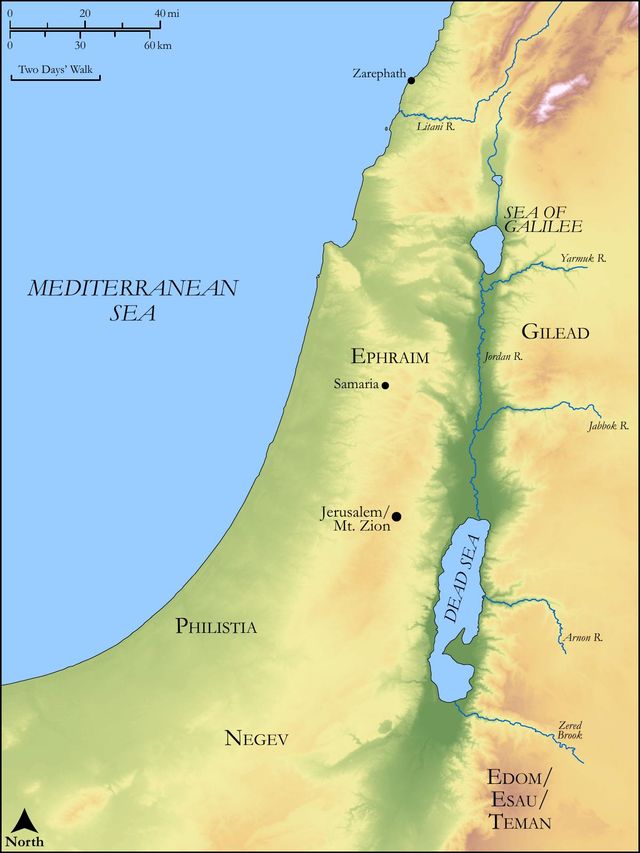
See on the biblical-era map
Study this verse
Historical interpretation
Historical reception
2 surviving comments on this verse. Each one is dated, so this reads as a timeline rather than a list.
(Version 2, verse 2) Behold, I have made you a little one among the nations: you are very contemptible. The pride of your heart has lifted you up, dwelling in the clefts of the rock, exalting your throne, saying in your heart: Who will bring me down to the ground? If you elevate yourself like an eagle, and if you place your nest among the stars: from there I will bring you down, says the Lord. LXX: Behold, I have made you a little one among the nations: you are very dishonored. The pride of your heart has lifted you up, you who dwell in the clefts of the rock, exalting your dwelling and saying in your heart: Who will bring me down to the ground? Though you soar aloft like the eagle, though your nest is set among the stars, from there I will bring you down, declares the Lord. Jeremiah, of whom we have mentioned above, agrees in almost the same words, saying: Behold, I have made you small among the nations; you are utterly despised among mankind. Your arrogance has deceived you, and the pride of your heart, you who live in the clefts of the rock, who strive to grasp the height of the hill: though you soar aloft like the eagle, from there I will bring you down, declares the Lord. In prophetic interpretation, we must follow our custom, that first we lay the foundations of history, and then, if possible, we raise lofty towers and the peaks of roofs. 'O Edom,' He says, 'though you are the least among all the nations around, and small in comparison to the other peoples, you rise up in arrogance beyond your strength. And though you dwell in caves, or rather in the rocky caverns, humble and poor, and not possessing the lofty roofs of buildings, you are lifted up as an eagle to the heights, and you swell with such pride in your thoughts, that you believe yourself to dwell among the stars. Even if you could penetrate the heights of the heavens beyond nature, I would bring you down from there and bring you to the earth,' says the Lord God. But what is added in Jeremiah, and which you strive to understand, reveals the height of the hill, representing Mount Zion, and through this either the city of Jerusalem itself or the temple built within it. As for the eagle, it is known by those who discuss the nature of birds that it flies higher than all other birds. It is said to have such a keen sight that while it soars above the motionless sea with its steady wings, it can see fish swimming from such a great height and, when they are near the shore, descend like a weapon and drag its captured prey with its wings to the shore. If we learn history, let us follow spiritual intelligence. Although you, o heretic, may seem great and despise the smallness of the Church, you are nonetheless small among the nations, and contemptible, and not only contemptible, but also very contemptible with arrogance. The pride of your heart has lifted you up. For who among heretics is not lifted up in pride, despising the simplicity of the Church and considering faith as ignorance? Dwelling in the clefts of the rock, and exalting his throne. Although the rock is often seen as representing the Lord Himself or His steadfastness (hence the prophet says, He set my feet upon a rock (Ps. XXXIX, 5)) and is also said to Peter, You are Peter, and upon this rock I will build my Church (Mat. I, 8), yet it is often interpreted in the opposite sense: I will take away the stony heart, and will give you a heart of flesh (Ezek. XXXVI, 26). And do not presume to say to yourselves, ‘We have Abraham as our father,’ for I tell you, God is able from these stones to raise up children for Abraham (Matt. 3:9). Especially here, where it does not say dwelling upon the rock, upon which the wise builder builds his house, but in the clefts of the rock, in order to signify the heresies that arise from Christ the rock and from the Church. Moreover, what follows, ‘Exalting your throne,’ and, ‘Who has measured the waters in the hollow of his hand?’ reveals the arrogance of a heretical mind, confident in its mysteries and its secrets, and insofar as it is able (but we should take this hyperbolically) promising itself the kingdoms of heaven. Where the Apostle writes to such people: 'Now you reign without us, and I wish you would reign, so that we may also reign with you' (I Cor. IV, 8). So also David speaks: 'They have set their mouth in heaven, and their tongue has passed through the earth' (Psalm LXXII, 9). If therefore they are exalted, like the eagle (for they also promise themselves a likeness to eagles, which are accustomed to gather around the Lord's body), and if they have set their nest among the stars, from there I will bring them down, says the Lord. For just as a father of a family, while sleeping, an enemy man oversows darnel among good seed (Matthew 13): so does that great eagle, (Ezekiel 17, 3), with its large wings, long body members, full of feathers and variety, which has the way of entering into Lebanon, and takes from the top of the cedar, and plants on many waters, so that shoot out into a vineyard, as plantings among the stars of the Church, concerning which it is also said in another place: But the just shall shine as the brightness of the firmament (Matthew 13, 43), they shall set their nest. I said above that this very thing, contrary to the flesh, can be understood as its strength being diminished in the coming of Christ, and it is contemptible, subject to the soul's rule, and is in vain exalted when it dwells in the caves of the rock, either in our senses or in our thoughts, and it desires to dominate the soul, exalting its own throne, and not believing that its works can be overcome. It is said to this, that although it exalts itself and imitates the lofty eagle, and deceives many of the saints, nevertheless it is overcome and cast down by the Lord. What we understand in heretics and in the flesh can also be understood against the Jews.
“The pride of your heart has deceived you.” This is directed against the heretics. “You who dwell in the rock”—the rock frequently refers to the Lord or standing on something solid, as the prophet says, “He has placed my feet upon a rock.” To Peter he said, “You are Peter, and upon this rock I will build my church.” Nevertheless it is also frequently used in another way. Ezekiel says, “I will take the heart of stone out of your flesh.” In Matthew we read that God is able to raise up children of Abraham from these stones. Ultimately, since here it does not say the inhabitants are on top of the rocks but rather in the fissure of the rocks, those referred to here are like heresies that split the rock of Christ and the church.
Continue studying Obadiah 1:3 across the web’s major study libraries — every link below opens this exact verse, chapter, or book on the destination site.
Read & Compare
 BibleGatewayThis verse in more than 200 translations and 70 languages.
 Bible.comThe YouVersion reader — hundreds of translations, reading plans, and highlights.
 ESV.orgCrossway's official English Standard Version reader.
 NET BibleThe NET translation with 60,000+ translators' notes on every rendering decision.
 STEP BibleTyndale House's free study tool — original text, vocabulary, and scholarly resources.
 BibliaLogos Bible Software's free web reader.
 USCCBThe New American Bible (Revised Edition) with the U.S. bishops' study notes.
Commentaries
 BibleHub CommentariesDozens of classic commentaries on this verse, gathered on one page.
 StudyLightMore than 100 commentary sets — the largest collection on the web.
 BibleRefPlain-English commentary on what this verse means, verse by verse.
 Enduring WordDavid Guzik's free commentary on this chapter, widely used by Bible teachers.
 Bible Study ToolsVerse commentary alongside Greek and Hebrew study aids.
Original Language & Research
- BibleHub InterlinearThe verse word by word — original language, transliteration, and English.
- BibleHub LexiconEvery word's original-language definition and Strong's entry.
 Blue Letter BibleDeep-study tools — Strong's numbers, concordance, and word studies.
 SefariaThe Hebrew text with Rashi and centuries of Jewish commentary.
Sermons, Hymns & Audio


TrulyRandomVerse is not affiliated with these sites and doesn’t control their content. They’re linked because they’re genuinely useful.
Summary
Obadiah 1:3 delivers a powerful prophetic indictment against the nation of Edom, exposing the destructive nature of their profound arrogance and self-reliance. The verse specifically targets Edom's misplaced confidence, which stemmed from their seemingly impregnable geographical location and led them to boast in their heart, "Who shall bring me down to the ground?" This declaration of self-sufficiency reveals a spiritual blindness to God's ultimate sovereignty and sets the stage for the pronouncement of divine judgment.
Context
ShowHideLiterary Context
Obadiah is the shortest book in the Old Testament, a prophetic oracle primarily directed against Edom. This verse immediately follows the introduction of Obadiah's vision and the declaration that the Lord God has sent a messenger among the nations to rise up against Edom (Obadiah 1:1-2). Verse 3 serves as the theological justification for the impending judgment, directly addressing the root cause of Edom's downfall: their pride. The subsequent verses detail the extent of Edom's humiliation and destruction, emphasizing that despite their elevated position, God will bring them low (Obadiah 1:4). The entire prophecy underscores the principle that God opposes the proud and brings down those who exalt themselves, particularly those who act with violence and treachery against His people.
Historical & Cultural Context
Edom, the nation descended from Esau, Jacob's twin brother, occupied a strategically important and naturally fortified mountainous region southeast of Judah. Their capital, Petra, was famously carved into red sandstone cliffs, accessible only through narrow gorges. The phrase "thou that dwellest in the clefts of the rock, whose habitation is high" vividly describes their formidable natural defenses and elevated settlements. This rugged terrain provided a sense of security and invincibility, fostering an inflated sense of self-importance and a defiant attitude. Historically, Edom maintained a contentious relationship with Israel, often exhibiting animosity and, critically, failing to assist their Israelite kin during times of invasion, even participating in the plundering of Jerusalem (as detailed in Obadiah 1:10-14). Their geographical advantage, instead of fostering gratitude or humility, became the very source of their spiritual peril and a symbol of their arrogant defiance against divine authority.
Key Themes
ShowHideObadiah 1:3 introduces and encapsulates several major theological and narrative themes central to the book and broader biblical theology. First, it highlights The Deceitfulness of Pride, asserting that Edom's "pride of thine heart hath deceived thee." This theme underscores how arrogance blinds individuals and nations to their true vulnerability and the reality of God's sovereignty, leading to a distorted perception of self and the world. This aligns with the biblical principle found in Proverbs 16:18, that "pride goeth before destruction, and an haughty spirit before a fall." Second, the verse addresses the theme of False Security, demonstrating how Edom placed their ultimate trust in their physical fortifications and elevated position rather than in the Almighty. Their "high habitation" became a source of spiritual peril, fostering an illusory sense of invincibility. Finally, it implicitly introduces the theme of Divine Sovereignty and Judgment, asserting that no human stronghold, however formidable, can withstand the righteous judgment of God. Despite their boastful question, "Who shall bring me down to the ground?", the very next verse in Obadiah 1:4 declares God's intention to bring them down, even if they were to "make thy nest among the stars."
Exposition and Analysis
ShowHideKey Word Analysis
ShowHideFrom the root meaning "to boil up," this word signifies arrogance, presumptuousness, and haughtiness. In Obadiah 1:3, it describes the swollen, self-exalting attitude of Edom, which is not merely a character flaw but an active force that distorts perception and leads to self-deception. It suggests an overbearing confidence rooted in a false sense of security and superiority.
This primitive root means "to lead astray," "to delude," or "to seduce." When applied to the heart, as here, it indicates that pride actively misleads and causes one to err in judgment. It's not a passive state but an internal mechanism by which one's own arrogance distorts reality, making them believe falsehoods about their strength, invincibility, and independence from God.
This primitive root means "to descend" or "to go downwards," but also causatively, "to bring down." In Edom's rhetorical question, "Who shall bring me down to the ground?", it expresses their conviction that no one possesses the power to humble them or overthrow their elevated position. Ironically, this very word foreshadows their actual downfall, as God declares His intention to bring them down from their heights, fulfilling the very action they deemed impossible for any human agency.
Verse Breakdown
ShowHide"The pride of thine heart hath deceived thee"
This opening clause directly indicts Edom, identifying the root cause of their impending judgment: the arrogance residing within their very core. Their pride is personified as an active agent that has led them astray, causing them to misjudge their own strength and God's power. This deception is internal, stemming from their own inflated self-perception rather than external manipulation.
"thou that dwellest in the clefts of the rock, whose habitation [is] high"
This descriptive phrase pinpoints the physical basis of Edom's pride. It refers to their geographical location in the rugged, mountainous terrain, specifically their cities and dwellings nestled high within the natural fortifications of cliffs and rocky crevices. This physical elevation and perceived impregnability fostered their sense of invincibility and self-sufficiency, becoming a symbol of their spiritual arrogance.
"that saith in his heart, Who shall bring me down to the ground?"
This final clause reveals the internal monologue and defiant boast of Edom. Their rhetorical question, spoken "in his heart," signifies a deep-seated conviction and an arrogant challenge to any potential adversary, human or divine. It expresses their absolute confidence in their own security and an utter disregard for any higher authority, particularly God's. This boast is the ultimate manifestation of the pride that has deceived them.
Literary Devices
ShowHideObadiah 1:3 is rich in literary devices that amplify its prophetic message. Personification is evident in "The pride of thine heart hath deceived thee," where pride is given the human action of deceiving, highlighting its active and misleading nature. The description of Edom's dwelling "in the clefts of the rock, whose habitation is high" employs vivid Imagery, painting a clear picture of their formidable, elevated stronghold and underscoring the physical basis of their self-assurance. The rhetorical question, "Who shall bring me down to the ground?", serves as a powerful Rhetorical Question, not seeking an answer but emphatically asserting Edom's perceived invincibility and challenging any who would dare to oppose them. This question also contains an element of Irony, as the very boast of unassailability foreshadows their inevitable downfall at the hand of God. The entire verse uses Metonymy where Edom's physical dwelling in high places stands in for their elevated, arrogant spirit.
Theological and Thematic Connections
ShowHideObadiah 1:3 serves as a timeless theological warning against the pervasive and destructive nature of pride. It articulates a fundamental biblical truth: human arrogance, no matter how firmly rooted in perceived strength or security, is ultimately a deception that blinds one to reality and invites divine judgment. Edom's reliance on their "high habitation" illustrates the futility of placing ultimate trust in created things—whether wealth, power, intellect, or physical defenses—rather than in the Creator. This verse underscores God's unwavering opposition to the proud and His commitment to humbling those who exalt themselves, demonstrating that true security and wisdom are found only in humble dependence on Him. It is a powerful reminder that God's sovereignty extends over all nations and circumstances, and no human boast can withstand His decree.
Reflection and Application
ShowHideObadiah 1:3 offers profound lessons for contemporary believers, serving as a stark warning against the insidious nature of pride in our own hearts and lives. Like Edom, we can be tempted to find our security and identity in "high habitations"—our achievements, social status, intellectual prowess, financial stability, or even spiritual gifts. This verse challenges us to critically examine where our ultimate trust lies. Does our confidence stem from our own abilities and resources, or from a humble reliance on God's grace and sovereignty? Pride, as it did for Edom, can deceive us, distorting our perception of reality, fostering self-sufficiency, and blinding us to our true dependence on God. It can lead us to believe we are immune to failure or beyond accountability. The antidote to such spiritual arrogance is humility, a recognition of our creatureliness and God's infinite majesty. This verse calls us to cultivate a posture of humility, acknowledging that every good gift comes from above and that true strength is found not in self-exaltation, but in submitting to the Lord, who "gives grace to the humble."
Questions for Reflection
ShowHideFAQ
ShowHideWhat was the significance of Edom's geographical location in relation to their pride?
ShowHideEdom's geographical location was central to their pride and sense of invincibility. They inhabited a rugged, mountainous region, characterized by deep ravines and high cliffs, with many of their cities, like Petra, carved directly into the rock faces. This natural fortress provided immense defensive advantages, making them feel secure and unassailable. The phrase "thou that dwellest in the clefts of the rock, whose habitation is high" in Obadiah 1:3 directly refers to this. Their elevated and fortified position led them to believe no one could "bring me down to the ground," fostering an extreme form of self-reliance and arrogance that blinded them to the reality of God's ultimate power and sovereignty. Their physical security became a spiritual snare, leading to their downfall.
Christ-Centered Fulfillment
ShowHideObadiah 1:3, with its stark warning against the deceitfulness of pride and the inevitability of judgment for those who exalt themselves, finds its ultimate fulfillment and counterpoint in the person and work of Jesus Christ. While Edom's pride led to their downfall, Christ exemplified perfect humility, choosing to "empty himself, by taking the form of a servant" as described in Philippians 2:7. He, though God, did not cling to His high position but descended to the "ground" of human existence, ultimately humbling Himself even to death on a cross for the sake of humanity's sin (Philippians 2:8). Jesus' life and teachings consistently condemned the pride of the human heart, particularly the spiritual arrogance of the religious leaders of His day, warning that "whoever exalts himself will be humbled, and whoever humbles himself will be exalted" (Matthew 23:12). Furthermore, while Edom's "clefts of the rock" offered false security, Christ Himself is the true and everlasting "Rock" upon whom believers can build their lives, a foundation that will never be brought down (Matthew 7:24-25). The judgment pronounced on Edom for their pride foreshadows the ultimate judgment against all sin, yet in Christ, those who humble themselves and trust in Him find forgiveness and eternal security, escaping the condemnation that pride inevitably brings.