


Acts 11:29
Bible text: King James Version (1769 Blayney text) · Public domain
Bible text: Berean Standard Bible · Public domain
Bible text: American Standard Version (1901) · Public domain
Bible text: World English Bible, Messianic edition · Public domain
Bible text: Geneva Bible (1599) · Public domain
Bible text: Young's Literal Translation · Public domain
- τῶνtōn<the>G3588T-GPMDefinite article Genitive Plural Masculine
- δὲdeAndG1161CONJConjunction
- μαθητῶνmathētōnthe disciplesG3101N-GPMNoun Genitive Plural Masculine
- καθὼςkathōseven asG2531CONJConjunction
- εὐπορεῖτόeuporeitowas prosperedG2141V-IMI-3SVerb Imperfect Middle Indicative 3rd Singular
- τιςtisanyoneG5100X-NSMIndefinite pronoun Nominative Singular Masculine
- ὥρισανhōrisandeterminedG3724V-AAI-3PVerb Aorist Active Indicative 3rd Plural
- ἕκαστοςhekastoseachG1538A-NSMAdjective Nominative Singular Masculine
- αὐτῶνautōnof themG846P-GPMPersonal pronoun Genitive Plural Masculine
- εἰςeisforG1519PREPPreposition
- διακονίανdiakonianministryG1248N-ASFNoun Accusative Singular Feminine
- πέμψαιpempsaito sendG3992V-AANVerb Aorist Active Infinitive
- τοῖςtoisto theG3588T-DPMDefinite article Dative Plural Masculine
- κατοικοῦσινkatoikousindwellingG2730V-PAP-DPMVerb Present Active Participle Dative Plural Masculine
- ἐνeninG1722PREPPreposition
- τῇtēa<the>G3588T-DSFDefinite article Dative Singular Feminine
- ἸουδαίᾳIoudaiaJudeaG2449N-DSF-LNoun Dative Singular Feminine Location
- ἀδελφοῖς·adelphoisbrothersG80N-DPMNoun Dative Plural Masculine
English is a literal word-by-word gloss of the Greek, not the KJV's wording. Why?
This is the original text the KJV's translators worked from — each Greek word with its own literal English meaning in this verse, prepared by scholars at Tyndale House, Cambridge. The KJV translates whole sentences, not word by word, so its wording differs: one Greek word can become several English words, and the KJV may choose “charity” where the gloss reads “love”. Both are faithful — they answer different questions. For the KJV's own rendering, switch to the KJV text.
Details
See on the biblical-era maps
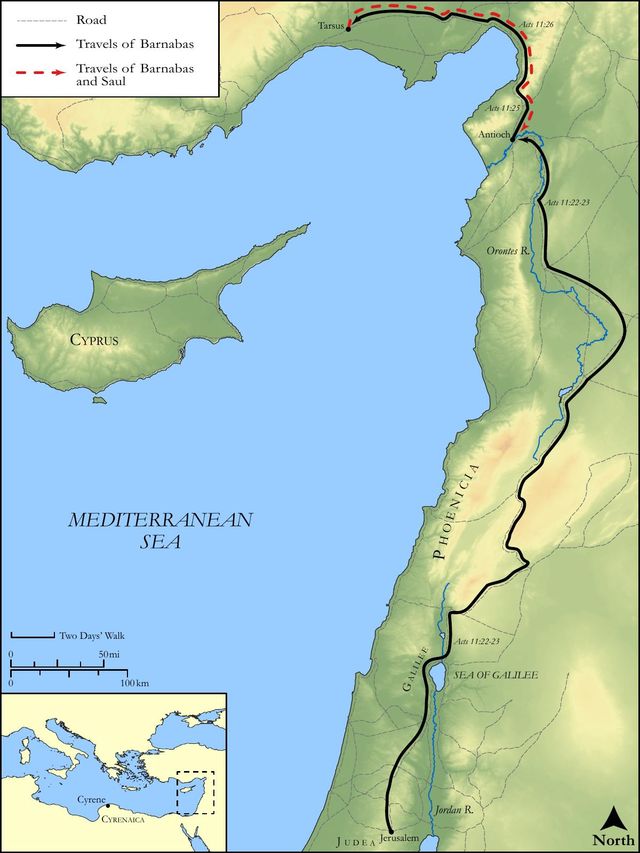
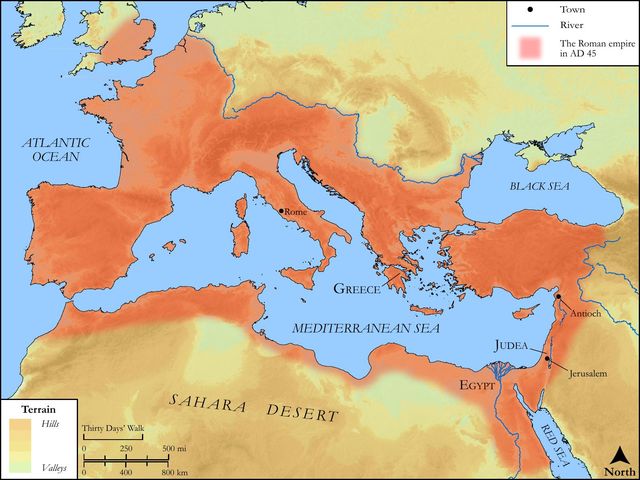
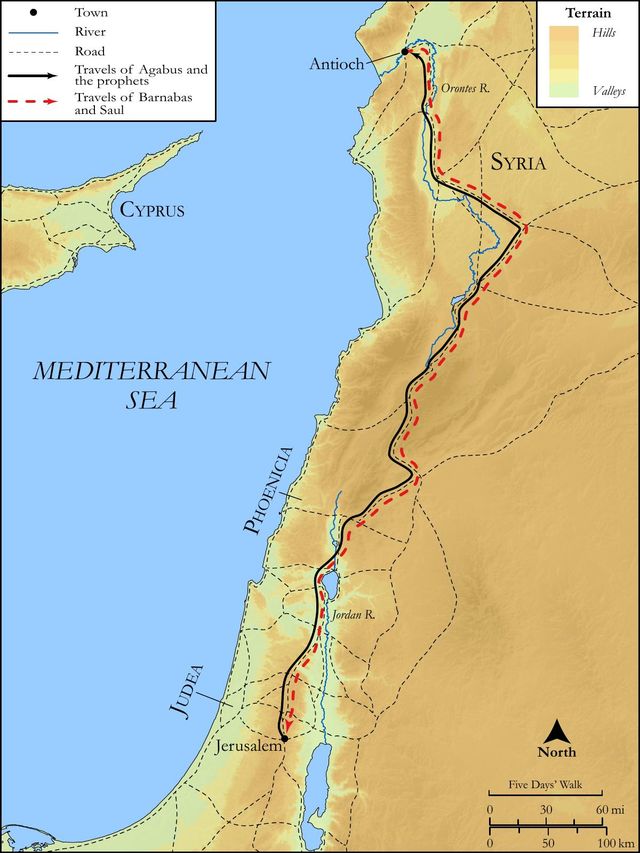
Study this verse
Public-domain commentary
Matthew Henry
From his Commentary on the Whole Bible. Henry comments on passages, not single verses — this entry covers Acts 11:27–30. His three-level outline is real structure in the source text, so it is rendered as structure.
When our Lord Jesus ascended on high he gave gifts unto men, not only apostles and evangelists, but prophets, who were enabled by the Spirit to foresee and foretel things to come, which not only served for a confirmation of the truth of Christianity (for all that these prophets foretold came to pass, which proved that they were sent of God, Deu 18:22; Jer 28:9), but was also of great use to the church, and served very much for its guidance. Now here we have,
I.A visit which some of these prophets made to Antioch (Act 11:27):
In these days, during that year that Barnabas and Saul lived at Antioch, there came prophets from Jerusalem to Antioch: we are not told how many, nor is it certain whether these were any of those prophets that we afterwards find in the church at Antioch, Act 13:1.
1.They came from Jerusalem, probably because they were not now so much regarded there as they had been; they saw their work in a manner done there, and therefore thought it time to be gone. Jerusalem had been infamous for killing the prophets and abusing them, and therefore is now justly deprived of these prophets.
2.They came to Antioch, because they heard of the flourishing state of that church, and there they hoped they might be of some service. Thus should every one as he hath received the gift minister the same. Barnabas came to exhort them, and they, having received the exhortation well, now have prophets sent them to show them things to come, as Christ had promised, Joh 16:13. Those that are faithful in their little shall be entrusted with more. The best understanding of scripture-predictions is to be got in the way of obedience to scripture-instructions.
II.A particular prediction of a famine approaching, delivered by one of these prophets, his name Agabus; we read of him again prophesying Paul's imprisonment, Act 21:10, Act 21:11. Here he stood up, probably in one of their public assemblies, and prophesied, Act 11:28. Observe,
1.Whence he had his prophecy. What he said was not of himself, nor a fancy of his own, nor an astronomical prediction, nor a conjecture upon the present workings of second causes, but he signified it by the Spirit, the Spirit of prophecy, that there should be a famine; as Joseph, by the Spirit enabling him, understood Pharaoh's dreams, foretold the famine in Egypt, and Elijah the famine in Israel in Ahab's time. Thus God revealed his secrets to his servants the prophets.
2.What the prophecy was: There should be great dearth throughout all the world, by unseasonable weather, that corn should be scarce and dear, so that many of the poor should perish for want of bread. This should be not in one particular country, but through all the world, that is, all the Roman empire, which they in their pride, like Alexander before them, called the world. Christ had foretold in general that there should be famines (Mat 24:7; Mar 13:8; Luk 21:11); but Agabus foretels one very remarkable famine now at hand.
3.The accomplishment of it: It came to pass in the days of Claudius Caesar; it began in the second year of his reign, and continued to the fourth, if not longer. Several of the Roman historians make mention of it, as does also Josephus. God sent them the bread of life, and they rejected it, loathed the plenty of that manna; and therefore God justly broke the staff of bread, and punished them with famine; and herein he was righteous. They were barren, and did not bring forth to God, and therefore God made the earth barren to them.
III.The good use they made of this prediction.
When they were told of a famine at hand, they did not do as the Egyptians, hoard up corn for themselves; but, as became Christians, laid by for charity to relieve others, which is the best preparative for our own sufferings and want. It is promised to those that consider the poor that God will preserve them, and keep them alive, and they shall be blessed upon the earth, Psa 41:1, Psa 41:2. And those who show mercy, and give to the poor, shall not be ashamed in the evil time, but in the days of famine they shall be satisfied, Psa 37:19, Psa 37:21. The best provision we can lay up against a dear time is to lay up an interest in these promises, by doing good, and communicating, Luk 12:33. Many give it as a reason why they should be sparing, but the scripture gives it as a reason why we should be liberal, to seven, and also to eight, because we know not what evil shall be upon the earth, Ecc 11:2. Observe,
1.What they determined - that every man, according to his ability, should send relief to the brethren that dwelt in Judea, Act 11:29.
(1.)The persons that were recommended to them as objects for charity were the brethren that dwelt in Judea. Though we must, as we have opportunity, do good to all men, yet we must have a special regard to the household of faith, Gal 6:10. No poor must be neglected, but God's poor most particularly regarded. The care which every particular church ought to take of their own poor we were taught by the early instance of that in the church at Jerusalem, where the ministration was so constant that none lacked, Act 4:34. But the communion of saints in that instance is here extended further, and provision is made by the church at Antioch for the relief of the poor in Judea, whom they call their brethren. It seems it was the custom of the Jews of the dispersion to send money to those Jews who dwelt in Judea, for the relief of the poor that were among them, and to make collections for that purpose (Tully speaks of such a thing in his time, Orat. pro Flacco), which supposes there were many poor in Judea, more than in other countries, so that the rich among them were not able to bear the charge of keeping them from starving; either because their land had become barren, though it had been a fruitful land, for the iniquity of those that dwelt therein, or because they had no traffic with other nations. Now we may suppose that the greatest part of those who turned Christians in that country were the poor (Mat 11:5, The poor are evangelized), and also that when the poor turned Christians they were put out of the poor's book, and cut off from their shares in the public charity; and it were easy to foresee that if there came a famine it would go very hard with them; and, if any of them should perish for want, it would be a great reproach to the Christian profession; and therefore this early care was taken, upon notice of this famine coming, to send them a stock beforehand, lest, if it should be deferred till the famine came, it should be too late.
(2.)The agreement there was among the disciples about it, that every man should contribute, according to his ability, to this good work. The Jews abroad, in other countries, grew rich by trade, and many of the rich Jews became Christians, whose abundance ought to be a supply to the want of their poor brethren that were at a great distance; for the case of such ought to be considered, and not theirs only that live among us. Charitable people are traders with what God has given them, and the merchants find their account in sending effects to countries that lie very remote; and so should we in giving alms to those afar off that need them, which therefore we should be forward to do when we are called to it. Every man determined to send something, more or less, according to his ability, what he could spare from the support of himself and his family, and according as God had prospered him. What may be said to be according to our ability we must judge for ourselves, but must be careful that we judge righteous judgment.
2.What they did - they did as they determined (Act 11:30). Which also they did. They not only talked of it, but they did it. Many a good motion of that kind is made and commended, but is not prosecuted, and so comes to nothing. But this was pursued, the collection was made, and was so considerable that they thought it worth while to send Barnabas and Saul to Jerusalem, to carry it to the elders there, though they would want their labours in the mean time at Antioch. They sent it,
(1.)To the elders, the presbyters, the ministers or pastors, of the churches in Judea, to be by them distributed according to the necessity of the receivers, as it had been contributed according to the ability of the givers.
(2.)It was sent by Barnabas and Saul, who perhaps wanted an occasion to go to Jerusalem, and therefore were willing to take this. Josephus tells us that at this time king Irates sent his charity to the chief men of Jerusalem, for the poor of that country; and Helena, queen of the Adiabeni, being now at Jerusalem, and hearing of many that died of famine there, and in the country about, sent for provisions from Cyprus and Alexandria, and distributed them among the people; so says Dr. Lightfoot, who also computes, by the date of Paul's rapture, "fourteen years before he wrote the second Epistle to the Corinthians" (Co2 12:1, Co2 12:2), that it was in this journey of his to Jerusalem, with these alms and offerings, that he had his trance in the temple (which he speaks of, Act 22:17), and in that trance was rapt up into the third heaven; and then it was that Christ told him he would send him thence unto the Gentiles, which accordingly he did as soon as ever he came back to Antioch. It is no disparagement, in an extraordinary case, for ministers of the gospel to be messengers of the church's charity, though to undertake the constant care of that matter would ordinarily be too great a diversion from more needful work to those who have given themselves to prayer and the ministry of the word.
Historical interpretation
Three Centuries of Reception
5 surviving comments on this verse. Each one is dated, so this reads as a timeline rather than a list.
Select a marker to jump to its quote. Markers stagger vertically where authors wrote within a few decades of each other.
They did not wait for the famine to come, but before this they sent: "according as each had the ability." And observe, among the Apostles, others are put in charge with this trust, but here Paul and Barnabas. For this was no small order of Providence. Besides, it was the beginning, and it was not fit they should be offended.
"Then the disciples, every man according to his ability, determined to send relief unto the brethren which dwelt in Judea." Mark how the famine becomes to them the means of salvation, an occasion of alms-giving, a harbinger of many blessings. And so it might have been to you, one may say, if you were so minded, but ye would not.
"As each had the ability, they sent." But now, none does this, although there is a famine more grievous than that. For the cases are not alike, for all to bear the calamity in common, and, while all the rest abound, for the poorer to be famishing. And the expression shows that the givers also were poor, for, it says, "as each of them had the means." A twofold famine, even as the abundance is twofold: a severe famine, a famine not of hearing the word of the Lord, but of being nourished by alms. Then, both the poor in Judea enjoyed the benefit, and so did those in Antioch who gave their money; yea, these more than those.
Now the disciples, each according to what they had, decided to send aid to the brothers living in Judea. And they did so, sending it to the elders by the hands of Barnabas and Paul. Here the disciples seem, to those who understand poorly, not to have kept the command of the Lord, where He says: Do not be anxious about tomorrow (Matthew VI), or what Paul often testifies about himself, that he worked with his own hands, so as not to burden anyone, does not seem to have followed the Lord's command to imitate the birds of the air and the lilies of the field. But from these and similar passages of Scripture, it is clear enough that our Lord does not disapprove of someone providing for these things in a human manner; but if someone serves God for the sake of these things, so that in their works they seek not the kingdom of God but the acquisition of these things. Therefore, this entire precept is reduced to this rule: that even in the provision of these things we should think of the kingdom of God, but in the service of the kingdom of God, we should not think of these things.
They decided to send relief to the brethren dwelling in Judea. They knew that in Judea, and especially in Jerusalem, the famine would rage more fiercely. There, the poor saints, who, having sold their possessions, houses, and fields, brought the prices to the apostles, did not engage much further in acquiring wealth. But some were also deprived of their property by the incredulous Jews because of their confession of faith. To these, the Apostle says: "And you joyfully accepted the plundering of your property" (Hebrews 10). Among these charitable acts, the religious deed of Helena, queen of Adiabene, is remembered, who, having bought grain from Egypt, generously ministered to the needs of the Jerusalemites. Hence, she also earned an honorable burial before the gates of the same city.
Continue studying Acts 11:29 across the web’s major study libraries — every link below opens this exact verse, chapter, or book on the destination site.
Read & Compare
 BibleGatewayThis verse in more than 200 translations and 70 languages.
 Bible.comThe YouVersion reader — hundreds of translations, reading plans, and highlights.
 ESV.orgCrossway's official English Standard Version reader.
 NET BibleThe NET translation with 60,000+ translators' notes on every rendering decision.
 STEP BibleTyndale House's free study tool — original text, vocabulary, and scholarly resources.
 BibliaLogos Bible Software's free web reader.
 USCCBThe New American Bible (Revised Edition) with the U.S. bishops' study notes.
Commentaries
 BibleHub CommentariesDozens of classic commentaries on this verse, gathered on one page.
 StudyLightMore than 100 commentary sets — the largest collection on the web.
 BibleRefPlain-English commentary on what this verse means, verse by verse.
 Enduring WordDavid Guzik's free commentary on this chapter, widely used by Bible teachers.
 Bible Study ToolsVerse commentary alongside Greek and Hebrew study aids.
Original Language & Research
- BibleHub InterlinearThe verse word by word — original language, transliteration, and English.
- BibleHub LexiconEvery word's original-language definition and Strong's entry.
 Blue Letter BibleDeep-study tools — Strong's numbers, concordance, and word studies.
 CNTR CollationThe earliest Greek manuscripts of this verse, collated letter by letter.
Sermons, Hymns & Audio


TrulyRandomVerse is not affiliated with these sites and doesn’t control their content. They’re linked because they’re genuinely useful.
Summary
Acts 11:29 vividly portrays the early church's profound unity and practical compassion, demonstrating how the burgeoning Gentile Christian community in Antioch responded to a prophetic warning of famine by collecting and sending financial aid to their Jewish brethren suffering in Judaea. This act of selfless generosity, with each disciple contributing according to their means, underscores the deep fraternal bond and mutual responsibility that transcended geographical and ethnic distinctions within the nascent Christian movement.
Context
ShowHideLiterary Context
This verse is situated within a significant narrative transition in the Book of Acts. Following the groundbreaking evangelistic efforts in Antioch, where many Gentiles were converted and the term "Christians" was first used (Acts 11:26), prophets from Jerusalem, including Agabus, arrived. Agabus's prophecy of a widespread famine (Acts 11:28) serves as the immediate catalyst for the church's response in verse 29. This act of sending relief highlights the practical outworking of faith and love, moving beyond mere theological assent to tangible support, and sets the stage for the subsequent mission of Barnabas and Saul (Paul) to Jerusalem to deliver this aid (Acts 11:30).
Historical & Cultural Context
The prophecy of Agabus concerned a great famine that "would spread over the entire Roman world," which historical sources confirm occurred during the reign of Emperor Claudius (c. AD 41-54). Judaea, being particularly susceptible to famine due to its climate and agricultural reliance, would have been severely impacted. The early church in Jerusalem, despite its spiritual vibrancy, often faced economic hardship, as evidenced by earlier communal sharing (Acts 2:44-45) and later collections organized by Paul (Romans 15:26). The act of the Antioch church, composed largely of Gentile converts, sending aid to the predominantly Jewish believers in Judaea, was culturally significant. It demonstrated a radical breaking down of traditional ethnic barriers, showcasing the unifying power of the Gospel that created a new family in Christ.
Key Themes
ShowHideActs 11:29 contributes to several overarching themes in Acts and the broader New Testament. It powerfully illustrates Christian Generosity and Benevolence, emphasizing a voluntary, proportionate giving "according to his ability," a principle echoed by Paul in his instructions on giving (2 Corinthians 8:12). The verse also highlights Practical Love and Mutual Aid within the body of Christ, moving beyond sentiment to concrete action in response to genuine need, a hallmark of true discipleship (John 13:35). Furthermore, it powerfully demonstrates the Unity of the Church, as believers from diverse backgrounds (Gentiles in Antioch, Jews in Judaea) recognized their shared identity in Christ and acted as one family. Finally, it shows the early church's Responsiveness to Prophecy, taking divine warnings seriously and acting decisively to mitigate impending hardship.
Exposition and Analysis
ShowHideKey Word Analysis
ShowHideDerived from a word meaning "to learn," this term signifies a learner or pupil. In the New Testament, "disciples" refers to those who follow Jesus, committing to His teachings and way of life. Here, it emphasizes that the act of generosity was not just a spontaneous impulse but a deliberate action rooted in their identity as followers of Christ, embodying His teachings on love and service.
This word literally means "to be good for passing through," and figuratively, "to have pecuniary means" or "to prosper." It indicates that each individual's contribution was not a fixed amount but was proportionate to their financial capacity or resources. This principle underscores a flexible, equitable approach to giving, where the emphasis is on the willingness to share from what one possesses, rather than a rigid, equal contribution.
From the root "diakonos" (servant), this term denotes attendance, service, or aid, especially eleemosynary (charitable) aid. It highlights the practical, servant-hearted nature of the assistance provided. The "relief" was not merely a handout but an act of service, ministering to the physical needs of the brethren, reflecting the core Christian value of serving others.
Verse Breakdown
ShowHide"Then the disciples, every man according to his ability,"
This opening clause establishes the agents of the action—the "disciples" in Antioch—and the principle governing their contribution. The phrase "every man" emphasizes individual participation, while "according to his ability" (literally, "as he prospered" or "as he had means") indicates that the giving was proportionate, not equal. Each person gave what they could afford, reflecting a spirit of willing and responsible stewardship of their resources.
"determined to send relief"
This phrase highlights the intentionality and resolve of the Antioch church. The word "determined" (horízō) implies a deliberate decision, a clear purpose to act. The "relief" (diakonía) signifies a practical, charitable service, addressing a tangible need. This was not a reactive, disorganized effort but a planned, collective act of compassion.
"unto the brethren which dwelt in Judaea:"
This final clause specifies the recipients and their location. The term "brethren" underscores the familial bond uniting believers across geographical and cultural divides. The destination, Judaea, was the heartland of the early church, and its believers, many of whom were Jewish Christians, were facing impending hardship. This act of sending aid from a predominantly Gentile church to a Jewish one powerfully illustrates the breaking down of barriers and the emerging unity of the universal body of Christ.
Literary Devices
ShowHideThe verse employs Narrative Progression by detailing the church's immediate and practical response to Agabus's prophecy, moving the story forward from a prophetic warning to an act of collective charity. It also functions as an Exemplum, providing a concrete example of Christian love and unity in action, illustrating how faith translates into tangible care for others. The phrase "every man according to his ability" employs Distributive Language, emphasizing individual participation within a collective effort, highlighting both personal responsibility and communal solidarity. Furthermore, the act of sending relief from Antioch to Judaea serves as a powerful Symbolism of the burgeoning unity of the early church, transcending ethnic and geographical boundaries to form a single family in Christ.
Theological and Thematic Connections
ShowHideActs 11:29 provides a foundational model for Christian generosity and inter-church solidarity. Theologically, it underscores the principle that true faith is not merely intellectual assent but finds its expression in practical love and sacrificial giving. The proportionate giving "according to his ability" aligns with New Testament teaching on stewardship, where believers are called to manage God-given resources responsibly and share them cheerfully, not out of compulsion but out of love. This act of sending relief also powerfully demonstrates the reality of the universal church, where believers, regardless of their background or location, are united as "brethren" in Christ, sharing a mutual responsibility to care for one another, especially those in need. This transcends any local or denominational boundaries, reflecting the global family of God.
Reflection and Application
ShowHideActs 11:29 serves as a timeless blueprint for Christian living, challenging believers and churches today to embody the same spirit of proactive generosity and compassionate unity. It calls us to look beyond our immediate circles and consider the needs of the wider body of Christ, both locally and globally. This verse reminds us that our faith is meant to be active, translating into tangible acts of love and support for those facing hardship, whether due to economic distress, natural disaster, or persecution. It encourages a culture of proportionate giving, where each person contributes not out of obligation but out of a heartfelt desire to share what God has entrusted to them, understanding that even small contributions, when given collectively and sacrificially, can make a significant impact. Ultimately, this passage inspires us to live out the reality of being one family in Christ, demonstrating His love through our actions.
Questions for Reflection
ShowHideFAQ
ShowHideWhat does "according to his ability" truly mean for giving?
ShowHideThe phrase "according to his ability" (Greek, kathōs ēuporeito tis) signifies proportionate giving. It means that each individual contributed based on their financial capacity or what they had prospered with, rather than a fixed or equal amount. This principle ensures that giving is both sacrificial and sustainable for everyone, regardless of their wealth. It emphasizes that God values the heart and willingness behind the gift, not just the size of the gift itself, as seen in Jesus' commendation of the widow's mite (Mark 12:41-44). It encourages generosity from all, recognizing that even small contributions from those with limited means are significant in God's eyes.
Why was relief sent specifically to Judaea?
ShowHideRelief was sent to Judaea primarily because of a prophecy by Agabus, who foretold a great famine that would affect the entire Roman world, including Judaea (Acts 11:28). Judaea, being a region prone to agricultural hardship, was particularly vulnerable. Furthermore, Jerusalem, located in Judaea, was the birthplace of the Christian movement and home to many early Jewish believers who often faced economic challenges. The act of sending aid from the predominantly Gentile church in Antioch to the Jewish believers in Judaea also served to strengthen the bonds of unity between these two significant early Christian communities, demonstrating that in Christ, ethnic and geographical barriers were overcome.
Christ-Centered Fulfillment
ShowHideActs 11:29, though a practical account of early church generosity, profoundly reflects the very heart of Christ and His redemptive work. The selfless act of the Antioch disciples, giving "according to his ability" to alleviate suffering, mirrors the ultimate act of proportionate giving by Christ Himself, who, "though he was rich, yet for your sakes he became poor, so that you through his poverty might become rich" (2 Corinthians 8:9). Jesus' life was a constant ministry of "relief" and service (diakonía), culminating in His sacrificial death on the cross, where He gave His very life to secure eternal "relief" from sin and death for humanity (Mark 10:45). The unity demonstrated between the Gentile believers in Antioch and the Jewish believers in Judaea foreshadows the breaking down of the "dividing wall of hostility" through Christ's blood, creating one new humanity in Him (Ephesians 2:14-16). Thus, the church's compassionate response in Acts 11:29 is a beautiful outworking of the Spirit of Christ, binding believers into a unified body that reflects His self-giving love to a needy world.