


2 Samuel 8:11
- גַּםgamalsoH1571AdvAdverb
- אֹתָם'o·Tam<obj.> themH853DirObjM ¦ 3mpParticle Object Indicatorאֹתָ<obj.>םthem
- הִקְדִּישׁhik·Dishhe consecratedH6942V-Hiphil-Perf-3msVerb Hiphil Perfect 3rd Singular Masculine
- הַמֶּלֶךְha·Me·lekhthe kingH4428Art ¦ N-msNoun Singular Masculine Absoluteהַtheמֶּלֶךְking
- דָּוִדda·VidDavidH1732N-proper-mNoun Proper Masculine
- לַיהוָהla·Yah·wehto YahwehH3068Prep-l ¦ N-properNoun Proper TitleלַtoיהוָהYahweh
- עִם'imwithH5973PrepPreposition
- הַכֶּסֶףha·Ke·sefthe silverH3701Art ¦ N-msNoun Singular Masculine Absoluteהַtheכֶּסֶףsilver
- וְהַזָּהָבve·ha·za·Havand the goldH2091Conj-w ¦ Art ¦ N-msNoun Singular Masculine Absoluteוְandהַtheזָּהָבgold
- אֲשֶׁר'a·SherwhichH834RelParticle Relative
- הִקְדִּישׁhik·Dishhe had consecratedH6942V-Hiphil-Perf-3msVerb Hiphil Perfect 3rd Singular Masculine
- מִכָּלmi·kolfrom allH3605Prep-m ¦ N-mscNoun Singular Masculine Constructמִfromכָּלall
- הַגּוֹיִםha·go·Yimthe nationsH1471Art ¦ N-mpNoun Plural Masculine Absoluteהַtheגּוֹיִםnations
- אֲשֶׁר'a·SherwhichH834RelParticle Relative
- כִּבֵּשׁki·Beshhe had subduedH3533V-Piel-Perf-3msVerb Piel Perfect 3rd Singular Masculine
English is a literal word-by-word gloss of the Hebrew, not the KJV's wording. Why?
This is the original text the KJV's translators worked from — each Hebrew word with its own literal English meaning in this verse, prepared by scholars at Tyndale House, Cambridge. The KJV translates whole sentences, not word by word, so its wording differs: one Hebrew word can become several English words, and the KJV may choose “the LORD” where the gloss reads “Yahweh”. Both are faithful — they answer different questions. For the KJV's own rendering, switch to the KJV text.
Details
See on the biblical-era map
Study this verse
Public-domain commentary
Matthew Henry
From his Commentary on the Whole Bible. Henry comments on passages, not single verses — this entry covers 2 Samuel 8:9–14.
Here is, 1. The court made to David by the king of Hamath, who, it seems was at this time at war with the king of Zobah. He hearing of David's success against his enemy, sent his own son ambassador to him (Sa2 8:9, Sa2 8:10), to congratulate him on his victory, to return him thanks for the favour he had done him in breaking the power of one he was in fear of, and to beg his friendship. Thus he not only secured but strengthened himself. And David lost nothing by taking this little prince under his protection, any more than the old Romans did by the like policy; for the wealth he had from the countries he conquered by way of spoil he had from this by way of present or gratuity: Vessels of silver and gold. Better get by composition than by compulsion. 2. The offering David made to God of the spoils of the nations and all the rich things that were brought him. He dedicated all to the Lord, Sa2 8:11, Sa2 8:12. This crowned all his victories, and made them far to out-shine Alexander's or Caesar's, that they sought their own glory, but he aimed at the glory of God. All the precious things he was master of were dedicated things, that is, they were designed for the building of the temple; and a good omen it was of kindness to the Gentiles in the fulness of time, and of the making of God's house a house of prayer for all people, that the temple was built of the spoils and presents of Gentile nations, in allusion to which we find the kings of the earth bringing their glory and honour into the new Jerusalem, Rev 21:24. Their gods of gold David burnt (Sa2 5:21), but their vessels of gold he dedicated. Thus in the conquest of a soul, by the grace of the Son of David, what stands in opposition to God must be destroyed, every lust mortified and crucified, but what may glorify him must be dedicated and the property of it altered. Even the merchandise and the hire must be holiness to the Lord (Isa 23:18), the gain consecrated to the Lord of the whole earth (Mic 4:13), and then it is truly our own and that most comfortably. 3. The reputation he got, in a particular manner, by his victory over the Syrians and their allies the Edomites, who acted in conjunction with them, as appears by comparing the title of the 60th Psalm, which was penned on this occasion, with Sa2 8:13. He got himself a name for all that conduct and courage which are the praise of a great and distinguished general. Something extraordinary, it is likely, there was in that action, which turned very much to his honour, yet he is careful to transfer the honour to God, as appears by the psalm he penned on this occasion, Sa2 8:12. It is through God that we do valiantly. 4. His success against the Edomites. They all became David's servants, Sa2 8:14. Now, and not till now, Isaac's blessing was accomplished, by which Jacob was made Esau's Lord (Gen 27:37-40) and the Edomites continued long tributary to the kings of Judah, as the Moabites were to the kings of Israel, till, in Joram's time, they revolted (Ch2 21:8) as Isaac had there foretold that Esau should, in process of time, break the yoke from off his neck. Thus David by his conquests, (1.) Secured peace to his son, that he might have time to build the temple. And, (2.) Procured wealth for his son, that he might have wherewith to build it. God employs his servants variously, some in one employment, others in another, some in the spiritual battles, others in the spiritual buildings; and one prepares work for the other, that God may have the glory of all. All David's victories were typical of the success of the gospel against the kingdom of Satan, in which the Son of David rode forth, conquering and to conquer, and he shall reign till he has brought down all opposing rule, principality, and power: and he has, as David had (Sa2 8:2), a line to kill and a line to save; for the same gospel is to some a savour of life unto life, to others a savour of death unto death.
Continue studying 2 Samuel 8:11 across the web’s major study libraries — every link below opens this exact verse, chapter, or book on the destination site.
Read & Compare
 BibleGatewayThis verse in more than 200 translations and 70 languages.
 Bible.comThe YouVersion reader — hundreds of translations, reading plans, and highlights.
 ESV.orgCrossway's official English Standard Version reader.
 NET BibleThe NET translation with 60,000+ translators' notes on every rendering decision.
 STEP BibleTyndale House's free study tool — original text, vocabulary, and scholarly resources.
 BibliaLogos Bible Software's free web reader.
 USCCBThe New American Bible (Revised Edition) with the U.S. bishops' study notes.
Commentaries
 BibleHub CommentariesDozens of classic commentaries on this verse, gathered on one page.
 StudyLightMore than 100 commentary sets — the largest collection on the web.
 BibleRefPlain-English commentary on what this verse means, verse by verse.
 Enduring WordDavid Guzik's free commentary on this chapter, widely used by Bible teachers.
 Bible Study ToolsVerse commentary alongside Greek and Hebrew study aids.
Original Language & Research
- BibleHub InterlinearThe verse word by word — original language, transliteration, and English.
- BibleHub LexiconEvery word's original-language definition and Strong's entry.
 Blue Letter BibleDeep-study tools — Strong's numbers, concordance, and word studies.
 SefariaThe Hebrew text with Rashi and centuries of Jewish commentary.
Sermons, Hymns & Audio


TrulyRandomVerse is not affiliated with these sites and doesn’t control their content. They’re linked because they’re genuinely useful.
Summary
2 Samuel 8:11 powerfully encapsulates King David's profound piety and exemplary stewardship, detailing his comprehensive dedication of the vast spoils of war—specifically silver and gold—to the LORD. These immense treasures, amassed from the numerous nations he had successfully subdued through divine favor, were not retained for personal aggrandizement or nationalistic pride. Instead, David consecrated them as a sacred offering to God, an act that underscored his deep devotion, his unwavering recognition of divine sovereignty in his military triumphs, and his far-sighted preparation of resources for the future construction of God's holy dwelling place.
Context
ShowHideLiterary Context
This verse is strategically positioned within 2 Samuel chapter 8, which functions as a concise yet comprehensive summary of David's extensive military campaigns and his subsequent administrative consolidation of power over all Israel. The preceding verses systematically enumerate David's decisive victories over key surrounding nations, including the Philistines 2 Samuel 8:1, Moab, Zobah, Syria, and Edom. Verse 11 serves as a pivotal culmination, revealing David's ultimate disposition of the immense wealth acquired from these conquests. Rather than dwelling on the material spoils themselves, the narrative shifts focus to highlight David's spiritual response to his triumphs. This act of dedication sets the theological stage for later accounts detailing David's fervent desire to build a permanent temple for the LORD and his diligent preparations for that monumental task, even though the actual construction was providentially reserved for his son, Solomon, as seen in [1_kings/5-5 "1 Kings 5:5 - Solomon's Promise to Build the Temple"] and [1_chronicles/22-8 "1 Chronicles 22:8 - David Not Permitted to Build the Temple"].
Historical & Cultural Context
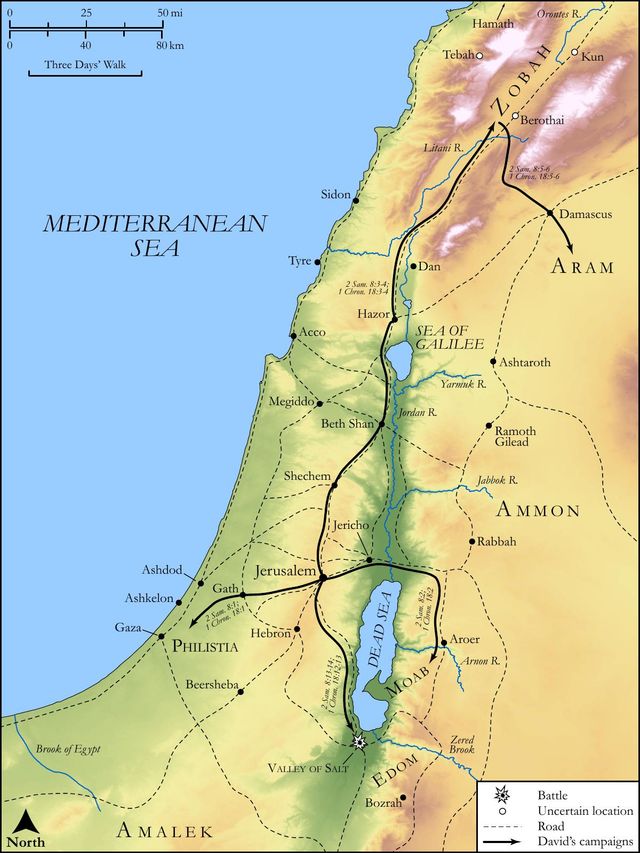
David's reign, spanning approximately 1010-970 BC, marked a transformative era for Israel, characterized by significant territorial expansion, the establishment of Jerusalem as the unified political and religious capital, and the emergence of Israel as a regional power. In the broader ancient Near Eastern context, it was a common practice for victorious kings to collect vast spoils of war. These treasures were typically employed to enrich the monarch's personal coffers, fund future military endeavors, or adorn national temples dedicated to their patron deities. David's action, however, distinguishes itself remarkably. By dedicating the entirety of the silver and gold to Yahweh, the one true God, he not only unequivocally acknowledged divine agency as the true source of his victories but also demonstrated a unique and profound commitment to monotheistic worship. This act transcended a mere religious gesture; it was a practical and strategic step in accumulating the immense wealth and precious materials that would be indispensable for the future construction of the Temple—a project of unparalleled national and theological significance that would solidify Israel's identity as God's chosen people with a central, consecrated place of worship.
Key Themes
ShowHide2 Samuel 8:11 powerfully articulates several foundational themes woven throughout the broader narrative of David's reign and the Old Testament. Firstly, it profoundly emphasizes Divine Sovereignty and Gratitude, as David's dedication unequivocally acknowledges that his military successes and the resulting prosperity were direct gifts from the LORD, rather than solely the outcome of his own strategic prowess or military might. This act of returning the spoils demonstrates a profound sense of dependence and heartfelt thankfulness. Secondly, the theme of Consecration and Holiness is paramount; the act of "dedicating" (qadash) transforms common war spoils into sacred offerings, setting them apart for God's exclusive use and divine purpose. This underscores the enduring biblical principle that all material blessings, when consecrated, can serve higher, divine ends. Thirdly, the verse highlights Preparation for Worship, revealing David's unwavering commitment to laying the material foundation for God's future dwelling place among His people, even though he was personally forbidden from building the Temple due to his involvement in extensive warfare, as elaborated in [1_chronicles/22-8 "1 Chronicles 22:8 - David Not Permitted to Build the Temple"]. Finally, David exemplifies Faithful Stewardship, managing the vast national wealth not for personal aggrandizement or fleeting earthly glory, but for the ultimate glory of God and the enduring spiritual benefit of the nation, thereby setting a profound precedent for future generations.
Exposition and Analysis
ShowHideKey Word Analysis
ShowHideThis verb, appearing twice in the verse ("did dedicate" and "had dedicated"), is absolutely central to its meaning. Qadash means "to be holy," "to consecrate," or "to set apart as holy." It implies a separation from common or profane use and an assignment to sacred purposes, often involving a ritual act that transforms something ordinary into something holy. In David's context, it signifies that the silver and gold, though obtained through the violent act of war, were purified and transformed into holy offerings, fit for the service of the LORD. This act was not merely a transfer of ownership but a spiritual transformation of the resources, reflecting David's heart posture of reverence and submission to God's ultimate authority over all things, including the spoils of victory.
This term refers to "foreign nations" or "Gentiles." Its use here emphasizes the breadth of David's military conquests, extending beyond Israel's immediate neighbors to encompass a wide array of peoples. The fact that the dedicated wealth came "of all nations" highlights the comprehensive nature of David's victories and, by extension, the universal scope of God's blessing upon his reign. It underscores that God's sovereignty extends over all peoples, and even the wealth of foreign lands can be brought into His service when consecrated.
This primitive root means "to tread down," "to conquer," or "to subjugate." It speaks to the decisive and overwhelming nature of David's military victories. The phrase "which he subdued" directly links the acquisition of the silver and gold to God's empowerment of David in battle. It signifies that the wealth was not merely found or traded, but was the direct result of divinely enabled conquest, further reinforcing the idea that the spoils were rightfully God's to begin with, having been delivered into David's hands through His might.
Verse Breakdown
ShowHide"Which also king David did dedicate unto the LORD,"
This opening clause immediately establishes David's intentional, deliberate, and pious act of consecration. It underscores his role as a king who understood that his victories were not merely a result of his own military prowess but were divinely granted. The phrase "unto the LORD" unequivocally identifies the divine recipient and ultimate owner of these vast treasures, emphasizing that David's actions were a profound act of worship, gratitude, and acknowledgment of God's supreme sovereignty. This dedication was a public and profound declaration of his allegiance and thankfulness.
"with the silver and gold"
This phrase precisely specifies the nature of the dedicated spoils. Silver and gold were the most valuable and enduring forms of wealth in the ancient world, representing immense material prosperity and significant national power. Their explicit mention emphasizes the sheer magnitude of David's military victories and the substantial, precious resources he was willing to set apart for God's purposes. It suggests that David held nothing back, consecrating the most valuable gains from his extensive conquests.
"that he had dedicated of all nations which he subdued;"
This concluding phrase powerfully reinforces both the comprehensive nature of David's dedication and the vast scope of his military successes. The repetition of "dedicated" (from the same root qadash) stresses the consistent, thorough, and principled application of this act of consecration across all his campaigns. "All nations which he subdued" signifies the extensive breadth of his dominion and, more importantly, the universal extent of God's blessing upon his reign. It implies that every victory, no matter the foe, was attributed to God, and its material fruit was faithfully returned to Him.
Literary Devices
ShowHideThe verse employs several potent literary devices to convey its profound message and emphasize David's piety. Repetition is prominently featured with the repeated use of the verb "dedicate" (or forms of qadash), which serves to underscore the central action and its profound theological significance. This repetition emphasizes the deliberate, consistent, and comprehensive nature of David's consecration of wealth to God. Furthermore, the phrase "all nations which he subdued" can be understood as a form of Hyperbole, not necessarily implying every single nation on earth, but rather conveying the immense vastness and comprehensiveness of David's military victories and the resulting wealth. This exaggeration serves to magnify God's blessing upon David and the extensive resources now available for divine purposes. The verse also functions as a powerful example of Thematic Reinforcement, consolidating the crucial themes of divine sovereignty, David's exemplary piety, and the diligent preparation for the future Temple, which are central to the surrounding narrative in 2 Samuel and 1 Chronicles.
Theological and Thematic Connections
ShowHide2 Samuel 8:11 offers a profound theological statement about divine ownership and human stewardship. David's act of dedicating the spoils of war to the LORD is a powerful recognition that all wealth, all victory, and indeed all things ultimately belong to God. It challenges the inherent human tendency to claim credit for success or to hoard resources for personal gain, instead modeling a posture of radical generosity and absolute dependence on the Creator. This dedication was not an end in itself, but a crucial preparation for God's dwelling place among His people, foreshadowing the construction of the Temple, a physical manifestation of God's presence and a central hub for Israel's worship. David understood that true prosperity was measured not by what he accumulated, but by what he consecrated to the One who gave it all, demonstrating a heart aligned with God's purposes.
Reflection and Application
ShowHideKing David's dedication of vast treasures to the LORD, as meticulously recorded in 2 Samuel 8:11, stands as a timeless and profound testament to a heart utterly devoted to God. It challenges believers today to undertake a deep introspection regarding their own relationship with material possessions, the source of their successes, and the ultimate purpose of their resources. David recognized with unwavering clarity that his victories were divinely granted, prompting him to return the "firstfruits" and the "best" of his spoils to the Giver of all good things. This act transcends mere tithing; it embodies a holistic and radical understanding that all we possess—our talents, our precious time, our financial resources, and even our most significant achievements—are ultimately God's. It calls us to embrace a radical form of stewardship, where our possessions are not ends in themselves but rather sacred instruments to be consecrated for God's overarching purposes, whether for the advancement of His kingdom, the support of His ongoing work in the world, or the flourishing of His people. Such intentional dedication transforms earthly gains into eternal investments, aligning our lives with God's divine will and preparing us to participate actively and meaningfully in His redemptive work in the world.
Questions for Reflection
ShowHideFAQ
ShowHideWhy did David dedicate these spoils to the LORD instead of using them for national defense or personal enrichment?
ShowHideDavid's decision to dedicate the vast spoils of war to the LORD, rather than employing them for conventional purposes like military expansion or personal luxury, stemmed from his deep theological understanding and profound piety. He recognized unequivocally that his victories were not merely the result of his own military prowess or strategic genius but were divinely granted by God. This act was primarily an expression of worship and profound gratitude, acknowledging God's absolute sovereignty over all things, including the outcome of battles and the immense wealth derived from them. Furthermore, David harbored a clear and divinely inspired vision for the future: these dedicated resources were specifically intended to be used for the construction of the Temple, a central and permanent place of worship for the LORD in Jerusalem. This foresight and unwavering commitment to God's dwelling place among His people are explicitly detailed in [1_chronicles/22-14 "1 Chronicles 22:14 - David's Abundant Preparations for the Temple"], where it is revealed that David accumulated an immense amount of gold, silver, and other precious materials for this very purpose, demonstrating his long-term planning for God's glory.
What was the ultimate purpose of these dedicated treasures?
ShowHideWhile 2 Samuel 8:11 succinctly states that David "did dedicate unto the LORD" the silver and gold, the full and overarching purpose of these dedicated treasures becomes clearer in later biblical accounts, particularly in the books of Kings and Chronicles. These vast riches formed a significant portion of the treasury and the raw materials that would later be used for the construction of the First Temple in Jerusalem. David himself passionately desired to build a permanent house for God, but he was providentially informed that this monumental task would be reserved for his son, Solomon, primarily due to David's extensive involvement in warfare and bloodshed 1 Chronicles 22:8. Nevertheless, David diligently prepared the resources, ensuring that Solomon would have abundant and invaluable materials to fulfill the divine mandate. Thus, the dedicated spoils were foundational for the physical manifestation of God's presence among His people, as seen in [1_kings/6-1 "1 Kings 6:1 - Solomon Begins Building the Temple"], which meticulously details the commencement of the Temple's construction, a project made possible by David's faithful dedication.
Christ-Centered Fulfillment
ShowHideDavid's exemplary dedication of the spoils of war to the LORD in 2 Samuel 8:11 finds its ultimate and most profound fulfillment in the person and work of Jesus Christ. David, serving as a significant type of Christ, dedicated earthly treasures gained through physical conquest for the building of a physical temple. Christ, the true King and ultimate conqueror, achieved a far greater and more encompassing victory, subduing not merely earthly nations but the spiritual enemies of sin, death, and the devil through His crucifixion and resurrection Colossians 2:15. The "spoils" of His unparalleled victory are not silver and gold, but redeemed humanity, whom He dedicates entirely to the Father as a living sacrifice. Jesus Himself is the ultimate "dedicated" offering, the Lamb of God who perfectly consecrated Himself for the salvation of the world John 1:29. Furthermore, Christ is revealed as the true Temple, the very dwelling place of God among humanity, where God's presence is fully and perfectly manifested in human flesh John 1:14. Through His perfect self-sacrifice, He has consecrated a new and living way for us to approach God, making us, His followers, "living stones" who are built into a spiritual house, a holy priesthood, dedicated to offering spiritual sacrifices acceptable to God through Him 1 Peter 2:5. Thus, David's act powerfully foreshadows Christ's perfect dedication, His ultimate victory over spiritual foes, and the establishment of a new, spiritual temple composed of all believers who are made holy and consecrated through their union with Him.