


2 Samuel 8:12
Bible text: King James Version (1769 Blayney text) · Public domain
Bible text: King James Version with Strong's numbers · Public domain
Bible text: Berean Standard Bible · Public domain
Bible text: American Standard Version (1901) · Public domain
Bible text: World English Bible, Messianic edition · Public domain
Bible text: Geneva Bible (1599) · Public domain
Bible text: Young's Literal Translation · Public domain
- מֵאֲרָםme·'a·Ramfrom AramH758Prep-m ¦ N-properNoun Proper LocationמֵfromאֲרָםAram
- וּמִמּוֹאָבu·mi·mo·'Avand from MoabH4124Conj-w ¦ Prep-m ¦ N-properNoun Proper LocationוּandמִfromמּוֹאָבMoab
- וּמִבְּנֵיu·mi·be·Neiand from [the] people ofH1121Conj-w ¦ Prep-m ¦ N-mpcNoun Plural Masculine Constructוּandמִfromבְּנֵי[the] people of
- עַמּוֹןa·MonAmmonH5983N-proper-mNoun Proper Masculine
- וּמִפְּלִשְׁתִּיםu·mi·pe·lish·Timand from [the] PhilistinesH6430Conj-w ¦ Prep-m ¦ N-mpNoun Gentilic Plural Masculine Absoluteוּandמִfromפְּלִשְׁתִּים[the] Philistines
- וּמֵעֲמָלֵקu·me·'a·ma·Lekand from AmalekH6002Conj-w ¦ Prep-m ¦ N-properNoun Proper LocationוּandמֵfromעֲמָלֵקAmalek
- וּמִשְּׁלַלu·mi·she·Laland from [the] plunder ofH7998Conj-w ¦ Prep-m ¦ N-mscNoun Singular Masculine Constructוּandמִfromשְּׁלַל[the] plunder of
- הֲדַדְעֶזֶרha·dad·'E·zerHadadezerH1909N-proper-mNoun Proper Masculine
- בֶּןben[the] son ofH1121N-mscNoun Singular Masculine Construct
- רְחֹבre·ChoRehobH7340N-proper-mNoun Proper Masculine
- מֶלֶךְMe·lekh[the] king ofH4428N-mscNoun Singular Masculine Construct
- צוֹבָהtzo·VahZobahH6678N-properNoun Proper Location
English is a literal word-by-word gloss of the Hebrew, not the KJV's wording. Why?
This is the original text the KJV's translators worked from — each Hebrew word with its own literal English meaning in this verse, prepared by scholars at Tyndale House, Cambridge. The KJV translates whole sentences, not word by word, so its wording differs: one Hebrew word can become several English words, and the KJV may choose “the LORD” where the gloss reads “Yahweh”. Both are faithful — they answer different questions. For the KJV's own rendering, switch to the KJV text.
Details
See on the biblical-era maps

Study this verse
Public-domain commentary
Matthew Henry
From his Commentary on the Whole Bible. Henry comments on passages, not single verses — this entry covers 2 Samuel 8:9–14.
Here is, 1. The court made to David by the king of Hamath, who, it seems was at this time at war with the king of Zobah. He hearing of David's success against his enemy, sent his own son ambassador to him (Sa2 8:9, Sa2 8:10), to congratulate him on his victory, to return him thanks for the favour he had done him in breaking the power of one he was in fear of, and to beg his friendship. Thus he not only secured but strengthened himself. And David lost nothing by taking this little prince under his protection, any more than the old Romans did by the like policy; for the wealth he had from the countries he conquered by way of spoil he had from this by way of present or gratuity: Vessels of silver and gold. Better get by composition than by compulsion. 2. The offering David made to God of the spoils of the nations and all the rich things that were brought him. He dedicated all to the Lord, Sa2 8:11, Sa2 8:12. This crowned all his victories, and made them far to out-shine Alexander's or Caesar's, that they sought their own glory, but he aimed at the glory of God. All the precious things he was master of were dedicated things, that is, they were designed for the building of the temple; and a good omen it was of kindness to the Gentiles in the fulness of time, and of the making of God's house a house of prayer for all people, that the temple was built of the spoils and presents of Gentile nations, in allusion to which we find the kings of the earth bringing their glory and honour into the new Jerusalem, Rev 21:24. Their gods of gold David burnt (Sa2 5:21), but their vessels of gold he dedicated. Thus in the conquest of a soul, by the grace of the Son of David, what stands in opposition to God must be destroyed, every lust mortified and crucified, but what may glorify him must be dedicated and the property of it altered. Even the merchandise and the hire must be holiness to the Lord (Isa 23:18), the gain consecrated to the Lord of the whole earth (Mic 4:13), and then it is truly our own and that most comfortably. 3. The reputation he got, in a particular manner, by his victory over the Syrians and their allies the Edomites, who acted in conjunction with them, as appears by comparing the title of the 60th Psalm, which was penned on this occasion, with Sa2 8:13. He got himself a name for all that conduct and courage which are the praise of a great and distinguished general. Something extraordinary, it is likely, there was in that action, which turned very much to his honour, yet he is careful to transfer the honour to God, as appears by the psalm he penned on this occasion, Sa2 8:12. It is through God that we do valiantly. 4. His success against the Edomites. They all became David's servants, Sa2 8:14. Now, and not till now, Isaac's blessing was accomplished, by which Jacob was made Esau's Lord (Gen 27:37-40) and the Edomites continued long tributary to the kings of Judah, as the Moabites were to the kings of Israel, till, in Joram's time, they revolted (Ch2 21:8) as Isaac had there foretold that Esau should, in process of time, break the yoke from off his neck. Thus David by his conquests, (1.) Secured peace to his son, that he might have time to build the temple. And, (2.) Procured wealth for his son, that he might have wherewith to build it. God employs his servants variously, some in one employment, others in another, some in the spiritual battles, others in the spiritual buildings; and one prepares work for the other, that God may have the glory of all. All David's victories were typical of the success of the gospel against the kingdom of Satan, in which the Son of David rode forth, conquering and to conquer, and he shall reign till he has brought down all opposing rule, principality, and power: and he has, as David had (Sa2 8:2), a line to kill and a line to save; for the same gospel is to some a savour of life unto life, to others a savour of death unto death.
Continue studying 2 Samuel 8:12 across the web’s major study libraries — every link below opens this exact verse, chapter, or book on the destination site.
Read & Compare
 BibleGatewayThis verse in more than 200 translations and 70 languages.
 Bible.comThe YouVersion reader — hundreds of translations, reading plans, and highlights.
 ESV.orgCrossway's official English Standard Version reader.
 NET BibleThe NET translation with 60,000+ translators' notes on every rendering decision.
 STEP BibleTyndale House's free study tool — original text, vocabulary, and scholarly resources.
 BibliaLogos Bible Software's free web reader.
 USCCBThe New American Bible (Revised Edition) with the U.S. bishops' study notes.
Commentaries
 BibleHub CommentariesDozens of classic commentaries on this verse, gathered on one page.
 StudyLightMore than 100 commentary sets — the largest collection on the web.
 BibleRefPlain-English commentary on what this verse means, verse by verse.
 Enduring WordDavid Guzik's free commentary on this chapter, widely used by Bible teachers.
 Bible Study ToolsVerse commentary alongside Greek and Hebrew study aids.
Original Language & Research
- BibleHub InterlinearThe verse word by word — original language, transliteration, and English.
- BibleHub LexiconEvery word's original-language definition and Strong's entry.
 Blue Letter BibleDeep-study tools — Strong's numbers, concordance, and word studies.
 SefariaThe Hebrew text with Rashi and centuries of Jewish commentary.
Sermons, Hymns & Audio


TrulyRandomVerse is not affiliated with these sites and doesn’t control their content. They’re linked because they’re genuinely useful.
Summary
2 Samuel 8:12 provides a precise inventory of the vast spoils and tribute that King David meticulously collected from his victorious military campaigns against surrounding nations. This verse, embedded within a broader summary of David's reign (2 Samuel 8:1-14), meticulously details the extent of his dominion and the immense material wealth acquired from the subjugation of formidable adversaries such as Syria (specifically Zobah), Moab, the Ammonites, the Philistines, and the Amalekites. The specific mention of Hadadezer, king of Zobah, highlights a particularly significant conquest. This enumeration underscores the tangible outcome of David's divinely-empowered victories, all of which, as the preceding verse indicates, were consecrated to the Lord for the purposes of the kingdom and the future construction of the Temple.
Context
ShowHideLiterary Context
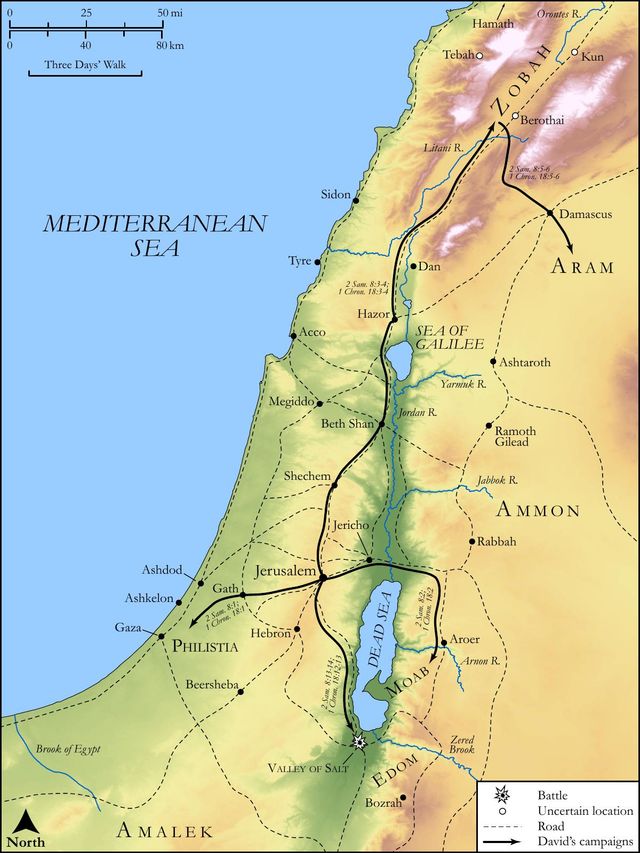
This verse is strategically placed within 2 Samuel 8, a pivotal chapter that comprehensively summarizes King David's military triumphs and the subsequent consolidation of his kingdom. It follows David's establishment of Jerusalem as his capital and the bringing of the Ark of the Covenant there in 2 Samuel 5-6. Crucially, 2 Samuel 7 records God's unconditional covenant with David, promising an enduring dynasty and rest from his enemies. Chapter 8 then serves as a powerful demonstration of the practical outworking of this divine favor through David's successful military expansion. Verse 12 functions as a detailed inventory, elaborating on the "silver and gold" mentioned in 2 Samuel 8:11, explicitly listing the nations and rulers from whom these precious spoils were taken. It underscores the scope of David's victories, particularly the significant defeat of Hadadezer in 2 Samuel 8:3-8.
Historical & Cultural Context
David's military campaigns unfolded during a period of relative geopolitical flux among the nations round about. Major powers like Egypt and Mesopotamia were in decline or not yet fully ascendant, creating a power vacuum that allowed regional kingdoms, including Israel, to expand their influence. The nations enumerated in 2 Samuel 8:12—Syria (specifically Zobah, a powerful Aramean kingdom), Moab, Ammon, the Philistines, and Amalek—were long-standing adversaries or contentious neighbors of Israel, frequently engaging in border conflicts or vying for regional dominance. The collection of "spoil" (booty, plunder) and "tribute" (regular payments from subjugated peoples) was a common and expected practice in ancient warfare, serving as a clear sign of conquest, submission, and the transfer of wealth and power. Furthermore, the dedication of such spoils to a deity was a widespread cultural practice, acknowledging divine assistance in securing victory. For David, dedicating these treasures "unto the LORD" (as explicitly stated in 2 Samuel 8:11) was a profound act of worship and an acknowledgment that his victories were divinely ordained, setting a crucial precedent for the use of national wealth for sacred purposes, particularly for the future Temple.
Key Themes
ShowHideThis verse powerfully contributes to several overarching themes evident in 2 Samuel and the broader Old Testament narrative. Firstly, it highlights David's Military Dominance and God's Empowerment, showcasing his strategic prowess and the strength of his army, while ultimately attributing his success to divine favor, as implied by the dedication of spoils to the Lord. Secondly, it vividly illustrates the Consolidation and Expansion of the Davidic Kingdom, as the decisive defeat of these surrounding nations secured Israel's borders and established its regional hegemony, thereby fulfilling aspects of the land promises made to Abraham (e.g., Genesis 15:18). Thirdly, and perhaps most significantly, it emphasizes Dedication and Stewardship of Resources to God. The fact that these immense spoils were consecrated to the Lord, rather than hoarded for personal gain, underscores David's piety and his understanding that all blessings and victories originate from God. This act of dedication directly foreshadows the use of these very resources for the construction of the Temple under Solomon, as noted in 1 Kings 7:51. Finally, the verse speaks to the Fulfillment of Divine Promises, demonstrating how God was indeed making David's name great and establishing his kingdom, just as promised in 2 Samuel 7:9.
Exposition and Analysis
ShowHideKey Word Analysis
ShowHideThis noun refers to plunder, booty, or goods taken from a defeated enemy during warfare. Its usage in this verse emphasizes the substantial material wealth—including metals, livestock, and other valuable assets—acquired through David's extensive military campaigns. The term signifies not merely the act of taking, but the valuable nature of the seized assets. The dedication of this shalal to the Lord, as explicitly stated in the preceding verse (2 Samuel 8:11), transforms it from mere plunder into a consecrated offering, highlighting David's piety and the sacred nature of Israel's national wealth.
Meaning "Hadad is his help" or "Hadad is my help," Hadadezer was the powerful king of Zobah, a prominent Aramean kingdom situated north of Damascus. His specific mention within this comprehensive list of conquered nations underscores the immense significance of David's victory over him, a triumph detailed earlier in 2 Samuel 8:3-8. Hadadezer's defeat represented a major strategic achievement for David, as it opened up vital trade routes and secured Israel's northern frontier, yielding a substantial and particularly valuable portion of the enumerated spoils.
This noun denotes a monarch or ruler. The designation of Hadadezer as "king of Zobah" highlights his royal status and the formidable nature of the kingdom he governed. The defeat of such a powerful and established king, rather than a mere chieftain or local leader, further magnifies David's military prowess and the extent of his dominion. It signifies the subjugation of a significant regional power, underscoring the comprehensive nature of David's conquests and the consolidation of his own royal authority.
Verse Breakdown
ShowHide"Of Syria, and of Moab, and of the children of Ammon, and of the Philistines, and of Amalek"
This initial clause provides a comprehensive enumeration of the primary nations and peoples against whom David waged successful campaigns. Each group represented a significant threat or historical adversary to Israel. "Syria" here refers specifically to the Aramean kingdoms, particularly Zobah, a dominant force. Moab and Ammon were Transjordanian kingdoms, frequently in conflict with Israel over territory. The Philistines were a formidable coastal power, a constant thorn in Israel's side since the time of the Judges. Amalek was an ancient, nomadic enemy whose defeat was a long-standing divine command (e.g., 1 Samuel 15:2-3). The inclusion of these diverse enemies demonstrates the breadth and completeness of David's military dominance, solidifying Israel's security and regional influence.
"and of the spoil of Hadadezer, son of Rehob, king of Zobah"
This specific and detailed mention of Hadadezer and his kingdom of Zobah highlights the particular importance and immense wealth derived from this singular victory. While other nations are listed generally, Hadadezer is singled out by name, title, and lineage ("son of Rehob"), indicating the magnitude of his power and the strategic significance of his defeat. The phrase "spoil of Hadadezer" suggests that a particularly large or valuable portion of the dedicated treasures came from this specific campaign, further emphasizing the pivotal nature of this conquest in David's consolidation of his kingdom and the fulfillment of God's promises.
Literary Devices
ShowHideThe primary literary device employed in 2 Samuel 8:12 is Enumeration (also known as a Catalog or List). The verse systematically provides a detailed list of the nations and rulers from whom David collected spoils. This technique serves to powerfully emphasize the vast scope of David's military victories and the extensive reach of his dominion. By meticulously listing each distinct entity—Syria, Moab, Ammon, the Philistines, Amalek, and then specifically Hadadezer of Zobah—the text conveys a profound sense of comprehensive conquest and the immense wealth that consequently accrued to Israel. The specificity of the enumeration reinforces the historical reality and tangible nature of David's achievements and the fulfillment of God's promises regarding the extent of Israel's territory and influence. The inclusion of Hadadezer by name, along with his full title and lineage, also acts as a form of Emphasis, drawing particular attention to this singularly significant victory within the broader catalog of conquests, thereby highlighting its strategic and material importance.
Theological and Thematic Connections
ShowHide2 Samuel 8:12, read in conjunction with the preceding verse, profoundly illustrates the theological principle that all success, wealth, and victory ultimately derive from God and should be consecrated back to Him. David's dedication of these vast spoils to the Lord is not merely a cultural practice but a deeply theological statement: he acknowledges God as the true source of his power and prosperity. This act foreshadows the future use of these dedicated resources for the construction of the Temple in Jerusalem, establishing a precedent for national wealth being channeled towards divine purposes. It underscores God's faithfulness in fulfilling His covenant promises to David, demonstrating that the expansion and security of Israel's kingdom were a direct result of divine favor and intervention.
Reflection and Application
ShowHideThe detailed list of conquered nations and collected spoils in 2 Samuel 8:12 offers a powerful historical testament to David's reign, but it also provides profound spiritual lessons for believers today. Just as David recognized that his victories and the resulting wealth were gifts from God, we are called to acknowledge divine providence in every aspect of our lives. Our talents, resources, successes, and even our very lives are ultimately on loan from God. The act of dedicating these spoils to the Lord, as David did, serves as a timeless model for stewardship: rather than hoarding blessings for personal gain or pride, we are to consecrate them back to God for His purposes and glory. This verse challenges us to consider how we are using our "spoils"—our time, talents, and treasures—to advance God's kingdom and honor His name. It reminds us that true security and lasting prosperity are found not in accumulated wealth or worldly power, but in obediently walking with God and entrusting all we have to Him, knowing that He is the ultimate source of every good and perfect gift.
Questions for Reflection
ShowHideFAQ
ShowHideWhy is the specific list of conquered nations and Hadadezer so important in this verse?
ShowHideThe detailed enumeration in 2 Samuel 8:12 is crucial for several reasons. Firstly, it underscores the magnitude and comprehensiveness of David's military achievements. These were not minor skirmishes but decisive victories over powerful, long-standing adversaries of Israel (Syria/Zobah, Moab, Ammon, Philistines, Amalek). This list demonstrates that David effectively secured Israel's borders and established its regional dominance, fulfilling God's promises regarding the extent of the land and the stability of the kingdom (e.g., Genesis 15:18). Secondly, the specific mention of "Hadadezer, son of Rehob, king of Zobah" highlights a particularly significant and lucrative conquest, detailed earlier in 2 Samuel 8:3-8. This specific reference emphasizes the strategic importance of defeating such a powerful Aramean king and the immense wealth (including gold shields and much bronze) that came from this victory, which was subsequently dedicated to the Lord. The list collectively paints a picture of a secure and prosperous Israel under David's divinely-blessed reign, demonstrating the tangible outworking of God's covenant faithfulness.
Christ-Centered Fulfillment
ShowHideWhile 2 Samuel 8:12 describes David's earthly victories and the consolidation of his temporal kingdom, it finds its ultimate and profound fulfillment in the person and work of Jesus Christ. David's conquests, which brought a measure of peace and prosperity to Israel and saw the dedication of spoils to God, powerfully foreshadow the spiritual victories of the true Son of David. Jesus, through His sacrificial death and glorious resurrection, decisively defeated the ultimate enemies of humanity: sin, death, and the devil (e.g., Colossians 2:15). He did not merely collect earthly spoils but secured an eternal spiritual kingdom, gathering to Himself a people from every nation, tribe, and tongue (e.g., Revelation 5:9). The vast wealth and resources David dedicated to the Lord for the earthly temple find their greater reality in the spiritual temple, the Church, which is built upon Christ as the cornerstone (e.g., Ephesians 2:20-22). All things, including the "spoils" of His victory—redeemed humanity, spiritual blessings, and ultimate dominion—are ultimately dedicated by Christ to the glory of God the Father, establishing a reign that is not merely regional but universal, eternal, and truly peaceful (e.g., 1 Corinthians 15:24-28). David's reign was a shadow; Christ's is the glorious, enduring reality of God's sovereign rule.