


2 Chronicles 25:8
- כִּיkithatH3588PrtParticle Conditional
- אִם'imexceptH518PrtParticle Conditional
- בֹּאbo'goH935V-Qal-Imp-2msVerb Qal Imperative 2nd Singular Masculine
- אַתָּה'a·TahyouH859Pro-2msPronoun Personal 2nd Singular Masculine
- עֲשֵׂה'a·SehactH6213V-Qal-Imp-2msVerb Qal Imperative 2nd Singular Masculine
- חֲזַקcha·Zakbe strongH2388V-Qal-Imp-2msVerb Qal Imperative 2nd Singular Masculine
- לַמִּלְחָמָהla·mil·cha·Mahfor the battleH4421Prep-l ¦ N-fsNoun Singular Feminine Absoluteלַfor theמִּלְחָמָהbattle
- יַכְשִׁילְךָyakh·shi·le·Khahe will overthrow youH3782V-Hiphil-Imperf-3ms ¦ 2msVerb Hiphil Imperfect 3rd Singular Masculineיַכְשִׁילְhe will overthrowךָyou
- הָאֱלֹהִיםha·'E·lo·Him<the> GodH430Art ¦ N-mpNoun Plural Masculine Absoluteהָ<the>אֱלֹהִיםGod
- לִפְנֵיlif·Nei<to> beforeH6440Prep-l ¦ N-mpcNoun Plural Masculine Constructלִ<to>פְנֵיbefore
- אוֹיֵב'o·Yev[the] enemyH341V-Qal-Prtcpl-msVerb Qal Participle Singular Masculine Absolute
- כִּיkiforH3588PrtParticle Conditional
- יֶשׁyeshthereH3426Adj-csAdjective Numerical Singular common gender Absolute
- כֹּחַKo·ach[is] strengthH3581N-msNoun Singular Masculine Absolute
- בֵּאלֹהִיםbe·lo·Himin GodH430Prep-b ¦ N-mpNoun Plural Masculine AbsoluteבֵּinאלֹהִיםGod
- לַעְזוֹרla'·Zorto helpH5826Prep-l ¦ V-Qal-InfVerb Qal Infinitive Constructלַtoעְזוֹרhelp
- וּלְהַכְשִׁילu·le·hakh·Shiland to overthrowH3782Conj-w ¦ Prep-l ¦ V-Hiphil-InfVerb Hiphil Infinitive Constructוּandלְtoהַכְשִׁילoverthrow
English is a literal word-by-word gloss of the Hebrew, not the KJV's wording. Why?
This is the original text the KJV's translators worked from — each Hebrew word with its own literal English meaning in this verse, prepared by scholars at Tyndale House, Cambridge. The KJV translates whole sentences, not word by word, so its wording differs: one Hebrew word can become several English words, and the KJV may choose “the LORD” where the gloss reads “Yahweh”. Both are faithful — they answer different questions. For the KJV's own rendering, switch to the KJV text.
Details
See on the biblical-era map
Study this verse
Public-domain commentary
Matthew Henry
From his Commentary on the Whole Bible. Henry comments on passages, not single verses — this entry covers 2 Chronicles 25:1–13. His three-level outline is real structure in the source text, so it is rendered as structure.
Here is, I. The general character of Amaziah: He did that which was right in the eyes of the Lord, worshipped the true God, kept the temple service a going, and countenanced religion in his kingdom; but he did not do it with a perfect heart (Ch2 25:2), that is, he was not a man of serious piety or devotion himself, nor had he any zeal for the exercises of religion. He was no enemy to it, but a cool and indifferent friend. Such is the character of too many in this Laodicean age: they do that which is good, but not with the heart, not with a perfect heart.
II.A necessary piece of justice which he did upon the traitors that murdered his father:
he put them to death, Ch2 25:3. Though we should suppose they intended to avenge on their king the death of the prophet (as was intimated, Ch2 24:25), yet this would by no means justify their wickedness; for they were not the avengers, but presumptuously took God's work out of his hands: and therefore Amaziah did what became him in calling them to an account for it, but forbade the putting of the children to death for the parents' sin, Ch2 25:4.
III.An expedition of his against the Edomites, who, some time ago, had revolted from under the dominion of Judah, to which he attempted to reduce them. Observe,
1.The great preparation he made for this expedition.
(1.)He mustered his own forces, and marshalled them (Ch2 25:5), and found Judah and Benjamin in all but 300,000 men that were fit for war, whereas, in Jehoshaphat's time, fifty or sixty years before, they were four times as many. Sin weakens a people, diminishes them, dispirits them, and lessens their number and figure.
(2.)He hired auxiliary troops out of the kingdom of Israel, Ch2 25:6. Finding his own kingdom defective in men, he thought to make up the deficiency with his money, and therefore took into his pay 100,000 Israelites. If he had advised with any of his prophets before he did this, or had but considered how little any of his ancestors got by their alliances with Israel, he would not have had this to undo again. But rashness makes work for repentance.
2.The command which God sent him by a prophet to dismiss out of his service the forces of Israel, Ch2 25:7, Ch2 25:8. He would not have him call in any assistance at all: it looked like distrust of God. If he made sure of God's presence, the army he had of his own was sufficient. But particularly he must not take in their assistance: For the Lord is not with the children of Ephraim, because they are not with him, but worship the calves. This was a good reason why he should not make use of them, because he could not depend upon them to do him any service. What good could be expected from those that had not God with them, nor his blessings upon their undertakings? It is comfortable to employ those who, we have reason to hope, have an interest in heaven, and dangerous to associate with those from whom the Lord has departed. The prophet assured him that if he persisted in his resolution to take these idolatrous apostate Israelites with him, in hopes thereby to make himself strong for the battle, it was at his peril; they would prove a dead weight to his army, would sink and betray it: "God shall make thee fall before the enemy, and these Israelites will be the ruin of thy cause; for God has power to help thee without them, and to cast thee down though thou hast them with thee."
3.The objection which Amaziah made against this command, and the satisfactory answer which the prophet gave to that objection, Ch2 25:9. The king had remitted 100 talents to the men of Israel for advance-money. "Now," says he, "if I send them back, I shall lose that: But what shall we do for the 100 talents?" This is an objection men often make against their duty: they are afraid of losing by it. "Regard not that," says the prophet: "The Lord is able to give thee much more than this; and, thou mayest depend upon it, he will not see thee lose by him. What are 100 talents between thee and him? He has ways enough to make up the loss to thee; it is below thee to speak of it." Note, A firm belief of God's all-sufficiency to bear us out in our duty, and to make up all the loss and damage we sustain in his service abundantly to our advantage, will make his yoke very easy and his burden very light. What is it to trust in God, but to be willing to venture the loss of any thing for him, in confidence of the goodness of the security he gives us that we shall not lose by him, but that whatever we part with for his sake shall be made up to us in kind or kindness. When we grudge to part with any thing for God and our religion, this should satisfy us, that God is able to give us much more than this. He is just, and he is good, and he is solvent. The king lost 100 talents by his obedience; and we find just that sum given to his grandson Jotham as a present (Ch2 27:5); then the principal was repaid, and, for interest, 10,000 measures of wheat and as many of barley.
4.His obedience to the command of God, which is upon record to his honour. He would rather lose his money, disoblige his allies, and dismiss a fourth part of his army just as they were going to take the field, than offend God: He separated the army of Ephraim, to go home again, Ch2 25:10. And they went home in great anger, taking it as a great affront thus to be made fools of, and to be cashiered as men not fit to be employed, and being perhaps disappointed of the advantages they promised themselves in spoil and plunder by joining with Judah against Edom. Men are apt to resent that which touches them in their profit or reputation, though it frees them from trouble.
5.His triumphs over the Edomites, Ch2 25:11, Ch2 25:12. He left dead upon the spot, in the field of battle, 10,000 men; 10,000 more he took prisoners, and barbarously killed them all by throwing them down some steep and craggy precipice. What provocation he had to exercise this cruelty towards them we are not told; but it was certainly very severe.
6.The mischief which the disbanded soldiers of Israel did to the cities of Judah, either in their return or soon after, Ch2 25:13. They were so enraged at being sent home that, if they might not go to share with Judah in the spoil of Edom, they would make a prey of Judah. Several cities that lay upon the borders they plundered, killing 3000 men that made resistance. But why should God suffer this to be done? Was it not in obedience to him that they were sent home, and yet shall the country thus suffer by it? Surely God's way is in the sea! Did not the prophet say that God was not with the children of Ephraim, and yet they are suffered to prevail against Judah? Doubtless God intended hereby to chastise those cities of Judah for their idolatries, which were found most in those parts that lay next to Israel. The men of Israel had corrupted them, and now they were made a plague to them. Satan both tempts and torments.
Historical interpretation
Historical reception
1 surviving comment on this verse from the historical church.
For the Almighty sets in motion even in the innermost hearts of people the movement of their will, so that he does through their agency whatsoever he wishes to perform through them—even he who knows not how to will anything in unrighteousness. What, again, is the purport of that which the man of God said to King Amaziah: "Let not the army of Israel go with you; for the Lord is not with Israel, even with all the children of Ephraim: for if you shall think to obtain with these, the Lord shall put you to flight before your enemies: for God has power either to strengthen or to put to flight"? Now, how does the power of God help some in war by giving them confidence and put others to flight by injecting fear into them, except it be that he who has made all things according to his own will, in heaven and on earth, also works in human hearts? We read also what Joash, king of Israel, said when he sent a message to Amaziah, king of Judah, who wanted to fight with him. After certain other words, he added, "Now stay at home; why do you challenge me to your hurt, that you should fall, you and Judah with you?" Then the Scripture has added this sequel: "But Amaziah would not hear; for it came of God, that he might be delivered into their hands, because they sought after the gods of Edom." Behold, now, how God, wishing to punish the sin of idolatry, wrought this in this man's heart, with whom he was indeed justly angry, not to listen to sound advice but to despise it and go to the battle in which he with his army was routed.
Continue studying 2 Chronicles 25:8 across the web’s major study libraries — every link below opens this exact verse, chapter, or book on the destination site.
Read & Compare
 BibleGatewayThis verse in more than 200 translations and 70 languages.
 Bible.comThe YouVersion reader — hundreds of translations, reading plans, and highlights.
 ESV.orgCrossway's official English Standard Version reader.
 NET BibleThe NET translation with 60,000+ translators' notes on every rendering decision.
 STEP BibleTyndale House's free study tool — original text, vocabulary, and scholarly resources.
 BibliaLogos Bible Software's free web reader.
 USCCBThe New American Bible (Revised Edition) with the U.S. bishops' study notes.
Commentaries
 BibleHub CommentariesDozens of classic commentaries on this verse, gathered on one page.
 StudyLightMore than 100 commentary sets — the largest collection on the web.
 BibleRefPlain-English commentary on what this verse means, verse by verse.
 Enduring WordDavid Guzik's free commentary on this chapter, widely used by Bible teachers.
 Bible Study ToolsVerse commentary alongside Greek and Hebrew study aids.
Original Language & Research
- BibleHub InterlinearThe verse word by word — original language, transliteration, and English.
- BibleHub LexiconEvery word's original-language definition and Strong's entry.
 Blue Letter BibleDeep-study tools — Strong's numbers, concordance, and word studies.
 SefariaThe Hebrew text with Rashi and centuries of Jewish commentary.
Sermons, Hymns & Audio


TrulyRandomVerse is not affiliated with these sites and doesn’t control their content. They’re linked because they’re genuinely useful.
Summary
Second Chronicles 25:8 delivers a profound and urgent prophetic warning to King Amaziah of Judah, asserting God's absolute and unchallengeable sovereignty over the outcomes of all human endeavors, particularly in warfare. The verse highlights that divine favor, not human strength or financial investment, is the sole determinant of victory or defeat, powerfully declaring God's omnipotent capacity to either grant success or orchestrate failure according to His will. It serves as a stark reminder that defiance of God's explicit instruction, even when seemingly costly, inevitably leads to divine judgment and defeat, underscoring the futility of human effort when it stands in opposition to the divine decree.
Context
ShowHideLiterary Context
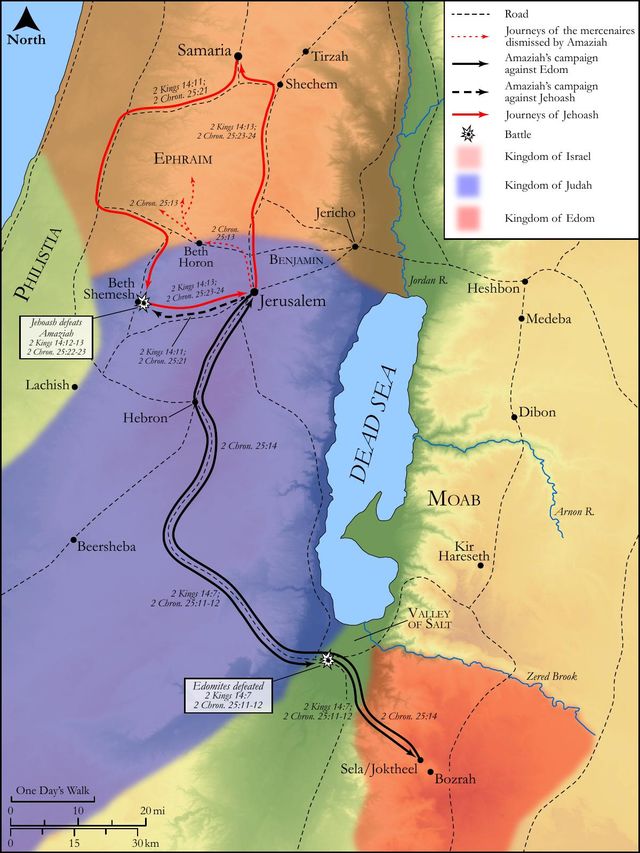
This verse is situated within the complex narrative of King Amaziah's reign, which begins with a mixed assessment: he "did what was right in the eyes of the Lord, though not with a perfect heart" 2 Chronicles 25:2. As Amaziah prepares for war against Edom, he initially raises a formidable army from Judah and Benjamin. However, in a move to augment his forces, he then hires 100,000 mighty warriors from the Northern Kingdom of Israel for a substantial sum of 100 talents of silver. It is at this critical juncture that an unnamed "man of God"—a prophet—intervenes with a direct divine message, warning Amaziah not to proceed with the Israelite mercenaries because "the Lord is not with Israel" 2 Chronicles 25:7. Amaziah's immediate concern is the significant financial loss of the 100 talents already paid. Verse 8 is the prophet's powerful and uncompromising response to this dilemma, emphasizing that the financial cost is utterly insignificant compared to the divine judgment that will ensue if Amaziah disregards God's explicit command.
Historical & Cultural Context
King Amaziah ruled Judah from approximately 796-767 BC. His conflict with Edom was a significant geopolitical event, as Edom had previously rebelled against Judah's control during the reign of Jehoram 2 Kings 8:20-22. The practice of hiring mercenaries was common in the ancient Near East, reflecting a desire for military superiority and numerical advantage. However, for a king of Judah, relying on a northern kingdom that had consistently strayed into idolatry and disobedience was spiritually problematic and a profound theological compromise. The 100 talents of silver represented an enormous sum, equivalent to over three tons of silver, highlighting the king's significant investment and his understandable, albeit misplaced, reluctance to forfeit it. The prophet's intervention underscores the unique covenant relationship between God and Judah, where military success was not determined by the size or strength of an army, but by divine favor and unwavering obedience to the Lord, a foundational theme echoed throughout Israel's history, as seen in the blessings and curses outlined in Deuteronomy 28.
Key Themes
ShowHideThis verse powerfully contributes to several overarching themes prominent in Chronicles and the broader Old Testament narrative. Firstly, it underscores the theme of Divine Sovereignty and Control, asserting that God alone determines the outcome of battles and human endeavors. Human strength, military alliances, or financial investments are rendered utterly secondary to His will, as also seen in the psalmist's declaration that "No king is saved by the multitude of an host: a mighty man is not delivered by much strength" Psalm 33:16-17. Secondly, it highlights the critical importance of Obedience over Expediency. Amaziah was tempted to prioritize his significant financial investment over divine counsel, but the prophet's warning emphasizes the necessity of immediate and complete obedience to God, regardless of perceived worldly losses or gains. Disobedience, the verse implies, leads to inevitable failure and divine judgment. Finally, the core message is encapsulated in the phrase, "for God hath power to help, and to cast down," which speaks to God's Omnipotence and Active Involvement in human affairs, whether bringing success or defeat. It serves as a stark reminder of His ultimate authority over all circumstances, a truth foundational to the narrative of 1 Samuel 2:6-8.
Exposition and Analysis
ShowHideKey Word Analysis
ShowHideThis word (H3581, כֹּחַ) denotes vigor, force, capacity, or means. In this context, it emphasizes God's inherent, unchallengeable ability and might to effect His will. It is not merely potential energy, but active, dynamic power that God wields to bring about specific outcomes. It speaks to His omnipotence and His sovereign control over all forces, human or otherwise, highlighting His absolute capacity to determine the course of events.
This term (H5826, עָזַר), in its infinitive form, means "to surround, i.e., protect or aid." When applied to God, it signifies His active intervention to grant victory, provide strength, or ensure success for those who are in His favor and aligned with His purposes. It implies a divine enablement and support that transcends human capabilities and guarantees a favorable outcome.
This word (H3782, כָּשַׁל), in its infinitive form, means "to totter or waver," and by implication, "to falter, stumble, faint or fall," or "to bring to ruin." It represents the antithesis of "help," indicating God's active role in bringing about defeat, failure, or judgment upon those who oppose His will or disobey His commands. The stark contrast between "help" and "cast down" underscores the absolute and comprehensive nature of God's power, encompassing both elevation and humiliation.
Verse Breakdown
ShowHide"But if thou wilt go, do [it], be strong for the battle:"
This opening clause functions as a rhetorical challenge or an ironic imperative from the prophet. It is not an encouragement to proceed, but rather a prophetic taunt that sets the stage for the inevitable consequences of disobedience. It implies, "Go ahead, if you insist on your own way, and prepare yourself fully with all your human strength for what you believe will be a strong fight." The prophet is highlighting the futility of human preparation when it stands in defiance of divine counsel, foreshadowing the divine intervention that will negate all human effort.
"God shall make thee fall before the enemy:"
This is the direct, unequivocal prophecy of judgment and defeat. The prophet declares that the outcome of the battle, if Amaziah proceeds with the ungodly alliance, will be a humiliating defeat, orchestrated by God Himself. It is a divine promise of failure, not a mere prediction based on human odds or military strategy. This highlights God's active involvement in the affairs of nations and kings, demonstrating His power to humble the proud and disobedient, proving that no human force can stand against His decree.
"for God hath power to help, and to cast down."
This final clause provides the profound theological foundation and justification for the preceding warning. It explains why God can make Amaziah fall: because He possesses absolute, dual power—the power to grant victory ("to help") and the power to inflict defeat ("to cast down"). This statement encapsulates God's omnipotence and His sovereign prerogative to determine the destiny of individuals and nations based on their obedience or disobedience to His commands. It declares that there is no force, human or otherwise, that can thwart His will or escape His ultimate authority.
Literary Devices
ShowHideThe verse employs several potent Literary Devices to convey its urgent and authoritative message. Central to its impact is Antithetical Parallelism, powerfully evident in the juxtaposed phrases "to help, and to cast down." This stark contrast emphasizes the dual nature of God's sovereign power, capable of both blessing and judgment, elevation and humiliation. The prophet's initial challenge, "But if thou wilt go, do [it], be strong for the battle," functions as a form of Ironic Imperative or Sarcasm, highlighting the utter futility and impending doom of human strength when pitted against divine decree. The entire verse is delivered as a Prophetic Oracle, a direct divine utterance conveyed through a human messenger, lending it absolute authority and gravity. The conciseness, directness, and declarative nature of the language also contribute to its Forcefulness, ensuring the king understands the dire and unavoidable consequences of his potential disobedience.
Theological and Thematic Connections
ShowHideThis verse profoundly articulates the biblical truth of God's absolute sovereignty over all creation and human affairs. It teaches that true power and ultimate victory do not reside in human armies, strategic alliances, or financial resources, but solely in the hands of the Almighty. God's ability "to help, and to cast down" means that He is the ultimate arbiter of destiny, capable of elevating or humbling, blessing or cursing, according to His righteous will. This divine prerogative demands complete trust and unwavering obedience from His people, reminding them that any perceived earthly advantage gained through disobedience is a mirage, destined to crumble before His omnipotent decree. The passage serves as a timeless theological anchor, calling believers to prioritize God's counsel above all human wisdom and expediency, recognizing that His power is the only true and unfailing source of success.
Reflection and Application
ShowHideThe profound message of 2 Chronicles 25:8 resonates deeply in the lives of believers today. In a world that often prioritizes human ingenuity, financial security, strategic alliances, and self-reliance, this verse calls us back to the foundational truth that God's power is supreme and His will is unthwartable. We are frequently tempted, much like Amaziah, to rely on our own strength, accumulated resources, or worldly wisdom when facing challenges, especially when the path of obedience seems costly, counter-intuitive, or demands a perceived sacrifice. This passage challenges us to examine where our ultimate trust truly lies. Do we truly believe that God has the power to "help" us succeed even against overwhelming odds, or to "cast down" our efforts if they are not aligned with His purposes? It compels us to surrender our plans, our finances, our careers, and our perceived needs to His sovereign hand, trusting that His way, though sometimes seemingly difficult or requiring significant relinquishment, is always the path to true and lasting victory and blessing.
Questions for Reflection
ShowHideFAQ
ShowHideWho was the "man of God" or prophet who delivered this message to King Amaziah?
ShowHideThe text of 2 Chronicles does not explicitly name this prophet. He is simply referred to as "a man of God" in 2 Chronicles 25:7. This anonymity is significant, as it emphasizes that the authority of the message came directly from God Himself, rather than from the prophet's personal renown or status. While some biblical scholars have speculated about his identity (e.g., Amos or Oded), the purposeful lack of a name serves to highlight the divine origin and absolute truth of the warning, making it clear that it was God's word, not merely a human opinion.
Why was the alliance with the Israelite mercenaries so problematic in God's eyes?
ShowHideThe primary reason the alliance was problematic was the explicit declaration that "the Lord is not with Israel" 2 Chronicles 25:7. At this time, the Northern Kingdom of Israel had consistently pursued idolatry and rebellion against God, particularly through the worship of golden calves established by Jeroboam I. God had withdrawn His favor from them due to their persistent disobedience and spiritual apostasy. For King Amaziah, the king of Judah—the kingdom where the true worship of Yahweh was meant to reside and where the Davidic covenant was upheld—to ally himself with such a disobedient and idolatrous nation for military gain was seen as a profound compromise of faith and a reliance on ungodly strength rather than on God alone. This principle of avoiding ungodly alliances and relying solely on God's power is a recurring theme throughout the Old Testament, warning against mixing with those who do not honor God, lest their ways lead to spiritual compromise, defilement, and divine disfavor.
Christ-Centered Fulfillment
ShowHideThe profound truth that "God hath power to help, and to cast down" finds its ultimate and most glorious fulfillment in the person and redemptive work of Jesus Christ. While 2 Chronicles 25:8 speaks of God's sovereign power in earthly battles and the outcomes of human endeavors, the New Testament reveals Christ as the very embodiment of this power, wielding it in the cosmic spiritual battle for humanity's redemption. He is the true King who did not rely on earthly armies, financial might, or strategic alliances, but on the Father's perfect will, ultimately laying down His life only to take it up again through the resurrection, demonstrating God's supreme power to "help" His people overcome sin, death, and the grave John 10:18. Through His crucifixion, Christ decisively "cast down" the principalities and powers of darkness, triumphing over them by the cross Colossians 2:15. He is the one who has been given "all power in heaven and in earth" Matthew 28:18, and who will ultimately "cast down" every enemy under His feet, including death itself, reigning until all things are subjected to Him 1 Corinthians 15:25-26. Thus, the warning to Amaziah to trust in God's power alone foreshadows the call to trust in Christ, the one through whom God's ultimate help, decisive victory, and eternal salvation are secured for all who believe.