


1 Kings 9:25
- וְהֶעֱלָהve·he·'e·Lahand he offered upH5927Conj-w ¦ V-Hiphil-ConsecPerf-3msVerb Hiphil Consecutive Perfect 3rd Singular Masculineוְandהֶעֱלָהhe offered up
- שְׁלֹמֹהshe·lo·MohSolomonH8010N-proper-mNoun Proper Masculine
- שָׁלֹשׁsha·LoshthreeH7969N-csNoun Singular common gender Absolute
- פְּעָמִיםpe·'a·MimtimesH6471N-mpNoun Plural Masculine Absolute
- בַּשָּׁנָהba·sha·Nahin the yearH8141Prep-b ¦ N-fsNoun Singular Feminine Absoluteבַּin theשָּׁנָהyear
- עֹלוֹתo·Lotburnt offeringsH5930N-fpNoun Plural Feminine Absolute
- וּשְׁלָמִיםu·she·la·Mimand peace offeringsH8002Conj-w ¦ N-mpNoun Plural Masculine Absoluteוּandשְׁלָמִיםpeace offerings
- עַל'alonH5921PrepPreposition
- הַמִּזְבֵּחַha·miz·Be·achthe altarH4196Art ¦ N-msNoun Singular Masculine Absoluteהַtheמִּזְבֵּחַaltar
- אֲשֶׁר'a·SherwhichH834RelParticle Relative
- בָּנָהba·Nahhe had builtH1129V-Qal-Perf-3msVerb Qal Perfect 3rd Singular Masculine
- לַיהוָהla·Yah·wehfor YahwehH3068Prep-l ¦ N-properNoun Proper TitleלַforיהוָהYahweh
- וְהַקְטֵירve·hak·Teirand he made smokeH6999Conj-w ¦ V-Hiphil-InfAbsVerb Hiphil Infinitive Absoluteוְandהַקְטֵירhe made smoke
- אִתּוֹ'i·Towith itH854Prep ¦ 3msPrepositionאִתּwithוֹit
- אֲשֶׁר'a·SherwhichH834RelParticle Relative
- לִפְנֵיlif·Nei[was] <to> beforeH6440Prep-l ¦ N-mpcNoun Plural Masculine Constructלִ[was] <to>פְנֵיbefore
- יְהוָהYah·wehYahwehH3068N-properNoun Proper Title
- וְשִׁלַּםve·shi·Lamand he completedH7999Conj-w ¦ V-Piel-ConsecPerf-3msVerb Piel Consecutive Perfect 3rd Singular Masculineוְandשִׁלַּםhe completed
- אֶת'et<obj.>H853DirObjMParticle Object Indicator
- הַבָּיִתha·Ba·yitthe houseH1004Art ¦ N-msNoun Singular Masculine Absoluteהַtheבָּיִתhouse
English is a literal word-by-word gloss of the Hebrew, not the KJV's wording. Why?
This is the original text the KJV's translators worked from — each Hebrew word with its own literal English meaning in this verse, prepared by scholars at Tyndale House, Cambridge. The KJV translates whole sentences, not word by word, so its wording differs: one Hebrew word can become several English words, and the KJV may choose “the LORD” where the gloss reads “Yahweh”. Both are faithful — they answer different questions. For the KJV's own rendering, switch to the KJV text.
Details
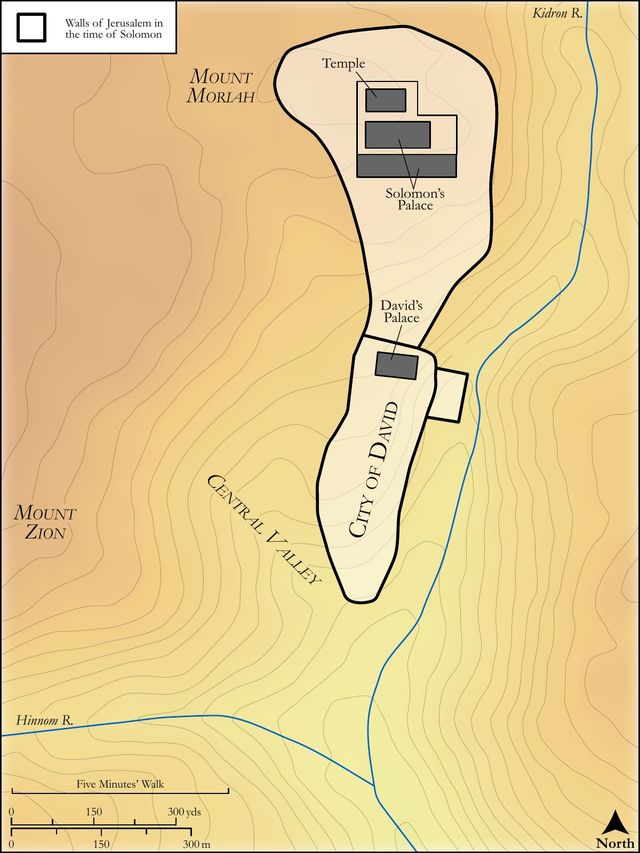
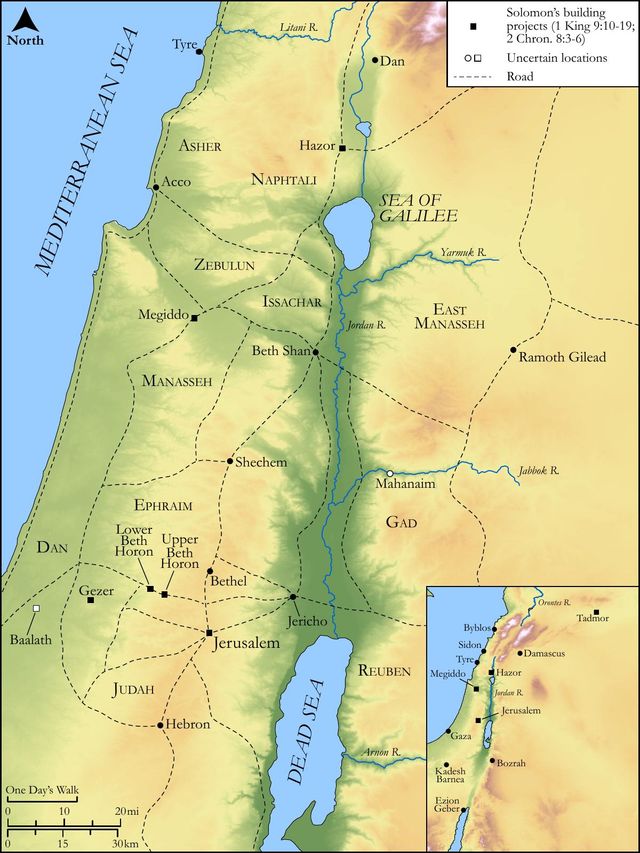
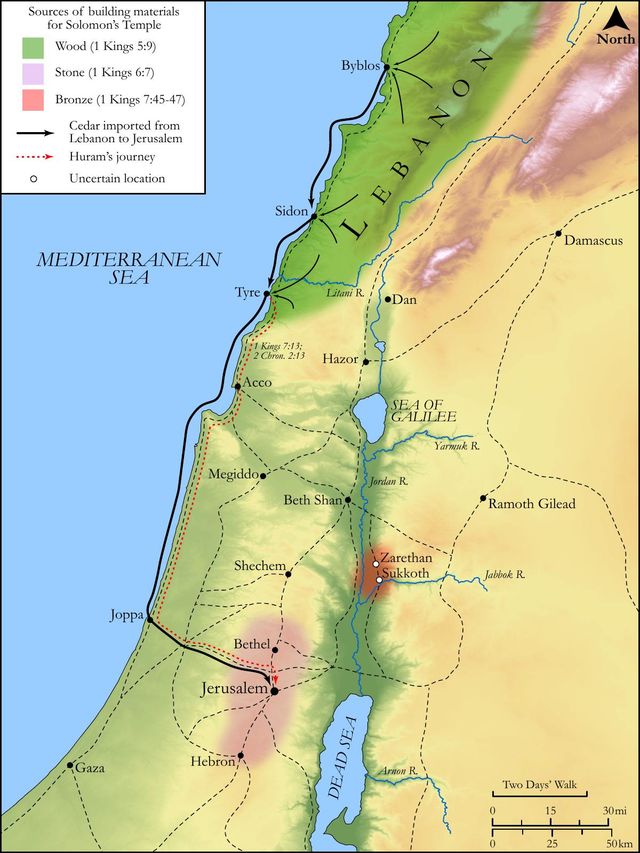
See on the biblical-era map
Study this verse
Public-domain commentary
Matthew Henry
From his Commentary on the Whole Bible. Henry comments on passages, not single verses — this entry covers 1 Kings 9:15–28. His two-level outline is real structure in the source text, so it is rendered as structure.
We have here a further account of Solomon's greatness.
I.His buildings.
He raised a great levy both of men and money, because he projected a great deal of building, which would both employ many hands and put him to a vast expense, Kg1 9:15. And he was a wise builder, who sat down first, and counted the cost, and would not begin to build till he found himself able to finish. Perhaps there was some complaint of the heaviness of the taxes, which the historian excuses from the greatness of his undertakings. He raised it, not for war (as other princes), which would spend the blood of his subjects, but for building, which would require only their labour and purses. Perhaps David observed Solomon's genius to lie towards building, and foresaw he would have his head and hands full of it, when he penned that song of degrees for Solomon, which begins, Except the Lord build the house, those labour in vain that build it (Psa 127:1), directing him to acknowledge God in all his ways, and, by prayer and faith in his providence, to take him along with him in all his designs of this kind. And Solomon verily began his work at the right end, for he built God's house first, and finished that before he began his own; and then God blessed him, and he prospered in all his other buildings. If we begin with God, he will go on with us. Let the first-fruits be his, and the after-fruits will the more comfortably be ours, Mat 6:33. Solomon built a church first and then he was enabled to build houses, and cities, and walls. Those consult not their own interest that defer to the last what they design for pious uses. The further order in Solomon's buildings is observable. God's house first for religion, then his own for his own convenience, then a house for his wife, to which she removed as soon as it was ready for her (Kg1 9:24), then Millo, the town-house or guild-hall, then the wall of Jerusalem, the royal city, then some cities of note and strength in the country, which were decayed and unfortified, Hazor, Megiddo, etc. As he rebuilt these at his own charge, the inhabitants would be not only his subjects, but his tenants, which would increase the revenues of the crown for the benefit of his successors. Among the rest, he built Gezer, which Pharaoh took out of the hands of the Canaanites, and made a present of to his daughter, Solomon's wife, Kg1 9:16. See how God maketh the earth to help the woman. Solomon was not himself a warlike prince, but the king of Egypt, who was, took cities for him to build. Then he built cities for convenience, for store, for his chariots, and for his horsemen, Kg1 9:19. And, lastly, he built for pleasure in Lebanon, for his hunting perhaps, or other diversions there. Let piety begin, and profit proceed, and leave pleasure to the last.
II.His workmen and servants.
In doing such great works, he must needs employ abundance of workmen. The honour of great men is borrowed from their inferiors, who do that which they have the credit of.
1.Solomon employed those who remained of the conquered and devoted nations in all the slavish work, Kg1 9:20, Kg1 9:21. We may suppose that they renounced their idolatry and submitted to Solomon's government, so that he could not, in honour, utterly destroy them, and they were so poor that he could not levy money on them; therefore he served himself of their labour. Herein he observed God's law (Lev 25:44, Thy bondmen shall be of the heathen), and fulfilled Noah's curse upon Canaan, A servant of servants shall he be unto his brethren, Gen 9:25.
2.He employed Israelites in the more creditable services (Kg1 9:22, Kg1 9:23): Of them he made no bondmen, for they were God's freemen, but he made them soldiers and courtiers, and gave them offices, as he saw them qualified, among his chariots and horsemen, appointing some to support the service of the inferior labourers. Thus he preserved the dignity and liberty of Israel and honoured their relation to God as a kingdom of priests.
III.His piety and devotion (Kg1 9:25):
Three times in a year he offered burnt-offerings extraordinary (namely, at the three yearly feasts, the passover, pentecost, and feast of tabernacles) in honour of the divine institution, besides what he offered at other times, both statedly and upon special occasions. With his sacrifices he burnt incense, not himself (that was king Uzziah's crime), but the priest for him, at his charge, and for his particular use. It is said, He offered on the altar which he himself built. He took care to build it, and then,
1.He himself made use of it. Many will assist the devotions of others that neglect their own. Solomon did not think his building an altar would excuse him from sacrificing, but rather engage him the more to it.
2.He himself had the benefit and comfort of it. Whatever pains we take, for the support of religion, to the glory of God and the edification of others, we ourselves are likely to have the advantage of it.
IV.His merchandise.
He built a fleet of trading ships at Ezion-geber (Kg1 9:26), a port on the coast of the Red Sea, the furthest stage of the Israelites when they wandered in the wilderness, Num 33:35. Probably that wilderness now began to be peopled by the Edomites, which it was not then. To them this port had belonged, but, David having subdued the Edomites, it now pertained to the crown of Judah. The fleet traded to Ophir in the East Indies, supposed to be that which is now called Ceylon. Gold was the commodity traded for, substantial wealth. It should seem, Solomon had before been Hiram's partner, or put a venture into his ships, which made him a rich return of 120 talents (Kg1 9:14), which encouraged him to build a fleet of his own. The success of others in any employment should quicken our industry; for in all labour there is profit. Solomon sent his own servants as factors, and merchants, and super-cargoes, but hired Tyrians for sailors, for they had knowledge of the sea, Kg1 9:27. Thus one nation needs another, Providence so ordering it that there may be mutual commerce and assistance; for not only as Christians, but as men, we are members one of another. The fleet brought home to Solomon 420 talents of gold, Kg1 9:28. Canaan, the holy land, the glory of all lands, had no gold in it, which teaches us that that part of the wealth of this world which is for hoarding and trading is not the best part of it, but that which is more immediately for the present support and comfort of life, our own and others'; such were the productions of Canaan. Solomon got much by his merchandise, but, it should seem, David got much more by his conquests. What were Solomon's 420 talents to David's 100,000 talents of gold? Ch1 22:14; Ch1 29:4. Solomon got much by his merchandise, and yet has directed us to a better trade, within reach of the poorest, having assured us from his own experience of both that the merchandise of wisdom is better than the merchandise of silver and the gain thereof than fine gold, Pro 3:14.
Continue studying 1 Kings 9:25 across the web’s major study libraries — every link below opens this exact verse, chapter, or book on the destination site.
Read & Compare
 BibleGatewayThis verse in more than 200 translations and 70 languages.
 Bible.comThe YouVersion reader — hundreds of translations, reading plans, and highlights.
 ESV.orgCrossway's official English Standard Version reader.
 NET BibleThe NET translation with 60,000+ translators' notes on every rendering decision.
 STEP BibleTyndale House's free study tool — original text, vocabulary, and scholarly resources.
 BibliaLogos Bible Software's free web reader.
 USCCBThe New American Bible (Revised Edition) with the U.S. bishops' study notes.
Commentaries
 BibleHub CommentariesDozens of classic commentaries on this verse, gathered on one page.
 StudyLightMore than 100 commentary sets — the largest collection on the web.
 BibleRefPlain-English commentary on what this verse means, verse by verse.
 Enduring WordDavid Guzik's free commentary on this chapter, widely used by Bible teachers.
 Bible Study ToolsVerse commentary alongside Greek and Hebrew study aids.
Original Language & Research
- BibleHub InterlinearThe verse word by word — original language, transliteration, and English.
- BibleHub LexiconEvery word's original-language definition and Strong's entry.
 Blue Letter BibleDeep-study tools — Strong's numbers, concordance, and word studies.
 SefariaThe Hebrew text with Rashi and centuries of Jewish commentary.
Sermons, Hymns & Audio


TrulyRandomVerse is not affiliated with these sites and doesn’t control their content. They’re linked because they’re genuinely useful.
Summary
1 Kings 9:25 serves as a pivotal concluding statement to the extensive narrative of Solomon's monumental building projects, particularly the Temple in Jerusalem and his royal palace. It meticulously details King Solomon's initial faithfulness and diligent adherence to the Mosaic Law by regularly offering prescribed sacrifices and incense upon the newly completed altars. This verse encapsulates a period of profound spiritual obedience and the successful culmination of his architectural endeavors, signifying the full operational status of the central sanctuary for Israelite worship and highlighting Solomon's role as a devout leader.
Context
ShowHideLiterary Context
This verse provides a definitive conclusion to a significant literary block spanning 1 Kings 6 through 1 Kings 9. Following the detailed accounts of the Temple's construction (chapters 6-7), its grand dedication (chapter 8), and God's subsequent covenantal appearance to Solomon (chapter 9:1-9), 1 Kings 9:25 acts as a summary statement of completion and ongoing fidelity. It marks the successful transition from construction to active worship, emphasizing that the Temple was not merely a structure but a functional center for Israel's relationship with Yahweh. The preceding verses (1 Kings 9:10-24) describe the completion of Solomon's own palace and other building projects, as well as his administrative dealings, making verse 25 a final affirmation of his commitment to the Lord amidst his vast accomplishments before the narrative shifts to his later decline.
Historical & Cultural Context
The phrase "three times in a year" directly references the three major annual pilgrimage festivals mandated by the Mosaic Law: the Feast of Unleavened Bread (Passover), the Feast of Weeks (Pentecost), and the Feast of Tabernacles. According to Deuteronomy 16:16, all Israelite males were required to appear before the LORD at the central sanctuary during these times. Solomon, as king, is depicted here as fulfilling this national obligation, setting an example for the entire nation. This practice underscored the covenant relationship between God and Israel, reinforcing national unity and religious identity. The construction of the Temple itself was a monumental undertaking, symbolizing God's permanent dwelling among His people and centralizing worship, a significant shift from the portable tabernacle. Solomon's actions in this verse solidify the Temple's role as the singular, legitimate place for national sacrifice and worship, adhering to the Deuteronomic ideal of a single sanctuary.
Key Themes
ShowHide1 Kings 9:25 contributes to several overarching themes in 1 Kings. Firstly, it highlights Solomon's initial piety and obedience. At this juncture, Solomon is portrayed as a devout and responsible monarch, diligently leading the nation in prescribed worship, consistent with the divine wisdom granted to him and his initial commitment to God's covenant. This depiction stands in stark contrast to his later spiritual decline, detailed in 1 Kings 11:1-13, which serves as a tragic counterpoint to the fidelity shown here. Secondly, the verse underscores the theme of regular and prescribed worship. The specific mention of "burnt offerings and peace offerings" and "incense" performed "three times in a year" emphasizes the importance of adherence to the divinely ordained sacrificial system, which was central to Israel's covenant relationship with God. Lastly, the concluding phrase, "So he finished the house," reinforces the theme of completion and divine fulfillment. It signifies that the Temple, the physical manifestation of God's presence and the heart of Israelite worship, was not only built but fully operational and consecrated for its sacred purpose, fulfilling a long-held desire since the days of David.
Exposition and Analysis
ShowHideKey Word Analysis
ShowHideThis term refers to a "holocaust (as going up in smoke)." These offerings were entirely consumed by fire on the altar, symbolizing complete dedication and atonement for sin. The smoke ascending to God represented the worshiper's total surrender and devotion, signifying a desire for reconciliation and purification before the Lord.
This term denotes a "requital, i.e. a (voluntary) sacrifice in thanks." Also known as fellowship offerings, these sacrifices involved a portion being burnt on the altar, a portion designated for the priests, and the remainder eaten by the worshiper and his family in a communal meal. Related to shalom (peace, wholeness), they symbolized reconciliation, communion, and thanksgiving, fostering peace between God and humanity, and among the people. They were often offered in fulfillment of vows or as expressions of gratitude.
This primitive root means "to smoke, i.e. turn into fragrance by fire (especially as an act of worship)." The act of burning incense on the altar before the LORD was a highly sacred ritual, distinct from the animal sacrifices. The sweet aroma symbolized the prayers of the saints ascending to God, signifying God's presence, acceptance of worship, and the holiness of the sanctuary. It was a constant reminder of God's covenant faithfulness and the people's ongoing need for His favor.
Verse Breakdown
ShowHide"And three times in a year did Solomon offer burnt offerings and peace offerings upon the altar which he built unto the LORD,"
This clause establishes Solomon's consistent and obedient leadership in national worship. The frequency "three times in a year" refers to the mandatory pilgrimage festivals—Passover/Unleavened Bread, Weeks (Pentecost), and Tabernacles—during which all Israelite males were required to appear before the Lord. Solomon, as king, not only participated but actively led the sacrificial rites, demonstrating his personal piety and fulfilling his role as the nation's spiritual head. The mention of "the altar which he built unto the LORD" specifically refers to the great bronze altar in the Temple courtyard, underscoring that these sacrifices were performed at the legitimate, divinely sanctioned place of worship.
"and he burnt incense upon the altar that [was] before the LORD."
This second part of the clause details another crucial aspect of Temple worship: the burning of incense. While the "altar which he built" likely refers to the large outdoor altar for animal sacrifices, "the altar that was before the LORD" refers to the golden incense altar located inside the Holy Place, directly before the veil leading to the Most Holy Place. This act signifies Solomon's comprehensive adherence to the prescribed rituals, including those symbolizing prayer, reverence, and the acknowledgment of God's holy presence within the sanctuary.
"So he finished the house."
This concluding phrase serves as a powerful summary statement, bringing closure to the extensive narrative of the Temple's construction and Solomon's other building projects. "The house" unequivocally refers to the Temple, the central sanctuary for Israel. This statement signifies not merely the physical completion of the structure, but also its full dedication and operational status, ready for continuous worship as intended. It marks the successful culmination of a monumental undertaking that had been a dream since the time of King David, establishing the permanent dwelling place for the Ark of the Covenant and the presence of Yahweh among His people.
Literary Devices
ShowHideThe verse primarily functions as a Summary Statement, bringing a definitive close to the preceding chapters detailing Solomon's building endeavors and initial fidelity. It encapsulates a period of significant achievement and spiritual alignment. The precise enumeration of "three times in a year" and the specific mention of "burnt offerings and peace offerings" and "incense" employ Specificity and Detail to emphasize the king's meticulous adherence to the Mosaic Law, underscoring his initial obedience. Furthermore, the verse contains a subtle element of Foreshadowing through its very completeness. By depicting Solomon at the zenith of his piety and accomplishments, it implicitly sets the stage for the tragic contrast of his later spiritual decline, making his subsequent apostasy all the more poignant. The Parallelism between offering sacrifices and burning incense highlights the dual nature of Israelite worship: atonement and fellowship through sacrifice, and prayer and adoration through incense.
Theological and Thematic Connections
ShowHide1 Kings 9:25 powerfully illustrates the theological significance of worship in ancient Israel, particularly the centrality of the Temple and the sacrificial system. It portrays a moment of ideal covenant fidelity where the king, representing the nation, diligently performs the rituals ordained by God. The offerings themselves—burnt offerings for complete dedication and atonement, and peace offerings for communion and thanksgiving—underscore the multifaceted nature of the relationship between God and His people, encompassing both the need for propitiation and the joy of fellowship. The burning of incense further highlights the importance of prayer and the ascent of devotion to God. This verse serves as a theological benchmark, showcasing the ideal state of Israelite worship under a righteous king, a standard against which later deviations would be measured. It affirms that the completion of the Temple was not merely an architectural feat but the establishment of a sacred space for ongoing, prescribed communion with the Divine.
Reflection and Application
ShowHideSolomon's consistent and comprehensive worship in 1 Kings 9:25 offers a profound lesson on the importance of intentional and holistic devotion in our own lives. Just as Solomon faithfully utilized the newly completed Temple for its intended purpose, we are called to actively engage in the spiritual disciplines and communal worship that nourish our faith. His example reminds us that true spiritual commitment is not merely about grand beginnings or monumental achievements, but about sustained faithfulness in the daily and seasonal rhythms of life. The diverse nature of the offerings—dedication, atonement, communion, and thanksgiving—invites us to examine the breadth of our own worship, ensuring it encompasses all facets of our relationship with God. It challenges us to move beyond mere religious observance to a heartfelt expression of gratitude, surrender, and fellowship, recognizing that our spiritual "house" (our lives, our communities) is truly "finished" when it is fully devoted to the Lord's purposes and actively engaged in His praise.
Questions for Reflection
ShowHideFAQ
ShowHideWhy is it significant that Solomon offered sacrifices "three times in a year"?
ShowHideThe phrase "three times in a year" is highly significant because it directly references the three mandatory annual pilgrimage festivals commanded by the Mosaic Law in Exodus 23:14-17 and Deuteronomy 16:16. These were the Feast of Unleavened Bread (Passover), the Feast of Weeks (Pentecost), and the Feast of Tabernacles. During these festivals, all Israelite males were required to appear before the LORD at the central sanctuary. Solomon's faithful observance demonstrates his adherence to the covenant requirements and his role as a righteous king leading the nation in prescribed worship. It underscores the importance of regular, national worship and covenant renewal in ancient Israelite life, setting an example for all his subjects.
What does "So he finished the house" imply beyond physical construction?
ShowHideWhile "So he finished the house" certainly refers to the physical completion of the Temple, it implies much more. It signifies that the Temple was not only built but was fully consecrated, operational, and serving its intended purpose as the central place of worship for the LORD. It means the extensive building projects, which had consumed much of Solomon's reign, had reached their successful conclusion, allowing the nation to fully engage in the worship practices detailed in the preceding clauses. The phrase marks a pivotal moment where the physical structure became a living, functioning sanctuary, fulfilling the divine mandate for a permanent dwelling place for God's presence among His people, as envisioned by David and brought to fruition by Solomon. It sets the stage for the ongoing religious life of Israel centered around this magnificent structure, ready for the prescribed rituals and communal gatherings.
Christ-Centered Fulfillment
ShowHide1 Kings 9:25, with its depiction of Solomon's faithful sacrifices and the completion of the Temple, beautifully foreshadows the ultimate work of Jesus Christ. Solomon's burnt offerings, symbolizing complete dedication and atonement, find their perfect and final fulfillment in Christ's singular, once-for-all sacrifice on the cross. He is the Lamb of God who takes away the sin of the world, offering Himself as the perfect, unblemished sacrifice that truly atones for sin, rendering all subsequent animal sacrifices obsolete (Hebrews 10:10-14). The peace offerings, symbolizing communion and reconciliation, are fully realized in Christ, who is our peace (Ephesians 2:14), reconciling us to God through His blood (Colossians 1:20). Furthermore, the Temple, which Solomon "finished" as the dwelling place of God's presence, points to Christ Himself as the true Temple (John 2:19-21), and ultimately to the Church as the spiritual temple where God dwells by His Spirit (1 Corinthians 3:16). The burning of incense, representing ascending prayers, finds its ultimate expression in Christ, our great High Priest, who ever lives to intercede for us (Hebrews 7:25), and whose perfect prayers are always heard by the Father. Thus, Solomon's actions and the Temple's completion are but shadows of the greater reality found in Jesus, who perfectly fulfills all the Law and the Prophets, establishing a new covenant of grace and a living, spiritual worship.