


Nehemiah 2:12
- וָאָקוּםva·'a·Kumand I aroseH6965Conj-w ¦ V-Qal-ConsecImperf-1csVerb Qal Consecutive Imperfect 1st Singular common genderוָandאָקוּםI arose
- לַיְלָהLay·lahnightH3915N-msNoun Singular Masculine Absolute
- אֲנִי'a·NiIH589Pro-1csPronoun Personal 1st Singular common gender
- וַאֲנָשִׁיםva·'a·na·Shimand menH582Conj-w ¦ N-mpNoun Plural Masculine Absoluteוַandאֲנָשִׁיםmen
- מְעַטme·'Ata fewH4592N-msNoun Singular Masculine Absolute
- עִמִּי'i·Miwith meH5973Prep ¦ 1csPrepositionעִמִּwithיme
- וְלֹאve·lo'and notH3808Conj-w ¦ NegParticle Negativeוְandלֹאnot
- הִגַּדְתִּיhi·Gad·tiI had toldH5046V-Hiphil-Perf-1csVerb Hiphil Perfect 1st Singular common gender
- לְאָדָםle·'a·Damto anyoneH120Prep-l ¦ N-msNoun Singular Masculine Absoluteלְtoאָדָםanyone
- מָהMahwhat?H4100InterrogPronoun Interrogative
- אֱלֹהַי'e·lo·Hai[was] my GodH430N-mpc ¦ 1csNoun Plural Masculine Constructאֱלֹהַ[was] Godיmy
- נֹתֵןno·TenputtingH5414V-Qal-Prtcpl-msVerb Qal Participle Singular Masculine Absolute
- אֶל'elintoH413PrepPreposition
- לִבִּיli·Bimy heartH3820N-msc ¦ 1csNoun Singular Masculine Constructלִבִּheartיmy
- לַעֲשׂוֹתla·'a·Sotto doH6213Prep-l ¦ V-Qal-InfVerb Qal Infinitive Constructלַtoעֲשׂוֹתdo
- לִירוּשָׁלִָםli·ru·sha·Limfor JerusalemH3389Prep-l ¦ N-properNoun Proper LocationלִforירוּשָׁלִָםJerusalem
- וּבְהֵמָהu·ve·he·Mahand an animalH929Conj-w ¦ N-fsNoun Singular Feminine Absoluteוּandבְהֵמָהan animal
- אֵין'einthere notH369N-mscNoun Singular Masculine Construct
- עִמִּי'i·Mi[was] with meH5973Prep ¦ 1csPrepositionעִמִּ[was] withיme
- כִּיkithatH3588PrtParticle Conditional
- אִם'imexceptH518PrtParticle Conditional
- הַבְּהֵמָהha·be·he·Mahthe animalH929Art ¦ N-fsNoun Singular Feminine Absoluteהַtheבְּהֵמָהanimal
- אֲשֶׁר'a·SherwhichH834RelParticle Relative
- אֲנִי'a·NiIH589Pro-1csPronoun Personal 1st Singular common gender
- רֹכֵבro·Khev[was] ridingH7392V-Qal-Prtcpl-msVerb Qal Participle Singular Masculine Absolute
- בָּהּBahon itPrep-b ¦ 3fsSuffix Personal 3rd Singular Feminineבָּonהּit
English is a literal word-by-word gloss of the Hebrew, not the KJV's wording. Why?
This is the original text the KJV's translators worked from — each Hebrew word with its own literal English meaning in this verse, prepared by scholars at Tyndale House, Cambridge. The KJV translates whole sentences, not word by word, so its wording differs: one Hebrew word can become several English words, and the KJV may choose “the LORD” where the gloss reads “Yahweh”. Both are faithful — they answer different questions. For the KJV's own rendering, switch to the KJV text.
Details
See on the biblical-era map
Study this verse
Public-domain commentary
Matthew Henry
From his Commentary on the Whole Bible. Henry comments on passages, not single verses — this entry covers Nehemiah 2:9–20. His four-level outline is real structure in the source text, so it is rendered as structure.
We are here told,
I.Now Nehemiah was dismissed by the court he was sent from.
The king appointed captains of the army and horsemen to go with him (Neh 2:9), both for his guard and to show that he was a man whom the king did delight to honour, that all the king's servants might respect him accordingly. Those whom the King of kings sends he thus protects, he thus dignifies with a host of angels to attend them.
II.How he was received by the country he was sent to.
1.By the Jews and their friends at Jerusalem. We are told,
(1.)That while he concealed his errand they took little notice of him. He was at Jerusalem three days (Neh 2:11), and it does not appear that any of the great men of the city waited on him to congratulate him on his arrival, but he remained unknown. The king sent horsemen to attend him, but the Jews sent none to meet him; he had no beast with him, but that which he himself rode on, Neh 2:12. Wise men, and those who are worthy of double honour, yet covet not to come with observation, to make a show, or make a noise, no, not when they come with the greatest blessings. Those that shortly are to have the dominion in the morning the world now knows not, but they lie hid, Jo1 3:1.
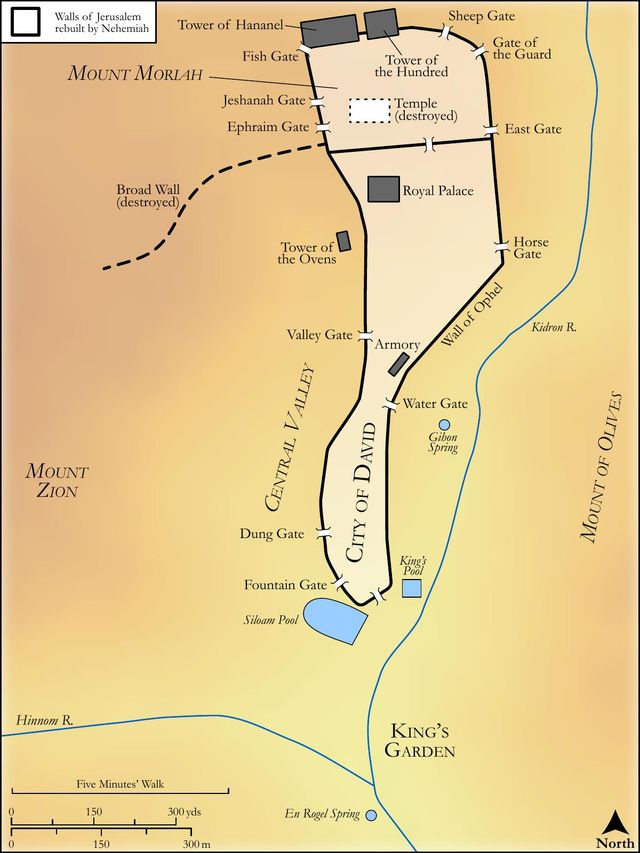
(2.)That though they took little notice of him he took great notice of them and their state. He arose in the night, and viewed the ruins of the walls, probably by moon-light (Neh 2:13), that he might see what was to be done and in what method they must go about it, whether the old foundation would serve, and what there was of the old materials that would be of use. Note,
[1.]Good work is likely to be well done when it is first well considered.
[2.]It is the wisdom of those who are engaged in public business, as much as may be, to see with their own eyes, and not to proceed altogether upon the reports and representations of others, and yet to do this without noise, and if possible unobserved.
[3.]Those that would build up the church's walls must first take notice of the ruins of those walls. Those that would know how to amend must enquire what is amiss, what needs reformation, and what may serve as it is.
(3.)That when he disclosed his design to the rulers and people they cheerfully concurred with him in it. He did not tell them, at first, what he came about (Neh 2:16), because he would not seem to do it for ostentation, and because, if he found it impracticable, he might retreat the more honourably. Upright humble men will not sound a trumpet before their alms or any other of their good offices. But when he had viewed and considered the thing, and probably felt the pulse of the rulers and people, he told them what God had put into his heart (Neh 2:12), even to build up the wall of Jerusalem, Neh 2:17. Observe,
[1.]How fairly he proposed the undertaking to them: "You see the distress we are in, how we lie exposed to the enemies that are round about us, how justly they reproach us as foolish and despicable, how easily they may make a prey of us whenever they have a mind; come, therefore, and let us build up the wall." He did not undertake to do the work without them (it could not be the work of one man), nor did he charge or command imperiously, though he had the king's commission; but in a friendly brotherly way he exhorted and excited them to join with him in this work. To encourage them hereto, he speaks of the design, First, As that which owed it origin to the special grace of God. He takes not the praise of it to himself, as a good thought of his own, but acknowledges that God put it into his heart, and therefore they all ought to countenance it (whatever is of God must be promoted), and might hope to prosper in it, for what God puts men upon he will own them in. Secondly, As that which owed its progress hitherto to the special providence of God. He produced the king's commission, told them how readily it was granted and how forward the king was to favour his design, in which he saw the hand of his God good upon him. It would encourage both him and them to proceed in an undertaking which God had so remarkably smiled upon. Thus he proposed it to them; and,
[2.]They presently came to a resolution, one and all, to concur with him: Let us rise up and build. They are ashamed that they have sat still so long without so much as attempting this needful work, and now resolve to rise up out of their slothfulness, to bestir themselves, and to stir up one another. "Let us rise up," that is, "let us do it with vigour, and diligence, and resolution, as those that are determined to go through with it." So they strengthened their hands, their own and one another's, for this good work. Note, First, Many a good work would find hands enough to be laid to it if there were but one good head to lead in it. They all saw the desolations of Jerusalem, yet none proposed the repair of them; but, when Nehemiah proposed it, they all consented to it. It is a pity that a good motion should be lost purely for want of one to move it and to break the ice in it. Secondly, By stirring up ourselves and one another to that which is good, we strengthen ourselves and one another for it; for the great reason why we are weak in our duty is because we are cold to it, indifferent and unresolved. Let us now see how Nehemiah was received,
2.By those that wished ill to the Jews. Those whom God and his Israel blessed they cursed.
(1.)When he did but show his face it vexed them, Neh 2:10. Sanballat and Tobiah, two of the Samaritans, but by birth the former a Moabite, the latter an Ammonite, when they saw one come armed with a commission from the king to do service to Israel, were exceedingly grieved that all their little paltry arts to weaken Israel were thus baffled and frustrated by a fair, and noble, and generous project to strengthen them. Nothing is a greater vexation to the enemies of good people, who have misrepresented them to princes as turbulent, and factious, and not fit to live, than to see them stand right in the opinion of their rulers, their innocency cleared and their reproach rolled away, and that they are thought not only fit to live, but fit to be trusted. When they saw a man come in that manner, who professedly sought the welfare of the children of Israel, it vexed them to the heart. The wicked shall see it, and be grieved.
(2.)When he began to act they set themselves to hinder him, but in vain, Neh 2:19, Neh 2:20.
[1.]See here with what little reason the enemies attempted to discourage him. They represented the undertaking as a silly thing: They laughed us to scorn and despised us as foolish builders, that could not finish what we began. They represented the undertaking also as a wicked thing, no better than treason: Will you rebel against the king? Because this was the old invidious charge, though now they had a commission from the king and were taken under his protection, yet still they must be called rebels.
[2.]See also with what good reason the Jews slighted these discouragements. They bore up themselves with this that they were the servants of the God of heaven, the only true and living God, that they were acting for him in what they did, and that therefore he would bear them out and prosper them, though the heathen raged, Psa 2:1. They considered also that the reason why these enemies did so malign them was because they had no right in Jerusalem, but envied them their right in it. Thus may the impotent menaces of the church's enemies be easily despised by the church's friends.
Continue studying Nehemiah 2:12 across the web’s major study libraries — every link below opens this exact verse, chapter, or book on the destination site.
Read & Compare
 BibleGatewayThis verse in more than 200 translations and 70 languages.
 Bible.comThe YouVersion reader — hundreds of translations, reading plans, and highlights.
 ESV.orgCrossway's official English Standard Version reader.
 NET BibleThe NET translation with 60,000+ translators' notes on every rendering decision.
 STEP BibleTyndale House's free study tool — original text, vocabulary, and scholarly resources.
 BibliaLogos Bible Software's free web reader.
 USCCBThe New American Bible (Revised Edition) with the U.S. bishops' study notes.
Commentaries
 BibleHub CommentariesDozens of classic commentaries on this verse, gathered on one page.
 StudyLightMore than 100 commentary sets — the largest collection on the web.
 BibleRefPlain-English commentary on what this verse means, verse by verse.
 Enduring WordDavid Guzik's free commentary on this chapter, widely used by Bible teachers.
 Bible Study ToolsVerse commentary alongside Greek and Hebrew study aids.
Original Language & Research
- BibleHub InterlinearThe verse word by word — original language, transliteration, and English.
- BibleHub LexiconEvery word's original-language definition and Strong's entry.
 Blue Letter BibleDeep-study tools — Strong's numbers, concordance, and word studies.
 SefariaThe Hebrew text with Rashi and centuries of Jewish commentary.
Sermons, Hymns & Audio


TrulyRandomVerse is not affiliated with these sites and doesn’t control their content. They’re linked because they’re genuinely useful.
Summary
Nehemiah 2:12 offers a profound glimpse into Nehemiah's divinely inspired leadership and strategic prudence upon his arrival in Jerusalem. Before publicly unveiling his God-given mission to rebuild the city walls, Nehemiah undertook a covert, nocturnal reconnaissance. This secret inspection, conducted with only a small, trusted retinue and minimal resources, highlights his absolute reliance on divine guidance, his wise discernment in assessing the monumental task, and his foresight in circumventing premature opposition.
Context
ShowHideLiterary Context
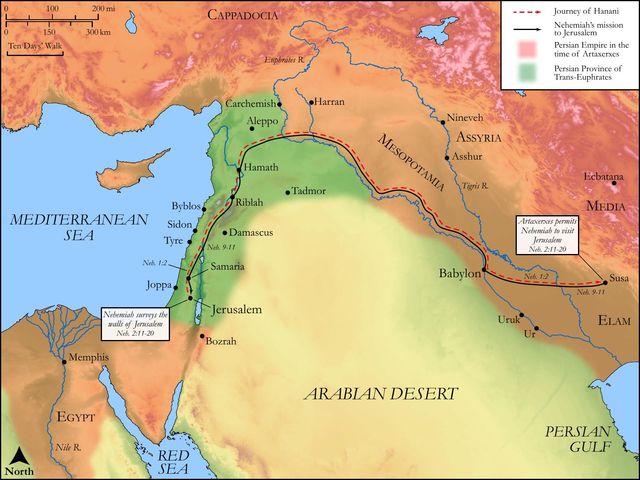
This verse is strategically placed within the narrative of Nehemiah's return to Jerusalem. It immediately follows his successful petition to King Artaxerxes, who granted him permission, letters of safe conduct, and material resources for the rebuilding project, as detailed in Nehemiah 2:1-9. Upon his arrival, Nehemiah wisely observed a three-day period of rest, a time for transition and perhaps quiet prayer and reflection. Verse 12 marks the pivotal shift from administrative preparation and royal endorsement to direct, on-the-ground assessment. This clandestine survey is a crucial precursor to his public address to the Jewish leaders and people, where he would reveal God's hand in the mission and rally them to the rebuilding effort, as recorded in Nehemiah 2:17-18. The secrecy of this initial inspection is paramount, setting the tone for the challenges and opposition that would inevitably arise once the work commenced.
Historical & Cultural Context
Nehemiah's mission unfolded during the post-exilic period, approximately a century after the initial return of exiles under Zerubbabel and several decades after Ezra's reforms. For over 140 years, Jerusalem's walls had lain in ruins since their destruction by the Babylonians in 586 BC, a stark and humiliating symbol of national vulnerability, shame, and incomplete restoration. The region was under the dominion of the mighty Persian Empire, which, while generally allowing local autonomy, maintained strict oversight. Any large-scale rebuilding project, particularly of fortifications, could easily be misconstrued as an act of rebellion or a threat to imperial authority. Furthermore, Nehemiah had already encountered significant antagonism from powerful local officials, notably Sanballat the Horonite and Tobiah the Ammonite, who were "much grieved" by his arrival and his mission to seek the welfare of the Israelites, as noted in Nehemiah 2:10. Given this volatile political climate and the presence of hostile neighbors, Nehemiah's decision to conduct his survey under the cover of night and in secret was not merely prudent but a necessary act of strategic genius, allowing him to gather vital intelligence without prematurely alerting adversaries or alarming the already disheartened populace.
Key Themes
ShowHideNehemiah 2:12 powerfully encapsulates several core themes that permeate the entire book of Nehemiah. Firstly, Divine Initiative and Guidance stands out, particularly in the phrase "what my God had put in my heart." This underscores that Nehemiah's undertaking was not a mere human ambition but a divinely ordained task, a burden supernaturally placed upon him by God. This echoes similar divine promptings seen throughout biblical history, such as God stirring the spirit of King Cyrus to decree the rebuilding of the temple in Jerusalem, as recounted in Ezra 1:1. Secondly, Prudent Leadership and Strategic Planning are vividly demonstrated by Nehemiah's choice to conduct a secret, thorough assessment before engaging in public action. His caution, discretion, and methodical approach reflect the qualities of a wise leader who understands the complexities of his environment and the critical need for careful preparation, a principle often emphasized in wisdom literature, as seen in Proverbs 20:18. Lastly, Humility and Dependence on God are subtly yet powerfully conveyed by his limited retinue and resources ("save the beast that I rode upon"). This signifies a leader who relies on divine strength and wisdom rather than human display or power, setting the tone for a monumental project that would ultimately require immense faith and perseverance against formidable odds.
Exposition and Analysis
ShowHideKey Word Analysis
ShowHideThis verb, used with "in my heart," signifies a divine impartation or placement. It is not merely that Nehemiah conceived an idea, but that God actively deposited this specific burden and vision within him. The word nâthan implies a giving, assigning, or appointing, suggesting that Nehemiah's mission was divinely commissioned and empowered, rather than being solely a product of his own will or ambition. This divine "putting" provides the foundational authority and conviction for his subsequent actions.
In Hebrew thought, the "heart" (lêb) is far more than just the seat of emotions; it encompasses the entire inner person—the intellect, will, feelings, and conscience. When God "puts" something in Nehemiah's heart, it implies a deep, comprehensive conviction that permeates his entire being, shaping his thoughts, desires, and resolve. This divine implanting in the "center" of Nehemiah's being ensures that his mission is rooted in God's purpose and is not subject to fleeting whims or external pressures.
The choice of "night" for this critical reconnaissance is highly significant. Layil refers to the period of darkness, often associated with secrecy, concealment, or even adversity. Nehemiah's decision to operate under its cover underscores his strategic brilliance and his awareness of the hostile environment. It allowed him to observe the true state of the walls undisturbed, gather vital information discreetly, and avoid alerting potential adversaries or causing premature excitement or alarm among the populace. This "night" operation speaks to the prudence required in executing a divinely-appointed task in a challenging world.
Verse Breakdown
ShowHide"And I arose in the night, I and some few men with me;"
This opening clause highlights Nehemiah's immediate and decisive initiative following his three-day rest. The verb "arose" (H6965, qûwm) conveys purpose and determination. The timing "in the night" (H3915, layil) is crucial, indicating a deliberate choice for secrecy and discretion, likely to avoid drawing attention to his activities. The phrase "I and some few men with me" (H4592, mᵉʻaṭ H582, ʼĕnôwsh) emphasizes the small, trusted nature of his accompanying party. This limited retinue ensured minimal visibility and maximum efficiency for a covert operation, rather than a public display.
"neither told I [any] man what my God had put in my heart to do at Jerusalem:"
This is the theological and strategic core of the verse. "Neither told I any man" (H5046, nâgad H120, ʼâdâm) reveals Nehemiah's profound wisdom and strategic silence. He understood the necessity of gathering accurate information and formulating a comprehensive plan before revealing his intentions. The source of his mission is explicitly stated as "what my God (H430, ʼĕlôhîym) had put (H5414, nâthan) in my heart (H3820, lêb)," signifying a direct divine prompting and a sacred burden. This divine origin provided the unwavering conviction for the monumental task of rebuilding Jerusalem (H3389, Yᵉrûwshâlaim).
"neither [was there any] beast with me, save the beast that I rode upon."
This seemingly minor detail powerfully underscores Nehemiah's humility, practicality, and lack of ostentation. He did not arrive with a grand procession or a display of wealth and power, which might have raised suspicions or expectations. His solitary mount ("the beast that I rode upon" H7392, râkab H929, bᵉhêmâh) emphasizes his personal commitment and the quiet, focused nature of his inspection. It portrays a leader who is hands-on, deeply invested in the task, and unconcerned with outward show, prioritizing the mission itself over personal prestige or comfort.
Literary Devices
ShowHideNehemiah 2:12 employs several literary devices to enrich its meaning and impact. Foreshadowing is prominently featured in Nehemiah's strategic secrecy; his quiet assessment in the night subtly hints at the significant opposition and challenges he would inevitably face once the rebuilding efforts commenced publicly. This discreet approach suggests his anticipation of resistance, which indeed materializes throughout the book. Symbolism is also present: Nehemiah's solitary ride on his one beast, accompanied by only a few trusted men, powerfully symbolizes the immense personal burden he carried and the singular, divinely-appointed nature of his mission. It serves as a stark Contrast to the grand scale of the task ahead—rebuilding a desolate city—emphasizing his humble reliance on God rather than human might or display. The phrase "what my God had put in my heart" functions as a powerful Metonymy for divine inspiration and calling, attributing the entire plan and burden directly to God's influence rather than merely Nehemiah's own ingenuity or ambition.
Theological and Thematic Connections
ShowHideNehemiah 2:12 profoundly illustrates the indispensable interplay between divine initiative and human responsibility in the unfolding of God's redemptive purposes. It teaches us that God often implants His specific purposes and burdens in the hearts of individuals, providing them with a clear vision for His kingdom work. However, this divine calling does not negate the crucial need for human wisdom, strategic planning, and careful, often discreet, execution. Nehemiah's example demonstrates that true spiritual leadership balances fervent prayer and absolute reliance on God with practical discernment, patience, and a willingness to operate quietly and strategically when circumstances demand it. His secrecy was not a lack of faith but an act of profound wisdom, protecting a divinely inspired vision from premature exposure to opposition and ensuring its successful launch. This verse underscores the biblical truth that God's most significant work often begins quietly, through humble means and unseen preparations, before blossoming into public manifestation.
Reflection and Application
ShowHideNehemiah 2:12 offers powerful and enduring lessons for believers navigating their own callings and challenges in contemporary life and ministry. It serves as a potent reminder that significant endeavors for God's kingdom often originate not from human ambition, but from a deep, personal conviction—a divine burden "put in our heart" by God Himself. This divine prompting should lead us to prayerful discernment, thorough assessment, and strategic preparation, rather than immediate public announcement or impulsive action. There are indeed seasons when quiet assessment, diligent information gathering, and the development of a solid plan in private are not merely prudent but essential acts of wisdom. We are challenged to cultivate a mature faith that balances zealous conviction with practical discernment, understanding that not every vision requires immediate public disclosure. Nehemiah's humility, evident in his simple reconnaissance and lack of ostentation, also calls us to prioritize the mission itself over personal recognition, outward display, or the accumulation of visible resources. His example encourages us to trust that God, who initiates and inspires the work, will also provide the necessary resources, wisdom, and timing for its successful execution, even when we must begin small and in apparent obscurity.
Questions for Reflection
ShowHideFAQ
ShowHideWhy did Nehemiah keep his plans secret from the people of Jerusalem initially?
ShowHideNehemiah's decision to keep his plans secret was a masterful act of strategic wisdom and prudence, demonstrating his profound understanding of the political and social landscape. Firstly, he needed to personally and objectively assess the true extent of the damage to Jerusalem's walls and gates. This critical reconnaissance could only be done thoroughly and accurately without public fanfare, interference, or the emotional reactions of the disheartened populace. Secondly, and perhaps more crucially, Nehemiah was acutely aware of the existing and powerful opposition from local officials like Sanballat the Horonite and Tobiah the Ammonite, who were already "much grieved" by his arrival and his mission to seek the welfare of the Israelites (Nehemiah 2:10). Revealing his intentions prematurely would have given these adversaries ample opportunity to mobilize opposition, spread discouraging rumors, or even actively sabotage the project before it could gain momentum or secure the people's crucial buy-in. His secrecy allowed him to gather facts, formulate a comprehensive plan, and then, at the opportune moment, present a compelling, divinely-inspired vision to a receptive populace, thereby minimizing initial resistance and maximizing the chances of success for the monumental rebuilding effort.
What does the phrase "what my God had put in my heart" signify about Nehemiah's mission?
ShowHideThis phrase is profoundly significant and serves as the theological bedrock of Nehemiah's entire mission. It indicates that his undertaking was not merely a personal ambition, a good idea he conceived on his own, or a response to human need alone. Instead, it was a direct divine impartation, a strong, undeniable conviction, and a sacred burden supernaturally placed upon his spirit by God Himself. This signifies that Nehemiah was acting under direct divine inspiration and guidance, making his work a sacred calling rather than a secular project. This divine origin provided him with the unwavering courage, conviction, and spiritual authority necessary to undertake the monumental task of rebuilding Jerusalem's walls, despite the immense challenges, political complexities, and fierce opposition he would inevitably face. It aligns with other biblical accounts where God sovereignly moves individuals to accomplish His specific purposes, such as God stirring up the spirit of King Cyrus to allow the Jewish exiles to return and rebuild the temple in Jerusalem (Ezra 1:1).
Christ-Centered Fulfillment
ShowHideNehemiah's divinely inspired, humble, and strategically discreet mission to rebuild the physical walls of Jerusalem finds its ultimate and profound fulfillment in the person and redemptive work of Jesus Christ, who came not merely to restore a city but to build a spiritual "city"—His Church—and to reconcile humanity to God. Just as Nehemiah was burdened by God to restore a desolate earthly city, Jesus was sent by the Father with a divine mission to restore a fallen world, a mission "put in His heart" from eternity past, rooted in God's boundless love for humanity (John 3:16). Christ's incarnation itself was a supreme act of humility and, in many ways, a "secret" work, as the Son of God took on human flesh, dwelling among us without ostentation or outward display of His divine glory (John 1:14 and Philippians 2:7-8). Before His public ministry, Jesus spent years in quiet preparation and obscurity, much like Nehemiah's nocturnal reconnaissance, before embarking on His public proclamation of the Kingdom. He often withdrew to pray in secret, discerning the Father's will and preparing for the ultimate work of redemption through His sacrifice. Ultimately, Jesus is the true builder of God's spiritual house, the Church, against which "the gates of hell shall not prevail" (Matthew 16:18). His work, initiated by divine love and executed with perfect wisdom and strategic timing, culminates in the restoration of all things, far surpassing the rebuilding of any physical city, as He is the "founder and perfecter of our faith" (Hebrews 12:2).