


Matthew 17:24
Bible text: King James Version (1769 Blayney text) · Public domain
Bible text: King James Version with Strong's numbers · Public domain
Bible text: Berean Standard Bible · Public domain
Bible text: American Standard Version (1901) · Public domain
Bible text: World English Bible, Messianic edition · Public domain
Bible text: Geneva Bible (1599) · Public domain
Bible text: Young's Literal Translation · Public domain
- ἘλθόντωνElthontōnWhen are comingG2064V-2AAP-GPMVerb 2nd Aorist Active Participle Genitive Plural Masculine
- δὲdenowG1161CONJConjunction
- αὐτῶνautōntheyG846P-GPMPersonal pronoun Genitive Plural Masculine
- εἰςeistoG1519PREPPreposition
- ΚαφαρναοὺμKapharnaoumCapernaumG2584N-ASF-LNoun Accusative Singular Feminine Location
- προσῆλθονprosēlthoncameG4334V-2AAI-3PVerb 2nd Aorist Active Indicative 3rd Plural
- οἱhoithoseG3588T-NPMDefinite article Nominative Plural Masculine
- τὰtatheG3588T-APNDefinite article Accusative Plural Neuter
- δίδραχμαdidrachmadidrachmasG1323N-APNNoun Accusative Plural Neuter
- λαμβάνοντεςlambanontescollectingG2983V-PAP-NPMVerb Present Active Participle Nominative Plural Masculine
- τῷtōto <the>G3588T-DSMDefinite article Dative Singular Masculine
- ΠέτρῳPetrōPeterG4074N-DSM-PNoun Dative Singular Masculine Individual
- καὶkaiandG2532CONJConjunction
- εἶπαν·eipansaidG2036V-2AAI-3PVerb 2nd Aorist Active Indicative 3rd Plural
- ὁhoTheG3588T-NSMDefinite article Nominative Singular Masculine
- διδάσκαλοςdidaskalosTeacherG1320N-NSM-TNoun Nominative Singular Masculine Title
- ὑμῶνhumōnof youG4771P-2GPPersonal pronoun Genitive 2nd Plural
- οὐousurelyG3756PRT-NNegative Particle Negative
- τελεῖteleihe paysG5055V-PAI-3SVerb Present Active Indicative 3rd Singular
- τὰtatheG3588T-APNDefinite article Accusative Plural Neuter
- δίδραχμα;didrachmadidrachmas?G1323N-APNNoun Accusative Plural Neuter
English is a literal word-by-word gloss of the Greek, not the KJV's wording. Why?
This is the original text the KJV's translators worked from — each Greek word with its own literal English meaning in this verse, prepared by scholars at Tyndale House, Cambridge. The KJV translates whole sentences, not word by word, so its wording differs: one Greek word can become several English words, and the KJV may choose “charity” where the gloss reads “love”. Both are faithful — they answer different questions. For the KJV's own rendering, switch to the KJV text.
Details
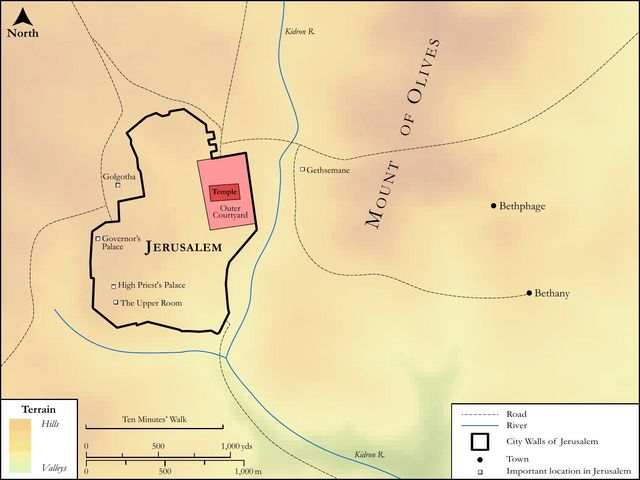
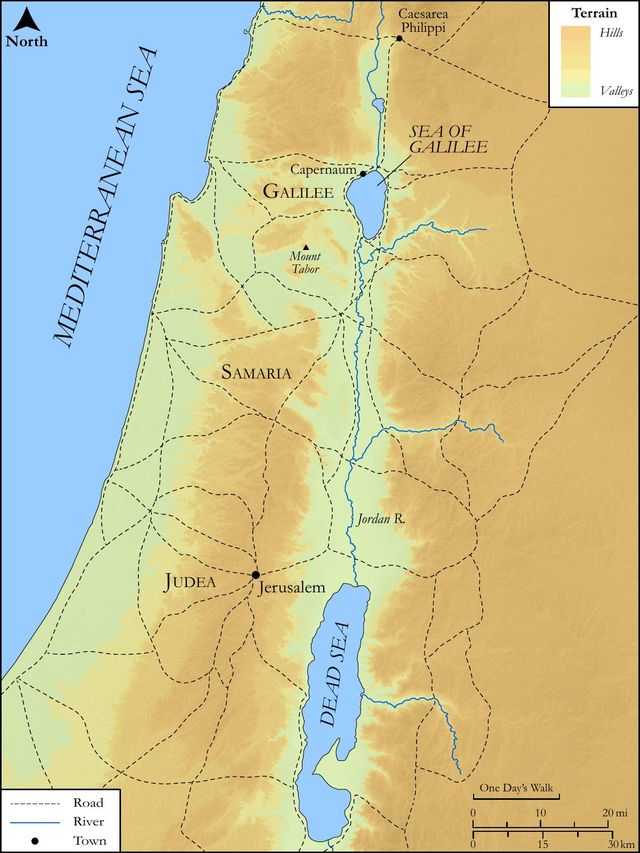
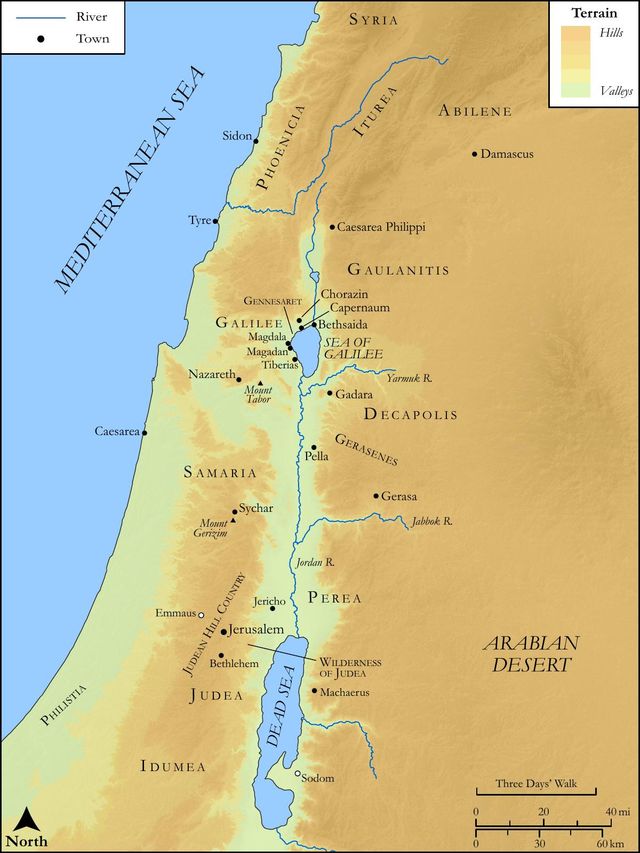
See on the biblical-era maps
Study this verse
Public-domain commentary
Matthew Henry
From his Commentary on the Whole Bible. Henry comments on passages, not single verses — this entry covers Matthew 17:24–27. His four-level outline is real structure in the source text, so it is rendered as structure.
We have here an account of Christ's paying tribute.
I.Observe how it was demanded, Mat 17:24.
Christ was now at Capernaum, his headquarters, where he mostly resided; he did not keep from thence, to decline being called upon for his dues, but rather came thither, to be ready to pay them.
1.The tribute demanded was not any civil payment to the Roman powers, that was strictly exacted by the publicans, but the church-duties, the half shekel, about fifteen pence, which were required from every person or the service of the temple, and the defraying of the expenses of the worship there; it is called a ransom for the soul, Exo 30:12, etc. This was not so strictly exacted now as sometimes it had been, especially not in Galilee.
2.The demand was very modest; the collectors stood in such awe of Christ, because of his mighty works, that they durst not speak to him about it, but applied themselves to Peter, whose house was in Capernaum, and probably in his house Christ lodged; he therefore was fittest to be spoken to as the housekeeper, and they presumed he knew his Master's mind. Their question is, Doth not your master pay tribute? Some think that they sought an occasion against him, designing, if he refused, to represent him as disaffected to the temple-service, and his followers as lawless people, that would pay neither toll, tribute, nor custom, Ezr 4:13. It should rather seem, they asked this with respect, intimating, that if he had any privilege to exempt him from this payment, they would not insist upon it.
Peter presently his word for his Master; "Yes, certainly; my Master pays tribute; it is his principle and practice; you need not fear moving it to him." (1.) He was made under the law (Gal 4:4); therefore under this law he was paid for at forty days old (Luk 2:22), and now he paid for himself, as one who, in his state of humiliation, had taken upon him the form of a servant, Phi 2:7, Phi 2:8. (2.) He was made sin for us, and was sent forth in the likeness of sinful flesh, Rom 8:3. Now this tax paid to the temple is called an atonement for the soul, Exo 30:15. Christ, that in every thing he might appear in the likeness of sinners, paid it though he had no sin to atone for. (3.) Thus it became him to fulfil all righteousness, Mat 3:15. He did this to set an example, [1.] Of rendering to all their due, tribute to whom tribute is due, Rom 13:7. The kingdom of Christ not being of this world, the favourites and officers of it are so far from having a power granted them, as such, to tax other people's purses, that theirs are made liable to the powers that are. [2.] Of contributing to the support of the public worship of God in the places where we are. If we reap spiritual things, it is fit that we should return carnal things. The temple was now made a den of thieves, and the temple-worship a pretence for the opposition which the chief priests gave to Christ and his doctrine; and yet Christ paid this tribute. Note, Church-duties, legally imposed, are to be paid, notwithstanding church-corruptions. We must take care not to use our liberty as a cloak of covetousness or maliciousness, Pe1 2:16. If Christ pay tribute, who can pretend an exemption?
II.How it was disputed (Mat 17:25), not with the collectors themselves, lest they should be irritated, but with Peter, that he might be satisfied in the reason why Christ paid tribute, and might not mistake about it. He brought the collectors into the house; but Christ anticipated him, to give him a proof of his omniscience, and that no thought can be withholden from him. The disciples of Christ are never attacked without his knowledge.
Now, 1. He appeals to the way of the kings of the earth, which is, to take tribute of strangers, of the subjects of their kingdom, or foreigners that deal with them, but not of their own children that are of their families; there is such a community of goods between parents and children, and a joint-interest in what they have, that it would be absurd for the parents to levy taxes upon the children, or demand any thing from them; it is like one hand taxing the other.
2.He applies this to himself; Then are the children free. Christ is the Son of God, and Heir of all things; the temple is his temple (Mal 3:1), his Father's house (Joh 2:16), in it he is faithful as a Son in his own house (Heb 3:6), and therefore not obliged to pay this tax for the service of the temple. Thus Christ asserts his right, lest his paying this tribute should be misimproved to the weakening of his title as the Son of God, and the King of Israel, and should have looked like a disowning of it himself. These immunities of the children are to be extended no further than our Lord Jesus himself. God's children are freed by grace and adoption from the slavery of sin and Satan, but not from their subjection to civil magistrates in civil things; here the law of Christ is express; Let every soul (sanctified souls not excepted) be subject to the higher powers. Render to Caesar the things that are Caesar's.
III.How it was paid, notwithstanding, Mat 17:27.
1.For what reason Christ waived his privilege, and paid this tribute, though he was entitled to an exemption - Lest we should offend them. Few knew, as Peter did, that he was the Son of God; and it would have been a diminution to the honour of that great truth, which was yet a secret, to advance it now, to serve such a purpose as this. Therefore Christ drops that argument, and considers, that if he should refuse this payment, it would increase people's prejudice against him and his doctrine, and alienate their affections from him, and therefore he resolves to pay it. Note, Christian prudence and humility teach us, in many cases, to recede from our right, rather than give offence by insisting upon it. We must never decline our duty for fear of giving offence (Christ's preaching and miracles offended them, yet he went on with him, Mat 15:12, Mat 15:13, better offend men than God); but we must sometimes deny ourselves in that which is our secular interest, rather than give offence; as Paul, Co1 8:13; Rom 14:13.
2.What course he took for the payment of this tax; he furnished himself with money for it out of the mouth of a fish (Mat 17:27), wherein appears,
(1.)The poverty of Christ; he had not fifteen pence at command to pay his tax with, though he cured so many that were diseased; it seems, he did all gratis; for our sakes he became poor, Co2 8:9. In his ordinary expenses, he lived upon alms (Luk 8:3), and in extraordinary ones, he lived upon miracles. He did not order Judas to pay this out of the bag which he carried; that was for subsistence, and he would not order that for his particular use, which was intended for the benefit of the community.
(2.)The power of Christ, in fetching money out of a fish's mouth for this purpose. Whether his omnipotence put it there, or his omniscience knew that it was there, it comes all to one; it was an evidence of his divinity, and that he is Lord of hosts. Those creatures that are most remote from man are at the command of Christ, even the fishes of the sea are under his feet (Psa 8:5); and to evidence his dominion in this lower world, and to accommodate himself to his present state of humiliation, he chose to take it out of a fish's mouth, when he could have taken it out of an angel's hand. Now observe,
[1.]Peter must catch the fish by angling. Even in miracles he would use means to encourage industry and endeavour. Peter has something to do, and it is in the way of his own calling too; to teach us diligence in the employment we are called to, and called in. Do we expect that Christ should give to us? Let us be ready to work for him.
[2.]The fish came up, with money in the mouth of it, which represents to us the reward of obedience in obedience. What work we do at Christ's command brings its own pay along with it: In keeping God's commands, as well as after keeping them, there is great reward, Psa 19:11. Peter was made a fisher of men, and those that he caught thus, came up; where the heart is opened to entertain Christ's word, the hand is open to encourage his ministers.
[3.]The piece of money was just enough to pay the tax for Christ and Peter. Thou shalt find a stater, the value of a Jewish shekel, which would pay the poll-tax for two, for it was half a shekel, Exo 30:13. Christ could as easily have commanded a bag of money as a piece of money; but he would teach us not to covet superfluities, but, having enough for our present occasions, therewith to be content, and not to distrust God, though we live but from hand to mouth. Christ made the fish his cash-keeper; and why may not we make God's providence our storehouse and treasury? If we have a competency for today, let tomorrow take thought for the things of itself. Christ paid for himself and Peter, because it is probable that here he only was assessed, and of him it was at this time demanded; perhaps the rest had paid already, or were to pay elsewhere. The papists make a great mystery of Christ's paying for Peter, as if this made him the head and representative of the whole church; whereas the payment of tribute for him was rather a sign of subjection than of superiority. His pretended successors pay no tribute, but exact it. Peter fished for this money, and therefore part of it went for his use. Those that are workers together with Christ in winning souls shall shine with him. Give it for thee and me. What Christ paid for himself was looked upon as a debt; what he paid for Peter was a courtesy to him. Note, it is a desirable thing, if God so please, to have wherewithal of this world's goods, not only to be just, but to be kind; not only to be charitable to the poor, but obliging to our friends. What is a great estate good for, but that it enables a man to do so much the more good?
Lastly, Observe, The evangelist records here the orders Christ gave to Peter, the warrant; the effect is not particularly mentioned, but taken for granted, and justly; for, with Christ, saying and doing are the same thing.
Historical interpretation
Nine Centuries of Reception
11 surviving comments on this verse. Each one is dated, so this reads as a timeline rather than a list.
Select a marker to jump to its quote. Markers stagger vertically where authors wrote within a few decades of each other.
The Lord is asked to pay a half-shekel. For this was the amount that the law had established for those serving in the temple for the redemption of soul and body. But the law, as we know, is the foreshadowing of the future (for it was not the value of the coin that God desired so that with such a small expense redemption of soul and body might be granted for sins). Therefore the offering of this half-shekel was established so that we might offer ourselves certified and professed and enrolled in the name of Christ, in Christ who is the true temple of God, and it was established as testimony of the Son of God.
The Lord is called upon to pay the didrachma, (that is, two denarii,) for this the Law had enjoined upon all Israel for the redemption of their body and soul, and the use of those that served in the temple.
When Peter is instructed to take the first fish, it is shown therein that he shall catch more than one. The blessed first martyr Stephen was the first that came up, having in his mouth a stater, which contained the didrachma of the new preaching, divided as two denarii, for he preached as he beheld in his passion the glory of God, and Christ the Lord.
This tax of the half-shekel was the law, defined by Moses, who said, “Each will give as redemption of his soul to the Lord, a half shekel.” The Jews collected this from everyone, and the half-shekel was paid as redemption for two souls according to the law. The rich man was not demanded more, nor the poor man less. The half-shekel is sacred, intimating nothing else than the true divine-human Mediator, since everything foreshadowed this. The true redemption was the Lord who had the Father in himself, since his nature is divine. The giving of the half-shekel is a symbol of his self-giving, and the shekel is for the redeemed soul. No one is allowed to pay more than the half, not even if he is rich. Thus it is said, “For in him all the fullness of God was pleased to dwell,” that is, all the fullness of divinity, which is offered in his mediatorial work on the cross, abides in his dual nature as God-man. The richness of his divinity and the poverty of his humanity are fully integrated in one person. The half-shekel is interpreted here as his divinity, under question by the tax collectors.
For when God slew the firstborn of Egypt, He then accepted the tribe of Levi for them. (Numb. 3:44.) But because the numbers of this tribe were less than the number of firstborn among the Jews, it was ordained that redemption money should be paid for the number that came short; and thence sprang the custom of paying this tax. Because then Christ was a firstborn son, and Peter seemed to be the first among the disciples, they came to him. And as it seems to me this was not demanded in every district, they come to Christ in Capernaum, because that was considered His native place.
And him they address not with boldness, but courteously; for they do not arraign, but ask a question, Doth not your Master pay the didrachma?
What then does Peter say? He saith, Yea. To these then he said that He did pay, but to Christ he said not so, blushing perhaps to speak of such matters.
But this instance were brought to no purpose if He were not a son. But some one may say, He is son indeed, but not an own son. But then He were a stranger; and so this instance would not apply; for He speaks only of own sons, distinct from whom He calls them strangers who are actually born of parents. Mark how here also Christ certifies that relationship which was revealed to Peter from God, Thou art Christ, the Son of the living God.
Or He does not direct it to be paid out of that they had at hand, that He might show that He was Lord also of the sea and the fish.
Observe also the wisdom of Christ; He neither refuses the tribute, nor merely commands that it be paid, but first proves that He is of right exempt, and then bids to give the money; the money was paid to avoid offence to the collectors; the vindication of His exemption was to avoid the offence to the disciples. Indeed in another place He disregards the offence of the Pharisees, in disputing of meats; teaching us herein to know the seasons in which we must attend to, and those in which we must slight the thoughts of, those who are like to be scandalized.
As you wonder at Christ's power, so admire Peter's faith, who was obedient in no easy matter. In reward of his faith he was joined with his Lord in the payment. An abundant honour! Thou shall find a stater, that take and give unto them for thee and for me.
And what is this "didrachma?" When God had slain the firstborn of the Egyptians, then He took the tribe of Levi in their stead. Afterwards, because the number of the tribe was less than of the firstborn among the Jews, for them that are wanting to make up the number, He commanded a shekel to be contributed: and moreover a custom came thereby in force, that the firstborn should pay this tribute.
Because then Christ was a firstborn child, and Peter seemed to be first of the disciples, to him they come: their way being, as I suppose, to exact it in every city; wherefore also in His native place they approached Him; for Capernaum was accounted His native place.
And Him indeed they durst not approach, but Peter; nor him either with much violence, but rather gently. For not as blaming, but as inquiring, they said, "Doth not your Master pay the didrachma?" For the right opinion of Him they had not as yet, but as concerning a man, so did they feel; yet they rendered Him some reverence and honor, because of the signs that went before.
(Verse 24) And when they came to Capernaum, those who received the didrachma came to Peter and said, 'Does your teacher not pay the didrachma?' He said, 'Yes.' After Augustus Caesar, Judea became subject to taxes, and all were registered. Hence, Joseph with Mary, his betrothed, went to Bethlehem to be registered. Again, since he was brought up in Nazareth (which is a town in Galilee, adjacent to the city of Capernaum), they demand taxes as custom dictates. Because of the magnitude of the signs, those demanding taxes do not dare ask for it directly from Jesus, but approach his disciple and ask maliciously whether he pays taxes or opposes Caesar's will; as we read in another place: 'Is it lawful to pay tribute to Caesar or not?' (Mark 12:14)
And when he entered the house, Jesus anticipated him, saying: “What do you think, Simon? From whom do the kings of the earth take toll or tribute? From their sons or from others?” And when he entered the house, before Peter could speak, the Lord asks, so that the disciples would not be scandalized by the demand for tribute; since they see him knowing what happened in his absence.
That they were thus made exceeding sorrowful, came not of their lack of faith; but out of their love of their Master they could not endure to hear of any hurt or indignity for Him.
Or otherwise; From the time of Augustus Cæsar Judæa was made tributary, and all the inhabitants were registered, as Joseph with Mary his kinswoman gave in His name at Bethlehem. Again, because the Lord was brought up at Nazareth, which is a town of Galilee subject to Capernaum, it is there that the tribute is asked of Him; but for that His miracles were so great, those who collected it did not dare to ask Himself, but make up to the disciple.
Or, They enquire with malicious purpose whether He pays tribute, or resists Caesar's will.
Before any hint from Peter, the Lord puts the question to him, that His disciples might not be offended at the demand of tribute, when they, see that He knows even those things that are done in His absence. It follows, But he said, From strangers; Jesus said unto him, Then are the children free.
But our Lord was the son of the king, both according to the flesh, and according to the Spirit; whether as sprung of the seed of David, or as the Word of the Almighty Father; therefore as the king's son He owed no tribute.
Howsoever free then He was, yet seeing He had taken to Him lowliness of the flesh, He ought to fulfil all righteousness; whence it follows, But that they should not be offended, go to the sea.
I am at a loss what first to admire in this passage; whether the foreknowledge, or the mighty power of the Saviour. His foreknowledge, in that He knew that a fish had a stater in its mouth, and that that fish should be the first taken; His mighty power, if the stater were created in the fish's mouth at His word, and if by His command that which was to happen was ordered. Christ then, for His eminent love, endured the cross, and paid tribute; how wretched we who are called by the name of Christ, though we do nothing worthy of so great dignity, yet in respect of His majesty, pay no tribute, but are exempt from tax as the King's sons. But even in its literal import it edifies the hearer to learn, that so great was the Lord's poverty, that He had not whence to pay the tribute for Himself and His Apostle. Should any object that Judas bore money in a bag, we shall answer, Jesus held it a fraud to divert that which was the poor's to His own use, and left us an example therein.
Or; That fish which was first taken is the first Adam, who is set free by the second Adam; and that which is found in his mouth, that is, in his confession, is given for Peter and for the Lord.
And beautifully is this very stater given for the tribute; but it is divided; for Peter as for a sinner a ransom is to be paid, but the Lord had not sin. Yet herein is shown the likeness of their flesh, when the Lord and His servants are redeemed with the same price.
After Caesar Augustus, Judea was made a tributary state and all the people were registered in the census. So Joseph and his kinswoman Mary had set off for Bethlehem. Once again, since Jesus had been brought up in Nazareth, which is a town of Galilee lying close to Capernaum, he is asked to pay taxes. Because of the magnitude of the miracles he had done, those who demanded this tax do not dare to ask him. Instead, they meet a disciple and maliciously ask whether he should pay taxes or defy Caesar’s will. .
(in Ezech. 7. 4.) For we must cast about how, as far as we may without sin, to avoid giving scandal to our neighbours. But if offence is taken from truth, it is better that offence should come, though truth be forsaken.
God wished to consecrate to Himself the tribe of Levi in the place of the first-born sons of the Hebrews. The tribe of Levi was found to number only 22,000; yet the first-born sons of all twelve tribes numbered 22,273. (Num. 3:43-50) In place of those first-born sons that exceeded the number of the tribe of Levi, God decreed that for each such first-born son two drachmas be given to the priests. From then on it became the custom simply for every first-born son to pay the two-drachma tax, which is the equivalent of five shekels, or two hundred obols. As the Lord, too, was a first-born son, He also paid the tax. Perhaps in awe of Christ because of His wonderworking, they did not ask Christ, but Peter; but, more likely, they asked craftily, as if they were saying, "Surely your teacher, who is opposed to the law, has not agreed to pay the two-drachma tax?"
(non occ.) The disciples were exceeding sorrowful when they heard of the Lord's passion, and therefore that none might ascribe His suffering to compulsion, and not to a voluntary Submission, he adds an incident which instances Christ's power, and is submission; And when they were come to Capernaum, there came to Peter those who received the didrachma, and said unto him, Doth not your Master pay the didrachma?
(ap. Anselm.) Otherwise; Peter answered, Yea; meaning, yea, He does not pay. And Peter sought to acquaint the Lord that the Herodians had demanded tribute, but the Lord prevented him; as it follows, And when he had entered into the house, Jesus prevented him, saying, Of whom do the kings of the earth receive custom or tribute, (i. e. head-money,) of their children, or of strangers?
(non occ.) Or because Jesus had not any image of Cæsar, (for the prince of this world had nothing in Him,) therefore He furnished an image of Cæsar, not out of their own stock, but out of the sea. But He takes not the stater into His own possession, that there should never be found an image of Cæsar upon the Image of the invisible God.
(ap. Anselm.) For by custom every several man paid a didrachma for himself; now a stater is equal to two didrachmas.
Continue studying Matthew 17:24 across the web’s major study libraries — every link below opens this exact verse, chapter, or book on the destination site.
Read & Compare
 BibleGatewayThis verse in more than 200 translations and 70 languages.
 Bible.comThe YouVersion reader — hundreds of translations, reading plans, and highlights.
 ESV.orgCrossway's official English Standard Version reader.
 NET BibleThe NET translation with 60,000+ translators' notes on every rendering decision.
 STEP BibleTyndale House's free study tool — original text, vocabulary, and scholarly resources.
 BibliaLogos Bible Software's free web reader.
 USCCBThe New American Bible (Revised Edition) with the U.S. bishops' study notes.
Commentaries
 BibleHub CommentariesDozens of classic commentaries on this verse, gathered on one page.
 StudyLightMore than 100 commentary sets — the largest collection on the web.
 BibleRefPlain-English commentary on what this verse means, verse by verse.
 Enduring WordDavid Guzik's free commentary on this chapter, widely used by Bible teachers.
 Bible Study ToolsVerse commentary alongside Greek and Hebrew study aids.
Original Language & Research
- BibleHub InterlinearThe verse word by word — original language, transliteration, and English.
- BibleHub LexiconEvery word's original-language definition and Strong's entry.
 Blue Letter BibleDeep-study tools — Strong's numbers, concordance, and word studies.
 CNTR CollationThe earliest Greek manuscripts of this verse, collated letter by letter.
Sermons, Hymns & Audio


TrulyRandomVerse is not affiliated with these sites and doesn’t control their content. They’re linked because they’re genuinely useful.
Summary
Matthew 17:24 introduces a pivotal interaction in Capernaum where temple tax collectors approach Peter, questioning whether his "master" pays the required tribute. This seemingly simple inquiry sets the stage for Jesus to reveal profound truths about His divine identity as the Son of God, His unique relationship to the Temple, and His practical wisdom in navigating earthly obligations while upholding heavenly principles.
Context
ShowHideLiterary Context
This verse immediately follows two significant events: the glorious Transfiguration of Jesus and the subsequent healing of a demon-possessed boy after the disciples' failure. Just before this incident, Jesus has again foretold His suffering and resurrection, indicating a shift in focus towards Jerusalem and His ultimate mission. The temple tax episode, though seemingly minor, serves to further illuminate Jesus' unique authority and identity in the midst of these weighty theological discussions and miraculous displays of power. It transitions the narrative from grand displays of divine power to a more intimate, practical lesson on Jesus' sovereignty.
Historical & Cultural Context
The "tribute money" (Greek: didrachmon) mentioned in this verse refers specifically to the annual temple tax, a half-shekel contribution required of every adult Jewish male for the maintenance and services of the Jerusalem Temple. This tax was rooted in Old Testament law, specifically Exodus 30:11-16, which prescribed a half-shekel for the "atonement money" for the tabernacle. It was distinct from the Roman civil taxes, such as the poll tax (Latin: census, Greek: kēnsos), which Jesus addressed in Matthew 22:15-22. Capernaum, located on the Sea of Galilee, served as a major base for Jesus' Galilean ministry, making it a natural place for such an encounter with temple officials. The fact that the collectors approached Peter, rather than Jesus directly, highlights Peter's prominent role among the disciples and perhaps indicates an attempt to subtly challenge Jesus' status through His leading follower.
Key Themes
ShowHideThis passage, particularly when read in conjunction with the subsequent verses (Matthew 17:25-27), contributes to several key themes. Foremost is the theme of Jesus' Divine Sonship and Authority. As the Son of God, Jesus is inherently exempt from the tax collected for His Father's house, underscoring His unique relationship with God and His supreme authority over the very institution the tax supported. Another crucial theme is Wisdom in Avoiding Offense. Despite His rightful exemption, Jesus instructs Peter to pay the tax, demonstrating a principle of wisdom and a desire to avoid causing unnecessary stumbling blocks or offense, even when one has the right to be exempt. This aligns with His broader teaching on submitting to earthly authorities and customs where it does not compromise divine truth. Finally, Peter's Central Role is reinforced, as he acts as the intermediary and receives direct, miraculous instruction from the Lord, further solidifying his position as a key disciple.
Exposition and Analysis
ShowHideKey Word Analysis
ShowHideThis word (G1323) specifically refers to a "double drachma," which was equivalent to the Jewish half-shekel temple tax. It is crucial to understand that this was not a Roman civil tax but a religious obligation for the upkeep of the Jerusalem Temple, distinguishing it from other taxes mentioned in the Gospels.
The term (G1320) means "an instructor, doctor, teacher." While the tax collectors use it in the common sense of a religious teacher, the subsequent dialogue with Jesus reveals that His identity transcends that of a mere human "master," implying His divine authority and unique relationship with God.
This verb (G5055) signifies "to end, i.e., complete, execute, conclude, discharge (a debt)." The question is not merely about whether Jesus has paid, but whether it is His regular practice or obligation to discharge this specific religious debt.
Verse Breakdown
ShowHide"And when they were come to Capernaum"
This phrase establishes the geographical setting for the encounter. Capernaum was Jesus' primary base of operations in Galilee, a bustling town where such encounters with officials would be common. The arrival marks a transition from the events on the mountain (Transfiguration) and the plain (healing the boy) to a more settled, domestic scene.
"they that received tribute [money] came to Peter"
This identifies the agents of the temple tax collection and their specific target for the inquiry. The fact that they approach Peter, rather than Jesus directly, is significant. It could be due to Peter's known role as a spokesman for the group, a subtle challenge to Jesus' authority through His disciple, or simply the customary way of inquiring about a group's leader. The "tribute money" is explicitly the didrachmon, the temple tax.
"and said, Doth not your master pay tribute?"
This is the direct question posed to Peter. It is framed as a rhetorical question expecting a "yes" answer, implying an assumption or an expectation that Jesus, as a Jewish male, would pay the temple tax. The question serves as the catalyst for Jesus' subsequent teaching on His divine sonship and His relationship to the Temple.
Literary Devices
ShowHideMatthew 17:24 employs several literary techniques to set the stage for Jesus' profound teaching. There is a subtle Irony in the tax collectors' question; they ask if Jesus, the Son of God for whom the Temple stands, pays the tax to His own Father's house, completely unaware of His true identity. The question also serves as a Catalyst for the subsequent dialogue, prompting Jesus to reveal a deeper theological truth about His divine exemption and His wisdom in avoiding offense. The selection of Capernaum as the setting is also significant; as Jesus' ministry base, it grounds this divine revelation in the everyday life of His followers, demonstrating how theological truths intersect with practical living. The focus on Peter as the recipient of the question highlights his ongoing role as a representative figure among the disciples, often serving as the one through whom Jesus communicates important lessons.
Theological and Thematic Connections
ShowHideMatthew 17:24, as the opening to this short narrative, powerfully underscores Jesus' unique identity and authority. Theologically, as the Son of God, Jesus is inherently Lord over the Temple, which is His Father's house. Therefore, He is not subject to a tax for its upkeep in the same way that earthly subjects pay tribute to their king. His willingness to pay the tax, despite His divine exemption, demonstrates a profound principle of humility and wisdom: to avoid causing unnecessary offense or stumbling blocks, especially in matters that do not compromise core theological truths. This act showcases Jesus' perfect balance of divine prerogative and earthly prudence, providing a model for believers navigating their responsibilities in the world.
Reflection and Application
ShowHideMatthew 17:24, when understood in its full context, offers profound lessons for contemporary believers. It challenges us to recognize Jesus' supreme authority and divine nature, even as He walked among us in human form, engaging with mundane earthly systems. His response to the temple tax collectors, initiated by their question to Peter, illustrates a crucial aspect of Christian living: the delicate balance between our spiritual freedom in Christ and our responsibility to live peaceably and wisely within society. Jesus, though exempt, chose to pay, teaching us the importance of navigating societal expectations with wisdom and a desire to avoid causing unnecessary offense. This is particularly relevant in areas where our "rights" might clash with the need to maintain a credible witness to the gospel. It compels us to consider when to assert our freedom and when to humbly submit for the sake of others, always maintaining our ultimate allegiance to God.
Questions for Reflection
ShowHideFAQ
ShowHideWhat was the "tribute money" mentioned here, and why was it significant?
ShowHideThe "tribute money" (Greek: didrachmon) was the annual half-shekel temple tax, a religious obligation for every adult Jewish male to support the upkeep and services of the Jerusalem Temple. It was distinct from Roman civil taxes. Its significance lies in its connection to the Temple, which was considered God's dwelling place, making the question about Jesus paying it a direct challenge to His relationship with God and His divine authority.
Why did the tax collectors approach Peter instead of Jesus directly?
ShowHideThere are a few possibilities. Peter was often the spokesman for the disciples, and it might have been easier or more customary to approach him first. It could also have been a subtle test or challenge directed at Jesus through His leading disciple, to see if Jesus acknowledged the traditional Jewish religious obligations. This approach also allowed Jesus to teach Peter a personal lesson that would later benefit his leadership.
Was Jesus truly obligated to pay this tax?
ShowHideTheologically, no. As the Son of God, the Temple was His Father's house, and kings do not collect taxes from their own sons (Matthew 17:25-26). Therefore, Jesus was inherently exempt. However, He chose to pay it, not out of obligation, but to avoid causing offense and to demonstrate a principle of wisdom and humble submission, even when He possessed divine prerogative.
Christ-Centered Fulfillment
ShowHideMatthew 17:24, though seemingly a simple account of a tax inquiry, profoundly points to Jesus' unique identity and His ultimate fulfillment of all that the Temple and its rituals prefigured. As the Son of God, Jesus is the very Lord of the Temple, the one to whom the Temple tax was ultimately due. His divine exemption, articulated in Matthew 17:25-26, reveals that He is not merely a prophet or teacher, but the King's Son, possessing inherent authority over the very institution that mediated God's presence. Yet, His willingness to pay the tax, even miraculously (Matthew 17:27), demonstrates His profound humility and commitment to avoiding stumbling blocks, echoing His greater mission to humble Himself and take on the form of a servant (Philippians 2:5-8). This act foreshadows His ultimate "payment" – not of a temple tax, but of the price for humanity's sin through His atoning sacrifice on the cross. He is the true and living Temple (John 2:19-21), through whom humanity gains access to God, rendering the physical Temple and its taxes ultimately obsolete. His submission to this earthly obligation, despite His divine freedom, exemplifies His perfect obedience to the Father's will, even unto death, thereby establishing the foundation for our own freedom in Him (Galatians 5:1).