


Luke 1:3
Bible text: King James Version (1769 Blayney text) · Public domain
Bible text: King James Version with Strong's numbers · Public domain
Bible text: Berean Standard Bible · Public domain
Bible text: American Standard Version (1901) · Public domain
Bible text: World English Bible, Messianic edition · Public domain
Bible text: Geneva Bible (1599) · Public domain
Bible text: Young's Literal Translation · Public domain
- ἔδοξενedoxenit seemed goodG1380V-AAI-3SVerb Aorist Active Indicative 3rd Singular
- κἀμοὶkamoialso to meG2532P-1DS + G2532=CONJ
- παρηκολουθηκότιparēkolouthēkotihaving been acquaintedG3877V-RAP-DSMVerb Perfect Active Participle Dative Singular Masculine
- ἄνωθενanōthenfrom the firstG509ADVAdverb
- πᾶσινpasinwith all thingsG3956A-DPNAdjective Dative Plural Neuter
- ἀκριβῶςakribōscarefullyG199ADVAdverb
- καθεξῆςkathexēswith methodG2517ADVAdverb
- σοιsoito youG4771P-2DSPersonal pronoun Dative 2nd Singular
- γράψαιgrapsaito writeG1125V-AANVerb Aorist Active Infinitive
- κράτιστεkratistemost excellentG2903A-VSMAdjective Vocative Singular Masculine
- ΘεόφιλεTheophileTheophilusG2321N-VSM-PNoun Vocative Singular Masculine Person Gentilic
English is a literal word-by-word gloss of the Greek, not the KJV's wording. Why?
This is the original text the KJV's translators worked from — each Greek word with its own literal English meaning in this verse, prepared by scholars at Tyndale House, Cambridge. The KJV translates whole sentences, not word by word, so its wording differs: one Greek word can become several English words, and the KJV may choose “charity” where the gloss reads “love”. Both are faithful — they answer different questions. For the KJV's own rendering, switch to the KJV text.
Details
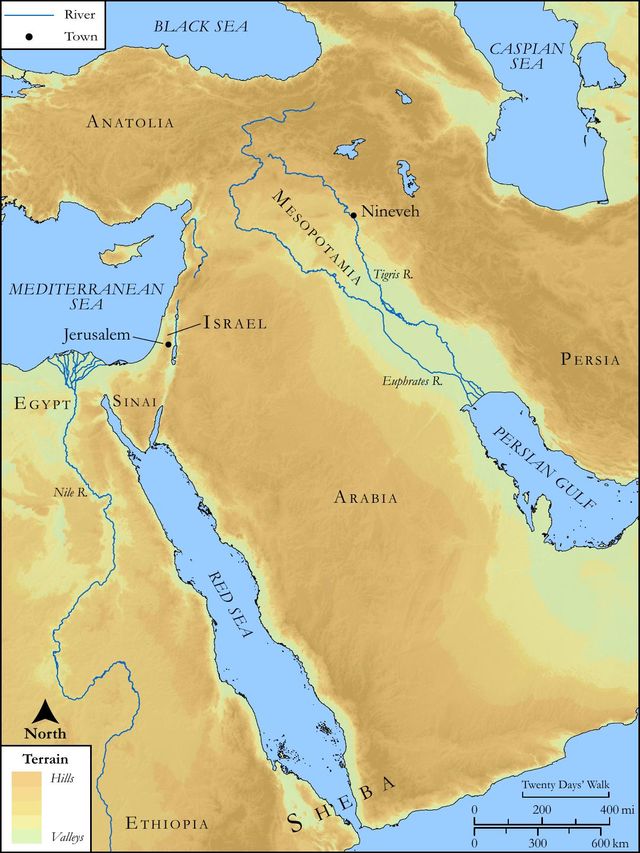
See on the biblical-era maps


Study this verse
Public-domain commentary
Matthew Henry
From his Commentary on the Whole Bible. Henry comments on passages, not single verses — this entry covers Luke 1:1–4. His four-level outline is real structure in the source text, so it is rendered as structure.
Complimental prefaces and dedications, the language of flattery and the food and fuel of pride, are justly condemned by the wise and good; but it doth not therefore follow, that such as are useful and instructive are to be run down; such is this, in which St. Luke dedicates his gospel to his friend Theophilus, not as to his patron, though he was a man of honour, to protect it, but as to his pupil, to learn it, and hold it fast. It is not certain who this Theophilus was; the name signifies a friend of God; some think that it does not mean any particular person, but every one that is a lover of God; Dr. Hammond quotes some of the ancients understanding it so: and then it teaches us, that those who are truly lovers of God, will heartily welcome the gospel of Christ, the design and tendency of which are, to bring us to God. But it is rather to be understood of some particular person, probably a magistrate; because Luke gives him here the same title of respect which St. Paul gave to Festus the governor, kratiste (Act 26:25), which we there translate most noble Festus, and here most excellent Theophilus. Note, Religion does not destroy civility and good manners, but teaches us, according to the usages of our country, to give honour to them to whom honour is due.
Now observe here, I. Why St. Luke wrote this gospel. It is certain that he was moved by the Holy Ghost, not only to the writing, but in the writing of it; but in both he was moved as a reasonable creature, and not as a mere machine; and he was made to consider,
1.That the things he wrote of were things that were most surely believed among all Christians, and therefore things which they ought to be instructed in, that they may know what they believe, and things which ought to be transmitted to posterity (who are as much concerned in them as we are); and, in order to that, to be committed to writing, which is the surest way of conveyance to the ages to come. He will not write about things of doubtful disputation, things about which Christians may safely differ from one another and hesitate within themselves; but the things which are, and ought to be, most surely believed, pragmata peplērophorēmena - the things which were performed (so some), which Christ and his apostles did, and did with such circumstances as gave a full assurance that they were really done, so that they have gained an established lasting credit. Note, Though it is not the foundation of our faith, yet it is a support to it, that the articles of our creed are things that have been long most surely believed. The doctrine of Christ is what thousands of the wisest and best of men have ventured their souls upon with the greatest assurance and satisfaction.
2.That it was requisite there should be a declaration made in order of those things; that the history of the life of Christ should be methodized, and committed to writing, for the greater certainty of the conveyance. When things are put in order, we know the better where to find them for our own use, and how to keep them for the benefit of others.
3.That there were many who had undertaken to publish narratives of the life of Christ, many well-meaning people, who designed well, and did well, and what they published had done good, though not done by divine inspiration, nor so well done as might be, nor intended for perpetuity. Note,
(1.)The labours of others in the gospel of Christ, if faithful and honest, we ought to commend and encourage, and not to despise, though chargeable with many deficiencies.
(2.)Others' services to Christ must not be reckoned to supersede ours, but rather to quicken them.
4.That the truth of the things he had to write was confirmed by the concurring testimony of those who were competent and unexceptionable witnesses of them; what had been published in writing already, and what he was now about to publish, agreed with that which had been delivered by word of mouth, over and over, by those who from the beginning were eye-witnesses and ministers of the word, Luk 1:2. Note,
(1.)The apostles were ministers of the word of Christ, who is the Word (so some understand it), or of the doctrine of Christ; they, having received it themselves, ministered it to others, Jo1 1:1. They had not a gospel to make as masters, but a gospel to preach as ministers.
(2.)The ministers of the word were eye-witnesses of the things which they preached, and, which is also included, ear-witnesses. They did themselves hear the doctrine of Christ, and see his miracles, and had them not by report, at second hand; and therefore they could not but speak, with the greatest assurance, the things which they had seen and heard, Act 4:20.
(3.)They were so from the beginning of Christ's ministry, Luk 1:2. He had his disciples with him when he wrought his first miracle, Joh 2:11. They companied with him all the time he went in and out among them (Act 1:21), so that they not only heard and saw all that which was sufficient to confirm their faith, but, if there had been any thing to shock it, they had opportunity to discover it.
(4.)The written gospel, which we have to this day, exactly agrees with the gospel which was preached in the first days of the church.
(5.)That he himself had a perfect understanding of the things he wrote of, from the first, Luk 1:3. Some think that here is a tacit reflection upon those who had written before him, that they had not a perfect understanding of what they wrote, and therefore, Here am I, send me ( - facit indignatio versum - my wrath impels my pen); or rather, without reflecting on them, he asserts his own ability for this undertaking: "It seemed good to me, having attained to the exact knowledge of all things, anōthen - from above;" so I think it should be rendered; for if he meant the same with from the beginning (Luk 1:2), as our translation intimates, he would have used the same word.
[1.]He had diligently searched into these things, had followed after them (so the word is), as the Old Testament prophets are said to have enquired and searched diligently, Pe1 1:10. He had not taken things so easily and superficially as others who had written before him, but made it his business to inform himself concerning particulars.
[2.]He had received his intelligence, not only by tradition, as others had done, but by revelation, confirming that tradition, and securing him from any error or mistake in the recording of it. He sought it from above (so the word intimates), and from thence he had it; thus, like Elihu, he fetched his knowledge from afar. He wrote his history as Moses wrote his, of things reported by tradition, but ratified by inspiration.
[3.]He could therefore say that he had a perfect understanding of these things. He knew them, akribōs - accurately, exactly. "Now, having received this from above, it seemed good to me to communicate it;" for such a talent as this ought not to be buried.
II.Observe why he sent it to Theophilus:
"I wrote unto thee these things in order, not that thou mayest give reputation to the work, but that thou mayest be edified by it (Luk 1:4); that thou mayest know the certainty of those things wherein thou has been instructed." 1. It is implied, that he had been instructed in these things either before his baptism, or since, or both, according to the rule, Mat 28:19, Mat 28:20. Probably, Luke had baptized him, and knew how well instructed he was; peri hōn katēchēthēs - concerning which thou hast been catechized; so the word is; the most knowing Christians began with being catechized. Theophilus was a person of quality, perhaps of noble birth; and so much the more pains should be taken with such when they are young, to teach them the principles of the oracles of God, that they may be fortified against temptations, and furnished for the opportunities, of a high condition in the world. 2. It was intended that he should know the certainty of those things, should understand them more clearly and believe more firmly. There is a certainty in the gospel of Christ, there is that therein which we may build upon; and those who have been well instructed in the things of God when they were young should afterwards give diligence to know the certainty of those things, to know not only what we believe, but why we believe it, that we may be able to give a reason of the hope that is in us.
Historical interpretation
Ten Centuries of Reception
11 surviving comments on this verse. Each one is dated, so this reads as a timeline rather than a list.
Select a marker to jump to its quote. Markers stagger vertically where authors wrote within a few decades of each other.
"It seemed right for me, too, following the same course from the beginning." He makes his point and repeats it. He did not learn from rumors what he is going to write. He himself has grasped it from the beginning. Hence, the apostle Paul praises him deservedly when he says, "He is praised for his Gospel throughout all the churches." Scripture says this about no one else. It uses the expression only for Luke. "It seemed right for me, too, following the same course from the beginning, carefully to write down all those events for you in order, most excellent Theophilus." Someone might think that Luke addressed the Gospel to a specific man named Theophilus. But, if you are the sort of people God can love, then all of you who hear us speaking are Theophiluses, and the Gospel is addressed to you. Anyone who is a Theophilus is both "excellent" and "very strong." This is what the Greek word υεοφιλος [Theophilos] actually means. No Theophilus is weak. Scripture says of the people of Israel, when they were going out from Egypt, "There was no weakling in their tribes." I could say boldly that everyone who is a Theophilus is robust. He has vigor and strength from both God and his Word. He can recognize the "truth" of those "words, by which he has been instructed" and understand the Word of the gospel in Christ—to whom is glory and power for ages of ages. Amen.
St. Luke hereby explains to us the source of his writing; seeing that what things he wrote, he gained not from report, but had himself traced them up from the beginning. Hence it follows, It seemed good to me also, having carefully investigated every thing from the very first, to write to thee in order, most excellent Theophilus.
(Eccl. Hist. iii. 4.) St. Luke at the commencement of his Gospel has told us the reason of his writing, which was, that many others had rashly taken upon themselves to give accounts of those things of which he had a more certain knowledge. And this is his meaning when he says, Forasmuch as many have taken in hand to set forth in order a declaration of things.
(sup.) Luke is a sure witness, because he obtained his knowledge of the truth either from St. Paul's instructions, or the instructions and traditions of the other Apostles, who were themselves eyewitnesses from the beginning.
(in proœm. Lucæ.) He says, of things, because not by shadows, as the heretics say, did Jesus accomplish His advent in the flesh, but being as He was the Truth, so in very truth He performed His work.
Now, it is written that the Gospel is addressed to Theophilus, that is, to him whom God loves. If you love God, it is written to you; if it is written to you, accept the gift of the Evangelist: diligently keep the pledge of a friend in the innermost part of your soul. Guard the valuable deposit through the Holy Spirit, who has been given to us: examine it frequently, discuss it often. Faith is owed to the pledge first: diligence follows faith; lest moths or rust destroy the entrusted pledges. For whatever has been entrusted to you can be consumed: the Gospel cannot be consumed. The Gospel is a good pledge: but beware that neither moth nor rust consumes it in your mind. Moth consumes it if you believe what you read well, poorly.
When he says, It seemed good to me, he does not deny that it seemed good to God: for it is God who predisposes the wills of men. Now no one has doubted that this book of the Gospel is more full of details than the others; by these words then he claims to himself, not any thing that is false, but the truth; and therefore he says, "It seemed good to me, having investigated every thing, to write." Not to write every thing, but from a review of every thing; "for if all the things which Jesus did were written, I do not think the world itself could contain them." (John 21:25.) But purposely has Luke passed by things that were written by others, in order that each book of the Gospel might be distinguished by certain mysteries and miracles peculiar to itself.
(Comm. in Act. Apost. Hom. i.) The Evangelist was so far from being content with his single testimony, that he refers the whole to the Apostles, seeking from them a confirmation of his words; and therefore he adds, as they handed them down to us, who were themselves from the beginning eyewitnesses.
(sup.) He says, were eyewitnesses, because this is our chief ground for believing in a thing, that we derive it from those who were actually eyewitnesses.
(sup.) Or it may be, "That thou mightest feel certain and satisfied as to the truth of those things which thou hast heard, now that thou beholdest the same in writing."
Prologue. Since many have undertaken to set in order a narrative of those things which have been fulfilled among us, just as those who from the beginning were eyewitnesses and ministers of the word delivered them to us, it seemed good to me also, having followed all things closely from the beginning, to write an orderly account for you, most excellent Theophilus, that you may know the certainty of those things in which you were instructed. This most clear prologue indicates that the chief reason for writing his Gospel was to prevent false evangelists from having the opportunity to preach falsely, who, as their memorials even today testify, tried to introduce sects under the name of the apostles. Indeed, some ascribed their writings falsely to Thomas, others to Bartholomew, some to Matthias, and even some under the title of the twelve apostles. But also Basilides and Apelles, one of whom taught of 365 heavens, the other of two opposing gods among other vile doctrines, have left Gospels defiled with their errors under their own names. Among these is to be noted what is called the Gospel according to the Hebrews, which should not be counted among the apocryphal but rather ecclesiastical histories. For Jerome, the interpreter of the sacred Scriptures himself, used many testimonies from it, and he translated it into Latin and Greek. False Gospels, however, Luke refuted with his very first preface. "Since many," he says, "have undertaken to compile a narrative." He counted many, not so much by numbers but by the varied diversity of heresy, who not endowed with the gift of the Holy Spirit but rather with empty labor more so attempted to arrange a narrative than to weave the truth of history, and therefore left others to complete the work in which they wasted their efforts in vain. They, indeed, who, although there are four of them, did not publish four Gospels but one consonant with the most beautiful variety of four. They published as those who from the beginning were eyewitnesses and ministers of the word delivered to them. By this sentence, not only Luke and Mark, who did not see the Lord present in the flesh and therefore had to learn by hearing what they wrote, but Matthew and John the apostles also are designated. For they too, in many things which they wrote, needed to hear from those who could know his infancy, childhood, and genealogy and participate in the acts. And when he says it seemed good to him also to write, he means not as if it seemed to himself by himself, but signifying it also seemed to him by the urging of the Holy Spirit. Just as the apostles in their letter say: "For it seemed good to the Holy Spirit, and to us." Whose grace indeed is that what is good may also seem good to us. He then says he followed not a few things but all things carefully. Yet, though he followed all things, it seemed good to write not everything but all those things he believed suitable for confirming the faith of the readers; for even the world itself, if all were written, could not contain them (John 21). Therefore, he intentionally omitted some things said by others, so that the diverse grace of the Gospel might shine, and each book by its own particular miracles of mysteries and deeds might stand out. Theophilus is interpreted as "lover of God" or "beloved by God." Therefore, whoever loves God or desires to be loved by God should consider the Gospel written to him, and keep it as a gift given and entrusted to himself. So that the money of the word received would not be wasted by the moth of heretical corruption or the rust of filthy greed. Not, however, of any new or unknown things does he promise to unfold the account to this same Theophilus, but to express the truth of the words in which he was instructed. Of course, so he might recognize the order in which whatever was done or said by the Lord or about the Lord. For he who wishes to be perfect ought not only to believe in Christ but also to understand the order of his eternal divinity and his temporary dispensation.
(in proœm. Lucæ.) The many who are mentioned, he reckons not so much by their number, as by the variety of their manifold heresies; men who were not endued with the gift of the Holy Spirit, but engaging in a vain work, have rather set forth in order a relation of events, than woven a true history.
Nevertheless both Matthew and John were obliged in many things that they wrote to consult those who had had means of knowing the infancy, childhood, and genealogy of our Lord, and of seeing the things which he did.
(sup.) Theophilus means, "loving God," or "being loved by God." Whoever then loves God, or desires to be loved by Him, let him think this Gospel to have been written to him, and preserve it as a gift presented to him, a pledge entrusted to his care. The promise was not to explain the meaning of certain new and strange things to Theophilus, but to set forth the truth of those words in which he had been instructed; as it is added, That thou mightest know the truth of those words in which thou hast been instructed; that is, "that thou mightest be able to know in what order each thing was said or done by the Lord."
(Præf. in Luc.) By these words it is plainly implied, that Luke was not a disciple from the beginning, but became one in course of time; others were disciples from the beginning, as Peter, and the sons of Zebedee.
(in loc.) He writes to Theophilus, a man probably of some distinction, and a governor; for the form, Most excellent, was not used except to rulers and governors. As for example, Paul says to Festus, Most excellent Festus. (Acts 26:25.)
For frequently, when a thing is asserted by any one, and not expressed in writing, we suspect it of falsehood; but when a man has written what he asserts, we are the more inclined to believe it, as if, unless he thought it to be true, he would not commit it to writing.
(Photius, comment. in Luc.) The whole Preface of this Evangelist contains two things; first, the condition of those who wrote Gospels before him, (Matthew and Mark for example;) secondly, the reason why he also himself proposed to write one.
Having said, "attempted," a word which may be applied both to those who presumptuously engage upon a subject, and those who reverently handle it, he determines the doubtful expression by two additions; first, by the words, Of things which have been fully accomplished among us; and secondly, As they handed them down to us, who were eyewitnesses from the beginning. The word handed down seems to show, that the eye-witnesses themselves had a commission to transmit the truth. For as they handed it down, so it became others also receiving it in due order, in their turn to publish it. But from the not depositing in writing what had been delivered, several difficulties through lapse of time sprang up. Rightly then did those who had received the tradition from the first eye-witnesses of the Word, establish it in writing for the whole world; thereby repelling falsehood, destroying forgetfulness, and making up from tradition itself a perfect whole.
Continue studying Luke 1:3 across the web’s major study libraries — every link below opens this exact verse, chapter, or book on the destination site.
Read & Compare
 BibleGatewayThis verse in more than 200 translations and 70 languages.
 Bible.comThe YouVersion reader — hundreds of translations, reading plans, and highlights.
 ESV.orgCrossway's official English Standard Version reader.
 NET BibleThe NET translation with 60,000+ translators' notes on every rendering decision.
 STEP BibleTyndale House's free study tool — original text, vocabulary, and scholarly resources.
 BibliaLogos Bible Software's free web reader.
 USCCBThe New American Bible (Revised Edition) with the U.S. bishops' study notes.
Commentaries
 BibleHub CommentariesDozens of classic commentaries on this verse, gathered on one page.
 StudyLightMore than 100 commentary sets — the largest collection on the web.
 BibleRefPlain-English commentary on what this verse means, verse by verse.
 Enduring WordDavid Guzik's free commentary on this chapter, widely used by Bible teachers.
 Bible Study ToolsVerse commentary alongside Greek and Hebrew study aids.
Original Language & Research
- BibleHub InterlinearThe verse word by word — original language, transliteration, and English.
- BibleHub LexiconEvery word's original-language definition and Strong's entry.
 Blue Letter BibleDeep-study tools — Strong's numbers, concordance, and word studies.
 CNTR CollationThe earliest Greek manuscripts of this verse, collated letter by letter.
Sermons, Hymns & Audio


TrulyRandomVerse is not affiliated with these sites and doesn’t control their content. They’re linked because they’re genuinely useful.
Summary
Luke 1:3 serves as a crucial component of the Gospel's prologue, where the author, Luke, articulates his meticulous methodology and purpose in writing. He asserts that, having thoroughly investigated "all things from the very first," he felt compelled to compile an orderly and accurate account for "most excellent Theophilus." This verse establishes the historical reliability and systematic nature of Luke's Gospel, setting the stage for a comprehensive narrative of Jesus' life, ministry, death, and resurrection, grounded in careful research and presented with clarity.
Context
ShowHideLiterary Context
Luke 1:3 is the capstone of Luke's concise yet profound prologue, spanning Luke 1:1-4. Verses 1-2 acknowledge the existence of other narratives concerning the "things which are most surely believed among us" and emphasize that these accounts were delivered by "eyewitnesses and ministers of the word." Following this, verse 3 transitions from the general acknowledgment of existing traditions to Luke's personal commitment and specific methodology. Verse 4 then states the ultimate purpose: "that thou mightest know the certainty of those things, wherein thou hast been instructed." This prologue, unique among the Synoptic Gospels for its formal, classical Greek style, positions Luke's work as a meticulously researched historical document, distinct from mere anecdotal collections.
Historical & Cultural Context
The first century CE was a period of burgeoning literary activity, with various accounts and narratives circulating, including those pertaining to Jesus. Luke, traditionally identified as a Gentile physician and companion of the Apostle Paul (as evidenced in passages like Colossians 4:14), writes within a Hellenistic cultural framework. His dedication to "most excellent Theophilus" suggests that Theophilus was a person of high social standing, possibly a Roman official or a wealthy patron, for whom the formal address "most excellent" (κράτιστε) was appropriate. Such individuals often sponsored literary works. Luke's emphasis on order and accuracy would have resonated with the Greco-Roman intellectual tradition, which valued historical investigation and systematic presentation, distinguishing his work from less rigorous popular accounts.
Key Themes
ShowHideThis verse powerfully contributes to several key themes pervasive in Luke's Gospel and the broader Luke-Acts narrative. Foremost is the theme of Historical Reliability and Certainty. Luke's claim of "perfect understanding of all things from the very first" and his intention "to write unto thee in order" underscore his commitment to presenting a trustworthy and verifiable account of Jesus' life, ministry, and the early church. This commitment is foundational to the entire two-volume work, which continues in Acts 1:1. Another significant theme is Divine Purpose and Order. While Luke emphasizes human diligence, the underlying conviction is that God's plan unfolds in an orderly and purposeful manner, from the prophecies of the Old Testament to the events of Jesus' life and the spread of the Gospel. Luke's careful arrangement reflects this divine order, ensuring that readers like Theophilus can grasp the coherence of God's redemptive work.
Exposition and Analysis
ShowHideKey Word Analysis
ShowHideMeaning "to think; by implication, to seem (truthfully or uncertainly); to be accounted, (of own) please(-ure), be of reputation, seem (good), suppose, think, trow." Here, it conveys Luke's personal conviction and decision, indicating that after his thorough investigation, it was his considered judgment and resolve to undertake this writing project. It's not a casual thought but a deliberate choice.
Meaning "to follow near, i.e. (figuratively) attend (as a result), trace out, conform to; to attain, follow, fully know, have understanding." This word is crucial, signifying Luke's diligent and comprehensive research. It implies not just casual knowledge but a thorough, systematic investigation, tracing events from their origin, possibly through interviewing eyewitnesses and consulting existing records, to gain a complete and accurate grasp of the facts.
Meaning "thereafter, i.e. consecutively; as a noun (by ellipsis of noun) a subsequent person or time; after(-ward), by (in) order." This term highlights Luke's methodical and systematic approach to presenting the narrative. It suggests a logical, coherent, and possibly chronological arrangement of events, designed to provide clarity and facilitate the reader's comprehension of the unfolding story of salvation.
Verse Breakdown
ShowHide"It seemed good to me also"
This clause reveals Luke's personal initiative and conviction in undertaking this monumental task. The "also" (G2504, kagṓ') implies that Luke is adding his own carefully researched account to the existing narratives mentioned in Luke 1:1. It underscores his deliberate decision and sense of divine prompting or scholarly responsibility.
"having had perfect understanding of all things from the very first"
This is the core of Luke's claim to authority and reliability. The phrase "perfect understanding" (G3877, parakolouthéō') denotes a thorough, comprehensive investigation, tracing events from their earliest origins (G509, ánōthen'). Luke is asserting that his knowledge is not superficial but deep, accurate, and based on diligent research, encompassing "all things" (G3956, pâs').
"to write unto thee in order, most excellent Theophilus,"
This segment states Luke's specific purpose and recipient. He intends "to write" (G1125, gráphō') a formal account, presented "in order" (G2517, kathexēs'), meaning systematically and coherently. The recipient, "most excellent Theophilus" (G2903, krátistos' G2321, Theóphilos'), is addressed with a title of high respect, indicating his social standing. This dedication suggests a primary audience, but the meticulous nature of the work implies a broader intention to provide a reliable historical foundation for all believers.
Literary Devices
ShowHideLuke 1:3 employs several literary devices to establish the credibility and purpose of his Gospel. The most prominent is Prologos, a formal literary introduction, which sets the tone and outlines the author's intent and methodology. This classical Greek literary form immediately signals to the reader that what follows is a serious, well-researched historical account rather than a casual narrative. Luke also utilizes Ethos, establishing his own credibility as an author through his explicit claim of "perfect understanding of all things from the very first." This direct assertion of thorough research and comprehensive knowledge builds trust with the reader. Furthermore, the phrase "to write unto thee in order" demonstrates Logos, appealing to reason and logic by promising a systematic and coherent presentation of facts, which was highly valued in Hellenistic scholarship. The formal address "most excellent Theophilus" is an example of Apostrophe, directly addressing a specific individual, which personalizes the dedication while simultaneously elevating the perceived importance and scholarly rigor of the work.
Theological and Thematic Connections
ShowHideLuke 1:3 profoundly impacts our understanding of the Christian faith by grounding it in historical reality rather than myth or legend. Luke's meticulous approach underscores the conviction that the events surrounding Jesus' life, death, and resurrection are not mere spiritual ideas but verifiable historical occurrences. This commitment to accuracy provides a firm foundation for the Gospel's claims, assuring believers of the certainty of their faith and offering a robust defense against skepticism. The "orderly" presentation also reflects a theological understanding of God's sovereign plan unfolding purposefully through history, from the Old Testament prophecies to the New Testament fulfillment in Christ, and continuing through the early church.
Reflection and Application
ShowHideLuke 1:3 offers profound assurance and practical guidance for believers today. In an age saturated with information, misinformation, and skepticism, Luke's commitment to "perfect understanding" and "orderly" presentation serves as a powerful reminder of the historical integrity of the Christian faith. It invites us to approach the Scriptures not as mere stories, but as divinely inspired historical accounts, meticulously compiled to reveal God's redemptive plan. For our own spiritual growth, this verse encourages diligence in seeking truth, not just accepting superficial knowledge, but delving deeply into God's Word to gain a firm and certain understanding of our faith. It also challenges us to present the Gospel to others with clarity, order, and a commitment to factual accuracy, mirroring Luke's example in making the certainty of Christ known.
Questions for Reflection
ShowHideFAQ
ShowHideWho was "most excellent Theophilus," and why was Luke's Gospel addressed to him?
ShowHide"Most excellent Theophilus" (G2321, Theóphilos') was the primary recipient of Luke's Gospel and also the Book of Acts (as seen in Acts 1:1), indicating that these two books form a single, continuous narrative. The name Theophilus means "friend of God" or "loved by God." The title "most excellent" (G2903, krátistos') was a formal address used for high-ranking officials, such as Roman governors (e.g., Felix in Acts 23:26 and Festus in Acts 26:25). This suggests Theophilus was likely a person of significant social or political standing, possibly a Roman official or a wealthy patron who may have been a new convert or an inquirer seeking a reliable and comprehensive account of Christian origins. Luke's meticulous and orderly presentation was designed to provide him (and by extension, a wider audience) with a "certainty of those things, wherein thou hast been instructed" (Luke 1:4).
Christ-Centered Fulfillment
ShowHideWhile Luke 1:3 does not directly prophesy Christ, it profoundly serves the Christ-centered narrative by establishing the historical and reliable framework through which the person and work of Jesus are presented. Luke's commitment to "perfect understanding of all things from the very first" and his intention "to write unto thee in order" ensure that the account of Jesus is not a myth but a verifiable historical reality. This meticulous approach underscores the truth that the Incarnation, the life of the Son of God, His atoning death on the cross, and His glorious resurrection are actual events that occurred in space and time, fulfilling the ancient prophecies. Luke's Gospel, thus, systematically unveils Jesus as the promised Messiah, the Son of God, and the Savior of the world, whose ministry extends God's salvation to all people, including Gentiles, as highlighted throughout Luke-Acts (e.g., Luke 2:32). The "orderly" presentation allows the reader to trace the unfolding of God's redemptive plan, culminating in Christ's ascension and the outpouring of the Holy Spirit, empowering His followers to continue His mission (as seen in Acts 1:8). Thus, Luke 1:3 is foundational, providing the trustworthy lens through which we encounter the historical Jesus and His saving work, ensuring that our faith is built upon the solid rock of truth.