


Luke 1:1
Bible text: King James Version (1769 Blayney text) · Public domain
Bible text: Berean Standard Bible · Public domain
Bible text: American Standard Version (1901) · Public domain
Bible text: World English Bible, Messianic edition · Public domain
Bible text: Geneva Bible (1599) · Public domain
Bible text: Young's Literal Translation · Public domain
- ἘπειδήπερEpeidēperInasmuch asG1895CONJConjunction
- πολλοὶpolloimanyG4183A-NPMAdjective Nominative Plural Masculine
- ἐπεχείρησανepecheirēsanundertookG2021V-AAI-3PVerb Aorist Active Indicative 3rd Plural
- ἀνατάξασθαιanataxasthaito draw upG392V-ADNVerb Aorist Middle Deponent Infinitive
- διήγησινdiēgēsina narrationG1335N-ASFNoun Accusative Singular Feminine
- περὶpericoncerningG4012PREPPreposition
- τῶνtōntheG3588T-GPNDefinite article Genitive Plural Neuter
- πεπληροφορημένωνpeplērophorēmenōnaccomplishedG4135V-RPP-GPNVerb Perfect Passive Participle Genitive Plural Neuter
- ἐνenamongG1722PREPPreposition
- ἡμῖνhēminusG3165P-1DPPersonal pronoun Dative 1st Plural
- πραγμάτωνpragmatōnthingsG4229N-GPNNoun Genitive Plural Neuter
English is a literal word-by-word gloss of the Greek, not the KJV's wording. Why?
This is the original text the KJV's translators worked from — each Greek word with its own literal English meaning in this verse, prepared by scholars at Tyndale House, Cambridge. The KJV translates whole sentences, not word by word, so its wording differs: one Greek word can become several English words, and the KJV may choose “charity” where the gloss reads “love”. Both are faithful — they answer different questions. For the KJV's own rendering, switch to the KJV text.
Details
See on the biblical-era maps

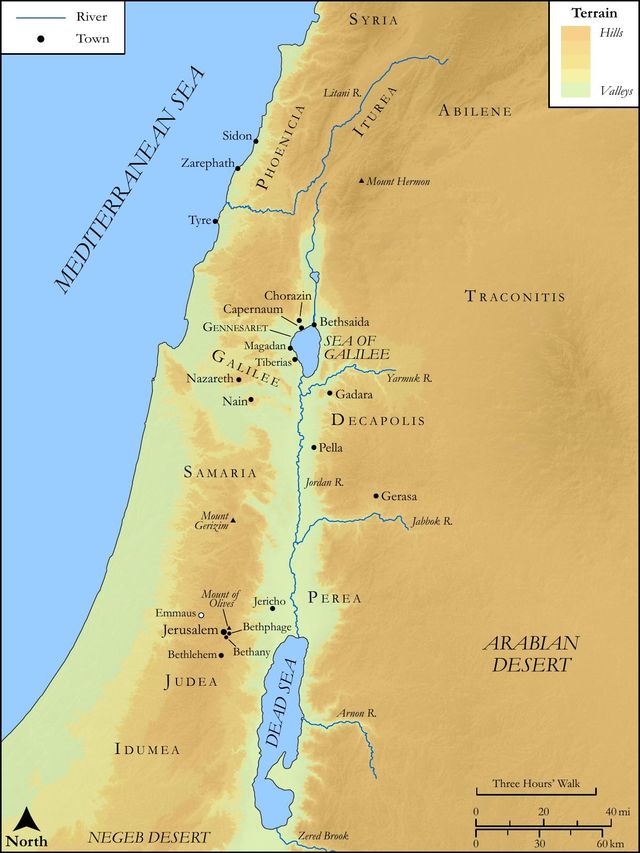
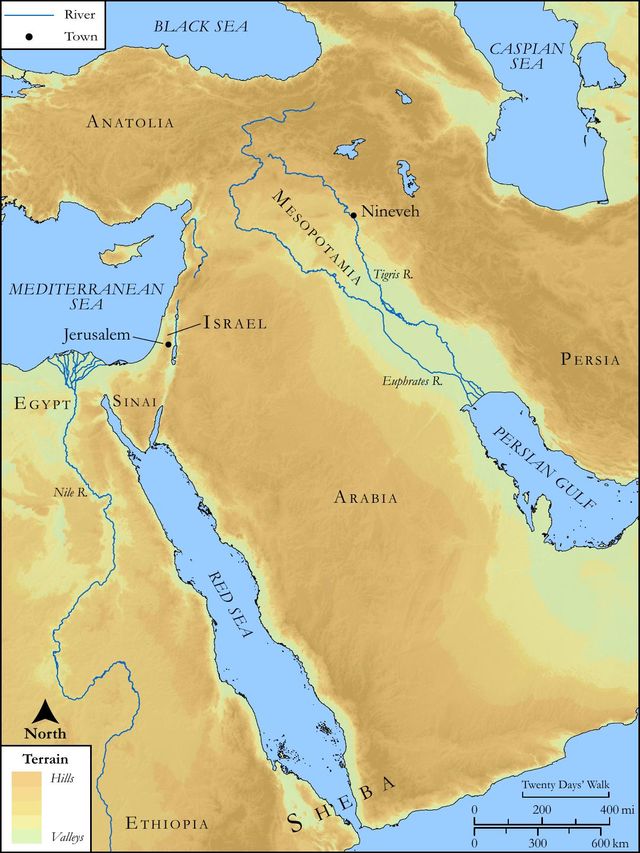
Study this verse
Public-domain commentary
Matthew Henry
From his Commentary on the Whole Bible. Henry comments on passages, not single verses — this entry covers Luke 1:1–4. His four-level outline is real structure in the source text, so it is rendered as structure.
Complimental prefaces and dedications, the language of flattery and the food and fuel of pride, are justly condemned by the wise and good; but it doth not therefore follow, that such as are useful and instructive are to be run down; such is this, in which St. Luke dedicates his gospel to his friend Theophilus, not as to his patron, though he was a man of honour, to protect it, but as to his pupil, to learn it, and hold it fast. It is not certain who this Theophilus was; the name signifies a friend of God; some think that it does not mean any particular person, but every one that is a lover of God; Dr. Hammond quotes some of the ancients understanding it so: and then it teaches us, that those who are truly lovers of God, will heartily welcome the gospel of Christ, the design and tendency of which are, to bring us to God. But it is rather to be understood of some particular person, probably a magistrate; because Luke gives him here the same title of respect which St. Paul gave to Festus the governor, kratiste (Act 26:25), which we there translate most noble Festus, and here most excellent Theophilus. Note, Religion does not destroy civility and good manners, but teaches us, according to the usages of our country, to give honour to them to whom honour is due.
Now observe here, I. Why St. Luke wrote this gospel. It is certain that he was moved by the Holy Ghost, not only to the writing, but in the writing of it; but in both he was moved as a reasonable creature, and not as a mere machine; and he was made to consider,
1.That the things he wrote of were things that were most surely believed among all Christians, and therefore things which they ought to be instructed in, that they may know what they believe, and things which ought to be transmitted to posterity (who are as much concerned in them as we are); and, in order to that, to be committed to writing, which is the surest way of conveyance to the ages to come. He will not write about things of doubtful disputation, things about which Christians may safely differ from one another and hesitate within themselves; but the things which are, and ought to be, most surely believed, pragmata peplērophorēmena - the things which were performed (so some), which Christ and his apostles did, and did with such circumstances as gave a full assurance that they were really done, so that they have gained an established lasting credit. Note, Though it is not the foundation of our faith, yet it is a support to it, that the articles of our creed are things that have been long most surely believed. The doctrine of Christ is what thousands of the wisest and best of men have ventured their souls upon with the greatest assurance and satisfaction.
2.That it was requisite there should be a declaration made in order of those things; that the history of the life of Christ should be methodized, and committed to writing, for the greater certainty of the conveyance. When things are put in order, we know the better where to find them for our own use, and how to keep them for the benefit of others.
3.That there were many who had undertaken to publish narratives of the life of Christ, many well-meaning people, who designed well, and did well, and what they published had done good, though not done by divine inspiration, nor so well done as might be, nor intended for perpetuity. Note,
(1.)The labours of others in the gospel of Christ, if faithful and honest, we ought to commend and encourage, and not to despise, though chargeable with many deficiencies.
(2.)Others' services to Christ must not be reckoned to supersede ours, but rather to quicken them.
4.That the truth of the things he had to write was confirmed by the concurring testimony of those who were competent and unexceptionable witnesses of them; what had been published in writing already, and what he was now about to publish, agreed with that which had been delivered by word of mouth, over and over, by those who from the beginning were eye-witnesses and ministers of the word, Luk 1:2. Note,
(1.)The apostles were ministers of the word of Christ, who is the Word (so some understand it), or of the doctrine of Christ; they, having received it themselves, ministered it to others, Jo1 1:1. They had not a gospel to make as masters, but a gospel to preach as ministers.
(2.)The ministers of the word were eye-witnesses of the things which they preached, and, which is also included, ear-witnesses. They did themselves hear the doctrine of Christ, and see his miracles, and had them not by report, at second hand; and therefore they could not but speak, with the greatest assurance, the things which they had seen and heard, Act 4:20.
(3.)They were so from the beginning of Christ's ministry, Luk 1:2. He had his disciples with him when he wrought his first miracle, Joh 2:11. They companied with him all the time he went in and out among them (Act 1:21), so that they not only heard and saw all that which was sufficient to confirm their faith, but, if there had been any thing to shock it, they had opportunity to discover it.
(4.)The written gospel, which we have to this day, exactly agrees with the gospel which was preached in the first days of the church.
(5.)That he himself had a perfect understanding of the things he wrote of, from the first, Luk 1:3. Some think that here is a tacit reflection upon those who had written before him, that they had not a perfect understanding of what they wrote, and therefore, Here am I, send me ( - facit indignatio versum - my wrath impels my pen); or rather, without reflecting on them, he asserts his own ability for this undertaking: "It seemed good to me, having attained to the exact knowledge of all things, anōthen - from above;" so I think it should be rendered; for if he meant the same with from the beginning (Luk 1:2), as our translation intimates, he would have used the same word.
[1.]He had diligently searched into these things, had followed after them (so the word is), as the Old Testament prophets are said to have enquired and searched diligently, Pe1 1:10. He had not taken things so easily and superficially as others who had written before him, but made it his business to inform himself concerning particulars.
[2.]He had received his intelligence, not only by tradition, as others had done, but by revelation, confirming that tradition, and securing him from any error or mistake in the recording of it. He sought it from above (so the word intimates), and from thence he had it; thus, like Elihu, he fetched his knowledge from afar. He wrote his history as Moses wrote his, of things reported by tradition, but ratified by inspiration.
[3.]He could therefore say that he had a perfect understanding of these things. He knew them, akribōs - accurately, exactly. "Now, having received this from above, it seemed good to me to communicate it;" for such a talent as this ought not to be buried.
II.Observe why he sent it to Theophilus:
"I wrote unto thee these things in order, not that thou mayest give reputation to the work, but that thou mayest be edified by it (Luk 1:4); that thou mayest know the certainty of those things wherein thou has been instructed." 1. It is implied, that he had been instructed in these things either before his baptism, or since, or both, according to the rule, Mat 28:19, Mat 28:20. Probably, Luke had baptized him, and knew how well instructed he was; peri hōn katēchēthēs - concerning which thou hast been catechized; so the word is; the most knowing Christians began with being catechized. Theophilus was a person of quality, perhaps of noble birth; and so much the more pains should be taken with such when they are young, to teach them the principles of the oracles of God, that they may be fortified against temptations, and furnished for the opportunities, of a high condition in the world. 2. It was intended that he should know the certainty of those things, should understand them more clearly and believe more firmly. There is a certainty in the gospel of Christ, there is that therein which we may build upon; and those who have been well instructed in the things of God when they were young should afterwards give diligence to know the certainty of those things, to know not only what we believe, but why we believe it, that we may be able to give a reason of the hope that is in us.
Historical interpretation
Eleven Centuries of Reception
13 surviving comments on this verse. Each one is dated, so this reads as a timeline rather than a list.
Select a marker to jump to its quote. Markers stagger vertically where authors wrote within a few decades of each other.
Of no man, I am quite sure, were they [the apostles] afraid, — neither of Jews nor of Gentiles in their violence; with all the greater freedom, then, would they certainly preach in the church, who held not their tongue in synagogues and public places. Indeed they would have found it impossible either to convert Jews or to bring in Gentiles, unless they "set forth in order" [Luke 1:1] that which they would have them believe.
(Hom. i. in Luc.) The effect upon his own mind, St. Luke explains by the expression, of the things which have been fully accomplished among us, i. e. have had their full manifestation among us, (as the Greek word peplerophoremenon signifies, which the Latin cannot express in one word,) for he had been convinced of them by sure faith and reason, and wavered not in any thing.
With respect to the New Testament also "many have tried" to write Gospels, but not all found acceptance. You should know that not just four Gospels, but very many, were composed. The Gospels we have were chosen from among these Gospels and passed on to the churches. We know this from Luke's own prologue, which begins this way: "Because many have tried to compose an account." The words "have tried" imply an accusation against those who rushed into writing gospels without the grace of the Holy Spirit. Matthew, Mark, John and Luke did not "try" to write. They wrote their Gospels when they were filled with the Holy Spirit. Hence, "many have tried to compose an account of the events that are clearly known among us." …Our doctrines about the person of our Lord and Savior should be drawn from these approved Gospels. I know one gospel called "According to Thomas," and another "According to Matthias." We have read many others, too, so that we do not appear to be ignorant of anything, because of those people who think they know something if they have examined these gospels. But in all of these questions we approve of nothing but that which the church approves, namely, only four canonical Gospels.…
Luke makes his intention known by the word he uses; that is, "that have been clearly shown to us," a concept that the Latin language cannot express in one word. It means that Luke knew by firm faith and by careful consideration and did not waver on any point, wondering whether it should be this way or that.
(Eccl. Hist. iii. 4.) St. Luke at the commencement of his Gospel has told us the reason of his writing, which was, that many others had rashly taken upon themselves to give accounts of those things of which he had a more certain knowledge. And this is his meaning when he says, Forasmuch as many have taken in hand to set forth in order a declaration of things.
(sup.) Luke is a sure witness, because he obtained his knowledge of the truth either from St. Paul's instructions, or the instructions and traditions of the other Apostles, who were themselves eyewitnesses from the beginning.
(in proœm. Lucæ.) He says, of things, because not by shadows, as the heretics say, did Jesus accomplish His advent in the flesh, but being as He was the Truth, so in very truth He performed His work.
(Expos. Ev. Luc. l. i. c. i.) For as many among the Jewish people prophesied by inspiration of the Spirit of God, but others were false prophets rather than prophets, so now also have many attempted to write Gospels which the good moneychanger refuses to pass. One gospel is mentioned which the twelve Apostles are said to have written; another Basilides presumed to write; and another is said to have been by Matthias.
Now they who have attempted to set forth these things in order have laboured by themselves, and have not succeeded in what they attempted. For without the assistance of man come the gifts and the grace of God, which, when it is infused, is wont so to flow, that the genius of the writer is not exhausted, but ever abounding. He well says therefore, Of things which have been fully accomplished among us, or which abound among us. For that which abounds is lacking to none, and no one doubts about that which is fulfilled, since the accomplishment builds up our faith, and the end manifests it.
This expression is used, not that we should suppose the ministry of the word to consist rather in seeing than hearing, but that, because by the word was meant not a word that can be spoken by the mouth, but one of real existence, we may understand that to have been not a common, but a Heavenly Word, to which the Apostles ministered.
Now not only did they see the Lord in the body, but also in the Word. For they saw the Word, who with Moses and Elias saw the glory of the Word. Others did not see it, who could only see the body.
(Comm. in Act. Apost. Hom. i.) The Evangelist was so far from being content with his single testimony, that he refers the whole to the Apostles, seeking from them a confirmation of his words; and therefore he adds, as they handed them down to us, who were themselves from the beginning eyewitnesses.
(sup.) He says, were eyewitnesses, because this is our chief ground for believing in a thing, that we derive it from those who were actually eyewitnesses.
(sup.) Or it may be, "That thou mightest feel certain and satisfied as to the truth of those things which thou hast heard, now that thou beholdest the same in writing."
Luke, a physician of Antioch, was not unacquainted with Greek culture, as is shown by his writings. He was a companion of the Apostle Paul and followed him in all his journeys to foreign lands. Luke wrote the Gospel to which Paul himself refers when he says, "And we have sent with him the brother, whose praise is in the Gospel throughout all the churches" (II Cor. 8:18). And in his letter to the Colossians he says, "Luke, the beloved physician, greets you" (Col. 4:14). And to Timothy he says, "Only Luke is with me" (II Tim. 4:11).
Luke wrote another excellent book entitled The Acts of the Apostles, a history which ends with Paul’s two-year stay in Rome, that is, in the fourth year of Nero’s reign. This leads us to believe that The Acts of the Apostles was written in Rome. The tale of the journey of Paul and Thecla, and every other fable, such as the baptism of the lion, should not be counted among the canonical Scriptures. For it is not possible that he who was inseparable from the Apostle should not have known of this act among all his other acts. Tertullian also mentions a certain elder in Asia at that time, a companion of the Apostle Paul, who, when it was proven in the presence of John that he was the author of this book, confessed that he had written it out of love for Paul. Some say that this is why Luke does not mention himself as the author. Whenever Paul says in his own Epistles, "according to my Gospel" (Rom. 2:16, etc.), it is clear that he means the Gospel written by Luke. But Luke learned the Gospel not only from the Apostle Paul, who was not with the Lord in the body at that time, but from the other Apostles as well. He himself clearly states this at the beginning of his work, saying, even as they were handed down to us by those who from the beginning were eyewitnesses. Therefore he wrote the Gospel as he had heard it. But he wrote The Acts based on what he himself had experienced. Luke’s relics were taken up and carried to Constantinople, together with the relics of the Apostle Andrew, in the twentieth year of the reign of Constantius.
Prologue. Since many have undertaken to set in order a narrative of those things which have been fulfilled among us, just as those who from the beginning were eyewitnesses and ministers of the word delivered them to us, it seemed good to me also, having followed all things closely from the beginning, to write an orderly account for you, most excellent Theophilus, that you may know the certainty of those things in which you were instructed. This most clear prologue indicates that the chief reason for writing his Gospel was to prevent false evangelists from having the opportunity to preach falsely, who, as their memorials even today testify, tried to introduce sects under the name of the apostles. Indeed, some ascribed their writings falsely to Thomas, others to Bartholomew, some to Matthias, and even some under the title of the twelve apostles. But also Basilides and Apelles, one of whom taught of 365 heavens, the other of two opposing gods among other vile doctrines, have left Gospels defiled with their errors under their own names. Among these is to be noted what is called the Gospel according to the Hebrews, which should not be counted among the apocryphal but rather ecclesiastical histories. For Jerome, the interpreter of the sacred Scriptures himself, used many testimonies from it, and he translated it into Latin and Greek. False Gospels, however, Luke refuted with his very first preface. "Since many," he says, "have undertaken to compile a narrative." He counted many, not so much by numbers but by the varied diversity of heresy, who not endowed with the gift of the Holy Spirit but rather with empty labor more so attempted to arrange a narrative than to weave the truth of history, and therefore left others to complete the work in which they wasted their efforts in vain. They, indeed, who, although there are four of them, did not publish four Gospels but one consonant with the most beautiful variety of four. They published as those who from the beginning were eyewitnesses and ministers of the word delivered to them. By this sentence, not only Luke and Mark, who did not see the Lord present in the flesh and therefore had to learn by hearing what they wrote, but Matthew and John the apostles also are designated. For they too, in many things which they wrote, needed to hear from those who could know his infancy, childhood, and genealogy and participate in the acts. And when he says it seemed good to him also to write, he means not as if it seemed to himself by himself, but signifying it also seemed to him by the urging of the Holy Spirit. Just as the apostles in their letter say: "For it seemed good to the Holy Spirit, and to us." Whose grace indeed is that what is good may also seem good to us. He then says he followed not a few things but all things carefully. Yet, though he followed all things, it seemed good to write not everything but all those things he believed suitable for confirming the faith of the readers; for even the world itself, if all were written, could not contain them (John 21). Therefore, he intentionally omitted some things said by others, so that the diverse grace of the Gospel might shine, and each book by its own particular miracles of mysteries and deeds might stand out. Theophilus is interpreted as "lover of God" or "beloved by God." Therefore, whoever loves God or desires to be loved by God should consider the Gospel written to him, and keep it as a gift given and entrusted to himself. So that the money of the word received would not be wasted by the moth of heretical corruption or the rust of filthy greed. Not, however, of any new or unknown things does he promise to unfold the account to this same Theophilus, but to express the truth of the words in which he was instructed. Of course, so he might recognize the order in which whatever was done or said by the Lord or about the Lord. For he who wishes to be perfect ought not only to believe in Christ but also to understand the order of his eternal divinity and his temporary dispensation.
(in proœm. Lucæ.) The many who are mentioned, he reckons not so much by their number, as by the variety of their manifold heresies; men who were not endued with the gift of the Holy Spirit, but engaging in a vain work, have rather set forth in order a relation of events, than woven a true history.
Nevertheless both Matthew and John were obliged in many things that they wrote to consult those who had had means of knowing the infancy, childhood, and genealogy of our Lord, and of seeing the things which he did.
(sup.) Theophilus means, "loving God," or "being loved by God." Whoever then loves God, or desires to be loved by Him, let him think this Gospel to have been written to him, and preserve it as a gift presented to him, a pledge entrusted to his care. The promise was not to explain the meaning of certain new and strange things to Theophilus, but to set forth the truth of those words in which he had been instructed; as it is added, That thou mightest know the truth of those words in which thou hast been instructed; that is, "that thou mightest be able to know in what order each thing was said or done by the Lord."
The divine Luke, an Antiochian and a physician, had a great knowledge of natural philosophy; but he was also much practiced in Hebrew learning. He lived in Jerusalem at the time when our Lord was teaching, so that some say that he himself became one of the seventy apostles, and together with Cleopas, met the Lord after He rose from the dead. After the Lord ascended, and Paul believed, Luke became a close companion and follower of Paul. He wrote his Gospel with great accuracy, as his preface makes clear. He wrote the Gospel fifteen years after the Lord’s Ascension. He writes it to a certain Theophilus, a senator and perhaps a magistrate as well, calling him most excellent. Magistrates and governors are addressed in this fashion, as when Paul said to the governor Festus, O most excellent Festus. [Acts 26:25] Everyone who loves God and exercises dominion over his passions is a Theophilus and most excellent, and it is he who is truly worthy to hear the Gospel.
(Præf. in Luc.) By these words it is plainly implied, that Luke was not a disciple from the beginning, but became one in course of time; others were disciples from the beginning, as Peter, and the sons of Zebedee.
(in loc.) He writes to Theophilus, a man probably of some distinction, and a governor; for the form, Most excellent, was not used except to rulers and governors. As for example, Paul says to Festus, Most excellent Festus. (Acts 26:25.)
For frequently, when a thing is asserted by any one, and not expressed in writing, we suspect it of falsehood; but when a man has written what he asserts, we are the more inclined to believe it, as if, unless he thought it to be true, he would not commit it to writing.
(Photius, comment. in Luc.) The whole Preface of this Evangelist contains two things; first, the condition of those who wrote Gospels before him, (Matthew and Mark for example;) secondly, the reason why he also himself proposed to write one.
Having said, "attempted," a word which may be applied both to those who presumptuously engage upon a subject, and those who reverently handle it, he determines the doubtful expression by two additions; first, by the words, Of things which have been fully accomplished among us; and secondly, As they handed them down to us, who were eyewitnesses from the beginning. The word handed down seems to show, that the eye-witnesses themselves had a commission to transmit the truth. For as they handed it down, so it became others also receiving it in due order, in their turn to publish it. But from the not depositing in writing what had been delivered, several difficulties through lapse of time sprang up. Rightly then did those who had received the tradition from the first eye-witnesses of the Word, establish it in writing for the whole world; thereby repelling falsehood, destroying forgetfulness, and making up from tradition itself a perfect whole.
Continue studying Luke 1:1 across the web’s major study libraries — every link below opens this exact verse, chapter, or book on the destination site.
Read & Compare
 BibleGatewayThis verse in more than 200 translations and 70 languages.
 Bible.comThe YouVersion reader — hundreds of translations, reading plans, and highlights.
 ESV.orgCrossway's official English Standard Version reader.
 NET BibleThe NET translation with 60,000+ translators' notes on every rendering decision.
 STEP BibleTyndale House's free study tool — original text, vocabulary, and scholarly resources.
 BibliaLogos Bible Software's free web reader.
 USCCBThe New American Bible (Revised Edition) with the U.S. bishops' study notes.
Commentaries
 BibleHub CommentariesDozens of classic commentaries on this verse, gathered on one page.
 StudyLightMore than 100 commentary sets — the largest collection on the web.
 BibleRefPlain-English commentary on what this verse means, verse by verse.
 Enduring WordDavid Guzik's free commentary on this chapter, widely used by Bible teachers.
 Bible Study ToolsVerse commentary alongside Greek and Hebrew study aids.
Original Language & Research
- BibleHub InterlinearThe verse word by word — original language, transliteration, and English.
- BibleHub LexiconEvery word's original-language definition and Strong's entry.
 Blue Letter BibleDeep-study tools — Strong's numbers, concordance, and word studies.
 CNTR CollationThe earliest Greek manuscripts of this verse, collated letter by letter.
Sermons, Hymns & Audio


TrulyRandomVerse is not affiliated with these sites and doesn’t control their content. They’re linked because they’re genuinely useful.
Summary
Luke 1:1 serves as the formal Hellenistic prologue to the Gospel of Luke, immediately establishing the author's meticulous methodology and the profound certainty of the Christian faith's historical foundations. It introduces Luke's purpose to compile an accurate, orderly, and comprehensive account of the events surrounding the life, ministry, death, and resurrection of Jesus Christ, which were widely accepted and firmly believed within the early Christian community.
Context
ShowHideLiterary Context
Luke 1:1 initiates the Gospel of Luke with a sophisticated literary prologue, a common feature in Greco-Roman historical and literary works of the era. This verse, along with the subsequent verses (Luke 1:2-4), functions as a formal dedication and statement of purpose, setting the tone for a carefully researched and historically grounded narrative. It immediately distinguishes Luke's Gospel from others by explicitly stating his investigative process and the reliability of his sources. This prologue serves as a literary bridge, connecting the author's scholarly intent with the unfolding divine history of salvation, which will be detailed throughout the Gospel and its sequel, the Book of Acts.
Historical & Cultural Context
In the 1st century AD, various accounts and oral traditions concerning Jesus' life and teachings were circulating among early Christian communities. Luke, traditionally identified as a Gentile physician and companion of the Apostle Paul, was not an eyewitness to the events he describes. His approach reflects the intellectual rigor valued in the Greco-Roman world, where historians often conducted extensive research, interviewed eyewitnesses, and consulted existing records to compile their works. Luke's explicit mention of "many" who had "taken in hand" to write their own accounts suggests a landscape of emerging Christian literature, some perhaps less systematic or thoroughly vetted. Luke's aim was to provide a definitive, well-substantiated record for his patron, Theophilus, and a broader Gentile audience, ensuring they had a reliable basis for their faith.
Key Themes
ShowHideLuke 1:1 introduces several foundational themes that permeate both the Gospel of Luke and the Book of Acts. First, Historical Reliability is paramount, as Luke emphasizes that the events are "most surely believed," implying they are not myths but verifiable historical occurrences. This commitment to factual accuracy underscores the tangible nature of God's work in human history, a theme seen throughout the narrative, from the birth narratives to the resurrection accounts. Second, Orderly Presentation highlights Luke's methodical and systematic approach, aiming to present events "in order" (as further clarified in Luke 1:3), which contributes to the narrative's coherence and persuasive power. Third, the theme of Eyewitness Foundation is crucial; though Luke was not an eyewitness, his work is explicitly grounded in the testimonies of those "who from the beginning were eyewitnesses and ministers of the word," reinforcing the authenticity and authority of the Gospel message, a concept also echoed in Acts 1:21-22. Finally, "those things which are most surely believed among us" points to a Shared Conviction within the early Christian community, emphasizing the collective understanding and acceptance of the foundational truths of the Gospel, demonstrating that the faith was not a private invention but a communal reality.
Exposition and Analysis
ShowHideKey Word Analysis
ShowHideFrom διηγέομαι (diēgeomai), meaning "to narrate fully, recount." Luke's use of this term signifies a comprehensive and detailed account, not a mere summary or casual telling. It implies a thorough exposition of the events, underscoring his intent to provide a complete and accurate narrative.
From ἐπί (epi, "upon") and χείρ (cheir, "hand"), literally "to put the hand upon," meaning "to undertake" or "to attempt." This word suggests a deliberate and purposeful effort by others to compile accounts. Luke acknowledges these prior attempts, implicitly setting his own work apart as one that aims for greater accuracy or completeness.
From πλήρης (plērēs, "full") and φορέω (phoreō, "to carry"), meaning "to carry out fully (in evidence)," "to completely assure," or "to fully accomplish/confirm." This is a powerful term, indicating not just a general belief but a deep conviction based on full assurance and undeniable evidence. The events Luke is about to narrate were not merely matters of opinion or faith, but historical realities that had been fulfilled and attested to with certainty among believers, providing a firm foundation for their faith.
Verse Breakdown
ShowHide"Forasmuch as many have taken in hand"
This opening clause acknowledges the existence of previous attempts to document the life of Jesus. Luke, as a meticulous historian, recognizes these efforts but implicitly suggests a need for a more comprehensive or accurate account. The phrase highlights a prevailing interest in chronicling these significant events within the early Christian movement.
"to set forth in order a declaration"
This phrase reveals Luke's methodological commitment. "To set forth in order" (Greek: anatássomai) implies a systematic, logical, and possibly chronological arrangement of events. "A declaration" (Greek: diḗgesis) signifies a full, detailed narrative or exposition. Together, these terms underscore Luke's intent to provide a well-organized and thorough account, distinguishing his work by its structured and comprehensive nature.
"of those things which are most surely believed among us"
This concluding clause defines the subject matter and its communal acceptance. "Those things" refers to the core events of Jesus' life, ministry, death, and resurrection. "Most surely believed" (Greek: plērophoréō) conveys a profound sense of certainty and full conviction, implying that these events were not mere rumors but established truths, fully accomplished and widely attested. "Among us" emphasizes the communal nature of this conviction, indicating that these beliefs were shared and affirmed within the early Christian community, providing a solid foundation for their collective faith.
Literary Devices
ShowHideLuke 1:1 functions as a sophisticated Prologue, a common literary device in Hellenistic historiography. This formal opening serves to introduce the author, state the work's purpose, and establish its credibility, signaling to the reader that what follows is a serious and researched historical account rather than myth or legend. The verse also employs Verisimilitude, a literary technique that emphasizes the appearance of truth or reality. By highlighting the "many" who have attempted to document these events and the "most surely believed" nature of the facts, Luke immediately establishes the historical grounding and factual basis of his narrative, aiming to convince the reader of its authenticity. Furthermore, the phrase "among us" utilizes Communal Language, drawing the reader into the shared experience and established conviction of the early Christian community, thereby fostering a sense of solidarity and reinforcing the collective affirmation of the Gospel's truths.
Theological and Thematic Connections
ShowHideLuke 1:1 lays a crucial theological foundation: the Christian faith is not based on abstract philosophy or subjective experience alone, but on concrete, verifiable historical events. God's redemptive plan unfolded within human history, attested by eyewitnesses and documented with meticulous care. This commitment to historical reliability underscores the trustworthiness of God's revelation and the objective reality of Christ's saving work. The "things most surely believed" are not mere doctrines but a narrative of divine intervention, demonstrating God's faithfulness and power through the life, death, and resurrection of Jesus. This historical grounding provides an anchor for faith, assuring believers that their hope is rooted in actual events, not fables.
Reflection and Application
ShowHideLuke 1:1 invites us to consider the profound historical grounding of our faith. In an age often skeptical of truth claims, Luke's meticulous approach reminds us that Christianity is not a blind leap into the unknown, but a reasoned trust in events that were "most surely believed" by those who lived through them. This verse encourages us to value the diligent efforts of those who preserved and transmitted the Gospel message, from the original eyewitnesses to the biblical authors and countless scholars throughout history. For us today, it underscores the importance of engaging with the historical evidence for Christianity, understanding that our faith is built upon a solid foundation of truth, not myth. It calls us to a faith that is both deeply personal and historically informed, capable of standing up to scrutiny. Just as Luke sought to provide certainty for Theophilus, so too can we find assurance in the reliable testimony of Scripture, allowing it to shape our understanding of God, ourselves, and the world.
Questions for Reflection
ShowHideFAQ
ShowHideWhy does Luke begin his Gospel with such a formal and detailed prologue?
ShowHideLuke's formal prologue in Luke 1:1-4 is characteristic of Hellenistic historiography, a common literary style in the Greco-Roman world of his time. He uses it to establish his credibility as an author, state his purpose, and assure his audience (especially Theophilus) of the historical accuracy and reliability of the account he is about to present. Unlike other Gospel writers who dive directly into the narrative, Luke's scholarly approach signals that his work is a carefully researched and systematic historical document, intended to provide a firm foundation for faith based on verifiable facts, not mere hearsay or legend. This formal opening sets the tone for the comprehensive and orderly narrative that follows, emphasizing the factual basis of the Christian faith.
Christ-Centered Fulfillment
ShowHideLuke 1:1, with its emphasis on "those things which are most surely believed among us," points directly to the person and work of Jesus Christ as the central subject and ultimate fulfillment of God's redemptive plan. The "declaration" Luke undertakes is not merely a historical biography, but a divinely inspired narrative culminating in the arrival of the promised Messiah. The "things most surely believed" are the historical realities of Christ's incarnation, His sinless life, His atoning death on the cross, and His glorious resurrection, all of which were witnessed and attested, providing irrefutable proof of His identity and mission. Luke's orderly account, stretching from the prophecies of the Old Testament to their fulfillment in Jesus, demonstrates how God's ancient promises find their "yes" and "amen" in Him (as seen in 2 Corinthians 1:20). The entire narrative, from the angelic announcements to the post-resurrection appearances (such as those described in Luke 24:36-49), serves to confirm that Jesus is indeed the Christ, the Son of God, through whom salvation is offered to all who believe. Thus, Luke's meticulous historical inquiry ultimately serves to magnify the unique and saving work of Christ, the very heart of the "things most surely believed."