


John 8:49
- ἈπεκρίθηApekrithēAnsweredG611V-ADI-3SVerb Aorist Middle Deponent Indicative 3rd Singular
- Ἰησοῦς·IēsousJesusG2424N-NSM-PNoun Nominative Singular Masculine Individual
- ἐγὼegōI myselfG1473P-1NSPersonal pronoun Nominative 1st Singular
- δαιμόνιονdaimoniona demonG1140N-ASNNoun Accusative Singular Neuter
- οὐκouknotG3756PRT-NNegative Particle Negative
- ἔχωechōhaveG2192V-PAI-1SVerb Present Active Indicative 1st Singular
- ἀλλὰallabutG235CONJConjunction
- τιμῶtimōI honorG5091V-PAI-1SVerb Present Active Indicative 1st Singular
- τὸνtontheG3588T-ASMDefinite article Accusative Singular Masculine
- πατέραpateraFatherG3962N-ASM-TNoun Accusative Singular Masculine Title
- μουmouof MineG3165P-1GSPersonal pronoun Genitive 1st Singular
- καὶkaiandG2532CONJConjunction
- ὑμεῖςhumeisyou yourselvesG4771P-2NPPersonal pronoun Nominative 2nd Plural
- ἀτιμάζετέatimazetedishonorG818V-PAI-2PVerb Present Active Indicative 2nd Plural
- μεmeMeG3165P-1ASPersonal pronoun Accusative 1st Singular
English is a literal word-by-word gloss of the Greek, not the KJV's wording. Why?
This is the original text the KJV's translators worked from — each Greek word with its own literal English meaning in this verse, prepared by scholars at Tyndale House, Cambridge. The KJV translates whole sentences, not word by word, so its wording differs: one Greek word can become several English words, and the KJV may choose “charity” where the gloss reads “love”. Both are faithful — they answer different questions. For the KJV's own rendering, switch to the KJV text.
Details
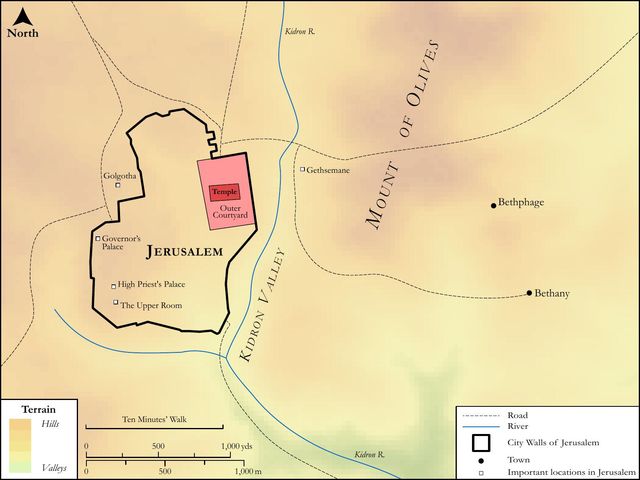
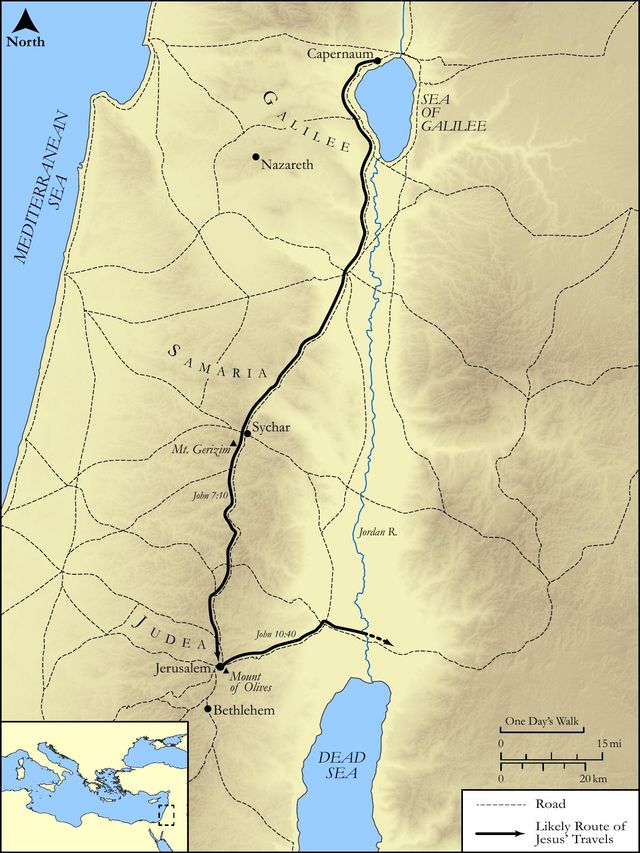
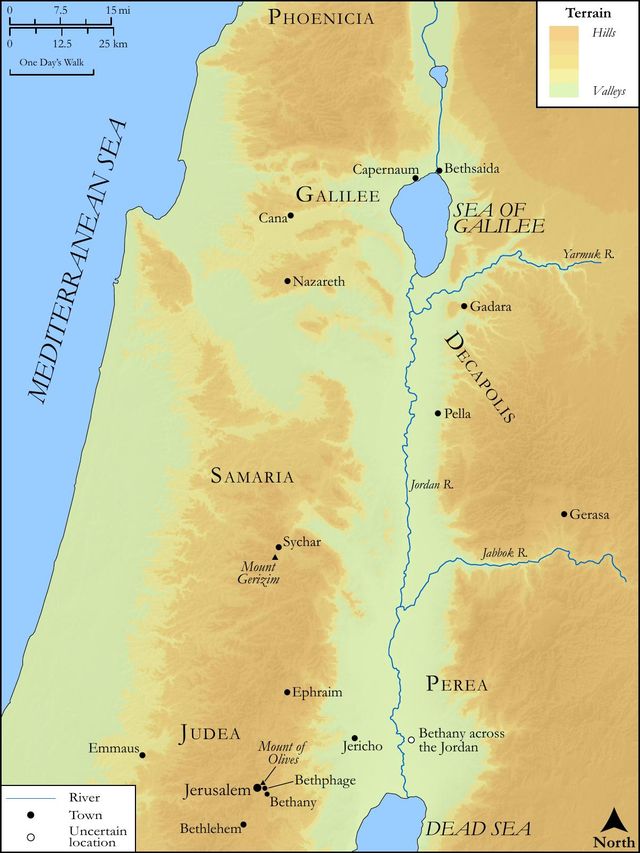
See on the biblical-era maps
Study this verse
Public-domain commentary
Matthew Henry
From his Commentary on the Whole Bible. Henry comments on passages, not single verses — this entry covers John 8:48–50. His four-level outline is real structure in the source text, so it is rendered as structure.
Here is, I. The malice of hell breaking out in the base language which the unbelieving Jews gave to our Lord Jesus. Hitherto they had cavilled at his doctrine, and had made invidious remarks upon it; but, having shown themselves uneasy when he complained (Joh 8:43, Joh 8:47) that they would not hear him, now at length they fall to downright railing, Joh 8:48. They were not the common people, but, as it should seem, the scribes and Pharisees, the men of consequence, who, when they saw themselves convicted of an obstinate infidelity, scornfully turned off the conviction with this: Say we not well that thou art a Samaritan, and hast a devil? See here, see it and wonder, see it and tremble,
1.What was the blasphemous character commonly given of our Lord Jesus among the wicked Jews, to which they refer.
(1.)That he was a Samaritan, that is, that he was an enemy to their church and nation, one that they hated and could not endure. Thus they exposed him to the ill will of the people, with whom you could not put a man into a worse name than to call him a Samaritan. If he had been a Samaritan, he had been punishable, by the beating of the rebels (as they called it), for coming into the temple. They had often enough called him a Galilean - a mean man; but as if that were not enough, though it contradicted the other, they will have him a Samaritan - a bad man. The Jews to this day call the Christians, in reproach, Cuthaei-Samaritans. Note, Great endeavours have in all ages been used to make good people odious by putting them under black characters, and it is easy to run that down with a crowd and a cry which is once put into an ill name. Perhaps because Christ justly inveighed against the pride and tyranny of the priests and elders, they hereby suggest that he aimed at the ruin of their church, in aiming at its reformation, and was falling away to the Samaritans.
(2.)That he had a devil. Either, [1.] That he was in league with the devil. Having reproached his doctrine as tending to Samaritanism, here they reflect upon his miracles as done in combination with Beelzebub. Or, rather [2.] That he was possessed with a devil, that he was a melancholy man, whose brain was clouded, or a mad man, whose brain was heated, and that which he said was no more to be believed than the extravagant rambles of a distracted man, or one in a delirium. Thus the divine revelation of those things which are above the discovery of reason have been often branded with the charge of enthusiasm, and the prophet was called a mad fellow, Kg2 9:11; Hos 9:7. The inspiration of the Pagan oracles and prophets was indeed a frenzy, and those that had it were for the time beside themselves; but that which was truly divine was not so. Wisdom is justified of her children, as wisdom indeed.
2.How they undertook to justify this character, and applied it to the present occasion: Say we not well that thou art so? One would think that his excellent discourses should have altered their opinion of him, and have made them recant; but, instead of this, their hearts were more hardened and their prejudices confirmed. They value themselves on their enmity to Christ, as if they had never spoken better than when they spoke the worst they could of Jesus Christ. Those have arrived at the highest pitch of wickedness who avow their impiety, repeat what they should retract, and justify themselves in that for which they ought to condemn themselves. It is bad to say and do ill, but it is worse to stand to it; I do well to be angry. When Christ spoke with so much boldness against the sins of the great men, and thereby incensed them against him, those who were sensible of no interest but what is secular and sensual concluded him beside himself, for they thought none but a madman would lose his preferment, and hazard his life, for his religion and conscience.
II.The meekness and mercifulness of Heaven shining in Christ's reply to this vile calumny, Joh 8:49, Joh 8:50.
1.He denies their charge against him: I have not a devil; as Paul (Act 26:25), I am not mad. The imputation is unjust; "I am neither actuated by a devil, nor in compact with one;" and this he evidenced by what he did against the devil's kingdom. He takes no notice of their calling him a Samaritan, because it was a calumny that disproved itself, it was a personal reflection, and not worth taking notice of: but saying he had a devil reflected on his commission, and therefore he answered that. St. Augustine gives this gloss upon his not saying any thing to their calling him a Samaritan - that he was indeed that good Samaritan spoken of in the parable, Luk 10:33.
2.He asserts the sincerity of his own intentions: But I honour my Father. They suggested that he took undue honours to himself, and derogated from the honour due to God only, both which he denies here, in saying that he made it his business to honour his Father, and him only. It also proves that he had not a devil; for, if he had, he would not honour God. Note, Those who can truly way that they make it their constant care to honour God are sufficiently armed against the censures and reproaches of men.
3.He complains of the wrong they did him by their calumnies: You do dishonour me. By this it appears that, as man, he had a tender sense of the disgrace and indignity done him; reproach was a sword in his bones, and yet he underwent it for our salvation. It is the will of God that all men should honour the Son, yet there are many that dishonour him; such a contradiction is there in the carnal mind to the will of God. Christ honoured his Father so as never man did, and yet was himself dishonoured so as never man was; for, though God has promised that those who honour him he will honour, he never promised that men should honour them.
4.He clears himself from the imputation of vain glory, in saying this concerning himself, Joh 8:50. See here,
(1.)His contempt of worldly honour: I seek not mine own glory. He did not aim at this in what he had said of himself or against his persecutors; he did not court the applause of men, nor covet preferment in the world, but industriously declined both. He did not seek his own glory distinct from his Father's, nor had any separate interest of his own. For men to search their own glory is not glory indeed (Pro 25:27), but rather their shame to be so much out in their aim. This comes in here as a reason why Christ made so light of their reproaches: "You do dishonour me, but cannot disturb me, shall not disquiet me, for I seek not my own glory." Note, Those who are dead to men's praise can safely bear their contempt.
(2.)His comfort under worldly dishonour: There is one that seeketh and judgeth. In two things Christ made it appear that he sought not his own glory; and here he tells us what satisfied him as to both.
[1.]He did not court men's respect, but was indifferent to it, and in reference to this he saith, "There is one that seeketh, that will secure and advance, my interest in the esteem and affections of the people, while I am in no care about it." Note, God will seek their honour that do not seek their own; for before honour is humility.
[2.]He did not revenge men's affronts, but was unconcerned at them, and in reference to this he saith, "There is one that judgeth, that will vindicate my honour, and severely reckon with those that trample upon it." Probably he refers here to the judgments that were coming upon the nation of the Jews for the indignities they did to the Lord Jesus. See Psa 37:13-15. I heard not, for thou wilt hear. If we undertake to judge for ourselves, whatever damage we sustain, our recompence is in our own hands; but if we be, as we ought to be, humble appellants and patient expectants, we shall find, to our comfort, there is one that judgeth.
Historical interpretation
Nine Centuries of Reception
9 surviving comments on this verse. Each one is dated, so this reads as a timeline rather than a list.
Select a marker to jump to its quote. Markers stagger vertically where authors wrote within a few decades of each other.
The statement “And you dishonor me” follows these words and is addressed to those who have dishonored him and said to him, “Are we not correct in saying that you are a Samaritan and have a demon?” They thought that their incorrect statement was correct. For they denounced the Savior because they thought incorrectly that he was a Samaritan and had a demon. But we must think that the statement “And you dishonor me” was made not only to those at that time but also to those who always dishonor him by what they do contrary to the upright word of God. It was made by those who dishonor Christ, who is justice, by the unjust things they do.… “You dishonor me” would also be said to anyone who despises wisdom, since Christ also is wisdom.
"Thou hast a devil," saith some one. Who is it that hath a devil? He that honoreth God, or he that insulteth Him that honoreth Him? What then saith Christ, who is very meekness and gentleness? "I have not a devil, but I honor Him that sent me." Where there was need to instruct them, to pull down their excessive insolence, to teach them not to be proud because of Abraham, He was vehement; but when it was needful that He being insulted should bear it, He used much gentleness. When they said, "We have God and Abraham for our Father," He touched them sharply; but when they called Him a demoniac, He spake submissively, thus teaching us to avenge insults offered to God, but to overlook such as are offered to ourselves.
(Hom. lv. 1) Whenever our Lord said any thing of lofty meaning, the Jews in their insensibility set it down madness: Then answered the Jews and said unto Him, Say we not well that Thou art a Samaritan, and hast a devil?
(Hom. lv. 1) And observe, when He had to teach them, and pull down their pride, He used roughness; but now that He has to suffer rebuke, He treats them with the utmost mildness: a lesson to us to be severe in what concerns God, but careless of ourselves.
(Hom. lv. 1) As if to say, I have told you thish on account of the honour which I have for My Father; and for this ye dishonour Me. But I concern not myself for your reviling: ye are accountable to Him, for whose sake I undergo it.
(Hom. lv. 1) He says, keep, i. e. not by faith, but by purity of life. And at the same time too He means it as a tacit intimation that they can do nothing to Him. For if whoever keepeth His word, shall never die, much less is it possible that He Himself should die.
Let us imitate him, since he also was an imitator of Christ. If he, with enemies, who went even to the length of murder and slaughter, said nothing offensive to them, what pardon shall we deserve, who in reviling and abuse become infuriated, calling our enemies villains, detestable wretches? Just as Christ also said: I have not a devil, but I honor My Father: but ye do dishonor Me.
(Tr. xliv. 1. 2) And to imitate His patience first, if we would attain to His power. But though being reviled, He reviled not again, it was incumbent on Him to deny the charge. Two charges had been made against Him: Thou art a Samaritan, and hast a devil. In reply He does not say, I am not a Samaritan: for Samaritan means keeper; and He knew He was a keeper: He could not redeem us, without at the same time preserving us. Lastly, He is the Samaritan, who went up to the wounded, and had compassion on him.
(Tr. xliii. 3) Then after being so reviled, all that He says to vindicate His glory, is, But I honour My Father: as if to say, That you may not think Me arrogant, I tell you, I have One, Whom I honour.
(Tr. xliii. 3) As if to say, I do my duty: ye do not do yours.
Gentle is the word, but nevertheless very pointed. For most emphatically does He say, I have not a devil, and putting Himself in contradistinction to them, He shows that He is free from their railing and that it is true of them. For unless themselves had a devil, they would (it is likely) have shuddered at calling Him possessed Who was attested to them by His Deeds as God. Most excellently therefore does He say, I have not, transferring the speech to them and allotting it rather to them by reason that so it was in truth. I therefore have not (He says) but YE the devil, and I honour My Father, saying that I am God and have beamed forth of God and affirming that I knew not sin. For it needed, it needed that He Who is of God be God and that He Who is of Him Who knoweth not sin should be beheld such as He of Whom He is. But if (as is necessary the opposite should be) refusing to offend you, I had not used such splendid language (for God would not be honoured if conceived of as having a Son not God) the Father (He says) would not have been honoured if He had been called the Father of one who falls into sin. Hence in witnessing most excellent things to Myself, I in no wise (He says) blaspheme as ye suppose, but rather honour My Father. I honour Him in another way too (for I say with justice of you that ye are not of God, since neither is it right that they who have come to this pitch of wickedness and are drenched in all villainy should say that they are of God. For He honours and deems worthy of kin to Him not the liar and railer and blasphemer and haughty and insolent, nor yet one whose wont it is to seek to kill unjustly, but the gentle and meek and pious and godly and good. Hence in this way too do I honour the Father, putting forth from kinness with Him those who are condemned for utter wickedness; and YE again dishonour Me doing this, and attack the praise that belongs to the Father that ye may be caught, blaspheming not only against the Son, but now against Him too. For if I by witnessing of Myself things most excellent, honour My Father, he will surely (He says) dishonour Him, who clothes Him That is of Him with the deepest reproaches. On all sides therefore is Christ consistent with His own words, and clearly shows that He is God by Nature, and whereby He says that the Father is honoured when the kinness to Him of the multitude of the unholy is thrust off, by this doth He say that the Jews are in all respects alien to God: for what more unholy than they who say those things?
(Hom. xviii. in Evang.) See; when God suffers a wrong, He does not reply reproachfully: Jesus answered, I have not a devil. An intimation this to us, that when reproached by our neighbours falsely, we should not retort upon them by bringing forward their evil deeds, however true such charges might be; lest the vehicle of a just rebuke turn into a weapon of rage.
(Hom. xliii. 3) As all who have zeal toward God are liable to meet with dishonour from wicked men, our Lord has Himself set us an example of patience under this trial; And ye do dishonour Me.
But having received such an insult, let us hear what the Lord responds: "I do not have a demon, but I honor my Father, and you have dishonored me." For since "Samaritan" is interpreted as "guardian," and he himself is truly the guardian of whom the Psalmist says: "Unless the Lord guards the city, in vain do those who guard it keep watch"; and to whom it is said through Isaiah: "Guardian, what of the night? Guardian, what of the night?" — the Lord did not wish to answer: "I am not a Samaritan"; but rather, "I do not have a demon." For indeed two things were charged against him: one he denied, the other he conceded by remaining silent. For he had come as the guardian of the human race; and if he had said that he was not a Samaritan, he would have denied that he was a guardian. But he kept silent about what he acknowledged, and patiently repelled what he heard falsely spoken, saying: "I do not have a demon." In these words, what else is confounded but our pride? For if it is provoked even slightly, it returns more savage injuries than it received: it does the evils it can, and threatens even those it cannot do. Behold, the Lord receiving an injury does not grow angry, does not answer with insulting words. If he had wished to respond to those saying these things: "You have a demon," he would certainly have spoken the truth, because unless they had been filled with a demon, they could not have spoken such perverse things about God. But having received the injury, Truth did not wish to say even what was true, lest he should seem not to have spoken truth, but to have returned insult when provoked. From this matter, what is suggested to us except that at the time when we receive insults from neighbors out of falsehood, we should also keep silent about their true evils, lest we turn the ministry of just correction into weapons of fury? But because whoever uses zeal for God is dishonored by wicked men, the Lord provided us an example of patience in himself, when he says: "But I honor my Father, and you have dishonored me."
He honoured the Father, by revenging Him, and not suffering murderers or liars to call themselves the true sons of God.
Continue studying John 8:49 across the web’s major study libraries — every link below opens this exact verse, chapter, or book on the destination site.
Read & Compare
 BibleGatewayThis verse in more than 200 translations and 70 languages.
 Bible.comThe YouVersion reader — hundreds of translations, reading plans, and highlights.
 ESV.orgCrossway's official English Standard Version reader.
 NET BibleThe NET translation with 60,000+ translators' notes on every rendering decision.
 STEP BibleTyndale House's free study tool — original text, vocabulary, and scholarly resources.
 BibliaLogos Bible Software's free web reader.
 USCCBThe New American Bible (Revised Edition) with the U.S. bishops' study notes.
Commentaries
 BibleHub CommentariesDozens of classic commentaries on this verse, gathered on one page.
 StudyLightMore than 100 commentary sets — the largest collection on the web.
 BibleRefPlain-English commentary on what this verse means, verse by verse.
 Enduring WordDavid Guzik's free commentary on this chapter, widely used by Bible teachers.
 Bible Study ToolsVerse commentary alongside Greek and Hebrew study aids.
Original Language & Research
- BibleHub InterlinearThe verse word by word — original language, transliteration, and English.
- BibleHub LexiconEvery word's original-language definition and Strong's entry.
 Blue Letter BibleDeep-study tools — Strong's numbers, concordance, and word studies.
 CNTR CollationThe earliest Greek manuscripts of this verse, collated letter by letter.
Sermons, Hymns & Audio


TrulyRandomVerse is not affiliated with these sites and doesn’t control their content. They’re linked because they’re genuinely useful.
Summary
In John 8:49, Jesus directly refutes the slanderous accusation of being demon-possessed, emphatically stating that He does not have a devil. Instead, He declares His profound commitment to honoring God the Father, while simultaneously highlighting the profound dishonor His Jewish adversaries are inflicting upon Him through their rejection and false accusations. This verse encapsulates the core conflict between divine truth and human unbelief, revealing Jesus's unwavering devotion to His Father amidst escalating hostility.
Context
ShowHideLiterary Context
This verse is situated within one of the most intense and protracted debates between Jesus and the Jewish leaders recorded in the Gospel of John, specifically in John chapter 8. The discussion begins with Jesus's declaration as the "light of the world" (John 8:12), leading to a series of exchanges concerning His origin, authority, and relationship with God. The tension escalates as Jesus exposes their spiritual blindness and their true spiritual father (John 8:44). Immediately preceding John 8:49, the Jewish leaders hurl a dual insult at Jesus, declaring, "Thou art a Samaritan, and hast a devil" (John 8:48). Jesus's response in John 8:49 is a direct, dignified, and truthful rebuttal to this grave accusation, underscoring the spiritual chasm between them.
Historical & Cultural Context
The accusation of being a "Samaritan" was a profound insult, implying Jesus was a religious outsider, a heretic, and racially impure, as Jews typically despised Samaritans. The charge of "having a devil" (or being demon-possessed) was even more severe, suggesting madness, moral depravity, or that His miracles were powered by evil forces, thereby invalidating His claims and teachings. This was a common tactic used by opponents to discredit prophets or religious figures whose teachings challenged the established order. The setting is likely the temple courts in Jerusalem during the Feast of Tabernacles, a time of heightened religious fervor and public discourse, where Jesus's bold claims would naturally provoke strong reactions from the religious authorities who perceived Him as a threat to their authority and traditions. Their dishonor of Jesus was rooted in their inability to recognize God's work through Him, a failure often stemming from spiritual pride and a misinterpretation of messianic expectations.
Key Themes
ShowHideJohn 8:49 contributes significantly to several key themes prevalent in the Gospel of John. Firstly, it highlights the theme of Truth vs. Lies, as Jesus, who is "the way, the truth, and the life" (John 14:6), refutes the false accusations with clear, undeniable truth. Secondly, the verse underscores Jesus's Unique Relationship with the Father, emphasizing His singular purpose to honor God, a relationship that is foundational to His identity and mission throughout the Gospel, as seen in His declaration that He and the Father are one (John 10:30). Thirdly, it brings to the forefront the theme of Honor and Dishonor, contrasting Jesus's perfect honor for God with the profound dishonor He receives from those who reject Him. This rejection is not merely personal but a rejection of God who sent Him, as Jesus states elsewhere, "He that honoureth not the Son honoureth not the Father which hath sent him" (John 5:23). Finally, the verse speaks to the Spiritual Blindness and Hostility of those who oppose Jesus, revealing their inability to perceive divine truth and their alignment with a spirit of falsehood, previously described by Jesus as having "the devil as your father" (John 8:44).
Exposition and Analysis
ShowHideKey Word Analysis
ShowHideThis term, a neuter derivative of daimōn, refers to a demonic being or, by extension, a deity. In this context, it specifically denotes an evil spirit or demon. The accusation "I have not a devil" implies that Jesus is not insane, not possessed by an evil spirit, and that His power and teachings do not originate from malevolent forces. This was a grave charge, meant to discredit Him entirely by associating Him with the powers of darkness.
Derived from tímios (precious, valued), this verb means to prize, to fix a valuation upon, or by implication, to revere. Jesus's statement "I honour my Father" signifies His deep reverence, esteem, and valuing of God the Father. This honor is demonstrated not merely in words but in His perfect obedience, His unwavering commitment to doing the Father's will, and His glorification of the Father through His life and ministry. It speaks to the profound unity and shared purpose within the Godhead.
Formed from átimos (without honor, disgraced), this verb means to render infamous, to contemn, or to maltreat. When Jesus states "ye do dishonour me," He is pointing out that His adversaries are treating Him shamefully, disrespectfully, and devaluing His person and His message. Their rejection, insults, and refusal to believe His words are not just an attack on Him personally, but a profound disrespect for the truth He embodies and for God who sent Him. This dishonor reveals their spiritual blindness and their unwillingness to acknowledge God's work through His Son.
Verse Breakdown
ShowHide"Jesus answered, I have not a devil"
Jesus directly and unequivocally refutes the slanderous accusation made by the Jewish leaders in the preceding verse. The charge of being demon-possessed was a severe one, implying He was either mad or empowered by evil forces. Jesus's calm and truthful denial stands in stark contrast to the baseless fury of His accusers, asserting His sanity, divine origin, and the pure source of His authority and power. He is not controlled by any malevolent entity; rather, He is fully aligned with God.
"but I honour my Father"
This clause presents a powerful contrast to the false accusation. Instead of being under the influence of a demon, Jesus declares that His entire being and ministry are devoted to honoring God the Father. This honor is not a mere verbal affirmation but is demonstrated through His perfect obedience, His words, and His actions, all of which are aimed at glorifying the Father. This statement underscores the profound unity and shared purpose between Jesus and the Father, a central theme in John's Gospel. It reveals the true motivation and source of Jesus's life and work.
"and ye do dishonour me"
In stark opposition to His own reverence for God, Jesus points out the profound disrespect and contempt shown by His opponents. Their rejection of His claims, their insults, and their refusal to believe His words constitute a deep dishonor to Him. This dishonor is not merely a personal affront but a spiritual offense, as it is a rejection of the truth and of God who sent Him. This statement exposes their spiritual blindness and their unwillingness to acknowledge the divine work being performed through Jesus, revealing the tragic irony that while He honors God, they dishonor God's Son.
Literary Devices
ShowHideJohn 8:49 is rich in literary devices that amplify its theological impact. The most prominent is Contrast, which is central to Jesus's response. He contrasts the false accusation ("I have not a devil") with His true purpose ("but I honour my Father"), and then contrasts His own honor for God with the dishonor He receives from His adversaries ("and ye do dishonour me"). This stark juxtaposition highlights the fundamental spiritual divide between Jesus and His opponents. There is also a strong element of Assertion/Declaration, as Jesus makes a definitive statement about His identity and mission ("I have not a devil; but I honour my Father") and then a direct accusation against His interlocutors ("and ye do dishonour me"). This declarative tone conveys authority and truthfulness. Furthermore, there is Irony in the situation: Jesus, who perfectly honors God, is accused of being demon-possessed by those who claim to honor God, yet are in fact dishonoring God's Son. This highlights their spiritual blindness and hypocrisy.
Theological and Thematic Connections
ShowHideJohn 8:49 serves as a pivotal statement in the ongoing theological drama of John's Gospel, revealing the profound chasm between divine truth and human unbelief. Jesus's unwavering commitment to honoring the Father, even in the face of vicious slander, underscores His perfect Sonship and His complete alignment with God's will. This honor is the very essence of His mission, demonstrating that His life, words, and works are entirely for the Father's glory. Conversely, the dishonor Jesus receives from His adversaries is not merely a personal slight but a profound spiritual rejection of God Himself, as to reject the Son is to reject the Father who sent Him. This highlights the severe consequences of spiritual blindness and the hardening of hearts against divine revelation. The verse powerfully articulates the core conflict: Jesus embodies truth and honor for God, while His opponents embody falsehood and dishonor toward God's ultimate revelation.
Reflection and Application
ShowHideJohn 8:49 offers profound lessons for believers navigating a world often hostile to truth. Jesus's response to slander provides a powerful model for how we should conduct ourselves when faced with false accusations or unwarranted criticism. He does not descend into retaliatory insults or emotional outbursts but calmly and truthfully addresses the charge, redirecting the focus to His ultimate purpose: honoring God. This teaches us the importance of maintaining integrity and a clear conscience, trusting that God is the ultimate judge and vindicator. Furthermore, the verse challenges us to examine our own lives: are we living in a way that truly honors God the Father, as Jesus did? Our words, actions, and priorities should reflect a deep reverence and esteem for Him. When we face rejection or misunderstanding for our faith, this passage reminds us that such experiences are not new; Jesus Himself endured profound dishonor. This can strengthen our resolve, knowing that our suffering for Christ's sake aligns us with His own experience, and that ultimately, our vindication rests with God.
Questions for Reflection
ShowHideFAQ
ShowHideWhy did the Jewish leaders accuse Jesus of having a devil?
ShowHideThe accusation of "having a devil" (John 8:48) was a severe charge used by the Jewish leaders to discredit Jesus and dismiss His teachings. It implied that He was either insane, morally corrupt, or that His power and miracles came from evil forces rather than from God. This was a common tactic against those who challenged established religious authority, aiming to invalidate their claims and influence. They could not refute His wisdom or miracles directly, so they resorted to character assassination, attributing His extraordinary abilities to demonic influence rather than divine power. This accusation reveals their spiritual blindness and their refusal to acknowledge Jesus's true identity and divine origin.
What does it mean for Jesus to "honour my Father"?
ShowHideFor Jesus to "honour my Father" means that His entire life, ministry, words, and actions were dedicated to glorifying God the Father. This honor was not merely verbal but manifested through perfect obedience to the Father's will, a complete alignment with His purposes, and a constant desire to reveal the Father's character and love to humanity. Jesus consistently taught that He did nothing of Himself but only what He saw the Father doing (John 5:19). His honor for the Father was the driving force behind His mission, culminating in His ultimate sacrifice, which brought the greatest glory to God (John 17:4).
Christ-Centered Fulfillment
ShowHideJohn 8:49 profoundly illuminates the person and work of Christ, revealing His perfect humanity and divine integrity in the face of ultimate opposition. Jesus's calm denial of demonic possession and His unwavering declaration of honoring the Father underscore His unique Sonship and His complete alignment with God's will. This honor culminates in His atoning work on the cross, where He perfectly obeyed the Father even to death, thereby bringing ultimate glory to God (Philippians 2:8). The "dishonor" Jesus receives foreshadows His rejection, suffering, and crucifixion, yet it is through this very dishonor that God's redemptive plan is fulfilled, leading to Jesus's ultimate exaltation (Philippians 2:9-11). His steadfastness in the face of slander exemplifies the sinless Lamb of God, who, "when he was reviled, reviled not again" (1 Peter 2:23), taking upon Himself the dishonor of humanity's sin to reconcile us to the Father. Thus, John 8:49 points forward to Christ's complete triumph over evil and His vindication as the Son who perfectly honored the Father, securing salvation for all who believe.