


John 8:43
- διὰdiaBecause ofG1223PREPPreposition
- τίtiwhyG5101I-ASNInterrogative pronoun Accusative Singular Neuter
- τὴνtēntheG3588T-ASFDefinite article Accusative Singular Feminine
- λαλιὰνlalianspeechG2981N-ASFNoun Accusative Singular Feminine
- τὴνtēn<the>G3588T-ASFDefinite article Accusative Singular Feminine
- ἐμὴνemēnof MineG1473S-1SASFPossessive pronoun Accusative 1st Person Singular Feminine
- οὐounotG3756PRT-NNegative Particle Negative
- γινώσκετε;ginōsketedo you understand?G1097V-PAI-2PVerb Present Active Indicative 2nd Plural
- ὅτιhotiBecauseG3754CONJConjunction
- οὐounotG3756PRT-NNegative Particle Negative
- δύνασθεdunastheyou are ableG1410V-PNI-2PVerb Present Middle Or Passive Deponent Indicative 2nd Plural
- ἀκούεινakoueinto hearG191V-PANVerb Present Active Infinitive
- τὸνtontheG3588T-ASMDefinite article Accusative Singular Masculine
- λόγονlogonwordG3056N-ASMNoun Accusative Singular Masculine
- τὸνton<the>G3588T-ASMDefinite article Accusative Singular Masculine
- ἐμόνemonof MineG1473S-1SASMPossessive pronoun Accusative 1st Person Singular Masculine
English is a literal word-by-word gloss of the Greek, not the KJV's wording. Why?
This is the original text the KJV's translators worked from — each Greek word with its own literal English meaning in this verse, prepared by scholars at Tyndale House, Cambridge. The KJV translates whole sentences, not word by word, so its wording differs: one Greek word can become several English words, and the KJV may choose “charity” where the gloss reads “love”. Both are faithful — they answer different questions. For the KJV's own rendering, switch to the KJV text.
Details
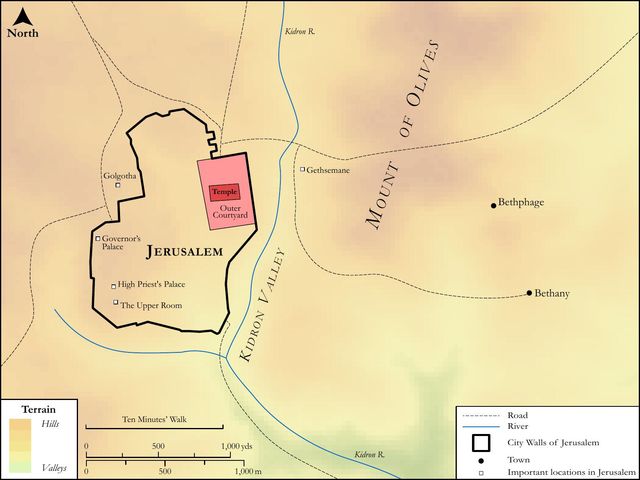
See on the biblical-era maps


Study this verse
Public-domain commentary
Matthew Henry
From his Commentary on the Whole Bible. Henry comments on passages, not single verses — this entry covers John 8:38–47. His four-level outline is real structure in the source text, so it is rendered as structure.
Here Christ and the Jews are still at issue; he sets himself to convince and convert them, while they still set themselves to contradict and oppose him.
I.He here traces the difference between his sentiments and theirs to a different rise and origin (Joh 8:38):
I speak that which I have seen with my Father, and you do what you have seen with your father. Here are two fathers spoken of, according to the two families into which the sons of men are divided - God and the devil, and without controversy these are contrary the one to the other.
1.Christ's doctrine was from heaven; it was copied out of the counsels of infinite wisdom, and the kind intentions of eternal love.
(1.)I speak that which I have seen. The discoveries Christ has made to us of God and another world are not grounded upon guess and hearsay, but upon ocular inspection; so that he was thoroughly apprized of the nature, and assured of the truth, of all he said. He that is given to be a witness to the people is an eye-witness, and therefore unexceptionable.
(2.)It is what I have seen with my Father. The doctrine of Christ is not a plausible hypothesis, supported by probable arguments, but it is an exact counterpart of the incontestable truths lodged in the eternal mind. It was not only what he had heard from his Father, but what he had seen with him when the counsel of peace was between them both. Moses spoke what he heard from God, but he might not see the face of God; Paul had been in the third heaven, but what he had seen there he could not, he must not, utter; for it was Christ's prerogative to have seen what he spoke, and to speak what he had seen.
2.Their doings were from hell: "You do that which you have seen with your father. You do, by your own works, father yourselves, for it is evident whom you resemble, and therefore easy to find out your origin." As a child that is trained up with his father learns his father's words and fashions, and grows like him by an affected imitation as well as by a natural image, so these Jews, by their malicious opposition to Christ and the gospel, made themselves as like the devil as if they had industriously set him before them for their pattern.
II.He takes off and answers their vain-glorious boasts of relation to Abraham and to God as their fathers, and shows the vanity and falsehood of their pretensions.
1.They pleaded relation to Abraham, and he replies to this plea. They said, Abraham is our father, Joh 8:39. In this they intended,
(1.)To do honour to themselves, and to make themselves look great. They had forgotten the mortification given them by that acknowledgement prescribed them (Deu 26:5), A Syrian ready to perish was my father; and the charge exhibited against their degenerate ancestors (whose steps they trod in, and not those of the first founder of the family), Thy father was an Amorite, and thy mother a Hittite, Eze 16:3. As it is common for those families that are sinking and going to decay to boast most of their pedigree, so it is common for those churches that are corrupt and depraved to value themselves upon their antiquity and the eminence of their first planters. Fuimus Troes, fuit Ilium - We have been Trojans, and there once was Troy.
(2.)They designed to cast an odium upon Christ as if he reflected upon the patriarch Abraham, in speaking of their father as one they had learned evil from. See how they sought an occasion to quarrel with him. Now Christ overthrows this plea, and exposes the vanity of it by a plain and cogent argument: "Abraham's children will do the works of Abraham, but you do not do Abraham's works, therefore you are not Abraham's children."
[1.]The proposition is plain: "If you were Abraham's children, such children of Abraham as could claim an interest in the covenant made with him and his seed, which would indeed put an honour upon you, then you would do the works of Abraham, for to those only of Abraham's house who kept the way of the Lord, as Abraham did, would God perform what he had spoken," Gen 18:19. Those only are reckoned the seed of Abraham, to whom the promise belongs, who tread in the steps of his faith and obedience, Rom 4:12. Though the Jews had their genealogies, and kept them exact, yet they could not by them make out their relation to Abraham, so as to take the benefit of the old entail (performam doni - according to the form of the gift), unless they walked in the same spirit; good women's relation to Sarah is proved only by this - whose daughters you are as long as you do well, and no longer, Pe1 3:6. Note, Those who would approve themselves Abraham's seed must not only be of Abraham's faith, but do Abraham's works (Jam 2:21, Jam 2:22), - must come at God's call, as he did, - must resign their dearest comforts to him, - must be strangers and sojourners in this world, - must keep up the worship of God in their families, and always walk before God in their uprightness; for these were the works of Abraham.
[2.]The assumption is evident likewise: But you do not do the works of Abraham, for you seek to kill me, a man that has told you the truth, which I have heard of God; this did not Abraham, Joh 8:40.
First, He shows them what their work was, their present work, which they were now about; they sought to kill him; and three things are intimated as an aggravation of their intention: - 1. They were so unnatural as to seek the life of a man, a man like themselves, bone of their bone, and flesh of their flesh, who had done them no harm, nor given them any provocation. You imagine mischief against a man, Psa 62:3. 2. They were so ungrateful as to seek the life of one who had told them the truth, had not only done them no injury, but had done them the greatest kindness that could be; had not only not imposed upon them with a lie, but had instructed them in the most necessary and important truths; was he therefore become their enemy? 3. They were so ungodly as to seek the life of one who told them the truth which he had heard from God, who was a messenger sent from God to them, so that their attempt against him was quasi deicidium - an act of malice against God. This was their work, and they persisted in it.
Secondly, He shows them that this did not become the children of Abraham; for this did not Abraham. 1. "He did nothing like this." He was famous for his humanity, witness his rescue of the captives; and for his piety, witness his obedience to the heavenly vision in many instances, and some tender ones. Abraham believed God; they were obstinate in unbelief: Abraham followed God; they fought against him; so that he would be ignorant of them, and would not acknowledge them, they were so unlike him, Isa 63:16. See Jer 22:15-17. 2. "He would not have done thus if he had lived now, or I had lived then." Hoc Abraham non fecisset - He would not have done this; so some read it. We should thus reason ourselves out of any way of wickedness; would Abraham, and Isaac, and Jacob have done so? We cannot expect to be ever with them, if we be never like them.
[3.]The conclusion follows of course (Joh 8:41): "Whatever your boasts and pretensions be, you are not Abraham's children, but father yourselves upon another family (Joh 8:41); there is a father whose deeds you do, whose spirit you are of, and whom you resemble." He does not yet say plainly that he means the devil, till they by their continued cavils forced him so to explain himself, which teaches us to treat even bad men with civility and respect, and not to be forward to say that of them, or to them, which, though true, sounds harsh. He tried whether they would suffer their own consciences to infer from what he said that they were the devil's children; and it is better to hear it from them now that we are called to repent, that is, to change our father and change our family, by changing our spirit and way, than to hear it from Christ in the great day.
2.So far were they from owning their unworthiness of relation to Abraham that they pleaded relation to God himself as their Father: "We are not born of fornication, we are not bastards, but legitimate sons; we have one Father, even God."
(1.)Some understand this literally. They were not the sons of the bondwoman, as the Ishmaelites were; nor begotten in incest, as the Moabites and Ammonites were (Deu 23:3); nor were they a spurious brood in Abraham's family, but Hebrews of the Hebrews; and, being born in lawful wedlock, they might call God Father, who instituted that honourable estate in innocency; for a legitimate seed, not tainted with divorces nor the plurality of wives, is called a seed of God, Mal 2:15.
(2.)Others take it figuratively. They begin to be aware now that Christ spoke of a spiritual not a carnal father, of the father of their religion; and so,
[1.]They deny themselves to be a generation of idolaters: "We are not born of fornication, are not the children of idolatrous parents, nor have been bred up in idolatrous worships." Idolatry is often spoken of as spiritual whoredom, and idolaters as children of whoredoms, Hos 2:4; Isa 57:3. Now, if they meant that they were not the posterity of idolaters, the allegation was false, for no nation was more addicted to idolatry than the Jews before the captivity; if they meant no more than that they themselves were not idolaters, what then? A man may be free from idolatry, and yet perish in another iniquity, and be shut out of Abraham's covenant. If thou commit no idolatry (apply it to this spiritual fornication), yet if thou kill thou art become a transgressor of the covenant. A rebellious prodigal son will be disinherited, though he be not born of fornication.
[2.]They boast themselves to be true worshippers of the true God. We have not many fathers, as the heathens had, gods many and lords many, and yet were without God, as filius populi - a son of the people, has many fathers and yet none certain; no, the Lord our God is one Lord and one Father, and therefore it is well with us. Note, Those flatter themselves, and put a damning cheat upon their own souls, who imagine that their professing the true religion and worshipping the true God will save them, though they worship not God in spirit and in truth, nor are true to their profession. Now our Saviour gives a full answer to this fallacious plea (Joh 8:42, Joh 8:43), and proves, by two arguments, that they had no right to call God Father.
First, They did not love Christ: If God were your Father, you would love me. He had disproved their relation to Abraham by their going about to kill him (Joh 8:40), but here he disproves their relation to God by their not loving and owning him. A man may pass for a child of Abraham if he do not appear an enemy to Christ by gross sin; but he cannot approve himself a child of God unless he be a faithful friend and follower of Christ. Note, All that have God for their Father have a true love to Jesus Christ, and esteem of his person, a grateful sense of his love, a sincere affection to his cause and kingdom, a complacency in the salvation wrought out by him and in the method and terms of it, and a care to keep his commandments, which is the surest evidence of our love to him. We are here in a state of probation, upon our trial how we will conduct ourselves towards our Maker, and accordingly it will be with us in the state of retribution. God has taken various methods to prove us, and this was one: he sent his Son into the world, with sufficient proofs of his sonship and mission, concluding that all that called him Father would kiss his Son, and bid him welcome who was the first-born among many brethren; see Jo1 5:1. By this our adoption will be proved or disproved - Did we love Christ, or no? If any man do not, he is so far from being a child of God that he is anathema, accursed, Co1 16:22. Now our Saviour proves that if they were God's children they would love him; for, saith he, I proceeded forth and came from God. They will love him; for, 1. He was the Son of God: I proceeded forth from God. Exēlthon this means his divine exeleusis, or origin from the Father, by the communication of the divine essence, and also the union of the divine logos to his human nature; so Dr. Whitby. Now this could not but recommend him to the affections of all that were born of God. Christ is called the beloved, because, being the beloved of the Father, he is certainly the beloved of all the saints, Eph 1:6. 2. He was sent of God, came from him as an ambassador to the world of mankind. He did not come of himself, as the false prophets, who had not either their mission or their message from God, Jer 23:21. Observe the emphasis he lays upon this: I came from God; neither came I of myself, but he sent me. He had both his credentials and his instructions from God; he came to gather together in one the children of God (Joh 11:51), to bring many sons to glory, Heb 2:10. And would not all God's children embrace with both arms a messenger sent from their Father on such errands? But these Jews made it appear that they were nothing akin to God, by their want of affection to Jesus Christ.
Secondly, They did not understand him. It was a sign they did not belong to God's family that they did not understand the language and dialect of the family: You do not understand my speech (Joh 8:43), tēn lalian tēn emēn. Christ's speech was divine and heavenly, but intelligible enough to those that were acquainted with the voice of Christ in the Old Testament. Those that had made the word of the Creator familiar to them needed no other key to the dialect of the Redeemer; and yet these Jews make strange of the doctrine of Christ, and find knots in it, and I know not what stumbling stones. Could a Galilean be known by his speech? An Ephraimite by his sibboleth? And would any have the confidence to call God Father to whom the Son of God was a barbarian, even when he spoke the will of God in the words of the Spirit of God? Note, Those who are not acquainted with the divine speech have reason to fear that they are strangers to the divine nature. Christ spoke the words of God (Joh 3:34) in the dialect of the kingdom of God; and yet they, who pretended to belong to the kingdom, understood not the idioms and properties of it, but like strangers, and rude ones too, ridiculed it. And the reason why they did not understand Christ's speech made the matter much worse: Even because you cannot hear my word, that is, "You cannot persuade yourselves to hear it attentively, impartially, and without prejudice, as it should be heard." The meaning of this cannot is an obstinate will not; as the Jews could not hear Stephen (Act 7:57) nor Paul, Act 23:22. Note, The rooted antipathy of men's corrupt hearts to the doctrine of Christ is the true reason of their ignorance of it, and of their errors and mistakes about it. They do not like it nor love it, and therefore they will not understand it; like Peter, who pretended he knew not what the damsel said (Mat 26:70), when in truth he knew not what to say to it. You cannot hear my words, for you have stopped your ears (Psa 58:4, Psa 58:5), and God, in a way of righteous judgment, has made your ears heavy, Isa 6:10.
III.Having thus disproved their relation both to Abraham and to God, he comes next to tell them plainly whose children they were:
You are of your father the devil, Joh 8:44. If they were not God's children, they were the devil's, for God and Satan divide the world of mankind; the devil is therefore said to work in the children of disobedience, Eph 2:2. All wicked people are the devil's children, children of Belial (Co2 6:15), the serpent's seed (Gen 3:15), children of the wicked one, Mat 13:38. They partake of his nature, bear his image, obey his commands, and follow his example. Idolaters said to a stock, Thou art our father, Jer 2:27.
This is a high charge, and sounds very harsh and horrid, that any of the children of men, especially the church's children, should be called children of the devil, and therefore our Saviour fully proves it.
1.By a general argument: The lusts of your father you will do, thelete poiein. (1.) "You do the devil's lusts, the lusts which he would have you to fulfil; you gratify and please him, and comply with his temptation, and are led captive by him at his will: nay, you do those lusts which the devil himself fulfils." Fleshly lusts and worldly lusts the devil tempts men to; but, being a spirit, he cannot fulfil them himself. The peculiar lusts of the devil are spiritual wickedness; the lusts of the intellectual powers, and their corrupt reasonings; pride and envy, and wrath and malice; enmity to that which is good, and enticing others to that which is evil; these are lusts which the devil fulfils, and those who are under the dominion of these lusts resemble the devil, as the child does the parent. The more there is of contemplation, and contrivance, and secret complacency, in sin, the more it resembles the lusts of the devil. (2.) You will do the devil's lusts. The more there is of the will in these lusts, the more there is of the devil in them. When sin is committed of choice and not by surprise, with pleasure and not with reluctancy, when it is persisted in with a daring presumption and a desperate resolution, like theirs that said, We have loved strangers and after them we will go, then the sinner will do the devil's lusts. "The lusts of your father you delight to do;" so Dr. Hammond; they are rolled under the tongue as a sweet morsel.
2.By two particular instances, wherein they manifestly resembled the devil - murder and lying. The devil is an enemy to life, because God is the God of life and life is the happiness of man; and an enemy to truth, because God is the God of truth and truth is the bond of human society.
(1.)He was a murderer from the beginning, not from his own beginning, for he was created an angel of light, and had a first estate which was pure and good, but from the beginning of his apostasy, which was soon after the creation of man. He was anthrōpoktonos - homicida, a man-slayer.
[1.]He was a hater of man, and so in affection an disposition a murderer of him. He has his name, Satan, from sitnah - hatred. He maligned God's image upon man, envied his happiness, and earnestly desired his ruin, was an avowed enemy to the whole race.
[2.]He was man's tempter to that sin which brought death into the world, and so he was effectually the murderer of all mankind, which in Adam had but one neck. He was a murderer of souls, deceived them into sin, and by it slew them (Rom 7:11), poisoned man with the forbidden fruit, and, to aggravate the matter, made him his own murderer. Thus he was not only at the beginning, but from the beginning, which intimates that thus he has been ever since; as he began, so he continues, the murderer of men by his temptations. The great tempter is the great destroyer. The Jews called the devil the angel of death.
[3.]He was the first wheel in the first murder that ever was committed by Cain, who was of that wicked one, and slew his brother, Jo1 3:12. If the devil had not been very strong in Cain, he could not have done such an unnatural thing as to kill his own brother. Cain killing his brother by the instigation of the devil, the devil is called the murderer, which does not speak Cain's personal guilt the less, but the devil's the more, whose torments, we have reason to think, will be the greater, when the time comes, for all that wickedness into which he has drawn men. See what reason we have to stand upon our guard against the wiles of the devil, and never to hearken to him (for he is a murderer, and certainly aims to do us mischief, even when he speaks fair), and to wonder that he who is the murderer of the children of men should yet be, by their own consent, so much their master. Now herein these Jews were followers of him, and were murderers, like him; murderers of souls, which they led blindfold into the ditch, and made the children of hell; sworn enemies of Christ, and now ready to be his betrayers and murderers, for the same reason that Cain killed Abel. These Jews were that seed of the serpent that were to bruise the heel of the seed of the woman; Now you seek to kill me.
(2.)He was a liar. A lie is opposed to truth (Jo1 2:21), and accordingly the devil is here described to be,
[1.]An enemy to truth, and therefore to Christ. First, He is a deserter, from the truth; he abode not in the truth, did not continue in the purity and rectitude of his nature wherein he was created, but left his first state; when he degenerated from goodness, he departed from truth, for his apostasy was founded in a lie. The angels were the hosts of the Lord; those that fell were not true to their commander and sovereign, they were not to be trusted, being charged with folly and defection, Job 4:18. By the truth here we may understand the revealed will of God concerning the salvation of man by Jesus Christ, the truth which Christ was now preaching, and which the Jews opposed; herein they did like their father the devil, who, seeing the honour put upon the human nature in the first Adam, and foreseeing the much greater honour intended in the second Adam, would not be reconciled to that counsel of God, nor stand in the truth concerning it, but, from a spirit of pride and envy, set himself to resist it, and to thwart the designs of it; and so did these Jews here, as his children and agents. Secondly, He is destitute of the truth: There is no truth in him. His interest in the world is supported by lies and falsehoods, and there is no truth, nothing you can confide in, in him, nor in any thing he says or does. The notions he propagates concerning good and evil are false and erroneous, his proofs are lying wonders, his temptations are all cheats; he has great knowledge of the truth, but having no affection to it, but on the contrary being a sworn enemy to it, he is said to have no truth in him.
[2.]He is a friend and patron of lying: When he speaketh a lie he speaketh of his own. Three things are here said of the devil with reference to the sin of lying: - First, That he is a liar; his oracles were lying oracles, his prophets lying prophets, and the images in which he was worshipped teachers of lies. He tempted our first parents with a downright lie. All his temptations are carried on by lies, calling evil good and good evil, and promising impunity in sin; he knows them to be lies, and suggests them with an intention to deceive, and so to destroy. When he now contradicted the gospel, in the scribes and Pharisees, it was by lies; and when afterwards he corrupted it, in the man of sin, it was by strong delusions, and a great complicated lie. Secondly, That when he speaks a lie he speaks of his own, ek tōn idiōn. It is the proper idiom of his language; of his own, not of God; his Creator never put it into him. When men speak a lie they borrow it from the devil, Satan fills their hearts to lie (Act 5:3); but when the devil speaks a lie the model of it is of his own framing, the motives to it are from himself, which bespeaks the desperate depth of wickedness into which those apostate spirits are sunk; as in their first defection they had no tempter, so their sinfulness is still their own. Thirdly, That he is the father of it, autou. 1. He is the father of every lie; not only of the lies which he himself suggests, but of those which others speak; he is the author and founder of all lies. When men speak lies, they speak from him, and as his mouth; they come originally from him, and bear his image. 2. He is the father of every liar; so it may be understood. God made men with a disposition to truth. It is congruous to reason and natural light, to the order of our faculties and the laws of society, that we should speak truth; but the devil, the author of sin, the spirit that works in the children of disobedience, has so corrupted the nature of man that the wicked are said to be estranged from the womb, speaking lies (Psa 58:3); he has taught them with their tongues to use deceit, Rom 3:13. He is the father of liars, who begat them, who trained them up in the way of lying, whom they resemble and obey, and with whom all liars shall have their portion for ever.
IV.Christ, having thus proved all murderers and all liars to be the devil's children, leaves it to the consciences of his hearers to say, Thou art the man. But he comes in the following verses to assist them in the application of it to themselves; he does not call them liars, but shows them that they were no friends to truth, and therein resembled him who abode not in the truth, because there is no truth in him. Two things he charges upon them: -
1.That they would not believe the word of truth (Joh 8:45), hoti tēn alētheian legō, ou pisteuete moi.
(1.)Two ways it may be taken; - [1.] "Though I tell you the truth, yet you will not believe me (hoti), that I do so." Though he gave abundant proof of his commission from God, and his affection to the children of men, yet they would not believe that he told them the truth. Now was truth fallen in the street, Isa 59:14, Isa 59:15. The greatest truths with some gained not the least credit; for they rebelled against the light, Job 24:13. Or, [2.] Because I tell you the truth (so we read it) therefore you believe me not. They would not receive him, nor entertain him as a prophet, because he told them some unpleasing truths which they did not care to hear, told them the truth concerning themselves and their own case, showed them their faces in a glass that would not flatter them; therefore they would not believe a word he said. Miserable is the case of those to whom the light of divine truth is become a torment.
(2.)Now, to show them the unreasonableness of their infidelity, he condescends to put the matter to this fair issue, Joh 8:46. He and they being contrary, either he was in an error or they were. Now take it either way.
[1.]If he were in an error, why did they not convince him? The falsehood of pretended prophets was discovered either by the ill tendency of their doctrines (Deu 13:2), or by the ill tenour of their conversation: You shall know them by their fruits; but (saith Christ) which of you, you of the sanhedrim, that take upon you to judge of prophets, which of you convinceth me of sin? They accused him of some of the worst of crimes - gluttony, drunkenness, blasphemy, sabbath-breaking, confederacy with Satan, and what not. But their accusations were malicious groundless calumnies, and such as every one that knew him knew to be utterly false. When they had done their utmost by trick and artifice, subornation and perjury, to prove some crime upon him, the very judge that condemned him owned he found no fault in him. The sin he here challenges them to convict him of is, First, An inconsistent doctrine. They had heard his testimony; could they show any thing in it absurd or unworthy to be believed, any contradiction either of himself or of the scriptures, or any corruption of truth or manners insinuated by his doctrine? Joh 18:20. Or, Secondly, An incongruous conversation: "Which of you can justly charge me with any thing, in word or deed, unbecoming a prophet?" See the wonderful condescension of our Lord Jesus, that he demanded not credit any further than the allowed motives of credibility supported his demands. See Jer 2:5, Jer 2:31; Mic 6:3. Ministers may hence learn, 1. To walk so circumspectly as that it may not be in the power of their most strict observers to convince them of sin, that the ministry be not blamed. The only way not to be convicted of sin is not to sin. 2. To be willing to admit a scrutiny; though we are confident in many things that we are in the right, yet we should be willing to have it tried whether we be not in the wrong. See Job 6:24.
[2.]If they were in an error, why were they not convinced by him? "If I say the truth, why do you not believe me? If you cannot convince me of error, you must own that I say the truth, and why do you not then give me credit? Why will you not deal with me upon trust?" Note, If men would but enquire into the reason of their infidelity, and examine why they do not believe that which they cannot gainsay, they would find themselves reduced to such absurdities as they could not but be ashamed of; for it will be found that the reason why we believe not in Jesus Christ is because we are not willing to part with our sins, and deny ourselves, and serve God faithfully; that we are not of the Christian religion, because we would not indeed be of any, and unbelief of our Redeemer resolves itself into a downright rebellion against our Creator.
2.Another thing charged upon them is that they would not hear the words of God (Joh 8:47), which further shows how groundless their claim of relation to God was. Here is,
(1.)A doctrine laid down: He that is of God heareth God's words; that is,
[1.]He is willing and ready to hear them, is sincerely desirous to know what the mind of God is, and cheerfully embraces whatever he knows to be so. God's words have such an authority over, and such an agreeableness with all that are born of God, that they meet them, as the child Samuel did, with, Speak, Lord, for thy servant heareth. Let the word of the Lord come.
[2.]He apprehends and discerns them, he so hears them as to perceive the voice of God in them, which the natural man does not, Co1 2:14. He that is of God is soon aware of the discoveries he makes of himself of the nearness of his name (Psa 75:1), as they of the family know the master's tread, and the master's knock, and open to him immediately (Luk 12:36), as the sheep know the voice of their shepherd from that of a stranger, Joh 10:4, Joh 10:5; Sol 2:8.
(2.)The application of this doctrine, for the conviction of these unbelieving Jews: You therefore hear them not; that is, "You heed not, you understand not, you believe not, the words of God, nor care to hear them, because you are not of God. Your being thus deaf and dead to the words of God is a plain evidence that you are not of God." It is in his word that God manifests himself and is present among us; we are therefore reckoned to be well or ill affected to his word; see Co2 4:4; Jo1 4:6. Or, their not being of God was the reason why they did not profitably hear the words of God, which Christ spoke; they did not understand and believe him, not because the things themselves were obscure or wanted evidence, but because the hearers were not of God, were not born again. If the word of the kingdom do not bring forth fruit, the blame is to be laid upon the soil, not upon the seed, as appears by the parable of the sower, Mat 13:3.
Historical interpretation
Two Centuries of Reception
8 surviving comments on this verse. Each one is dated, so this reads as a timeline rather than a list.
Select a marker to jump to its quote. Markers stagger vertically where authors wrote within a few decades of each other.
(tom. xx. 18. [Nic.]) First then, that virtue must be sought after, which hears the divine word; that by degrees we may be strong enough to embrace the whole teaching of Jesus. For so long as a man has not had his hearing restored by the Word, which says to the deaf ear, Be opened: (Mark 7:34) so long he cannot hear.
(tom. xx.) And this seems to be the same mistake, as if one said, that an eye which saw right was different in kind from an eye which saw wrong. For just as in these there is no difference of kind, only one of them for some reason sees wrong; so, in the other case, whether a man receives a doctrine, or whether he does not, he is of the same nature.
First then, we must acquire the ability to hear the divine word so that subsequently we may also be able to know the whole teaching of Jesus. For it is possible that, though one previously could not hear Jesus’ word, he attains the ability to hear it, because one cannot hear until his hearing is healed by the Word who says to the deaf, “Be opened.”
(vi. de Trin. c. 30) It was not that the Son of God condemned the assumption of so religious a name; that is, condemned them for professing to be the sons of God, and calling God their Father; but that He blamed the rash presumption of the Jews in claiming God for their Father, when they did not love the Son. For I proceeded forth, and came from God. To proceed forth, is not the same with to come. When our Lord says that those who called God their Father, ought to love Him, because He came forth from God, He means that His being born of God was the reason why He should be loved: the proceeding forth, having reference to His incorporeal birth. Their claim to be the sons of God, was to be made good by their loving Christ, Who was begotten from God. For a true worshipper of God the Father must love the Son, as being from Godf. And he only can love the Father, who believes that the Son is from Him.
(lib. v. ibid.) In what follows, He teaches that His origin is not in Himself; Neither came I of Myself, but He sent Me.
(Hom. liv. 3) But what say ye? Have ye God for your Father, and do ye blame Christ for speaking thus? Yet true it was, that many of them were born of fornication, for people then used to form unlawful connections. But this is not the thing our Lord has in view. He is bent on proving that they are not from God. Jesus said unto them, If God were your Father, ye would love Me: for I proceeded forth and came from God.
(Hom. liv. 3) And because they were ever enquiring, What is this which He saith, Whither I go ye cannot come? He adds here, Why do ye not understand My speech? even because ye cannot hear My word.
"What sayest thou? Ye have God for your Father, and do ye blame Christ for asserting this?" Seest thou that He said that God was His Father in a special manner? When therefore He had cast them out of their relationship to Abraham, having nothing to reply, they dare a greater thing, and betake themselves to God. But from this honor also He expelleth them, saying, "If God were your Father, ye would love Me; for I proceeded forth and came from God; neither came I of Myself, but He sent Me. Why do ye not understand My speech? Even because ye cannot hear My word."
(Tr. xlii. 9) And they could not hear, because they would not believe, and amend their lives.
"Why," He says, "do ye not understand my speech? Even because ye cannot hear my word." And so they could not understand, because they could not hear. And whence could they not hear, but just because they refused to be set right by believing?
What we have oftentimes said we say again for profit to the readers: for there is no harm in our discourse going very frequently through what may profit. It is the custom then of our Saviour Christ not altogether to accept from those who disbelieve Him, the word that boiled up from their tongue, but to look rather on the hearts and reins, and to make His replies to the thoughts that were yet revolving in the depth of their hearts. For man who knows not the thoughts that are in another, will needs admit the uttered word, but God not so; for He knowing all things, takes the thought for the voice. When then the Lord said to the Jews that He had come not of Himself, like them who of their own mind and not of the Divine Spirit advance to prophesy, but that He was sent by God, they again imagine, or reason among themselves, or secretly whispering one to another said, Many Prophets have spoken the things of God and brought words from the Spirit unto us, but we find nought among them of such sort as is in this man's words. For He bears us wholly away from the worship after the Law and removes us to some other polity and introduces to us a strange transition of life. Dissonant therefore manifestly and irreconcileable is His Discourse with that of those of old. Since He beheld them thinking (as is likely) these things, shewing that He is by Nature God and knoweth the counsels of the hearts, He takes hold of it and says, Why do ye not understand My Speech? because ye cannot hear My Word. I am not ignorant (He says) that ye cannot comprehend My Speech, or doctrine; but I will tell you the reason and will clearly set before you what is the hindrance. Ye cannot hear My Word. He says, ye cannot, convicting them of impotence unto perfect good, because of their being fore-mastered by their passions. For the love of pleasure unnerves the mind, and the unbridled tendency towards evil yet weakening the sinew of the heart, renders it feeble and most spiritless to the power of performing any virtue. Being therefore fore-weakened by tendencies to vice and tyrannized by your own passions ye cannot, He says, hear My Word. For right are the ways of the Lord, as it is written, and the just shall walk in them, but the transgressors shall become impotent in them. Akin to this will you find that too which was in another place said to the Pharisees, How can ye believe which receive honour one of another and seek not the honour that, cometh from the only God? for verily in this their not being able to believe shews the voluntary weakness of their understanding or that their mind has been before overcome of vainglory. And we find again that that is true of the Jews which has been spoken by the voice of Paul, But the natural man receiveth not the things of the Spirit of God, for they are foolishness to him. Since therefore they were natural, they deemed that He was foolishness Who was inviting them to be saved, and was teaching them the path of an excellent conversation, and directing them full well unto the power of pleasing God who delighteth in virtue, to whom be all honour, glory, might, for ever and ever. Amen.
Continue studying John 8:43 across the web’s major study libraries — every link below opens this exact verse, chapter, or book on the destination site.
Read & Compare
 BibleGatewayThis verse in more than 200 translations and 70 languages.
 Bible.comThe YouVersion reader — hundreds of translations, reading plans, and highlights.
 ESV.orgCrossway's official English Standard Version reader.
 NET BibleThe NET translation with 60,000+ translators' notes on every rendering decision.
 STEP BibleTyndale House's free study tool — original text, vocabulary, and scholarly resources.
 BibliaLogos Bible Software's free web reader.
 USCCBThe New American Bible (Revised Edition) with the U.S. bishops' study notes.
Commentaries
 BibleHub CommentariesDozens of classic commentaries on this verse, gathered on one page.
 StudyLightMore than 100 commentary sets — the largest collection on the web.
 BibleRefPlain-English commentary on what this verse means, verse by verse.
 Enduring WordDavid Guzik's free commentary on this chapter, widely used by Bible teachers.
 Bible Study ToolsVerse commentary alongside Greek and Hebrew study aids.
Original Language & Research
- BibleHub InterlinearThe verse word by word — original language, transliteration, and English.
- BibleHub LexiconEvery word's original-language definition and Strong's entry.
 Blue Letter BibleDeep-study tools — Strong's numbers, concordance, and word studies.
 CNTR CollationThe earliest Greek manuscripts of this verse, collated letter by letter.
Sermons, Hymns & Audio


TrulyRandomVerse is not affiliated with these sites and doesn’t control their content. They’re linked because they’re genuinely useful.
Summary
In John 8:43, Jesus confronts the Jewish leaders, articulating the profound spiritual chasm that prevents them from grasping His message. He reveals that their inability to comprehend His "speech" or His "word" stems not from an intellectual deficit, but from a deep-seated spiritual incapacity to truly hear and receive divine truth, setting the stage for His subsequent revelation about their spiritual father.
Context
ShowHideLiterary Context
This verse is embedded within one of the most intense and protracted debates between Jesus and the Jewish authorities recorded in the Gospel of John, specifically in chapter 8. The dialogue begins with Jesus' declaration as the "light of the world" in John 8:12, leading to escalating confrontations over His identity, origin, and authority. Prior to John 8:43, Jesus has repeatedly asserted His divine origin and His speaking of truth from the Father (John 8:23-29). He has just told them that if they were truly Abraham's children, they would do the works of Abraham, but instead, they seek to kill Him because His word finds no place in them (John 8:39-40). Their failure to understand His "speech" and "word" directly precedes Jesus' shocking and definitive statement in John 8:44, where He reveals their true spiritual parentage. This verse serves as a critical bridge, explaining why they are unable to receive His truth before exposing the ultimate source of their resistance.
Historical & Cultural Context
The setting for this discourse is likely the Temple courts in Jerusalem, possibly during the Feast of Tabernacles, a time when many pilgrims were present and religious fervor was high. Jesus' audience primarily consists of Jewish leaders, likely Pharisees, who prided themselves on their knowledge of the Law and their lineage from Abraham. They held a deeply ingrained expectation of a political, conquering Messiah, which clashed sharply with Jesus' spiritual claims and humble demeanor. Their understanding of "truth" was often tied to their traditions and interpretations of the Law, rather than a direct revelation from God. The concept of "hearing" or "understanding" in this context goes beyond mere intellectual comprehension; it implies a spiritual reception and obedience. To claim that someone "cannot hear" or "cannot understand" was a profound indictment, suggesting a spiritual deficiency or a deliberate rejection of divine authority, especially from a figure claiming to speak for God.
Key Themes
ShowHideJohn 8:43 contributes significantly to several key themes in John's Gospel. Firstly, it highlights the theme of Spiritual Blindness and Deafness. Jesus consistently points out that many, despite physically seeing and hearing Him, are spiritually unable to perceive His true identity or the divine nature of His message (e.g., John 9:39-41). Their inability to "hear" His word signifies a spiritual incapacity to receive and comprehend divine truth, distinguishing superficial listening from genuine spiritual reception. Secondly, it underscores the theme of Rejection of Truth and Divine Revelation. Their spiritual deafness is not passive but an active manifestation of their deep-seated resistance to Jesus and the truth He embodies. They are unwilling to accept His claims, leading to an entrenched spiritual unresponsiveness, which Jesus attributes to their spiritual parentage in the subsequent verse. Finally, the verse implicitly emphasizes the Divine Origin and Authority of Jesus' Message. Jesus' "speech" (laliá) and "word" (lógos) are not merely human pronouncements but carry divine authority and truth, directly from the Father. Their rejection of His words is, in essence, a rejection of God Himself, a theme echoed throughout John's Gospel.
Exposition and Analysis
ShowHideKey Word Analysis
ShowHideThis verb, G1097, means "to know" in a profound sense, encompassing not just intellectual apprehension but also experiential knowledge, recognition, and discernment. When Jesus asks, "Why do you not understand my speech?", He is implying a lack of spiritual discernment and an inability to truly grasp the nature and implications of His communication, which goes beyond simple linguistic comprehension.
This noun, G2981, refers to "talk" or "saying," often implying a manner of speaking, an accent, or a particular way of expressing oneself. In this context, it points to Jesus' overall discourse, His manner of teaching, or the specific way He articulates divine truths, which the Jewish leaders found alien or offensive. They couldn't understand His way of speaking because they couldn't receive the content of His message.
This profound noun, G3056, signifies "something said," "a topic," "reasoning," or "the mental faculty." Crucially, in John's Gospel, especially with the article ("the Word"), it refers to the Divine Expression, Christ Himself. Here, "my word" refers to the content of Jesus' message, the divine truth, the very essence of His teaching and identity. Their inability to "hear" His lógos indicates a spiritual deafness to the ultimate truth and revelation of God embodied in Jesus.
Verse Breakdown
ShowHide"Why do ye not understand my speech?"
Jesus poses a rhetorical question, not seeking an answer from them, but highlighting their perplexing spiritual condition. He is not questioning their intellectual capacity, but their spiritual inability to grasp the deeper meaning and divine origin of His communication style and the truths He presents. This lack of understanding is indicative of a deeper spiritual problem.
"even because ye cannot hear my word."
This clause provides the direct answer to the rhetorical question, revealing the root cause of their lack of understanding. The inability to "hear" (Greek, akoúō) here is not a physical deafness but a spiritual one—a profound unwillingness or incapacity to receive, accept, and obey the divine truth (Greek, lógos) that Jesus proclaims. Their spiritual ears are closed to the very message of God, rendering His "speech" incomprehensible to them.
Literary Devices
ShowHideJesus employs several potent literary devices in this concise verse. The opening phrase, Rhetorical Question ("Why do ye not understand my speech?"), immediately engages the audience and highlights the paradox of their situation: they are educated religious leaders, yet they fail to grasp the most vital truth. This question is not posed to elicit information but to underscore their spiritual deficiency. This is followed by a clear statement that functions as a form of Causal Explanation, directly linking their lack of understanding to their inability to hear. The verse also exhibits Parallelism through the pairing of "speech" (laliá) and "word" (lógos), and "understand" (ginṓskō) and "hear" (akoúō). While distinct, these pairs work in tandem to convey a comprehensive spiritual failure: they cannot grasp the manner of His communication because they are fundamentally unreceptive to its content. Furthermore, the concepts of "hearing" and "understanding" are used Metaphorically to denote spiritual receptivity and discernment, rather than mere auditory or intellectual functions. Their "deafness" and "lack of understanding" are not physical or cognitive but profound spiritual conditions.
Theological and Thematic Connections
ShowHideJohn 8:43 profoundly illustrates the spiritual chasm between those who are receptive to divine truth and those who are not. It underscores the biblical truth that spiritual understanding is not merely an intellectual exercise but requires a divinely enabled capacity to perceive and receive God's revelation. The inability to "hear" Jesus' word is a symptom of a deeper spiritual malady, a heart hardened against God, which ultimately prevents true knowledge of Him. This verse sets the stage for the revelation that spiritual parentage determines spiritual receptivity—those who are of God hear God's words, and those who are not cannot. It highlights the critical importance of a humble and receptive heart for discerning spiritual truth, contrasting with the pride and self-righteousness that blind the Jewish leaders.
Reflection and Application
ShowHideThis verse serves as a profound mirror for self-examination, challenging us to consider the state of our own hearts and our receptivity to God's Word. Jesus' indictment of the Jewish leaders is a timeless reminder that intellectual prowess or religious adherence alone do not guarantee spiritual understanding. True comprehension of divine truth flows from a heart that is open, humble, and willing to submit to God's authority. If we find ourselves struggling to grasp or accept certain biblical truths, this verse prompts us to ask whether the issue lies with the clarity of the message or with the condition of our spiritual "ears." It calls us to cultivate a spirit of humility, repentance, and earnest prayer, asking God to open our hearts and minds to truly hear and embrace His transformative "word," allowing it to take root and bear fruit in our lives.
Questions for Reflection
ShowHideFAQ
ShowHideWhat is the difference between "speech" (laliá) and "word" (lógos) in this verse?
ShowHideWhile both terms relate to Jesus' communication, they carry distinct nuances. "Speech" (Greek, laliá) refers more to the manner, style, or general discourse of Jesus—how He speaks. The Jewish leaders found His way of speaking, His parables, His claims, and His authority unsettling and incomprehensible. "Word" (Greek, lógos) refers to the content, substance, and divine truth of His message. It encompasses the very essence of what He proclaims about Himself and the Father. Jesus is saying that they cannot understand His manner of communication because they are fundamentally unwilling or unable to receive the content of His divine message, the very truth He embodies as the Word made flesh. Their spiritual deafness to His lógos prevents them from grasping His laliá.
Does Jesus imply that the Jewish leaders are intellectually incapable of understanding Him?
ShowHideNo, Jesus is not implying an intellectual deficiency. The Jewish leaders were highly educated and knowledgeable in the Law. Instead, Jesus points to a spiritual incapacity. Their inability to "understand" (Greek, ginṓskō) and "hear" (Greek, akoúō) is a spiritual failing, a deep-seated unwillingness or inability to receive divine truth due to a hardened heart and spiritual rebellion. This is why Jesus later reveals their true spiritual father in John 8:44, indicating that their spiritual lineage determines their spiritual receptivity. Their problem was not a lack of intelligence, but a lack of spiritual inclination toward God's truth.
Christ-Centered Fulfillment
ShowHideThough John 8:43 highlights the tragic spiritual blindness and rejection of Jesus by His contemporaries, it profoundly points to Christ as the ultimate source of spiritual understanding and the very embodiment of God's "word." Jesus is the lógos, the divine expression of God, through whom all things were made and in whom is life and light. The Jewish leaders' inability to hear His word underscores the fallen human condition and its inherent resistance to divine truth. However, Christ's mission is precisely to overcome this spiritual deafness. He declares that His true sheep hear His voice and follow Him (John 10:27), implying that spiritual hearing is a gift granted by the Shepherd. Through His atoning work, Jesus, the Lamb of God, provides the means for reconciliation with God, opening spiritual ears and eyes that were once closed. The Holy Spirit, whom Christ sends (John 16:13), illuminates the truth of Christ's words, enabling believers to not only hear but also understand and live by the divine revelation. Thus, John 8:43, while a statement of rejection, serves as a backdrop against which the necessity and glory of Christ's work in granting spiritual perception are magnified.