


Isaiah 41:18
Bible text: King James Version (1769 Blayney text) · Public domain
Bible text: King James Version with Strong's numbers · Public domain
Bible text: Berean Standard Bible · Public domain
Bible text: American Standard Version (1901) · Public domain
Bible text: World English Bible, Messianic edition · Public domain
Bible text: Geneva Bible (1599) · Public domain
Bible text: Young's Literal Translation · Public domain
- אֶפְתַּח'ef·TachI will openH6605V-Qal-Imperf-1csVerb Qal Imperfect 1st Singular common gender
- עַל'alonH5921PrepPreposition
- שְׁפָיִיםshe·fa·Yimbare heightsH8205N-mpNoun Plural Masculine Absolute
- נְהָרוֹתne·ha·RotriversH5104N-fpNoun Plural Feminine Absolute
- וּבְתוֹךְu·ve·Tokhand in [the] middle ofH8432Conj-w ¦ Prep-b ¦ N-mscNoun Singular Masculine Constructוּandבְinתוֹךְ[the] middle of
- בְּקָעוֹתbe·ka·'otvalleysH1237N-fpNoun Plural Feminine Absolute
- מַעְיָנוֹתma'·ya·NotspringsH4599N-fpNoun Plural Feminine Absolute
- אָשִׂים'a·SimI will makeH7760V-Qal-Imperf-1csVerb Qal Imperfect 1st Singular common gender
- מִדְבָּרmid·Bar[the] wildernessH4057N-msNoun Singular Masculine Absolute
- לַאֲגַםla·'a·gam<into> a pool ofH98Prep-l ¦ N-mscNoun Singular Masculine Constructלַ<into>אֲגַםa pool of
- מַיִםMa·yimwaterH4325N-mpNoun Plural Masculine Absolute
- וְאֶרֶץve·'E·retzand a landH776Conj-w ¦ N-fscNoun Singular Feminine Constructוְandאֶרֶץa land
- צִיָּהtzi·YahdryH6723N-fsNoun Singular Feminine Absolute
- לְמוֹצָאֵיle·mo·Tza·'ei<into> springs ofH4161Prep-l ¦ N-mpcNoun Plural Masculine Constructלְ<into>מוֹצָאֵיsprings of
- מָיִםMa·yimwaterH4325N-mpNoun Plural Masculine Absolute
English is a literal word-by-word gloss of the Hebrew, not the KJV's wording. Why?
This is the original text the KJV's translators worked from — each Hebrew word with its own literal English meaning in this verse, prepared by scholars at Tyndale House, Cambridge. The KJV translates whole sentences, not word by word, so its wording differs: one Hebrew word can become several English words, and the KJV may choose “the LORD” where the gloss reads “Yahweh”. Both are faithful — they answer different questions. For the KJV's own rendering, switch to the KJV text.
Details
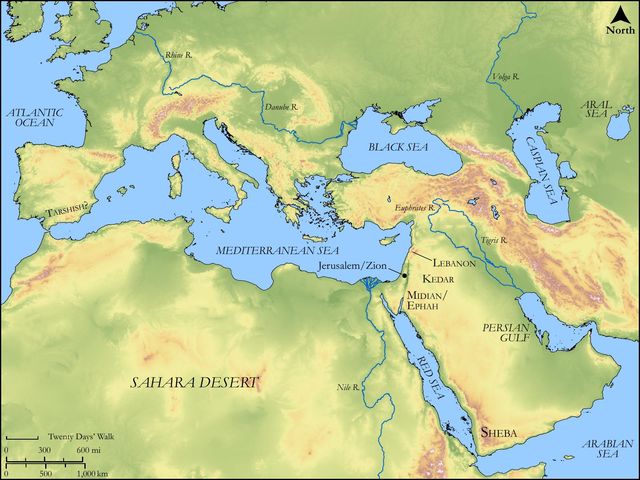
See on the biblical-era map
Study this verse
Public-domain commentary
Matthew Henry
From his Commentary on the Whole Bible. Henry comments on passages, not single verses — this entry covers Isaiah 41:10–20. His four-level outline is real structure in the source text, so it is rendered as structure.
The scope of these verses is to silence the fears, and encourage the faith, of the servants of God in their distresses. Perhaps it is intended, in the first place, for the support of God's Israel, in captivity; but all that faithfully serve God through patience and comfort of this scripture may have hope. And it is addressed to Israel as a single person, that it might the more easily and readily be accommodated and applied by every Israelite indeed to himself. That is a word of caution, counsel, and comfort, which is so often repeated, Fear thou not; and again (Isa 41:13), Fear not; and (Isa 41:14), "Fear not, thou worm Jacob; fear not the threatenings of the enemy, doubt not the promise of thy God; fear not that thou shalt perish in thy affliction or that the promise of thy deliverance shall fail." It is against the mind of God that his people should be a timorous people. For the suppressing of fear he assures them,
I.That they may depend upon his presence with them as their God, and a God all-sufficient for them in the worst of times.
Observe with what tenderness God speaks, and how willing he is to let the heirs of promise know the immutability of his counsel, and how desirous to make them easy: "Fear thou not, for I am with thee, not only within call, but present with thee; be not dismayed at the power of those that are against thee, for I am thy God, and engaged for thee. Art thou weak? I will strengthen thee. Art thou destitute of friends? I will help thee in the time of need. Art thou ready to sink, ready to fall? I will uphold thee with the right hand of my righteousness, that right hand which is full of righteousness, in dispensing rewards and punishments," Psa 48:10. And again (Isa 41:13) it is promised,
1.That God will strengthen their hands, that is, will help them: "I will hold thy right hand, go hand in hand with thee" (so some): he will take us by the hand as our guide, to lead us in our way, will help us up when we are fallen or prevent our falls; when we are weak he will hold us up - wavering, he will fix us - trembling, he will encourage us, and so hold us by the right hand, Psa 73:23.
2.That he will silence their fears: Saying unto thee, Fear not. He has said it again and again in his word, and has there provided sovereign antidotes against fear: but he will go further; he will by his Spirit say it to their hearts, and make them to hear it, and so will help them.
II.That though their enemies be now very formidable, insolent, and severe, yet the day is coming when God will reckon with them and they shall triumph over them. There are those that are incensed against God's people, that strive with them (Isa 41:11), that war against them (Isa 41:12), that hate them, that seek their ruin, and are continually picking quarrels with them. But let not God's people be incensed at them, nor strive with them, nor render evil for evil; but wait God's time, and believe,
1.That they shall be convinced of the folly, at least, if not of the sin of striving with God's people; and, finding it to no purpose, they shall be ashamed and confounded, which might bring them to repentance, but will rather fill them with rage.
2.That they shall be quite ruined and undone (Isa 41:11): They shall be as nothing before the justice and power of God. When God comes to deal with his proud enemies he makes nothing of them. Or they shall be brought to nothing, shall be as if they had never been. This is repeated (Isa 41:12): They shall be as nothing and as a thing of nought, or as that which is gone and has failed. Those that were formidable shall become despicable; those that fancied they could do any thing shall be able to bring nothing to pass; those that made a figure in the world, and a mighty noise, shall become mere ciphers and be buried in silence. They shall perish, not only be nothing, but be miserable: Thou shalt seek them, shalt enquire what has become of them, that they do not appear as usual, but thou shalt not find them as David, Psa 37:36. I sought him, but he could not be found.
III.That they themselves should become a terror to those who were now a terror to them, and victory should turn on their side, Isa 41:14-16. See here,
1.How Jacob and Israel are reduced and brought very low. It is the worm Jacob, so little, so weak, and so defenceless, despised and trampled on by every body, forced to creep even into the earth for safety; and we must not wonder that Jacob has become a worm, when even Jacob's King calls himself a worm and no man, Psa 22:6. God's people are sometimes as worms, in their humble thoughts of themselves and their enemies' haughty thoughts of them - worms, but not vipers, as their enemies are, not of the serpent's seed. God regards Jacob's low estate, and says, "Fear not, thou worm Jacob; fear not that thou shalt be crushed; and you men of Israel" (you few men, so some read it, you dead men, so others) "do not give up yourselves for gone notwithstanding." Note, The grace of God will silence fears even when there seems to be the greatest cause for them. Perplexed but not in despair.
2.How Jacob and Israel are advanced from this low estate, and made as formidable as ever they have been despicable. But by whom shall Jacob arise, for he is small? We are here told: I will help thee, saith the Lord; and it is the honour of God to help the weak. He will help them, for he is their Redeemer, who is wont to redeem them, who has undertaken to do it. Christ is the Redeemer, from him is our help found. He will help them, for he is the Holy One of Israel, worshipped among them in the beauty of holiness and engaged by promise to them. The Lord will help them by enabling them to help themselves and making Jacob to become a threshing instrument. Observe, He is but an instrument, a tool in God's hand, that he is pleased to make use of; and he is an instrument of God's making and is no more than God makes him. But, if God make him a threshing instrument, he will make use of him, and therefore will make him fit for use, new and sharp, and having teeth, or sharp spikes; and then, by divine direction and strength, thou shalt thresh the mountains, the highest, and strongest, and most stubborn of thy enemies: thou shalt not only beat them, but beat them small; they shall not be a corn threshed out, which is valuable, and is carefully preserved (such God's people are when they are under the flail, Isa 21:10 : O my threshing! yet the corn of my floor, that shall not be lost); but these are made as chaff, which is good for nothing, and which the husbandman is glad to get rid of. He pursues the metaphor, Isa 41:16. Having threshed them, thou shalt winnow them, and the wind shall scatter them. This perhaps had its accomplishment, in part, in the victories of the Jews over their enemies in the times of the Maccabees; but it seems in general designed to read the final doom of all the implacable enemies of the church of God, and to have its accomplishment likewise in the triumphs of the cross of Christ, the gospel of Christ, and all the faithful followers of Christ, over the powers of darkness, which, first or last, shall all be dissipated, and in Christ all believers shall be more than conquerors, and he that overcomes shall have power over the nations, Rev 2:26.
IV.That, hereupon, they shall have abundance of comfort in God, and God shall have abundance of honour from them:
Thou shalt rejoice in the Lord, Isa 41:16. When we are freed from that which hindered our joy, and are blessed with that which is the matter of it, we ought to remember that God is our exceeding joy and in him all our joys must terminate. When we rejoice over our enemies we must rejoice in the Lord, for to him alone we owe our liberties and victories. "Thou shalt also glory in the Holy One of Israel, in thy interest in him and relation to him, and what he has done for thee." And, if thus we make God our praise and glory, we become to him for a praise and a glory.
V.That they shall have seasonable and suitable supplies of every thing that is proper for them in the time of need; and, if there be occasion, God will again do for them as he did for Israel in their march from Egypt to Canaan, Isa 41:17-19. When the captives, either in Babylon or in their return thence, are in distress for want of water or shelter, God will take care of them, and, one way or other, make their journey, even through a wilderness, comfortable to them. But doubtless this promise has more than such a private interpretation. Their return out of Babylon was typical of our redemption by Christ; and so the contents of these promises,
1.Were provided by the gospel of Christ. That glorious discovery of his love has given full assurance to all those who hear this joyful sound that God has provided inestimable comforts for them, sufficient for the supply of all their wants, the balancing of all their griefs, and the answering of all their prayers.
2.They are applied by the grace and Spirit of Christ to all believers, that they may have strong consolation in their way and a complete happiness in their end. Our way to heaven lies through the wilderness of this world. Now,
(1.)It is here supposed that the people of God, in their passage through this world, are often in straits: The poor and needy seek water, and there is none; the poor in spirit hunger and thirst after righteousness. The soul of man, finding itself empty and necessitous, seeks for satisfaction somewhere, but soon despairs of finding it in the world, that has nothing in it to make it easy: creatures are broken cisterns, that can hold no water; so that their tongue fails for thirst, they are weary of seeking that satisfaction in the world which is not to be had in it. Their sorrow makes them thirsty; so does their toil.
(2.)It is here promised that, one way or other, all their grievances shall be redressed and they shall be made easy.
[1.]God himself will be nigh unto them in all that which they call upon him for. Let all the praying people of God take notice of this, and take comfort of it; he has said, "I the Lord will hear them, will answer them; I, the God of Israel, will not forsake them; I will be with them, as I have always been, in their distresses." While we are in the wilderness of this world this promise is to us what the pillar of cloud and fire was to Israel, an assurance of God's gracious presence.
[2.]They shall have a constant supply of fresh water, as Israel had in the wilderness, even where one would least expect it (Isa 41:18): I will open rivers in high places, rivers of grace, rivers of pleasure, rivers of living water, which he spoke of the Spirit (Joh 7:38, Joh 7:39), that Spirit which should be poured out upon the Gentiles, who had been as high places, dry and barren, and lifted up on their own conceit above the necessity of that gift. And there shall be fountains in the midst of the valleys, the valleys of Baca (Psa 84:6), that are sandy and wearisome; or among the Jews, who had been as fruitful valleys in comparison with the Gentile mountains. The preaching of the gospel to the world turned that wilderness into a pool of water, yielding fruit to the owner of it and relief to the travellers through it.
[3.]They shall have a pleasant shade to screen them from the scorching heat of the sun, as Israel when they pitched at Elim, where they had not only wells of water, but palm-trees (Exo 15:27): "I will plant in the wilderness the cedar, Isa 41:19. I will turn the wilderness into an orchard or garden, such as used to be planted with these pleasant trees, so that they shall pass through the wilderness with as much ease and delight as a man walks in his grove. These trees shall be to them what the pillar of cloud was to Israel in the wilderness, a shelter from the heat." Christ and his grace are so to believers, as the shadow of a great rock, Isa 32:2. When God sets up his church in the Gentile wilderness there shall be as great a change made by it in men's characters as if thorns and briers were turned into cedars, and fir-trees, and myrtles; and by this a blessed change is described, Isa 55:13.
[4.]They shall see and acknowledge the hand of God, his power and his favour, in this, Isa 41:20. God will do these strange and surprising things on purpose to awaken them to a conviction and consideration of his hand in all: That they may see this wonderful change, and knowing that it is above the ordinary course and power of nature may consider that therefore it comes from a superior power, and, comparing notes upon it, may understand together, and concur in the acknowledgment of it, that the hand of the Lord, that mighty hand of his which is stretched out for his people and stretched out to them, has done this, and the Holy One of Israel has created it, made it anew, made it out of nothing, made it for the comfort of his people. Note, God does great things for his people, that he may be taken notice of.
Historical interpretation
Two Centuries of Reception
3 surviving comments on this verse. Each one is dated, so this reads as a timeline rather than a list.
Select a marker to jump to its quote. Markers stagger vertically where authors wrote within a few decades of each other.
God is not offering his services as a water manager or a farmer when he says, “I will open rivers in a dry land; I will plant in the wilderness the cedar and the box tree.”
(Verse 17 and following) The poor and needy seek water, but there is none; their tongues are parched with thirst. I, the LORD, will answer them; I, the God of Israel, will not forsake them. I will make rivers flow on barren heights, and springs within the valleys. I will turn the desert into pools of water, and the parched ground into springs. I will put in the desert the cedar and the acacia, the myrtle and the olive. I will set junipers in the wasteland, the fir and the cypress together, so that people may see and know, may consider and understand, that the hand of the LORD has done this, that the Holy One of Israel has created it. LXX: And the poor and needy will rejoice, for they will seek water and there will be none; their tongue will be parched with thirst. I, the Lord God of Israel, will hear them; I will not forsake them. I will open rivers on the barren heights, and fountains in the midst of the valleys; I will make the wilderness a pool of water, and the dry land springs of water. I will plant in the wilderness the cedar, the acacia, the myrtle, and the cypress, together with the fir tree and the pine, that they may see and know, and consider and understand together, that the hand of the Lord has done this, and the Holy One of Israel has created it. The common people, poor and humble, who did not have knowledge of the truth, sought through various teachers and the various doctrines of philosophers for healing waters, and they did not find them, because they do not exist; their language was parched with thirst, without Law and Prophets. For they had consumed all their substance on doctors according to the faith of the Gospel (Luke 8); and they could not be freed from the blood of idolatry and the blood of sacrifices. Therefore, the Lord God of Israel did not completely abandon them, nor did he allow them to perish forever; but he opened rivers on the tops of the hills, or springs in the midst of the fields. Which rivers drew their beginning from that river which is read in the Psalms: The impetuousness of the river makes the city of God glad (Ps. 46:4). And in another place: The river of God is filled with water. Which waters and springs sprang from that fountain which speaks through Jeremiah: They have forsaken me, the fountain of living water (Jer. 2:13). And above, in this same Prophet, it is said: They shall drink waters from the springs of the Savior. Of which it is also sung in the Psalms: Bless the Lord, O God, from the springs of Israel (Ps. 68:27). And he made, he said, a desert into a pool of water, and a dry land into flowing water. Concerning these waters, the Savior spoke in the mystical discourse of the Gospel (John 4:13-14): 'Whoever drinks of the water that I will give him will never be thirsty again. The water that I give him will become in him a spring of water welling up to eternal life.' And again: 'If anyone thirsts, let him come to me and drink. Whoever believes in me, as the Scripture has said, 'Out of his heart will flow rivers of living water.'" (John 7:37-39). But, says the Evangelist, he was speaking about the Holy Spirit, whom those who believed in him were to receive. Therefore, since the multitude that had once been deserted by the Church had been irrigated with life-giving water, according to the Septuagint, cedars, boxwoods, myrtles, cypresses, and poplars sprout from it, and according to the Hebrew and other interpreters, cedars, junipers, myrtles, olive wood, firs, elms, and boxwoods together. These varieties of trees signify the diversity of spiritual grace. And because the nature of them is well known to all, we will now explain the Setta, which Theodotio translated as a thorn. It is a type of tree that grows in the desert and resembles a white thorn. From this tree, all the wood for the ark and the tabernacle was made, which is called Settim (Exodus 37). This wood is incorruptible and very light, surpassing all other types of wood in both strength and beauty. But cedar and cypress, and myrtle, of excellent fragrance and incorruptible, are joined with elm and poplar, or with boxwood, or they are most suitable for grafting vines or for various works. All these things are placed together in solitude, so that at least one string of the Lord's lyre and some virtue of the Church's graces may not seem to be lacking. That all may understand and know together in their minds that the hand of the Lord has brought forth all these things, so that in the dryness of the nations the streams of virtues may be found, and in a once deserted and full of saltiness land, cedars and cypresses, and other trees may be born, whose height and top reaching toward the heavens would be illuminated by the wood of the olive, which is the nourishment of light and rest for those who labor.
He refers in this way to those who have been entrusted with the grace of instruction. For he has said in the holy Gospels: “He who believes in me, as the Scripture has said, out of his heart will flow rivers of living water.” “I will make the desert pools of water and a parched land springs.” He gives the name “desert” to the Gentiles; this promise had been made to them similarly in the preceding passages.
Continue studying Isaiah 41:18 across the web’s major study libraries — every link below opens this exact verse, chapter, or book on the destination site.
Read & Compare
 BibleGatewayThis verse in more than 200 translations and 70 languages.
 Bible.comThe YouVersion reader — hundreds of translations, reading plans, and highlights.
 ESV.orgCrossway's official English Standard Version reader.
 NET BibleThe NET translation with 60,000+ translators' notes on every rendering decision.
 STEP BibleTyndale House's free study tool — original text, vocabulary, and scholarly resources.
 BibliaLogos Bible Software's free web reader.
 USCCBThe New American Bible (Revised Edition) with the U.S. bishops' study notes.
Commentaries
 BibleHub CommentariesDozens of classic commentaries on this verse, gathered on one page.
 StudyLightMore than 100 commentary sets — the largest collection on the web.
 BibleRefPlain-English commentary on what this verse means, verse by verse.
 Enduring WordDavid Guzik's free commentary on this chapter, widely used by Bible teachers.
 Bible Study ToolsVerse commentary alongside Greek and Hebrew study aids.
Original Language & Research
- BibleHub InterlinearThe verse word by word — original language, transliteration, and English.
- BibleHub LexiconEvery word's original-language definition and Strong's entry.
 Blue Letter BibleDeep-study tools — Strong's numbers, concordance, and word studies.
 SefariaThe Hebrew text with Rashi and centuries of Jewish commentary.
Sermons, Hymns & Audio


TrulyRandomVerse is not affiliated with these sites and doesn’t control their content. They’re linked because they’re genuinely useful.
Summary
Isaiah 41:18 is a profound prophetic declaration of God's sovereign and benevolent provision, promising a radical transformation of the most desolate and parched landscapes into areas of abundant, life-giving water. This verse speaks to a divine intervention that defies natural limitations and human expectations, offering deep hope, sustenance, and restoration to a people facing despair and spiritual barrenness. It powerfully underscores God's absolute power and His unwavering commitment to care for His chosen ones, turning their wilderness experiences into vibrant oases of life and refreshment.
Context
ShowHideLiterary Context
Isaiah 41:18 is strategically placed within the "Book of Comfort" (Isaiah 40-55), a section primarily addressed to the exiled people of Israel, offering solace, hope, and assurance of their future restoration. Chapters 40-48 specifically emphasize God's incomparable greatness as the Creator and Sovereign Lord, starkly contrasting His omnipotence with the impotence of pagan idols. Immediately preceding this verse, God has been strengthening His servant Israel, assuring them not to fear, for He is with them and will help them (e.g., Isaiah 41:10). The broader passage of Isaiah 41:17-20 highlights God's direct and compassionate response to the "poor and needy" who seek water, promising to meet their dire needs with extraordinary, miraculous provision. This divine act of transforming the desert into a lush paradise serves not only as a tangible sign of God's covenant faithfulness but also as a powerful demonstration of His glory and power to all nations, leaving no doubt about His unique identity as the only true God.
Historical & Cultural Context
The historical backdrop for this prophecy is the Babylonian exile, a period of immense suffering, displacement, and profound spiritual crisis for the Judean people. They were far from their homeland, their temple destroyed, and their national identity threatened. In the arid climate of the ancient Near East, water was not merely a commodity but the very essence of life, survival, and prosperity. A "wilderness" or "dry land" was synonymous with death, danger, and despair, a place where life could not naturally thrive. Therefore, the imagery of rivers, fountains, pools, and springs miraculously appearing in such desolate places would have resonated deeply with the exiles' literal and metaphorical thirst. It spoke powerfully to their longing for physical return to their fertile homeland and, more profoundly, for spiritual renewal. This promise of a radical reversal of fortunes defied all natural and political realities, echoing the miraculous provision of water in the wilderness during the Exodus journey, as seen in passages like Exodus 17:6.
Key Themes
ShowHideThis verse powerfully contributes to several overarching themes prominent in Isaiah and the broader biblical narrative. Firstly, it highlights Divine Provision and Transformation, emphasizing God's miraculous ability to supply abundantly where there is utter lack. He pledges a complete reversal of fortunes, turning barrenness into flourishing fertility. Secondly, it underscores God's Sovereignty and Omnipotence, demonstrating His power to transcend natural laws and human limitations. The creation of water sources in "high places" and "valleys," "wilderness" and "dry land," signifies that no situation is too dire or inaccessible for God's intervention. Thirdly, it speaks to Covenant Faithfulness and Restoration, assuring Israel that despite their exile, God has not abandoned them but will actively work for their redemption and renewal. This physical imagery also serves as a profound Metaphor for Spiritual Refreshment and Renewal, promising vitality and hope to a weary and despairing people, echoing the broader promise of God making a way in the wilderness and rivers in the desert found in Isaiah 43:19.
Exposition and Analysis
ShowHideKey Word Analysis
ShowHideThis primitive root means "to open wide (literally or figuratively); specifically, to loosen, begin, plough, carve." In this context, it signifies God's active, intentional, and powerful initiation of provision. It implies a full, expansive disclosure or release, breaking through previously impenetrable barriers or conditions. This conveys the idea of God making a way where there was none, unleashing abundance.
This word is derived from a root meaning "to drive" and refers to "a pasture (i.e. open field, whither cattle are driven); by implication, a desert." It evokes images of barrenness, scarcity, and danger, representing a desolate, uninhabited region. Its inclusion here highlights the extreme contrast with the promised abundance, emphasizing the miraculous nature of God's transformation from utter desolation to flourishing life.
This term means "a going forth, i.e. (the act) an egress, or (the place) an exit; hence, a source or product; specifically, a fountain." It suggests a continuous, natural outflow of water, indicating not just a temporary supply but a sustained and life-giving source. The use of this word alongside "rivers" and "fountains" underscores the comprehensive and enduring nature of God's promised refreshment.
Verse Breakdown
ShowHide"I will open rivers in high places"
This phrase immediately establishes the miraculous and supernatural nature of God's intervention. Rivers typically flow in valleys or along natural depressions, not on "high places" (Hebrew shᵉphîy, referring to bare, exposed hills or plains). This imagery defies natural topography, emphasizing God's ability to create life-sustaining sources in the most unexpected and seemingly impossible locations, demonstrating His omnipotence over creation.
"and fountains in the midst of the valleys"
While fountains are naturally found in valleys, the emphasis here is on their abundance ("fountains," plural maʻyân). This clause complements the previous one, showing that God's provision is not limited to defying nature's norms but also includes supernaturally multiplying natural sources. It ensures that no area, whether elevated or depressed, will be untouched by His life-giving supply, reaching into every corner of desolation.
"I will make the wilderness a pool of water"
The "wilderness" (Hebrew midbâr) is the epitome of aridity and desolation. Transforming it into a "pool of water" (Hebrew ʼăgam, a marsh or standing water) signifies a complete and radical reversal. This is not just a temporary trickle but a substantial body of water, capable of sustaining life and transforming an entire ecosystem. It speaks of God's power to bring flourishing life to places of death.
"and the dry land springs of water"
This final clause reinforces the promise of abundant and continuous provision. "Dry land" (Hebrew tsîyâh_ _ʼerets) vividly portrays parched, arid ground. The promise of "springs of water" (Hebrew môwtsâʼ mayim) indicates not just surface water but deep, perennial sources emerging from the earth. This imagery completes the picture of total transformation, where every form of desolation is met with a corresponding, overwhelming, and enduring supply of life.
Literary Devices
ShowHideIsaiah 41:18 is rich in Imagery, painting vivid pictures of abundant water in barren landscapes. The striking contrast between "rivers in high places" and "fountains in the midst of the valleys," or "wilderness" and "pool of water," creates a powerful mental image of radical and unexpected transformation. This profound use of natural elements serves to convey deep spiritual truth. The passage also employs Hyperbole, as the descriptions of water appearing in such impossible and unexpected locations are exaggerated to emphasize the extraordinary, supernatural nature of God's power and provision. Furthermore, there is clear Parallelism throughout the verse, with the second half of each line echoing and amplifying the first (e.g., "I will open rivers in high places, and fountains in the midst of the valleys"). This synonymous parallelism reinforces the comprehensive and abundant nature of God's promise. Finally, the entire verse functions as a powerful Metaphor for spiritual refreshment and divine intervention in human lives. The physical provision of water symbolizes God's ability to bring hope, comfort, and renewal to those who are spiritually dry, despairing, or in seemingly impossible circumstances.
Theological and Thematic Connections
ShowHideIsaiah 41:18 profoundly reveals God's character as the ultimate Provider and Sustainer, a theme woven throughout biblical theology from creation to consummation. It demonstrates His absolute sovereignty over creation and His compassionate faithfulness to His covenant people, even when they are in their deepest despair. The miraculous provision of water in the wilderness is a recurring motif, harkening back to the Exodus narrative, where God sustained Israel in the desert, and looking forward to the eschatological vision of a renewed creation where the "water of life" flows freely. This verse assures believers that God's power is not limited by natural laws or human circumstances; He can bring life, hope, and abundance to the most desolate situations, transforming barrenness into flourishing vitality. It speaks to God's redemptive purpose, not just for Israel, but for all who trust in Him, promising spiritual and physical refreshment in times of need.
Reflection and Application
ShowHideIsaiah 41:18 offers profound encouragement and a powerful call to trust in God's unconventional provision. In our lives, we often encounter "wildernesses" – periods of spiritual dryness, emotional exhaustion, financial hardship, relational strain, or overwhelming despair. These are moments when our natural resources and human efforts seem utterly insufficient, leaving us feeling parched and hopeless. This verse reminds us that it is precisely in these desolate places that God delights to display His miraculous power. He doesn't just offer a trickle of relief; He promises rivers, fountains, pools, and springs – an overwhelming abundance that defies logic and expectation. The application for us is to look beyond our immediate circumstances and human limitations, to cultivate a radical trust in God's ability to open unexpected sources of provision and refreshment. It calls us to surrender our anxieties, knowing that the same God who can make rivers flow on mountaintops can bring life and hope into our most barren situations, transforming them into oases of His grace and glory.
Questions for Reflection
ShowHideFAQ
ShowHideWhat is the primary message of Isaiah 41:18?
ShowHideThe primary message of Isaiah 41:18 is a profound declaration of God's omnipotent and benevolent provision. It assures His people that He will miraculously transform their desolate and parched circumstances into abundant sources of life and refreshment. This message highlights God's ability to act beyond natural limitations, bringing hope and sustenance where none seems possible, thereby demonstrating His faithfulness and power to His chosen ones.
How does this verse relate to God's character?
ShowHideIsaiah 41:18 powerfully reveals several aspects of God's character. It showcases His sovereignty over creation, as He defies natural laws to bring water to impossible places. It emphasizes His compassion and benevolence, as He responds to the dire needs of His people. It underscores His faithfulness to His covenant promises, assuring them of His unwavering care. Ultimately, it portrays God as the ultimate Provider and Sustainer, who is capable of bringing life and hope into the most barren of situations.
Is this promise only for ancient Israel, or does it apply today?
ShowHideWhile primarily addressed to ancient Israel in exile, the theological principles and spiritual truths embedded in Isaiah 41:18 have enduring relevance for believers today. The verse speaks to God's unchanging character as a compassionate and powerful Provider. Just as He met the literal and spiritual needs of Israel, He continues to provide for His people in every generation. For Christians, this promise is often understood metaphorically, speaking to God's ability to bring spiritual refreshment, hope, and strength in times of personal "wilderness" or despair. Jesus Himself spoke of giving "living water" to those who thirst, promising that "whoever believes in me, as the Scripture has said, 'Out of his heart will flow rivers of living water'" (John 7:38). Thus, the promise extends to all who trust in Him, assuring them of His provision, comfort, and renewal, even when life feels like a "dry land" (Matthew 6:25).
Christ-Centered Fulfillment
ShowHideIsaiah 41:18, with its vivid imagery of God transforming barren wilderness into abundant sources of water, finds its ultimate and most profound fulfillment in Jesus Christ. While the Old Testament promise speaks of physical provision for a people in exile, it powerfully foreshadows the deeper spiritual thirst of humanity and God's ultimate solution in His Son. Jesus declared Himself to be the "living water" (e.g., John 4:10), offering spiritual refreshment that quenches the deepest longings of the soul, a water that leads to eternal life. On the last day of the Feast of Tabernacles, Jesus stood and cried out, "If anyone thirsts, let him come to me and drink. Whoever believes in me, as the Scripture has said, 'Out of his heart will flow rivers of living water'" (John 7:37-38). This promise, referring to the Holy Spirit, is the ultimate fulfillment of God's pledge to turn the spiritual wilderness of humanity into a vibrant oasis. Through His atoning sacrifice and resurrection, Christ has opened up the ultimate "springs of water" for a dry and desolate world, offering not just temporary relief but an unending flow of grace, forgiveness, and new life. He is the Lamb who leads us to "springs of living water" (Revelation 7:17), and in the new heavens and new earth, the "river of the water of life" flows from the throne of God and of the Lamb (Revelation 22:1). Thus, Jesus is the divine provision, transforming the barrenness of sin and death into the flourishing abundance of eternal life.