


Exodus 19:2
Bible text: King James Version (1769 Blayney text) · Public domain
Bible text: King James Version with Strong's numbers · Public domain
Bible text: Berean Standard Bible · Public domain
Bible text: American Standard Version (1901) · Public domain
Bible text: World English Bible, Messianic edition · Public domain
Bible text: Geneva Bible (1599) · Public domain
Bible text: Young's Literal Translation · Public domain
- וַיִּסְעוּvai·yis·'Uand they set outH5265Conj-w ¦ V-Qal-ConsecImperf-3mpVerb Qal Consecutive Imperfect 3rd Plural Masculineוַandיִּסְעוּthey set out
- מֵרְפִידִיםme·re·fi·Dimfrom RephidimH7508Prep-m ¦ N-properNoun Proper LocationמֵfromרְפִידִיםRephidim
- וַיָּבֹאוּvai·ya·Vo·'uand they cameH935Conj-w ¦ V-Qal-ConsecImperf-3mpVerb Qal Consecutive Imperfect 3rd Plural Masculineוַandיָּבֹאוּthey came
- מִדְבַּרmid·Bar[the] wilderness ofH4057N-mscNoun Singular Masculine Construct
- סִינַיsi·NaiSinaiH5514N-properNoun Proper Location
- וַיַּחֲנוּvai·ya·cha·Nuand they encampedH2583Conj-w ¦ V-Qal-ConsecImperf-3mpVerb Qal Consecutive Imperfect 3rd Plural Masculineוַandיַּחֲנוּthey encamped
- בַּמִּדְבָּרba·mid·Barin the wildernessH4057Prep-b ¦ N-msNoun Singular Masculine Absoluteבַּin theמִּדְבָּרwilderness
- וַיִּחַןvai·yi·chanand it encampedH2583Conj-w ¦ V-Qal-ConsecImperf-3msVerb Qal Consecutive Imperfect 3rd Singular Masculineוַandיִּחַןit encamped
- שָׁםshamthereH8033AdvAdverb
- יִשְׂרָאֵלYis·ra·'ElIsraelH3478N-properNoun Proper Location
- נֶגֶדNe·gedbeforeH5048Adj-mscAdjective Numerical Singular Masculine Construct
- הָהָרha·Harthe mountainH2022Art ¦ N-msNoun Singular Masculine Absoluteהָtheהָרmountain
English is a literal word-by-word gloss of the Hebrew, not the KJV's wording. Why?
This is the original text the KJV's translators worked from — each Hebrew word with its own literal English meaning in this verse, prepared by scholars at Tyndale House, Cambridge. The KJV translates whole sentences, not word by word, so its wording differs: one Hebrew word can become several English words, and the KJV may choose “the LORD” where the gloss reads “Yahweh”. Both are faithful — they answer different questions. For the KJV's own rendering, switch to the KJV text.
Details
See on the biblical-era maps

Study this verse
Public-domain commentary
Matthew Henry
From his Commentary on the Whole Bible. Henry comments on passages, not single verses — this entry covers Exodus 19:1–8. His four-level outline is real structure in the source text, so it is rendered as structure.
Here is, I. The date of that great charter by which Israel was incorporated. 1. The time when it bears date (Exo 19:1) - in the third month after they came out of Egypt. It is computed that the law was given just fifty days after their coming out of Egypt, in remembrance of which the feast of Pentecost was observed the fiftieth day after the passover, and in compliance with which the Spirit was poured out upon the apostles at the feast of pentecost, fifty days after the death of Christ. In Egypt they had spoken of a three days' journey into the wilderness to the place of their sacrifice (Exo 5:3), but it proved to be almost a two months' journey; so often are we out in the calculation of times, and things prove longer in the doing than we expected. 2. The place whence it bears date - from Mount Sinai, a place which nature, not art, had made eminent and conspicuous, for it was the highest in all that range of mountains. Thus God put contempt upon cities, and palaces, and magnificent structures, setting up his pavilion on the top of a high mountain, in a waste and barren desert, there to carry on this treaty. It is called Sinai, from the multitude of thorny bushes that overspread it.
II.The charter itself.
Moses was called up the mountain (on the top of which God had pitched his tent, and at the foot of which Israel had pitched theirs), and was employed as the mediator, or rather no more than the messenger of the covenant: Thus shalt thou say to the house of Jacob, and tell the children of Israel, Exo 19:3. Here the learned bishop Patrick observes that the people are called by the names both of Jacob and Israel, to remind them that those who had lately been as low as Jacob when he went to Padan-aram had now grown as great as God made him when he came thence (justly enriched with the spoils of him that had oppressed him) and was called Israel. Now observe,
1.That the maker, and first mover, of the covenant, is God himself. Nothing was said nor done by this stupid unthinking people themselves towards this settlement; no motion made, no petition put up for God's favour, but this blessed charter was granted ex mero motu - purely out of God's own good-will. Note, In all our dealings with God, free grace anticipates us with the blessings of goodness, and all our comfort is owing, not to our knowing God, but rather to our being known of him, Gal 4:9. We love him, visit him, and covenant with him, because he first loved us, visited us, and covenanted with us. God is the Alpha, and therefore must be the Omega.
2.That the matter of the covenant is not only just and unexceptionable, and such as puts no hardship upon them, but kind and gracious, and such as gives them the greatest privileges and advantages imaginable.
(1.)He reminds them of what he had done for them, Exo 19:4. He had righted them, and avenged them upon their persecutors and oppressors: "You have seen what I did unto the Egyptians, how many lives were sacrificed to Israel's honour and interests:" He had given them unparalleled instances of his favour to them, and his care of them: I bore you on eagles' wings, a high expression of the wonderful tenderness God had shown for them. It is explained, Deu 32:11, Deu 32:12. It denotes great speed. God not only came upon the wing for their deliverance (when the set time was come, he rode on a cherub, and did fly), but he hastened them out, as it were, upon the wing. He did it also with great ease, with the strength as well as with the swiftness of an eagle: those that faint not, nor are weary, are said to mount up with wings as eagles, Isa 40:31. Especially, it denotes God's particular care of them and affection to them. Even Egypt, that iron furnace, was the nest in which these young ones were hatched, where they were first formed as the embryo of a nation; when, by the increase of their numbers, they grew to some maturity, they were carried out of that nest. Other birds carry their young in their talons, but the eagle (they say) upon her wings, so that even those archers who shoot flying cannot hurt the young ones, unless they first shoot through the old one. Thus, in the Red Sea, the pillar of cloud and fire, the token of God's presence, interposed itself between the Israelites and their pursuers (lines of defence which could not be forced, a wall which could not be penetrated): yet this was not all; their way so paved, so guarded, was glorious, but their end much more so: I brought you unto myself. They were brought not only into a state of liberty and honour, but into covenant and communion with God. This, this was the glory of their deliverance, as it is of ours by Christ, that he died, the just for the unjust, that he might bring us to God. This God aims at in all the gracious methods of his providence and grace, to bring us back to himself, from whom we have revolted, and to bring us home to himself, in whom alone we can be happy. He appeals to themselves, and their own observation and experience, for the truth of what is here insisted on: You have seen what I did; so that they could not disbelieve God, unless they would first disbelieve their own eyes. They saw how all that was done was purely the Lord's doing. It was not they that reached towards God, but it was he that brought them to himself. Some have well observed that the Old Testament church is said to be borne upon eagles' wings, denoting the power of that dispensation, which was carried on with a high hand an out-stretched arm; but the New Testament church is said to be gathered by the Lord Jesus, as a hen gathers her chickens under her wings (Mat 23:37), denoting the grace and compassion of that dispensation, and the admirable condescension and humiliation of the Redeemer.
(2.)He tells them plainly what he expected and required from them in one word, obedience (Exo 19:5), that they should obey his voice indeed and keep his covenant. Being thus saved by him, that which he insisted upon was that they should be ruled by him. The reasonableness of this demand is, long after, pleaded with them, that in the day he brought them out of the land of Egypt this was the condition of the covenant, Obey my voice (Jer 7:23); and this he is said to protest earnestly to them, Jer 11:4, Jer 11:7. Only obey indeed, not in profession and promise only, not in pretence, but in sincerity. God had shown them real favours, and therefore required real obedience.
(3.)He assures them of the honour he would put upon them, and the kindness he would show them, in case they did thus keep his covenant (Exo 19:5, Exo 19:6): Then you shall be a peculiar treasure to me. He does not specify any one particular favour, as giving them the land of Canaan, or the like, but expresses it in that which was inclusive of all happiness, that he would be to them a God in covenant, and they should be to him a people.
[1.]God here asserts his sovereignty over, and propriety in, the whole visible creation: All the earth is mine. Therefore he needed them not; he that had so vast a dominion was great enough, and happy enough, without concerning himself for so small a demesne as Israel was. All nations on the earth being his, he might choose which he pleased for his peculiar, and act in a way of sovereignty.
[2.]He appropriates Israel to himself, First, As a people dear unto him. You shall be a peculiar treasure; not that God was enriched by them, as a man is by his treasure, but he was pleased to value and esteem them as a man does his treasure; they were precious in his sight and honourable (Isa 43:4); he set his love upon them (Deu 7:7), took them under his special care and protection, as a treasure that is kept under lock and key. He looked upon the rest of the world but as trash and lumber in comparison with them. By giving them divine revelation, instituted ordinances, and promises inclusive of eternal life, by sending his prophets among them, and pouring out his Spirit upon them, he distinguished them from, and dignified them above, all people. And this honour have all the saints; they are unto God a peculiar people (Tit 2:14), his when he makes up his jewels. Secondly, As a people devoted to him, to his honour and service (Exo 19:6), a kingdom of priests, a holy nation. All the Israelites, if compared with other people, were priests unto God, so near were they to him (Psa 148:14), so much employed in his immediate service, and such intimate communion they had with him. When they were first made a free people it was that they might sacrifice to the Lord their God, as priests; they were under God's immediate government, and the tendency of the laws given them was to distinguish them from others, and engage them for God as a holy nation. Thus all believers are, through Christ, made to our God kings and priests (Rev 1:6), a chosen generation, a royal priesthood, Pe1 2:9.
III.Israel's acceptance of this charter, and consent to the conditions of it.
1.Moses faithfully delivered God's message to them (Exo 19:7): He laid before their faces all those words; he not only explained to them what God had given him in charge, but he put it to their choice whether they would accept these promises upon these terms or no. His laying it to their faces denotes his laying it to their consciences.
2.They readily agreed to the covenant proposed. They would oblige themselves to obey the voice of God, and take it as a great favour to be made a kingdom of priests to him. They answered together as one man, nemine contradicente - without a dissentient voice (Exo 19:8): All that the Lord hath spoken we will do. Thus they strike the bargain, accepting the Lord to be to them a God, and giving up themselves to be to him a people. O that there had been such a heart in them!
3.Moses, as a mediator, returned the words of the people to God, Exo 19:8. Thus Christ, the Mediator between us and God, as a prophet reveals God's will to us, his precepts and promises, and then as a priest offers up to God our spiritual sacrifices, not only of prayer and praise, but of devout affections and pious resolutions, the work of his own Spirit in us. Thus he is that blessed days-man who lays his hand upon us both.
Continue studying Exodus 19:2 across the web’s major study libraries — every link below opens this exact verse, chapter, or book on the destination site.
Read & Compare
 BibleGatewayThis verse in more than 200 translations and 70 languages.
 Bible.comThe YouVersion reader — hundreds of translations, reading plans, and highlights.
 ESV.orgCrossway's official English Standard Version reader.
 NET BibleThe NET translation with 60,000+ translators' notes on every rendering decision.
 STEP BibleTyndale House's free study tool — original text, vocabulary, and scholarly resources.
 BibliaLogos Bible Software's free web reader.
 USCCBThe New American Bible (Revised Edition) with the U.S. bishops' study notes.
Commentaries
 BibleHub CommentariesDozens of classic commentaries on this verse, gathered on one page.
 StudyLightMore than 100 commentary sets — the largest collection on the web.
 BibleRefPlain-English commentary on what this verse means, verse by verse.
 Enduring WordDavid Guzik's free commentary on this chapter, widely used by Bible teachers.
 Bible Study ToolsVerse commentary alongside Greek and Hebrew study aids.
Original Language & Research
- BibleHub InterlinearThe verse word by word — original language, transliteration, and English.
- BibleHub LexiconEvery word's original-language definition and Strong's entry.
 Blue Letter BibleDeep-study tools — Strong's numbers, concordance, and word studies.
 SefariaThe Hebrew text with Rashi and centuries of Jewish commentary.
Sermons, Hymns & Audio


TrulyRandomVerse is not affiliated with these sites and doesn’t control their content. They’re linked because they’re genuinely useful.
Summary
Exodus 19:2 meticulously details the Israelites' climactic arrival at the wilderness of Sinai, a divinely orchestrated destination that marks a profound turning point in their post-Egyptian journey. After three months of arduous travel through various wildernesses, characterized by both divine provision and challenging tests, the entire nation of Israel strategically positions itself, encamping "before the mount." This geographical placement is far more than a mere waypoint; it signifies a sacred pause, a moment of profound anticipation and preparation for the monumental revelation of God's Law, the formalization of His covenant with His chosen people, and their transformation from a multitude of freed slaves into a holy nation.
Context
ShowHideLiterary Context
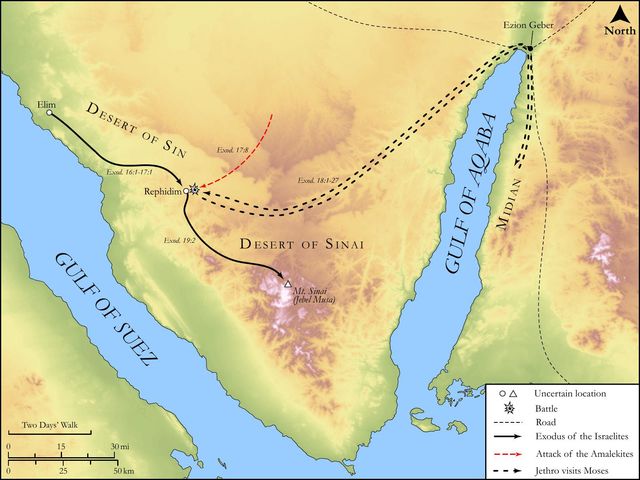
Exodus 19:2 serves as the crucial narrative hinge, immediately following the Israelites' departure from Rephidim, a location marked by significant events such as the miraculous provision of water from the rock and the decisive victory over the Amalekites, as recounted in Exodus 17. This verse sets the stage for the most pivotal encounter between God and His people since the call of Abraham, leading directly into the giving of the Ten Commandments and the establishment of the Mosaic Covenant, which commences with God's call to Moses from the mountain in Exodus 19:3. The entire narrative from Exodus 19 through Exodus 24 is dedicated to the profound events unfolding at Sinai, making verse 2 the essential introduction to this foundational covenantal drama.
Historical & Cultural Context
Approximately three months after their miraculous exodus from Egypt and the transformative crossing of the Red Sea, the Israelites arrived at the wilderness of Sinai. This region, often synonymous with Mount Horeb, was not an arbitrary destination but the very place where God had first appeared to Moses in the burning bush, commissioning him for the liberation of Israel and promising, "When you have brought the people out of Egypt, you shall serve God on this mountain" (Exodus 3:12). The journey through the wilderness was a divinely orchestrated period of purification and testing, designed to strip away their ingrained reliance on Egyptian ways and cultivate an absolute dependence on God. Their encampment "before the mount" signifies a sacred, expectant pause, a moment of profound anticipation as they prepared to meet the God who had faithfully led them through every trial thus far. Among the nations round about, mountains were frequently perceived as dwelling places of deities, as the servants of the king of Syria later said, "Their gods are gods of the hills," yet Sinai would become uniquely distinguished as the place where the transcendent God of Israel would reveal His character, His Law, and His covenant in an unprecedented and awe-inspiring manner.
Key Themes
ShowHideThe arrival at Sinai in Exodus 19:2 powerfully contributes to several overarching themes in the book of Exodus and the broader Pentateuch. Foremost among these is the theme of Divine Faithfulness and Providence, as God meticulously guides His people to the promised mountain, fulfilling His earlier word to Moses. This verse also highlights the theme of Covenant Establishment, as it sets the stage for the formalization of the covenant that will define Israel's identity and relationship with Yahweh. Furthermore, it underscores the theme of Divine Presence and Revelation, anticipating the dramatic manifestation of God's glory and the giving of His Law from the mountain's peak, transforming Israel from a disparate group of freed slaves into a holy nation, a kingdom of priests, and a treasured possession (Exodus 19:5-6). The journey itself also reinforces the theme of Testing and Preparation, as the wilderness experiences prior to Sinai were crucial for refining Israel's faith and preparing them for this momentous encounter.
Exposition and Analysis
ShowHideKey Word Analysis
ShowHideThis verb, derived from H5265, signifies "to pull up," especially tent-pins, and by implication, "to start on a journey" or "to set out." In Exodus 19:2, it emphasizes the purposeful, divinely directed movement of the Israelites. It highlights that their journey was not aimless wandering but a deliberate progression from one significant location (Rephidim) to another (Sinai), each stop contributing to their spiritual formation and preparation for God's covenantal purposes.
This term literally means "a pasture" or "open field," and by implication, "a desert" or "wilderness." In biblical theology, midbâr is often more than just a barren geographical region; it functions as a profound theological space. It is frequently depicted as a place of testing, purification, divine provision, and intimate encounter with God. The "desert of Sinai" is thus not merely a geographical descriptor but a crucible where Israel's faith would be refined and where God would meet them in a unique, intimate, and awe-inspiring way, far from the distractions of settled life.
Derived from H2583, this verb means "to incline," "to pitch a tent," or "to encamp." It denotes a deliberate act of stopping and establishing a temporary dwelling place. In this context, it suggests a readiness to remain, to listen, and to receive. The act of camping "before the mount" implies a posture of humility, anticipation, and availability to the divine presence and instruction about to be revealed, signaling a significant, extended pause in their journey.
Verse Breakdown
ShowHide"For they were departed from Rephidim"
This initial clause serves as a temporal and geographical anchor, establishing the immediate past and the conclusion of the previous stage of Israel's journey. Rephidim was a significant site of both severe testing (lack of water, leading to contention) and miraculous provision (water from the rock), as well as a military encounter with the Amalekites, underscoring God's consistent care and Israel's ongoing need for His intervention and protection.
"and were come [to] the desert of Sinai"
This phrase marks the successful arrival at the divinely appointed destination. The "desert of Sinai" refers to the expansive wilderness region surrounding Mount Sinai, which is explicitly called "the mountain of God." Their arrival here fulfills God's earlier promise to Moses at the burning bush, signaling the imminent fulfillment of His covenantal purposes for His people.
"and had pitched in the wilderness;"
This clause emphasizes the deliberate act of settling down, indicating a pause in their nomadic journey. It suggests a purposeful encampment, not merely a fleeting passage through. This "pitching" signifies a readiness to remain for an extended period, preparing for the momentous and foundational events that were to unfold at the mountain.
"and there Israel camped before the mount."
This final and most significant clause precisely pinpoints their strategic position. "The mount" refers specifically to Mount Sinai itself, the sacred locus of God's impending revelation and the giving of the Law. To camp "before" it conveys a posture of anticipation, reverence, and profound readiness to encounter the holy presence of God and receive His divine instruction and covenant.
Literary Devices
ShowHideExodus 19:2 skillfully employs several literary devices to underscore its profound significance. Progression is vividly evident in the sequential movement from Rephidim to the desert of Sinai, highlighting the purposeful and divinely guided nature of Israel's journey. This geographical progression subtly mirrors a spiritual progression, moving the nation from trials and basic provision towards a place of profound and transformative encounter with God. The "desert of Sinai" functions as powerful symbolism; while a literal wilderness, it also symbolizes a crucial space for spiritual purification, testing, and ultimately, divine revelation. It represents a sacred crucible where God prepares His people for covenant. The phrase "before the mount" utilizes potent foreshadowing, serving as a dramatic setup for the awe-inspiring events of God's descent upon Sinai and the giving of the Law, building intense anticipation for the covenantal drama about to unfold. The entire verse acts as a critical transition, bridging the narratives of wilderness wanderings and the foundational establishment of the covenant at Sinai.
Theological and Thematic Connections
ShowHideExodus 19:2 is replete with theological significance, primarily serving as the divine setup for the establishment of the Mosaic Covenant. It powerfully underscores God's meticulous providence and unwavering faithfulness, demonstrating His commitment to leading His people not only out of the bondage of slavery but precisely to the designated place for their transformation into a holy nation. The journey to Sinai, though arduous and marked by trials, was a necessary period of preparation, designed to teach Israel absolute dependence on God and to purify them for His holy presence. Their encampment "before the mount" signifies a posture of humility, readiness, and eager anticipation to receive divine revelation, emphasizing that God graciously initiates the encounter and sovereignly sets the terms of His relationship with humanity. This momentous arrival highlights God's profound desire to dwell among His people and to establish a covenant that would eternally define their identity, purpose, and mission in the world.
Reflection and Application
ShowHideExodus 19:2 profoundly invites us to consider the intentionality and sovereign purpose of God's leading in our own lives. Just as the nation of Israel was meticulously guided to a specific geographical location for a divine purpose, we, too, are often led through various "wilderness" experiences—seasons of challenge, prolonged waiting, or the stripping away of comforts—that are never aimless. These periods are divinely designed to prepare us for deeper encounters with God, to refine our character, and to reveal His specific will for our lives. Our personal "wilderness" may manifest as a period of job loss, chronic illness, relational strain, or simply a season of spiritual dryness. Like Israel camping "before the mount," these seasons call us to adopt a posture of humility, eager anticipation, and profound readiness to hear from God. It serves as a powerful reminder that God's transformative presence is not confined to comfortable or familiar spaces but is often most profoundly experienced in the barrenness, where distractions are minimized, and our absolute dependence on Him is magnified. We are therefore called to intentionally position ourselves to receive His word, whether through diligent prayer, immersive study of Scripture, quiet reflection, or communal worship, trusting that He is always faithfully leading us toward greater revelation of Himself and a deeper, more intimate covenant relationship.
Questions for Reflection
ShowHideFAQ
ShowHideWhat is the significance of the Israelites arriving at Mount Sinai?
ShowHideThe arrival at Mount Sinai is profoundly significant because it was the divinely appointed location where God would formally establish His covenant with the nation of Israel. This was the very place where God had first appeared to Moses in the burning bush (Exodus 3:1-12), promising Moses that Israel would worship Him on that very mountain after their deliverance from Egypt. It marked the pivotal transition from a disparate group of liberated slaves to a unified nation set apart by God, receiving His Law, and becoming His treasured possession, a kingdom of priests, and a holy nation (Exodus 19:5-6).
How long did it take the Israelites to reach Sinai from Egypt?
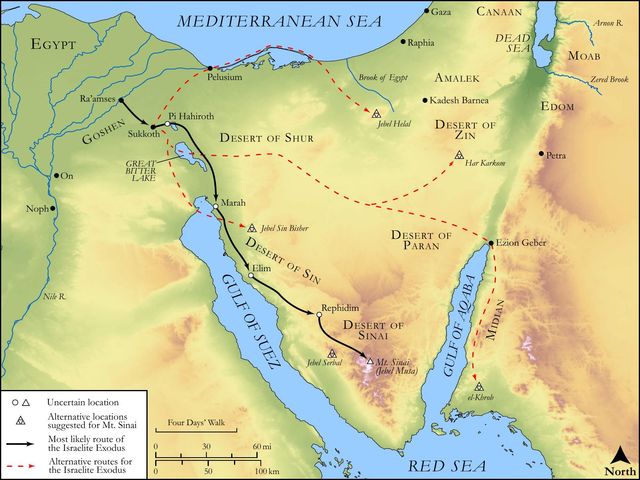
ShowHideAccording to Exodus 19:1, the Israelites arrived at the wilderness of Sinai "in the third month after the children of Israel were gone forth out of the land of Egypt." This implies a journey of approximately two to three months from their exodus, including their time at various encampments such as Elim, Rephidim, and other locations, as detailed in the narrative of their wilderness travels found in Exodus 15-18.
Christ-Centered Fulfillment
ShowHideExodus 19:2, with Israel's deliberate encampment "before the mount" of Sinai, powerfully foreshadows the ultimate divine encounter and the perfect fulfillment of God's covenant purposes found in Jesus Christ. While Sinai represented the giving of the Law, establishing a covenant based on human obedience and starkly revealing humanity's inherent inability to perfectly fulfill God's righteous demands (Romans 3:20), Christ is the living embodiment and perfect fulfillment of that very Law (Matthew 5:17). The awe-inspiring, yet terrifying, presence of God on Sinai, marked by fire, smoke, and the blast of a trumpet (Exodus 19:18-19), stands in stark contrast to the approachable grace and truth fully revealed in Jesus Christ (John 1:17). He is the true "mount" of God, not a physical peak, but the very dwelling place of God's presence, through whom a new and infinitely better covenant is established—one not written on stone tablets but powerfully inscribed upon human hearts by the Spirit (Jeremiah 31:31-34). Our "camping before the mount" now is to come by faith to Christ, the mediator of this new and living covenant, where we find not fear and condemnation, but abundant forgiveness, unhindered access to God, and eternal life through His perfect and complete sacrifice (Hebrews 12:22-24).