


Esther 6:11
Bible text: King James Version (1769 Blayney text) · Public domain
Bible text: King James Version with Strong's numbers · Public domain
Bible text: Berean Standard Bible · Public domain
Bible text: American Standard Version (1901) · Public domain
Bible text: World English Bible, Messianic edition · Public domain
Bible text: Geneva Bible (1599) · Public domain
Bible text: Young's Literal Translation · Public domain
- וַיִּקַּחvai·yi·Kachand he tookH3947Conj-w ¦ V-Qal-ConsecImperf-3msVerb Qal Consecutive Imperfect 3rd Singular Masculineוַandיִּקַּחhe took
- הָמָןha·ManHamanH2001N-proper-mNoun Proper Masculine
- אֶת'et<obj.>H853DirObjMParticle Object Indicator
- הַלְּבוּשׁha·le·Vushthe clothingH3830Art ¦ N-msNoun Singular Masculine Absoluteהַtheלְּבוּשׁclothing
- וְאֶתve·'Etand <obj.>H853Conj-w ¦ DirObjMParticle Object Indicatorוְandאֶת<obj.>
- הַסּוּסha·Susthe horseH5483Art ¦ N-msNoun Singular Masculine Absoluteהַtheסּוּסhorse
- וַיַּלְבֵּשׁvai·yal·Beshand he clothedH3847Conj-w ¦ V-Hiphil-ConsecImperf-3msVerb Hiphil Consecutive Imperfect 3rd Singular Masculineוַandיַּלְבֵּשׁhe clothed
- אֶת'et<obj.>H853DirObjMParticle Object Indicator
- מָרְדֳּכָיma·re·do·KhaiMordecaiH4782N-proper-mNoun Proper Masculine
- וַיַּרְכִּיבֵהוּvai·yar·ki·Ve·huand he made ride himH7392Conj-w ¦ V-Hiphil-ConsecImperf-3ms ¦ 3msVerb Hiphil Consecutive Imperfect 3rd Singular Masculineוַandיַּרְכִּיבֵhe made rideהוּhim
- בִּרְחוֹבbir·Chovin [the] open place ofH7339Prep-b ¦ N-fscNoun Singular Feminine Constructבִּinרְחוֹב[the] open place of
- הָעִירha·'Irthe cityH5892Art ¦ N-fsNoun Singular Feminine Absoluteהָtheעִירcity
- וַיִּקְרָאvai·yik·Ra'and he proclaimedH7121Conj-w ¦ V-Qal-ConsecImperf-3msVerb Qal Consecutive Imperfect 3rd Singular Masculineוַandיִּקְרָאhe proclaimed
- לְפָנָיוle·fa·Nav<to> before himH6440Prep-l ¦ N-mpc ¦ 3msNoun Plural Masculine Constructלְ<to>פָנָיbeforeוhim
- כָּכָהKa·khahthusH3602AdvAdverb
- יֵעָשֶׂהye·'a·Sehit will be doneH6213V-Niphal-Imperf-3msVerb Niphal Imperfect 3rd Singular Masculine
- לָאִישׁla·'Ishfor the manH376Prep-l ¦ N-msNoun Singular Masculine Absoluteלָfor theאִישׁman
- אֲשֶׁר'a·SherwhomH834RelParticle Relative
- הַמֶּלֶךְha·Me·lekhthe kingH4428Art ¦ N-msNoun Singular Masculine Absoluteהַtheמֶּלֶךְking
- חָפֵץcha·Fetzhe delightsH2654V-Qal-Perf-3msVerb Qal Perfect 3rd Singular Masculine
- בִּיקָרוֹbi·ka·Roin his honorH3366Prep-b ¦ N-msc ¦ 3msNoun Singular Masculine Constructבִּinיקָרhonorוֹhis
English is a literal word-by-word gloss of the Hebrew, not the KJV's wording. Why?
This is the original text the KJV's translators worked from — each Hebrew word with its own literal English meaning in this verse, prepared by scholars at Tyndale House, Cambridge. The KJV translates whole sentences, not word by word, so its wording differs: one Hebrew word can become several English words, and the KJV may choose “the LORD” where the gloss reads “Yahweh”. Both are faithful — they answer different questions. For the KJV's own rendering, switch to the KJV text.
Details
See on the biblical-era maps
Study this verse
Public-domain commentary
Matthew Henry
From his Commentary on the Whole Bible. Henry comments on passages, not single verses — this entry covers Esther 6:4–11. His two-level outline is real structure in the source text, so it is rendered as structure.
It is now morning, and people begin to stir.
I.Haman is so impatient to get Mordecai hanged that he comes early to court, to be ready at the king's levee, before any other business is brought before him, to get a warrant for his execution (Est 6:4), which he makes sure that he shall have at the first word. The king would gratify him in a greater thing than that; and he could tell the king that he was so confident of the justice of his request, and the king's favour to him in it, that he had got the gallows ready: one word from the king would complete his satisfaction.
II.The king is so impatient to have Mordecai honoured that he sends to know who is in the court that is fit to be employed in it.
Word is brought him that Haman is in the court, Est 6:5. Let him come in, says the king, the fittest man to be made use of both in directing and in dispensing the king's favour; and the king knew nothing of any quarrel he had with Mordecai. Haman is brought in immediately, proud of the honour done him in being admitted into the king's bed-chamber, as it should seem, before he was up; for let the king but give orders for the dignifying of Mordecai, and he will be easy in his mind and try to sleep. Now Haman thinks he has the fairest opportunity he can wish for to solicit against Mordecai; but the king's heart is as full as his, and it is fit he should speak first.
III.The king asks Haman how he should express his favour to one whom he had marked for a favourite:
What shall be done to the man whom the king delights to honour? Est 6:6. Note, It is a good property in kings, and other superiors, to delight in bestowing rewards and not to delight in punishing. Parents and masters should take a pleasure in commending and encouraging that which is good in those under their charge.
IV.Haman concludes that he himself is the favourite intended, and therefore prescribes the highest expressions of honour that could, for once, be bestowed upon a subject. His proud heart presently suggested, "To whom will the king delight to do honour more than to myself? No one deserves it so well as I," thinks Haman, "nor stands so fair for it." See how men's pride deceives them.
1.Haman had a better opinion of his merits than there was cause for: he thought none so worthy of honour as himself. It is a foolish thing for us thus to think ourselves the only deserving persons, or more deserving than any other. The deceitfulness of our own hearts appears in nothing so much as in the good conceit we have of ourselves and our own performances, against which we should therefore constantly watch and pray.
2.He had a better opinion of his interest than there was reason for. He thought the king loved and valued no one but himself, but he was deceived. We should suspect that the esteem which others profess for us is not so great as it seems to be or as we are sometimes willing to believe it is, that we may not think too well of ourselves nor place too much confidence in others. Now Haman thinks he is carving out honour for himself, and therefore does it very liberally, Est 6:8, Est 6:9. Nay, he does it presumptuously, prescribing honours too great to be conferred upon any subject, that he must be dressed in the royal robes, wear the royal crown, and ride on the king's own horse; in short, he must appear in all the pomp and grandeur of the king himself, only he must not carry the sceptre, the emblem of power. He must be attended by one of the king's most noble princes, who must be his lacquey, and all the people must be made to take notice of him and do him reverence; for he must ride in state through the streets, and it must be proclaimed before him, for his honour, and the encouragement of all to seek the ruler's favour, Thus shall it be done to the man whom the king delights to honour, which had the same intention with that which was proclaimed before Joseph, Bow the knee; for every good subject will honour those whom the king delights to honour. And shall not every good Christian then honour those whom the King of kings delights to honour and call the saints that are on the earth the excellent ones?
V.The king confounds him with a positive order that he should immediately go himself and put all this honour upon Mordecai the Jew, Est 6:10.
If the king had but said, as Haman expected, Thou art the man, what a fair opportunity would he have had to do the errand he came on, and to desire that, to grace the solemnity of his triumphs, Mordecai, his sworn enemy, might be hanged at the same time! But how is he thunderstruck when the king bids him not to order all this to be done, but to do it himself to Mordecai the Jew, the very man he hated above all men and whose ruin he was now designing! Now, it is to no purpose to think of moving any thing to the king against Mordecai when he is the man whom the king delights to honour. Solomon says, The heart of the king is unsearchable (Pro 25:3), but it is not unchangeable.
VI.Haman dares not dispute nor so much as seem to dislike the king's order, but, with the greatest regret and reluctance imaginable, brings it to Mordecai, who I suppose did no more cringe to Haman now than he had done, valuing his counterfeit respect no more than he had valued his concealed malice. The apparel is brought, Mordecai is dressed up, and rides in state through the city, recognized as the king's favourite, Est 6:11. It is hard to say which of the two put a greater force upon himself, proud Haman in putting this honour upon Mordecai, or humble Mordecai in accepting it: the king would have it so, and both must submit. Upon this account it was agreeable to Mordecai as it was an indication of the king's favour, and gave hope that Esther would prevail for the reversing of the edict against the Jews.
Historical interpretation
Five Centuries of Reception
3 surviving comments on this verse. Each one is dated, so this reads as a timeline rather than a list.
Select a marker to jump to its quote. Markers stagger vertically where authors wrote within a few decades of each other.
Mordecai was also persecuted as Jesus was persecuted. Mordecai was persecuted by the wicked Haman; and Jesus was persecuted by the rebellious people. Mordecai by his prayer delivered his people from the hands of Haman; and Jesus by his prayer delivered his people from the hands of Satan. Mordecai was delivered from the hands of his persecutor; and Jesus was rescued from the hands of his persecutors. Because Mordecai sat and clothed himself with sackcloth, he saved Esther and his people from the sword; and because Jesus clothed himself with a body and was illuminated, he saved the church and its children from death. Because of Mordecai, Esther was well pleasing to the king and went in and sat instead of Vashti, who did not do his will; and because of Jesus, the church is well pleasing to God and has gone in to the king, instead of the congregation that did not his will. Mordecai admonished Esther that she should fast with her maidens, that she and her people might be delivered from the hands of Haman; and Jesus admonished the church and its children [to fast], that it and its children might be delivered from the wrath. Mordecai received the honor of Haman, his persecutor; and Jesus received great glory from his Father, instead of his persecutors who were of the foolish people. Mordecai trod on the neck of Haman, his persecutor; and as for Jesus, his enemies shall be put under his feet. Before Mordecai, Haman proclaimed, “Thus shall it be done to the man, in honoring whom the king is pleased”; as for Jesus, his preachers came out of the people who persecuted him, and they said, “This is Jesus the Son of God.” The blood of Mordecai was required at the hand of Haman and his sons; and "the blood of Jesus,” his persecutors took “on themselves and on their children.”
Above all we should at least know that there are three origins of our thoughts, that is, from God, from the devil and from ourselves. They come from God when he deigns to visit us with the illumination of the Holy Spirit, lifting us up to a higher state of progress; or when we have made but little progress or through sloth have been overcome, he chastens us with most salutary compunction; or when he discloses to us heavenly mysteries or turns our purpose and will to better actions. This was the case of king Ahasuerus when, chastened by the Lord, he was prompted to ask for the books of the annals, by which he was reminded of the good deeds of Mordecai and promoted him to a position of the highest honor and at once recalled his most cruel sentence concerning the slaughter of the Jews.
After all, the preachers of the sacred Gospel and the leaders of the Church, who glisten with their practice of all the virtues and the beauty of wisdom and—because they are the limbs of the supreme king—are nobly honored with the diadem of royal rank, are ordered to mount the king’s horse, i.e. to take charge of and govern the people of the faithful in whose hearts the king of Heaven himself presides continuously. The Lord himself is told about these horses by the prophet Habakkuk: “Going up you shall mount your horses, and your horsemanship is salvation” (Habakkuk 3).
It is to Mordecai that Haman, the spiritual enemy of the people of God, offers—if unwillingly—the appropriate obeisance, since the persecutors of the holy Church are often forced with the assent of Heaven to preach with accurate testimony the praises of the Church, even though they do so in a spirit of disdain; because once the truth has been revealed, the guilty cannot conceal what is obvious by hiding it away.
Continue studying Esther 6:11 across the web’s major study libraries — every link below opens this exact verse, chapter, or book on the destination site.
Read & Compare
 BibleGatewayThis verse in more than 200 translations and 70 languages.
 Bible.comThe YouVersion reader — hundreds of translations, reading plans, and highlights.
 ESV.orgCrossway's official English Standard Version reader.
 NET BibleThe NET translation with 60,000+ translators' notes on every rendering decision.
 STEP BibleTyndale House's free study tool — original text, vocabulary, and scholarly resources.
 BibliaLogos Bible Software's free web reader.
 USCCBThe New American Bible (Revised Edition) with the U.S. bishops' study notes.
Commentaries
 BibleHub CommentariesDozens of classic commentaries on this verse, gathered on one page.
 StudyLightMore than 100 commentary sets — the largest collection on the web.
 BibleRefPlain-English commentary on what this verse means, verse by verse.
 Enduring WordDavid Guzik's free commentary on this chapter, widely used by Bible teachers.
 Bible Study ToolsVerse commentary alongside Greek and Hebrew study aids.
Original Language & Research
- BibleHub InterlinearThe verse word by word — original language, transliteration, and English.
- BibleHub LexiconEvery word's original-language definition and Strong's entry.
 Blue Letter BibleDeep-study tools — Strong's numbers, concordance, and word studies.
 SefariaThe Hebrew text with Rashi and centuries of Jewish commentary.
Sermons, Hymns & Audio


TrulyRandomVerse is not affiliated with these sites and doesn’t control their content. They’re linked because they’re genuinely useful.
Summary
Esther 6:11 marks a profound and ironic turning point in the book of Esther, depicting a dramatic reversal of fortune orchestrated by divine providence. Haman, the arrogant prime minister who had meticulously plotted the destruction of Mordecai and the entire Jewish people, is compelled by King Ahasuerus to publicly honor Mordecai, his despised enemy. This scene of Haman leading Mordecai through the city streets, proclaiming the king's high esteem, serves as a powerful testament to God's unseen hand at work, transforming Haman's intended humiliation of Mordecai into his own public disgrace and foreshadowing his ultimate downfall.
Context
ShowHideLiterary Context
This pivotal verse immediately follows King Ahasuerus's sleepless night, during which he commanded the royal chronicles to be read. This seemingly mundane act led to the discovery that Mordecai had previously foiled an assassination plot against the king but had never been rewarded (Esther 2:21-23). Simultaneously, Haman, swollen with pride from his recent dinner with the king and queen, arrived at the palace early, intending to request permission to hang Mordecai on the gallows he had prepared (Esther 5:14). Instead, the king, unaware of Haman's malicious intent, unwittingly asked Haman how best to honor a man the king delighted in. Haman, assuming the king was referring to him, offered extravagant suggestions for public honor, which the king then commanded him to carry out for Mordecai. This setup creates a profound moment of dramatic irony, where Haman's self-serving advice becomes the very instrument of his own humiliation and Mordecai's exaltation.
Historical & Cultural Context
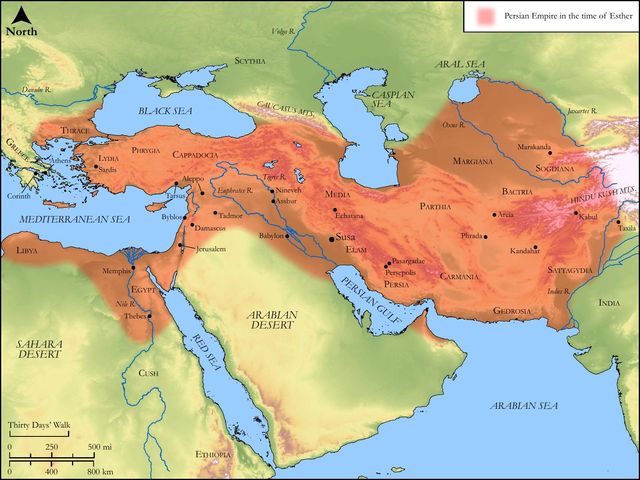
The events unfold within the vast and powerful Achaemenid Persian Empire, renowned for its elaborate court protocols and grand public displays of power and favor. Public honor, especially when bestowed by the king, was a significant form of recognition and a clear indicator of one's social and political standing. To be paraded through the city on the king's horse, wearing royal apparel, and with a herald proclaiming one's praise, was the highest form of public commendation, akin to a royal triumph. Conversely, to be forced to bestow such honor upon an enemy, particularly one whom you intended to execute, was an unparalleled public disgrace. This context underscores the extreme humiliation Haman endures and the immense elevation Mordecai experiences, all within the strict framework of Persian imperial customs.
Key Themes
ShowHideEsther 6:11 masterfully weaves together several profound themes. Firstly, it strikingly exemplifies divine reversal and poetic justice. The very man who meticulously plotted Mordecai's demise and sought to eradicate his people (Esther 3:5-6) is now forced to become the instrument of his enemy's public exaltation. This moment powerfully foreshadows Haman's ultimate downfall and death on his own gallows (Esther 7:9-10). Secondly, the verse highlights the destructive nature of pride and its inevitable humiliation. Haman's immense pride, which fueled his hatred and destructive plans, is met with ultimate public disgrace, perfectly illustrating the biblical principle that "Pride goes before destruction, a haughty spirit before a fall" (Proverbs 16:18). Finally, though God's name is conspicuously absent from the entire book of Esther, His sovereign providence is unmistakably evident. This verse is a prime example of God orchestrating a series of seemingly coincidental events—the king's insomnia, the reading of the chronicles, Haman's timely arrival—to protect His people and bring about His perfect justice, demonstrating His unseen yet active control over human affairs (Romans 8:28).
Exposition and Analysis
ShowHideKey Word Analysis
ShowHideThis word (H2001) refers to the Persian vizier, Haman, whose foreign derivation underscores his antagonistic role against the Jewish people. In this verse, his name becomes synonymous with the agent of his own public shame, forced to participate in the exaltation of the very man he sought to destroy.
The root (H2654) means "to incline to" or "to be pleased with, desire." Here, it signifies the king's deep favor and pleasure in the man he wishes to honor. The irony is profound, as Haman assumes this delight is directed towards himself, only to discover it is for Mordecai, forcing him to act against his own bitter inclinations.
Derived from a root meaning "value," this term (H3366) denotes dignity, costliness, and public esteem. In Esther 6:11, it signifies the highest form of royal recognition, involving a visible and public manifestation of elevated status and favor. The forced act of bestowing such "honour" upon Mordecai is the ultimate public degradation for Haman.
This primitive root (H7121) means "to call out to," "to proclaim," or "to publish." Its use here emphasizes the public, authoritative, and inescapable nature of Haman's announcement. It was not a private whisper but a loud, official declaration, ensuring that the entire city witnessed and understood Mordecai's elevated status and Haman's unwilling participation.
Verse Breakdown
ShowHide"Then took Haman the apparel and the horse"
This clause immediately establishes Haman's forced servitude and the direct reversal of his malicious intentions. The man who had meticulously prepared gallows for Mordecai is now compelled to handle the very instruments of royal honor—the king's own garments and horse—for his despised enemy. This act is a public stripping of Haman's dignity and a profound visual representation of the tables turning.
"and arrayed Mordecai"
Haman's act of dressing Mordecai is deeply symbolic. It signifies Haman's involuntary participation in Mordecai's elevation and his own debasement. The one who wished to see Mordecai stripped of his life is now dressing him in symbols of life, honor, and royal favor, a powerful visual representation of divine justice at work.
"and brought him on horseback through the street of the city"
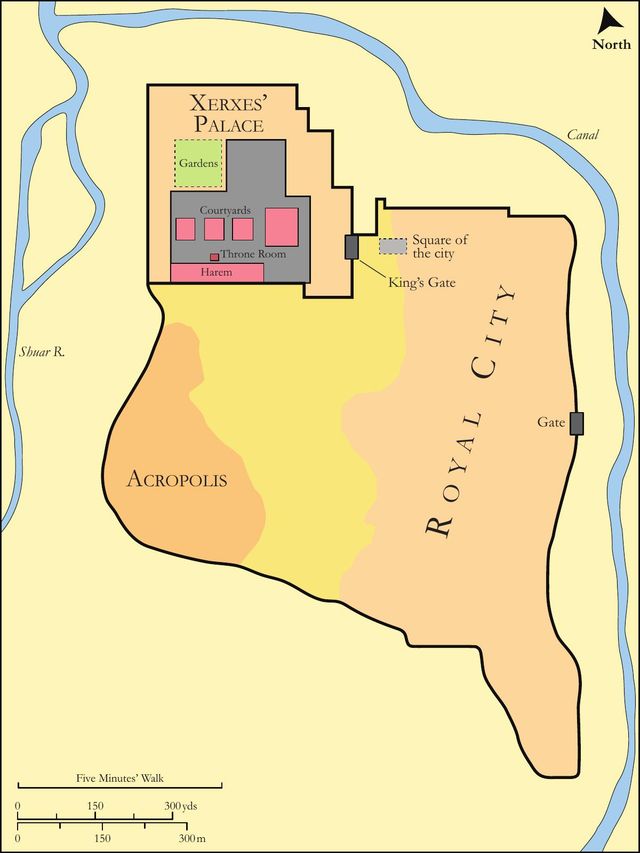
This describes the public procession, the ultimate act of public exaltation for Mordecai and public humiliation for Haman. Haman, the second most powerful man in the empire, is reduced to the role of a servant, leading his enemy through the very streets where he expected to see him disgraced or executed. The "street of the city" implies the most prominent public thoroughfare, ensuring maximum visibility for this ironic spectacle.
"and proclaimed before him, Thus shall it be done unto the man whom the king delighteth to honour."
This is the climax of the irony. Haman is forced to utter the very words he himself suggested, believing they would be spoken for him. His own advice, born of pride and self-exaltation, becomes the instrument of his public disgrace and Mordecai's public acclaim. The proclamation serves as a formal, public declaration of Mordecai's restored and elevated status, sealing Haman's humiliation.
Literary Devices
ShowHideEsther 6:11 is exceptionally rich with literary devices, primarily Irony. Both Situational Irony and Dramatic Irony are powerfully at play. Situational Irony is vividly evident in the complete reversal of roles: Haman, the architect of Mordecai's destruction, becomes his unwilling servant and herald, while Mordecai, the intended victim, becomes the recipient of the highest royal honor. Dramatic Irony is heightened by the reader's knowledge of Haman's true intentions and his earlier conversation with the king, which Haman misinterprets as referring to himself. This creates a profound sense of anticipation and satisfaction as Haman unknowingly orchestrates his own humiliation. The scene also employs Foreshadowing, hinting strongly at Haman's ultimate downfall and Mordecai's eventual rise to power. Furthermore, Symbolism is present in the royal apparel and horse, which are not merely objects but powerful symbols of the king's favor, authority, and the recipient's elevated status. The entire scene is a masterclass in narrative tension and resolution, building towards a moment of profound poetic justice.
Theological and Thematic Connections
ShowHideEsther 6:11 stands as a powerful testament to God's sovereign control over human affairs, even when His name is not explicitly mentioned in the narrative. It illustrates that divine justice often operates through seemingly coincidental or profoundly ironic events, turning the schemes of the wicked against themselves and exalting the humble. This dramatic reversal underscores the biblical principle that God opposes the proud but shows favor to the humble, demonstrating His ability to bring about His purposes through the most unlikely of circumstances and individuals. It reassures believers that even in the face of grave threats and seemingly insurmountable odds, God is actively working behind the scenes to protect His people and execute His righteous judgment.
Reflection and Application
ShowHideEsther 6:11 offers profound lessons for the believer's journey, reminding us that our circumstances can change dramatically and swiftly, often in ways we least expect. It underscores that God is actively working behind the scenes, even when we cannot perceive His hand or understand His timing. In moments of adversity, when it seems that evil is triumphing and our plans are thwarted, this passage calls us to patience and trust, assuring us that God's timing is perfect and His justice is certain. It serves as a powerful warning against the destructive nature of pride, envy, and malicious intent, demonstrating how these vices can lead to one's own downfall and public humiliation. Conversely, Mordecai's quiet faithfulness, integrity, and humility, even in the face of existential threats, ultimately lead to unexpected exaltation and vindication. We are encouraged to live with integrity, trusting that God will ultimately honor those who honor Him, even if it means enduring a season of apparent disadvantage or obscurity. This passage inspires us to cling to hope, knowing that God delights in reversing the fortunes of His faithful servants and confounding the plans of their adversaries.
Questions for Reflection
ShowHideFAQ
ShowHideWhy is God's name not explicitly mentioned in the book of Esther, yet His hand is so clearly evident in this verse?
ShowHideThe absence of God's explicit name in Esther is unique among biblical books, yet His providential activity is arguably more pronounced than in many other narratives. This stylistic choice emphasizes the concept of God's "hidden hand" or "unseen providence." In Esther 6:11, the chain of seemingly coincidental events—the king's insomnia, the reading of the chronicles, Mordecai's unrewarded service, Haman's perfectly timed arrival, and the king's unwitting question—all converge to bring about a divine reversal. This demonstrates that God's sovereignty does not always manifest through overt miracles or direct pronouncements, but often through the subtle orchestration of human choices and circumstances, working all things for the good of His people and the fulfillment of His purposes (Romans 8:28). It teaches us to discern God's active presence even in the ordinary and the unexpected.
What is the significance of Haman being forced to lead Mordecai on the king's horse and proclaim his honor?
ShowHideThis act carries profound symbolic and ironic significance. In ancient Persian culture, riding the king's horse and wearing royal apparel was the highest form of public honor, reserved for those in the king's utmost favor. For Haman, the second most powerful man in the empire, to be forced to bestow this honor upon Mordecai, his despised enemy whom he intended to hang, was the ultimate public humiliation. It was a complete reversal of power and status, transforming Haman from the intended executioner into the unwilling herald of his enemy's exaltation. This moment visually encapsulates the principle of poetic justice, where the wicked's own schemes boomerang back upon them, and the humble are exalted (Proverbs 26:27).
Christ-Centered Fulfillment
ShowHideEsther 6:11, with its profound reversal of fortunes and the public exaltation of the humble over the proud, powerfully foreshadows the ultimate triumph and reversal accomplished through Jesus Christ. Haman's forced humiliation and Mordecai's unexpected honor point to the cosmic reversal initiated by God in the person of Christ. Just as Haman, in his pride, sought to destroy Mordecai but was ultimately brought low, so too did Satan, in his arrogance, seek to destroy humanity through sin and death. Yet, in the ultimate act of divine irony, God used the very instrument of death—the cross—to defeat Satan and bring about salvation and life for humanity (Colossians 2:15). Jesus, the truly humble One, "who, being in the form of God, thought it not robbery to be equal with God: But made himself of no reputation, and took upon him the form of a servant, and was made in the likeness of men" (Philippians 2:6-7). Because of His obedience and profound self-abasement, God "hath highly exalted him, and given him a name which is above every name: That at the name of Jesus every knee should bow, of things in heaven, and things in earth, and things under the earth" (Philippians 2:9-10). Thus, the public honor bestowed upon Mordecai by an earthly king pales in comparison to the universal honor and eternal exaltation bestowed upon Christ by God the Father, securing victory over all His enemies and offering true honor and eternal life to all who believe in Him (John 12:32).