


Esther 6:4
Bible text: King James Version (1769 Blayney text) · Public domain
Bible text: King James Version with Strong's numbers · Public domain
Bible text: Berean Standard Bible · Public domain
Bible text: American Standard Version (1901) · Public domain
Bible text: World English Bible, Messianic edition · Public domain
Bible text: Geneva Bible (1599) · Public domain
Bible text: Young's Literal Translation · Public domain
- וַיֹּאמֶרvai·Yo·merand he saidH559Conj-w ¦ V-Qal-ConsecImperf-3msVerb Qal Consecutive Imperfect 3rd Singular Masculineוַandיֹּאמֶרhe said
- הַמֶּלֶךְha·Me·lekhthe kingH4428Art ¦ N-msNoun Singular Masculine Absoluteהַtheמֶּלֶךְking
- מִיmiwho?H4310InterrogPronoun Interrogative
- בֶחָצֵרve·cha·Tzer[is] in the courtH2691Prep-b ¦ N-csNoun Singular common gender Absoluteבֶ[is] in theחָצֵרcourt
- וְהָמָןve·ha·Manand HamanH2001Conj-w ¦ N-proper-mNoun Proper MasculineוְandהָמָןHaman
- בָּאBa'he had comeH935V-Qal-Perf-3msVerb Qal Perfect 3rd Singular Masculine
- לַחֲצַרla·cha·Tzarto [the] court ofH2691Prep-l ¦ N-cscNoun Singular common gender Constructלַtoחֲצַר[the] court of
- בֵּיתbeit[the] house ofH1004N-mscNoun Singular Masculine Construct
- הַמֶּלֶךְha·Me·lekhthe kingH4428Art ¦ N-msNoun Singular Masculine Absoluteהַtheמֶּלֶךְking
- הַחִיצוֹנָהha·Chi·tzo·Nah<the> outerH2435Art ¦ Adj-fsAdjective Singular Feminine Absoluteהַ<the>חִיצוֹנָהouter
- לֵאמֹרle·Morto speakH559Prep-l ¦ V-Qal-InfVerb Qal Infinitive Constructלֵtoאמֹרspeak
- לַמֶּלֶךְla·Me·lekhto the kingH4428Prep-l ¦ N-msNoun Singular Masculine Absoluteלַto theמֶּלֶךְking
- לִתְלוֹתlit·lOtto hangH8518Prep-l ¦ V-Qal-InfVerb Qal Infinitive Constructלִtoתְלוֹתhang
- אֶת'et<obj.>H853DirObjMParticle Object Indicator
- מָרְדֳּכַיma·re·do·KhaiMordecaiH4782N-proper-mNoun Proper Masculine
- עַל'alonH5921PrepPreposition
- הָעֵץha·'Etzthe gallowsH6086Art ¦ N-msNoun Singular Masculine Absoluteהָtheעֵץgallows
- אֲשֶׁר'a·SherwhichH834RelParticle Relative
- הֵכִיןhe·Khinhe had preparedH3559V-Hiphil-Perf-3msVerb Hiphil Perfect 3rd Singular Masculine
- לוֹlofor himPrep-l ¦ 3msSuffix Personal 3rd Singular Masculineלforוֹhim
English is a literal word-by-word gloss of the Hebrew, not the KJV's wording. Why?
This is the original text the KJV's translators worked from — each Hebrew word with its own literal English meaning in this verse, prepared by scholars at Tyndale House, Cambridge. The KJV translates whole sentences, not word by word, so its wording differs: one Hebrew word can become several English words, and the KJV may choose “the LORD” where the gloss reads “Yahweh”. Both are faithful — they answer different questions. For the KJV's own rendering, switch to the KJV text.
Details
See on the biblical-era maps
Study this verse
Public-domain commentary
Matthew Henry
From his Commentary on the Whole Bible. Henry comments on passages, not single verses — this entry covers Esther 6:4–11. His two-level outline is real structure in the source text, so it is rendered as structure.
It is now morning, and people begin to stir.
I.Haman is so impatient to get Mordecai hanged that he comes early to court, to be ready at the king's levee, before any other business is brought before him, to get a warrant for his execution (Est 6:4), which he makes sure that he shall have at the first word. The king would gratify him in a greater thing than that; and he could tell the king that he was so confident of the justice of his request, and the king's favour to him in it, that he had got the gallows ready: one word from the king would complete his satisfaction.
II.The king is so impatient to have Mordecai honoured that he sends to know who is in the court that is fit to be employed in it.
Word is brought him that Haman is in the court, Est 6:5. Let him come in, says the king, the fittest man to be made use of both in directing and in dispensing the king's favour; and the king knew nothing of any quarrel he had with Mordecai. Haman is brought in immediately, proud of the honour done him in being admitted into the king's bed-chamber, as it should seem, before he was up; for let the king but give orders for the dignifying of Mordecai, and he will be easy in his mind and try to sleep. Now Haman thinks he has the fairest opportunity he can wish for to solicit against Mordecai; but the king's heart is as full as his, and it is fit he should speak first.
III.The king asks Haman how he should express his favour to one whom he had marked for a favourite:
What shall be done to the man whom the king delights to honour? Est 6:6. Note, It is a good property in kings, and other superiors, to delight in bestowing rewards and not to delight in punishing. Parents and masters should take a pleasure in commending and encouraging that which is good in those under their charge.
IV.Haman concludes that he himself is the favourite intended, and therefore prescribes the highest expressions of honour that could, for once, be bestowed upon a subject. His proud heart presently suggested, "To whom will the king delight to do honour more than to myself? No one deserves it so well as I," thinks Haman, "nor stands so fair for it." See how men's pride deceives them.
1.Haman had a better opinion of his merits than there was cause for: he thought none so worthy of honour as himself. It is a foolish thing for us thus to think ourselves the only deserving persons, or more deserving than any other. The deceitfulness of our own hearts appears in nothing so much as in the good conceit we have of ourselves and our own performances, against which we should therefore constantly watch and pray.
2.He had a better opinion of his interest than there was reason for. He thought the king loved and valued no one but himself, but he was deceived. We should suspect that the esteem which others profess for us is not so great as it seems to be or as we are sometimes willing to believe it is, that we may not think too well of ourselves nor place too much confidence in others. Now Haman thinks he is carving out honour for himself, and therefore does it very liberally, Est 6:8, Est 6:9. Nay, he does it presumptuously, prescribing honours too great to be conferred upon any subject, that he must be dressed in the royal robes, wear the royal crown, and ride on the king's own horse; in short, he must appear in all the pomp and grandeur of the king himself, only he must not carry the sceptre, the emblem of power. He must be attended by one of the king's most noble princes, who must be his lacquey, and all the people must be made to take notice of him and do him reverence; for he must ride in state through the streets, and it must be proclaimed before him, for his honour, and the encouragement of all to seek the ruler's favour, Thus shall it be done to the man whom the king delights to honour, which had the same intention with that which was proclaimed before Joseph, Bow the knee; for every good subject will honour those whom the king delights to honour. And shall not every good Christian then honour those whom the King of kings delights to honour and call the saints that are on the earth the excellent ones?
V.The king confounds him with a positive order that he should immediately go himself and put all this honour upon Mordecai the Jew, Est 6:10.
If the king had but said, as Haman expected, Thou art the man, what a fair opportunity would he have had to do the errand he came on, and to desire that, to grace the solemnity of his triumphs, Mordecai, his sworn enemy, might be hanged at the same time! But how is he thunderstruck when the king bids him not to order all this to be done, but to do it himself to Mordecai the Jew, the very man he hated above all men and whose ruin he was now designing! Now, it is to no purpose to think of moving any thing to the king against Mordecai when he is the man whom the king delights to honour. Solomon says, The heart of the king is unsearchable (Pro 25:3), but it is not unchangeable.
VI.Haman dares not dispute nor so much as seem to dislike the king's order, but, with the greatest regret and reluctance imaginable, brings it to Mordecai, who I suppose did no more cringe to Haman now than he had done, valuing his counterfeit respect no more than he had valued his concealed malice. The apparel is brought, Mordecai is dressed up, and rides in state through the city, recognized as the king's favourite, Est 6:11. It is hard to say which of the two put a greater force upon himself, proud Haman in putting this honour upon Mordecai, or humble Mordecai in accepting it: the king would have it so, and both must submit. Upon this account it was agreeable to Mordecai as it was an indication of the king's favour, and gave hope that Esther would prevail for the reversing of the edict against the Jews.
Historical interpretation
Five Centuries of Reception
3 surviving comments on this verse. Each one is dated, so this reads as a timeline rather than a list.
Select a marker to jump to its quote. Markers stagger vertically where authors wrote within a few decades of each other.
Mordecai was also persecuted as Jesus was persecuted. Mordecai was persecuted by the wicked Haman; and Jesus was persecuted by the rebellious people. Mordecai by his prayer delivered his people from the hands of Haman; and Jesus by his prayer delivered his people from the hands of Satan. Mordecai was delivered from the hands of his persecutor; and Jesus was rescued from the hands of his persecutors. Because Mordecai sat and clothed himself with sackcloth, he saved Esther and his people from the sword; and because Jesus clothed himself with a body and was illuminated, he saved the church and its children from death. Because of Mordecai, Esther was well pleasing to the king and went in and sat instead of Vashti, who did not do his will; and because of Jesus, the church is well pleasing to God and has gone in to the king, instead of the congregation that did not his will. Mordecai admonished Esther that she should fast with her maidens, that she and her people might be delivered from the hands of Haman; and Jesus admonished the church and its children [to fast], that it and its children might be delivered from the wrath. Mordecai received the honor of Haman, his persecutor; and Jesus received great glory from his Father, instead of his persecutors who were of the foolish people. Mordecai trod on the neck of Haman, his persecutor; and as for Jesus, his enemies shall be put under his feet. Before Mordecai, Haman proclaimed, “Thus shall it be done to the man, in honoring whom the king is pleased”; as for Jesus, his preachers came out of the people who persecuted him, and they said, “This is Jesus the Son of God.” The blood of Mordecai was required at the hand of Haman and his sons; and "the blood of Jesus,” his persecutors took “on themselves and on their children.”
Above all we should at least know that there are three origins of our thoughts, that is, from God, from the devil and from ourselves. They come from God when he deigns to visit us with the illumination of the Holy Spirit, lifting us up to a higher state of progress; or when we have made but little progress or through sloth have been overcome, he chastens us with most salutary compunction; or when he discloses to us heavenly mysteries or turns our purpose and will to better actions. This was the case of king Ahasuerus when, chastened by the Lord, he was prompted to ask for the books of the annals, by which he was reminded of the good deeds of Mordecai and promoted him to a position of the highest honor and at once recalled his most cruel sentence concerning the slaughter of the Jews.
What can the fact that the king spent a sleepless night mean but that which is written in the Psalm: “See, the one who guards Israel will not sleep or slumber” (Psalms 121). They read before him the histories and chronicles of earlier times in which are mentioned the loyalty and the good deeds of Mordecai, because the king of the saints and the prince of the kings of the earth—who remains the same within himself—comes to know with a single glance the course of all the ages and the actions of every individual; and nothing ever escapes his notice, rather everything lies open before him in his sight. Jeremiah tells us about this: “For it is he who has strengthened all things, and Israel is the staff of his inheritance; the Lord of hosts is his name” (Jeremiah 10). Hence the apostle also says: “For in Christ Jesus there is no ‘is’ and ‘was’, but in him there is always ‘is’.” And likewise: “Jesus Christ is the same yesterday and today, and for all time” (Hebrews 13).
So Mordecai’s actions are mentioned before this king, because the good deeds of the holy teachers never fade from his memory; rather it is as it is written: “The righteous will be in eternal memory, he will have no fear of bad tidings” (Psalms 112).
Continue studying Esther 6:4 across the web’s major study libraries — every link below opens this exact verse, chapter, or book on the destination site.
Read & Compare
 BibleGatewayThis verse in more than 200 translations and 70 languages.
 Bible.comThe YouVersion reader — hundreds of translations, reading plans, and highlights.
 ESV.orgCrossway's official English Standard Version reader.
 NET BibleThe NET translation with 60,000+ translators' notes on every rendering decision.
 STEP BibleTyndale House's free study tool — original text, vocabulary, and scholarly resources.
 BibliaLogos Bible Software's free web reader.
 USCCBThe New American Bible (Revised Edition) with the U.S. bishops' study notes.
Commentaries
 BibleHub CommentariesDozens of classic commentaries on this verse, gathered on one page.
 StudyLightMore than 100 commentary sets — the largest collection on the web.
 BibleRefPlain-English commentary on what this verse means, verse by verse.
 Enduring WordDavid Guzik's free commentary on this chapter, widely used by Bible teachers.
 Bible Study ToolsVerse commentary alongside Greek and Hebrew study aids.
Original Language & Research
- BibleHub InterlinearThe verse word by word — original language, transliteration, and English.
- BibleHub LexiconEvery word's original-language definition and Strong's entry.
 Blue Letter BibleDeep-study tools — Strong's numbers, concordance, and word studies.
 SefariaThe Hebrew text with Rashi and centuries of Jewish commentary.
Sermons, Hymns & Audio


TrulyRandomVerse is not affiliated with these sites and doesn’t control their content. They’re linked because they’re genuinely useful.
Summary
Esther 6:4 masterfully captures a moment of profound dramatic irony and divine orchestration, revealing King Ahasuerus's unexpected inquiry about who is present in the court coinciding precisely with the arrival of Haman, who has come with the sinister intention of requesting permission to execute Mordecai on the very gallows he meticulously prepared. This pivotal verse serves as the narrative's turning point, setting the stage for a miraculous reversal of fortune where Haman's malevolent plot is unwittingly transformed into an instrument of Mordecai's exaltation and Haman's own catastrophic downfall, highlighting God's hidden yet sovereign hand in human affairs.
Context
ShowHideLiterary Context
This verse immediately follows King Ahasuerus's sleepless night and his subsequent command for the royal chronicles to be read aloud. During this reading, it is discovered that Mordecai had previously foiled an assassination plot against the king but had never received any reward or recognition. The king's sudden realization of this significant oversight creates an immediate need for counsel regarding how to properly honor Mordecai. It is into this precise moment of royal contemplation and administrative oversight that Haman, driven by his burning hatred for Mordecai and his desire for immediate vengeance, arrives in the outer court. The narrative brilliantly juxtaposes the king's benevolent concern for justice with Haman's malevolent intent, highlighting the unseen hand of God guiding these seemingly random events towards His ultimate purpose of delivering His people.
Historical & Cultural Context
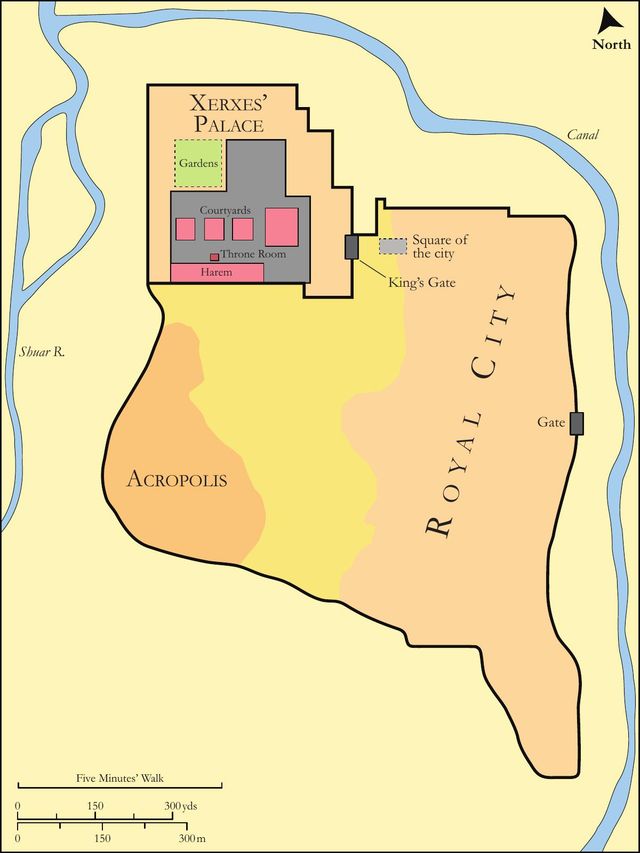
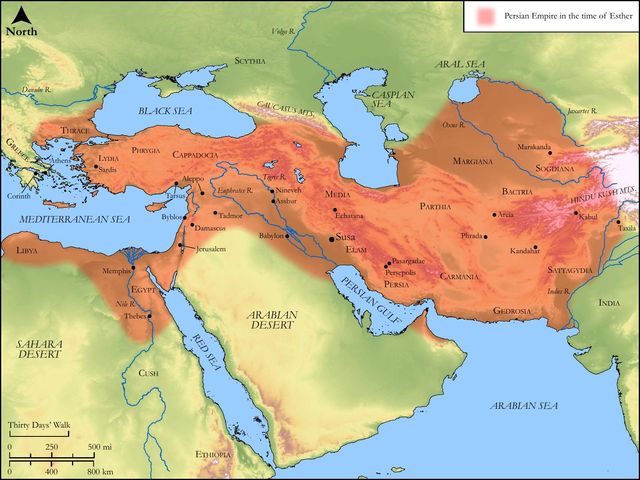
The setting for this dramatic encounter is the vast Persian Empire under King Ahasuerus (commonly identified as Xerxes I, who reigned from 486-465 BC), specifically within the opulent royal palace in Susa, one of the empire's capitals. The "outward court" (Hebrew: חָצֵר הַמֶּלֶךְ הַחִיצוֹנָה, chatser ha-melekh ha-chitzonah) refers to the formal outer courtyard of the king's house, a designated area where high-ranking officials and supplicants would wait for an audience with the monarch. Access to the king's inner presence was highly restricted and often perilous, typically requiring a royal summons, as famously illustrated by Esther's own risk in approaching the king. Haman's presence there signifies his elevated status and his expectation of immediate access due to the perceived urgency of his request. The "gallows" (Hebrew: עֵץ, ets, literally "tree" or "wood") refers to a tall stake or impaling pole, a common and particularly brutal form of public execution among the Persians, designed to inflict maximum humiliation and terror upon the condemned. Haman's preparation of a fifty-cubit-high (approximately 75 feet) structure specifically for Mordecai, as detailed in Esther 5:14, underscores his extreme malice and his desire for Mordecai's public disgrace and utter annihilation.
Key Themes
ShowHideThis verse serves as a powerful illustration of Divine Providence and Timing, a central theme of the Book of Esther, even though God's name is conspicuously absent from the entire narrative. Haman's arrival at the exact moment the king is pondering how to honor Mordecai is presented not as mere coincidence but as a divinely orchestrated "kairos" moment, demonstrating God's sovereign control over seemingly random human events and decisions. It also vividly displays Dramatic Irony, as the audience is fully aware of Haman's sinister purpose while the king is not, and Haman himself remains blissfully oblivious to the king's current preoccupation. This creates a palpable tension that powerfully foreshadows the great reversal about to unfold. Furthermore, the verse highlights the destructive nature of Pride and Malice, as Haman's consuming hatred and arrogance lead him directly into the very trap he intended for another, a theme that culminates in his own execution on the gallows he prepared, as recounted in Esther 7:9-10.
Exposition and Analysis
ShowHideKey Word Analysis
ShowHideThis term refers to "a yard (as inclosed by a fence); also a hamlet (as similarly surrounded with walls); court, tower, village." In the context of a royal palace, "court" signifies an open, enclosed area, specifically the "outward court" where officials and supplicants would wait for an audience. Haman's presence here indicates his high status and expectation of access, yet also his position outside the most intimate royal chambers, awaiting summons. His presence in this formal waiting area precisely when the king seeks counsel underscores the perfect timing of the unfolding divine plan.
This word literally means "a tree (from its firmness); hence, wood (plural sticks); carpenter, gallows, helve, pine, plank, staff, stalk, stick, stock, timber, tree, wood." While translated "gallows" in the KJV, the Hebrew term simply denotes a "tree" or "wood." This suggests a tall, upright stake or pole, upon which a person would be impaled or hanged. The use of this more general term emphasizes the brutal and humiliating nature of Haman's intended execution for Mordecai, designed not just to kill but to publicly disgrace him. The very "tree" Haman prepared ironically foreshadows the "tree" upon which he himself would eventually be hanged.
This primitive root means "to be erect (i.e. stand perpendicular); hence (causatively) to set up, in a great variety of applications, whether literal (establish, fix, prepare, apply), or figurative (appoint, render sure, proper or prosperous); certain(-ty), confirm, direct, faithfulness, fashion, fasten, firm, be fitted, be fixed, frame, be meet, ordain, order, perfect, (make) preparation, prepare (self), provide, make provision, (be, make) ready, right, set (aright, fast, forth), be stable, (e-) stablish, stand, tarry, very deed." Haman's "preparation" of the gallows implies a deliberate, meticulous, and firm establishment of the structure, highlighting his premeditated malice and the certainty with which he expected Mordecai's demise. This word choice underscores the depth of his hatred and the careful planning behind his vengeful plot.
Verse Breakdown
ShowHide"And the king said, Who [is] in the court?"
This opening clause immediately establishes the king's active search for someone, indicating an urgent need for consultation or action. His question is posed in a moment of critical decision-making, following his discovery of Mordecai's unrewarded loyalty. The king's inquiry is not casual but purposeful, creating the perfect window for divine intervention and setting the stage for the dramatic irony.
"Now Haman was come into the outward court of the king's house"
This phrase introduces the dramatic coincidence and impeccable timing. Haman's arrival is presented as happening precisely at the moment the king is seeking counsel. The emphatic "Now" (וְהָמָן בָּא, ve-haman ba) highlights the perfect, almost uncanny, synchronization of Haman's presence, setting the stage for the unfolding irony. He has positioned himself strategically, expecting to be granted an audience, oblivious to the king's true preoccupation.
"to speak unto the king to hang Mordecai on the gallows that he had prepared for him."
This final clause starkly reveals Haman's malevolent purpose. His sole intent in seeking the king's presence is to secure immediate permission for Mordecai's execution. The phrase "that he had prepared for him" underscores Haman's meticulous, premeditated malice and the deeply personal nature of his hatred, adding a profound layer of tragic irony, as this very structure, so carefully "prepared," will become the instrument of his own demise.
Literary Devices
ShowHideEsther 6:4 is exceptionally rich in literary devices, most notably Dramatic Irony. The audience is fully aware of the king's recent discovery of Mordecai's loyalty and his earnest desire to honor him, while Haman, consumed by his own overwhelming pride and vengeful plot, remains entirely ignorant of this crucial development. This creates a palpable tension and anticipation, as Haman unknowingly walks into a situation that will completely reverse his fortunes. The verse also employs powerful Juxtaposition, placing the king's benevolent inquiry (seeking to reward) directly against Haman's malevolent intent (seeking to destroy), highlighting the stark contrast between their purposes and intensifying the dramatic effect. Furthermore, there is strong Foreshadowing in Haman's meticulous preparation of the gallows "for him" (Mordecai), which subtly but powerfully hints at the ultimate reversal where Haman himself will be hanged on his own device, fulfilling the principle of poetic justice and divine retribution.
Theological and Thematic Connections
ShowHideEsther 6:4 serves as a profound testament to the hidden yet intensely active providence of God. Though His name is never explicitly mentioned in the book, His sovereign hand is undeniably at work, orchestrating seemingly random events—a king's sleepless night, the opportune reading of chronicles, and a perfectly timed arrival—to bring about His purposes. This verse powerfully illustrates that God can use the intentions of evil individuals to accomplish His good will, turning human malice into an instrument of divine justice and deliverance. It underscores the theme that pride often precedes a fall, and those who plot evil against others often find their schemes turned back upon themselves. The narrative encourages believers to trust in God's perfect timing and His ability to work behind the scenes, even when His presence feels obscured, to protect His people and fulfill His promises.
Reflection and Application
ShowHideEsther 6:4 offers profound and enduring lessons for contemporary believers. It reminds us that even in life's most challenging or seemingly chaotic moments, when God's presence feels hidden or His plan unclear, He is actively at work, orchestrating circumstances for His purposes and the ultimate good of His people. This narrative encourages us to cultivate a deep and unwavering trust in God's perfect timing, recognizing that His delays are not denials, and His silence does not imply His absence or inaction. Furthermore, Haman's dramatic downfall serves as a stark and sobering warning against the corrosive dangers of unchecked pride, malice, and vengeance. When we harbor ill will, allow bitterness to fester, or actively seek to harm others, we often become ensnared in our own traps, just as Haman did. Instead, we are called to live with integrity, humility, and compassion, trusting that God is the ultimate arbiter of justice and that He will ultimately vindicate the righteous and bring down the proud. Our response to perceived injustice or opposition should be one of prayerful reliance on God's sovereignty and patient endurance, rather than succumbing to bitterness or retaliatory schemes.
Questions for Reflection
ShowHideFAQ
ShowHideWhy is God's name not mentioned in the Book of Esther, even in such a clearly providential moment?
ShowHideThe absence of God's explicit name in the Book of Esther is a unique literary feature that actually magnifies the theme of divine providence. Rather than direct, overt intervention, God's hand is seen in the intricate orchestration of seemingly coincidental events: the king's sleepless night, the opportune reading of the chronicles, Mordecai's unrewarded loyalty, and Haman's perfectly timed arrival. This subtle portrayal emphasizes that God works behind the scenes, through natural means and human decisions, to accomplish His purposes. It teaches us that God is active even when He is not overtly named, and His sovereignty extends over all circumstances, including those that appear purely secular or random. The book powerfully illustrates that God's faithfulness to His covenant people does not depend on miraculous displays but on His constant, though hidden, supervision of history, ensuring His plans prevail.
What is the significance of the "gallows" in this verse, and why is it so tall?
ShowHideThe "gallows" (Hebrew: עֵץ, ets, meaning "tree" or "wood") refers to a tall stake or impaling pole, a common and particularly brutal method of execution in ancient Persia designed for maximum public humiliation and terror. Haman's decision to make it fifty cubits high (approximately 75 feet) specifically for Mordecai, as mentioned in Esther 5:14, underscores his extreme hatred and his desire for Mordecai's public disgrace and a powerful display of his own authority. The immense height would ensure that Mordecai's body would be visible from a great distance, serving as a chilling warning to anyone who defied Haman or the king. The profound irony, of course, is that this very structure becomes the instrument of Haman's own demise, fulfilling the biblical principle that the wicked often fall into the pit they dig for others (Psalm 7:15).
Christ-Centered Fulfillment
ShowHideEsther 6:4, with its dramatic reversal and the hidden divine hand orchestrating events, powerfully foreshadows the ultimate reversal and deliverance wrought by Jesus Christ. Haman, the arrogant enemy of God's people, meticulously prepares a gallows (a "tree") for Mordecai, only to be impaled upon it himself. This mirrors the greater drama where Satan, the ultimate adversary, orchestrated the crucifixion of Jesus on a "tree" or "gallows" (Acts 5:30), believing it to be his ultimate victory and the end of God's plan. Yet, through this very act of apparent defeat, God turned the enemy's scheme into the means of salvation for all humanity, triumphing over sin and death. Just as Mordecai, through no merit of his own, was exalted by the king precisely at the moment his enemy sought his destruction, so too was Christ, having "humbled himself by becoming obedient to the point of death, even death on a cross," ultimately "exalted him to the highest place and gave him the name that is above every name" (Philippians 2:8-9). The gallows prepared for Mordecai, and ultimately used for Haman, points to the cross, which, though a symbol of death and shame, became the instrument of God's greatest triumph over sin and death, delivering His people from eternal destruction and offering them exaltation with Christ (Ephesians 2:6).