


Esther 9:3
Bible text: King James Version (1769 Blayney text) · Public domain
Bible text: King James Version with Strong's numbers · Public domain
Bible text: Berean Standard Bible · Public domain
Bible text: American Standard Version (1901) · Public domain
Bible text: World English Bible, Messianic edition · Public domain
Bible text: Geneva Bible (1599) · Public domain
Bible text: Young's Literal Translation · Public domain
- וְכָלve·kholand allH3605Conj-w ¦ N-mscNoun Singular Masculine Constructוְandכָלall
- שָׂרֵיsa·Rei[the] officials ofH8269N-mpcNoun Plural Masculine Construct
- הַמְּדִינוֹתha·me·di·Notthe provincesH4082Art ¦ N-fpNoun Plural Feminine Absoluteהַtheמְּדִינוֹתprovinces
- וְהָאֲחַשְׁדַּרְפְּנִיםve·ha·'a·chash·dar·pe·Nimand the satrapsH323Conj-w ¦ Art ¦ N-mpNoun Plural Masculine Absoluteוְandהָtheאֲחַשְׁדַּרְפְּנִיםsatraps
- וְהַפַּחוֹתve·ha·pa·Chotand the governorsH6346Conj-w ¦ Art ¦ N-fpNoun Plural Feminine Absoluteוְandהַtheפַּחוֹתgovernors
- וְעֹשֵׂיve·'o·Seiand [the] doers ofH6213Conj-w ¦ V-Qal-Prtcpl-mpVerb Qal Participle Plural Masculine Constructוְandעֹשֵׂי[the] doers of
- הַמְּלָאכָהha·me·la·Khahthe workH4399Art ¦ N-fsNoun Singular Feminine Absoluteהַtheמְּלָאכָהwork
- אֲשֶׁר'a·SherwhichH834RelParticle Relative
- לַמֶּלֶךְla·Me·lekh[belonged] to the kingH4428Prep-l ¦ N-msNoun Singular Masculine Absoluteלַ[belonged] to theמֶּלֶךְking
- מְנַשְּׂאִיםme·na·se·'Im[were] supportingH5375V-Piel-Prtcpl-mpVerb Piel Participle Plural Masculine Absolute
- אֶת'et<obj.>H853DirObjMParticle Object Indicator
- הַיְּהוּדִיםhai·ye·hu·Dimthe JewsH3064Art ¦ N-mpNoun Gentilic Plural Masculine AbsoluteהַtheיְּהוּדִיםJews
- כִּיkiforH3588PrtParticle Conditional
- נָפַלna·Falit had fallenH5307V-Qal-Perf-3msVerb Qal Perfect 3rd Singular Masculine
- פַּחַדpa·chad[the] dread ofH6343N-mscNoun Singular Masculine Construct
- מָרְדֳּכַיma·re·do·KhaiMordecaiH4782N-proper-mNoun Proper Masculine
- עֲלֵיהֶם'a·lei·Hemon themH5921Prep ¦ 3mpPrepositionעֲלֵיonהֶםthem
English is a literal word-by-word gloss of the Hebrew, not the KJV's wording. Why?
This is the original text the KJV's translators worked from — each Hebrew word with its own literal English meaning in this verse, prepared by scholars at Tyndale House, Cambridge. The KJV translates whole sentences, not word by word, so its wording differs: one Hebrew word can become several English words, and the KJV may choose “the LORD” where the gloss reads “Yahweh”. Both are faithful — they answer different questions. For the KJV's own rendering, switch to the KJV text.
Details
See on the biblical-era maps
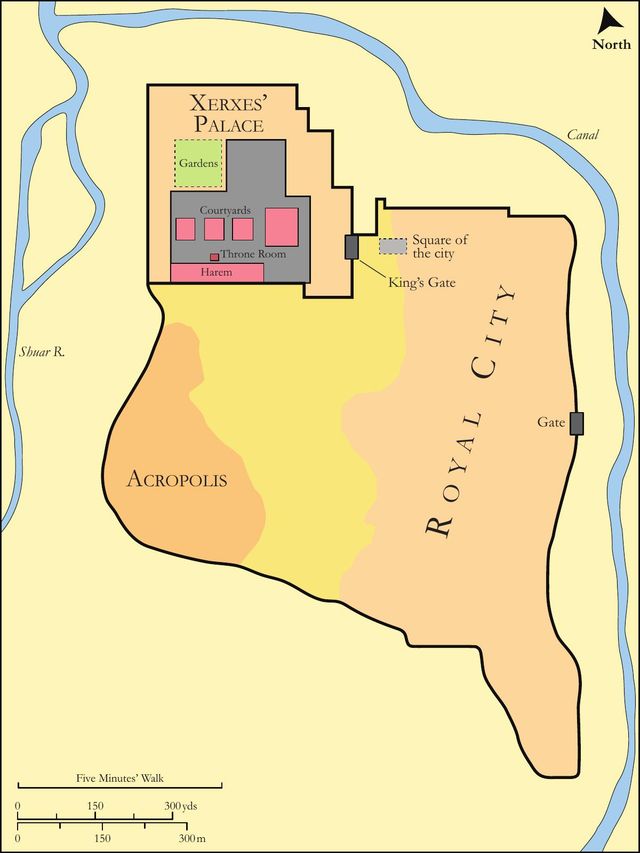
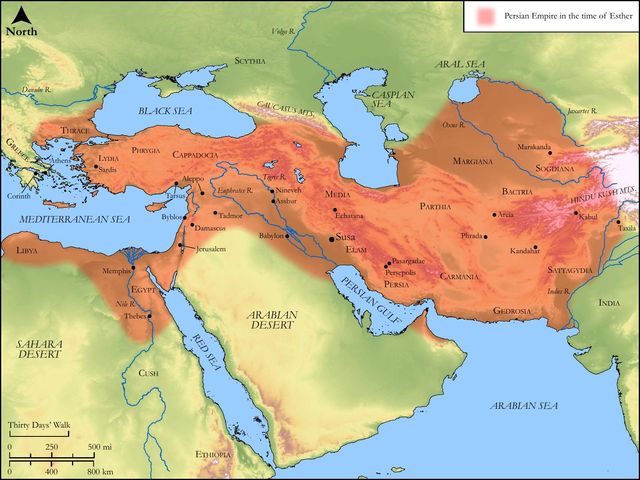
Study this verse
Public-domain commentary
Matthew Henry
From his Commentary on the Whole Bible. Henry comments on passages, not single verses — this entry covers Esther 9:1–19. His four-level outline is real structure in the source text, so it is rendered as structure.
We have here a decisive battle fought between the Jews and their enemies, in which the Jews were victorious. Neither side was surprised; for both had notice of it long enough before, so that it was a fair trial of skill between them. Nor could either side call the other rebels, for they were both supported by the royal authority.
I.The enemies of the Jews were the aggressors.
They hoped, notwithstanding the latter edict, to have power over them, by virtue of the former (Est 9:1), and made assaults upon them accordingly; they formed themselves into bodies, and joined in confederacy against them, to seek their hurt, Est 9:2. The Chaldee paraphrase says that none appeared against the Jews but Amalekites only, who were infatuated, and had their hearts hardened, as Pharaoh's against Israel, to take up arms to their own destruction. Some had such an inveterate implacable malice against the Jews that Haman's fall and Mordecai's advancement, instead of convincing them, did but exasperate them, and make them the more outrageous and resolute to cut all their throats. The sons of Haman, particularly, vowed to avenge their father's death, and pursue his designs, which they call noble and brave, whatever hazards they run; and a strong party they had formed both in Shushan and in the provinces in order hereunto. Fight they would, though they plainly saw Providence fight against them; and thus they were infatuated to their own destruction. If they would have sat still, and attempted nothing against the people of God, not a hair of their head would have fallen to the ground: but they cannot persuade themselves to do that; they must be meddling, though it prove to their own ruin, and roll a burdensome stone, which will return upon them.
II.But the Jews were the conquerors.
That very day when the king's decree for their destruction was to be put in execution, and which the enemies thought would have been their day, proved God's day, Psa 37:13. It was turned to the contrary of what was expected, and the Jews had rule over those that hated them, Est 9:1. We are here told,
1.What the Jews did for themselves (Est 9:2): They gathered themselves together in their cities, embodied, and stood upon their defence, offering violence to none, but bidding defiance to all. If they had not had an edict to warrant them, they durst not have done it, but, being so supported, they strove lawfully. Had they acted separately, each family apart, they would have been an easy prey to their enemies; but acting in concert, and gathering together in their cities, they strengthened one another, and durst face their enemies. Vis unita fortior - forces act most powerfully when combined. Those that write of the state of the Jews at this day give this as a reason why, though they are very numerous in many parts, and very rich, they are yet so despicable, because they are generally so selfish that they cannot incorporate, and, being under the curse of dispersion, they cannot unite, nor (as here) gather together, for, if they could, they might with their numbers and wealth threaten the most potent states.
2.What the rulers of the provinces did for them, under the influence of Mordecai. All the officers of the king, who, by the bloody edict, were ordered to help forward their destruction (Est 3:12, Est 3:13), conformed to the latter edict (which, being an estopel against an estopel, had set the matter at large, and left them at liberty to observe which they pleased) and helped the Jews, which turned the scale on their side, Est 9:3. The provinces would generally do as the rulers of the provinces inclined, and therefore their favouring the Jews would greatly further them. But why did they help them? Not because they had any kindness for them, but because the fear of Mordecai fell upon them, he having manifestly the countenance both of God and the king. They all saw it their interest to help Mordecai's friends because he was not only great in the king's house, and caressed by the courtiers (as many are who have no intrinsic worth to support their reputation), but his fame for wisdom and virtue went out thence throughout all the provinces: in all places he was extolled as a great man. He was looked upon also as a thriving man, and one that waxed greater and greater (Est 9:4), and therefore for fear of him all the king's officers helped the Jews. Great men may, by their influence, do a great deal of good; many that fear not God will stand in awe of them.
3.What God did for them: he struck all people with a fear of them (Est 9:2), as the Canaanites were made afraid of Israel (Jos 2:9, Jos 5:1), so that, though they had so much hardiness as to assault them, yet they had not courage to prosecute the assault. Their hearts failed them when they came to engage, and none of the men of might could find their hands.
4.What execution they did hereupon: No man could withstand them (Est 9:2), but they did what they would to those that hated them, Est 9:5. So strangely were the Jews strengthened and animated, and their enemies weakened and dispirited, that none of those who had marked themselves for their destruction escaped, but they smote them with the stroke of the sword. Particularly,
(1.)On the thirteenth day of the month Adar they slew in the city Shushan 500 men (Est 9:6) and the ten sons of Haman, Est 9:10. The Jews, when on the feast of Purim they read this book of Esther, oblige themselves to read the names of Haman's ten sons all in one breath, without any pause, because they say that they were all killed together, and all gave up the ghost just in the same moment. - Buxt. Synag. Jud. c. 24. The Chaldee paraphrase says that, when these ten were slain, Zeresh, with seventy more of his children, escaped, and afterwards begged their bread from door to door.
(2.)On the fourteenth day they slew in Shushan 300 more, who had escaped the sword on the former day of execution, Est 9:15. This Esther obtained leave of the king for them to do, for the greater terror of their enemies, and the utter crushing of that malignant party of men. The king had taken account of the numbers that were put to the sword the first day (Est 9:11), and told Esther (Est 9:12), and asked her what more she desired. "Nothing," says she, "but commission to do such another day's work." Esther surely was none of the blood-thirsty, none of those that delight in slaughter, but she had some very good reasons that moved her to make this request. She also desired that the dead bodies of Haman's ten sons might be hanged up on the gallows on which their father was hanged, for the greater disgrace of the family and terror of the party (Est 9:13), and it was done accordingly, Est 9:14. It is supposed that they were hanged in chains and left hanging for some time.
(3.)The Jews in the country kept to their orders, and slew no more of their enemies than what were slain the thirteenth day, which were in all, among all the provinces, 75,000, Est 9:16. If all these were Amalekites (as the Jews say), surely now it was that the remembrance of Amalek was utterly put out, Exo 17:14. However, that which justifies them in the execution of so many is that they did it in their own just and necessary defence; they stood for their lives, authorized to do so by the law of self-preservation, as well as by the king's decree.
(4.)In these several executions it is taken notice of that on the prey they laid not their hand, Est 9:10, Est 9:15, Est 9:16. The king's commission had warranted them to take the spoil of their enemies for a prey (Est 8:11), and a fair opportunity they had of enriching themselves with it; if Haman's party had prevailed, no doubt, they would have made use of their authority to seize the goods and estates of the Jews, Est 3:13. But the Jews would not do so by them,
[1.]That they might, to the honour of their religion, evidence a holy and generous contempt of worldly wealth, in imitation of their father Abraham, who scorned to enrich himself with the spoils of Sodom.
[2.]That they might make it appear that they aimed at nothing but their own preservation, and used their interest at court for the saving of their lives, not for the raising of their estates.
[3.]Their commission empowered them to destroy the families of their enemies, even the little ones and the women, Est 8:11. But their humanity forbade them to do that, though that was designed against them. They slew none but those they found in arms; and therefore they did not take the spoil, but left it to the women and little ones, whom they spared, for their subsistence; otherwise as good slay them as starve them, take away their lives as take away their livelihoods. Herein they acted with a consideration and compassion well worthy of imitation.
5.What a satisfaction they had in their deliverance. The Jews in the country cleared themselves of their enemies on the thirteenth day of the month, and they rested on the fourteenth day (Est 9:17), and made that a thanksgiving day, Est 9:19. The Jews in Shushan, the royal city, took two days for their military execution, so that they rested on the fifteenth day, and made that their thanksgiving-day, Est 9:18. Both of them celebrated their festival the very day after they had finished their work and gained their point. When we have received signal mercies from God we ought to be quick and speedy in making our thankful returns to him, while the mercy is fresh and the impressions of it are most sensible.
Historical interpretation
Historical reception
2 surviving comments on this verse. Each one is dated, so this reads as a timeline rather than a list.
“All the officials of the provinces, the satraps and the governors, and the royal officials were supporting the Jews.” Certainly the praiseworthy action of the holy teachers and the strength of their virtue have contributed great honor and respect to the multitude of the faithful. Therefore, in the Acts of the Apostles, in which we read how the first preachers of the gospel labored to teach the word of God and cared for it, it is written, “They devoted themselves to the apostles’ teaching and fellowship, to the breaking of bread and prayer. Awe came upon everyone, because many wonders and signs were being done by the apostles.”
That is, the praiseworthy actions of our sacred teachers and the power of the virtues gave great honor and reverence to the mass of the faithful. Hence in the Acts of the Apostles, where we read that these first preachers of the Gospel were trying to teach and to care for the word of God, it is written: “For they were devoted to the teachings of the apostles, and to breaking bread together, and to their prayers. Every soul was full of awe, and many wonders and signs were being done by the apostles in Jerusalem, and there was great fear among them all” (Acts 2). And likewise: “Many signs and wonders were being performed among the people by the apostles; and they were all together in the portico of Solomon. But none of the others dared to join them, though the people were paying them homage” (Acts 5).
Continue studying Esther 9:3 across the web’s major study libraries — every link below opens this exact verse, chapter, or book on the destination site.
Read & Compare
 BibleGatewayThis verse in more than 200 translations and 70 languages.
 Bible.comThe YouVersion reader — hundreds of translations, reading plans, and highlights.
 ESV.orgCrossway's official English Standard Version reader.
 NET BibleThe NET translation with 60,000+ translators' notes on every rendering decision.
 STEP BibleTyndale House's free study tool — original text, vocabulary, and scholarly resources.
 BibliaLogos Bible Software's free web reader.
 USCCBThe New American Bible (Revised Edition) with the U.S. bishops' study notes.
Commentaries
 BibleHub CommentariesDozens of classic commentaries on this verse, gathered on one page.
 StudyLightMore than 100 commentary sets — the largest collection on the web.
 BibleRefPlain-English commentary on what this verse means, verse by verse.
 Enduring WordDavid Guzik's free commentary on this chapter, widely used by Bible teachers.
 Bible Study ToolsVerse commentary alongside Greek and Hebrew study aids.
Original Language & Research
- BibleHub InterlinearThe verse word by word — original language, transliteration, and English.
- BibleHub LexiconEvery word's original-language definition and Strong's entry.
 Blue Letter BibleDeep-study tools — Strong's numbers, concordance, and word studies.
 SefariaThe Hebrew text with Rashi and centuries of Jewish commentary.
Sermons, Hymns & Audio


TrulyRandomVerse is not affiliated with these sites and doesn’t control their content. They’re linked because they’re genuinely useful.
Summary
Esther 9:3 marks a pivotal moment in the narrative of reversal and vindication for the Jewish people, revealing the profound and far-reaching impact of Mordecai's elevated status and the king's new decree. On the very day designated for their annihilation, the Jewish communities across the vast Persian Empire, empowered by royal edict, found unexpected and crucial allies in the highest echelons of the imperial administration. This verse specifically details how all provincial rulers, lieutenants, deputies, and various royal officers actively assisted the Jews in their defense against adversaries, a direct and compelling consequence of the widespread awe, respect, and apprehension—the "fear"—that Mordecai's newfound authority inspired throughout the realm. It powerfully underscores a complete reversal of fortune, demonstrating the intricate workings of divine providence through human agency and established political power.
Context
ShowHideLiterary Context
This verse is strategically placed at the zenith of the book's dramatic narrative reversal, immediately preceding the detailed account of the Jews' victorious self-defense and the subsequent institution of the Feast of Purim. The preceding chapters, particularly Esther 8 and Esther 9, meticulously chronicle the astonishing shift from impending genocide to triumphant vindication. Following Queen Esther's courageous intercession and Mordecai's astute counsel, King Ahasuerus issued a counter-decree, granting the Jews the legal right to defend themselves and exact retribution upon those who sought their harm on the very day Haman had originally planned their extermination (Esther 8:11-13). Mordecai's elevation to the position of prime minister, adorned in royal robes and wielding immense authority (Esther 8:15), serves as the direct catalyst for the unprecedented actions of the officials described in this verse. The immediate verses, Esther 9:1-2, set the stage, emphasizing that the day Haman intended for the Jews' destruction became the day they gained the upper hand, with no one able to withstand them.
Historical & Cultural Context
The Persian Empire, particularly during the reign of Ahasuerus (widely identified with Xerxes I), represented the largest empire of that day, extending from India to Ethiopia and encompassing 127 provinces (Esther 1:1). Effective governance of such an immense and diverse territory necessitated a complex and highly structured administrative hierarchy, which included provincial governors (satraps), military commanders (lieutenants), and various royal officials (deputies and officers). These officials were directly accountable to the king and his highest-ranking ministers, their power and security intrinsically linked to royal favor. The king's decrees in Persia were considered absolute and, once issued and sealed, irrevocable (Esther 8:8). This meant Haman's original genocidal edict could not simply be rescinded. Therefore, the counter-decree was not a revocation but a crucial legal authorization, empowering the Jews to defend themselves. The "fear of Mordecai" that "fell upon them" vividly reflects the deeply ingrained hierarchical and power-driven nature of the Persian court, where the favor of the king and his chief minister dictated one's standing and security. To oppose Mordecai was, in essence, to oppose the king's newly expressed will, a perilous act with severe consequences.
Key Themes
ShowHideThis verse powerfully encapsulates several core themes woven throughout the Book of Esther. Firstly, Divine Reversal and Providence is paramount; despite the conspicuous absence of God's explicit name, His providential hand is undeniably at work, orchestrating a complete and miraculous turnaround from certain doom to decisive victory. The very instruments of the state, initially intended for the Jews' destruction, are now compelled to facilitate their protection and triumph. Secondly, Mordecai's Influence and Authority stands central; his elevation to prime minister instills a profound "fear" (encompassing awe, respect, and apprehension) in the officials, compelling them to enforce the new decree with remarkable zeal. This highlights the transformative power of righteous leadership when divinely positioned. Thirdly, Justice and Protection are vividly demonstrated; the officials, who were initially bound to enforce Haman's wicked genocidal edict (Esther 3:13), now actively assist the Jews, ensuring that justice is served and the vulnerable are protected through a divinely orchestrated turn of events and human cooperation.
Exposition and Analysis
ShowHideKey Word Analysis
ShowHideThis term (H8269) refers to a "head person of any rank or class," encompassing captains, chiefs, generals, governors, and princes. In this context, it denotes the highest-ranking officials, typically provincial governors or satraps, who wielded significant authority over large territories. Their active assistance signifies a top-down, comprehensive enforcement of the new decree and a clear acknowledgment of Mordecai's immense influence.
This is a Persian loanword (H323), specifically referring to a high-ranking official, often a satrap or governor of a main province. Its inclusion alongside "rulers" emphasizes the comprehensive and pervasive nature of the administrative support for the Jews, extending to the most powerful regional authorities who were direct representatives of the king's power.
While often translated as "dread" or "terror," pachad (H6343) in this context signifies a profound and compelling awe, respect, and apprehension of Mordecai's power and the severe consequences of opposing him or the king's new decree. It was not merely paralyzing fright but a strategic acknowledgment of his immense authority and the king's favor, compelling these officials to act decisively and in accordance with the new royal directive.
Verse Breakdown
ShowHide"And all the rulers of the provinces, and the lieutenants, and the deputies, and officers of the king, helped the Jews;"
This clause meticulously lists the various levels of Persian officialdom, from the highest provincial rulers (satraps) and lieutenants (high-ranking governors) to local administrators (deputies) and general royal officers. The comprehensive nature of this enumeration underscores that the support for the Jews was widespread and emanated from every tier of the imperial bureaucracy. The active verb "helped" (Hebrew, nâsâʼ, H5375, meaning to lift, bear, or support) indicates their direct involvement and active assistance, ensuring the Jews' ability to defend themselves effectively, rather than merely standing by. This assistance was absolutely crucial in a vast empire where local enforcement was key to the implementation of any royal edict.
"because the fear of Mordecai fell upon them."
This concluding clause provides the singular, powerful, and immediate reason for the officials' unexpected and unified cooperation. Mordecai's recent elevation to prime minister, second only to the king himself, and his clear and public favor with Ahasuerus, instilled a profound sense of awe, respect, and apprehension throughout the empire. This "fear" (Hebrew, pachad, H6343) was not simply terror but a pragmatic understanding that aligning with Mordecai and the king's new decree was essential for their own political survival, advancement, and avoidance of royal displeasure. It vividly demonstrates the immense power of influence and the swift, dramatic shift in allegiance that occurred once Mordecai's position was firmly established and publicly recognized.
Literary Devices
ShowHideEsther 9:3 masterfully employs several literary devices to convey its powerful message. The verse effectively uses Synecdoche by meticulously listing various categories of officials—"rulers," "lieutenants," "deputies," and "officers"—to represent the entire administrative apparatus of the vast Persian Empire. This detailed enumeration emphasizes the pervasive and comprehensive nature of the support the Jews received, indicating that the king's counter-decree and Mordecai's influence permeated and commanded obedience from every level of government. The phrase "the fear of Mordecai fell upon them" is a clear example of Metonymy, where "fear" stands in for the powerful influence, authority, and profound respect (or apprehension of consequences) that Mordecai commanded. It is not merely an internal emotion but the tangible result of his elevated status and the undeniable backing of the king. Furthermore, the entire verse functions as a profound instance of Irony, as the very apparatus of the state that was initially mobilized to annihilate the Jews is now actively deployed to protect them, showcasing a complete and dramatic reversal of fortune orchestrated by divine providence.
Theological and Thematic Connections
ShowHideEsther 9:3 profoundly illustrates God's sovereign providence, even in a narrative where His name is conspicuously absent. It powerfully demonstrates how God can orchestrate political events and subtly influence human hearts, even those of pagan rulers and officials, to accomplish His divine purposes for His chosen people. The dramatic shift from a decree of destruction to one of authorized defense, enforced by the very powers that were initially intended to be instruments of evil, highlights a miraculous divine reversal of fortune. This verse offers a profound assurance to believers that God is actively at work behind the scenes, turning seemingly impossible and dire situations around for the ultimate good of those who trust in Him, ensuring His covenant promises endure despite formidable opposition and human wickedness.
Reflection and Application
ShowHideEsther 9:3 offers a powerful and enduring testament to the unseen yet undeniably active hand of God in the intricate affairs of humanity. It serves as a vital reminder that even when circumstances appear overwhelmingly dire and powerful, seemingly insurmountable forces are arrayed against God's people, He retains ultimate authority and possesses the power to decisively turn the tide. Just as Mordecai's influence, divinely orchestrated, shifted the hearts and actions of an entire empire, so too can God work through the most unexpected channels and individuals to bring about His perfect will. This verse profoundly encourages believers to place their unwavering trust in God's sovereignty, knowing with certainty that He is capable of transforming what appear to be impossible situations into glorious opportunities for His glory and the protection of His people. It challenges us to cultivate steadfast faithfulness and courageous resolve, emulating the spirit of Esther and Mordecai, even when facing overwhelming odds, holding firm to the conviction that God's ultimate plan will prevail over any human scheme or malevolent intent.
Questions for Reflection
ShowHideFAQ
ShowHideHow could the Persian officials suddenly "help" the Jews after Haman's decree had already been issued?
ShowHideThe original decree by Haman, sealed with the king's ring, was indeed irrevocable according to the strictures of Persian law. However, King Ahasuerus issued a counter-decree through Mordecai, which was also sealed with the king's ring (Esther 8:8). This counter-decree did not revoke or annul the first but rather empowered the Jews to defend themselves and destroy those who sought to attack them on the appointed day (Esther 8:11). With Mordecai elevated to the position of prime minister, second only to the king (Esther 8:15), his immense authority and the king's clear favor ensured that the new decree was enforced with zeal and without question. The "fear of Mordecai" falling upon the officials meant they understood it was in their best political and personal interest to support Mordecai and the Jews, as opposing them would be directly perceived as opposing the king's newly expressed and powerful will. They were not breaking the law but rather enforcing a new, overriding legal provision that clarified and expanded the rights of the Jews.
Christ-Centered Fulfillment
ShowHideEsther 9:3, though set in the Old Testament and notably lacking explicit mention of God, powerfully foreshadows the ultimate divine reversal and the comprehensive victory secured through the person and work of Jesus Christ. Just as the "fear of Mordecai"—his immense authority and the king's backing—compelled earthly powers to aid God's people, so too does the "fear of the Lord" (a profound awe, reverence, and submission to God) ultimately lead to salvation and the decisive defeat of spiritual enemies. The dramatic shift from impending destruction to triumphant vindication for the Jews in Persia finds its ultimate and glorious fulfillment in Christ's redemptive work on the cross. Humanity, under the condemnation of sin and facing certain spiritual death (Romans 6:23), was utterly helpless and without hope. Yet, through the "counter-decree" of God's sovereign grace in Christ, we are not merely empowered but are granted victory over sin and death. Christ's ascension to the right hand of the Father (Ephesians 1:20-21) establishes His supreme and universal authority over all earthly and spiritual powers, mirroring and infinitely surpassing Mordecai's elevation. The "fear" that fell upon the Persian officials is but a faint echo of the universal submission that will one day compel every knee to bow before the Lordship of Jesus (Philippians 2:9-11). He is the true and ultimate deliverer, the Lamb of God who takes away the sin of the world (John 1:29), turning our certain judgment into eternal life and glorious victory through His perfect sacrifice and triumphant resurrection (1 Corinthians 15:54-57).