


Esther 9:4
Bible text: King James Version (1769 Blayney text) · Public domain
Bible text: Berean Standard Bible · Public domain
Bible text: American Standard Version (1901) · Public domain
Bible text: World English Bible, Messianic edition · Public domain
Bible text: Geneva Bible (1599) · Public domain
Bible text: Young's Literal Translation · Public domain
- כִּיkiforH3588PrtParticle Conditional
- גָדוֹלGa·dol[was] greatH1419Adj-msAdjective Singular Masculine Absolute
- מָרְדֳּכַיma·re·do·KhaiMordecaiH4782N-proper-mNoun Proper Masculine
- בְּבֵיתbe·Veitin [the] house ofH1004Prep-b ¦ N-mscNoun Singular Masculine Constructבְּinבֵית[the] house of
- הַמֶּלֶךְha·Me·lekhthe kingH4428Art ¦ N-msNoun Singular Masculine Absoluteהַtheמֶּלֶךְking
- וְשָׁמְעוֹve·sha·me·'Oand [the] report of himH8089Conj-w ¦ N-msc ¦ 3msNoun Singular Masculine Constructוְandשָׁמְע[the] report ofוֹhim
- הוֹלֵךְho·Lekh[was] goingH1980V-Qal-Prtcpl-msVerb Qal Participle Singular Masculine Absolute
- בְּכָלbe·kholin allH3605Prep-b ¦ N-mscNoun Singular Masculine Constructבְּinכָלall
- הַמְּדִינוֹתha·me·di·Notthe provincesH4082Art ¦ N-fpNoun Plural Feminine Absoluteהַtheמְּדִינוֹתprovinces
- כִּיkiforH3588PrtParticle Conditional
- הָאִישׁha·'Ishthe manH376Art ¦ N-msNoun Singular Masculine Absoluteהָtheאִישׁman
- מָרְדֳּכַיma·re·do·KhaiMordecaiH4782N-proper-mNoun Proper Masculine
- הוֹלֵךְho·Lekh[was] goingH1980V-Qal-Prtcpl-msVerb Qal Participle Singular Masculine Absolute
- וְגָדוֹלve·ga·Doland becoming greatH1431Conj-w ¦ V-Qal-InfAbsVerb Qal Infinitive Absoluteוְandגָדוֹלbecoming great
English is a literal word-by-word gloss of the Hebrew, not the KJV's wording. Why?
This is the original text the KJV's translators worked from — each Hebrew word with its own literal English meaning in this verse, prepared by scholars at Tyndale House, Cambridge. The KJV translates whole sentences, not word by word, so its wording differs: one Hebrew word can become several English words, and the KJV may choose “the LORD” where the gloss reads “Yahweh”. Both are faithful — they answer different questions. For the KJV's own rendering, switch to the KJV text.
Details
See on the biblical-era maps
Study this verse
Public-domain commentary
Matthew Henry
From his Commentary on the Whole Bible. Henry comments on passages, not single verses — this entry covers Esther 9:1–19. His four-level outline is real structure in the source text, so it is rendered as structure.
We have here a decisive battle fought between the Jews and their enemies, in which the Jews were victorious. Neither side was surprised; for both had notice of it long enough before, so that it was a fair trial of skill between them. Nor could either side call the other rebels, for they were both supported by the royal authority.
I.The enemies of the Jews were the aggressors.
They hoped, notwithstanding the latter edict, to have power over them, by virtue of the former (Est 9:1), and made assaults upon them accordingly; they formed themselves into bodies, and joined in confederacy against them, to seek their hurt, Est 9:2. The Chaldee paraphrase says that none appeared against the Jews but Amalekites only, who were infatuated, and had their hearts hardened, as Pharaoh's against Israel, to take up arms to their own destruction. Some had such an inveterate implacable malice against the Jews that Haman's fall and Mordecai's advancement, instead of convincing them, did but exasperate them, and make them the more outrageous and resolute to cut all their throats. The sons of Haman, particularly, vowed to avenge their father's death, and pursue his designs, which they call noble and brave, whatever hazards they run; and a strong party they had formed both in Shushan and in the provinces in order hereunto. Fight they would, though they plainly saw Providence fight against them; and thus they were infatuated to their own destruction. If they would have sat still, and attempted nothing against the people of God, not a hair of their head would have fallen to the ground: but they cannot persuade themselves to do that; they must be meddling, though it prove to their own ruin, and roll a burdensome stone, which will return upon them.
II.But the Jews were the conquerors.
That very day when the king's decree for their destruction was to be put in execution, and which the enemies thought would have been their day, proved God's day, Psa 37:13. It was turned to the contrary of what was expected, and the Jews had rule over those that hated them, Est 9:1. We are here told,
1.What the Jews did for themselves (Est 9:2): They gathered themselves together in their cities, embodied, and stood upon their defence, offering violence to none, but bidding defiance to all. If they had not had an edict to warrant them, they durst not have done it, but, being so supported, they strove lawfully. Had they acted separately, each family apart, they would have been an easy prey to their enemies; but acting in concert, and gathering together in their cities, they strengthened one another, and durst face their enemies. Vis unita fortior - forces act most powerfully when combined. Those that write of the state of the Jews at this day give this as a reason why, though they are very numerous in many parts, and very rich, they are yet so despicable, because they are generally so selfish that they cannot incorporate, and, being under the curse of dispersion, they cannot unite, nor (as here) gather together, for, if they could, they might with their numbers and wealth threaten the most potent states.
2.What the rulers of the provinces did for them, under the influence of Mordecai. All the officers of the king, who, by the bloody edict, were ordered to help forward their destruction (Est 3:12, Est 3:13), conformed to the latter edict (which, being an estopel against an estopel, had set the matter at large, and left them at liberty to observe which they pleased) and helped the Jews, which turned the scale on their side, Est 9:3. The provinces would generally do as the rulers of the provinces inclined, and therefore their favouring the Jews would greatly further them. But why did they help them? Not because they had any kindness for them, but because the fear of Mordecai fell upon them, he having manifestly the countenance both of God and the king. They all saw it their interest to help Mordecai's friends because he was not only great in the king's house, and caressed by the courtiers (as many are who have no intrinsic worth to support their reputation), but his fame for wisdom and virtue went out thence throughout all the provinces: in all places he was extolled as a great man. He was looked upon also as a thriving man, and one that waxed greater and greater (Est 9:4), and therefore for fear of him all the king's officers helped the Jews. Great men may, by their influence, do a great deal of good; many that fear not God will stand in awe of them.
3.What God did for them: he struck all people with a fear of them (Est 9:2), as the Canaanites were made afraid of Israel (Jos 2:9, Jos 5:1), so that, though they had so much hardiness as to assault them, yet they had not courage to prosecute the assault. Their hearts failed them when they came to engage, and none of the men of might could find their hands.
4.What execution they did hereupon: No man could withstand them (Est 9:2), but they did what they would to those that hated them, Est 9:5. So strangely were the Jews strengthened and animated, and their enemies weakened and dispirited, that none of those who had marked themselves for their destruction escaped, but they smote them with the stroke of the sword. Particularly,
(1.)On the thirteenth day of the month Adar they slew in the city Shushan 500 men (Est 9:6) and the ten sons of Haman, Est 9:10. The Jews, when on the feast of Purim they read this book of Esther, oblige themselves to read the names of Haman's ten sons all in one breath, without any pause, because they say that they were all killed together, and all gave up the ghost just in the same moment. - Buxt. Synag. Jud. c. 24. The Chaldee paraphrase says that, when these ten were slain, Zeresh, with seventy more of his children, escaped, and afterwards begged their bread from door to door.
(2.)On the fourteenth day they slew in Shushan 300 more, who had escaped the sword on the former day of execution, Est 9:15. This Esther obtained leave of the king for them to do, for the greater terror of their enemies, and the utter crushing of that malignant party of men. The king had taken account of the numbers that were put to the sword the first day (Est 9:11), and told Esther (Est 9:12), and asked her what more she desired. "Nothing," says she, "but commission to do such another day's work." Esther surely was none of the blood-thirsty, none of those that delight in slaughter, but she had some very good reasons that moved her to make this request. She also desired that the dead bodies of Haman's ten sons might be hanged up on the gallows on which their father was hanged, for the greater disgrace of the family and terror of the party (Est 9:13), and it was done accordingly, Est 9:14. It is supposed that they were hanged in chains and left hanging for some time.
(3.)The Jews in the country kept to their orders, and slew no more of their enemies than what were slain the thirteenth day, which were in all, among all the provinces, 75,000, Est 9:16. If all these were Amalekites (as the Jews say), surely now it was that the remembrance of Amalek was utterly put out, Exo 17:14. However, that which justifies them in the execution of so many is that they did it in their own just and necessary defence; they stood for their lives, authorized to do so by the law of self-preservation, as well as by the king's decree.
(4.)In these several executions it is taken notice of that on the prey they laid not their hand, Est 9:10, Est 9:15, Est 9:16. The king's commission had warranted them to take the spoil of their enemies for a prey (Est 8:11), and a fair opportunity they had of enriching themselves with it; if Haman's party had prevailed, no doubt, they would have made use of their authority to seize the goods and estates of the Jews, Est 3:13. But the Jews would not do so by them,
[1.]That they might, to the honour of their religion, evidence a holy and generous contempt of worldly wealth, in imitation of their father Abraham, who scorned to enrich himself with the spoils of Sodom.
[2.]That they might make it appear that they aimed at nothing but their own preservation, and used their interest at court for the saving of their lives, not for the raising of their estates.
[3.]Their commission empowered them to destroy the families of their enemies, even the little ones and the women, Est 8:11. But their humanity forbade them to do that, though that was designed against them. They slew none but those they found in arms; and therefore they did not take the spoil, but left it to the women and little ones, whom they spared, for their subsistence; otherwise as good slay them as starve them, take away their lives as take away their livelihoods. Herein they acted with a consideration and compassion well worthy of imitation.
5.What a satisfaction they had in their deliverance. The Jews in the country cleared themselves of their enemies on the thirteenth day of the month, and they rested on the fourteenth day (Est 9:17), and made that a thanksgiving day, Est 9:19. The Jews in Shushan, the royal city, took two days for their military execution, so that they rested on the fifteenth day, and made that their thanksgiving-day, Est 9:18. Both of them celebrated their festival the very day after they had finished their work and gained their point. When we have received signal mercies from God we ought to be quick and speedy in making our thankful returns to him, while the mercy is fresh and the impressions of it are most sensible.
Historical interpretation
Historical reception
2 surviving comments on this verse. Each one is dated, so this reads as a timeline rather than a list.
“All the officials of the provinces, the satraps and the governors, and the royal officials were supporting the Jews.” Certainly the praiseworthy action of the holy teachers and the strength of their virtue have contributed great honor and respect to the multitude of the faithful. Therefore, in the Acts of the Apostles, in which we read how the first preachers of the gospel labored to teach the word of God and cared for it, it is written, “They devoted themselves to the apostles’ teaching and fellowship, to the breaking of bread and prayer. Awe came upon everyone, because many wonders and signs were being done by the apostles.”
That is, the praiseworthy actions of our sacred teachers and the power of the virtues gave great honor and reverence to the mass of the faithful. Hence in the Acts of the Apostles, where we read that these first preachers of the Gospel were trying to teach and to care for the word of God, it is written: “For they were devoted to the teachings of the apostles, and to breaking bread together, and to their prayers. Every soul was full of awe, and many wonders and signs were being done by the apostles in Jerusalem, and there was great fear among them all” (Acts 2). And likewise: “Many signs and wonders were being performed among the people by the apostles; and they were all together in the portico of Solomon. But none of the others dared to join them, though the people were paying them homage” (Acts 5).
Continue studying Esther 9:4 across the web’s major study libraries — every link below opens this exact verse, chapter, or book on the destination site.
Read & Compare
 BibleGatewayThis verse in more than 200 translations and 70 languages.
 Bible.comThe YouVersion reader — hundreds of translations, reading plans, and highlights.
 ESV.orgCrossway's official English Standard Version reader.
 NET BibleThe NET translation with 60,000+ translators' notes on every rendering decision.
 STEP BibleTyndale House's free study tool — original text, vocabulary, and scholarly resources.
 BibliaLogos Bible Software's free web reader.
 USCCBThe New American Bible (Revised Edition) with the U.S. bishops' study notes.
Commentaries
 BibleHub CommentariesDozens of classic commentaries on this verse, gathered on one page.
 StudyLightMore than 100 commentary sets — the largest collection on the web.
 BibleRefPlain-English commentary on what this verse means, verse by verse.
 Enduring WordDavid Guzik's free commentary on this chapter, widely used by Bible teachers.
 Bible Study ToolsVerse commentary alongside Greek and Hebrew study aids.
Original Language & Research
- BibleHub InterlinearThe verse word by word — original language, transliteration, and English.
- BibleHub LexiconEvery word's original-language definition and Strong's entry.
 Blue Letter BibleDeep-study tools — Strong's numbers, concordance, and word studies.
 SefariaThe Hebrew text with Rashi and centuries of Jewish commentary.
Sermons, Hymns & Audio


TrulyRandomVerse is not affiliated with these sites and doesn’t control their content. They’re linked because they’re genuinely useful.
Summary
Esther 9:4 serves as a powerful capstone to the dramatic narrative of the book of Esther, succinctly capturing the unparalleled elevation and widespread recognition of Mordecai within the vast Persian Empire. This verse highlights the complete and irreversible reversal of fortune for Mordecai and, by extension, the entire Jewish people, showcasing his transformation from a humble gatekeeper to a figure of immense authority and enduring influence, whose fame and power continuously increased throughout all the provinces.
Context
ShowHideLiterary Context
Esther 9:4 immediately follows the climactic and violent events of the Jewish people's self-defense against their enemies across the 127 provinces of King Ahasuerus's empire, as detailed in Esther 9:1-3. The preceding chapters meticulously chronicle Haman's genocidal plot, Queen Esther's courageous intercession, Haman's subsequent execution (Esther 7:10), and Mordecai's elevation to the position of prime minister, second only to the king himself (Esther 8:1-2). This verse solidifies Mordecai's new, secure status and sets the stage for the establishment and promulgation of the Festival of Purim, which he and Esther institute as a lasting memorial to their deliverance (Esther 9:20-22). It functions as a final, emphatic statement on Mordecai's personal triumph and the secure standing of the Jewish community within the empire, providing a sense of resolution and divine vindication after intense conflict.
Historical & Cultural Context
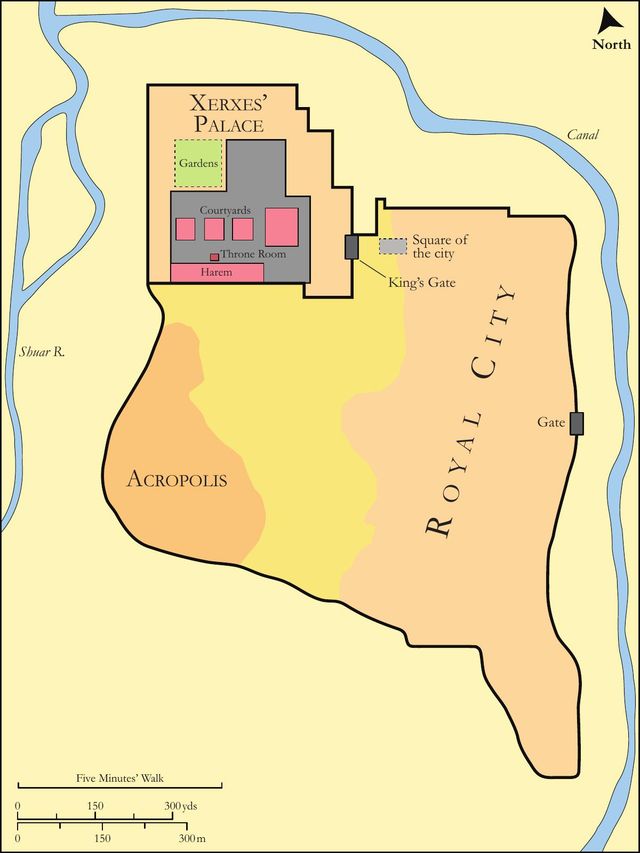
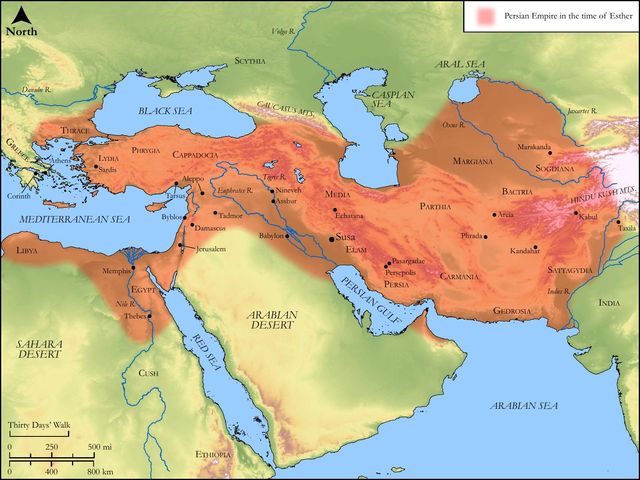
The events of Esther unfold within the vast Achaemenid Persian Empire, which, at its peak, stretched from India to Ethiopia, encompassing 127 provinces (Esther 1:1). In such an expansive empire, a position "in the king's house" (i.e., the royal court, often Susa, the capital city) signified immense power, direct access to the monarch, and significant influence over imperial policy and administration. "Fame" in this context was not merely personal reputation but an official recognition of authority and standing, often disseminated through royal decrees and messengers across the provinces, ensuring compliance and respect. The cultural significance of a vizier or prime minister was profound, as they often wielded executive power on behalf of the king, effectively governing the empire. Mordecai's ascent from an overlooked Jew to this pinnacle of power was an extraordinary and highly visible event, defying the social and political norms that typically excluded foreigners from such high office, underscoring the remarkable and undeniable divine intervention at play.
Key Themes
ShowHideThis verse powerfully encapsulates several overarching themes of the book of Esther. Firstly, it highlights Divine Reversal and Vindication, demonstrating God's sovereign ability to turn a situation of imminent destruction for His people into one of triumph and exaltation. What began with a decree for annihilation (Esther 3:13) culminates in the vindication and flourishing of the very people targeted. Secondly, it underscores the theme of Authority and Influence. Mordecai's "greatness" and "fame" are not passive titles but active expressions of his new administrative power and moral authority, which he uses to secure the well-being and prosperity of his people (Esther 10:3). Finally, the phrase "waxed greater and greater" emphasizes Progressive Elevation and God's Sustained Favor. Mordecai's rise was not a one-time event but an ongoing, dynamic process of increasing esteem, respect, and authority, reflecting both his effective leadership and the enduring favor of the king, orchestrated by divine providence. This continuous growth signifies the lasting security and prosperity granted to the Jewish community under his leadership.
Exposition and Analysis
ShowHideKey Word Analysis
ShowHideThe Hebrew adjective גָּדוֹל (gâdôwl) denotes something or someone of significant size, importance, or influence. When applied to a person, especially in a political context as here, it signifies high rank, power, and prestige. It describes Mordecai's elevated status within the royal court, indicating that he was a figure of substantial authority and consequence, not merely a figurehead.
The Hebrew word שׁוֹמַע (shômaʻ), derived from the verb "to hear," refers to a report, rumor, or what is heard about someone, thereby signifying reputation or renown. When it is said that Mordecai's "fame went out," it implies that his reputation as a powerful, respected, and influential figure was widely known and acknowledged across the vast expanse of the Persian Empire, solidifying his position and, by extension, the security of the Jewish people.
The Hebrew verb הָלַךְ (hâlak), meaning "to walk" or "to go," is used here in a dynamic sense to convey progression and continuous action. In the phrase "waxed greater and greater," its repetition (implied in the KJV translation of the Hebrew idiom) emphasizes a continuous, dynamic, and ever-increasing trajectory of influence, power, and esteem. It highlights that Mordecai's ascendancy was not static but an ongoing process of gaining more authority and recognition, indicating sustained growth and momentum.
Verse Breakdown
ShowHide"For Mordecai [was] great in the king's house"
This initial clause firmly establishes Mordecai's supreme position and influence within the very epicenter of imperial power. It signifies that he was not merely a distant advisor but a prominent and essential figure directly involved in the daily affairs and critical decisions of the Persian court. This highlights his administrative authority, his close proximity to King Ahasuerus, and his pivotal role as a key player in the empire's governance.
"and his fame went out throughout all the provinces"
This part of the verse powerfully emphasizes the widespread recognition and profound impact of Mordecai's elevated status. His renown was not confined to the capital city of Susa but extended across the entire 127 provinces of the vast empire. This universal acknowledgment of his authority and reputation was absolutely crucial for the security and well-being of the Jewish people scattered throughout these diverse regions, as it ensured that the reversal of Haman's genocidal decree would be respected, enforced, and would protect them from further aggression.
"for this man Mordecai waxed greater and greater"
This final, emphatic clause underscores the dynamic and continuous nature of Mordecai's ascendancy. His influence was not a fixed point but progressively increasing, indicating an ongoing process of gaining even more power, respect, and authority. This continuous growth implies sustained favor from the king, effective and wise leadership from Mordecai, and ultimately, the enduring divine providence that ensured the long-term stability and flourishing of the Jewish community under his protection and guidance.
Literary Devices
ShowHideThe verse employs several impactful literary devices that amplify its message. Repetition is evident in the recurrence of the concept of "greatness" ("great" and "greater and greater"), which serves to underscore and amplify Mordecai's extraordinary rise and continuously expanding influence. This repetition creates a sense of emphatic finality regarding his established and growing power. The phrase "throughout all the provinces" functions as Hyperbole, effectively conveying the vastness of Mordecai's reach and the universal acknowledgment of his authority, even if not every single person in every province knew him personally, it communicates the imperial scope of his influence. Furthermore, the verse acts as a Climax to Mordecai's personal narrative arc, providing a definitive statement of his ultimate vindication and triumph after enduring humiliation and threats to his life and people. Implicitly, there is a powerful Contrast with his former humble status as a gatekeeper and the desperate vulnerability of the Jewish people under Haman's plot, highlighting the dramatic Reversal of Fortune that defines the entire book.
Theological and Thematic Connections
ShowHideEsther 9:4 powerfully illustrates the biblical principle of divine sovereignty and the vindication of the righteous. Even though God's name is conspicuously absent from the book of Esther, His providential hand is undeniably at work, orchestrating events behind the scenes to protect His covenant people and elevate those who remain faithful. Mordecai's rise from obscurity and peril to unprecedented power and fame is a testament to God's ability to turn human schemes on their head, using even the most unlikely individuals and circumstances to achieve His purposes. This verse speaks to the truth that God often exalts the humble and brings down the proud, demonstrating His justice and faithfulness to those who trust in Him, even when the path is fraught with danger. It reassures believers that God is actively involved in the affairs of nations and individuals, working all things for the good of those who love Him and are called according to His purpose, even when His methods are hidden.
Reflection and Application
ShowHideMordecai's dramatic elevation in Esther 9:4 offers profound lessons for contemporary believers. His story reminds us that God's providence is often at work in unseen ways, orchestrating events and positioning individuals even when His direct intervention is not explicitly perceived or His name is not spoken. Mordecai's faithfulness, integrity, and unwavering commitment to his people, even in the face of death, ultimately paved the way for his exaltation. This encourages us to remain steadfast in our convictions and diligent in our responsibilities, trusting that God sees our faithfulness and will, in His perfect timing, bring about His purposes. Furthermore, Mordecai's example challenges us to consider how we use any influence or position God grants us. He leveraged his power not for personal gain or revenge but for the welfare and security of his community, establishing a lasting legacy of deliverance and peace. We are called to use our spheres of influence, no matter how great or small, to serve others, promote justice, and advance God's kingdom, recognizing that true greatness in God's eyes lies in humble service and righteous impact, reflecting His character to a watching world.
Questions for Reflection
ShowHideFAQ
ShowHideWhy is Mordecai's "greatness" so emphasized in this verse?
ShowHideMordecai's greatness is emphasized in Esther 9:4 to highlight the complete and dramatic reversal of fortune for him and the Jewish people. Previously, he was a humble gatekeeper, then marked for death by Haman, who sought to annihilate all Jews (Esther 3:6). This verse showcases his transformation into the most powerful man in the empire, second only to King Ahasuerus (Esther 10:3). The emphasis on his "greatness" and ever-increasing "fame" serves multiple purposes: it underscores the divine vindication of the righteous, demonstrates God's sovereign control over human affairs, secures the safety and prosperity of the Jewish community, and provides a fitting climax to Mordecai's personal narrative within the book. It's a powerful statement of triumph over adversity, showcasing that God elevates those who are faithful.
How does Mordecai's rise relate to the theme of God's providence in Esther, given that God's name isn't mentioned?
ShowHideMordecai's rise is a quintessential example of God's hidden providence at work throughout the book of Esther. While God's name is never explicitly mentioned, His hand is undeniably evident in the meticulous orchestration of events that lead to Mordecai's exaltation and the deliverance of the Jews. From Esther's selection as queen (Esther 2:17), to Mordecai uncovering the plot against the king (Esther 2:21-23), to the king's sleepless night and the reading of the chronicles (Esther 6:1-3), every seemingly coincidental event contributes to the ultimate triumph. Mordecai's "waxing greater and greater" is the visible outcome of God's invisible, yet active, working behind the scenes. It teaches us that God is sovereign and faithful to His people, even when He operates through natural means and human agents, fulfilling His purposes without direct miraculous intervention or explicit revelation of His name, demonstrating His constant care for His covenant people.
Christ-Centered Fulfillment
ShowHideMordecai's dramatic ascent from a humble gatekeeper, targeted for death, to a position of unparalleled authority and widespread fame within the Persian Empire, serves as a compelling type of Christ's ultimate exaltation. Just as Mordecai interceded for his people, risking his life to deliver them from certain destruction, so too Christ, the ultimate deliverer, laid down His life to rescue humanity from the dominion of sin and death. Mordecai's suffering and humiliation preceded his glory, mirroring the path of Jesus, who "humbled himself by becoming obedient to the point of death, even death on a cross" (Philippians 2:8). Yet, because of this profound obedience, God "highly exalted him and bestowed on him the name that is above every name, so that at the name of Jesus every knee should bow, in heaven and on earth and under the earth" (Philippians 2:9-10). Mordecai's fame going out "throughout all the provinces" foreshadows Christ's universal dominion and the glorious proclamation of His gospel to "all nations" (Matthew 28:19). His "waxing greater and greater" points to the ever-expanding and eternal nature of Christ's kingdom, which has no end (Luke 1:33). Ultimately, Mordecai's story assures us that the one who delivers His people will indeed be exalted, and that in Christ, believers share in His glorious triumph and eternal reign, seated with Him in the heavenly places by grace (Ephesians 2:6).