


Daniel 6:28
Bible text: King James Version (1769 Blayney text) · Public domain
Bible text: Berean Standard Bible · Public domain
Bible text: American Standard Version (1901) · Public domain
Bible text: World English Bible, Messianic edition · Public domain
Bible text: Geneva Bible (1599) · Public domain
Bible text: Young's Literal Translation · Public domain
- וְדָנִיֵּאלve·da·ni·Yeland DanielH1841Conj-w ¦ N-proper-mNoun Proper MasculineוְandדָנִיֵּאלDaniel
- דְּנָהde·NahthisH1836PrtParticle Demonstrative
- הַצְלַחhatz·Lachhe prosperedH6744V-Haphel-Perf-3msVerb Haphel Perfect 3rd Singular Masculine
- בְּמַלְכוּתbe·mal·Khutin [the] reign ofH4437Prep-b ¦ N-fscNoun Singular Feminine Constructבְּinמַלְכוּת[the] reign of
- דָּרְיָוֶשׁda·re·Ya·veshDariusH1868N-proper-mNoun Proper Masculine
- וּבְמַלְכוּתu·ve·mal·Khutand in [the] reign ofH4437Conj-w ¦ Prep-b ¦ N-fscNoun Singular Feminine Constructוּandבְinמַלְכוּת[the] reign of
- כּוֹרֶשׁKo·reshCyrusH3567N-proper-mNoun Proper Masculine
- פָּרְסָאָהpa·re·sa·ya'Persian theH6543N-cs ¦ ArtNoun Gentilic Singular common gender DefiniteפָּרְסָאָPersianהthe
English is a literal word-by-word gloss of the Hebrew, not the KJV's wording. Why?
This is the original text the KJV's translators worked from — each Hebrew word with its own literal English meaning in this verse, prepared by scholars at Tyndale House, Cambridge. The KJV translates whole sentences, not word by word, so its wording differs: one Hebrew word can become several English words, and the KJV may choose “the LORD” where the gloss reads “Yahweh”. Both are faithful — they answer different questions. For the KJV's own rendering, switch to the KJV text.
Details
See on the biblical-era map
Study this verse
Public-domain commentary
Matthew Henry
From his Commentary on the Whole Bible. Henry comments on passages, not single verses — this entry covers Daniel 6:25–28. His two-level outline is real structure in the source text, so it is rendered as structure.
Darius here studies to make some amends for the dishonour he had done both to God and Daniel, in casting Daniel into the lions' den, by doing honour to both.
I.He gives honour to God by a decree published to all nations, by which they are required to fear before him.
And this is a decree which is indeed fit to be made unalterable, according to the laws of the Medes and Persians, for it is the everlasting gospel, preached to those that dwell on the earth, Rev 14:7. Fear God, and give glory to him. Observe,
1.To whom he sends this decree - to all people, nations and languages, that dwell in all the earth, Dan 6:25. These are great words, and it is true that all the inhabitants of the earth are obliged to that which is here decreed; but here they mean no more than every dominion of his kingdom, which, though it contained many nations, did not contain all nations; but so it is, those that have much are ready to think they have all.
2.What the matter of the decree is - that men tremble and fear before the God of Daniel. This goes further than Nebuchadnezzar's decree upon a similar occasion, for that only restrained people from speaking amiss of this God, but this requires them to fear before him, to keep up and express awful reverent thoughts of him. And well might this decree he prefaced, as it is, with Peace be multiplied unto you, for the only foundation of true and abundant peace is laid in the fear of God, for that is true wisdom. If we live in the fear of God, and walk according to that rule, peace shall be upon us, peace shall be multiplied to us. But, though this decree goes far, it does not go far enough; had he done right, and come up to his present convictions, he would have commanded all men not only to tremble and fear before this God, but to love him and trust in him, to forsake the service of their idols, and to worship him only, and call upon him as Daniel did. But idolatry had been so long and so deeply rooted that it was not to be extirpated by the edicts of princes, nor by any power less than that which went along with the glorious gospel of Christ.
3.What are the causes and considerations moving him to make this decree. They are sufficient to have justified a decree for the total suppression of idolatry, much more will they serve to support this. There is good reason why all men should fear before this God, for, (1.) His being is transcendent. "He is the living God, lives as a God, whereas the gods we worship are dead things, have not so much as an animal life." (2.) His government is incontestable. He has a kingdom, and a dominion; he not only lives, but reigns as an absolute sovereign. (3.) Both his being and his government are unchangeable. He is himself stedfast for ever, and with him is no shadow of turning. And his kingdom too is that which shall not be destroyed by any external force, nor has his dominion any thing in itself that threatens a decay or tends towards it, and therefore it shall be even to the end. (4.) He has an ability sufficient to support such an authority, Dan 6:27. He delivers his faithful servants from trouble and rescues them out of trouble; he works signs and wonders, quite above the utmost power of nature to effect, both in heaven and on earth, by which it appears that he is sovereign Lord of both. (5.) He has given a fresh proof of all this in delivering his servant Daniel from the power of the lions. This miracle, and that of the delivering of the three children, were wrought in the eyes of the world, were seen, published, and attested by two of the greatest monarchs that ever were, and were illustrious confirmations of the first principles of religion, abstracted from the narrow scheme of Judaism, effectual confutations of all the errors of heathenism, and very proper preparations for pure catholic Christianity.
II.He puts honour upon Daniel (Dan 6:28):
So this Daniel prospered. See how God brought to him good out of evil. This bold stroke which his enemies made at his life was a happy occasion of taking them off, and their children too, who otherwise would still have stood in the way of his preferment, and have been upon all occasions vexatious to him; and now he prospered more than ever, was more in favour with his prince and in reputation with the people, which gave him a great opportunity of doing good to his brethren. Thus out of the eater (and that was a lion too) comes forth meat, and out of the strong sweetness.
Historical interpretation
Historical reception
1 surviving comment on this verse from the historical church.
Verse 28. "Thereafter Daniel lived on until the reign of Darius and the reign of Cyrus the Persian." And so the statement which we read above at the end of the first vision, "And Daniel lived until the first year of King Cyrus," is not to be understood as defining the span of his life. In view of the fact that we read in the last vision: "In the third year of Cyrus, King of the Persians, a word was revealed to Daniel, whose surname was Belteshazzar"; this is what is meant, that up to the first year of King Cyrus, who destroyed the empire of the Chaldeans, Daniel continued in power in Chaldea, but was afterwards transferred to Media by Darius.
Continue studying Daniel 6:28 across the web’s major study libraries — every link below opens this exact verse, chapter, or book on the destination site.
Read & Compare
 BibleGatewayThis verse in more than 200 translations and 70 languages.
 Bible.comThe YouVersion reader — hundreds of translations, reading plans, and highlights.
 ESV.orgCrossway's official English Standard Version reader.
 NET BibleThe NET translation with 60,000+ translators' notes on every rendering decision.
 STEP BibleTyndale House's free study tool — original text, vocabulary, and scholarly resources.
 BibliaLogos Bible Software's free web reader.
 USCCBThe New American Bible (Revised Edition) with the U.S. bishops' study notes.
Commentaries
 BibleHub CommentariesDozens of classic commentaries on this verse, gathered on one page.
 StudyLightMore than 100 commentary sets — the largest collection on the web.
 BibleRefPlain-English commentary on what this verse means, verse by verse.
 Enduring WordDavid Guzik's free commentary on this chapter, widely used by Bible teachers.
 Bible Study ToolsVerse commentary alongside Greek and Hebrew study aids.
Original Language & Research
- BibleHub InterlinearThe verse word by word — original language, transliteration, and English.
- BibleHub LexiconEvery word's original-language definition and Strong's entry.
 Blue Letter BibleDeep-study tools — Strong's numbers, concordance, and word studies.
 SefariaThe Hebrew text with Rashi and centuries of Jewish commentary.
Sermons, Hymns & Audio


TrulyRandomVerse is not affiliated with these sites and doesn’t control their content. They’re linked because they’re genuinely useful.
Summary
Daniel 6:28 serves as a concise yet profound epilogue to the dramatic narrative of Daniel's miraculous deliverance from the lions' den, encapsulating the prophet's remarkable longevity, unwavering divine favor, and consistent influence within the highest echelons of successive imperial powers. It underscores the enduring nature of God's faithfulness to His servant, even amidst radical geopolitical shifts, solidifying Daniel's legacy as a trusted statesman and prophet across the reigns of both Darius the Mede and Cyrus the Persian. This verse provides a powerful testament to the overarching sovereignty of God, who orchestrates human history and elevates His faithful servants for His divine purposes.
Context
ShowHideLiterary Context
This verse functions as a pivotal concluding statement for Daniel chapter 6, immediately following the miraculous deliverance of Daniel from the lions' den and the subsequent judgment upon his accusers. It provides a vital summary of Daniel's enduring status and influence, demonstrating that God's favor extended beyond a single event, ensuring his continued prosperity and strategic placement within the new Medo-Persian administration. Coming after the intense personal trial and divine vindication, Daniel 6:28 shifts the focus from the immediate crisis to the broader arc of Daniel's life and ministry, reinforcing the theme of God's protection over His faithful servants, even when they face extreme persecution. Crucially, it sets the stage for the profound prophetic visions that follow in the latter half of the book, many of which occurred during the very reigns mentioned here, highlighting Daniel's sustained prophetic activity and access to divine revelation under these new rulers.
Historical & Cultural Context
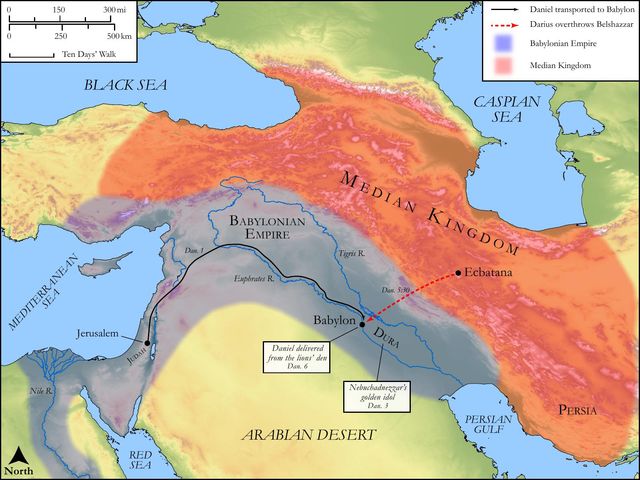
Daniel 6:28 spans a critical historical juncture: the momentous transition of world power from the Neo-Babylonian Empire to the Medo-Persian Empire. Darius the Mede is presented as the immediate successor to Belshazzar after the fall of Babylon, likely a viceroy or high-ranking governor appointed by Cyrus the Great, who was the true architect of the vast Achaemenid Persian Empire. Cyrus, renowned for his enlightened policies towards conquered peoples, including the famous decree allowing the Jewish exiles to return to Jerusalem (Ezra 1:1-4), represents the apex of this new imperial order. Daniel's ability to "prosper" under both Darius and Cyrus speaks volumes about his exceptional administrative skills, his profound wisdom, and, most importantly, the divine favor that transcended political and cultural boundaries. His continued service under these powerful rulers highlights the unique position of a Jewish exile who rose to unparalleled influence in a foreign land, serving as a testament to God's ability to use His people in any context.
Key Themes
ShowHideThe verse powerfully encapsulates several overarching themes prevalent throughout the Book of Daniel. First, it underscores Divine Sovereignty, demonstrating that God is the ultimate ruler over all earthly kingdoms, raising up and bringing down kings as He wills (Daniel 2:21). Daniel's sustained prosperity under different monarchs is a clear testament to God's hand guiding history, even through periods of significant geopolitical upheaval. Second, it highlights Faithfulness and Vindication, showing that Daniel's unwavering devotion to God, even unto death, resulted in divine protection and elevation. His commitment to prayer and obedience, even when it meant defying royal decrees (Daniel 6:10), was met with God's miraculous intervention and subsequent blessing. Finally, the verse speaks to Enduring Influence, portraying Daniel as a consistent and impactful figure whose wisdom and integrity were recognized and utilized by successive world leaders, allowing him to serve God's purposes for His people across generations, from the early days of the Babylonian exile (Daniel 1:21) to the dawn of the Persian era.
Exposition and Analysis
ShowHideKey Word Analysis
ShowHideThis demonstrative pronoun, when combined with Daniel's name, serves to emphasize the specific individual whose life and character have been the subject of the preceding narrative. It highlights the unique identity of Daniel, underscoring the personal nature of God's favor and the direct connection between his faithfulness and his sustained prosperity. The phrase "this Daniel" points back to the man of unwavering integrity, whose God-given wisdom and prophetic insight were consistently demonstrated.
This Aramaic verb signifies "to advance," "to succeed," "to be effective," or "to thrive." It denotes more than mere survival; it implies flourishing and achieving success in one's endeavors. For Daniel, this prosperity was multifaceted, encompassing not only his political influence and administrative effectiveness within the highest levels of government but also his spiritual well-being and continued prophetic ministry, which extended into the reign of Cyrus (Daniel 10:1). It speaks to God's comprehensive blessing upon His faithful servant.
This term refers to "dominion," "kingdom," or "kingly rule," whether abstractly or concretely. Its repeated use ("in the reign of Darius, and in the reign of Cyrus") underscores the remarkable continuity of Daniel's influence across different administrations and the transfer of imperial power. It emphasizes that his prosperity and position were not tied to one particular monarch or political system but rather to the overarching sovereignty of God, who sustained him through successive earthly kingdoms.
Verse Breakdown
ShowHide"So this Daniel prospered"
This clause serves as a direct consequence and summary of the preceding events, especially Daniel's miraculous deliverance from the lions' den. The phrase "this Daniel" points back to the faithful servant whose integrity and God-given wisdom have been consistently demonstrated throughout the book. His "prosperity" indicates not just material wealth or political power, but a thriving in all aspects of his life—spiritual, intellectual, and administrative—a testament to God's blessing and vindication.
"in the reign of Darius"
This specifies the first phase of Daniel's continued prosperity under the new Medo-Persian rule. Darius the Mede, likely a subordinate king or governor under Cyrus, represented the initial transition of power after the fall of Babylon. Daniel's ability to prosper under this new, foreign ruler immediately after the intense trial of the lions' den highlights his indispensable value and God's continued favor, establishing his position within the new regime.
"and in the reign of Cyrus the Persian"
This extends Daniel's period of prosperity to the full establishment of the Persian Empire under its founder, Cyrus the Great. Cyrus was the pivotal figure who would eventually issue the decree allowing the Jewish exiles to return to Jerusalem. Daniel's continued influence under such a significant and powerful monarch underscores the depth of his wisdom, the breadth of his administrative skills, and, most importantly, the divine hand that positioned him to potentially influence the very decree that would bring about the restoration of his people.
Literary Devices
ShowHideDaniel 6:28 employs several literary devices to achieve its impact. The most prominent is Epilogue, as the verse functions as a concise yet comprehensive concluding summary to the dramatic narrative of Daniel's trial and vindication in Daniel chapter 6, providing a sense of closure and resolution to the immediate crisis. It also utilizes Emphasis through Repetition with the phrase "in the reign of," highlighting the remarkable continuity of Daniel's influence across successive administrations and reinforcing the theme of God's enduring favor despite changes in human leadership. Furthermore, the verse serves as a subtle form of Foreshadowing, hinting at Daniel's continued prophetic ministry (as seen in later chapters like Daniel 10) and his potential influence on the historical events, such as Cyrus's decree, that would unfold in the broader biblical narrative. Finally, it powerfully embodies Divine Providence, implicitly attributing Daniel's sustained prosperity not merely to human skill or political acumen but to the sovereign hand of God orchestrating events for His ultimate purposes.
Theological and Thematic Connections
ShowHideDaniel 6:28 stands as a powerful testament to the enduring biblical truth that faithfulness to God, even in the face of extreme adversity, is met with divine vindication and sustained blessing. Daniel's prosperity was not a matter of political maneuvering or personal charisma alone, but a direct consequence of God's sovereign will to elevate and protect His servant for His grand purposes, which included the eventual return of the Jewish exiles. This verse underscores the theme that God's kingdom is eternal and transcends all earthly empires, and that He can use even pagan rulers to accomplish His divine plan. Daniel's life, as summarized here, becomes a living parable of God's power to sustain His people through changing seasons and hostile environments, ensuring that His chosen instruments are in place to fulfill His will and demonstrate His glory to the nations.
Reflection and Application
ShowHideDaniel 6:28 offers profound encouragement and practical lessons for believers navigating a complex and often hostile world. Daniel's unwavering commitment to God, even when it meant facing a den of lions, resulted in a sustained season of influence and prosperity that transcended political shifts and personal dangers. This reminds us that true security and lasting impact are found not in human power structures or fleeting circumstances, but in steadfast devotion to the Lord. Our faithfulness, integrity, and reliance on God's sovereignty can position us for divine favor and enable us to be agents of His purposes in unexpected places, even when the cultural or political climate seems adverse. Daniel's life invites us to trust that God can not only deliver us from immediate perils but also sustain us through long seasons of service, making our lives fruitful and impactful for His glory, regardless of the earthly powers that rise and fall around us.
Questions for Reflection
ShowHideFAQ
ShowHideWho were Darius and Cyrus, and what was their significance in Daniel's life?
ShowHideDarius the Mede and Cyrus the Persian represent the two key rulers under whom Daniel continued to prosper after the momentous fall of Babylon. Darius is presented as the immediate successor to Belshazzar, likely a high-ranking official or viceroy appointed by Cyrus, who was the true founder of the vast Achaemenid Persian Empire. Cyrus the Great was a pivotal figure in ancient history, renowned for his vast conquests and, notably, for his policy of allowing conquered peoples, including the Jews, to return to their homelands and rebuild their temples (Ezra 1:1-4). Daniel's continued influence and prosperity under both these leaders, especially Cyrus, suggest that he may have played a significant role in advising Cyrus, potentially even influencing the famous decree that allowed the Jewish exiles to return to Jerusalem. This highlights Daniel's unique position as a trusted advisor who served across multiple empires and generations, demonstrating God's ability to place His servants in positions of influence.
What does "prospered" mean in the context of Daniel 6:28?
ShowHideThe Aramaic word translated "prospered" (tsᵉlach) signifies more than just material wealth or political power. It denotes thriving, succeeding, advancing, and being effective in one's endeavors. For Daniel, this "prosperity" encompassed his continued high standing in the government, his administrative effectiveness, his intellectual and spiritual vitality, and the ongoing recognition of his wisdom and integrity by successive rulers. It implies that God not only protected Daniel from harm but also enabled him to flourish and fulfill his divine calling as a prophet and statesman, even amidst the complexities of foreign imperial courts. This comprehensive prosperity demonstrates God's holistic care for His faithful servant, ensuring his effectiveness for God's purposes.
Christ-Centered Fulfillment
ShowHideDaniel's enduring prosperity and influence across successive pagan empires, culminating in the reign of Cyrus, beautifully foreshadows the ultimate and eternal reign of Jesus Christ. Just as Daniel, a faithful servant, was vindicated and elevated by God despite facing death, so too was Christ, the perfectly obedient Son, vindicated through His resurrection after His crucifixion, leading to His exaltation to the right hand of God (Philippians 2:8-9). Daniel's ability to "prosper" and maintain influence in the earthly kingdoms of men points to the far greater truth that Christ's kingdom is not of this world, yet it reigns over this world (John 18:36). He is the true King of kings and Lord of lords, under whose eternal dominion all earthly powers ultimately bow (Revelation 19:16). Daniel's life of unwavering faithfulness, which led to divine protection and promotion, serves as a type for the perfect faithfulness of Christ, through whom believers also receive true and lasting prosperity—not necessarily earthly riches, but spiritual blessings, eternal life, and a share in His glorious kingdom (Ephesians 1:3). Thus, Daniel 6:28, while speaking of a historical figure, ultimately directs our gaze to the one who truly prospers eternally and reigns supremely: Jesus Christ, the Lamb who was slain and is now glorified (Revelation 5:12-13).