


Esther 8:15
Bible text: King James Version (1769 Blayney text) · Public domain
Bible text: King James Version with Strong's numbers · Public domain
Bible text: Berean Standard Bible · Public domain
Bible text: American Standard Version (1901) · Public domain
Bible text: World English Bible, Messianic edition · Public domain
Bible text: Geneva Bible (1599) · Public domain
Bible text: Young's Literal Translation · Public domain
- וּמָרְדֳּכַיu·ma·re·do·Khaiand MordecaiH4782Conj-w ¦ N-proper-mNoun Proper MasculineוּandמָרְדֳּכַיMordecai
- יָצָאya·Tza'he went outH3318V-Qal-Perf-3msVerb Qal Perfect 3rd Singular Masculine
- מִלִּפְנֵיmi·lif·Neifrom to beforeH6440Prep-m ¦ Prep-l ¦ N-mpcNoun Plural Masculine Constructמִfromלִּtoפְנֵיbefore
- הַמֶּלֶךְha·Me·lekhthe kingH4428Art ¦ N-msNoun Singular Masculine Absoluteהַtheמֶּלֶךְking
- בִּלְבוּשׁbil·Vushin clothing ofH3830Prep-b ¦ N-mscNoun Singular Masculine Constructבִּinלְבוּשׁclothing of
- מַלְכוּתmal·Khutroyalty ofH4438N-fscNoun Singular Feminine Construct
- תְּכֵלֶתte·Khe·letvioletH8504N-fsNoun Singular Feminine Absolute
- וָחוּרva·Churand white clothH2353Conj-w ¦ N-msNoun Singular Masculine Absoluteוָandחוּרwhite cloth
- וַעֲטֶרֶתva·'a·Te·retand a crown ofH5850Conj-w ¦ N-fscNoun Singular Feminine Constructוַandעֲטֶרֶתa crown of
- זָהָבza·HavgoldH2091N-msNoun Singular Masculine Absolute
- גְּדוֹלָהge·do·LahgreatH1419Adj-fsAdjective Singular Feminine Absolute
- וְתַכְרִיךְve·takh·Rikhand a robe ofH8509Conj-w ¦ N-mscNoun Singular Masculine Constructוְandתַכְרִיךְa robe of
- בּוּץbutzfine linenH948N-msNoun Singular Masculine Absolute
- וְאַרְגָּמָןve·'ar·ga·Manand purpleH713Conj-w ¦ N-msNoun Singular Masculine Absoluteוְandאַרְגָּמָןpurple
- וְהָעִירve·ha·'Irand the city ofH5892Conj-w ¦ Art ¦ N-fscNoun Singular Feminine Constructוְandהָtheעִירcity of
- שׁוּשָׁןshu·ShanSusaH7800N-properNoun Proper Location
- צָהֲלָהtza·ha·Lahit shouted for joyH6670V-Qal-Perf-3fsVerb Qal Perfect 3rd Singular Feminine
- וְשָׂמֵחָהve·sa·Me·chahand it rejoicedH8055Conj-w ¦ V-Qal-Perf-3fsVerb Qal Perfect 3rd Singular Feminineוְandשָׂמֵחָהit rejoiced
English is a literal word-by-word gloss of the Hebrew, not the KJV's wording. Why?
This is the original text the KJV's translators worked from — each Hebrew word with its own literal English meaning in this verse, prepared by scholars at Tyndale House, Cambridge. The KJV translates whole sentences, not word by word, so its wording differs: one Hebrew word can become several English words, and the KJV may choose “the LORD” where the gloss reads “Yahweh”. Both are faithful — they answer different questions. For the KJV's own rendering, switch to the KJV text.
Details
See on the biblical-era maps
Study this verse
Public-domain commentary
Matthew Henry
From his Commentary on the Whole Bible. Henry comments on passages, not single verses — this entry covers Esther 8:15–17.
It was but a few days ago that we had Mordecai in sackcloth and all the Jews in sorrow; but here is a blessed change, Mordecai in purple and all the Jews in joy. See Psa 30:5, Psa 30:11, Psa 30:12. 1. Mordecai in purple, Est 8:15. Having obtained an order for the relief of all the Jews, he was easy, he parted with his mourning weeds, and put on the royal apparel, which either belonged to his place or which the king appointed him as a favourite. His robes were rich, blue and white, of fine linen and purple; so was his coronet: it was of gold. These are things not worth taking notice of, but as they were marks of the king's favour, and that the fruit of God's favour to his church. It is well with a land when the ensigns of dignity are made the ornaments of serious piety. The city Shushan was sensible of its advantage in the preferment of Mordecai, and therefore rejoiced and was glad, not only pleased in general with the advancement of virtue, but promising itself, in particular, better times, now that so good a man was entrusted with power. Haman was hanged; and, when the wicked perish, there is shouting, Pro 11:10. Mordecai was preferred; and, when the righteous are in authority, the people rejoice. 2. The Jews in joy, Est 8:16, Est 8:17. The Jews, who awhile ago were under a dark cloud, dejected and disgraced, now had light and gladness, joy and honour, a feast and a good lay. If they had not been threatened and in distress they would not have had occasion for this extraordinary joy. Thus are God's people sometimes made to sow in tears that they may reap in so much the more joy. The suddenness and strangeness of the turn of affairs in their favour added much to their joy. They were like those that dream; then was their mouth filled with laughter, Psa 126:1, Psa 126:2. One good effect of this deliverance was that many of the people of the land, that were considerate, sober, and well inclined, became Jews, were proselyted to the Jewish religion, renounced idolatry, and worshipped the true God only. Haman thought to extirpate the Jews, but it proves, in the issue, that their numbers are greatly increased and many added to the church. Observe, When the Jews had joy and gladness then many of the people of the land became Jews. The holy cheerfulness of those that profess religion is a great ornament to their profession, and will invite and encourage others to be religious. The reason here given why so many became Jews at this time is because the fear of the Jews fell upon them. When they observed how wonderfully divine Providence had owned them and wrought for them in this critical juncture, (1.) They thought them great, and considered those happy that were among them; and therefore they came over to them, as was foretold, Zac 8:23. We will go with you, for we have heard, we have seen, that God is with you, the shield of your help, and the sword of your excellency, Deu 33:29. When the church prospers, and is smiled upon, many will come into it that will be shy of it when it is in trouble. (2.) They thought them formidable, and considered those miserable that were against them. They plainly saw in Haman's fate that, if any offered injury to the Jews, it was at their peril; and therefore, for their own security, they joined themselves to them. It is folly to think of contending with the God of Israel, and therefore it is wisdom to think of submitting to him.
Historical interpretation
Historical reception
2 surviving comments on this verse. Each one is dated, so this reads as a timeline rather than a list.
It is to the great credit of our sacred teachers that with their teaching and encouragement the faithful are able to conquer, through the power of the supreme king, the savagery of a most wicked enemy; and their reward for this awaits them in the heavenly kingdom of eternal blessing and perpetual brightness, which seem to be prefigured by the color blue and the flash of gold. Moreover, in the celestial citadel the martyrs of Christ, along with those who are going to rule together with Christ the king, are repaid with the dignity given to kings by that most righteous of source of recompense, in exchange for shedding their blood. The terms “purple” and “silken” offer us a prefiguration of this fact; and every gathering of saints will be happy and rejoice no less over this in the celestial Jerusalem. This is described in what follows: “So for the Jews, a new light was seen to arise; and joy, and honor, and celebration. Among every people, city and province, and wherever the king’s orders reached, there was a wonderful exultation, banquets, and feasting, and a holiday; and so much so that many members of other nations and beliefs adopted their religion and their rites. For a great terror of the Jewish people had fallen upon them all.” Many, therefore, among the gentiles and enemies of the Church left behind their idolatry and their gentile superstitions, and were converted to the Christian faith by the power, wisdom and perseverance of the holy martyrs, and through the virtue of Christ that shines through them; which should be perfectly obvious to anyone who reads about the sufferings of the saints and the triumphs of the martyrs. And since that time, the numbers of the faithful have been growing every day by the mercy of God, and the precincts of the Church have been replenished. This is mentioned by the Psalmist: “Let all the land fear the Lord; let everyone be moved by him, and all who inhabit the world” (Psalms 33). And likewise: “The righteous will rejoice in the Lord and will hope in him; and all the upright in heart will be praised” (Psalms 64). And the apostle says: “In the name of Jesus every creature—celestial, terrestrial and infernal—shall bend his knee, and every tongue shall proclaim that the Lord Jesus is in the glory of God the Father” (Philippians 2).
The glory of the holy teachers is exalted because it is through their doctrine and exhortation that the faithful defeat the cruelty of their most evil enemy with the help and strength of their heavenly king. And their reward remains with them in the heavenly kingdom of eternal blessedness and perpetual splendor, which appears to be signified by the colors of blue and white and the brightness of gold.
Continue studying Esther 8:15 across the web’s major study libraries — every link below opens this exact verse, chapter, or book on the destination site.
Read & Compare
 BibleGatewayThis verse in more than 200 translations and 70 languages.
 Bible.comThe YouVersion reader — hundreds of translations, reading plans, and highlights.
 ESV.orgCrossway's official English Standard Version reader.
 NET BibleThe NET translation with 60,000+ translators' notes on every rendering decision.
 STEP BibleTyndale House's free study tool — original text, vocabulary, and scholarly resources.
 BibliaLogos Bible Software's free web reader.
 USCCBThe New American Bible (Revised Edition) with the U.S. bishops' study notes.
Commentaries
 BibleHub CommentariesDozens of classic commentaries on this verse, gathered on one page.
 StudyLightMore than 100 commentary sets — the largest collection on the web.
 BibleRefPlain-English commentary on what this verse means, verse by verse.
 Enduring WordDavid Guzik's free commentary on this chapter, widely used by Bible teachers.
 Bible Study ToolsVerse commentary alongside Greek and Hebrew study aids.
Original Language & Research
- BibleHub InterlinearThe verse word by word — original language, transliteration, and English.
- BibleHub LexiconEvery word's original-language definition and Strong's entry.
 Blue Letter BibleDeep-study tools — Strong's numbers, concordance, and word studies.
 SefariaThe Hebrew text with Rashi and centuries of Jewish commentary.
Sermons, Hymns & Audio


TrulyRandomVerse is not affiliated with these sites and doesn’t control their content. They’re linked because they’re genuinely useful.
Summary
Esther 8:15 vividly portrays the dramatic reversal of fortune for Mordecai and the Jewish people, marking a pivotal moment of triumph and deliverance within the Persian Empire. Emerging from the king's presence, Mordecai is arrayed in magnificent royal attire—garments of blue and white, a great gold crown, and robes of fine linen and purple—a public display of his newly acquired honor and immense authority. This visible manifestation of his exalted status signaled the secure hope of deliverance for the Jews and was met with widespread jubilation throughout the capital city of Shushan, reflecting the profound relief and gladness that permeated society following Haman's downfall and the establishment of a righteous new order.
Context
ShowHideLiterary Context
This pivotal verse follows a series of intense and dramatic events that have completely reshaped the narrative arc of the Book of Esther. Haman's wicked plot to annihilate the Jewish people had reached its horrifying climax with the issuing of a royal decree for their destruction throughout the empire. However, Queen Esther's courageous and strategic intervention before King Ahasuerus, culminating in Haman's exposure and subsequent execution on the very gallows he had prepared for Mordecai, as detailed in Esther 7:10, set the stage for this profound reversal. Mordecai, who had previously been seen in sackcloth and ashes, mourning the decree of destruction in Esther 4:1, has now been appointed to Haman's former position and entrusted with immense authority. The preceding verses in Esther 8 describe the king's new decree, drafted by Mordecai himself, which empowered the Jews to defend themselves against their enemies. Therefore, Esther 8:15 serves as the triumphant visual confirmation of this new reality, showcasing Mordecai's restored honor and the secure hope of deliverance for his people.
Historical & Cultural Context
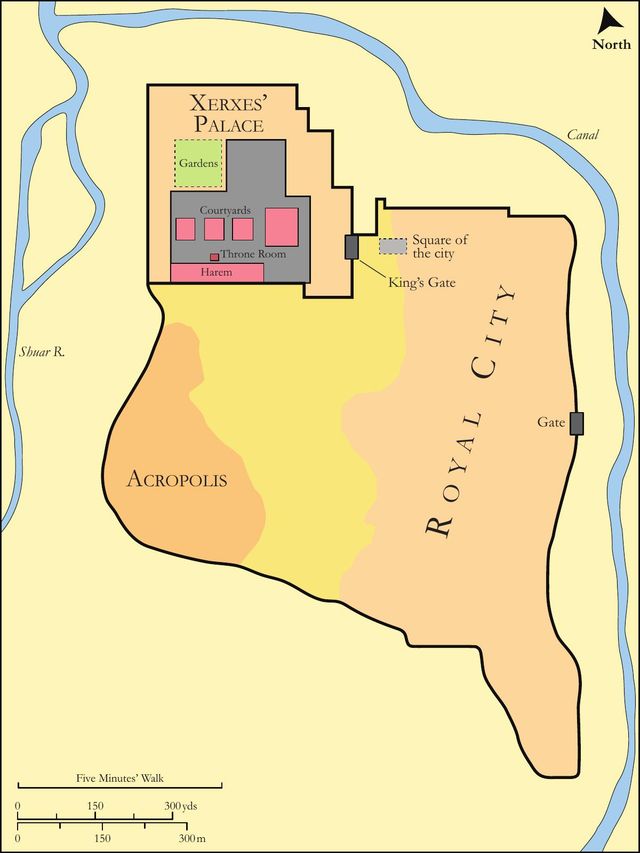
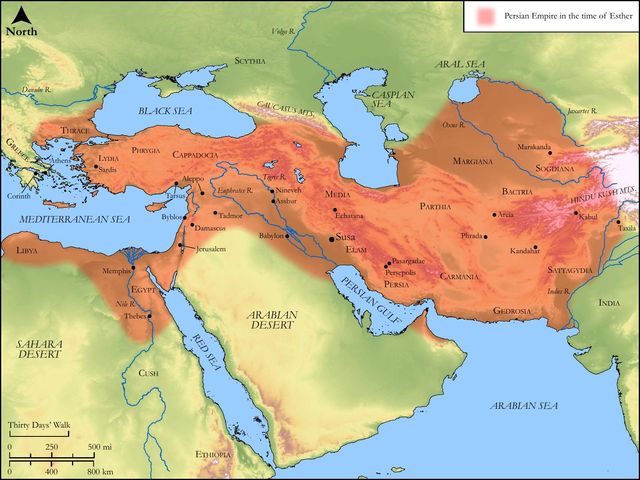
The setting is the opulent Persian Empire, with its grand capital city of Shushan (Susa), a center of imperial power and administration. In this highly stratified society, clothing and public display were not merely aesthetic choices but potent symbols of status, power, and the king's favor. The specific garments described—"royal apparel of blue and white," a "great crown of gold," and "a garment of fine linen and purple"—were explicit markers of the highest honor and authority, second only to the king himself. Blue and white were traditional colors associated with Persian royalty, signifying majesty, purity, and divine favor. Purple dye, extracted from rare murex snails, was incredibly costly and difficult to produce, making it an exclusive mark of immense wealth and royal status, often reserved for emperors and high officials. Fine linen (Hebrew: bûwts) was a luxurious fabric, frequently imported from Egypt, worn by royalty and priests. The "great crown of gold" was likely a royal diadem or turban adorned with gold, a clear emblem of the supreme authority bestowed upon him by the king. This elaborate public display was crucial for solidifying Mordecai's new status and demonstrating the king's unequivocal favor to all citizens and officials throughout the capital.
Key Themes
ShowHideThis verse powerfully encapsulates several major themes central to the Book of Esther. The most prominent is Dramatic Reversal and Divine Providence. The transformation of Mordecai from a grieving mourner facing annihilation to a royal dignitary is a profound testament to God's unseen hand at work. Though God is not explicitly named in the book, His providence is undeniably evident in the complete reversal of fortune for Mordecai and the Jewish people, underscoring the theme of God's faithfulness to His covenant people, even when He seems hidden. Another key theme is Exaltation and Honor. Mordecai's lavish attire signifies the highest honor and authority, reflecting the king's favor and the restoration of justice. This public recognition is a direct contrast to the humiliation and danger he previously faced, as seen in Esther 4:1. Finally, the verse highlights Joy and Deliverance. The phrase "the city of Shushan rejoiced and was glad" emphasizes the widespread relief and celebration. This joy was not confined to the Jewish community but extended to the general populace, who likely suffered under Haman's oppressive influence and now welcomed the stability and justice brought by Mordecai's rise. This widespread joy foreshadows the broader, annual celebration of Purim, a lasting memorial to God's deliverance.
Exposition and Analysis
ShowHideKey Word Analysis
ShowHideThis primitive root signifies "to go (causatively, bring) out" in a great variety of applications, both literally and figuratively. In this context, it emphasizes Mordecai's public emergence from the king's private presence, signifying his official presentation and the public unveiling of his new, exalted status and authority. It highlights the transition from private counsel to public display of power.
Derived from a root meaning "to encompass," this noun specifically refers to a crown or diadem. As a symbol, the crown represents sovereignty, power, and honor. Mordecai's wearing of a "great crown of gold" signifies that he was granted an extraordinary level of delegated authority and prestige, likely as the king's chief minister or vizier, a position of unparalleled influence and recognition within the Persian Empire.
This primitive root means "to gleam," and figuratively, "to be cheerful." By transference, it can also describe a clear sound, such as "bellow," "cry aloud," or "shout." In this verse, it conveys an active, vibrant, and public expression of joy and cheerfulness, indicating a widespread and enthusiastic celebration throughout the city, not merely a quiet contentment.
Verse Breakdown
ShowHide"And Mordecai went out from the presence of the king"
This opening clause is highly significant, indicating Mordecai's direct and privileged access to King Ahasuerus. It signifies not only his elevated status but also his new role as a trusted advisor and chief minister, having replaced Haman. His departure from the inner court to the public sphere marks the official unveiling of his transformed position and the king's unequivocal favor, making his new authority visible to all.
"in royal apparel of blue and white, and with a great crown of gold, and with a garment of fine linen and purple"
This detailed description of Mordecai's attire is crucial for understanding his new identity and authority. The "royal apparel of blue and white" were colors associated with Persian monarchy, symbolizing majesty and purity. The "great crown of gold" was a clear sign of supreme honor and delegated authority, representing the king's trust. The "garment of fine linen and purple" further underscored his immense wealth and high status; fine linen was a luxurious fabric, and purple dye was exceedingly rare and expensive, reserved for the elite. This ensemble mirrors the honor bestowed upon Joseph when he was exalted in Egypt, as recorded in Genesis 41:42.
"and the city of Shushan rejoiced and was glad"
This concluding clause highlights the widespread and public nature of the celebration. The joy was not confined to the Jewish community but encompassed the entire capital city. This suggests that Haman's oppressive influence had been felt by many, and his downfall, coupled with Mordecai's just leadership, brought a general sense of relief, stability, and hope to the broader populace. It signifies the triumph of light over darkness, justice over tyranny, and the restoration of well-being to the city, reflecting a collective sigh of relief and celebration.
Literary Devices
ShowHideThe verse employs several powerful literary devices to convey its message of triumph and transformation. Symbolism is paramount, with Mordecai's elaborate royal attire serving as a potent symbol of his transformed status, authority, and the king's favor. Each item—the blue and white, the gold crown, the fine linen and purple—carries specific cultural and social meaning, collectively proclaiming his new identity as a powerful and respected leader. Contrast is also vividly evident, as Mordecai's current state of regal splendor stands in stark opposition to his previous appearance in sackcloth and ashes, mourning the decree of destruction in Esther 4:1. This dramatic visual contrast underscores the magnitude of the reversal. Furthermore, the verse uses Foreshadowing, as the immediate rejoicing of Shushan anticipates the broader, annual celebration of Purim by all Jews throughout the empire, as commanded in Esther 9:22. Finally, there is a strong element of Irony, as the very honor and public display that Haman sought for himself and envisioned for the man the king delighted to honor, as detailed in Esther 6:6-11, are now bestowed upon Mordecai, the very man Haman despised and intended to destroy.
Theological and Thematic Connections
ShowHideEsther 8:15 powerfully illustrates the biblical theme of divine providence and the ultimate triumph of justice over evil, even when God's name is not explicitly mentioned. This verse serves as a profound testament to the truth that God is sovereignly at work behind the scenes, orchestrating events, raising up the humble, and bringing down the proud to accomplish His purposes for His people. Mordecai's exaltation, after suffering humiliation and facing imminent destruction, mirrors a pattern seen throughout Scripture where God reverses fortunes, turning sorrow into joy and despair into deliverance. It reminds us that even in the darkest hours, when human plans seem to prevail, God's unseen hand is guiding history towards His redemptive ends, ensuring that His covenant promises to His people endure. The widespread joy in Shushan reflects the communal blessing that flows when righteousness is established and tyranny overthrown, pointing to the peace and flourishing that result from God's intervention.
Reflection and Application
ShowHideEsther 8:15 offers a powerful and enduring message of hope and the triumph of justice that resonates deeply with believers today. It calls us to trust in God's unfailing providence, even when His presence feels hidden or His intervention seems delayed. Mordecai's journey from sackcloth to royal robes reminds us that our present circumstances do not define our ultimate destiny in God's plan. When we face adversity, injustice, or seemingly insurmountable odds, this verse encourages us to persevere in faith, knowing that God is capable of dramatic reversals and can turn our mourning into dancing. It also invites us to consider the public impact of righteous leadership and the widespread joy that can result when God's people are honored and justice prevails. We are called to be agents of God's justice and light in a world that often feels dark, trusting that our faithful endurance can contribute to a broader restoration of joy and order, reflecting God's kingdom.
Questions for Reflection
ShowHideFAQ
ShowHideWhy is God not explicitly mentioned in Esther, yet His providence is so evident?
ShowHideThe Book of Esther is unique in the biblical canon for its omission of any explicit mention of God's name, prayer, or direct divine intervention. However, His providence is powerfully demonstrated through a series of "coincidences," dramatic reversals, and the strategic actions of human agents like Esther and Mordecai. This "hiddenness" of God serves a profound theological purpose: it teaches readers to recognize God's sovereign hand at work even in seemingly secular or ordinary events, reinforcing the idea that He is always in control, orchestrating history for the good of His people, even when He appears silent or absent. The entire narrative, culminating in the triumph of Esther 8:15, is a testament to His faithfulness and unwavering commitment to His covenant.
What is the significance of the specific colors and garments Mordecai wore?
ShowHideThe garments Mordecai wore were not simply luxurious; they were highly symbolic of his new status and the king's favor in ancient Persian culture. "Royal apparel of blue and white" were the official colors of the Persian monarchy, representing majesty, purity, and divine authority. The "great crown of gold" was a clear emblem of supreme honor and delegated power, signifying his position as the king's chief minister. "Fine linen" was an extremely expensive and luxurious fabric, often associated with royalty and priesthood (e.g., Genesis 41:42). "Purple" dye was the most costly and rare color in that day, derived from murex snails, and was exclusively worn by kings, emperors, and the highest nobility. Together, these garments communicated to the entire city of Shushan that Mordecai possessed immense wealth, power, and the unequivocal backing of King Ahasuerus, solidifying his new, exalted position.
Did the entire city of Shushan truly rejoice, or just the Jewish population?
ShowHideThe text explicitly states, "the city of Shushan rejoiced and was glad," implying a widespread celebration that extended beyond the Jewish community. While the Jewish population certainly rejoiced at their deliverance from annihilation, Haman's oppressive and self-serving rule likely created an atmosphere of instability and fear that affected many inhabitants of the capital. His downfall and Mordecai's rise to power, representing justice and stability, would have been welcomed by the general populace. Mordecai's new decree, empowering the Jews to defend themselves, also brought a sense of order and peace to the empire, which would have benefited all citizens. Therefore, the joy was likely a collective expression of relief and gladness for the restoration of a just and stable administration in the capital.
Christ-Centered Fulfillment
ShowHideMordecai's dramatic transformation from a man in sackcloth mourning a decree of death to one arrayed in royal splendor, bringing joy and deliverance to his people, serves as a powerful Old Testament type pointing to the ultimate Christ-centered fulfillment. Just as Mordecai, through his intercession and the king's favor, secured the salvation of his people, so too does Jesus Christ, our greater Mordecai, secure eternal deliverance for all who believe. Christ, though "in the form of God... made himself nothing, taking the form of a servant, being born in the likeness of men" (Philippians 2:6-7), humbled Himself even to the point of death on a cross. Yet, like Mordecai's exaltation, God "highly exalted him and bestowed on him the name that is above every name" (Philippians 2:9), clothing Him in eternal glory and authority. Mordecai's public display of honor and the city's rejoicing foreshadow the universal joy that will accompany Christ's ultimate triumph and the establishment of His eternal kingdom, where "God himself will be with them as their God. He will wipe away every tear from their eyes, and death shall be no more, neither shall there be mourning, nor crying, nor pain anymore" (Revelation 21:3-4). Mordecai's deliverance was partial and temporal; Christ's is complete and eternal, bringing ultimate peace and unending joy to His redeemed people.