


Esther 4:1
Bible text: King James Version (1769 Blayney text) · Public domain
Bible text: King James Version with Strong's numbers · Public domain
Bible text: Berean Standard Bible · Public domain
Bible text: American Standard Version (1901) · Public domain
Bible text: World English Bible, Messianic edition · Public domain
Bible text: Geneva Bible (1599) · Public domain
Bible text: Young's Literal Translation · Public domain
- וּמָרְדֳּכַיu·ma·re·do·Khaiand MordecaiH4782Conj-w ¦ N-proper-mNoun Proper MasculineוּandמָרְדֳּכַיMordecai
- יָדַעya·Da'he knewH3045V-Qal-Perf-3msVerb Qal Perfect 3rd Singular Masculine
- אֶת'et<obj.>H853DirObjMParticle Object Indicator
- כָּלkolallH3605N-msNoun Singular Masculine Absolute
- אֲשֶׁר'a·SherthatH834RelParticle Relative
- נַעֲשָׂהna·'a·Sahit had been doneH6213V-Niphal-Perf-3msVerb Niphal Perfect 3rd Singular Masculine
- וַיִּקְרַעvai·yik·Ra'and he toreH7167Conj-w ¦ V-Qal-ConsecImperf-3msVerb Qal Consecutive Imperfect 3rd Singular Masculineוַandיִּקְרַעhe tore
- מָרְדֳּכַיma·re·do·KhaiMordecaiH4782N-proper-mNoun Proper Masculine
- אֶת'et<obj.>H853DirObjMParticle Object Indicator
- בְּגָדָיוbe·ga·Davhis clothesH899N-mpc ¦ 3msNoun Plural Masculine Constructבְּגָדָיclothesוhis
- וַיִּלְבַּשׁvai·yil·Bashand he put onH3847Conj-w ¦ V-Qal-ConsecImperf-3msVerb Qal Consecutive Imperfect 3rd Singular Masculineוַandיִּלְבַּשׁhe put on
- שַׂקsaksackclothH8242N-msNoun Singular Masculine Absolute
- וָאֵפֶרva·'E·ferand ash[es]H665Conj-w ¦ N-msNoun Singular Masculine Absoluteוָandאֵפֶרash[es]
- וַיֵּצֵאvai·ye·Tze'and he went outH3318Conj-w ¦ V-Qal-ConsecImperf-3msVerb Qal Consecutive Imperfect 3rd Singular Masculineוַandיֵּצֵאhe went out
- בְּתוֹךְbe·Tokhin [the] midst ofH8432Prep-b ¦ N-mscNoun Singular Masculine Constructבְּinתוֹךְ[the] midst of
- הָעִירha·'Irthe cityH5892Art ¦ N-fsNoun Singular Feminine Absoluteהָtheעִירcity
- וַיִּזְעַקvai·yiz·'Akand he criedH2199Conj-w ¦ V-Qal-ConsecImperf-3msVerb Qal Consecutive Imperfect 3rd Singular Masculineוַandיִּזְעַקhe cried
- זְעָקָהze·'a·Kaha cryH2201N-fsNoun Singular Feminine Absolute
- גְדֹלָהge·do·LahloudH1419Adj-fsAdjective Singular Feminine Absolute
- וּמָרָהu·ma·Rahand bitterH4751Conj-w ¦ Adj-fsAdjective Singular Feminine Absoluteוּandמָרָהbitter
English is a literal word-by-word gloss of the Hebrew, not the KJV's wording. Why?
This is the original text the KJV's translators worked from — each Hebrew word with its own literal English meaning in this verse, prepared by scholars at Tyndale House, Cambridge. The KJV translates whole sentences, not word by word, so its wording differs: one Hebrew word can become several English words, and the KJV may choose “the LORD” where the gloss reads “Yahweh”. Both are faithful — they answer different questions. For the KJV's own rendering, switch to the KJV text.
Details
See on the biblical-era maps
Study this verse
Public-domain commentary
Matthew Henry
From his Commentary on the Whole Bible. Henry comments on passages, not single verses — this entry covers Esther 4:1–4.
Here we have an account of the general sorrow that there was among the Jews upon the publishing of Haman's bloody edict against them. It was a sad time with the church. 1. Mordecai cried bitterly, rent his clothes, and put on sackcloth, Est 4:1, Est 4:2. He not only thus vented his grief, but proclaimed it, that all might take notice of it that he was not ashamed to own himself a friend to the Jews, and a fellow-sufferer with them, their brother and companion in tribulation, how despicable and how odious soever they were now represented by Haman's faction. It was nobly done thus publicly to espouse what he knew to be a righteous cause, and the cause of God, even when it seemed a desperate and a sinking cause. Mordecai laid the danger to heart more than any because he knew that Haman's spite was against him primarily, and that it was for his sake that the rest of the Jews were struck at; and therefore, though he did not repent of what some would call his obstinacy, for he persisted in it (Est 5:9), yet it troubled him greatly that his people should suffer for his scruples, which perhaps occasioned some of them to reflect upon him as too precise. But, being able to appeal to God that what he did he did from a principle of conscience, he could with comfort commit his own cause and that of his people to him that judgeth righteously. God will keep those that are exposed by the tenderness of their consciences. Notice is here taken of a law that none might enter into the king's gate clothed with sackcloth; though the arbitrary power of their kings often, as now, set many a mourning, yet none must come near the king in a mourning dress, because he was not willing to hear the complaints of such. Nothing but what was gay and pleasant must appear at court, and every thing that was melancholy must be banished thence; all in king's palaces wear soft clothing (Mat 11:8), not sackcloth. But thus to keep out the badges of sorrow, unless they could withal have kept out the causes of sorrow - to forbid sackcloth to enter, unless they could have forbidden sickness, and trouble, and death to enter - was jest. However this obliged Mordecai to keep his distance, and only to come before the gate, not to take his place in the gate. 2. All the Jews in every province laid it much to heart, Est 4:3. They denied themselves the comfort of their tables (for they fasted and mingled tears with their meat and drink), and the comfort of their beds at night, for they lay in sackcloth and ashes. Those who for want of confidence in God, and affection to their own land, has staid in the land of their captivity, when Cyrus gave them liberty to be gone, now perhaps repented of their folly, and wished, when it was too late, that they had complied with the call of God. 3. Esther the queen, upon a general intimation of the trouble Mordecai was in, was exceedingly grieved, v. 4. Mordecai's grief was hers, such a respect did she still retain for him; and the Jews' danger was her distress; for, though a queen, she forgot not her relation to them. Let not the greatest think it below them to grieve for the affliction of Joseph, though they themselves be anointed with the chief ointments, Amo 6:6. Esther sent change of raiment to Mordecai, the oil of joy for mourning and the garments of praise for the spirit of heaviness; but because he would make her sensible of the greatness of his grief, and consequently of the cause of it, he received it not, but was as one that refused to be comforted.
Historical interpretation
Historical reception
2 surviving comments on this verse. Each one is dated, so this reads as a timeline rather than a list.
When Mordecai heard about the destruction of the Jews which had been sanctioned with an imperial decree, he put on clothes for mourning and proceeded to the gates of the palace with bitterness in his soul and grief in his voice. In the same way, after the teachers of the church hear of the persecution which the princes of this world want to bring against the innocent servants of Christ, they come with their prayers and alms, with vigils and prayers, with tears and heavy hearts in view of what they know must happen. They give their all before the supreme judge, so that through the dignity and prayers of the true queen, namely, the holy church—which is still a stranger in this world even as it reigns in heaven together with the Lord—they might be heard by the king of the universe. If someone, then, should ask how it might be fitting to a most just king to inflict torments on the innocent, let him know that this is not the result of an evil decision, but of the command of a supreme will. Indeed divine wisdom—a wisdom which defeats every wickedness and leads things from beginning to end with its power, and perfectly arranges everything—does whatever it wants in heaven and on earth, in the sea, and in every abyss. The events that occur, occur fairly so that (God’s) faithful servant may be given into the hands of their persecutors both for the expiation of sin, and the correction of their habits … as the prophet testifies, “the Lord is just in all his ways, and kind in all his doings. The Lord is near to all who call on him.”
When Mordecai hears that the slaughter of the Jews has been fixed by imperial decree, he dresses himself in somber clothing and approaches the doors of the palace with a bitter soul and a wailing voice; and when the leaders of the Church hear about the persecution which the princes of the earth desire to inflict upon the blameless slaves of Christ, they long to pour out their troubles—with fasting and charity, with vigils and prayer, with tears and the devotion of the heart—to the hidden recesses of Heaven, i.e. in the sight of the supreme judge. So in light of the honor and the prayers of the true queen, i.e. the holy Church which even now wanders the earth for some of the time, and rules with the Lord in Heaven for the rest, they deserve to be heard by the king of all ages. If, moreover, one were to ask how it might befit a just king to inflict torments on the innocent, he should know that the source of this is not some desire to do harm but the intention of the highest providence; for the divine wisdom—which conquers every sort of wickedness and reaches powerfully from one end to the other, and disposes everything with ease—does whatever it wishes in Heaven and on earth, on the sea and in all the depths. It is, in other words, with just judgment that his faithful servants are delivered into the hands of the persecutors, whether to expiate their sins or to correct their behavior or even to add to their merits or multiply their rewards, since— as the prophet testifies—“the Lord is just in all his ways, and holy in all his acts; he is close to all who call upon him” (Psalms 145). In truth, he will do the will of those who fear him, and will listen to their prayers and bring them salvation; for the Lord did not deliver Job into Satan’s hands to destroy him because he asked him to, but so that with Job’s help he could defeat his most wicked enemy and so acquire for himself the palm of victory, and leave to that enemy the just punishment for his wickedness. The apostle Paul was subjected to a corporal goad, namely the angel of Satan, who pummeled him so that his virtue would be perfected in a state of weakness. We should also be careful not to pass over in silence the statement that Mordecai could not enter the royal court because he had put on sackcloth, but instead got as far as the doors of the palace; because no one who has been polluted by the life of this world may enter the court of the heavenly realm, rather each of us should, before the last day of his life, knock on the entrance of the kingdom by chastising his body and repenting in his heart for as long as he is here. And this way, he will be fortunate to enter the paradise of the Lord after he has passed into death.
Continue studying Esther 4:1 across the web’s major study libraries — every link below opens this exact verse, chapter, or book on the destination site.
Read & Compare
 BibleGatewayThis verse in more than 200 translations and 70 languages.
 Bible.comThe YouVersion reader — hundreds of translations, reading plans, and highlights.
 ESV.orgCrossway's official English Standard Version reader.
 NET BibleThe NET translation with 60,000+ translators' notes on every rendering decision.
 STEP BibleTyndale House's free study tool — original text, vocabulary, and scholarly resources.
 BibliaLogos Bible Software's free web reader.
 USCCBThe New American Bible (Revised Edition) with the U.S. bishops' study notes.
Commentaries
 BibleHub CommentariesDozens of classic commentaries on this verse, gathered on one page.
 StudyLightMore than 100 commentary sets — the largest collection on the web.
 BibleRefPlain-English commentary on what this verse means, verse by verse.
 Enduring WordDavid Guzik's free commentary on this chapter, widely used by Bible teachers.
 Bible Study ToolsVerse commentary alongside Greek and Hebrew study aids.
Original Language & Research
- BibleHub InterlinearThe verse word by word — original language, transliteration, and English.
- BibleHub LexiconEvery word's original-language definition and Strong's entry.
 Blue Letter BibleDeep-study tools — Strong's numbers, concordance, and word studies.
 SefariaThe Hebrew text with Rashi and centuries of Jewish commentary.
Sermons, Hymns & Audio


TrulyRandomVerse is not affiliated with these sites and doesn’t control their content. They’re linked because they’re genuinely useful.
Summary
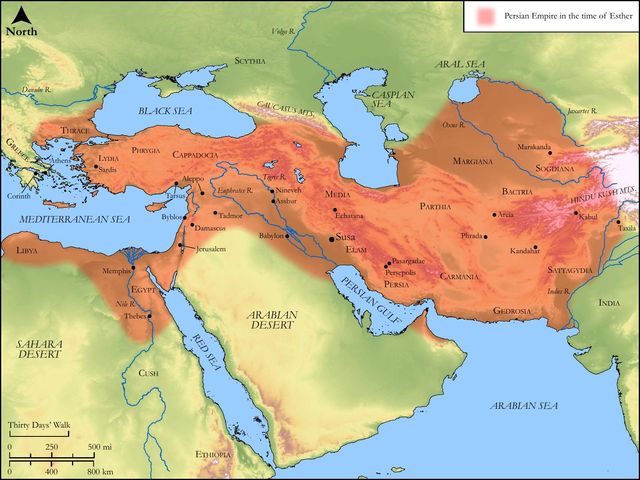
Esther 4:1 vividly portrays Mordecai's immediate and profound reaction to Haman's genocidal decree against the Jewish people. Upon learning of the edict to annihilate all Jews throughout the Persian Empire, Mordecai publicly expresses overwhelming grief and despair by tearing his garments, donning sackcloth and ashes, and crying out with a loud and bitter wail in the city square. This dramatic and culturally significant display of lamentation marks a pivotal turning point in the narrative, transforming a hidden threat into an open demonstration of anguish and signaling the urgent need for divine intervention and decisive human action.
Context
ShowHideLiterary Context
Esther 4:1 serves as the crucial emotional and narrative pivot following the chilling revelation of Haman's decree to exterminate all Jews, meticulously detailed in Esther 3. The preceding chapters establish Haman's meteoric rise to power, his deep-seated animosity toward Mordecai, and by extension, his genocidal hatred for all Jewish people, culminating in his manipulative procurement of King Ahasuerus's unwitting approval for their annihilation. Mordecai's public lament is not merely a personal expression of sorrow but a strategic, agonizing response to this existential threat, designed to alert the Jewish community and prepare the ground for the dramatic intercession that will unfold through Queen Esther in the subsequent verses of Esther 4. His actions transform a private horror into a public crisis, setting the stage for the desperate measures required for survival.
Historical & Cultural Context
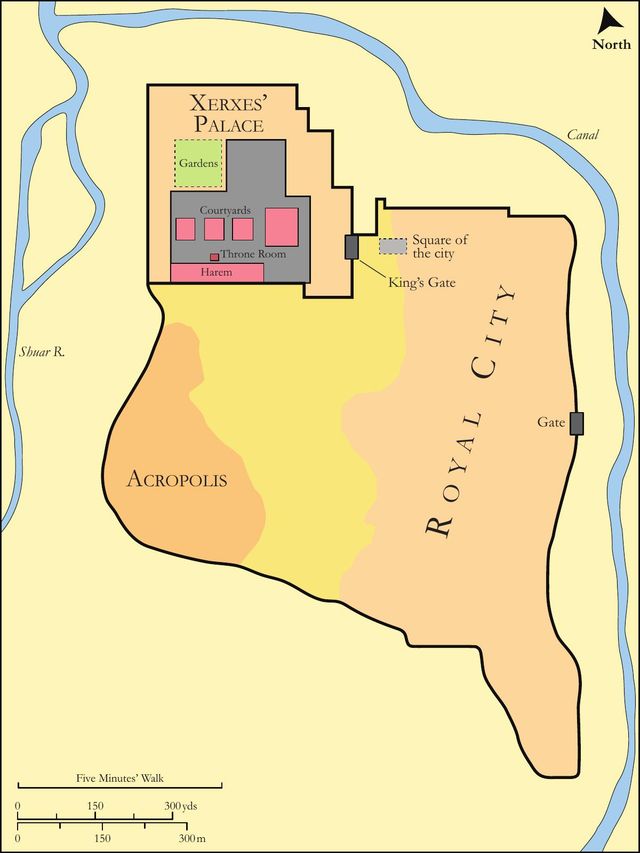
In the ancient Near East, the actions described in Esther 4:1—tearing clothes, wearing sackcloth, and covering oneself with ashes—were universally recognized and deeply symbolic expressions of extreme grief, mourning, repentance, and profound distress in the face of calamity. This was a public ritual, often performed in response to national disaster, death, or overwhelming personal suffering. The "midst of the city" (or city square, often near the city gate) was the central gathering place where news was disseminated and public displays occurred. Mordecai's dramatic actions would have immediately communicated the unparalleled gravity of the situation to anyone who witnessed him, signaling an unprecedented catastrophe. This widespread cultural practice underscores the severity of the threat posed by Haman's decree, which was a state-sanctioned plan for ethnic cleansing, an unimaginable horror for the Jewish diaspora living under foreign rule.
Key Themes
ShowHideThis verse powerfully introduces or amplifies several key themes within the book of Esther. Firstly, it highlights the theme of Lament and Despair in Crisis, as Mordecai's visceral actions encapsulate the overwhelming sense of hopelessness faced by a people condemned to annihilation. His public display of anguish is a raw expression of the deep suffering inflicted by injustice. Secondly, it underscores the theme of Public Witness and Call to Action, as Mordecai's highly visible grief is not merely for himself but serves to alert and galvanize the wider Jewish community, prompting them to recognize the immediacy and severity of the threat. Thirdly, although God's name is conspicuously absent from the book of Esther, Mordecai's actions, particularly the donning of sackcloth and ashes, implicitly connect to the ancient practice of seeking divine mercy and intervention in times of national peril. This subtly introduces the underlying theme of Divine Providence working through human agents, even in the apparent silence or hiddenness of God. This public act of mourning foreshadows the broader fast and lament observed by the Jews throughout the provinces, as mentioned in Esther 4:3.
Exposition and Analysis
ShowHideKey Word Analysis
ShowHideThis word (H3045) signifies more than mere intellectual understanding; it implies a deep, experiential knowledge or full comprehension. Mordecai didn't just hear the news; he "perceived" it, grasping the full, devastating implications of Haman's decree for the entirety of his people. This perception moved him to a profound emotional and physical response, indicating a complete internalization of the catastrophe.
The verb "rent" (H7167), when referring to clothes, describes a deliberate and often violent act of tearing one's garments. This was a powerful, non-verbal expression of shock, horror, extreme grief, indignation, or acute emotional distress. It signifies a breaking of normalcy, a visible manifestation of profound internal upheaval and sorrow. The accompanying "clothes" (Hebrew, beged, H899) are the outer garments, making the act a public display.
This term (H8242) refers to a coarse, rough fabric, typically made of goat's hair, worn directly against the skin as a sign of deep mourning, humility, or penitence.
Ashes (H665) were often sprinkled on the head or body, further symbolizing humiliation, sorrow, and a posture of repentance or supplication before God. The combination of sackcloth and ashes was a profound visual statement of abject misery and a desperate plea for divine mercy, commonly observed during times of national calamity or personal distress.
This adjective (H4751) describes the quality of Mordecai's cry, emphasizing profound anguish, sorrow, and perhaps even a sense of injustice or hopelessness. It intensifies the emotional weight of his lament, suggesting a deep-seated, agonizing pain.
The noun "cry" (H2201), derived from the verb zâʻaq (H2199), denotes a loud, often desperate shriek or outcry, frequently associated with distress, lament, or an appeal for help. When qualified by "bitter," it underscores that this was not a quiet lament but a public, piercing wail of intense emotional pain and desperation, designed to be heard and to convey the full weight of the impending disaster.
Verse Breakdown
ShowHide"When Mordecai perceived all that was done,"
This opening clause establishes Mordecai's immediate and full comprehension of the gravity of Haman's decree. "All that was done" refers specifically to the edict for the annihilation of the Jews, sealed by the king, as detailed in Esther 3. Mordecai, being at the king's gate and privy to official proceedings, understood the full implications of this state-sanctioned genocide. His perception is not merely intellectual understanding but a deep, personal realization of the existential threat to his people.
"Mordecai rent his clothes,"
This action is the first physical manifestation of Mordecai's profound shock and horror. It is a culturally significant and universally understood gesture in the ancient world, signifying overwhelming grief, despair, or indignation. It expresses a tearing apart of one's inner being in response to an unbearable reality.
"and put on sackcloth with ashes,"
Following the initial outburst of tearing clothes, Mordecai adopts the traditional attire of deep mourning and supplication. Sackcloth, a coarse, uncomfortable fabric, and ashes, sprinkled on the head, symbolize deep humility, sorrow, and often, repentance or a desperate plea for divine mercy in the face of catastrophe. This is a sustained, rather than momentary, expression of distress, indicating a state of prolonged lament.
"and went out into the midst of the city,"
Mordecai's actions are not confined to private grief. By going "into the midst of the city," likely the public square or gate area where people gathered, he transforms his personal lament into a public demonstration. This act serves to alert the wider community to the impending doom and to share the burden of sorrow, potentially stirring a collective response and galvanizing action.
"and cried with a loud and a bitter cry;"
This final clause emphasizes the intensity and public nature of Mordecai's lament. It was not a quiet, private weeping but a vociferous, anguish-filled wail. The "bitter" quality of the cry underscores the profound sorrow, despair, and righteous indignation felt in the face of such an unjust and devastating decree. It is a cry of desperation, a public lament for a people facing annihilation, intended to be heard and to provoke a response.
Literary Devices
ShowHideEsther 4:1 is rich in Symbolism, primarily through Mordecai's actions. Tearing his clothes, donning sackcloth, and covering himself with ashes are not merely descriptive details but potent visual symbols universally understood in the ancient Near East as expressions of extreme grief, mourning, humiliation, and deep distress. The act of tearing clothes symbolizes a tearing of the soul, an internal rupture made external. Sackcloth and ashes symbolize humility, penitence, and a desperate appeal to a higher power in times of national calamity. The "loud and bitter cry" further amplifies this symbolism, conveying the depth of anguish through auditory means. The verse also employs Dramatic Action to propel the narrative forward; Mordecai's public display is a deliberate catalyst, forcing the hidden threat into the open and initiating the chain of events that will involve Esther. This public lament also functions as a form of Protest and Call to Awareness, transforming personal grief into a communal alarm and implicitly calling for a response from both humanity and, by ancient custom, from God.
Theological and Thematic Connections
ShowHideMordecai's profound lament in Esther 4:1 serves as a powerful theological statement about the appropriate human response to overwhelming evil and impending catastrophe. While the book of Esther famously omits any direct mention of God, Mordecai's actions—particularly the donning of sackcloth and ashes—are deeply rooted in biblical tradition as expressions of repentance, supplication, and a desperate plea for divine intervention. This public display of grief, therefore, implicitly acknowledges a higher power and the need for a miraculous deliverance beyond human capacity. It highlights the theological theme of corporate lament and intercession in the face of existential threat, demonstrating that even when God seems silent or hidden, His people are called to express their anguish and seek His mercy. This moment underscores the profound reality of human suffering in a fallen world and the spiritual necessity of acknowledging that suffering before God and one another, trusting in His ultimate sovereignty.
Reflection and Application
ShowHideMordecai's raw and public display of grief in Esther 4:1 offers profound lessons for believers today. In a world often characterized by injustice, suffering, and threats to human dignity, this verse reminds us that it is not only permissible but often necessary to lament deeply. Our faith does not call us to stoic indifference in the face of evil, but to a compassionate and even indignant response. Mordecai's public cry was a call to awareness, a summons to his community to recognize the gravity of their situation and to respond. Similarly, our lamentation, whether private or public, can serve as a catalyst for prayer, advocacy, and action against injustice. It validates the full spectrum of human emotion, showing that even in despair, there can be a pathway to intercession and, ultimately, to hope rooted in God's sovereign care, even when His hand is not immediately visible. This verse challenges us to consider how we respond to the suffering in our own communities and the world, urging us to move beyond passive observation to active, empathetic engagement, recognizing that our cries, like Mordecai's, can be a prelude to God's redemptive work.
Questions for Reflection
ShowHideFAQ
ShowHideWhy did Mordecai tear his clothes and put on sackcloth and ashes?
ShowHideMordecai's actions were traditional and highly symbolic expressions of extreme grief, mourning, despair, and often, repentance or supplication in the ancient Near East. Tearing clothes (Hebrew: qaraʿ bəḡāḏāw) signified profound shock, horror, or indignation, an outward manifestation of inner turmoil. Donning sackcloth (Hebrew: saq), a coarse, uncomfortable fabric, and covering oneself with ashes (Hebrew: ʾēp̄er) symbolized deep humility, sorrow, and a desperate plea for divine mercy. These acts were a public declaration of the overwhelming calamity—Haman's decree to annihilate all Jews—and a desperate appeal for intervention, implicitly from God, even though His name is not mentioned in the book of Esther. This was a common response to national disaster, as seen in other biblical accounts like Jonah 3:6 and Daniel 9:3, demonstrating a people turning to God in their distress.
Christ-Centered Fulfillment
ShowHideWhile Esther 4:1 depicts a moment of profound human lament in the face of existential threat, it finds its ultimate Christ-centered fulfillment in the person and work of Jesus Christ. Mordecai's bitter cry and public display of anguish foreshadow the ultimate lament and suffering of the Son of Man who would bear the sins and sorrows of humanity. Just as Mordecai interceded for his people, Jesus, the Great High Priest, continually intercedes for His people before the Father (Romans 8:34). The profound threat to the Jewish people in Esther, which necessitated such desperate measures, points to the far greater threat of sin and death that condemns all humanity. Jesus, the true Lamb of God, did not merely lament but offered Himself as the ultimate sacrifice, taking away the sin of the world and delivering His people from eternal annihilation. His suffering on the cross, though not marked by sackcloth and ashes, was the ultimate expression of divine grief and self-sacrifice, securing a deliverance far greater and more permanent than any earthly reprieve, leading to the ultimate triumph over death and the grave (1 Corinthians 15:54-57). His cry from the cross, "My God, my God, why have you forsaken me?" (Matthew 27:46), echoes Mordecai's bitter cry, but with the added weight of bearing the world's sin, ultimately leading to eternal salvation for all who believe.