


Esther 4:2
Bible text: King James Version (1769 Blayney text) · Public domain
Bible text: Berean Standard Bible · Public domain
Bible text: American Standard Version (1901) · Public domain
Bible text: World English Bible, Messianic edition · Public domain
Bible text: Geneva Bible (1599) · Public domain
Bible text: Young's Literal Translation · Public domain
- וַיָּבוֹאvai·ya·Vo'and he wentH935Conj-w ¦ V-Qal-ConsecImperf-3msVerb Qal Consecutive Imperfect 3rd Singular Masculineוַandיָּבוֹאhe went
- עַד'adtoH5704PrepPreposition
- לִפְנֵיlif·Nei<to> beforeH6440Prep-l ¦ N-mpcNoun Plural Masculine Constructלִ<to>פְנֵיbefore
- שַׁעַרsha·'ar[the] gate ofH8179N-mscNoun Singular Masculine Construct
- הַמֶּלֶךְha·Me·lekhthe kingH4428Art ¦ N-msNoun Singular Masculine Absoluteהַtheמֶּלֶךְking
- כִּיkiforH3588PrtParticle Conditional
- אֵין'einnotH369N-mscNoun Singular Masculine Construct
- לָבוֹאla·Vo'to goH935Prep-l ¦ V-Qal-InfVerb Qal Infinitive Constructלָtoבוֹאgo
- אֶל'elintoH413PrepPreposition
- שַׁעַרSha·'ar[the] gate ofH8179N-mscNoun Singular Masculine Construct
- הַמֶּלֶךְha·Me·lekhthe kingH4428Art ¦ N-msNoun Singular Masculine Absoluteהַtheמֶּלֶךְking
- בִּלְבוּשׁbil·Vushin clothing ofH3830Prep-b ¦ N-mscNoun Singular Masculine Constructבִּinלְבוּשׁclothing of
- שָׂקSaksackclothH8242N-msNoun Singular Masculine Absolute
English is a literal word-by-word gloss of the Hebrew, not the KJV's wording. Why?
This is the original text the KJV's translators worked from — each Hebrew word with its own literal English meaning in this verse, prepared by scholars at Tyndale House, Cambridge. The KJV translates whole sentences, not word by word, so its wording differs: one Hebrew word can become several English words, and the KJV may choose “the LORD” where the gloss reads “Yahweh”. Both are faithful — they answer different questions. For the KJV's own rendering, switch to the KJV text.
Details
See on the biblical-era maps
Study this verse
Public-domain commentary
Matthew Henry
From his Commentary on the Whole Bible. Henry comments on passages, not single verses — this entry covers Esther 4:1–4.
Here we have an account of the general sorrow that there was among the Jews upon the publishing of Haman's bloody edict against them. It was a sad time with the church. 1. Mordecai cried bitterly, rent his clothes, and put on sackcloth, Est 4:1, Est 4:2. He not only thus vented his grief, but proclaimed it, that all might take notice of it that he was not ashamed to own himself a friend to the Jews, and a fellow-sufferer with them, their brother and companion in tribulation, how despicable and how odious soever they were now represented by Haman's faction. It was nobly done thus publicly to espouse what he knew to be a righteous cause, and the cause of God, even when it seemed a desperate and a sinking cause. Mordecai laid the danger to heart more than any because he knew that Haman's spite was against him primarily, and that it was for his sake that the rest of the Jews were struck at; and therefore, though he did not repent of what some would call his obstinacy, for he persisted in it (Est 5:9), yet it troubled him greatly that his people should suffer for his scruples, which perhaps occasioned some of them to reflect upon him as too precise. But, being able to appeal to God that what he did he did from a principle of conscience, he could with comfort commit his own cause and that of his people to him that judgeth righteously. God will keep those that are exposed by the tenderness of their consciences. Notice is here taken of a law that none might enter into the king's gate clothed with sackcloth; though the arbitrary power of their kings often, as now, set many a mourning, yet none must come near the king in a mourning dress, because he was not willing to hear the complaints of such. Nothing but what was gay and pleasant must appear at court, and every thing that was melancholy must be banished thence; all in king's palaces wear soft clothing (Mat 11:8), not sackcloth. But thus to keep out the badges of sorrow, unless they could withal have kept out the causes of sorrow - to forbid sackcloth to enter, unless they could have forbidden sickness, and trouble, and death to enter - was jest. However this obliged Mordecai to keep his distance, and only to come before the gate, not to take his place in the gate. 2. All the Jews in every province laid it much to heart, Est 4:3. They denied themselves the comfort of their tables (for they fasted and mingled tears with their meat and drink), and the comfort of their beds at night, for they lay in sackcloth and ashes. Those who for want of confidence in God, and affection to their own land, has staid in the land of their captivity, when Cyrus gave them liberty to be gone, now perhaps repented of their folly, and wished, when it was too late, that they had complied with the call of God. 3. Esther the queen, upon a general intimation of the trouble Mordecai was in, was exceedingly grieved, v. 4. Mordecai's grief was hers, such a respect did she still retain for him; and the Jews' danger was her distress; for, though a queen, she forgot not her relation to them. Let not the greatest think it below them to grieve for the affliction of Joseph, though they themselves be anointed with the chief ointments, Amo 6:6. Esther sent change of raiment to Mordecai, the oil of joy for mourning and the garments of praise for the spirit of heaviness; but because he would make her sensible of the greatness of his grief, and consequently of the cause of it, he received it not, but was as one that refused to be comforted.
Historical interpretation
Historical reception
2 surviving comments on this verse. Each one is dated, so this reads as a timeline rather than a list.
When Mordecai heard about the destruction of the Jews which had been sanctioned with an imperial decree, he put on clothes for mourning and proceeded to the gates of the palace with bitterness in his soul and grief in his voice. In the same way, after the teachers of the church hear of the persecution which the princes of this world want to bring against the innocent servants of Christ, they come with their prayers and alms, with vigils and prayers, with tears and heavy hearts in view of what they know must happen. They give their all before the supreme judge, so that through the dignity and prayers of the true queen, namely, the holy church—which is still a stranger in this world even as it reigns in heaven together with the Lord—they might be heard by the king of the universe. If someone, then, should ask how it might be fitting to a most just king to inflict torments on the innocent, let him know that this is not the result of an evil decision, but of the command of a supreme will. Indeed divine wisdom—a wisdom which defeats every wickedness and leads things from beginning to end with its power, and perfectly arranges everything—does whatever it wants in heaven and on earth, in the sea, and in every abyss. The events that occur, occur fairly so that (God’s) faithful servant may be given into the hands of their persecutors both for the expiation of sin, and the correction of their habits … as the prophet testifies, “the Lord is just in all his ways, and kind in all his doings. The Lord is near to all who call on him.”
When Mordecai hears that the slaughter of the Jews has been fixed by imperial decree, he dresses himself in somber clothing and approaches the doors of the palace with a bitter soul and a wailing voice; and when the leaders of the Church hear about the persecution which the princes of the earth desire to inflict upon the blameless slaves of Christ, they long to pour out their troubles—with fasting and charity, with vigils and prayer, with tears and the devotion of the heart—to the hidden recesses of Heaven, i.e. in the sight of the supreme judge. So in light of the honor and the prayers of the true queen, i.e. the holy Church which even now wanders the earth for some of the time, and rules with the Lord in Heaven for the rest, they deserve to be heard by the king of all ages. If, moreover, one were to ask how it might befit a just king to inflict torments on the innocent, he should know that the source of this is not some desire to do harm but the intention of the highest providence; for the divine wisdom—which conquers every sort of wickedness and reaches powerfully from one end to the other, and disposes everything with ease—does whatever it wishes in Heaven and on earth, on the sea and in all the depths. It is, in other words, with just judgment that his faithful servants are delivered into the hands of the persecutors, whether to expiate their sins or to correct their behavior or even to add to their merits or multiply their rewards, since— as the prophet testifies—“the Lord is just in all his ways, and holy in all his acts; he is close to all who call upon him” (Psalms 145). In truth, he will do the will of those who fear him, and will listen to their prayers and bring them salvation; for the Lord did not deliver Job into Satan’s hands to destroy him because he asked him to, but so that with Job’s help he could defeat his most wicked enemy and so acquire for himself the palm of victory, and leave to that enemy the just punishment for his wickedness. The apostle Paul was subjected to a corporal goad, namely the angel of Satan, who pummeled him so that his virtue would be perfected in a state of weakness. We should also be careful not to pass over in silence the statement that Mordecai could not enter the royal court because he had put on sackcloth, but instead got as far as the doors of the palace; because no one who has been polluted by the life of this world may enter the court of the heavenly realm, rather each of us should, before the last day of his life, knock on the entrance of the kingdom by chastising his body and repenting in his heart for as long as he is here. And this way, he will be fortunate to enter the paradise of the Lord after he has passed into death.
Continue studying Esther 4:2 across the web’s major study libraries — every link below opens this exact verse, chapter, or book on the destination site.
Read & Compare
 BibleGatewayThis verse in more than 200 translations and 70 languages.
 Bible.comThe YouVersion reader — hundreds of translations, reading plans, and highlights.
 ESV.orgCrossway's official English Standard Version reader.
 NET BibleThe NET translation with 60,000+ translators' notes on every rendering decision.
 STEP BibleTyndale House's free study tool — original text, vocabulary, and scholarly resources.
 BibliaLogos Bible Software's free web reader.
 USCCBThe New American Bible (Revised Edition) with the U.S. bishops' study notes.
Commentaries
 BibleHub CommentariesDozens of classic commentaries on this verse, gathered on one page.
 StudyLightMore than 100 commentary sets — the largest collection on the web.
 BibleRefPlain-English commentary on what this verse means, verse by verse.
 Enduring WordDavid Guzik's free commentary on this chapter, widely used by Bible teachers.
 Bible Study ToolsVerse commentary alongside Greek and Hebrew study aids.
Original Language & Research
- BibleHub InterlinearThe verse word by word — original language, transliteration, and English.
- BibleHub LexiconEvery word's original-language definition and Strong's entry.
 Blue Letter BibleDeep-study tools — Strong's numbers, concordance, and word studies.
 SefariaThe Hebrew text with Rashi and centuries of Jewish commentary.
Sermons, Hymns & Audio


TrulyRandomVerse is not affiliated with these sites and doesn’t control their content. They’re linked because they’re genuinely useful.
Summary
Esther 4:2 vividly portrays Mordecai's profound public lamentation outside the king's gate in Susa, a direct and desperate response to Haman's genocidal decree against the Jewish people. The verse underscores a rigid Persian court protocol that strictly prohibited anyone clothed in sackcloth—a universally recognized symbol of deep mourning and distress—from entering the royal precinct. This prohibition creates a powerful visual and thematic barrier, highlighting the stark contrast between the opulent, insulated world of the Persian court and the overwhelming national catastrophe unfolding just beyond its ceremonial threshold.
Context
ShowHideLiterary Context
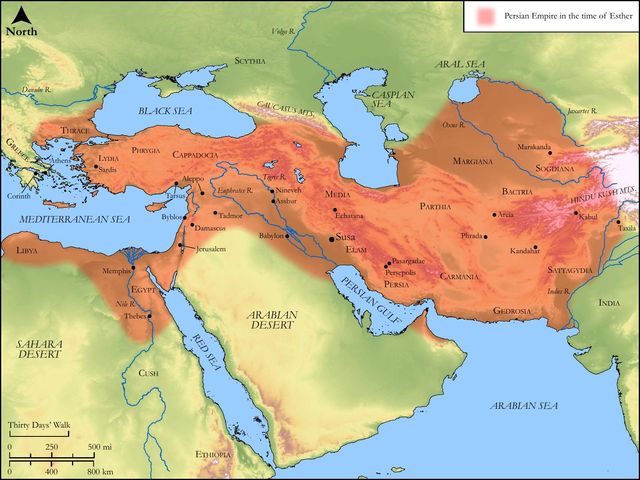
This verse immediately follows Mordecai's dramatic reaction to the devastating decree orchestrated by Haman, which mandated the extermination of all Jews throughout the vast Persian Empire, as detailed in Esther 3:13. Having torn his clothes, donned sackcloth and ashes, and cried out with a loud and bitter cry throughout the city, Mordecai's deliberate movement "even before the king's gate" in verse 2 signifies a calculated, public act of protest and lament at the very threshold of imperial power. This strategic positioning is crucial, as it sets the stage for the communication between Mordecai and Esther. Her servants and eunuchs would soon observe his conspicuous distress and report it to her, thereby initiating the critical chain of events that culminates in Esther's courageous and life-saving intervention, which unfolds throughout Esther 4. Thus, the verse functions as a pivotal narrative bridge, connecting the widespread public lamentation of the Jewish people with the private, strategic actions that must now be undertaken within the palace walls.
Historical & Cultural Context
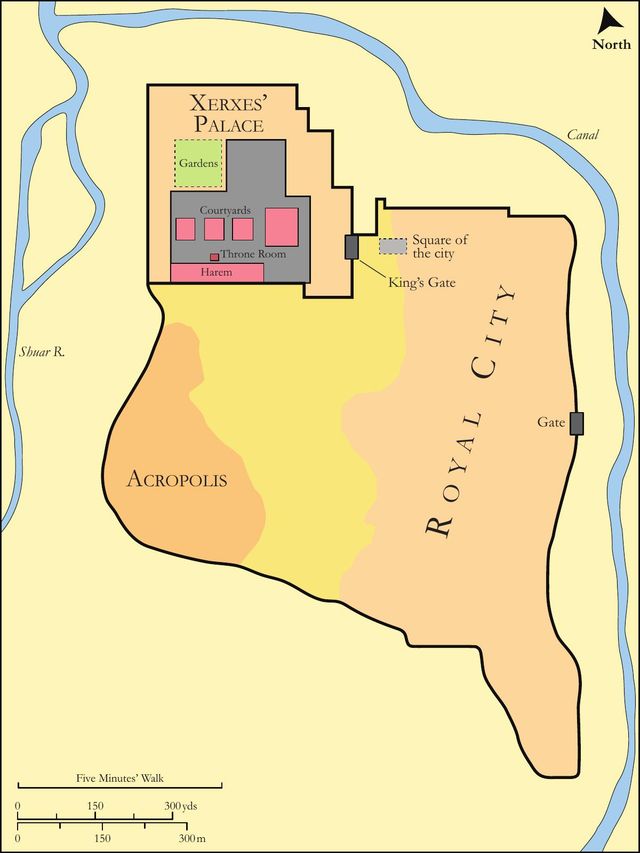
The Persian Empire, at its zenith, was renowned for its elaborate court protocols, strict etiquette, and rigid adherence to decorum, particularly within the royal palace and in the king's presence. The "king's gate" (שַׁעַר הַמֶּלֶךְ, sha'ar ha-melekh) was far more than a mere entrance; it was a significant public and administrative hub, often serving as a place where royal decrees were posted, officials gathered, and public life intersected with royal authority. Displays of unkempt appearance, profound sorrow, or distress, such as wearing sackcloth, were considered highly inappropriate and disruptive to the serene and majestic atmosphere expected within the royal precinct. Sackcloth itself (שַׂק, saq), a coarse fabric typically woven from goat hair, was a widely recognized and potent symbol of intense grief, mourning, repentance, or national calamity throughout Scripture, as evidenced in diverse accounts like Jonah 3:5 and Genesis 37:34. Mordecai's presence in such attire at this specific, highly visible location was therefore a calculated and deeply symbolic act, designed to draw urgent attention to the unprecedented crisis facing his people.
Key Themes
ShowHideEsther 4:2 significantly contributes to several overarching themes within the book of Esther. Firstly, it powerfully illustrates the theme of profound despair and lament among the Jewish people, creating a stark contrast with the king's initial ignorance and the seemingly indifferent opulence of the court. Mordecai's sackcloth is a tangible, visceral representation of the existential threat facing his entire nation. Secondly, the verse underscores the clash between rigid human protocol and overwhelming human suffering. The "king's gate" embodies an impenetrable barrier of human-made rules and ceremonial demands, effectively preventing the raw reality of national anguish from reaching the highest authority. This tension highlights the isolation of power and the often-unseen struggles of those outside its immediate sphere. Finally, and subtly, the verse introduces the theme of divine providence working through human agency, even through seemingly indirect acts of protest. Mordecai's visible distress, though unable to directly breach the gate, is precisely what catches the attention of Esther's servants, ultimately setting in motion the divinely orchestrated plan for deliverance.
Exposition and Analysis
ShowHideKey Word Analysis
ShowHideMeaning an opening, i.e., door or gate. In the context of the "king's gate," this term refers not merely to a physical entrance but to a significant public square and administrative center directly associated with the royal palace. It was the place where royal decrees were announced, officials congregated, and public business was conducted. Mordecai's presence here in sackcloth was a highly visible and deliberate act of public lament, bringing the national crisis to the very threshold of power, even if he could not physically enter. It symbolizes the barrier between the insulated world of the king and the suffering of his subjects.
Meaning a garment (literally or figuratively); by implication (euphemistically) a wife; apparel, clothing, raiment. This word emphasizes the specific attire Mordecai was wearing—sackcloth—which was the direct reason for his prohibition from the gate. The choice of this particular "garment" was a deliberate and public statement of his profound grief and the national calamity, making his appearance a direct violation of court protocol.
Properly, a mesh (as allowing a liquid to run through), i.e., coarse loose cloth or sacking (used in mourning and for bagging); hence, a bag. This refers to a coarse, rough fabric, often made from goat hair, worn as a traditional sign of deep mourning, lamentation, repentance, or extreme distress in Israel and among the nations round about. It was frequently accompanied by ashes, as seen in various biblical accounts. The act of wearing sackcloth was a public declaration of profound sorrow and humility, often in response to personal tragedy, national calamity, or divine judgment. Its prohibition at the king's gate underscores the Persian court's emphasis on decorum and the suppression of visible grief within the royal presence.
Verse Breakdown
ShowHide"And came even before the king's gate:"
This phrase highlights Mordecai's deliberate and strategic positioning. Despite the inherent danger and the known court protocol, he brings his visible lament to the most prominent public space adjacent to the palace. This act is not random but a calculated move to ensure that his profound distress, and by extension, the desperate plight of the Jewish people, is seen by those who might convey it to Queen Esther or other influential figures within the court. It powerfully conveys his courage, desperation, and the urgency of the situation.
"for none [might] enter into the king's gate clothed with sackcloth."
This clause serves as the immediate explanation for Mordecai's inability to proceed further. It reveals a strict Persian court protocol that mandated a specific level of decorum and appearance, expressly forbidding any outward display of sorrow, unkemptness, or the wearing of mourning attire within the royal precinct. This rule functions as a potent symbol of the king's insulation from the suffering of his people and illustrates the rigid, ceremonial demands of the empire, which prioritized appearance and royal majesty over the raw reality of human anguish and national crisis.
Literary Devices
ShowHideThe verse employs several potent literary devices to convey its profound message. Contrast is central, starkly juxtaposing Mordecai's raw, public display of grief in sackcloth with the rigid, unyielding decorum of the Persian court, symbolized by the "king's gate" where such sorrow was expressly forbidden. This highlights the vast chasm between the king's insulated reality and the existential crisis facing his subjects. Symbolism is also prominent: the sackcloth itself is a powerful symbol of national mourning, despair, and humility in the face of impending doom, while the "king's gate" symbolizes inaccessible power, rigid protocol, and the formidable barrier between the people's suffering and the royal authority that could potentially alleviate it. Furthermore, there is a crucial element of foreshadowing, as Mordecai's visible protest, though seemingly futile in its direct aim of gaining entry, indirectly sets in motion the crucial communication with Queen Esther, which will ultimately lead to the miraculous deliverance of the Jewish people, demonstrating how divine providence can work through unexpected human actions and seemingly insurmountable obstacles.
Theological and Thematic Connections
ShowHideEsther 4:2 profoundly illustrates the tension between human suffering and divine sovereignty, particularly when God's people face existential threats. Mordecai's public lament in sackcloth before the king's gate is a deeply theological act, embodying the biblical tradition of crying out to God in times of national distress. Though God's name is not explicitly mentioned in the book of Esther, Mordecai's actions reflect an implicit trust that such a profound display of anguish might somehow move the heavens or those in power. It highlights the importance of lament as a legitimate and necessary response to injustice and impending doom, even when direct access to solutions seems blocked by human systems and protocols. This verse reminds us that even when doors are shut, and conventional avenues are closed, God can use unconventional means—like a public display of grief that catches the attention of a queen's servants—to orchestrate His deliverance.
Reflection and Application
ShowHideMordecai's poignant act of lament before the king's gate, despite being barred from entry, speaks powerfully to our own responses to suffering and injustice in the world today. It challenges us to consider how we express our anguish and concern when faced with overwhelming crises, whether personal, communal, or global. Are we willing to visibly lament, to bear witness to the brokenness and pain around us, even when it is inconvenient, uncomfortable, or goes against societal norms of composure and stoicism? This verse underscores that sometimes, the most impactful form of advocacy is a public, unvarnished display of grief and protest, which, though seemingly unable to directly penetrate the "gates" of power, can stir the hearts and minds of those who do have access. It encourages us to find creative and persistent ways to bring the urgency of suffering to the attention of those who can make a difference, trusting that even indirect means can be used by God to bring about His purposes. It also reminds us that true compassion often requires us to step outside our comfort zones and embody the pain of others, allowing our lament to become a catalyst for action, even if that action is initially unseen or indirectly achieved.
Questions for Reflection
ShowHideFAQ
ShowHideWhy was sackcloth forbidden at the king's gate?
ShowHideSackcloth was forbidden at the king's gate primarily due to the strict decorum and elaborate protocol of the Persian court. The royal presence and the palace environment were meticulously designed to convey majesty, order, and prosperity. Displays of deep mourning, distress, or an unkempt appearance, such as wearing sackcloth, were considered disruptive, disrespectful, and potentially even a bad omen that could disturb the king's peace or signify ill fortune. The king's gate was a place of public administration and royal authority, and any visible sign of national calamity or personal anguish was seen as inappropriate for such a setting. This rule underscored the king's insulated reality and the expectation that all who approached the royal sphere would adhere to a standard of serenity and respect, regardless of the turmoil outside, maintaining the illusion of absolute control and tranquility within the empire's heart.
What was the significance of the "king's gate" beyond being a mere entrance?
ShowHideThe "king's gate" (שַׁעַר הַמֶּלֶךְ, sha'ar ha-melekh) was far more than just a physical entrance to the palace. It functioned as a significant public square and a central hub where royal decrees were often posted for public viewing, where officials and courtiers gathered, and where judicial matters might be heard. It was a highly visible and symbolic space, representing the nexus of royal power and public life. Therefore, Mordecai's presence there in sackcloth was not just a personal act of mourning but a powerful, public declaration of the national catastrophe facing the Jewish people, bringing the urgency of their plight to the very doorstep of the empire's authority, even if he could not physically enter the inner court. It was a strategic location for his lament to be seen and reported.
Christ-Centered Fulfillment
ShowHideEsther 4:2, with its depiction of Mordecai barred from the king's gate in his profound lament, powerfully foreshadows the ultimate access and intercession provided through Jesus Christ. Mordecai's inability to enter the king's presence in his state of grief symbolizes humanity's separation from God due to sin, where our lament and brokenness cannot directly approach the divine throne. Yet, in Christ, this barrier is utterly removed. He is the one who, unlike the Persian king, did not recoil from human suffering but fully embraced it, becoming a "man of sorrows, and acquainted with grief" (Isaiah 53:3-4). Through His atoning sacrifice on the cross, the ultimate act of lament and intercession, the "veil of the temple was torn in two from top to bottom" (Matthew 27:50-51), signifying that the way to God's presence is now open to all, regardless of their state of brokenness or lament. We are now invited to "draw near with confidence to the throne of grace, that we may receive mercy and find grace to help in time of need" (Hebrews 4:16). Jesus himself declares, "I am the door; if anyone enters through Me, he will be saved" (John 10:9), transforming the concept of a forbidden gate into an open invitation, where our deepest anguish can be brought directly before the King of Kings, who understands, sympathizes, and intercedes on our behalf.