


Esther 1:6
- חוּרchurwhite materialH2353N-msNoun Singular Masculine Absolute
- כַּרְפַּסkar·PascottonH3768N-msNoun Singular Masculine Absolute
- וּתְכֵלֶתu·te·Khe·letand violet materialH8504Conj-w ¦ N-fsNoun Singular Feminine Absoluteוּandתְכֵלֶתviolet material
- אָחוּז'a·Chuz[was] heldH270V-Qal-PassPrtcpl-msVerb Qal Participle Passive Singular Masculine Absolute
- בְּחַבְלֵיbe·chav·leiwith cords ofH2256Prep-b ¦ N-cpcNoun Plural common gender Constructבְּwithחַבְלֵיcords of
- בוּץvutzfine linenH948N-msNoun Singular Masculine Absolute
- וְאַרְגָּמָןve·'ar·ga·Manand purpleH713Conj-w ¦ N-msNoun Singular Masculine Absoluteוְandאַרְגָּמָןpurple
- עַל'alonH5921PrepPreposition
- גְּלִילֵיge·Li·leirods ofH1550N-mpcNoun Plural Masculine Construct
- כֶסֶףKhe·sefsilverH3701N-msNoun Singular Masculine Absolute
- וְעַמּוּדֵיve·'a·Mu·deiand pillars ofH5982Conj-w ¦ N-mpcNoun Plural Masculine Constructוְandעַמּוּדֵיpillars of
- שֵׁשׁSheshmarbleH8336N-msNoun Singular Masculine Absolute
- מִטּוֹתmi·Totcouches ofH4296N-fpcNoun Plural Feminine Construct
- זָהָבza·HavgoldH2091N-msNoun Singular Masculine Absolute
- וָכֶסֶףva·Khe·sefand silverH3701Conj-w ¦ N-msNoun Singular Masculine Absoluteוָandכֶסֶףsilver
- עַל'alonH5921PrepPreposition
- רִצְפַתritz·Fata pavement ofH7531N-fscNoun Singular Feminine Construct
- בַּהַטba·hatporphyryH923N-msNoun Singular Masculine Absolute
- וָשֵׁשׁva·Sheshand marbleH8336Conj-w ¦ N-msNoun Singular Masculine Absoluteוָandשֵׁשׁmarble
- וְדַרve·Darand mother-of-pearlH1858Conj-w ¦ N-msNoun Singular Masculine Absoluteוְandדַרmother-of-pearl
- וְסֹחָרֶתve·so·Cha·retand paving stoneH5508Conj-w ¦ N-fsNoun Singular Feminine Absoluteוְandסֹחָרֶתpaving stone
English is a literal word-by-word gloss of the Hebrew, not the KJV's wording. Why?
This is the original text the KJV's translators worked from — each Hebrew word with its own literal English meaning in this verse, prepared by scholars at Tyndale House, Cambridge. The KJV translates whole sentences, not word by word, so its wording differs: one Hebrew word can become several English words, and the KJV may choose “the LORD” where the gloss reads “Yahweh”. Both are faithful — they answer different questions. For the KJV's own rendering, switch to the KJV text.
Details
See on the biblical-era map
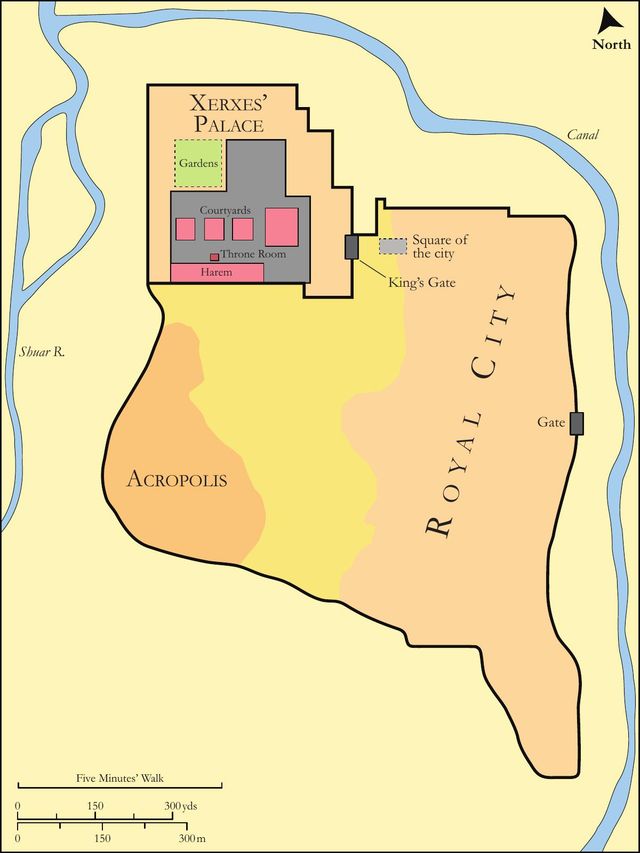
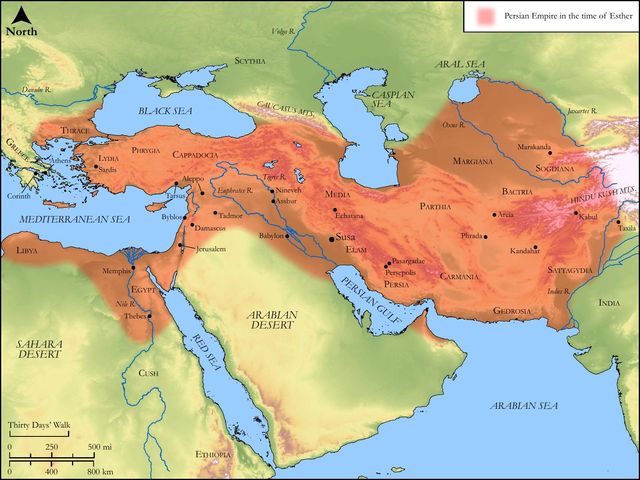
Study this verse
Public-domain commentary
Matthew Henry
From his Commentary on the Whole Bible. Henry comments on passages, not single verses — this entry covers Esther 1:1–9.
Which of the kings of Persia this Ahasuerus was the learned are not agreed. Mordecai is said to have been one of those that were carried captive from Jerusalem (Est 2:5, Est 2:6), whence it should seem that this Ahasuerus was one of the first kings of that empire. Dr. Lightfoot thinks that he was that Artaxerxes who hindered the building of the temple, who is called also Ahasuerus (Ezr 4:6, Ezr 4:7), after his great-grandfather of the Medes, Dan 9:1. We have here an account,
I.Of the vast extent of his dominion.
In the time of Darius and Cyrus there were but 120 princes (Dan 6:1); now there were 127, from India to Ethiopia, Est 1:1. It had become an over-grown kingdom, which in time would sink with its own weight, and, as usual, would lose its provinces as fast as it got them. If such vast power be put into a bad hand, it is able to do so much the more mischief; but, if into a good hand, it is able to do so much the more good. Christ's kingdom is, or shall be, far larger than this, when the kingdoms of the world shall all become his; and it shall be everlasting.
II.Of the great pomp and magnificence of his court.
When he found himself fixed in his throne, the pride of his heart rising with the grandeur of his kingdom, he made a most extravagant feast, wherein he put himself to vast expense and trouble only to show the riches of his glorious kingdom and the honour of his excellent majesty, Est 1:4. This was vain glory, an affection of pomp to no purpose at all; for none questioned the riches of his kingdom, nor offered to vie with him for honour. If he had shown the riches of his kingdom and the honour of his majesty, as some of his successors did, in contributing largely towards the building of the temple and the maintaining of the temple service (Ezr 6:8, Ezr 7:22), it would have turned to a much better account. Two feasts Ahasuerus made: - 1. One for his nobles and princes, which lasted a hundred and eighty days, Est 1:3, Est 1:4. Not that he feasted the same persons every day for all that time, but perhaps the nobles and princes of one province one day, of another province another day, while thus he and his constant attendants fared sumptuously every day. The Chaldee paraphrast (who is very bold in his additions to the story of this book) says that there had been a rebellion among his subjects and that this feast was kept for joy of the quashing of it. 2. Another was made for all the people, both great and small, which lasted seven days, some one day and some another; and, because no house would hold them, they were entertained in the court of the garden, Est 1:5. The hangings with which the several apartments were divided or the tents which were there pitched for the company, were very fine and rich; so were the beds or benches on which they sat, and the pavement under their feet, Est 1:6. Better is a dinner of herbs with quietness, and the enjoyment of one's self and a friend, than this banquet of wine with all the noise and tumult that must needs attend it.
III.Of the good order which in some respects was kept there notwithstanding.
We do not find this like Belshazzar's feast, in which dunghill-gods were praised and the vessels of the sanctuary profaned, Dan 5:3, Dan 5:4. Yet the Chaldee paraphrase says that the vessels of the sanctuary were used in this feast, to the great grief of the pious Jews. It was not like Herod's feast, which reserved a prophet's head for the last dish. Two things which are laudable we may gather from the account here given of this feast: - 1. That there was no forcing of healths, nor urging of them: The drinking was according to the law, probably some law lately made; none did compel, no, not by continual proposing of it (as Josephus explains it); they did not send the glass about, but every man drank as he pleased (Est 1:8), so that if there were any that drank to excess it was their own fault, a fault which few would commit when the king's order put an honour upon sobriety. This caution of a heathen prince, even when he would show his generosity, may shame many who are called Christians, who think they do not sufficiently show their good housekeeping, nor bid their friends welcome, unless they make them drunk, and, under pretence of sending the health round, send the sin round, and death with it. There is a woe to those that do so; let them read it and tremble, Hab 2:15, Hab 2:16. It is robbing men of their reason, their richest jewel, and making them fools, the greatest wrong that can be. 2. That there was no mixed dancing; for the gentlemen and ladies were entertained asunder, not as in the feast of Belshazzar, whose wives and concubines drank with him (Dan 5:2), or that of Herod, whose daughter danced before him. Vashti feasted the women in her own apartment; not openly in the court of the garden, but in the royal house, Est 1:9. Thus, while the king showed the honour of his majesty, she and her ladies showed the honour of their modesty, which is truly the majesty of the fair sex.
Historical interpretation
Historical reception
3 surviving comments on this verse. Each one is dated, so this reads as a timeline rather than a list.
Even though from the historical point of view it simply appears to show the abundance of riches and the luxury of delights of a powerful king, … according to the holier mystery of our most powerful king, namely, Our Lord Christ, this preparation of a most magnificent banquet signifies the greatness of the spiritual riches and the excellence of the living treasures that he distributes according to the measure of his dispensation to each of his faithful.
“So in the third year of his rule, King Ahasuerus held a grand feast for all his officials and young men, the famous heroes of Persia and Media, and the chiefs of the provinces in his presence, so that he could show off the wealth of the glory of his kingdom.” For our Redeemer—whom Ahasuerus represented in both his title and his rank—is interpreted as “my entry” or “my court”, because in the third era of that age the eternal ruler of man in the Father and the Holy Spirit opened wide to the human race the sacrament of his incarnation; and he has opened up for us the entryway to life and served to his faithful ones the most ample of spiritual banquets. The first era, then, was before the Law, the second was under the Law, and the third was under grace, namely when he fulfilled his preaching in the Gospels and prepared for all the nations an opulent meal of his body and blood. That is to say, the Lord himself was spiritually commending to us, in as a mystery, the excellence of this feast through the Gospel parable in which he described the king who threw a wedding for his son, and the great meal prepared by a man. “So the great king held a feast for seven days, in the entryway of the garden and the grove that the king had planted and cultivated by hand,” because for the entire period of that life which transpires in multiples of the number seven, our Redeemer satisfies his chosen ones with the pasturage of the divine word and the feasts of the virtues, in the Church of this world where each of the faithful readies himself— with correct faith and good works—to enter Paradise and the celestial kingdom. Hence they will become accustomed in every respect to the delights and the pleasures of the heavenly kingdom where fruit-bearing trees are planted, that is, where holy men and those who are famous for their good deeds show—through the divine gift that has been lavished on them—the beauty of holy conduct and proper doctrine. Hanging there “from every spot are tents the color of the sky, and fine linen and blue,” because it is there that the spiritual ornament of study, and the splendor of celestial wisdom, flash with the brilliance of the virtues whose proper purpose is to instruct us in those things. For that matter, the color of linen mimics (as some claim) the appearance of gold, and has deservedly been compared to the sheen of divine wisdom which excels above all in the cultivation and the practice of righteousness. “And these tents were stretched with ropes of flax and purple, and were supported by marble columns.” For flax signifies the mortification of the flesh, purple the blood of martyrdom, ivory the chastity of the body, and marble columns the solidity of the sacred teachers. It therefore makes sense that, as we are told, the tents of various colors were held up with ropes of flax and purple by ivory circles on marble columns, because the beauty of the holy Church ought to shine in the contemplation of wisdom—or rather in the perfection of the virtues—through the restraint and chastity of bodies, i.e. with the honor of martyrdom among the teachers of the sacred Gospels; and it ought, through both the word and the example of these men, to reach the notice of many people so that those who have been taught, encouraged and comforted by them may be able to reach, as they should, the court of the celestial empire. There were also “gold and silver couches spread about a floor inlaid with emerald and Parian marble, which he decorated with a marvelous variety of pictures,” because the humility of the saints, which is decorated with diverse kinds of the various virtues, provides the peace of inner contemplation to the chosen of God when they consider the divine word and investigate the true wisdom. It is there that the sweetness of knowing and loving God is lavished generously upon those who seek righteously in the gift of the Holy Spirit. It is about this couch that the bride speaks in the Song of Songs: “Our couch is bright with flowers;” in other words, when any of the saints make use of the tranquility of his times and depart from times of tribulation, it is then above all that they are free to make use of the sacred couches, fasting, prayer and all the other fruits of the spirit. They may then raise themselves up high in the contemplation of ethereal matters to gaze in all directions upon the glory of the divine majesty, since they have been given a respite from less essential concerns. The emerald is, after all, so called because it is so green; and Parian is the whitest kind of marble; and it is fitting that, as we are told, the floor where the couches were placed was set with these two stones, since it is through the whiteness, i.e. the chastity of the body, and the greenness of the good sense which is always verdant in the grace of God, that the foundations of humility are solidly laid where the reward of eternal peace is prepared for all those who deserve it. Hence it is written: “Blessed are the poor in spirit, because theirs is the kingdom of Heaven” (Matthew 5). And “He who has well humbled himself will be properly raised up” (Matthew 23). That is why the same Truth says to the disciples elsewhere in the Gospels: “Learn from me because I am gentle and humble of heart, and you will find rest for your souls; for my yoke is smooth, and my burden is light” (Matthew 11). “And those who were invited to the royal feast drank from golden goblets.” Those who drink from golden goblets are those who draw divine wisdom from the precious sayings of the sacred Gospels; and those who are served foods in different kinds of vessels are those who—by reading the Law and the prophets, and the apostles and the Gospels—are known to accept the manifold meals of spiritual doctrine on which are fed the souls brought up for eternal life. And as befits the magnificence of a king, wine is also served to the guests in exceptional abundance, since the gift of celestial grace is generously granted to each and every one of the faithful in accordance with the dispensation of divine mercy and the grant of the Holy Spirit. This is because, in Paul’s judgment: “the charity of God is spread throughout our hearts by the Holy Spirit which was given to us (Romans 5)”; and “To each one is given a manifestation of the Spirit for their use. Indeed, one person is able through the Spirit to speak the words of wisdom, while another, through the same Spirit, speaks the words of knowledge; to another is given faith in that same Spirit; to another, the grace of healing in that one Spirit; to another, the working of miracles; to another, prophecy; to another, the power to discern spirits; to another, the varieties of languages; to another, the interpretation of speech” (1 Corinthians 12). And what we said a moment ago—i.e. that he did not force to drink anyone who did not wish to do so, but as the king had decreed he sat each of his officials at tables so that each could take whatever he liked—symbolizes the freedom of grace in which no one is forced against his will to accept a spiritual gift, rather the willing participation of each individual is sought in accordance with that statement of the Lord where he says: “Whoever can accept this, let him accept it” (Matthew 19). And in the same spirit: “If you wish to enter into life, then keep the commandments” (ibid.). And again: “If you wish to be perfect, go, sell everything you have and give it to the poor, and you will have treasure in Heaven; and come, follow me” (ibid.). For at the festive and sacred feast of the holy Church, our king seats his teachers at the table of the Holy Scriptures so that they might dispense to each of the faithful the doctrines that are suited to him, and adapt to each man’s character the preaching of the word so that each one might take from it whatever he perceives as feasible and useful to him. Of course, the words of a teacher must be crafted with such skill that even though the faults of his hearers differ from one another, they should be suited to each individual and yet not contradict themselves; in this way he may maneuver in a single pass between the moderate passions, while at the same time cutting out—in the manner of a double-edged sword—the tumors of carnal thoughts. He may, accordingly, preach humility to the arrogant without making the timid more afraid; he may lavish authority upon the timid without loosening up on the arrogant; he may preach to the indolent and the sluggish attention to good works, without giving the impulsive the license to act without restraint; he may place limits upon the impulsive without making the indolent secure in their laziness; he may dampen the wrath of the impatient without encouraging carelessness among the easygoing and the gentle; he may enflame the feckless to take action without adding fuel to the irritable; he may fill the miserly with the desire to give generously, without having to preach tightfistedness to the prodigal; he may praise marriage to the promiscuous, without enticing the continent back to excess; he may praise bodily virginity to the continent, without causing married couples to look down on the fruitfulness of the flesh. He will preach the good in such a way that the bad will not also be commanded alongside it; he will praise the highest good without despising the final one; he will foster the final one so that for as long as it is believed sufficient, no one will ever turn from it toward the highest. So the faithful and wise slave who has been appointed the manager by his master, and gives his fellow slaves their share of the wheat on time, is praised by his master’s words; and he is promised that he will be put in charge of all his goods. Hence it is necessary that one who ministers with the cup of the word should possess the means of discretion, so that he may obtain from his ministry praise and reward rather than condemnation and torment.
Though these preparations for so rich a feast seem intended to portray in concrete terms the parade of wealth and the abundance of delights possessed by a powerful king, it is actually a very sanctified allegory which symbolizes the magnitude of spiritual riches, and the excellence of the necessities of life, provided by the most powerful of kings, namely the Lord Christ, which he—in accord with his method of dispensation—has generously distributed to each of his faithful ones. For this king of great wealth, who was convinced by the entreaties of his faithful wife to do away with the imminent destruction of the Jews which wicked men were plotting, prefigures no one more than our Redeemer who is accosted every day by the prayers of the Church who is his dearest wife, and frees his chosen ones from the hands of their enemies, and subjects their adversaries to the punishment they deserve. And that Esther prefigures the Church, no one can doubt; nor may she be described as the bride of anyone but Christ. That is why no one should reject this interpretation merely because this actual king was faithless, as though this would mean he could never be a figure of the just king; for we do not say that anyone’s treacheries or transgressions are the sum of his behavior, whether he is trustworthy or even faithless: “He did not sin, and no deceit was found in his mouth” (1 Peter 2). “For how can light associate with darkness; or what can Christ have in common with Belial (2 Corinthians 6)?” Rather, the good actions and just judgments of any individual should be associated with no less an authority than the one from whom comes every good, about whom it is written: “He will judge the world in fairness, and the peoples in his truth” (Psalm 9). For the transgressions and sins of the faithful do not provide the most accurate representation of their character, as do the errors and wicked actions of the gentiles; and the reason we are saying this is because certain of our teachers have used David’s behavior toward Uriah and his wife as a prefiguration of Christ and the Church. Why would anyone want to suggest that Moses’ doubts at the “waters of dissension,” Aaron’s deception about manufacturing the calf, Solomon’s lust, Ezekiel’s arrogance, Peter’s denial, and Saul’s blasphemy are fitting prefigurations of our Redeemer? And yet no one can properly deny that the good actions and the correct doctrines of those men offered a great deal of evidence on his behalf. No one, therefore, ought to take us to task for comparing, by some sort of analogy, the righteous works and the just judgments of a great king to the king and judge of all the ages; since whatever is good belongs to him, and every sin flees his presence. But if anyone should feel that what we are saying is inappropriate, let him read the prophet Isaiah who compared Cyrus, the king of Persia and a gentile, to our Redeemer when he said in the person of the Lord: “I will give you hidden treasures and the secrets of hidden things so that you may know that I am the Lord, since I the God of Israel call on your name for the sake of my servant Jacob, and Israel my chosen one; and I have summoned you in your name, I have made you like me though you have not acknowledged me. I am the Lord and there is none greater; aside from me there is no God. I have strengthened you, though you have not acknowledged me” (Isaiah 45). Let him read as well the short works of the Fathers, who said that the deeds—or rather, the misdeeds—of the shameful kings Saul and Jeconiah were symbolic prefigurations of the holy actions of our Redeemer—that is, they interpret the death of Saul, who was anointed king but was quite rightly killed for his crimes, in reference to the death of Christ the innocent king; and they explain the fact that Jeconiah was exiled from Judah to Babylonia—which he deserved because of his sins—as a prefiguration of the grace of that same Redeemer of ours, which was why he deigned to wander through the world for sake of saving the nations once he had left the Jews behind for their faithlessness. They also reported that the actions of Pharaoh or Nebuchadnezzar should be understood as prefigurations of the enemies of the Church; for example: Pharaoh commands the male infants of the people of God to be killed in the river and the females spared, because the Devil wishes to extinguish the sturdy aspects of our behavior, and to nourish the feckless and weak ones. In the same way, Nebuchadnezzar ordered all the peoples subject to him to bow down and worship his statue to the sounds of orchestras and musicians; and the Devil uses the sweetness of earthly pomp to try and steer the human race away from proper intent, and to pervert the hearts of the deceived into indulging their desire, which is “the worship of images.” If, therefore, certain actions—namely the just punishment of shameful men—prefigured not only wicked acts but good ones, could not the good actions or words of good men, which are contained in the writings of the prophets, also have prefigured the good deeds of those who came after them? After all, the power of the sacred narrative is (as someone has said) that it tells us about what happened at o time or another so that it may spell out what is going to come; it approves of the actor so that it may reprove him in the guise of an allegory, and condemns what has happened to persuade us allegorically of what is going to happen. Let us also consider the short works of St. Augustine, who said that the seven husbands of a single wife who died without children, with whom the Sadducees were testing the Lord because they denied the idea of resurrection, were likewise a sure prefiguration of the sacrament of the Church. In fact, he taught that the wife, and her barrenness and death, as well as the deaths of her husbands, prefigured noteworthy events even though the Lord himself did not tell this story, and neither did any of the evangelists who were writing in his person; instead they recorded the unspeakable words that wicked men had thrown in the Lord’s face, on account of the Lord’s very sanctified response. So when the faithful reader finds these sentiments and others like them among the statements of the sacred Fathers, he should not give the credit to us if we choose to include assertions of a similar character in our own brief works.
Continue studying Esther 1:6 across the web’s major study libraries — every link below opens this exact verse, chapter, or book on the destination site.
Read & Compare
 BibleGatewayThis verse in more than 200 translations and 70 languages.
 Bible.comThe YouVersion reader — hundreds of translations, reading plans, and highlights.
 ESV.orgCrossway's official English Standard Version reader.
 NET BibleThe NET translation with 60,000+ translators' notes on every rendering decision.
 STEP BibleTyndale House's free study tool — original text, vocabulary, and scholarly resources.
 BibliaLogos Bible Software's free web reader.
 USCCBThe New American Bible (Revised Edition) with the U.S. bishops' study notes.
Commentaries
 BibleHub CommentariesDozens of classic commentaries on this verse, gathered on one page.
 StudyLightMore than 100 commentary sets — the largest collection on the web.
 BibleRefPlain-English commentary on what this verse means, verse by verse.
 Enduring WordDavid Guzik's free commentary on this chapter, widely used by Bible teachers.
 Bible Study ToolsVerse commentary alongside Greek and Hebrew study aids.
Original Language & Research
- BibleHub InterlinearThe verse word by word — original language, transliteration, and English.
- BibleHub LexiconEvery word's original-language definition and Strong's entry.
 Blue Letter BibleDeep-study tools — Strong's numbers, concordance, and word studies.
 SefariaThe Hebrew text with Rashi and centuries of Jewish commentary.
Sermons, Hymns & Audio


TrulyRandomVerse is not affiliated with these sites and doesn’t control their content. They’re linked because they’re genuinely useful.
Summary
Esther 1:6 offers a breathtakingly detailed description of the opulent setting for King Ahasuerus's grand feast in the Persian capital of Susa. This verse, rich in its enumeration of precious materials and vibrant colors—from luxurious hangings of white, green, and blue, secured with fine linen and purple cords to silver rings and marble pillars, to beds of gold and silver resting upon a mosaic pavement of red, blue, white, and black marble—serves to underscore the king's immense wealth, absolute power, and extravagant display of imperial glory. It meticulously paints a picture of unparalleled grandeur, establishing the lavish backdrop against which the dramatic events of the book of Esther will unfold.
Context
ShowHideLiterary Context
Esther 1:6 is intricately woven into the opening narrative of the Book of Esther, specifically detailing the lavish feast hosted by King Ahasuerus. The preceding verses (Esther 1:1-5) establish the king's vast dominion, the duration of his reign, and the initial six-month display of his wealth, culminating in a seven-day feast for all the people in Susa. Verse 6 then immerses the reader directly into the visual splendor of the royal garden court where this particular feast takes place, providing the physical stage for the king's subsequent actions. This detailed description is not mere embellishment but crucial for understanding the king's character—his self-aggrandizement and impulsive nature—and the environment in which the Jewish people's fate will precariously hang in the balance. The sheer scale of the opulence sets the tone for the dramatic events, including Queen Vashti's refusal to appear before the king, leading to her dethronement as recorded in Esther 1:19.
Historical & Cultural Context
The Book of Esther is set during the reign of King Ahasuerus, widely identified with Xerxes I (486-465 BC), a formidable ruler of the Achaemenid Persian Empire. The feast described in Esther 1 was a common practice among ancient Near Eastern monarchs, serving as a powerful demonstration of their authority, wealth, and control over a vast empire. Such lavish banquets were strategic displays, intended to impress officials, subjects, and foreign dignitaries alike, solidifying loyalty and deterring rebellion. The materials mentioned—fine linen, purple dye, gold, silver, and various types of marble—were exceedingly costly and often imported from distant parts of the empire, signifying the king's ability to command resources from across his dominion, stretching from India to Ethiopia. The specific colors and materials were not only aesthetically pleasing but also carried symbolic weight, often associated with royalty, divinity, and immense status in the ancient world.
Key Themes
ShowHideThis verse significantly contributes to several key themes within the Book of Esther. Firstly, it highlights Royal Opulence and Power, showcasing the king's absolute authority and seemingly limitless resources. This theme is central to the initial chapters, as the king's decrees and whims drive much of the early narrative. Secondly, it establishes the Setting for Dramatic Events, creating a backdrop of human grandeur and excess against which the unfolding drama of God's unseen providence will play out. The luxurious environment helps to explain the king's impulsive decisions and the grand scale of the threats and deliverances to come. Finally, it subtly introduces the theme of Earthly Grandeur vs. Divine Providence. While the verse focuses entirely on human display and material wealth, the overarching message of Esther is God's sovereign hand working behind the scenes, even when unmentioned, to protect His people. The immense earthly power showcased here ultimately serves as a canvas for God's greater, unseen purpose, foreshadowing how this seemingly secure kingdom will be used to protect the Jewish people, as seen in the reversal of Haman's decree in Esther 8.
Exposition and Analysis
ShowHideKey Word Analysis
ShowHideThis term, of foreign origin, refers to "byssus or fine vegetable wool." Its inclusion points to a highly prized, likely imported, fine fabric that was used for the hangings. The presence of such exotic and expensive material underscores the king's vast access to rare goods from the furthest reaches of his empire, emphasizing the global reach of Ahasuerus's influence and wealth.
This word denotes "the cerulean mussel, i.e. the color (violet) obtained therefrom or stuff dyed therewith." This highly valued blue dye, notoriously difficult and expensive to produce, was a symbol of royalty, priesthood, and divine commands in ancient Israel (e.g., for the Tabernacle curtains in Exodus 26:1). Its presence in the Persian court's decor signifies immense wealth and status, placing the king's display on par with the highest standards of luxury in the ancient world.
Also of foreign origin, this term refers to "purple (the color or the dyed stuff)." This is the renowned Tyrian purple or royal purple, another incredibly costly dye derived from memex snails. Like tᵉkêleth, it was a universal symbol of ultimate luxury, royalty, and power throughout the ancient Near East. The inclusion of ʼargâmân in the cords fastening the hangings further elevates the opulence, indicating that even the functional elements of the decor were made of the most precious materials available.
Verse Breakdown
ShowHide"[Where were] white, green, and blue, [hangings]"
This initial clause immediately establishes a scene of vibrant color and luxury. The "hangings," likely large curtains or draperies, would have provided shade and enclosure for the garden court, transforming an outdoor space into an elegant, semi-private chamber. The specific colors—white (H2353, chûwr), green (H3768, karpaç), and blue (H8504, tᵉkêleth)—were not merely aesthetically pleasing but indicative of immense wealth and the king's ability to procure rare and costly dyes and fabrics from across his vast empire.
"fastened with cords of fine linen and purple to silver rings and pillars of marble"
This detail elaborates on the construction and materials of the hangings. The "cords of fine linen (H948, bûwts) and purple (H713, ʼargâmân)" emphasize that even the means of fastening were made of the most expensive materials, rather than common rope. The "silver (H3701, keçeph) rings (H1550, gâlîyl)" and "pillars (H5982, ʻammûwd) of marble (H8336, shêsh)" further underscore the extravagance, demonstrating that the very structure supporting the decor was built with precious metals and high-quality, imported stone, signifying permanence and grandeur.
"the beds [were of] gold and silver"
This refers to the reclining couches used for dining in the ancient Near East. The fact that these "beds" (H4296, miṭṭâh) were made of "gold (H2091, zâhâb) and silver (H3701, keçeph)" is an extraordinary detail, indicating unparalleled luxury. These were not merely gilded or adorned with precious metals but constructed from them, highlighting the king's boundless wealth and his desire to provide an experience of ultimate comfort and splendor for his guests.
"upon a pavement of red, and blue, and white, and black, marble"
This final descriptive clause completes the picture of opulence, focusing on the very ground beneath the guests' feet. The "pavement" (H7531, ritspâh) was a mosaic, likely intricate and visually stunning, composed of various colored marbles: red (H923, bahaṭ), blue (H8504, tᵉkêleth), white (H1858, dar), and black (H5508, çôchêreth). This detail not only adds to the aesthetic richness but also symbolizes the king's dominion over diverse lands, from which these different colored stones would have been sourced. The use of such a costly and elaborate floor speaks to the king's desire for perfection in his display of power and wealth.
Literary Devices
ShowHideEsther 1:6 is a masterclass in Imagery, painting a vivid and sensory-rich picture of the royal feast. The detailed enumeration of colors (white, green, blue, red, black) and materials (fine linen, purple, silver, gold, marble) appeals directly to the reader's visual and tactile senses, immersing them in the scene of unparalleled luxury. The use of Hyperbole is evident in the sheer accumulation of precious and rare items; the description is intentionally over-the-top to convey the king's boundless wealth and power, almost to the point of extravagance. This serves to emphasize the king's self-aggrandizement and the scale of his ego. Furthermore, there is potent Symbolism at play: the colors purple and blue were universally recognized as symbols of royalty and high status, while gold and silver represented ultimate wealth and power. The diverse colors of the marble pavement could also be interpreted as a form of Merism, representing the vastness and diversity of the Persian Empire from which these resources were drawn, all under the king's feet, signifying his absolute dominion.
Theological and Thematic Connections
ShowHideEsther 1:6, with its extravagant portrayal of human wealth and power, serves as a stark contrast to the unseen, yet active, providence of God throughout the book. While the human characters are consumed by their earthly displays and political machinations, God's sovereign hand is subtly guiding events, often through seemingly coincidental circumstances, to protect His chosen people. This verse highlights the transient nature of even the most immense earthly grandeur, reminding us that all human power is ultimately subservient to divine will. The king's elaborate feast, meant to display his absolute control, ironically sets the stage for events that will challenge his authority and ultimately elevate a Jewish woman, Esther, to a position where she can save her people, demonstrating that God can work through any environment, no matter how secular or self-serving, to accomplish His purposes.
Reflection and Application
ShowHideThe detailed description of the king's feast in Esther 1:6 invites us to consider where we place our trust and find our security. The immense wealth and power displayed by King Ahasuerus were intended to impress and intimidate, to project an image of unshakeable authority. Yet, within this very setting, God was already at work, preparing the way for His people's deliverance through unexpected means. This passage challenges us to look beyond the superficial allure of earthly grandeur, power, and material possessions, recognizing their fleeting nature. It encourages us to cultivate a deeper awareness of God's unseen hand in our lives and in the world, trusting that His purposes will prevail even amidst human ambition, chaos, or seemingly insurmountable challenges. Our true security and hope are not found in the fleeting displays of human might but in the steadfast, sovereign care of the Almighty God, who works all things for the good of those who love Him.
Questions for Reflection
ShowHideFAQ
ShowHideWhat is the significance of the specific colors and materials mentioned in Esther 1:6?
ShowHideThe specific colors—white, green, blue, red, and black—and materials—fine linen, purple, gold, silver, and marble—are highly significant as they represent the epitome of luxury, wealth, and royal status in the ancient Near East. "White" (often fine linen) symbolized purity and royalty. "Green" (karpaç) likely referred to fine cotton, an exotic import. "Blue" (tᵉkêleth) and "purple" (ʼargâmân) were exceptionally expensive dyes, extracted from murex snails, reserved almost exclusively for royalty, high priests, and the extremely wealthy due to their rarity and costly production. "Gold" and "silver" were the ultimate symbols of wealth, while "marble," especially in various colors, indicated vast resources and sophisticated architectural taste. Together, these elements paint a picture of unparalleled opulence, designed to demonstrate King Ahasuerus's absolute power and dominion over a vast empire that could supply such precious goods from its furthest reaches, as mentioned in Esther 1:1.
Christ-Centered Fulfillment
ShowHideEsther 1:6, with its vivid portrayal of earthly splendor, serves as a powerful foil to the true and eternal glory found in Christ. King Ahasuerus's kingdom, though vast and adorned with gold, silver, and precious stones, was ultimately temporal and built upon human pride and fleeting power. In stark contrast, Jesus Christ, the true King, did not come to display earthly opulence but to reveal a spiritual kingdom of righteousness, peace, and joy in the Holy Spirit (Romans 14:17). His glory was not found in lavish banquets or marble palaces, but in His humility, self-sacrifice, and perfect obedience to the Father, culminating in His death and resurrection (Philippians 2:5-8). While Ahasuerus's feast showcased a king's dominion over his subjects, Christ's ultimate act was to serve and give His life as a ransom for many (Mark 10:45). The "fine linen, bright and clean" mentioned in Revelation 19:8 is not for an earthly king's display, but represents the righteous acts of the saints, prepared for the wedding supper of the Lamb—a heavenly feast that far surpasses any earthly banquet, where Christ Himself is the host and the glory is eternal (Revelation 19:9). Thus, the transient grandeur of Esther 1:6 points us toward the enduring, spiritual glory of Christ's kingdom and the eternal inheritance awaiting those who believe in Him (1 Peter 1:3-4).