


2 Chronicles 25:19
- אָמַרְתָּ'a·Mar·tayou have saidH559V-Qal-Perf-2msVerb Qal Perfect 2nd Singular Masculine
- הִנֵּהhi·Nehhere!H2009PrtParticle Interjection
- הִכִּיתָhi·Ki·tayou have struck downH5221V-Hiphil-Perf-2msVerb Hiphil Perfect 2nd Singular Masculine
- אֶת'et<obj.>H853DirObjMParticle Object Indicator
- אֱדוֹם'e·DomEdomH123N-proper-mNoun Proper Masculine
- וּנְשָׂאֲךָu·ne·sa·'a·Khaand it has lifted youH5375Conj-w ¦ V-Qal-ConsecPerf-3ms ¦ 2msVerb Qal Consecutive Perfect 3rd Singular Masculineוּandנְשָׂאֲit has liftedךָyou
- לִבְּךָli·be·Khayour heartH3820N-msc ¦ 2msNoun Singular Masculine Constructלִבְּheartךָyour
- לְהַכְבִּידle·hakh·Bidto become heavyH3513Prep-l ¦ V-Hiphil-InfVerb Hiphil Infinitive Constructלְtoהַכְבִּידbecome heavy
- עַתָּה'a·TahnowH6258AdvAdverb
- שְׁבָהshe·Vahremain !H3427V-Qal-Imp-2ms ¦ SfxVerb Qal Imperative 2nd Singular Masculineשְׁבָremainה!
- בְּבֵיתֶךָbe·vei·Te·khain your houseH1004Prep-b ¦ N-msc ¦ 2msNoun Singular Masculine Constructבְּinבֵיתֶhouseךָyour
- לָמָּהLa·mah<to> why?H4100Prep-l ¦ InterrogPronoun Interrogativeלָ<to>מָּהwhy?
- תִתְגָּרֶהtit·ga·Rehwill you engage in strifeH1624V-Hithpael-Imperf-2msVerb Hithpael Imperfect 2nd Singular Masculine
- בְּרָעָהbe·ra·'Ahwith harmH7451Prep-b ¦ N-fsNoun Singular Feminine Absoluteבְּwithרָעָהharm
- וְנָפַלְתָּve·Na·fal·taand you will fallH5307Conj-w ¦ V-Qal-ConsecPerf-2msVerb Qal Consecutive Perfect 2nd Singular Masculineוְandנָפַלְתָּyou will fall
- אַתָּה'a·TahyouH859Pro-2msPronoun Personal 2nd Singular Masculine
- וִיהוּדָהvi·hu·Dahand JudahH3063Conj-w ¦ N-properNoun Proper LocationוִandיהוּדָהJudah
- עִמָּךְ'i·Makhwith youH5973Prep ¦ 2msPrepositionעִמָּwithךְyou
English is a literal word-by-word gloss of the Hebrew, not the KJV's wording. Why?
This is the original text the KJV's translators worked from — each Hebrew word with its own literal English meaning in this verse, prepared by scholars at Tyndale House, Cambridge. The KJV translates whole sentences, not word by word, so its wording differs: one Hebrew word can become several English words, and the KJV may choose “the LORD” where the gloss reads “Yahweh”. Both are faithful — they answer different questions. For the KJV's own rendering, switch to the KJV text.
Details
See on the biblical-era map
Study this verse
Public-domain commentary
Matthew Henry
From his Commentary on the Whole Bible. Henry comments on passages, not single verses — this entry covers 2 Chronicles 25:17–28. His three-level outline is real structure in the source text, so it is rendered as structure.
We have here this degenerate prince mortified by his neighbour and murdered by his own subjects.
I.Never was proud prince more thoroughly mortified than Amaziah was by Joash king of Israel.
1.This part of the story (which was as fully related Kg2 14:8, etc., as it is here) - embracing the foolish challenge which Amaziah sent to Joash (Ch2 25:17), his haughty scornful answer to it (Ch2 25:18), with the friendly advice he gave him to sit still and know when he was well off, (Ch2 25:19), - his wilfully persisting in his challenge (Ch2 25:20, Ch2 25:21), the defeat that was given him (Ch2 25:22), and the calamity he brought upon himself and his city thereby (Ch2 25:23, Ch2 25:24), - verifies two of Solomon's proverbs: - (1.) That a man's pride will bring him low, Pro 29:23. It goes before his destruction; not only procures it meritoriously, but is often the immediate occasion of it. He that exalteth himself shall be abased. (2.) That he that goes forth hastily to strive will probably not know what to do in the end thereof, when his neighbour has put him to shame, Pro 25:8. He that is fond of contention may have enough of it sooner than he thinks of.
2.But there are two passages in this story which we had not before in the Kings.
(1.)That Amaziah took advice before he challenged the king of Israel, Ch2 25:17. But of whom? Not of the prophet - he was not made of the king's counsel; but of his statesmen that would flatter him and bid him go up and prosper. It is good to take advice, but then it must be of those that are fit to advise us. Those that will not take advice from the word of God, which would guide them aright, will justly be left to the bad advice of those that will counsel them to their destruction. Let those be made fools that will not be made wise.
(2.)Amaziah's imprudence is here made the punishment of his impiety (Ch2 25:20): It was of the Lord; he left him to himself to act thus foolishly, that he and his people might be delivered into the hands of their enemies, because they had forsaken God and sought after the gods of Edom. Those that will not persuaded to do well for their souls will justly be given up to their own counsels to do ill for themselves even in their outward affairs.
II.Never was poor prince more violently pursued by his own subjects.
From the time that he departed from the Lord (so it may be read, Ch2 25:27) the hearts of his subjects departed from him, and they began to form a design against him in Jerusalem. It is probable they were exasperated against him more for his rashly engaging in a war against Israel than for his worshipping the gods of Edom. But at length the ferment grew so high, and he perceived the plot to be laid so deeply, that he thought fit to quit his royal city and flee to Lachish, either as a private place where he might be hid or as a strong place where he might be guarded; but they sent after him thither, and slew him there. By this the putting of him to death seems to have been done deliberately, and to have been the act, not of a disgusted servant or two, but of a considerable body that durst avow it. How unrighteous soever they were herein, God was righteous.
Continue studying 2 Chronicles 25:19 across the web’s major study libraries — every link below opens this exact verse, chapter, or book on the destination site.
Read & Compare
 BibleGatewayThis verse in more than 200 translations and 70 languages.
 Bible.comThe YouVersion reader — hundreds of translations, reading plans, and highlights.
 ESV.orgCrossway's official English Standard Version reader.
 NET BibleThe NET translation with 60,000+ translators' notes on every rendering decision.
 STEP BibleTyndale House's free study tool — original text, vocabulary, and scholarly resources.
 BibliaLogos Bible Software's free web reader.
 USCCBThe New American Bible (Revised Edition) with the U.S. bishops' study notes.
Commentaries
 BibleHub CommentariesDozens of classic commentaries on this verse, gathered on one page.
 StudyLightMore than 100 commentary sets — the largest collection on the web.
 BibleRefPlain-English commentary on what this verse means, verse by verse.
 Enduring WordDavid Guzik's free commentary on this chapter, widely used by Bible teachers.
 Bible Study ToolsVerse commentary alongside Greek and Hebrew study aids.
Original Language & Research
- BibleHub InterlinearThe verse word by word — original language, transliteration, and English.
- BibleHub LexiconEvery word's original-language definition and Strong's entry.
 Blue Letter BibleDeep-study tools — Strong's numbers, concordance, and word studies.
 SefariaThe Hebrew text with Rashi and centuries of Jewish commentary.
Sermons, Hymns & Audio


TrulyRandomVerse is not affiliated with these sites and doesn’t control their content. They’re linked because they’re genuinely useful.
Summary
King Joash of Israel delivers a sharp, divinely inspired warning to King Amaziah of Judah. Following his decisive military victory over the Edomites, Amaziah's heart became dangerously inflated with pride, leading him to arrogantly challenge Joash to an unnecessary and unprovoked battle. Joash's counsel is a direct, prophetic rebuke, urging Amaziah to remain content with his current success and avoid initiating a conflict that would inevitably lead to his own ruin and the catastrophic downfall of the kingdom of Judah. The verse powerfully underscores the profound dangers of hubris, unbridled ambition, and unprovoked aggression in leadership.
Context
ShowHideLiterary Context
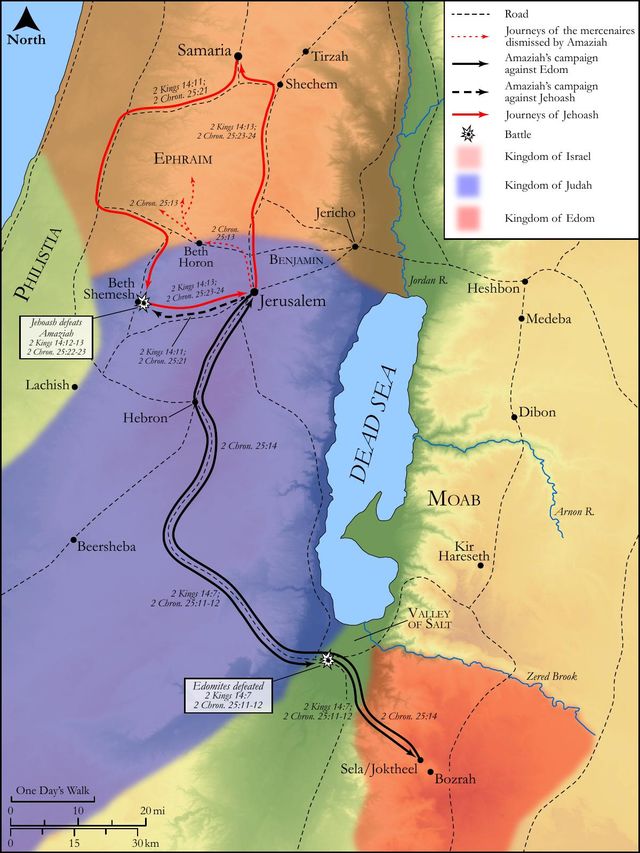
This verse is a pivotal and climactic moment within the narrative of King Amaziah's reign, meticulously detailed in 2 Chronicles 25. Amaziah initially demonstrates a measure of righteousness, acting "as Joash his father had done" (2 Chronicles 25:2). He executes the murderers of his father but wisely refrains from punishing their children, adhering to the Law of Moses (2 Chronicles 25:3-4). His reign then sees a significant military triumph over the Edomites in the Valley of Salt, a victory achieved with divine assistance after he obediently dismissed mercenary troops (2 Chronicles 25:5-13). However, this very success becomes his spiritual undoing. Instead of fostering humility and gratitude, it leads to a profound and shocking spiritual lapse: Amaziah adopts the gods of the conquered Edomites and begins to worship them, provoking the Lord's anger (2 Chronicles 25:14-15). It is in this state of pride and idolatry that Amaziah, without provocation, sends a challenge to King Joash of Israel (2 Chronicles 25:17). Joash responds with a pointed parable of a thistle and a cedar, warning against Amaziah's overconfidence and impending doom (2 Chronicles 25:18). Verse 19 then follows as Joash's direct, unvarnished, and prophetic counsel, laying bare the folly and inevitable consequences of Amaziah's prideful challenge. This warning directly precedes the disastrous battle where Amaziah is defeated, Jerusalem is plundered, and the temple treasures are seized (2 Chronicles 25:20-24).
Historical & Cultural Context
The historical backdrop for this verse is the turbulent period of the divided monarchy, where the northern kingdom of Israel and the southern kingdom of Judah, though sharing a common heritage, were often at odds. This era was characterized by shifting alliances, internal strife, and external threats. Edom, located southeast of Judah, was a traditional enemy, descended from Esau, Jacob's brother, and their relationship was often marked by conflict. Victories over such long-standing adversaries were highly significant, bolstering a king's prestige and often celebrated with great pomp. Culturally, kings in the ancient Near East were expected to be strong military leaders, often seeking to expand their territory and influence through conquest. Boasting and issuing challenges were part of the royal rhetoric, demonstrating perceived strength and authority. However, within Israelite wisdom literature, particularly the book of Proverbs, there were frequent and strong cautions against the dangers of pride and self-exaltation, especially when such attitudes led to unnecessary conflict or alienated divine favor. Joash's warning, while coming from a rival king, resonates deeply with this wisdom tradition, advising against a course of action driven by personal hubris rather than strategic necessity or, more importantly, divine guidance. The narrative implicitly critiques the common ancient Near Eastern practice of adopting the gods of conquered peoples, highlighting its spiritual danger for a king of Judah.
Key Themes
ShowHideThis verse powerfully illustrates several recurring and profound themes within 2 Chronicles and the broader biblical narrative. First and foremost is The Peril of Pride: Amaziah's heart being "lifted up to boast" is a classic biblical motif where human arrogance, particularly after success or divine blessing, inevitably precedes a fall. This is a central message throughout Scripture, as articulated in Proverbs 16:18 and exemplified by numerous figures. Secondly, the verse highlights the Consequences of Unnecessary Conflict: Joash's rhetorical question, "why shouldest thou meddle to [thine] hurt," underscores that engaging in battles not necessitated by defense, strategic imperative, or divine instruction leads to self-inflicted harm, not only for the leader but for the entire nation. This speaks to the wisdom of discerning when to engage and when to refrain from conflict. Finally, the counsel to "abide now at home" emphasizes the Wisdom of Restraint and Contentment. True strength and effective leadership often involve knowing when to be satisfied with current blessings and to avoid the relentless pursuit of further glory driven by ego. This theme aligns with the broader biblical call to humility, trust in God's provision, and the preservation of peace and well-being over vainglory. Amaziah's failure to heed this wisdom ultimately leads to his personal and national downfall, reinforcing the chronicler's consistent message that the king's spiritual and moral state directly impacts the prosperity or ruin of Judah, as seen throughout the reigns documented in 2 Chronicles.
Exposition and Analysis
ShowHideKey Word Analysis
ShowHideFrom the root נָשָׂא (nasa), meaning "to lift, carry, bear." While this verb can signify legitimate elevation, honor, or even divine lifting up, when applied to the "heart" in this context, it takes on a negative connotation. It describes an inflated sense of self-importance, arrogance, or haughtiness. Amaziah's heart has become proud and presumptuous due to his recent military success, rather than remaining humble and grateful for divine favor.
From the root כָּבַד (kabad), which primarily means "to be heavy" but can extend to "be weighty, honorable, glorious," or, in a negative sense, "to be burdensome, severe," and here, "to boast." In this context, it signifies self-glory, an empty or foolish pride that is often unwarranted or leads to destructive behavior. It suggests a focus on one's own achievements and perceived strength, rather than acknowledging divine assistance or exercising prudence, leading to a dangerous overestimation of oneself.
From the root גָּרָה (garah), meaning "to stir up, provoke, contend, strive." This word vividly captures the aggressive, unprovoked, and unnecessary nature of Amaziah's challenge to Joash. It implies actively initiating conflict without sufficient cause, seeking confrontation rather than maintaining peace, and acting out of a contentious spirit. Joash uses it to highlight the sheer folly of Amaziah's belligerence.
Verse Breakdown
ShowHide"Thou sayest, Lo, thou hast smitten the Edomites;"
Joash begins by acknowledging Amaziah's recent military achievement. This opening serves not as an endorsement of Amaziah's subsequent pride, but as a factual premise. It sets the stage for a critical contrast between a legitimate victory and its corrupting effect on Amaziah's heart, validating the accomplishment before rebuking the attitude it produced.
"and thine heart lifteth thee up to boast:"
This is Joash's core diagnosis of Amaziah's spiritual and psychological state. He identifies the root cause of Amaziah's challenge: an inflated ego and self-glorification stemming directly from his victory. Amaziah's "heart," the seat of his will, intellect, and emotions, has become arrogant and presumptuous, leading him to believe he is invincible and superior to Joash and Israel.
"abide now at home;"
This is Joash's direct, practical, and wise counsel. It is an imperative urging Amaziah to remain peaceful, content, and prudent. "At home" signifies a state of security, stability, and non-aggression, emphasizing that Amaziah should be satisfied with his current position and not seek further, unnecessary conflict. It represents wisdom, restraint, and the avoidance of self-inflicted trouble.
"why shouldest thou meddle to [thine] hurt, that thou shouldest fall, [even] thou, and Judah with thee?"
This is a powerful rhetorical question that highlights the utter folly and self-destructive nature of Amaziah's proposed action. Joash points out the inevitable and dire consequence: Amaziah's unprovoked aggression will lead directly to his own downfall ("thine hurt," "thou shouldest fall"). Crucially, the warning extends beyond Amaziah himself to include the entire nation of Judah, emphasizing the king's profound responsibility for the well-being of his people and the communal impact of his personal pride and foolish decisions.
Literary Devices
ShowHideThe verse employs several potent literary devices to convey its urgent and condemnatory message. The most prominent is Rhetorical Question, found in "why shouldest thou meddle to [thine] hurt, that thou shouldest fall, [even] thou, and Judah with thee?" This is not a genuine inquiry but a forceful, didactic query designed to highlight the sheer irrationality and self-destructive nature of Amaziah's prideful challenge. It compels Amaziah to confront the inevitable negative consequences of his actions. Additionally, the verse utilizes Direct Address and Rebuke, as Joash directly confronts Amaziah's arrogance ("thine heart lifteth thee up to boast") and issues a clear, imperative command ("abide now at home"). This directness underscores the severity of the situation and the urgency of the counsel. There is also a strong element of Foreshadowing, as Joash's warning that Amaziah "shouldest fall" directly anticipates the historical outcome of the ensuing battle, where Amaziah indeed suffers a humiliating defeat and Judah is plundered. Finally, the verse presents a stark Contrast between the wisdom of restraint and contentment ("abide now at home") and the folly of prideful aggression ("meddle to thine hurt"), emphasizing the two divergent paths and their respective outcomes for both the king and his kingdom.
Theological and Thematic Connections
ShowHideThis passage resonates deeply with broader biblical theology concerning the dangers of human pride and the catastrophic consequences of rejecting wise, often divinely inspired, counsel. It underscores God's consistent opposition to arrogance and self-exaltation, regardless of human achievement or military prowess. Amaziah's fall serves as a powerful testament to the principle that victory, when it leads to hubris rather than humility, gratitude, and continued obedience to God, becomes a catalyst for destruction. The narrative implies that God allows such pride to lead to ruin as a form of judgment, particularly when it is coupled with idolatry and a disregard for divine wisdom. The well-being and prosperity of a nation are often inextricably tied to the spiritual state and wise leadership of its king, and Amaziah's personal failing directly impacts the entire kingdom of Judah, demonstrating the corporate consequences of individual sin.
Reflection and Application
ShowHideThe ancient warning delivered by King Joash to King Amaziah in 2 Chronicles 25:19 remains remarkably relevant for individuals, leaders, and even nations in every era. It serves as a profound mirror, inviting us to critically examine our hearts in the wake of success, achievement, or any form of elevation. Does our triumph lead to genuine humility, recognizing the source of our blessings and acknowledging divine providence, or does it inflate our ego, making us arrogant, presumptuous, and prone to foolish, self-destructive decisions? The verse teaches the critical importance of choosing our battles wisely, discerning that not every challenge, perceived slight, or opportunity for conflict is worth pursuing, especially if it stems from pride, a desire for unnecessary glory, or a misplaced sense of invincibility. True strength and wisdom often lie not in aggressive expansion or unprovoked confrontation, but in humility, contentment, and the ability to discern when to "abide at home"—to preserve peace, consolidate gains, foster well-being, and protect those entrusted to our care, rather than risking it all for the sake of ego or vainglory. It is a timeless lesson on avoiding self-sabotage and protecting others from the fallout of our own hubris.
Questions for Reflection
ShowHideFAQ
ShowHideWhat was the immediate cause of Amaziah's challenge to Joash, and why was it considered foolish?
ShowHideThe immediate cause of Amaziah's challenge was his inflated pride and hubris following his decisive victory over the Edomites, coupled with his subsequent turn to idolatry. This success led him to believe he was invincible and could easily defeat Joash and the kingdom of Israel. He sent a direct and unprovoked challenge, saying, "Come, let us look one another in the face" (2 Chronicles 25:17), essentially daring Joash to battle. It was considered foolish because it was an unnecessary conflict, driven by ego rather than strategic need, and it risked the well-being of his entire kingdom.
What was the outcome of Amaziah's decision to ignore Joash's warning?
ShowHideAmaziah tragically ignored Joash's wise and prophetic counsel, leading to disastrous consequences for himself and Judah. He engaged Joash in battle at Beth Shemesh, where Judah was thoroughly defeated and fled before Israel. Amaziah himself was captured by Joash, who then marched on Jerusalem, broke down a significant portion of its wall (four hundred cubits), and plundered the temple and the king's palace of their treasures and hostages (2 Chronicles 25:20-24). This humiliating defeat directly fulfilled Joash's warning that Amaziah and Judah would "fall," illustrating the severe repercussions of pride and disobedience.
Christ-Centered Fulfillment
ShowHideThe warning to Amaziah in 2 Chronicles 25:19 serves as a stark and illuminating contrast to the character and mission of Jesus Christ, highlighting the profound difference between human pride and divine humility. Amaziah's heart was "lifted up to boast" after an earthly victory, leading him to self-destruction and national ruin. In stark contrast, Jesus, though eternally "in the form of God, did not count equality with God a thing to be grasped, but emptied himself, by taking the form of a servant, being born in the likeness of men" (Philippians 2:6-7). His ultimate and eternal victory over sin, death, and the grave was not achieved through boasting, earthly conquest, or self-exaltation, but through profound humility, suffering, and self-sacrifice on the cross, demonstrating obedience "even to the point of death" (Philippians 2:8). While Amaziah was warned to "abide now at home" to avoid hurt, Christ, who "abided at home" in the glory of heaven with the Father from eternity past (John 1:1-2), willingly left that glory to "meddle" in humanity's profound hurt, not for His own gain, but to bear our sin and bring us healing and reconciliation (2 Corinthians 5:21). His kingdom is not built on the prideful acquisition of earthly power, as He Himself declared, "My kingdom is not of this world" (John 18:36), but on humble service, self-giving love, and spiritual transformation. Jesus is the ultimate example of a leader whose heart was never "lifted up to boast," but always perfectly aligned with the Father's will, leading to redemption, eternal life, and true glory, rather than ruin.