


Matthew 8:3
Bible text: King James Version (1769 Blayney text) · Public domain
Bible text: Berean Standard Bible · Public domain
Bible text: American Standard Version (1901) · Public domain
Bible text: World English Bible, Messianic edition · Public domain
Bible text: Geneva Bible (1599) · Public domain
Bible text: Young's Literal Translation · Public domain
- καὶkaiAndG2532CONJConjunction
- ἐκτείναςekteinashaving stretched outG1614V-AAP-NSMVerb Aorist Active Participle Nominative Singular Masculine
- τὴνtēntheG3588T-ASFDefinite article Accusative Singular Feminine
- χεῖραcheirahandG5495N-ASFNoun Accusative Singular Feminine
- ἥψατοhēpsatoHe touchedG681V-ADI-3SVerb Aorist Middle Deponent Indicative 3rd Singular
- αὐτοῦautouof himG846P-GSMPersonal pronoun Genitive Singular Masculine
- ὁho<the>G3588T-NSMDefinite article Nominative Singular Masculine
- ἸησοῦςIēsousJesusG2424N-NSM-PNoun Nominative Singular Masculine Individual
- λέγων·legōnsayingG3004V-PAP-NSMVerb Present Active Participle Nominative Singular Masculine
- θέλωthelōI am willingG2309V-PAI-1SVerb Present Active Indicative 1st Singular
- καθαρίσθητιkatharisthētido be cleansedG2511V-APM-2SVerb Aorist Passive Imperative 2nd Singular
- καὶkaiAndG2532CONJConjunction
- εὐθέωςeutheōsimmediatelyG2112ADVAdverb
- ἐκαθαρίσθηekatharisthēwas cleansedG2511V-API-3SVerb Aorist Passive Indicative 3rd Singular
- αὐτοῦautouhisG846P-GSMPersonal pronoun Genitive Singular Masculine
- ἡhē<the>G3588T-NSFDefinite article Nominative Singular Feminine
- λέπραlepraleprosyG3014N-NSFNoun Nominative Singular Feminine
English is a literal word-by-word gloss of the Greek, not the KJV's wording. Why?
This is the original text the KJV's translators worked from — each Greek word with its own literal English meaning in this verse, prepared by scholars at Tyndale House, Cambridge. The KJV translates whole sentences, not word by word, so its wording differs: one Greek word can become several English words, and the KJV may choose “charity” where the gloss reads “love”. Both are faithful — they answer different questions. For the KJV's own rendering, switch to the KJV text.
Details
See on the biblical-era maps
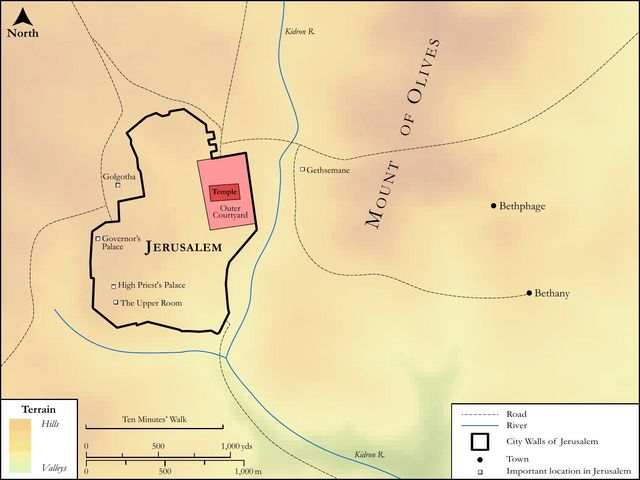
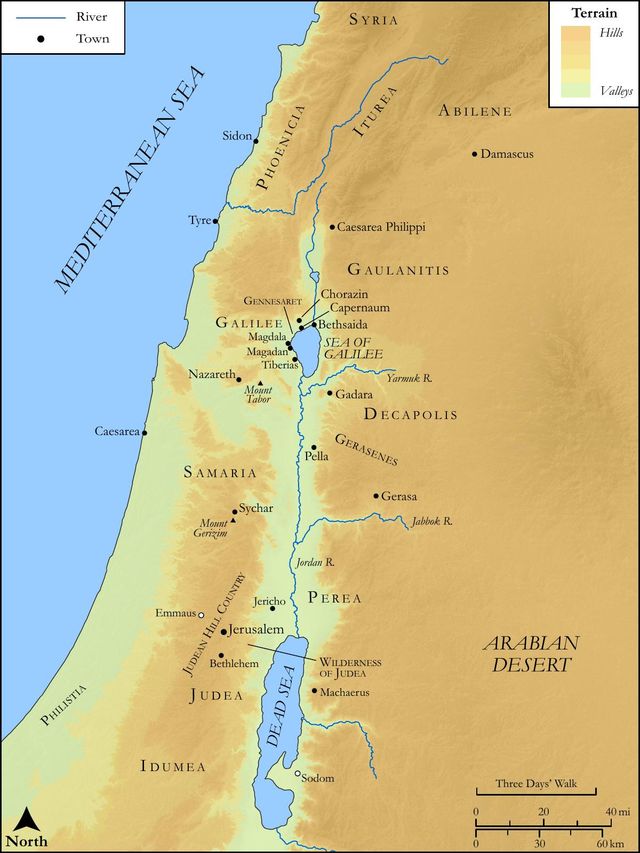
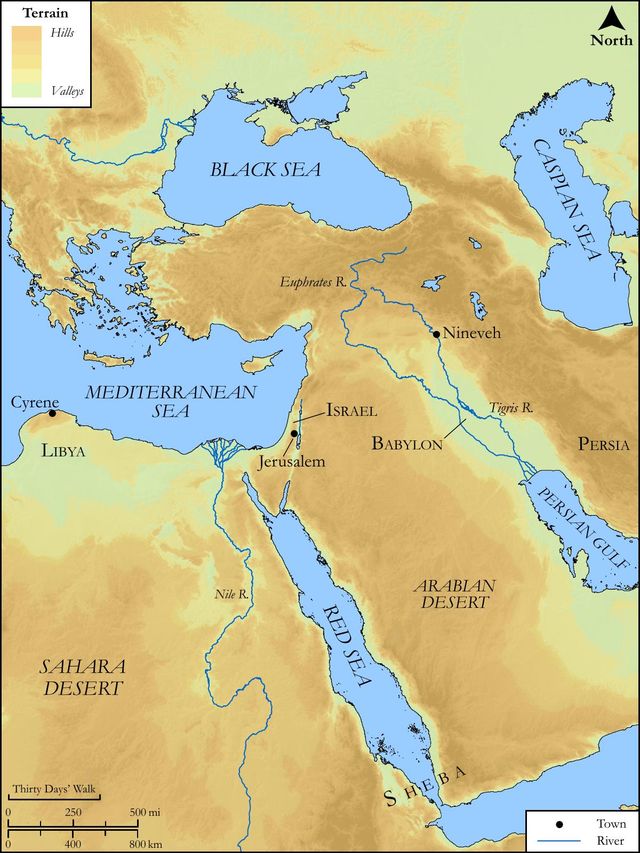
Study this verse
Public-domain commentary
Matthew Henry
From his Commentary on the Whole Bible. Henry comments on passages, not single verses — this entry covers Matthew 8:1–4. His three-level outline is real structure in the source text, so it is rendered as structure.
The first verse refers to the close of the foregoing sermon: the people that heard him were astonished at his doctrine; and the effect was, that when he came down from the mountain, great multitudes followed him; though he was so strict a Lawgiver, and so faithful a Reprover, they diligently attended him, and were loth to disperse, and go from him. Note, They to whom Christ has manifested himself, cannot but desire to be better acquainted with him. They who know much of Christ should covet to know more; and then shall we know, if we thus follow on to know the Lord. It is pleasing to see people so well affected to Christ, as to think they can never hear enough of him; so well affected to the best things, as thus to flock after good preaching, and to follow the Lamb withersoever he goes. Now was Jacob's prophecy concerning the Messiah fulfilled, that unto him shall the gathering of the people be; yet they who gathered to him did not cleave to him. They who followed him closely and constantly were but few, compared with the multitudes that were but followers at large.
In these verses we have an account of Christ's cleansing a leper. It should seem, by comparing Mar 1:40, and Luk 5:12, that this passage, though placed, by St. Matthew, after the sermon on the mount, because he would give account of his doctrine first, and then of his miracles, happened some time before; but that is not at all material. This is fitly recorded with the first of Christ's miracles, 1. Because the leprosy was looked upon, among the Jews, as a particular mark of God's displeasure: hence we find Miriam, Gehazi, and Uzziah, smitten with leprosy for some one particular sin; and therefore Christ, to show that he came to turn away the wrath of God, by taking away sin, began with the cure of a leper. 2. Because this disease, as it was supposed to come immediately from the hand of God, so also it was supposed to be removed immediately by his hand, and therefore it was not attempted to be cured by physicians, but was put under the inspection of the priests, the Lord's ministers, who waited to see what God would do. And its being in a garment, or in the walls of a house, was altogether supernatural: and it should seem to be a disease of a quite different nature from what we now call the leprosy. The king of Israel said, Am I God, that I am sent to, to recover a man of a leprosy? Kg2 5:7. Christ proved himself God, by recovering many from the leprosy, and authorizing his disciples, in his name, to do so too (Mat 10:8), and it is put among the proofs of his being the Messiah, Mat 11:5. He also showed himself to be the Saviour of his people from their sins; for though every disease is both the fruit of sin, and a figure of it, as the disorder of the soul, yet the leprosy was in a special manner so; for it contracted such a pollution, and obliged to such a separation from holy things, as no other disease did; and therefore in the laws concerning it (Lev. 13 and 14), it is treated, not as a sickness, but as an uncleanness; the priest was to pronounce the party clean or unclean, according to the indications: but the honour of making the lepers clean was reserved for Christ, who was to do it as the High Priest of our profession; he comes to do that which the law could not do, in that it was weak through the flesh, Rom 8:3. The law discovered sin (for by the law is the knowledge of sin), and pronounced sinners unclean; it shut them up (Gal 3:23), as the priest did the leper, but could go no further; it could not make the comers thereunto perfect. But Christ takes away sin; cleanses us from it, and so perfecteth for ever them that are sanctified. Now here we have,
I.The leper's address to Christ.
If this happened, as it is here placed, after the sermon on the mount, we may suppose that the leper, though shut out by his disease from the cities of Israel, yet got within hearing of Christ's sermon, and was encouraged by it to make his application to him; for he that taught as one having authority, could heal so; and therefore he came and worshipped him, as one clothed with a divine power. His address is, Lord, if thou wilt, thou canst make me clean. The cleaning of him may be considered,
1.As a temporal mercy; a mercy to the body, delivering it from a disease, which, though it did not threaten life, embittered it. And so it directs us, not only to apply ourselves to Christ, who has power over bodily diseases, for the cure of them, but it also teaches us in what manner to apply ourselves to him; with an assurance of his power, believing that he is as able to cure diseases now, as he was when on earth, but with a submission to his will; Lord, if thou wilt, thou canst. As to temporal mercies, we cannot be so sure of God's will to bestow them, as we may of his power, for his power in them is unlimited by a regard to his glory and our good: when we cannot be sure of his will, we may be sure of his wisdom and mercy, to which we may cheerfully refer ourselves; Thy will be done: and this makes the expectation easy, and the event, when it comes, comfortable.
2.As a typical mercy. Sin is the leprosy of the soul; it shuts us out from communion with God, to which that we maybe restored, it is necessary that we be cleansed from this leprosy, and this ought to be our great concern. Now observe, It is our comfort when we apply ourselves to Christ, as the great Physician, that if he will, he can make us clean; and we should, with an humble, believing boldness, go to him and tell him so. That is,
(1.)We must rest ourselves upon his power; we must be confident of this, that Christ can make us clean. No guilt is so great but that there is a sufficiency in his righteousness to atone for it; no corruption so strong, but there is a sufficiency in his grace to subdue it. God would not appoint a physician to his hospital that is not par negotio - every way qualified for the undertaking.
(2.)We must recommend ourselves to his pity; we cannot demand it as a debt, but we must humbly request it as a favour; "Lord, if thou wilt. I throw myself at thy feet, and if I perish, I will perish there."
II.Christ's answer to this address, which was very kind, Mat 8:3.
1.He put forth his hand and touched him. The leprosy was a noisome, loathsome disease, yet Christ touched him; for he did not disdain to converse with publicans and sinners, to do them good. There was a ceremonial pollution contracted by the touch of a leper; but Christ would show, that when he conversed with sinners, he was in no danger of being infected by them, for the prince of this world had nothing in him. If we touch pitch, we are defiled; but Christ was separate from sinners, even when he lived among them.
2.He said, I will, be thou clean. He did not say, as Elisha to Naaman, Go, wash in Jordan; did not put him upon a tedious, troublesome, chargeable course of a physic, but spake the word and healed him.
(1.)Here is a word of kindness, I will; I am as willing to help thee, as thou art to be helped. Note, They who by faith apply themselves to Christ for mercy and grace, may be sure that he is willing, freely willing, to give them the mercy and grace they come to him for. Christ is a Physician, that does not need to be sought for, he is always in the way; does not need to be urged, while we are yet speaking, he hears; does not need to be feed, he heals freely, not for price nor reward. he has given all possible demonstration, that he is as willing as he is able to save sinners.
(2.)A word of power, Be thou clean. Both a power of authority, and a power of energy, are exerted in this word. Christ heals by a word of command to us; Be thou clean; "Be willing to be clean, and use the means; cleanse thyself from all filthiness;" but there goes along with this a word of command concerning us, a word that does the work; I will that thou be clean. Such a word as this is necessary to the cure, and effectual for it; and the Almighty grace which speaks it, shall not be wanting to those who truly desire it.
III.The happy change hereby wrought:
Immediately his leprosy was cleansed. Nature works gradually, but the God of nature works immediately; he speaks it, it is done; and yet he works effectually; he commands, and it stands fast. One of the first miracles Moses wrought, was curing himself of a leprosy (Exo 4:7), for the priests under the law offered sacrifices first for their own sin; but one of Christ's first miracles was curing another of leprosy, for he had no sin of his own to atone for.
IV.The after - directions Christ gave him. It is fit that they who are cured by Christ should ever after be ruled by him.
1.See thou tell no man; "Tell no man till thou has shown thyself to the priest, and he has pronounced thee clean; and so thou hast a legal proof, both that thou wast before a leper, and art now thoroughly cleansed." Christ would have his miracles to appear in their full light and evidence, and not to be published till they could appear so. Note, They that preach the truths of Christ should be able to prove them; to defend what they preach, and convince gainsayers. "Tell no man, till thou hast showed thyself to the priest, lest if he hear who cured thee, he should out of spite deny to give thee a certificate of the cure, and so keep thee under confinement." Such were the priests in Christ's time, that they who had any thing to do with them had need to have been as wise as serpents.
2.Go show thyself to the priest, according to the law, Lev 14:2. Christ took care to have the law observed, lest he should give offence, and to show that he will have order kept up, and good discipline and respect paid to those that are in office. It may be of use to those that are cleansed of their spiritual leprosy, to have recourse to Christ's ministers, and to open their case to them, that they may assist them in their enquiries into their spiritual state, and advise, and comfort, and pray for them.
3.Offer the gift that Moses commanded, in token of thankfulness to God, and recompence to the priest for his pains; and this for a testimony unto them; either, (1.) Which Moses commanded for a testimony: the ceremonial laws were testimonies of God's authority over them, care of them, and of that grace which should afterwards be revealed. Or, (2.) "Do thou offer it for a testimony, and let the priest know who cleansed thee, and how; and it shall be a testimony, that there is one among them who does that which the high priest cannot do. Let it remain upon record as a witness of my power, and a testimony for me to them, if they will use it and improve it; but against them, if they will not:" for so Christ's word and works are testimonies.
Historical interpretation
Five Centuries of Reception
13 surviving comments on this verse. Each one is dated, so this reads as a timeline rather than a list.
Select a marker to jump to its quote. Markers stagger vertically where authors wrote within a few decades of each other.
(ubi sup.) Because he was not slow to believe, his cure is not delayed; he did not linger in his confession, Christ did not linger in His cure.
Or that this healing might be sought rather than offered, therefore silence is enjoined.
Or we may read, Which Moses commanded for a testimony; inasmuch as what Moses commanded in the Law is a testimony, not an effect.
But do thou mark, I pray thee, the Lord's consideration, how He varies the mode of profiting His hearers, after miracles entering on words, and again from the instruction by His words passing to miracles. Thus, both before they went up into the mountain, He healed many, preparing the way for His sayings; and after finishing that long discourse to the people, He comes again to miracles, confirming what had been said by what was done. And so, because He was teaching as "one having authority," lest His so teaching should be thought boasting and arrogant, He doth the very same in His works also, as having authority to heal; that they might no more be perplexed at seeing Him teach in this way, when He was working His miracles also in the same.
"For when He was come down from the mountain, there came a leper, saying, Lord, if Thou wilt, Thou canst make me clean." Great was the understanding and the faith of him who so drew near. For he did not interrupt the teaching, nor break through the auditory, but awaited the proper time, and approaches Him "when He is come down." And not at random, but with much earnestness, and at His knees, he beseeches Him, as another evangelist saith, and with the genuine faith and right opinion about him. For neither did he say, "If Thou request it of God," nor, "If Thou pray," but, "If Thou wilt, Thou canst make me clean." Nor did he say, "Lord, cleanse me," but leaves all to Him, and makes His recovery depend on Him, and testifies that all the authority is His.
"What then," saith one, "if the leper's opinion was mistaken?" It were meet to do away with it, and to reprove, and set it right. Did He then so do? By no means; but quite on the contrary, He establishes and confirms what had been said. For this cause, you see, neither did He say, "Be thou cleansed," but, "I will, be thou clean;" that the doctrine might no longer be a thing of the other's surmising, but of His own approval.
But the apostles not so: rather in what way? The whole people being in amazement, they said, "Why give heed to us, as though by our own power or authority we had made him to walk?" But the Lord, though He spake oftentimes many things modestly, and beneath His own glory, what saith He here, to establish the doctrine of them that were amazed at Him for His authority? "I will, be thou clean." Although in the many and great signs which He wrought, He nowhere appears to have uttered this word. Here however, to confirm the surmise both of all the people and of the leper touching His authority, He purposely added, "I will."
And it was not that He said this, but did it not; but the work also followed immediately. Whereas, if he had not spoken well, but the saying had been a blasphemy, the work ought to have been interrupted. But now nature herself gave way at His command, and that speedily, as was meet, even more speedily than the evangelist hath said. For the word, "immediately," falls far short of the quickness that there was in the work.
But He did not merely say, "I will, be thou clean," but He also "put forth His hand, and touched him;" a thing especially worthy of inquiry. For wherefore, when cleansing him by will and word, did He add also the touch of His hand? It seems to me, for no other end, but that He might signify by this also, that He is not subject to the law, but is set over it; and that to the clean, henceforth, nothing is unclean. For this cause, we see, Elisha did not so much as see Naaman, but though he perceived that he was offended at his not coming out and touching him, observing the strictness of the law, he abides at home, and sends him to Jordan to wash. Whereas the Lord, to signify that He heals not as a servant, but as absolute master, doth also touch. For His hand became not unclean from the leprosy, but the leprous body was rendered clean by His holy hand.
Because, as we know, He came not to heal bodies only, but also to lead the soul unto self-command. As therefore He from that time forward no more forbad to eat with unwashen hands, introducing that excellent law, which relates to the indifference of meats; just so in this case also, to instruct us for the future, that the soul must be our care;-that leaving the outward purifications, we must wipe that clean, and dread the leprosy thereof alone, which is sin (for to be a leper is no hindrance to virtue):-He Himself first touches the leper, and no man finds fault. For the tribunal was not corrupt, neither were the spectators under the power of envy. Therefore, so far from blaming, they were on the contrary astonished at the miracle, and yielded thereto: and both for what He said, and for what He did, they adored his uncontrollable power.
Having therefore healed his body, He bids him, "Tell no man, but show himself to the priest, and offer the gift that Moses commanded, for a testimony unto them."
Now some say, that for this intent He bade him tell no man, that they might practise no craft about the discerning of his cure; a very foolish suspicion on their part. For He did not so cleanse as to leave the cleansing questionable, but He bids him "tell no man," teaching us to avoid boasting and vainglory. And yet He well knew that the other would not obey, but would proclaim his benefactor: nevertheless He doth His own part.
"How then elsewhere doth He bid them tell of it?" one may ask. Not as jostling with or opposing Himself, but as teaching men to be grateful. For neither in that place did He give command to proclaim Himself, but to "give glory to God;" by this leper training us to be clear of pride and vainglory, by the other to be thankful and grateful; and instructing on every occasion to offer to the Lord the praise of all things that befall us. That is, because men for the most part remember God in sickness, but grow slacker after recovery; He bids them continually both in sickness and in health to give heed to the Lord, in these words, "give glory to God."
But wherefore did He command him also to show himself to the priest, and to offer a gift? To fulfill the law here again. For neither did He in every instance set it aside, nor in every instance keep it, but sometimes He did the one, sometimes the other; by the one making way for the high rule of life that was to come, by the other checking for a while the insolent speech of the Jews, and condescending to their infirmity. And why marvel, if just at the beginning He Himself did this, when even the very apostles, after they were commanded to depart unto the Gentiles, after the doors were opened for their teaching throughout the world, and the law shut up, and the commandments made new, and all the ancient things had ceased, are found sometimes observing the law, sometimes neglecting it?
But what, it may be said, doth this saying, "Show thyself to the priest," contribute to the keeping of the law? No little. Because it was an ancient law, that the leper when cleansed should not entrust to himself the judgment of his cleansing, but should show himself to the priest, and present the demonstration thereof to his eyes, and by that sentence be numbered amongst the clean. For if the priest said not "The leper is cleansed," he remained still with the unclean without the camp. Wherefore he saith, "Show thyself to the priest, and offer the gift that Moses commanded." He said not, "which I command," but for a time remits him to the law, by every means stopping their mouths. Thus, lest they should say, He had seized upon the priests' honor; though He performed the work Himself, yet the approving it He entrusted to them, and made them sit as judges of His own miracles "Why, I am so far," He saith, "from striving either with Moses or with the priests, that I guide the objects of my favor to submit themselves unto them."
But what is, "for a testimony unto them"? For reproof, for demonstration, for accusation, if they be unthankful. For since they said, as a deceiver and impostor we persecute Him, as an adversary of God, and a transgressor of the law; "Thou shalt bear me witness," saith He, "at that time, that I am not a transgressor of the law. Nay, for having healed thee, I remit thee to the law, and to the approval of the priests;" which was the act of one honoring the law, and admiring Moses, and not setting himself in opposition to the ancient doctrines.
And if they were not in fact to be the better, hereby most of all one may perceive His respect for the law, that although He fore-knew they would reap no benefit, He fulfilled all His part. For this very thing He did indeed foreknow, and foretold it: not saying, "for their correction," neither, "for their instruction," but, "for a testimony unto them," that is, for accusation, and for reproof, and for a witness that all hath been done on my part; and though I foreknew they would continue incorrigible, not even so did I omit what ought to be done; only they continued keeping up to the end their own wickedness.
He said not, If Thou wilt ask of God, or, If Thou wilt make adoration to God; but, If thou wilt. Nor did he say, Lord, cleanse me; but left all to Him, thereby making Him Lord, and attributing to Him the power over all.
He was able, to cleanse by a word, or even by mere will, but He put out His hand, He stretched forth his hand and touched him, to show that He was not subject to the Law, and that to the pure nothing is impure. Elisha truly kept the Law in all strictness, and did not go out and touch Naaman, but sends him to wash in Jordan. But the Lord shows that He does not heal as a servant, but as Lord heals and touches; His hand was not made unclean by the leprosy, but the leprous body was made pure by the holy hand. For He came not only to heal bodies, but to lead the soul to the true wisdom. As then He did not forbid to eat with unwashen hands, so here He teaches us that it is the leprosy of the soul we ought only to dread, which is sin, but that the leprosy of the body is no impediment to virtue.
But for touching the leprous man there is none that accuses Him, because His hearers were not yet seized with envy against Him.
No where else do we see Him using this word though He be working ever so signal a miracle; but He here adds, I will, to confirm the opinion of the people and the leprous man concerning His power. Nature obeyed the word of the Purifier with proper speed, whence it follows, and straight his leprosy was cleansed. But even this word straightway is too slow to express the speed with which the deed was done.
Jesus when healing his body bids him tell no man; Jesus saith unto him, See thou tell no man. Some say that He gave this command that they might not through malice distrust his cure. But this is said foolishly, for He did not so cure him as that his purity should be called in question; but He bids him tell no man, to teach that He does not love ostentation and glory. How is it then that to another to whom He had healed He gives command to go and tell it? What He taught in that was only that we should have a thankful heart; for He does not command that it should be published abroad, but that glory should be given to God. (Mark 5:19.) He teaches us then through this leper not to be desirous of empty honour; by the other, not to be ungrateful, but to refer all things to the praise of God.
He neither every where broke, nor every where observed, the Law, but sometimes the one, sometimes the other. The one was preparing the way for the wisdom that was to come, (ἡ μέλλουσα φιλοσοφία.) the other was silencing the irreverent tongue of the Jews, and condescending to their weakness. Whence the Apostles also are seen sometimes observing, sometimes neglecting, the Law.
For Christ, knowing beforehand that they would not profit by this, said not, 'for their amendment,' but, for a testimony to them; that is, for an accusation of them, and in attestation that all things that should have been done by Me, have been done. But though He thus knew that they would not profit by it, yet He did not omit any thing that behoved to be done; but they remained in their former ill-will. Also He said not, 'The gift that I command,' but, that Moses commanded, that in the meantime He might hand them over to the Law, and close the mouths of the unjust. That they might not say that He usurped the honour of the Priests, He fulfilled the work of the Law, and made a trial of them.
"But wherefore," one may say, "was not the leper commended, who showed forth things greater than these?" For he did not so much as say, "speak the word," but what was far more, "be willing only," which is what the prophet saith concerning the Father, "He hath done whatsoever He pleased." But he also was commended. For when He said, "Offer the gift that Moses commanded, for a testimony unto them," He means nothing else but, "thou shalt be an accuser of them, in that thou didst believe." And besides, it was not the same for one that was a Jew to believe, and for one from without that nation. For that the centurion was not a Jew is evident, both from his being a centurion and from its being said, "I have not found so great faith, no, not in Israel." And it was a very great thing for a man who was out of the list of the Jewish people to admit so great a thought. For he did no less than imagine to himself, as it seems to me, the armies in Heaven; or that the diseases and death, and everything else, were so subject to Him, as his soldiers to himself.
(Verse 3) And Jesus, extending His hand, touched him, saying: I will, be clean. And immediately his leprosy was cleansed. By extending His hand, the Lord caused the leprosy to flee. Consider also how humble and devoid of boasting His response is. The man had said, if you will: the Lord answered, I will. The man had said, you can cleanse me: The Lord unites and says, be cleansed. Therefore, it is not, as many Latin speakers believe, to be joined and read as, I will-be-cleanse, but separately, so that first, He says, I will: then, giving the command, He says, be clean (or be cleansed).
After the preaching and teaching, is offered an occasion of working miracles, that by mighty works following, the preceding doctrine might be confirmed.
It is not to be read, as most of the Latins think, 'I will to cleanse thee;' but separately, He first answers, I will, and then follows the command, be thou clean. The leper has said, If thou wilt; the Lord answers, I will; he first said, Thou canst make me clean; the Lord spake, Be thou clean.
And in truth what need was there that he should proclaim with his mouth what was evidently showed in his body?
He sends him to the Priests, first, because of His humility that He may seem to defer to the Priests; secondly, that when they saw the leper cleansed they might be saved, if they would believe on the Saviour, or if not that they might be without excuse; and, lastly, that He might not seem, as He was often charged, to be infringing the Law.
It was ordained in the Law, that those that had been cleansed of a leprosy should offer gifts to the Priests; as it follows, And offer thy gift as Moses commanded for a testimony to them.
(De Cons. Ev. ii. 19.) Luke has mentioned the cleansing of this leper, though not in the same order of events, but as his manner is to recollect things omitted, and to put first things that were done later, as they were divinely suggested; so that what they had known before, they afterwards set down in writing when they were recalled to their minds.
(quoad sens.) Because He taught them as one having authority, that He might not thence be supposed to use this method of teaching from ostentation, He does the same in works, as one having power to cure; and therefore, When Jesus descended from the mountain, great multitudes followed him.
Among others who were not able to ascend into the mount was the leper, as bearing the burden of sin; for the sin of our souls is a leprosy. And the Lord came down from the height of heaven, as from a mountain, that He might purge the leprousness of our sin; and so the leper as already prepared meets Him as He came down.
He did not ask it of Him as of a human physician, but adored Him as God. For faith and confession make a perfect prayer; so that the leprous man in adoring fulfilled the work of faith, and the work of confession in words, he made adoration to him, saying;
And thus he rewarded a spiritual Physician with a spiritual reward; for as physicians are gained by money, so He with prayer. We offer to God nothing more worthy than faithful prayer. In that he says, If thou wilt, there is no doubt that Christ's will is ready to every good work; but only doubt whether that cure would be expedient for him, because soundness of body is not good for all. If thou wilt then is as much as to say, I believe that Thou wiliest whatever is good, but I know not if this that I desire for myself is good.
But though He transgressed the letter of the Law, He did not transgress its meaning. For the Law forbade to touch leprosy, because it could not hinder that the touch should not defile; therefore it meant not that lepers should not be healed, but that they that touched should not be polluted. So He was not polluted by touching the leprosy, but purified the leprosy by touching it.
Had He healed him without speaking, who would know by whose power he had been healed? So the will to heal was for the sake of the leprous man; the word was for the sake of them that beheld, therefore He said, I will, be thou clean.
Which is not to be understood, Moses commanded it for a testimony to them; but, Go thou and offer for a testimony.
Or; He commands the oblation, that should they afterwards seek to put him out, he might be able to say, You have received gifts on my cleansing, how do ye now cast me out as a leper?
Morally; by the leper is signified the sinner; for sin makes an unclean and impure soul; he falls down before Christ when he is confounded concerning his former sins; yet he ought to confess, and to seek the remedy of penitence; so the leper shows his disease, and asks a cure. The Lord stretches out His hand when He affords the aid of Divine mercy; whereupon follows immediately remission of sin; nor ought the Church to be reconciled to the same, but on the sentence of the Priest.
(Hom. in Dom. 3 Epiph.) Should any be perplexed how, when the Lord seems here to approve Moses' offering, the Church does not receive it, let him remember, that Christ had not yet offered His body for a holocaust. And it behoved that the typical sacrifices should not be taken away, before that which they typified was established by the testimony of the Apostles' preaching, and by the faith of the people believing. By this man was figured the whole human race, for he was not only leprous, but, according to the Gospel of Luke, is described as full of leprosy. For all have sinned, and need glory of God; (Rom. 3:23.) to wit, that glory, that the hand of the Saviour being stretched out, (that is, the Word being made flesh,) and touching human nature, they might be cleansed from the vanity of their former ways; and that they that had been long abominable, and cast out from the camp of God's people, might be restored to the temple and the priest, and be able to offer their bodies a living sacrifice to Him to whom it is said, Thou art a Priest for ever. (Ps. 110:4.)
(De Fid. Orth. iii. 15.) For He was not only God, but man also, whence He wrought Divine wonders by touch and word; for as by an instrument so by His body the Divine acts were done.
Otherwise; By the mount on which the Lord sate is figured the Heaven, as it is written, Heaven is my throne. (Is. 66:1.) But when the Lord sits on the mount, only the disciples come to Him; because before He took on Him the frailty of our human nature, God was known only in Judæa; (Ps. 76:1.) but when He came down from the height of his Divinity, and took upon Him the frailty of our human nature, a great multitude of the nations followed Him. Herein it is shown to them that teach that their speech should be so regulated, that as they see each man is able to receive, they should so speak the word of God. For the doctors ascend the mountain, when they show the more excellent precepts to the perfect; they come down from the mount, in showing the lesser precepts to the weak.
Continue studying Matthew 8:3 across the web’s major study libraries — every link below opens this exact verse, chapter, or book on the destination site.
Read & Compare
 BibleGatewayThis verse in more than 200 translations and 70 languages.
 Bible.comThe YouVersion reader — hundreds of translations, reading plans, and highlights.
 ESV.orgCrossway's official English Standard Version reader.
 NET BibleThe NET translation with 60,000+ translators' notes on every rendering decision.
 STEP BibleTyndale House's free study tool — original text, vocabulary, and scholarly resources.
 BibliaLogos Bible Software's free web reader.
 USCCBThe New American Bible (Revised Edition) with the U.S. bishops' study notes.
Commentaries
 BibleHub CommentariesDozens of classic commentaries on this verse, gathered on one page.
 StudyLightMore than 100 commentary sets — the largest collection on the web.
 BibleRefPlain-English commentary on what this verse means, verse by verse.
 Enduring WordDavid Guzik's free commentary on this chapter, widely used by Bible teachers.
 Bible Study ToolsVerse commentary alongside Greek and Hebrew study aids.
Original Language & Research
- BibleHub InterlinearThe verse word by word — original language, transliteration, and English.
- BibleHub LexiconEvery word's original-language definition and Strong's entry.
 Blue Letter BibleDeep-study tools — Strong's numbers, concordance, and word studies.
 CNTR CollationThe earliest Greek manuscripts of this verse, collated letter by letter.
Sermons, Hymns & Audio


TrulyRandomVerse is not affiliated with these sites and doesn’t control their content. They’re linked because they’re genuinely useful.
Summary
Matthew 8:3 powerfully illustrates Jesus' divine authority and profound compassion through the healing of a leper. Following the leper's humble plea, Jesus responds not with a distant command, but with a revolutionary act of physical touch, immediately followed by a declarative word of healing. This instantaneous cleansing not only restores the man's physical health but also signifies his spiritual and social reintegration, demonstrating Jesus' willingness and power to break through barriers of disease, ritual impurity, and social ostracization.
Context
ShowHideLiterary Context
This miracle is strategically placed early in Matthew's Gospel, immediately after the monumental Sermon on the Mount (Matthew 5-7). Having just taught with unparalleled authority (Matthew 7:28-29), Jesus now demonstrates that authority in action. The healing of the leper is the first of a series of ten miracles presented in Matthew 8-9, serving as concrete evidence of His power over disease, nature, demons, and even death, thereby validating His claims and teachings. This immediate transition from authoritative word to authoritative deed underscores the unique nature of Jesus' ministry.
Historical & Cultural Context
In ancient Israel, leprosy (Hebrew: tzara'at) was a dreaded and highly stigmatized condition, often encompassing various skin diseases, not just Hansen's disease. According to Mosaic Law, individuals afflicted with leprosy were considered ritually unclean and were strictly isolated from the community (Leviticus 13:45-46). They were required to live outside the camp or city, wear torn clothes, and cry "Unclean! Unclean!" to warn others. Touching a leper would render a clean person ritually unclean, necessitating purification rituals. Jesus' act of touching the leper was therefore a profoundly counter-cultural and revolutionary gesture, defying both social custom and ritual law to demonstrate compassion and power.
Key Themes
ShowHideThis verse powerfully contributes to several overarching themes in Matthew's Gospel. It highlights Jesus' Divine Authority and Power as He commands disease and it instantly obeys, echoing the authority He displayed in His teaching (Matthew 7:28-29). The act of touching and healing an outcast underscores Jesus' radical Compassion and Inclusion, demonstrating His willingness to reach out to the lowly and ceremonially unclean, a theme further explored in His interactions with tax collectors and sinners (Matthew 9:10-13). Furthermore, the "cleansing" of the leper points to Jesus' role as the ultimate source of Purity and Restoration, not just physical but also spiritual, foreshadowing His power to cleanse from sin and restore individuals to fellowship with God and community.
Exposition and Analysis
ShowHideKey Word Analysis
ShowHideFrom the reflexive of háptō, meaning "to attach oneself to" or "to touch" in various implied relations. This word emphasizes a deliberate, physical contact. In the context of leprosy, where touching was forbidden and defiling, Jesus' act of háptomai was a radical demonstration of His willingness to engage with the outcast and His power to transcend ritual impurity without becoming defiled Himself. Instead, His touch imparted purity.
Apparently strengthened from an alternate form of hairéomai, meaning "to determine (as an active option from subjective impulse)," "to choose or prefer," or "to wish, to be inclined to." This is not a hesitant or conditional statement but a firm, decisive declaration of Jesus' sovereign will and desire. It underscores that His power is always aligned with His perfect will and compassionate intention. He doesn't just have the ability; He has the desire.
From katharós, meaning "to cleanse (literally or figuratively)," "to make clean," "purge," or "purify." This term is crucial because it goes beyond mere physical healing. In the context of leprosy, "cleansing" was the specific term used in the Mosaic Law for the ritual purification process that allowed a leper to be reintegrated into the community and temple worship (Leviticus 14). Jesus' use of this word and the immediate result signify not just a cure, but a complete restoration to a state of ritual purity and social acceptance.
Verse Breakdown
ShowHide"And Jesus put forth [his] hand, and touched him,"
This clause describes Jesus' physical action. The act of "putting forth His hand" (G1614, ekteínō) signifies a deliberate, intentional reach. The subsequent "touched him" (G680, háptomai) is profoundly significant. In a society where lepers were untouchable due to ritual impurity and fear of contagion, Jesus' physical contact was a revolutionary act of compassion. It broke through social, religious, and physical barriers, demonstrating His willingness to draw near to the lowly and defiled, and His power to do so without becoming defiled Himself.
"saying, "I will; be thou clean.""
This clause contains Jesus' powerful verbal response. His declaration, "I will" (G2309, thélō), is a direct affirmation of His sovereign will and desire to heal, dispelling any doubt the leper might have had about Jesus' willingness (as expressed in Matthew 8:2). The command, "be thou clean" (G2511, katharízō), is a divine decree. The use of "clean" rather than merely "healed" emphasizes the restoration of ritual purity and social standing, not just physical health.
"And immediately his leprosy was cleansed."
This final clause highlights the instantaneous and complete efficacy of Jesus' word and touch. The adverb "immediately" (G2112, euthéōs) underscores the direct and absolute power of Jesus. There was no delay, no gradual improvement, but an instant transformation. The passive voice "was cleansed" (G2511, katharízō) emphasizes that the cleansing was an act performed upon him by an external, divine power, confirming Jesus' authority over disease and His ability to restore what was lost.
Literary Devices
ShowHideMatthew employs several powerful Literary Devices in this verse. The most prominent is Symbolism, where Jesus' physical touch and the leper's cleansing transcend their literal meaning. The touch symbolizes Jesus' willingness to break social and ritual barriers, embodying His universal reach and compassion for the outcast. The cleansing symbolizes not only physical healing but also spiritual purification and restoration, foreshadowing His ultimate work of cleansing humanity from the defilement of sin. The Immediacy conveyed by the word "immediately" (G2112, euthéōs) serves to emphasize Jesus' absolute divine authority and power, demonstrating that His word is not merely a suggestion but a potent, instantaneous command. Furthermore, the Direct Discourse of Jesus' "I will; be thou clean" highlights His personal will and authority, making His divine agency explicit and undeniable. The narrative also uses Contrast between the leper's defiled state and Jesus' pure touch, and between the social ostracization and the immediate restoration, amplifying the miraculous nature of the event.
Theological and Thematic Connections
ShowHideMatthew 8:3 stands as a profound theological statement about the nature of Jesus' ministry and person. It reveals a Messiah who is not only powerful enough to command disease but also compassionate enough to defy social and religious norms to reach the untouchable. This act of intentional touch and immediate cleansing underscores Jesus' authority over all forms of impurity—physical, ritual, and ultimately, spiritual. His "I will" signifies that His power is always aligned with His perfect, loving will, assuring us of His readiness to engage with our brokenness. This healing serves as a microcosm of the Gospel: Jesus drawing near to the unclean, speaking a word of power, and bringing about complete transformation and restoration, inviting the lowly back into community and fellowship.
Reflection and Application
ShowHideMatthew 8:3 offers profound encouragement and a powerful call to faith for believers today. Just as Jesus did not hesitate to reach out and touch the leper, breaking through barriers of fear and ritual impurity, so too is He willing and able to reach into the deepest parts of our lives, no matter how "unclean," broken, or isolated we may feel due to sin, past failures, or present struggles. His emphatic "I will" echoes through the ages, assuring us of His divine readiness and desire to cleanse, heal, and restore us completely. This passage invites us to approach Him with the same humble faith and desperate need as the leper, trusting in His compassion and absolute power for our own spiritual cleansing, healing, and restoration to full fellowship with God and His people. It reminds us that no condition is too dire, no person too defiled, for the transformative touch and word of Jesus.
Questions for Reflection
ShowHideFAQ
ShowHideWhy was touching a leper so significant, and why did Jesus do it?
ShowHideIn ancient Israel, touching a leper was strictly forbidden by Mosaic Law (Leviticus 13:45-46) because it would render the person touching ritually unclean. Lepers were social outcasts, forced to live in isolation. Jesus' act of touching the leper was profoundly significant because it defied these deeply ingrained social and religious norms. He did it to demonstrate His radical compassion, His willingness to draw near to the lowly, and His divine authority over impurity. Unlike others who would become unclean by touching a leper, Jesus' touch did not defile Him; instead, His touch imparted purity and healing, signifying His unique power as the Son of God.
What is the meaning of Jesus saying, "I will"?
ShowHideThe leper in Matthew 8:2 approached Jesus saying, "Lord, if you are willing, you can make me clean." His question was not about Jesus' ability, but His willingness. Jesus' emphatic response, "I will," (Greek: thélō) is a powerful declaration of His sovereign will and compassionate desire. It removes all doubt about His readiness to heal and cleanse. It signifies that His power is always coupled with His perfect, loving intention. This phrase assures us that Jesus is not only capable but also eager to bring about healing and restoration.
Christ-Centered Fulfillment
ShowHideMatthew 8:3 is a profound foreshadowing of Jesus' ultimate work of redemption and cleansing. Just as Jesus physically touched the leper, breaking through barriers of ritual impurity and social ostracization, so He would ultimately "touch" humanity in its deepest state of spiritual uncleanness—sin. His willingness to physically engage with the defiled body of the leper anticipates His willingness to take on human flesh and bear the defilement of the world's sin on the cross (2 Corinthians 5:21). The immediate cleansing of the leper by Jesus' word and touch points directly to the instantaneous and complete purification from sin available through faith in His atoning sacrifice (Hebrews 9:14). His declaration, "I will; be thou clean," finds its ultimate fulfillment in His divine purpose to redeem and purify a people for Himself, making them holy and blameless before God (Ephesians 5:25-27). Thus, the healing of the leper is not merely a miracle of physical restoration, but a vivid parable of the spiritual cleansing and restoration that Jesus, the Lamb of God, accomplishes for all who believe (John 1:29).