


Acts 15:9
- καὶkaiandG2532CONJConjunction
- οὐθὲνouthenno [thing]G3762A-ASNAdjective Accusative Singular Neuter
- διέκρινενdiekrinenHe made distinctionG1252V-AAI-3SVerb Aorist Active Indicative 3rd Singular
- μεταξὺmetaxubetweenG3342PREPPreposition
- ἡμῶνhēmōnusG3165P-1GPPersonal pronoun Genitive 1st Plural
- τεtealsoG5037CONJConjunction
- καὶkaiandG2532CONJConjunction
- αὐτῶνautōnthemG846P-GPNPersonal pronoun Genitive Plural Neuter
- τῇtēaby theG3588T-DSFDefinite article Dative Singular Feminine
- πίστειpisteifaithG4102N-DSFNoun Dative Singular Feminine
- καθαρίσαςkatharisashaving purifiedG2511V-AAP-NSMVerb Aorist Active Participle Nominative Singular Masculine
- τὰςtastheG3588T-APFDefinite article Accusative Plural Feminine
- καρδίαςkardiasheartsG2588N-APFNoun Accusative Plural Feminine
- αὐτῶνautōnof themG846P-GPNPersonal pronoun Genitive Plural Neuter
English is a literal word-by-word gloss of the Greek, not the KJV's wording. Why?
This is the original text the KJV's translators worked from — each Greek word with its own literal English meaning in this verse, prepared by scholars at Tyndale House, Cambridge. The KJV translates whole sentences, not word by word, so its wording differs: one Greek word can become several English words, and the KJV may choose “charity” where the gloss reads “love”. Both are faithful — they answer different questions. For the KJV's own rendering, switch to the KJV text.
Details
See on the biblical-era map
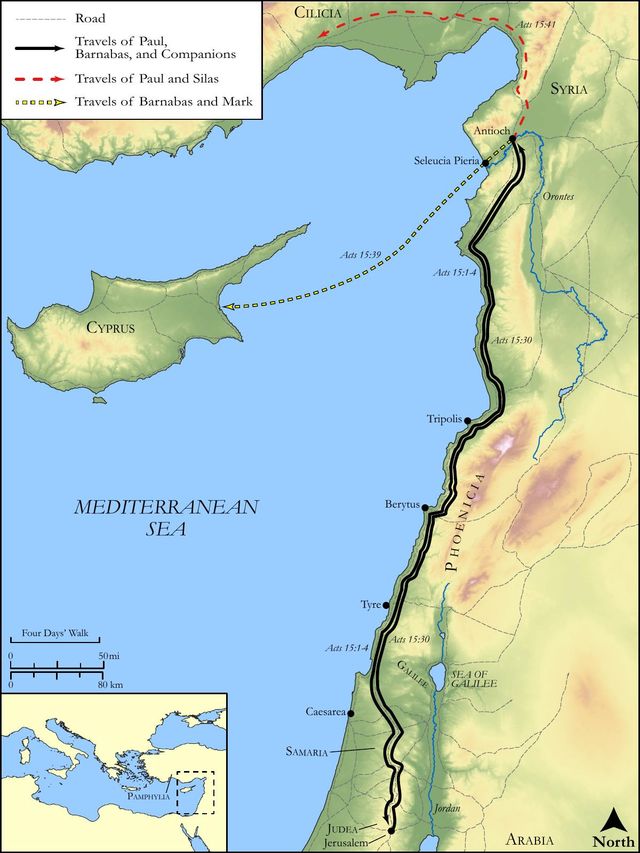
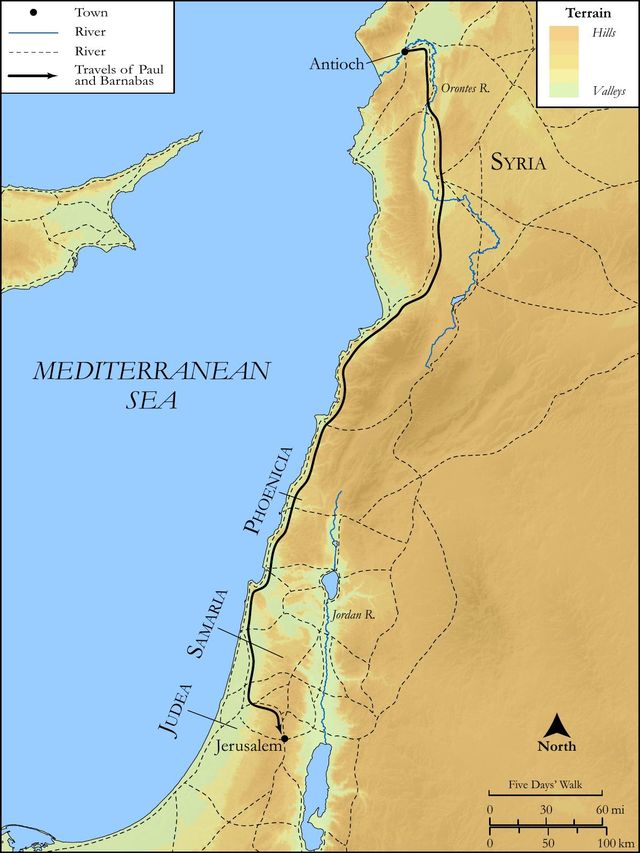
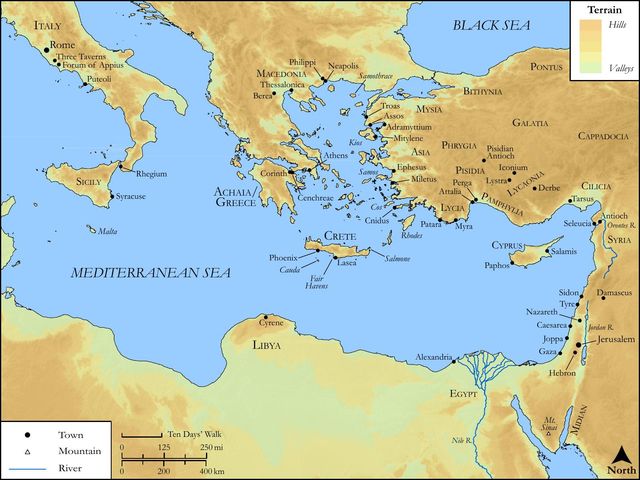
Study this verse
Public-domain commentary
Matthew Henry
From his Commentary on the Whole Bible. Henry comments on passages, not single verses — this entry covers Acts 15:6–21. His four-level outline is real structure in the source text, so it is rendered as structure.
We have here a council called, not by writ, but by consent, on this occasion (Act 15:6): The apostles and presbyters came together, to consider this matter. They did not give their judgment separately, but came together to do it, that they might hear one another's sense in this matter; for in the multitude of counsellors there is safety and satisfaction. They did not give their judgment rashly, but considered of this matter. Though they were clear concerning it in their own minds, yet they would take time to consider of it, and to hear what might be said by the adverse party. Nor did the apostles give their judgment concerning it without the elders, the inferior ministers, to whom they thus condescended, and on whom they thus put an honour. Those that are most eminent in gifts and graces, and are in the most exalted stations in the church, ought to show respect to their juniors and inferiors; for, though days should speak, yet there is a spirit in man, Job 32:7, Job 32:8. Here is a direction to the pastors of the churches, when difficulties arise, to come together in solemn meetings for mutual advice and encouragement, that they may know one another's mind, and strengthen one another's hands, and may act in concert. Now here we have,
I.Peter's speech in this synod.
He did not in the least pretend to any primacy or headship in this synod. He was not master of this assembly, nor so much as chairman or moderator, pro hac vice - on this occasion; for we do not find that either he spoke first, to open the synod (there having been much disputing before he rose up), nor that he spoke last, to sum up the cause and collect the suffrages; but he was a faithful, prudent zealous member of this assembly, and offered that which was very much to the purpose, and which would come better from him than from another, because he had himself been the first that preached the gospel to the Gentiles. There had been much disputing, pro and con, upon this question, and liberty of speech allowed, as ought to be in such cases; those of the sect of the Pharisees were some of them present, and allowed to say what they could in defence of those of their opinion at Antioch, which probably was answered by some of the elders; such questions ought to be fairly disputed before they are decided. When both sides had been heard, Peter rose up, and addressed himself to the assembly, Men and brethren, as did James afterwards, Act 15:13. And here,
1.He put them in mind of the call and commission he had some time ago to preach the gospel to the Gentiles; he wondered there should be any difficulty made of a matter already settled: You know that aph' hēmerōn archaiōn - from the beginning of the days of the gospel, many years ago, God made choice among us apostles of one to preach the gospel to the Gentiles, and I was the person chosen, that the Gentiles by my mouth should hear the word, and believe, Act 15:7. You know I was questioned about it and cleared myself to the universal satisfaction; every body rejoiced that God had granted to the Gentiles repentance unto life, and nobody said a word of circumcising them, nor was there any thought of such a thing. See Act 11:18. "Why should the Gentiles who hear the word of the gospel by Paul's mouth be compelled to submit to circumcision, any more than those that heard it by my mouth? Or why should the terms of their admission now be made harder than they were then?"
2.He puts them in mind how remarkably God owned him in preaching to the Gentiles, and gave testimony to their sincerity in embracing the Christian faith (Act 15:8): "God, who knows the hearts, and therefore is able to judge infallibly of men, bore them witness that they were his indeed, by giving them the Holy Ghost; not only the graces and comforts, but the extraordinary miraculous gifts of the Holy Ghost, even as he did unto us apostles." See Act 11:15-17. Note, The Lord knows those that are his, for he knows men's hearts; and we are as our hearts are. Those to whom God gives the Holy Ghost, he thereby bears witness to that they are his; hence we are said to be sealed with that Holy Spirit of promise - marked for God. God had bidden the Gentiles welcome to the privilege of communion with him, without requiring them to be circumcised and to keep the law; and therefore shall not we admit them into communion with us but upon those terms? "God has put no difference between us and them (Act 15:9); they, though Gentiles, are as welcome to the grace of Christ and the throne of grace as we Jews are; why then should we set them at a distance, as if we were holier than they?" Isa 65:5. Note, We ought not to make any conditions of our brethren's acceptance with us but such as God has made the conditions of their acceptance with him, Rom 14:3. Now the Gentiles were fitted for communion with God, in having their hearts purified by faith, and that faith God's own work in them; and therefore why should we think them unfit for communion with us, unless they will submit to the ceremonial purifying enjoined by the law to us? Note,
(1.)By faith the heart is purified; we are not only justified, and conscience purified, but the work of sanctification is begun and carried on.
(2.)Those that have their hearts purified by faith are therein made so nearly to resemble one another, that, whatever difference there may be between them, no account is to be made of it; for the faith of all the saints is alike precious, and has like precious effects (Pe2 1:1), and those that by it are united to Christ are so to look upon themselves as joined to one another as that all distinctions, even that between Jew and Gentile, are merged and swallowed up in it.
3.He sharply reproves those teachers (some of whom, it is likely, were present) who went about to bring the Gentiles under the obligation of the law of Moses, Act 15:10. The thing is so plain that he cannot forbear speaking of it with some warmth: "Now therefore, since God has owned them for his, why tempt you God to put a yoke upon the neck of the disciples, of the believing Gentiles and their children" (for circumcision was a yoke upon their infant seed, who are here reckoned among the disciples), "a yoke which neither our fathers nor we were able to bear?" Here he shows that in this attempt,
(1.)They offered a very great affront to God: "You tempt him, by calling that in question which he has already settled and determined by no less an indication than that of the gift of the Holy Ghost; you do, in effect, ask, 'Did he know what he did? Or was he in earnest in it? Or will he abide by his own act?' Will you try whether God, who designed the ceremonial law for the people of the Jews only, will now, in its last ages, bring the Gentiles too under the obligation of it, to gratify you?" Those tempt God who prescribe to him, and say that people cannot be saved but upon such and such terms, which God never appointed; as if the God of salvation must come into their measures.
(2.)They offered a very great wrong to the disciples: Christ came to proclaim liberty to the captives, and they go about to enslave those whom he has made free. See Neh 5:8. The ceremonial law was a heavy yoke; they and their fathers found it difficult to be borne, so numerous, so various, so pompous, were the institutions of it. The distinction of meats was a heavy yoke, not only as it rendered conversation less pleasant, but as it embarrassed conscience with endless scruples. The ado that was made about even unavoidable touch of a grave or a dead body, the pollution contracted by it, and the many rules about purifying from that pollution, were a heavy burden. This yoke Christ came to ease us of, and called those that were weary and heavy laden under it to come and take his yoke upon them, his easy yoke. Now for these teachers to go about to lay that yoke upon the neck of the Gentiles from which he came to free even the Jews was the greatest injury imaginable to them.
4.Whereas the Jewish teachers had urged that circumcision was necessary to salvation, Peter shows it was so far from being so that both Jews and Gentiles were to be saved purely through the grace of our Lord Jesus Christ, and in no other way (Act 15:11): We believe to be saved through that grace only; pisteuomen sōthēnai - We hope to be saved; or, We believe unto salvation in the same manner as they - kath' hon tropon kakeinoi̇ "We that are circumcised believe to salvation, and so do those that are uncircumcised; and, as our circumcision will be no advantage to us, so their uncircumcision will be no disadvantage to them; for we must depend upon the grace of Christ for salvation, and must apply that grace by faith, as well as they. There is not one way of salvation for the Jews and another for the Gentiles; neither circumcision avails any thing nor uncircumcision (that is neither here nor there), but faith which works by love, Gal 5:6. Why should we burden them with the law of Moses, as necessary to their salvation, when it is not that, but the gospel of Christ, that is necessary both to our salvation and theirs?"
II.An account of what Barnabas and Paul said in this synod, which did not need to be related, for they only gave in a narrative of what was recorded in the foregoing chapters, what miracles and wonders God had wrought among the Gentiles by them, Act 15:12. This they had given in to the church at Antioch (Act 14:27), to their brethren by the way (Act 15:3), and now again to the synod; and it was very proper to be given in here. That which was contended for was that the Gentiles ought to submit to the law of Moses; now, in opposition to this, Paul and Barnabas undertake to show, by a plain relation of matters of fact, that God owned the preaching of the pure gospel to them without the law, and therefore to press the law upon them now was to undo what God had done. Observe,
1.What account they gave; they declared, or opened in order, and with all the magnifying and affecting circumstances, what glorious miracles, what signs and wonders, God had wrought among the Gentiles by them, what confirmation he had given to their preaching by miracles wrought in the kingdom of nature, and what success he had given to it by miracles wrought in the kingdom of grace. Thus God had honoured these apostles whom Jewish teachers condemned, and had thus honoured the Gentiles whom they contemned. What need had they of any other advocate when God himself pleaded their cause? The conversion of the Gentiles was itself a wonder, all things considered, no less than a miracle. Now if they received the Holy Ghost by the hearing of faith, why should they be embarrassed with the works of the law? See Gal 3:2.
2.What attention was given to them: All the multitude (who, though they had not voted, yet came together to hear what was said) kept silence, and gave audience to Paul and Barnabas; it should seem they took more notice of their narrative than they did of all the arguments that were offered. As in natural philosophy and medicine nothing is so satisfactory as experiments, and in law nothing is so satisfactory as cases adjudged, so in the things of God the best explication of the word of grace is the accounts given of the operations of the Spirit of grace; to these the multitude will with silence give audience. Those that fear God will most readily hear those that can tell them what God has done for their souls, or by their means, Psa 66:16.
III.The speech which James made to the synod.
He did not interrupt Paul and Barnabas, though, it is likely, he had before heard their narrative, but let them go on with it, for the edification of the company, and that they might have it from the first and best hand; but, after they had held their peace, then James stood up. You may all prophesy one by one, Co1 14:31. God is the God of order. He let Paul and Barnabas say what they had to say, and then he made the application of it. The hearing of variety of ministers may be of use when one truth does not drive out, but clench, another.
1.He addresses himself respectfully to those present: "Men and brethren, hearken unto me. You are men, and therefore, it is to be hoped, will hear reason; you are my brethren, and therefore will hear me with candour. We are all brethren, and equally concerned in this cause that nothing be done to the dishonour of Christ and the uneasiness of Christians."
2.He refers to what Peter had said concerning the conversion of the Gentiles (Act 15:14): "Simeon" (that is, Simon Peter) "hath declared, and opened the matter to you - how God at the first did visit the Gentiles, in Cornelius and his friends, who were the first-fruits of the Gentiles-how, when the gospel began first to spread, presently the Gentiles were invited to come and take the benefit of it;" and James observes here, (1.) That the grace of God was the origin of it; it was God that visited the Gentiles; and it was a kind visit. Had they been left to themselves, they would never have visited him, but the acquaintance began on his part; he not only visited and redeemed his people, but visited and redeemed those that were lo ammi - not a people. (2.) that the glory of God was the end of it: it was to take out of them a people for his name, who should glorify him, and in whom he would be glorified. As of old he took the Jews, so now the Gentiles, to be to him for a name, and for a praise, and for a glory, Jer 13:11. Let all the people of God remember that therefore they are thus dignified in God, that God may be glorified in them.
3.He confirms this with a quotation out of the Old Testament: he could not prove the calling of the Gentiles by a vision, as Peter could, nor by miracles wrought by his hand, as Paul and Barnabas could, but he would prove that it was foretold in the Old Testament, and therefore it must be fulfilled, Act 15:15. To this agree the words of the prophets; most of the Old Testament prophets spoke more or less of the calling in of the Gentiles, even Moses himself, Rom 10:19. It was the general expectation of the pious Jews that the Messiah should be a light to enlighten the Gentiles (Luk 2:32): but James waives the more illustrious prophecies of this, and pitches upon one that seemed more obscure: It is written, Amo 9:11, Amo 9:12, where is foretold,
(1.)The setting up of the kingdom of the Messiah (Act 15:16): I will raise up the tabernacle of David, that is fallen. The covenant was made with David and his seed; but the house and family of David are here called his tabernacle, because David in his beginning was a shepherd, and dwelt in tents, and his house, that had been as a stately palace, had become a mean and despicable tabernacle, reduced in a manner to its small beginning. This tabernacle was ruined and fallen down; there had not been for many ages a king of the house of David; the sceptre had departed from Judah, the royal family was sunk and buried in obscurity, and, as it should seem, not enquired after. But God will return, and will build it again, raise it out of its ruins, a phoenix out of its ashes; and this was now lately fulfilled, when our Lord Jesus was raised out of that family, had the throne of his father David given him, with a promise that he should reign over the house of Jacob for ever, Luk 1:32, Luk 1:33. And, when the tabernacle of David was thus rebuilt in Christ, all the rest of it was, not many years after, wholly extirpated and cut off, as was also the nation of the Jews itself, and all their genealogies were lost. The church of Christ may be called the tabernacle of David. This may sometimes be brought very low, and may seem to be in ruins, but it shall be built again, its withering interests shall revive; it is cast down, but not destroyed: even dry bones are made to live.
(2.)The bringing in of the Gentiles as the effect and consequence of this (Act 15:17): That the residue of men might seek after the Lord; not the Jews only, who thought they had the monopoly of the tabernacle of David, but the residue of men, such as had hitherto been left out of the pale of the visible church; they must now, upon this re-edifying of the tabernacle of David, be brought to seek after the Lord, and to enquire how they may obtain his favour. When David's tabernacle is set up, they shall seek the Lord their God, and David their king, Hos 3:5; Jer 30:9. Then Israel shall possess the remnant of Edom (so it is in the Hebrew); but the Jews called all the Gentiles Edomites, and therefore the Septuagint leave out the particular mention of Edom, and read it just as it is here, that the residue of men might seek (James here adds, after the Lord), and all the Gentiles, or heathen, upon whom my name is called. The Jews were for many ages so peculiarly favoured that the residue of men seemed neglected; but now God will have an eye to them, and his name shall be called upon by the Gentiles; his name shall be declared and published among them, and they shall be brought both to know his name and to call upon it: they shall call themselves the people of God, and he shall call them so; and thus, by consent of both parties, his name is called upon them. This promise we may depend upon the fulfilling of in its season; and now it begins to be fulfilled, for it is added, saith the Lord, who doeth this; who doeth all these things (so the Seventy); and the apostle here: he saith it who doeth it, who therefore said it because he was determined to do it; and who therefore does it because he hath said it; for though with us saying and doing are two things they are not so with God. The uniting of Jews and Gentiles in one body, and all those things that were done in order to it, which were here foretold, were,
[1.]What God did: This was the Lord's doing, whatever instruments were employed in it: and,
[2.]It was what God delighted in, and was well pleased with; for he is the God of the Gentiles, as well as the Jews, and it is his honour to be rich in mercy to all that call upon him.
4.He resolves it into the purpose and counsel of God (Act 15:18): Known unto God are all his works from the beginning of the world. He not only foretold the calling of the Gentiles many ages ago by the prophets (and therefore it ought not to be a surprise or stumbling-block to us), but he foresaw and foreordained it in his eternal counsels, which are unquestionably wise and unalterably firm. It is an excellent maxim here laid down concerning all God's works, both of providence and grace, in the natural and spiritual kingdom, that they were all known unto him from the beginning of the world, from the time he first began to work, which supposes his knowing them (as other scriptures speak) from before the foundation of the world, and therefore from all eternity. Note, Whatever God does, he did before design and determine to do; for he works all, not only according to his will, but according to the counsel of his will: he not only does whatever he determined (Psa 135:6), which is more than we can do (our purposes are frequently broken off, and our measures broken), but he determined whatever he does. Whatever he may say, to prove us, he himself knows what he will do. We know not our works beforehand, but must do as occasion shall serve, Sa1 10:7. What we shall do in such or such a case we cannot tell till it comes to the setting to; but known unto God are all his works; in the volume of his book (called the scriptures of truth, Dan 10:21) they are all written in order, without any erasure or interlining (Psa 40:7); and all God's works will, in the day of review, be found to agree exactly with his counsels, without the least error or variation. We are poor short-sighted creatures; the wisest men can see but a little way before them, and not at all with any certainty; but this is our comfort, that, whatever uncertainty we are at, there is an infallible certainty in the divine prescience: known unto God are all his works.
5.He gives his advice what was to be done in the present case, as the matter now stood with reference to the Gentiles (Act 15:19): My sentence is; egō krinō - I give it as my opinion, or judgment; not as having authority over the rest, but as being an adviser with them. Now his advice is,
(1.)That circumcision and the observance of the ceremonial law be by no means imposed upon the Gentile converts; no, not so much as recommended nor mentioned to them. "There are many from among the Gentiles that are turned to God in Christ, and we hope there will be many more. Now I am clearly for using them with all possible tenderness, and putting no manner of hardship or discouragement upon them," mē parenochlein - "not to give them any molestation nor disturbance, nor suggest any thing to them that may be disquieting, or raise scruples in their minds, or perplex them." Note, Great care must be taken not to discourage nor disquiet young converts with matters of doubtful disputation. Let the essentials of religion, which an awakened conscience will readily receive, be first impressed deeply upon them, and these will satisfy them and make them easy; and let not things foreign and circumstantial be urged upon them, which will but trouble them. The kingdom of God, in which they are to be trained up, is not meat and drink, neither the opposition nor the imposition of indifferent things, which will but trouble them; but it is righteousness, and peace, and joy in the Holy Ghost, which we are sure will trouble nobody.
(2.)That yet it would be well that in some things, which gave most offence to the Jews, the Gentiles should comply with them. Because they must not humour them so far as to be circumcised, and keep the whole law, it does not therefore follow that they must act in a continual contradiction to them, and study how to provoke them. It will please the Jews (and, if a little thing will oblige them, better do so than cross them) if the Gentile converts abstain,
[1.]From pollutions of idols, and from fornication, which are two bad things, and always to be abstained from; but writing to them particularly and expressly to abstain from them (because in these things the Jews were jealous of the Gentile converts, lest they should transgress) would very much gratify the Jews; not but that the apostles, both in preaching and writing to the Gentiles that embraced Christianity, were careful to warn against, First, Pollutions of idols, that they should have no manner of fellowship with idolaters in their idolatrous worships, and particularly not in the feasts they held upon their sacrifices. See Co1 10:14, etc.; Co2 6:14, etc. Secondly, Fornication, and all manner of uncleanness. How large, how pressing, is Paul in his cautions against this sin! Co1 6:9-15; Eph 5:3, etc. But the Jews, who were willing to think the worst of those they did not like, suggested that these were things in which the Gentiles, even after conversion, allowed themselves, and the apostle of the Gentiles connived at it. Now, to obviate this suggestion, and to leave no room for this calumny, James advises that, besides the private admonitions which were given them by their ministers, they should be publicly warned to abstain from pollutions of idols and from fornication - that herein they should be very circumspect, and should avoid all appearances of these two evils, which would be in so particular a manner offensive to the Jews.
[2.]From things strangled, and from blood, which, though not evil in themselves, as the other two, nor designed to be always abstained fRom. as those were, had been forbidden by the precepts of Noah (Gen 9:4.), before the giving of the law of Moses; and the Jews had a great dislike to them, and to all those that took a liberty to use them; and therefore, to avoid giving offence, let the Gentile converts abridge themselves of their liberty herein, Co1 8:9, Co1 8:13. Thus we must become all things to all men.
6.He gives a reason for his advice - that great respect ought to be shown to the Jews for they have been so long accustomed to the solemn injunctions of the ceremonial law that they must be borne with, if they cannot presently come off from them (Act 15:21): For Moses hath of old those that preach him in every city, his writings (a considerable part of which is the ceremonial law) being read in the synagogues every sabbath day. "You cannot blame them if they have a great veneration for the law of Moses; for besides that they are very sure God spoke to Moses," (1.) "Moses is continually preached to them, and they are called upon to remember the law of Moses," Mal 4:4. Note, Even that word of God which is written to us should also be preached: those that have the scriptures have still need of ministers to help them to understand and apply the scriptures. (2.) "His writings are read in a solemn religious manner, in their synagogues, and on the sabbath day, in the place and at the time of their meetings for the worship of God; so that from their childhood they have been trained up in a regard to the law of Moses; the observance of it is a part of their religion." (3.) "This has been done of old time; they have received from their fathers an honour for Moses; they have antiquity for it." (4.) "This had been done in every city, wherever there are any Jews, so that none of them can be ignorant what stress that law laid upon these things: and therefore, though the gospel has set us free from these things, yet they cannot be blamed if they are loth to part with them, and cannot of a sudden be persuaded to look upon those things as needless and indifferent which they, and their fathers before them, had been so long taught, and taught of God too, to place religion in. We must therefore give them time, must meet them half-way; they must be borne with awhile, and brought on gradually, and we must comply with them as far as we can without betraying our gospel liberty." Thus does this apostle show the spirit of a moderator, that is, a spirit of moderation, being careful to give no offence either to Jew or Gentile, and contriving, as much as may be, to please both sides and provoke neither. Note, We are not to think it strange if people be wedded to customs which they have had transmitted to them from their fathers, and which they have been educated in an opinion of as sacred; and therefore allowances must be made in such cases, and not rigour used.
Historical interpretation
Three Centuries of Reception
3 surviving comments on this verse. Each one is dated, so this reads as a timeline rather than a list.
Select a marker to jump to its quote. Markers stagger vertically where authors wrote within a few decades of each other.
"And put no difference between us and them, having purified their hearts by faith." From faith alone, he says, they obtained the same gifts. This is also meant as a lesson to those objectors; this is able to teach even them that faith only is needed, not works nor circumcision. For indeed they do not say all this only by way of apology for the Gentiles, but to teach the Jewish believers also to abandon the Law. When he has mentioned the testimony borne to them, then he utters that great word, the same which Paul speaks, "Neither circumcision availeth anything, nor uncircumcision." "That he may make the twain one in Himself." Of all these the seeds lie in Peter's discourse. And he does not say between them of the circumcision, but "Between us," that is the Apostles, "and them." Then, that the expression, "no difference" may not seem an outrage, After faith, he says-"Having purified their hearts by faith"-He thoroughly cleansed them first.
Faith in God purifies the heart, the pure heart sees God. But faith is sometimes defined as followed by people who wish to deceive themselves; as if it were enough merely to believe—some people, you see, promise themselves the vision of God and the kingdom of heaven for believing while living bad lives. Against these the apostle James indignantly took umbrage out of spiritual charity, so he says in his letter, “You believe that God is one.” You pat yourself on your back for your faith; you observe that many godless people assume there are many gods, and you congratulate yourself for believing that there is only one God. “You do well. The demons also believe—and shudder.” Shall they too see God? Those who are pure of heart shall see him. Whoever would say that the unclean spirits are pure of heart? And yet, “they believe—and shudder.”So our faith must be distinguished from the faith of demons. Our faith, you see, purifies the heart, their faith makes them guilty.… So let us distinguish our faith and see that believing is not enough. That is not the sort of faith that purifies the heart. “Purifying their hearts,” it says, “by faith.” But which faith, what sort of faith? The one, surely, which the apostle Paul defines when he says “faith that works through love.” This faith is different from the faith of demons, different from the morals of dissolute and desperate people. “Faith,” he says. “Which faith?” The one “that works through love,” hopes for what God promises. You could not have a more perfect, a more carefully thought-out definition than that.
Purifying their hearts by faith. Therefore, it is not necessary to cleanse them with the circumcision of the flesh, whose hearts such great faith purifies, that they even deserve to receive the Holy Spirit before baptism.
Continue studying Acts 15:9 across the web’s major study libraries — every link below opens this exact verse, chapter, or book on the destination site.
Read & Compare
 BibleGatewayThis verse in more than 200 translations and 70 languages.
 Bible.comThe YouVersion reader — hundreds of translations, reading plans, and highlights.
 ESV.orgCrossway's official English Standard Version reader.
 NET BibleThe NET translation with 60,000+ translators' notes on every rendering decision.
 STEP BibleTyndale House's free study tool — original text, vocabulary, and scholarly resources.
 BibliaLogos Bible Software's free web reader.
 USCCBThe New American Bible (Revised Edition) with the U.S. bishops' study notes.
Commentaries
 BibleHub CommentariesDozens of classic commentaries on this verse, gathered on one page.
 StudyLightMore than 100 commentary sets — the largest collection on the web.
 BibleRefPlain-English commentary on what this verse means, verse by verse.
 Enduring WordDavid Guzik's free commentary on this chapter, widely used by Bible teachers.
 Bible Study ToolsVerse commentary alongside Greek and Hebrew study aids.
Original Language & Research
- BibleHub InterlinearThe verse word by word — original language, transliteration, and English.
- BibleHub LexiconEvery word's original-language definition and Strong's entry.
 Blue Letter BibleDeep-study tools — Strong's numbers, concordance, and word studies.
 CNTR CollationThe earliest Greek manuscripts of this verse, collated letter by letter.
Sermons, Hymns & Audio


TrulyRandomVerse is not affiliated with these sites and doesn’t control their content. They’re linked because they’re genuinely useful.
Summary
Acts 15:9 captures Peter's profound declaration at the Jerusalem Council, asserting God's impartial acceptance of both Jewish and Gentile believers. He emphasizes that God made no distinction between them, demonstrating His divine approval by granting the Holy Spirit to Gentiles and purifying their hearts solely through faith, thereby nullifying the necessity of Mosaic Law observance for salvation. This verse stands as a foundational statement for the universal nature of the gospel and salvation by grace through faith.
Context
ShowHideLiterary Context
Acts 15:9 is a pivotal statement within Peter's address to the Jerusalem Council, which convened to resolve a contentious theological dispute. The preceding verses (Acts 15:1-5) describe the arrival of certain Jewish believers from Judea who insisted that Gentile converts must be circumcised and adhere to the Law of Moses to be saved. This contention caused "no small dissension and debate" (Acts 15:2). Peter, having been instrumental in the conversion of Cornelius's household (Acts 10), stands up to remind the council of God's direct intervention in bringing Gentiles into the fold without requiring circumcision or adherence to the Law. His argument in verses 7-11 serves as a powerful testimony, setting the stage for James's concluding remarks and the council's ultimate decision.
Historical & Cultural Context
The early church was grappling with its identity as it expanded beyond its Jewish origins. For centuries, Jewish identity was inextricably linked to the covenant of circumcision (Genesis 17:9-14) and adherence to the Mosaic Law, including dietary restrictions and Sabbath observance. The idea that Gentiles could become full members of God's people without adopting these markers was revolutionary and deeply challenging to many Jewish Christians, especially the Pharisees who had converted (Acts 15:5). The cultural chasm between Jews and Gentiles was vast, marked by distinct social customs, religious practices, and a long history of separation. Peter's argument directly confronts these deeply ingrained cultural and religious assumptions, highlighting God's new work in Christ that transcends traditional boundaries.
Key Themes
ShowHideThis verse powerfully contributes to several overarching themes in Acts and the broader New Testament. Foremost is Divine Impartiality, demonstrating that God shows no favoritism based on ethnicity or background, a truth underscored by Peter's experience in Acts 10. Another critical theme is Salvation by Faith Alone, directly challenging the notion that works of the Law are necessary for justification. This aligns with the Pauline emphasis on grace through faith. Furthermore, the concept of Internal Transformation is central, as the purification is described as occurring in the "hearts" rather than through external rituals, echoing the New Covenant promise of a transformed heart.
Exposition and Analysis
ShowHideKey Word Analysis
ShowHideFrom διά and κρίνω; to separate thoroughly, i.e. (literally and reflexively) to withdraw from, or (by implication) oppose; figuratively, to discriminate (by implication, decide), or (reflexively) hesitate. In this context, Peter asserts that God Himself did not "discriminate" or "make a distinction" between Jewish and Gentile believers regarding the reception of the Holy Spirit and salvation, thereby leveling the playing field for all who believe.
From καθαρός; to cleanse (literally or figuratively). Here, it refers to a spiritual cleansing and moral purification of the inner being, the "hearts." This is not an external, ceremonial purification achieved through human effort or ritual observance, but a profound, internal transformation divinely accomplished through genuine faith.
From πείθω; persuasion, i.e. credence; moral conviction (of religious truth, or the truthfulness of God or a religious teacher), especially reliance upon Christ for salvation; abstractly, constancy in such profession. This word is crucial, as it identifies the sole means by which God purifies hearts and accepts individuals, whether Jew or Gentile, directly contrasting with reliance on works of the Law.
Verse Breakdown
ShowHide"And put no difference between us and them"
This clause highlights God's absolute impartiality. "Us" refers to Jewish believers, and "them" refers to Gentile converts. Peter asserts that God, in His sovereign act of salvation, did not require Gentiles to undergo circumcision or adhere to the Mosaic Law to be accepted into His covenant people, just as He did not require Jewish believers to do so for their salvation in Christ. This declaration directly refutes the claims of the Judaizers who sought to impose these requirements.
"purifying their hearts by faith"
This second clause explains how God made no difference and what He did. The purification is not external or ritualistic, but an internal, spiritual cleansing of the "hearts," the seat of one's will, intellect, and emotion. This profound transformation is accomplished "by faith," meaning that sincere belief and trust in God (and by extension, in Jesus Christ) are the sole instruments through which this divine work of cleansing and acceptance occurs. This emphasizes that salvation is a work of God's grace, received through faith, not earned by human merit or adherence to legalistic requirements.
Literary Devices
ShowHideThe verse employs several significant literary devices. Contrast is prominent, setting "us" (Jewish believers) against "them" (Gentile believers) to emphasize God's unified approach to both groups. This highlights the breaking down of traditional barriers. Metaphor is evident in the phrase "purifying their hearts," as the heart is not literally cleansed but spiritually transformed and made pure in God's sight. This internal cleansing stands in stark contrast to external, ceremonial purifications. The phrase "by faith" functions as a Means, indicating the instrument through which this purification is achieved, underscoring the theological principle of sola fide.
Theological and Thematic Connections
ShowHideActs 15:9 is a cornerstone for understanding the New Testament's doctrine of salvation and the nature of the church. It unequivocally declares that God's grace extends universally, without ethnic or legalistic prerequisites. The purification of hearts "by faith" underscores the internal, spiritual transformation that defines true conversion, moving beyond outward religious performance to a profound work of God's Spirit. This verse dismantles the walls of division, establishing a new community where all are one in Christ, united not by shared ancestry or adherence to a legal code, but by common faith in a gracious God. It affirms that the Holy Spirit is given to all who believe, regardless of their past, serving as the ultimate sign of God's acceptance.
Reflection and Application
ShowHideActs 15:9 offers timeless truths for believers today, reminding us that God's acceptance is based purely on His grace, received through faith, rather than on our background, achievements, or adherence to man-made rules. This should foster profound humility and gratitude, knowing that our standing before God is not earned but freely given. It calls us to examine our own hearts for any lingering prejudices or tendencies to create "us vs. them" mentalities within the body of Christ. True unity in the church is found in our shared faith in Jesus, transcending all cultural, social, or denominational differences. This verse encourages us to prioritize the internal work of the Spirit in purifying hearts over external religious displays, understanding that genuine transformation flows from a living faith.
Questions for Reflection
ShowHideFAQ
ShowHideWhat was the "difference" that God did not put between Jews and Gentiles?
ShowHideThe "difference" refers to the traditional distinctions and requirements of the Mosaic Law, particularly circumcision, that some Jewish believers believed were necessary for Gentiles to be saved and fully accepted into God's covenant people. Peter argues that God Himself did not require these external markers for salvation, but rather accepted both Jews and Gentiles equally through faith, as evidenced by His giving the Holy Spirit to uncircumcised Gentiles (as seen in Acts 10:44-48). God's act of "purifying their hearts by faith" demonstrates that the true basis of acceptance is internal spiritual transformation, not external ritualistic adherence.
Christ-Centered Fulfillment
ShowHideActs 15:9 finds its ultimate fulfillment in the person and work of Jesus Christ. The "purification of hearts by faith" points directly to Christ as the source and object of that faith. Before Christ, purification often involved external rituals and sacrifices, but these were only shadows of the ultimate cleansing that would come through His atoning work. Jesus, as the Lamb of God, offered Himself as the perfect sacrifice, making possible a radical, internal purification for all who believe. His death on the cross broke down the "dividing wall of hostility" between Jew and Gentile, creating one new humanity in Himself. The impartiality of God, so clearly articulated by Peter, is fully realized in Christ, who is the Savior of all mankind, and through whom both Jew and Gentile have access in one Spirit to the Father. Thus, Acts 15:9 is a powerful testament to the universal scope of Christ's redemptive work, inviting all to be purified and reconciled to God through faith in Him.