


Matthew 6:16
Bible text: King James Version (1769 Blayney text) · Public domain
Bible text: King James Version with Strong's numbers · Public domain
Bible text: Berean Standard Bible · Public domain
Bible text: American Standard Version (1901) · Public domain
Bible text: World English Bible, Messianic edition · Public domain
Bible text: Geneva Bible (1599) · Public domain
Bible text: Young's Literal Translation · Public domain
- ὍτανHotanWheneverG3752CONJConjunction
- δὲdenowG1161CONJConjunction
- νηστεύητεnēsteuēteyou may fastG3522V-PAS-2PVerb Present Active Subjunctive 2nd Plural
- μὴmēnotG3361PRT-NNegative Particle Negative
- γίνεσθεginesthedo beG1096V-PNM-2PVerb Present Middle Or Passive Deponent Imperative 2nd Plural
- ὡςhōslikeG5613PRTParticle or Disjunctive
- οἱhoitheG3588T-NPMDefinite article Nominative Plural Masculine
- ὑποκριταὶhupokritaihypocritesG5273N-NPMNoun Nominative Plural Masculine
- σκυθρωποί·skuthrōpoigloomyG4659A-NPMAdjective Nominative Plural Masculine
- ἀφανίζουσινaphanizousinthey disfigureG853V-PAI-3PVerb Present Active Indicative 3rd Plural
- γὰρgarforG1063CONJConjunction
- τὰtatheG3588T-APNDefinite article Accusative Plural Neuter
- πρόσωπαprosōpaappearanceG4383N-APNNoun Accusative Plural Neuter
- αὐτῶνautōnof themG846P-GPMPersonal pronoun Genitive Plural Masculine
- ὅπωςhopōsso thatG3704CONJConjunction
- φανῶσινphanōsinthey may appearG5316V-2APS-3PVerb 2nd Aorist Passive Subjunctive 3rd Plural
- τοῖςtois<the>G3588T-DPMDefinite article Dative Plural Masculine
- ἀνθρώποιςanthrōpoisto menG444N-DPMNoun Dative Plural Masculine
- νηστεύοντεςnēsteuontes[as] fastingG3522V-PAP-NPMVerb Present Active Participle Nominative Plural Masculine
- ἀμὴνamēnAmenG281INJ-HEBInterjection
- λέγωlegōI sayG3004V-PAI-1SVerb Present Active Indicative 1st Singular
- ὑμῖνhuminto youG4771P-2DPPersonal pronoun Dative 2nd Plural
- ὅτι·hotithatG3754CONJConjunction
- ἀπέχουσινapechousinthey haveG568V-PAI-3PVerb Present Active Indicative 3rd Plural
- τὸνtontheG3588T-ASMDefinite article Accusative Singular Masculine
- μισθὸνmisthonrewardG3408N-ASMNoun Accusative Singular Masculine
- αὐτῶνautōnof themG846P-GPMPersonal pronoun Genitive Plural Masculine
English is a literal word-by-word gloss of the Greek, not the KJV's wording. Why?
This is the original text the KJV's translators worked from — each Greek word with its own literal English meaning in this verse, prepared by scholars at Tyndale House, Cambridge. The KJV translates whole sentences, not word by word, so its wording differs: one Greek word can become several English words, and the KJV may choose “charity” where the gloss reads “love”. Both are faithful — they answer different questions. For the KJV's own rendering, switch to the KJV text.
Details
See on the biblical-era maps
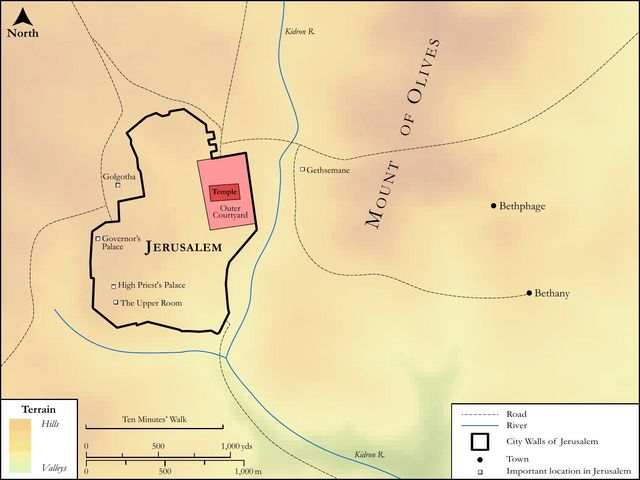
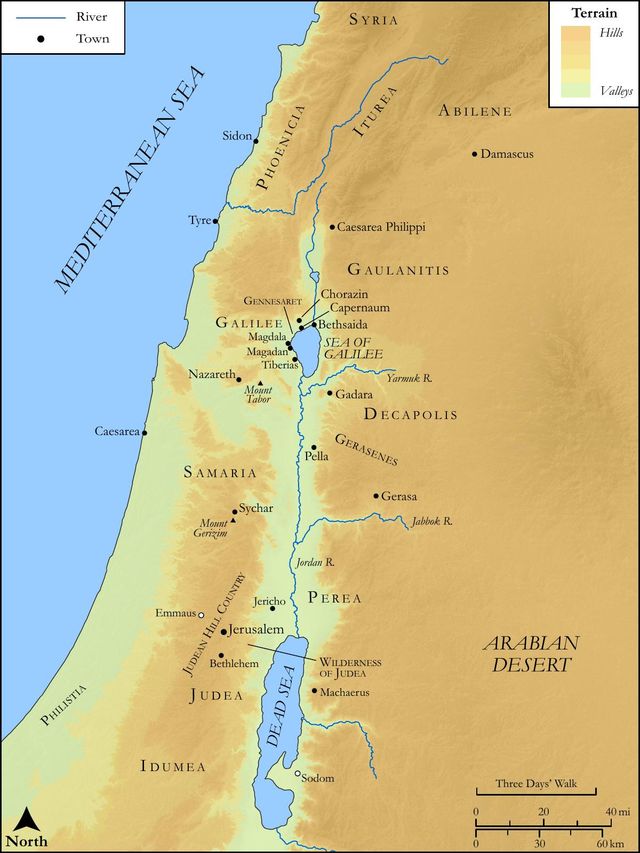
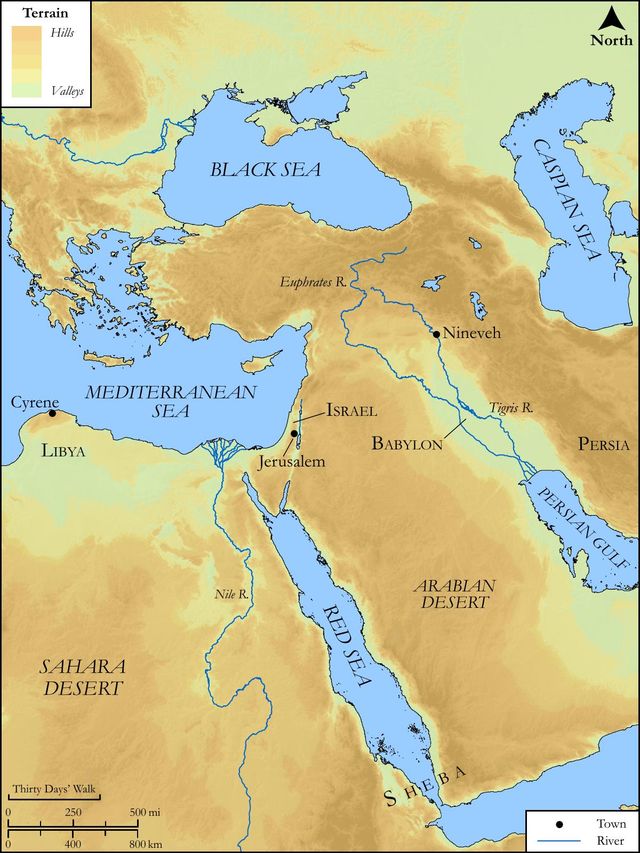
Study this verse
Public-domain commentary
Matthew Henry
From his Commentary on the Whole Bible. Henry comments on passages, not single verses — this entry covers Matthew 6:16–18. His two-level outline is real structure in the source text, so it is rendered as structure.
We are here cautioned against hypocrisy in fasting, as before in almsgiving, and in prayer.
I.It is here supposed that religious fasting is a duty required of the disciples of Christ, when God, in his providence, calls to it, and when the case of their own souls upon any account requires it; when the bridegroom is taken away, then shall they fast, Mat 9:15. Fasting is here put last, because it is not so much a duty for its own sake, as a means to dispose us for other duties. Prayer comes in between almsgiving and fasting, as being the life and soul of both. Christ here speaks especially of private fasts, such as particular persons prescribe to themselves, as free-will offerings, commonly used among the pious Jews; some fasted one day, some two, every week; others seldomer, as they saw cause. On those days they did not eat till sun-set, and then very sparingly. It was not the Pharisee's fasting twice in the week, but his boasting of it, that Christ condemned, Luk 18:12. It is a laudable practice, and we have reason to lament it, that is so generally neglected among Christians. Anna was much in fasting, Luk 2:37. Cornelius fasted and prayed, Act 10:30. The primitive Christians were much in it, see Act 13:3; Act 14:23. Private fasting is supposed, Co1 7:5. It is an act of self-denial, and mortification of the flesh, a holy revenge upon ourselves, and humiliation under the hand of God. The most grown Christians must hereby own, they are so far from having any thing to be proud of, that they are unworthy of their daily bread. It is a means to curb the flesh and the desires of it, and to make us more lively in religious exercises, as fulness of bread is apt to make us drowsy. Paul was in fastings often, and so he kept under this body, and brought it into subjection.
II.We are cautioned not to do this as the hypocrites did it, lest we lose the reward of it; and the more difficulty attends the duty, the greater loss it is to lose the reward of it.
Now, 1. The hypocrites pretended fasting, when there was nothing of that contrition or humiliation of soul in them, which is the life and soul of the duty. Theirs were mock-fasts, the show and shadow without the substance; they took on them to be more humbled than really they were, and so endeavored to put a cheat upon God, than which they could not put a greater affront upon him. The fast that God has chosen, is a day to afflict the soul, not to hang down the head like a bulrush, nor for a man to spread sackcloth and ashes under him; we are quite mistaken if we call this a fast, Isa 58:5. Bodily exercise, if that be all, profits little, since that is not fasting to God, even to him.
2.They proclaimed their fasting, and managed it so that all who saw them might take notice that it was a fasting-day with them. Even on these days they appeared in the streets, whereas they should have been in their closets; and the affected a downcast look, a melancholy countenance, a slow and solemn pace; and perfectly disfigured themselves, that men might see how often they fasted, and might extol them as devout, mortified men. Note, It is sad that men, who have, in some measure, mastered their pleasure, which is sensual wickedness, should be ruined by their pride, which is spiritual wickedness, and no less dangerous. Here also they have their reward, that praise and applause of men which they court and covet so much; they have it, and it is their all.
III.We are directed how to manage a private fast; we must keep it in private, Mat 6:17, Mat 6:18.
He does not tell us how often we must fast; circumstances vary, and wisdom is profitable therein to direct; the Spirit in the word has left that to the Spirit in the heart; but take this for a rule, whenever you undertake this duty, study therein to approve yourselves to God, and not to recommend yourselves to the good opinion of men; humility must evermore attend upon our humiliation. Christ does not direct to abate any thing of the reality of the fast; he does not say,"take a little meat, or a little drink, or a little cordial;" no, "let the body suffer, but lay aside the show and appearance of it; appear with thy ordinary countenance, guise, and dress; and while thou deniest thyself thy bodily refreshments, do it so as that it may not be taken notice of, no, not by those that are nearest to thee; look pleasant, anoint thine head and wash thy face, as thou dost on ordinary days, on purpose to conceal thy devotion; and thou shalt be no loser in the praise of it at last; for though it be not of men, it shall be of God." Fasting is the humbling of the soul (Psa 35:13), that is the inside of the duty; let that therefore be thy principal care, and as to the outside of it, covet not to let it be seen. If we be sincere in our solemn fasts, and humble, and trust God's omniscience for our witness, and his goodness for our reward, we shall find, both that he did see in secret, and will reward openly. Religious fasts, if rightly kept, will shortly be recompensed with an everlasting feast. Our acceptance with God in our private fasts should make us dead, both to the applause of men (we must not do the duty in hopes of this), and to the censures of men too (we must not decline the duty for fear of them). David's fasting was turned to his reproach, Psa 69:10; and yet, Psa 69:13, As for me, let them say what they will of me, my prayer is unto thee in an acceptable time.
Historical interpretation
Ten Centuries of Reception
15 surviving comments on this verse. Each one is dated, so this reads as a timeline rather than a list.
Select a marker to jump to its quote. Markers stagger vertically where authors wrote within a few decades of each other.
But let not your fasts be with the hypocrites; for they fast on the second and fifth day of the week; but do ye fast on the fourth day and the Preparation (Friday). Neither pray as the hypocrites; but as the Lord commanded in His Gospel, thus pray: Our Father who art in heaven, hallowed be Thy name. Thy kingdom come. Thy will be done, as in heaven, so on earth. Give us to-day our daily (needful) bread, and forgive us our debt as we also forgive our debtors. And bring us not into temptation, but deliver us from the evil one (or, evil); for Thine is the power and the glory for ever. Thrice in the day thus pray.
Thereafter He prescribed to fasts a law-that they are to be performed "without sadness: " for why should what is salutary be sad? He taught likewise that fasts are to be the weapons for battling with the more direful demons: for what wonder if the same operation is the instrument of the iniquitous spirit's egress as of the Holy Spirit's ingress? Finally, granting that upon the centurion Cornelius, even before baptism, the honourable gift of the Holy Spirit, together with the gift of prophecy besides, had hastened to descend, we see that his fasts had been heard, I think, moreover, that the apostle too, in the Second of Corinthians, among his labours, and perils, and hardships, after "hunger and thirst," enumerates "fasts" also "very many"
their own peace? What prayer is complete if divorced from the "holy kiss? " Whom does peace impede when rendering service to his Lord? What kind of sacrifice is that from which men depart without peace? Whatever our prayer be, it will not be better than the observance of the precept by which we are bidden to conceal our fasts; for now, by abstinence from the kiss, we are known to be fasting.
He mentions heaven and the Father to claim our attention, for nothing so likens you to God, as to forgive him who has injured you. And it were indeed unmeet should the son of such a Father become a slave, and should one who has a heavenly vocation live as of this earth, and of this life only.
Here it were well to sigh aloud, and to wail bitterly: for not only do we imitate the hypocrites, but we have even surpassed them. For I know, yea I know many, not merely fasting and making a display of it, but neglecting to fast, and yet wearing the masks of them that fast, and cloaking themselves with an excuse worse than their sin.
For "I do this," say they, "that I may not offend the many." What sayest thou? There is a law of God which commands these things, and dost thou talk of offense? And thinkest thou that in keeping it thou art offending, in transgressing it, delivering men from offense? And what can be worse than this folly?
Wilt thou not leave off becoming worse than the very hypocrites, and making thine hypocrisy double? And when thou considerest the great excess of this evil, wilt thou not be abashed at the force of the expression now before us? In that He did not say, "they act a part," merely, but willing also to touch them more deeply, He saith, "For they disfigure their faces;" that is, they corrupt, they mar them.
But if this be a disfiguring of the face, to appear pale for vainglory, what should we say concerning the women who corrupt their faces with colorings and paintings to the ruin of the unchaste sort of young men? For while those harm themselves only, these women harm both themselves and them who behold them. Wherefore we should fly both from the one pest and from the other, keeping at distance enough and to spare. For so He not only commanded to make no display, but even to seek to be concealed. Which thing He had done before likewise.
And whereas in the matter of almsgiving, He did not put it simply, but having said, "Take heed not to do it before men," He added, "to be seen of them;" yet concerning fasting and prayer, He made no such limitation. Why could this have been? Because for almsgiving to be altogether concealed is impossible, but for prayer and fasting, it is possible.
And somewhat else He signified by this name, this of hypocrites, I mean. That is, not only by the ridiculousness of the thing, nor by its bringing an extreme penalty, but also by showing that such deceit is but for a season, doth He withdraw us from that evil desire. For the actor seems glorious just so long as the audience is sitting; or rather not even then in the sight of all. For the more part of the spectators know who it is, and what part he is acting. However, when the audience is broken up, he is more clearly discovered to all. Now this, you see, the vainglorious must in all necessity undergo. For even here they are manifest to the majority, as not being that which they appear to be, but as wearing a mask only; but much more will they be detected hereafter, when all things appear "naked and open."
And by another motive again He withdraws them from the hypocrites, by showing that His injunction is light. For He doth not make the fast more strict, nor command us to practise more of it, but not to lose the crown thereof. So that what seems hard to bear, is common to us and to the hypocrites, for they also fast; but that which is lightest, namely, not to lose the reward after our labors, "this is what I command," saith He; adding nothing to our toils, but gathering our wages for us with all security, and not suffering us to go away unrewarded, as they do. Nay, they will not so much as imitate them that wrestle in the Olympic games, who although so great a multitude is sitting there, and so many princes, desire to please but one, even him who adjudges the victory amongst them; and this, though he be much their inferior. But thou, though thou hast a twofold motive for displaying the victory to Him, first, that He is the person to adjudge it, and also, that He is beyond comparison superior to all that are sitting in the theatre,-thou art displaying it to others, who so far from profiting, do privily work thee the greatest harm.
(V. 16) For they disfigure their faces that they may appear to men to fast. Amen I say to you, they have received their reward. The word exterminate, which is frequently used in the books of Ecclesiastic writers, has a much different meaning than is commonly understood. For it means that those who are exiled are exterminated, as they are sent beyond the borders. Therefore, we should always understand this word in this sense: which is said in Greek as ἀφανίζουσι. However, the hypocrite demolishes his face to simulate sadness; and with a strong mind rejoicing, he bears grief on his countenance.
The word exterminare, so often used in the ecclesiastical Scriptures through a blunder of the translators, has a quite different meaning from that in which it is commonly understood. It is properly said of exiles who are sent beyond the boundary of their country. Instead of this word, it would seem better to use the word demoliri, 'to destroy,' in translating the Greek ἀφανίζειν. The hypocrite destroys his face, in order that he may feign sorrow, and with a heart full of joy wears sorrow in his countenance.
There follows a precept concerning fasting, having reference to that same purification of heart which is at present under discussion. For in this work also we must be on our guard, lest there should creep in a certain ostentation and hankering after the praise of man, which would make the heart double, and not allow it to be pure and single for apprehending God.
It is manifest from these precepts that all our effort is to be directed towards inward joys, lest, seeking a reward from without, we should be conformed to this world, and should lose the promise of a blessedness so much the more solid and firm, as it is inward, in which God has chosen that we should become conformed to the image of His Son.
But in this section it is chiefly to be noticed, that there may be ostentatious display not merely in the splendour and pomp of things pertaining to the booty, but also in doleful squalor itself; and the more dangerous on this account, that it deceives under the name of serving God. And therefore he who is very conspicuous by immoderate attention to the body, and by the splendour of his clothing or other things, is easily convicted by the things themselves of being a follower of the pomps of the world, and misleads no one by a cunning semblance of sanctity; but in regard to him who under a profession of Christianity, fixes the eyes of men upon himself by unusual squalor and filth, when he does it voluntarily, and not under the pressure of necessity, it may be conjectured from the rest of his actings whether he does this from contempt of superfluous attention to the body, or from a certain ambition: for the Lord has enjoined us to beware of wolves under a sheep's skin; but by their fruits, says He, shall you know them. For when by temptations of any kind those very things begin to be withdrawn from them or refused to them, which under that veil they either have obtained or desire to obtain, then of necessity it appears whether it is a wolf in a sheep's skin or a sheep in its own. For a Christian ought not to delight the eyes of men by superfluous ornament on this account, because pretenders also too often assume that frugal and merely necessary dress, that they may deceive those who are not on their guard: for those sheep also ought not to lay aside their own skins, if at any time wolves cover themselves there with.
(Serm. in Mont. ii. 12.) On this paragraph it is to be specially noted, that not only in outward splendor and pomp, but even in the dress of sorrow and mourning, is there room for display, and that the more dangerous, inasmuch as it deceives under the name of God's services. For he who by inordinate pains taken with his person, or his apparel, or by the glitter of his other equipage, is distinguished, is easily proved by these very circumstances to be a follower of the pomps of this world, and no man is deceived by any semblance of a feigned sanctity in him. But when any one in the profession of Christianity draws men's eyes upon him by unwonted beggary and slovenliness in dress, if this be voluntary and not compulsory, then by his other conduct may be seen whether he does this to be seen of men, or from contempt of the refinements of dress.
(Serm. in Epiph. iv. 5.) But that fasting is not pure, that comes not of reasons of continence, but of the arts of deceit.
She also said, ‘The devil sometimes sends a severe fast which is too prolonged; the devil’s disciples do this as well as holy men. How do we distinguish the fasting of our God and King from the fasting of that tyrant the devil? Clearly by its moderation. Throughout your life, then, you ought to keep an unvarying rule of fasting. Do you fast four or five days on end and then lose your spiritual strength by eating a feast? That really pleases the devil! Everything which is extreme is destructive. So do not suddenly throw away your armour, or you may be found unarmed in the battle and easily captured. Our body is the armour, our soul is the warrior. Take care of both, and you will be ready for whatever comes.’
Forasmuch as that prayer which is offered in a humble spirit and contrite heart, shows a mind already strong and disciplined; whereas he who is sunk in self-indulgence cannot have a humble spirit and contrite heart; it is plain that without fasting prayer must be faint and feeble; therefore, when any would pray for any need in which they might be, they joined fasting with prayer, because it is an aid thereof. Accordingly the Lord, after His doctrine respecting prayer, adds doctrine concerning fasting, saying, When ye fast, be not ye as the hypocrites, of sad countenance. The Lord knew that vanity may spring from every good thing, and therefore bids us root out the bramble of vain-gloriousness which springs in the good soil, that it choke not the fruit of fasting. For though it cannot be that fasting should not be discovered in any one, yet is it better that fasting should show you, than that you should show your fasting. But it is impossible that any in fasting should be gay, therefore He said not, Be not sad, but Be not made sad; for they who discover themselves by any false displays of their affliction, they are not sad, but make themselves; but he who is naturally sad in consequence of continued fasting, does not make himself sad, but is so.
If then he who fasts, and makes himself of sad countenance, is a hypocrite, how much more wicked is he who does not fast, yet assumes a fictitious paleness of face as a token of fasting.
The reward of the hypocrites' fast is shown, when it is added, That they may seem to men to fast; verily I say unto you, They have their reward; that is, that reward for which they looked.
(Mor. viii. 44.) For by the pale countenance, the trembling limbs, and the bursting sighs, and by all so great toil and trouble, nothing is in the mind but the esteem of men.
. "Disfigurement of the face" is an artificial discoloration of the face, painting it pale, so that one does not appear as he really is, but feigns mournfulness.
Continue studying Matthew 6:16 across the web’s major study libraries — every link below opens this exact verse, chapter, or book on the destination site.
Read & Compare
 BibleGatewayThis verse in more than 200 translations and 70 languages.
 Bible.comThe YouVersion reader — hundreds of translations, reading plans, and highlights.
 ESV.orgCrossway's official English Standard Version reader.
 NET BibleThe NET translation with 60,000+ translators' notes on every rendering decision.
 STEP BibleTyndale House's free study tool — original text, vocabulary, and scholarly resources.
 BibliaLogos Bible Software's free web reader.
 USCCBThe New American Bible (Revised Edition) with the U.S. bishops' study notes.
Commentaries
 BibleHub CommentariesDozens of classic commentaries on this verse, gathered on one page.
 StudyLightMore than 100 commentary sets — the largest collection on the web.
 BibleRefPlain-English commentary on what this verse means, verse by verse.
 Enduring WordDavid Guzik's free commentary on this chapter, widely used by Bible teachers.
 Bible Study ToolsVerse commentary alongside Greek and Hebrew study aids.
Original Language & Research
- BibleHub InterlinearThe verse word by word — original language, transliteration, and English.
- BibleHub LexiconEvery word's original-language definition and Strong's entry.
 Blue Letter BibleDeep-study tools — Strong's numbers, concordance, and word studies.
 CNTR CollationThe earliest Greek manuscripts of this verse, collated letter by letter.
Sermons, Hymns & Audio


TrulyRandomVerse is not affiliated with these sites and doesn’t control their content. They’re linked because they’re genuinely useful.
Summary
In Matthew 6:16, Jesus continues His discourse on genuine righteousness within the Sermon on the Mount, specifically addressing the spiritual discipline of fasting. He sternly cautions His followers against adopting the ostentatious practices of the "hypocrites," who intentionally alter their appearance to publicly signal their fasting and garner human praise. Jesus underscores that such outward displays, driven by a desire for human recognition rather than sincere devotion to God, constitute their sole reward, thereby forfeiting any divine commendation.
Context
ShowHideLiterary Context
Matthew 6:16 is situated within the broader framework of the Sermon on the Mount, where Jesus outlines the principles of kingdom living. It forms the third part of a triad of teachings on righteous acts, following His instructions on almsgiving (Matthew 6:2-4) and prayer (Matthew 6:5-15). In each instance, Jesus contrasts the public, performance-driven piety of the "hypocrites" with the private, heart-centered devotion that God truly values. The consistent theme is that true spiritual disciplines are performed for God's eyes alone, not for human applause, culminating in the promise of a reward from the Father who "sees in secret."
Historical & Cultural Context
Fasting was a common and highly respected spiritual discipline in ancient Judaism, practiced both individually and communally. While the Mosaic Law mandated only one annual fast on the Day of Atonement (Leviticus 16:29), devout Jews, particularly the Pharisees, often observed additional voluntary fasts, commonly on Mondays and Thursdays. In this cultural milieu, public displays of piety were common, and those who fasted might intentionally neglect their appearance—refusing to wash, anoint themselves with oil, or groom—to emphasize their supposed asceticism and draw attention to their spiritual devotion. This outward show was meant to elicit admiration and respect from others, reinforcing their perceived righteousness within the community.
Key Themes
ShowHideThis verse powerfully contributes to several overarching themes in Jesus' teaching. Foremost is the theme of Authenticity vs. Hypocrisy, where Jesus directly challenges superficial religious observance. The term "hypocrites" (Greek: hypokritēs) literally means 'actor' or 'pretender,' highlighting the performative nature of their piety. Relatedly, the Motivation in Religious Practice is paramount; Jesus teaches that the heart's intention, not the outward act, determines its spiritual value. Fasting, when done to impress people, loses its sacred purpose and becomes a mere performance. Finally, the theme of Divine vs. Human Approval is central. Jesus' declaration, "They have their reward," signifies that the human praise sought and received is the only recompense such individuals will ever gain, contrasting sharply with the "reward of your Father which seeth in secret" promised to those whose devotion is genuine and private, as also seen in 1 Samuel 16:7.
Exposition and Analysis
ShowHideKey Word Analysis
ShowHideThis term, from which we derive "hypocrite," originally referred to an actor or stage-player in ancient Greek theater. Jesus' use of this word is highly significant, portraying those who perform religious duties for public acclaim as merely playing a role, lacking genuine internal devotion. They are dissemblers, presenting a false front of piety.
This verb means "to render unapparent, consume, or disfigure." In this context, it describes the intentional act of neglecting one's appearance—perhaps by not washing, anointing with oil, or grooming—to look mournful, unkempt, or visibly suffering. The goal was to make their fasting obvious to others, thereby drawing attention and sympathy.
This word refers to pay for service, wages, or recompense, whether good or bad. Jesus' statement, "They have their reward," is a poignant declaration that the human praise and recognition they sought is the full and final payment for their actions. They have already received what they desired, and there will be no further spiritual or eternal reward from God for their self-serving piety.
Verse Breakdown
ShowHide"Moreover when ye fast, be not, as the hypocrites, of a sad countenance:"
Jesus introduces the topic of fasting, a common religious practice, and immediately issues a negative command. He warns against imitating the "hypocrites," whose outward demeanor during fasting is characterized by a "sad countenance" (Greek: skythrōpós, meaning gloomy or affecting a mournful appearance). This sadness is not a natural byproduct of spiritual discipline but a deliberate display.
"for they disfigure their faces, that they may appear unto men to fast."
This clause provides the reason for the hypocrites' sad appearance: they intentionally "disfigure their faces." This act of neglecting their normal grooming (e.g., not washing or anointing with oil, which was customary in daily life) is done with a specific, self-serving purpose: "that they may appear unto men to fast." Their motivation is entirely external, aimed at human observation and approval, rather than internal devotion to God.
"Verily I say unto you, They have their reward."
Jesus concludes with a solemn declaration, introduced by "Verily" (Greek: amḗn, truly or surely). This emphasizes the absolute truth of His statement. The "reward" they receive is precisely what they sought: the praise and admiration of people. This human applause is their complete payment, signifying that they will receive no spiritual or eternal commendation from God for acts performed with such self-glorifying motives.
Literary Devices
ShowHideJesus employs several potent Literary Devices in Matthew 6:16 to convey His message. The most prominent is Contrast, where He starkly juxtaposes the authentic, private spiritual discipline He advocates with the performative, public piety of the "hypocrites." This contrast highlights the difference between genuine devotion and superficial religiosity. The term "hypocrites" itself functions as a powerful Metaphor, likening those who seek human praise to actors playing a role on a stage, emphasizing their inauthenticity. Furthermore, there is a subtle Irony in Jesus' declaration, "They have their reward." While "reward" typically implies something positive and desirable, here it carries a negative connotation, signifying that the only "pay" they will receive is the fleeting human recognition they craved, implying a profound spiritual loss. This ironic statement underscores the futility of seeking human approval over divine commendation.
Theological and Thematic Connections
ShowHideMatthew 6:16 profoundly shapes our understanding of true worship and spiritual discipline. It asserts that the heart's posture and underlying motivation are paramount in all religious acts. God is not impressed by outward displays of piety designed to garner human praise, but rather by sincere devotion that seeks His glory alone. This verse challenges believers to constantly examine their motives, ensuring that their acts of worship, service, and sacrifice flow from a genuine desire to honor God and draw closer to Him, rather than from a need for human affirmation or recognition. It reinforces the theological truth that God sees beyond the visible, discerning the intentions of the heart, and that true spiritual reward comes from Him alone.
Reflection and Application
ShowHideMatthew 6:16 serves as a timeless mirror, inviting every believer to critically examine the motives behind their spiritual practices. In a world increasingly driven by external validation and social media performance, Jesus' words are a powerful antidote to superficiality. This verse calls us to cultivate a deep, private relationship with God, where our acts of worship, prayer, giving, and fasting are performed primarily for His eyes, not for human applause. True spiritual growth and intimacy with God flourish in the secret place, where our hearts are laid bare before Him. When our primary audience is God, our spiritual disciplines become transformative, fostering genuine humility and dependence on Him. This passage encourages us to seek the "unseen" reward that comes from a Father who truly sees and honors sincerity.
Questions for Reflection
ShowHideFAQ
ShowHideWhat is the significance of Jesus calling them "hypocrites"?
ShowHideThe term "hypocrites" (Greek: hypokritḗs) originally referred to an actor on a stage. By using this term, Jesus vividly portrays those who perform religious duties for public acclaim as merely playing a role, lacking genuine internal devotion. It highlights their inauthenticity and the performative nature of their piety, emphasizing that their actions are a show designed to impress an audience rather than an expression of true worship.
What does it mean to "disfigure their faces" when fasting?
ShowHideTo "disfigure their faces" (Greek: aphanízō) means to make one's appearance unattractive, neglected, or mournful. In Jesus' time, it was customary to wash and anoint oneself with oil daily. Those who wanted to publicly advertise their fasting would intentionally neglect these practices, perhaps appearing unkempt, unwashed, or with a visibly somber countenance. This was a deliberate act to draw attention to their supposed spiritual suffering and piety, aiming to elicit admiration and respect from others, rather than to genuinely humble themselves before God.
What "reward" do the hypocrites receive, according to Jesus?
ShowHideJesus states, "They have their reward." This means that the applause, recognition, and praise they receive from other people for their public displays of piety are the only reward they will ever get. They have already received their full payment in the form of human admiration. This contrasts sharply with the promise of a "reward from your Father who sees in secret" for those who practice genuine, private devotion (Matthew 6:4). For the hypocrites, there is no further spiritual or eternal commendation from God, as their actions were not motivated by love for Him.
Christ-Centered Fulfillment
ShowHideMatthew 6:16, like all of Jesus' teachings in the Sermon on the Mount, finds its ultimate fulfillment and deepest meaning in Christ Himself. Jesus perfectly embodies the authentic righteousness He preaches, demonstrating a life lived entirely for the Father's glory, utterly devoid of self-promotion or a desire for human applause. Unlike the hypocrites, Jesus' life was a continuous act of humble obedience, seeking not His own will but the will of the Father who sent Him (John 5:30). His ultimate act of fasting and self-denial was not a public spectacle but the silent, agonizing journey to the cross, where He humbled Himself, becoming obedient to death (Philippians 2:8). Through His perfect life, sacrificial death, and resurrection, Christ establishes a new covenant where external rituals are secondary to the internal transformation of the heart, enabling believers to worship God "in spirit and truth" (John 4:23-24). He is the one who truly "sees in secret" and rewards those who, through faith in Him, are empowered by the Holy Spirit to live lives of genuine, God-honoring devotion, free from the need for human validation (2 Corinthians 5:17).