


Joshua 22:4
Bible text: King James Version (1769 Blayney text) · Public domain
Bible text: King James Version with Strong's numbers · Public domain
Bible text: Berean Standard Bible · Public domain
Bible text: American Standard Version (1901) · Public domain
Bible text: World English Bible, Messianic edition · Public domain
Bible text: Geneva Bible (1599) · Public domain
Bible text: Young's Literal Translation · Public domain
- וְעַתָּהve·'a·Tahand nowH6258Conj-w ¦ AdvAdverbוְandעַתָּהnow
- הֵנִיחַhe·Ni·achhe has given restH5117V-Hiphil-Perf-3msVerb Hiphil Perfect 3rd Singular Masculine
- יְהוָהYah·wehYahwehH3068N-properNoun Proper Title
- אֱלֹהֵיכֶם'e·lo·hei·Khemyour GodH430N-mpc ¦ 2mpNoun Plural Masculine ConstructאֱלֹהֵיGodכֶםyour
- לַאֲחֵיכֶםla·'a·chei·Khemto your countrymenH251Prep-l ¦ N-mpc ¦ 2mpNoun Plural Masculine Constructלַtoאֲחֵיcountrymenכֶםyour
- כַּאֲשֶׁרka·'a·Sherjust asH834Prep-k ¦ RelParticle Relativeכַּjustאֲשֶׁרas
- דִּבֶּרdi·Berhe spokeH1696V-Piel-Perf-3msVerb Piel Perfect 3rd Singular Masculine
- לָהֶםla·Hemto <the> themPrep-l ¦ 3mpSuffix Personal 3rd Plural Masculineלָto <the>הֶםthem
- וְעַתָּהve·'a·Tahand thereforeH6258Conj-w ¦ AdvAdverbוְandעַתָּהtherefore
- פְּנוּpe·NuturnH6437V-Qal-Imp-2mpVerb Qal Imperative 2nd Plural Masculine
- וּלְכוּu·le·Khuand goH1980Conj-w ¦ V-Qal-Imp-2mpVerb Qal Imperative 2nd Plural Masculineוּandלְכוּgo
- לָכֶםla·Khemfor <the> yourselvesPrep-l ¦ 2mpSuffix Personal 2nd Plural Masculineלָfor <the>כֶםyourselves
- לְאָהֳלֵיכֶםle·'o·ho·lei·Khemto your tentsH168Prep-l ¦ N-mpc ¦ 2mpNoun Plural Masculine Constructלְtoאָהֳלֵיtentsכֶםyour
- אֶל'eltoH413PrepPreposition
- אֶרֶץ'e·retz[the] land ofH776N-fscNoun Singular Feminine Construct
- אֲחֻזַּתְכֶם'a·chu·zat·Khemyour possessionH272N-fsc ¦ 2mpNoun Singular Feminine Constructאֲחֻזַּתְpossessionכֶםyour
- אֲשֶׁר'a·SherwhichH834RelParticle Relative
- נָתַןna·Tanhe gaveH5414V-Qal-Perf-3msVerb Qal Perfect 3rd Singular Masculine
- לָכֶםla·Khemto <the> youPrep-l ¦ 2mpSuffix Personal 2nd Plural Masculineלָto <the>כֶםyou
- מֹשֶׁהmo·ShehMosesH4872N-proper-mNoun Proper Masculine
- עֶבֶד'E·ved[the] servant ofH5650N-mscNoun Singular Masculine Construct
- יְהוָהYah·wehYahwehH3068N-properNoun Proper Title
- בְּעֵבֶרbe·'E·veron [the] other side ofH5676Prep-b ¦ N-mscNoun Singular Masculine Constructבְּonעֵבֶר[the] other side of
- הַיַּרְדֵּןhai·yar·Denthe JordanH3383Art ¦ N-properNoun Proper LocationהַtheיַּרְדֵּןJordan
English is a literal word-by-word gloss of the Hebrew, not the KJV's wording. Why?
This is the original text the KJV's translators worked from — each Hebrew word with its own literal English meaning in this verse, prepared by scholars at Tyndale House, Cambridge. The KJV translates whole sentences, not word by word, so its wording differs: one Hebrew word can become several English words, and the KJV may choose “the LORD” where the gloss reads “Yahweh”. Both are faithful — they answer different questions. For the KJV's own rendering, switch to the KJV text.
Details
See on the biblical-era map
Study this verse
Historical interpretation
Historical reception
1 surviving comment on this verse from the historical church.
After these things Jesus [Joshua] assembles the sons of Reuben and the sons of Gad and the half-tribe of Manasseh, who had served as soldiers with him to overcome the foes of the Israelites, and he dismisses them to go to their inheritance with certain gifts given to them, as it is written. Whereby this seems to indicate the mystery that “when the fullness of the nations will come in,” they receive from the Lord Jesus what was promised to them, those who had been taught and instructed by Moses and who by prayers and entreaties brought aid to us who are placed in the contest. They have not yet “attained the promises,” waiting so that our calling might also be fulfilled, as the apostle says. But now at last with the gifts they receive from Jesus they may attain the perfection that had been deferred for them so that each one may dwell in peace with every war and every battle ceasing.
Continue studying Joshua 22:4 across the web’s major study libraries — every link below opens this exact verse, chapter, or book on the destination site.
Read & Compare
 BibleGatewayThis verse in more than 200 translations and 70 languages.
 Bible.comThe YouVersion reader — hundreds of translations, reading plans, and highlights.
 ESV.orgCrossway's official English Standard Version reader.
 NET BibleThe NET translation with 60,000+ translators' notes on every rendering decision.
 STEP BibleTyndale House's free study tool — original text, vocabulary, and scholarly resources.
 BibliaLogos Bible Software's free web reader.
 USCCBThe New American Bible (Revised Edition) with the U.S. bishops' study notes.
Commentaries
 BibleHub CommentariesDozens of classic commentaries on this verse, gathered on one page.
 StudyLightMore than 100 commentary sets — the largest collection on the web.
 BibleRefPlain-English commentary on what this verse means, verse by verse.
 Enduring WordDavid Guzik's free commentary on this chapter, widely used by Bible teachers.
 Bible Study ToolsVerse commentary alongside Greek and Hebrew study aids.
Original Language & Research
- BibleHub InterlinearThe verse word by word — original language, transliteration, and English.
- BibleHub LexiconEvery word's original-language definition and Strong's entry.
 Blue Letter BibleDeep-study tools — Strong's numbers, concordance, and word studies.
 SefariaThe Hebrew text with Rashi and centuries of Jewish commentary.
Sermons, Hymns & Audio


TrulyRandomVerse is not affiliated with these sites and doesn’t control their content. They’re linked because they’re genuinely useful.
Summary
Joshua 22:4 marks a significant culmination in Israel's history, as Joshua formally discharges the Transjordanian tribes—Reuben, Gad, and the half-tribe of Manasseh—to return to their ancestral lands. After years of unwavering solidarity and active participation in the conquest of Canaan alongside their Israelite brethren, this verse declares that the LORD, in His faithfulness, has granted "rest" to the tribes settled west of the Jordan. This pronouncement celebrates God's meticulous fulfillment of His promises and acknowledges the successful completion of the Transjordanian tribes' solemn covenantal obligation, thereby permitting their return to their divinely allotted inheritance on the eastern side of the Jordan River.
Context
ShowHideLiterary Context
Joshua 22:4 is strategically positioned at a pivotal moment in the book of Joshua, immediately following the meticulous accounts of the land's distribution among the various Israelite tribes (Joshua 13 through Joshua 21) and the profound summary statement affirming God's unfailing faithfulness in providing rest and fulfilling every one of His promises (Joshua 21:43-45). This verse initiates Joshua's solemn farewell address and commendation to the Transjordanian tribes, a discourse that extends through Joshua 22:8. It serves as the climactic fulfillment of the commitment these tribes made to Moses in Numbers 32 and subsequently reaffirmed to Joshua at the outset of the conquest in Joshua 1:12-18. The subsequent narrative in Joshua 22:9-34 details a significant misunderstanding and its resolution concerning an altar they built, highlighting the ongoing importance of unity and faithful worship within the covenant community, even when geographically separated.
Historical & Cultural Context
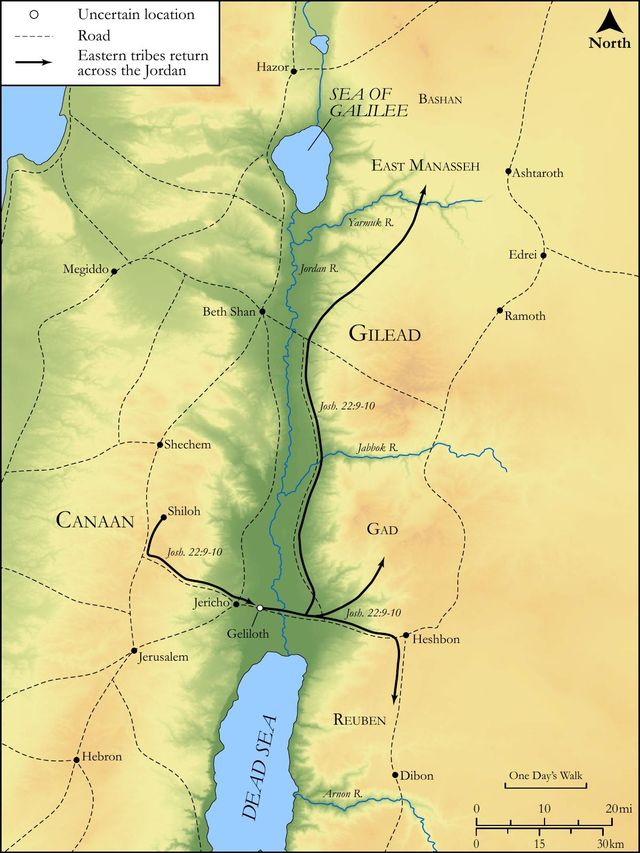
The historical backdrop for Joshua 22:4 is the immediate post-conquest era in Canaan, a crucial period transitioning from intense military campaigns to the establishment of settled, tribal life. For ancient Israel, land was far more than mere property; it was a sacred, tangible manifestation of God's covenant promises, particularly those made to Abraham regarding a permanent inheritance (Genesis 12:7). The Transjordanian tribes' unique situation arose from their earlier request to Moses to settle east of the Jordan River, a request granted on the explicit condition that they would participate fully and actively in the conquest of the western land before returning to their designated territory (Numbers 32:16-23). Their formal dismissal and return home in this verse signify the successful completion of this arduous, multi-year military obligation, allowing them to finally inhabit their divinely allotted "possession." The concept of "rest" (Hebrew: nûwach or menuchah) was profoundly significant, encompassing not just the cessation of warfare but also secure dwelling, peace, and freedom from hostile threats, representing a foundational blessing of the promised land.
Key Themes
ShowHideThis verse powerfully encapsulates several core theological and narrative themes central to the book of Joshua and the broader Old Testament. Firstly, Divine Faithfulness is paramount, as Joshua explicitly declares that "the LORD your God hath given rest unto your brethren, as he promised them." This echoes the overarching message of God's unwavering commitment to His covenant people, demonstrating His reliability in bringing every promise to fruition (Joshua 21:45). Secondly, Covenant Fidelity and Completion are highlighted through the formal dismissal of the Transjordanian tribes, who had diligently honored their solemn pledge to both Moses and Joshua. Their faithful service underscores the vital importance of corporate responsibility, loyalty, and perseverance within the covenant community. Thirdly, the theme of Inheritance and Rest is central, emphasizing the land as a divine gift and a place of secure dwelling, a tangible expression of God's blessing and a foundational element of Israel's national and spiritual identity. The phrase "land of your possession" reinforces the idea of a permanent, divinely allotted inheritance that guarantees their future and security.
Exposition and Analysis
ShowHideKey Word Analysis
ShowHideThis term signifies more than a mere cessation of warfare or physical quietude. It denotes a profound state of secure dwelling, settled existence, peace, and freedom from harassment by enemies. It encapsulates the ultimate goal of the conquest: a secure homeland where Israel could live and worship God without fear, reflecting the Sabbath rest from God's creative work (Genesis 2:2) and foreshadowing a deeper, spiritual rest.
A primitive root meaning "to speak," this word emphasizes God's direct, authoritative, and covenantal declaration. It highlights that the "rest" was not a happenstance but a deliberate, pre-ordained fulfillment of divine promises made over generations, particularly through Moses. It underscores God's active communication and His commitment to His word.
This term refers to something seized, i.e., a permanent holding, an inherited property, or an inalienable possession, especially of land. It underscores that the land given to the Transjordanian tribes was not temporary but a divinely allotted, secure inheritance, a tangible manifestation of God's faithfulness and their tribal identity, ensuring their permanent place within Israel.
Verse Breakdown
ShowHide"And now the LORD your God hath given rest unto your brethren, as he promised them:"
This opening clause attributes the success and peace directly to Yahweh (H3068), emphasizing His active role as the faithful, covenant-keeping God (H430). The "rest" (H5117) is presented as a divine gift, not merely a human achievement, and it is explicitly linked to God's prior promises (H1696), validating His word and demonstrating His unwavering reliability and sovereignty over historical events.
"therefore now return ye, and get you unto your tents,"
This is Joshua's direct command, serving as a formal dismissal and authorization for their departure. The word "tents" (H168) here functions as a metonymy for their homes and settled domestic life, signifying a transition from military encampment and shared duty to their established residences, families, and individual tribal responsibilities. It marks the successful conclusion of their corporate military service.
"[and] unto the land of your possession, which Moses the servant of the LORD gave you on the other side Jordan."
This specifies their ultimate destination – their inherited land (H776) of possession (H272). The phrase "Moses (H4872) the servant (H5650) of the LORD (H3068)" is a highly honored and authoritative designation, affirming Moses' divine commission and the legitimacy of the land distribution east of the Jordan. It also clearly distinguishes their inheritance geographically, emphasizing its location "on the other side (H5676) Jordan (H3383)," setting it apart from the land conquered by the other tribes to the west.
Literary Devices
ShowHideJoshua 22:4 employs several effective literary devices to convey its profound message of divine faithfulness and covenant fulfillment. The phrase "Moses the servant of the LORD" functions as a powerful Appellation, a formal and reverent title that lends immense authority and legitimacy to Moses' actions, particularly the allocation of land east of the Jordan. The entire verse serves as a Formal Dismissal, a ceremonial act marking the conclusion of a significant period of shared endeavor and the transition to a new phase of settled life for the Transjordanian tribes. This dismissal is deeply imbued with Covenantal Language, as it explicitly links the "rest" to God's "promised" word, underscoring the divine faithfulness that undergirds all of Israel's history. The verse also utilizes Metonymy through the use of "tents" to represent the homes and settled lives of the tribes, symbolizing their return to domesticity after years of military campaigning. Ultimately, the verse functions as a profound Affirmation, confirming God's unwavering reliability and the successful completion of a divinely mandated task through human obedience.
Theological and Thematic Connections
ShowHideJoshua 22:4 stands as a powerful testament to the unwavering faithfulness of God, demonstrating His meticulous fulfillment of promises made generations earlier. The "rest" granted to Israel, and the secure possession of their land, were not accidental outcomes but the direct result of God's sovereign plan and covenant commitment. This divine reliability forms the bedrock of Israel's theology, teaching them that Yahweh is a God who speaks and acts, bringing His word to fruition with precision. It also highlights the corporate nature of the covenant, where the faithfulness of a few (the Transjordanian tribes) contributes directly to the well-being and "rest" of the whole nation, and the collective obedience of Israel unlocks God's blessings. This physical rest in the land serves as a profound type and shadow of the ultimate spiritual rest God provides for His people.
Reflection and Application
ShowHideJoshua 22:4 offers timeless lessons for believers today, primarily centered on the profound faithfulness of God and the importance of human fidelity. Just as God meticulously fulfilled His promise of "rest" and land for ancient Israel, so too can we confidently trust in His unfailing promises in our lives, knowing that His character is immutable. This verse encourages us to patiently wait for God's perfect timing, knowing that His word will never return void, and that His plans for our peace and security will ultimately prevail. Furthermore, the diligent commitment of the Transjordanian tribes, who honored their pledge for years of arduous warfare, serves as a powerful example of integrity, perseverance, and corporate responsibility within the community of faith. It reminds us of the spiritual discipline required to fulfill our own God-given commitments, whether in our families, churches, workplaces, or communities. There is a deep, divine satisfaction and a sense of "rest" that accompanies the faithful completion of a task to which God has called us, knowing we have played our part in His larger redemptive story and honored His name through our obedience.
Questions for Reflection
ShowHideFAQ
ShowHideWhat is the significance of "rest" in this verse, and how does it relate to the broader biblical concept of rest?
ShowHideThe "rest" (Hebrew: nûwach or menuchah) in Joshua 22:4 signifies more than just a cessation of warfare. It represents a profound state of secure dwelling, peace, and freedom from enemies, enabling Israel to settle in their divinely promised land and worship God without fear. This concept is deeply rooted in the biblical narrative, reflecting God's own rest after creation (Genesis 2:2) and the foundational Sabbath principle. Throughout the Old Testament, it is consistently presented as the promised outcome of God's covenant faithfulness and obedience to His commands (Deuteronomy 12:10). In the New Testament, this physical rest in Canaan powerfully foreshadows the spiritual rest found in Jesus Christ, a rest from the striving of works, the burden of sin, and the anxieties of the world (Matthew 11:28).
Why are the Transjordanian tribes specifically addressed and dismissed in this chapter?
ShowHideThe tribes of Reuben, Gad, and the half-tribe of Manasseh had a unique and solemn covenantal obligation. While they chose to receive their inheritance east of the Jordan River from Moses (Numbers 32), they pledged to cross the Jordan with the other tribes and actively assist them in the arduous conquest of Canaan before returning to their own land. Joshua 22:4 marks the formal recognition and honorable dismissal of these tribes, signifying that they had faithfully fulfilled their arduous commitment, demonstrating their unwavering loyalty to the covenant and their Israelite brethren. Their departure underscores the successful completion of the primary phase of the conquest and the unity of the Israelite nation.
What does the title "Moses the servant of the LORD" signify in this context?
ShowHideThe title "Moses the servant of the LORD" (Hebrew: 'eved Yahweh) is a highly honored and profoundly significant designation used throughout the Old Testament, particularly in the book of Joshua. It signifies Moses' unique and intimate relationship with God, highlighting his unparalleled role as God's chosen instrument, mediator of the Law, and leader of Israel. In this specific context, it serves to legitimize the land allocation east of the Jordan, reminding the tribes that their inheritance was divinely given through God's appointed representative, Moses. It reinforces the continuity of God's covenant plan, executed first through Moses and now brought to completion through Joshua, emphasizing the divine authority behind all the land divisions.
Christ-Centered Fulfillment
ShowHideJoshua 22:4, while celebrating a physical rest and the secure possession of an earthly inheritance, profoundly foreshadows the ultimate and eternal rest and inheritance found exclusively in Jesus Christ. Just as Joshua led Israel into a promised land of rest from their enemies, Christ, our greater Joshua, leads His people into a spiritual rest from the bondage of sin, the futility of self-righteous striving, and the condemnation of the Law. The "rest" granted by God in Canaan was imperfect and temporary, often disrupted by Israel's disobedience and external conflicts. However, the rest Christ offers is perfect, eternal, and unshakeable: He lovingly invites all who are weary and burdened by life's struggles and the weight of sin to come to Him and find true rest for their souls (Matthew 11:28). This is the true Sabbath rest that remains for the people of God, a cessation from our own works and a trusting in His finished, redemptive work on the cross (Hebrews 4:9-10). Furthermore, the "land of your possession" points powerfully to our spiritual inheritance in Christ—not a physical territory, but a secure dwelling in God's eternal presence, an indestructible kingdom, and all the immeasurable spiritual blessings that come with being adopted children of God (Ephesians 1:11). Christ is the ultimate fulfillment of God's promise of peace and secure dwelling, offering a profound peace that the world cannot give, for He Himself is our peace (John 14:27; Ephesians 2:14).