


Genesis 17:23
- וַיִּקַּחvai·yi·Kachand he tookH3947Conj-w ¦ V-Qal-ConsecImperf-3msVerb Qal Consecutive Imperfect 3rd Singular Masculineוַandיִּקַּחhe took
- אַבְרָהָם'av·ra·HamAbrahamH85N-proper-mNoun Proper Masculine
- אֶת'et<obj.>H853DirObjMParticle Object Indicator
- יִשְׁמָעֵאלyish·ma·'ElIshmaelH3458N-proper-mNoun Proper Masculine
- בְּנוֹbe·Nohis sonH1121N-msc ¦ 3msNoun Singular Masculine Constructבְּנsonוֹhis
- וְאֵתve·'Etand <obj.>H853Conj-w ¦ DirObjMParticle Object Indicatorוְandאֵת<obj.>
- כָּלkolallH3605N-mscNoun Singular Masculine Construct
- יְלִידֵיye·li·Deithose born ofH3211N-mpcNoun Plural Masculine Construct
- בֵיתוֹvei·Tohis householdH1004N-msc ¦ 3msNoun Singular Masculine Constructבֵיתhouseholdוֹhis
- וְאֵתve·'Etand <obj.>H853Conj-w ¦ DirObjMParticle Object Indicatorוְandאֵת<obj.>
- כָּלkolallH3605N-mscNoun Singular Masculine Construct
- מִקְנַתmik·Nat[the] purchase ofH4736N-fscNoun Singular Feminine Construct
- כַּסְפּוֹkas·Pohis silverH3701N-msc ¦ 3msNoun Singular Masculine Constructכַּסְפּsilverוֹhis
- כָּלkoleveryH3605N-msNoun Singular Masculine Absolute
- זָכָרza·KharmaleH2145Adj-msAdjective Singular Masculine Absolute
- בְּאַנְשֵׁיbe·'an·Sheiamong [the] men ofH582Prep-b ¦ N-mpcNoun Plural Masculine Constructבְּamongאַנְשֵׁי[the] men of
- בֵּיתbeit[the] household ofH1004N-mscNoun Singular Masculine Construct
- אַבְרָהָם'av·ra·HamAbrahamH85N-proper-mNoun Proper Masculine
- וַיָּמָלvai·Ya·moland he circumcisedH4135Conj-w ¦ V-Qal-ConsecImperf-3msVerb Qal Consecutive Imperfect 3rd Singular Masculineוַandיָּמָלhe circumcised
- אֶת'et<obj.>H853DirObjMParticle Object Indicator
- בְּשַׂרbe·Sar[the] flesh ofH1320N-mscNoun Singular Masculine Construct
- עָרְלָתָם'a·re·la·Tamtheir foreskinH6190N-fsc ¦ 3mpNoun Singular Feminine Constructעָרְלָתָforeskinםtheir
- בְּעֶצֶםbe·'E·tzemon [the] substance ofH6106Prep-b ¦ N-fscNoun Singular Feminine Constructבְּonעֶצֶם[the] substance of
- הַיּוֹםhai·Yomthe dayH3117Art ¦ N-msNoun Singular Masculine Absoluteהַtheיּוֹםday
- הַזֶּהha·Zeh<the> thisH2088Art ¦ PrtParticle Demonstrativeהַ<the>זֶּהthis
- כַּאֲשֶׁרka·'a·Sherjust asH834Prep-k ¦ RelParticle Relativeכַּjustאֲשֶׁרas
- דִּבֶּרdi·Berhe had spokenH1696V-Piel-Perf-3msVerb Piel Perfect 3rd Singular Masculine
- אִתּוֹ'i·Towith himH854Prep ¦ 3msPreposition Definiteאִתּwithוֹhim
- אֱלֹהִים'E·lo·HimGodH430N-mpNoun Plural Masculine Absolute
English is a literal word-by-word gloss of the Hebrew, not the KJV's wording. Why?
This is the original text the KJV's translators worked from — each Hebrew word with its own literal English meaning in this verse, prepared by scholars at Tyndale House, Cambridge. The KJV translates whole sentences, not word by word, so its wording differs: one Hebrew word can become several English words, and the KJV may choose “the LORD” where the gloss reads “Yahweh”. Both are faithful — they answer different questions. For the KJV's own rendering, switch to the KJV text.
Details
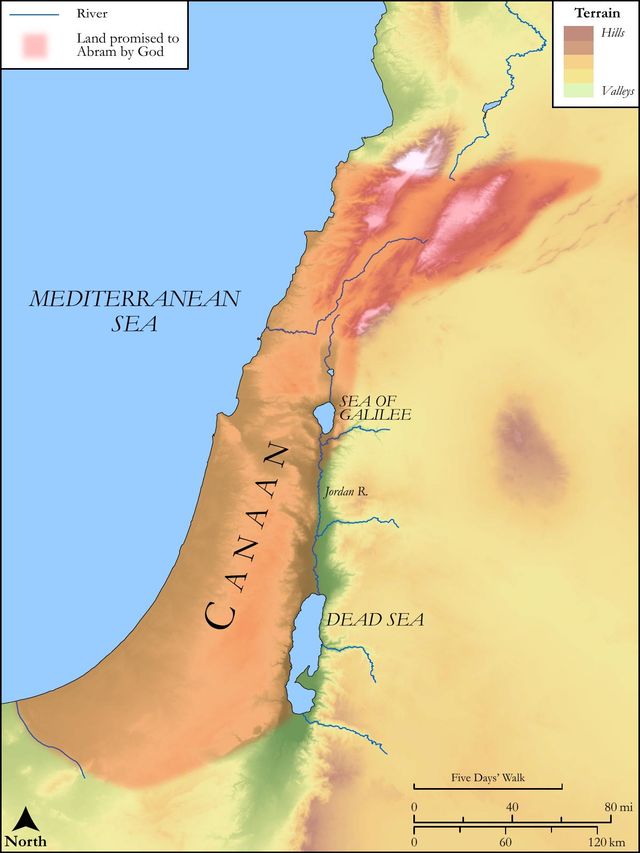
See on the biblical-era maps


Study this verse
Public-domain commentary
Matthew Henry
From his Commentary on the Whole Bible. Henry comments on passages, not single verses — this entry covers Genesis 17:23–27.
We have here Abraham's obedience to the law of circumcision. He himself and all his family were circumcised, so receiving the token of the covenant and distinguishing themselves from other families, that had no part nor lot in the matter. 1. It was an implicit obedience: He did as God had said to him, and did not ask why or wherefore. God's will was not only a law to him, but a reason; he did it because God told him. 2. It was a speedy obedience: In the self-same day, Gen 17:23, Gen 17:26. Sincere obedience is not dilatory, Psa 119:60. While the command is yet sounding in our ears, and the sense of duty is fresh, it is good to apply ourselves to it immediately, lest we deceive ourselves by putting it off to a more convenient season. 3. It was a universal obedience: He did not circumcise his family and excuse himself, but set them an example; nor did he take the comfort of the seal of the covenant to himself only, but desired that all his might share with him in it. This is a good example to masters of families; they and their houses must serve the Lord. Though God's covenant was not established with Ishmael, yet he was circumcised; for children of believing parents, as such, have a right to the privileges of the visible church, and the seals of the covenant, whatever they may prove afterwards. Ishmael is blessed, and therefore circumcised. 4. Abraham did this though much might be objected against it. Though circumcision was painful, - though to grown men it was shameful, - though, while they were sore and unfit for action, their enemies might take advantage against them, as Simeon and Levi did against the Shechemites, - though Abraham was ninety-nine years old, and had been justified and accepted of God long since, - though so strange a thing done religiously might be turned to his reproach by the Canaanite and the Perizzite that dwelt then in the land, - yet God's command was sufficient to answer these and a thousand such objection: what God requires we must do, not conferring with flesh and blood.
Continue studying Genesis 17:23 across the web’s major study libraries — every link below opens this exact verse, chapter, or book on the destination site.
Read & Compare
 BibleGatewayThis verse in more than 200 translations and 70 languages.
 Bible.comThe YouVersion reader — hundreds of translations, reading plans, and highlights.
 ESV.orgCrossway's official English Standard Version reader.
 NET BibleThe NET translation with 60,000+ translators' notes on every rendering decision.
 STEP BibleTyndale House's free study tool — original text, vocabulary, and scholarly resources.
 BibliaLogos Bible Software's free web reader.
 USCCBThe New American Bible (Revised Edition) with the U.S. bishops' study notes.
Commentaries
 BibleHub CommentariesDozens of classic commentaries on this verse, gathered on one page.
 StudyLightMore than 100 commentary sets — the largest collection on the web.
 BibleRefPlain-English commentary on what this verse means, verse by verse.
 Enduring WordDavid Guzik's free commentary on this chapter, widely used by Bible teachers.
 Bible Study ToolsVerse commentary alongside Greek and Hebrew study aids.
Original Language & Research
- BibleHub InterlinearThe verse word by word — original language, transliteration, and English.
- BibleHub LexiconEvery word's original-language definition and Strong's entry.
 Blue Letter BibleDeep-study tools — Strong's numbers, concordance, and word studies.
 SefariaThe Hebrew text with Rashi and centuries of Jewish commentary.
Sermons, Hymns & Audio


TrulyRandomVerse is not affiliated with these sites and doesn’t control their content. They’re linked because they’re genuinely useful.
Summary
Genesis 17:23 meticulously records Abraham's immediate and comprehensive obedience to God's covenant command, detailing the circumcision of every male in his household—including his son Ishmael, those born in his house, and those acquired by purchase—on the very day the divine directive was given. This swift and thorough action underscores Abraham's profound faith and unwavering commitment to the perpetual sign of the Abrahamic covenant, demonstrating a model of unreserved submission to the Almighty's will.
Context
ShowHideLiterary Context
This verse serves as the immediate and crucial response to God's detailed establishment of the covenant of circumcision in Genesis 17:1-22. Following the divine revelation where God reiterates His promises of a vast progeny, a son through Sarah (Isaac), and the everlasting possession of the land of Canaan, He institutes circumcision as an "everlasting covenant" (Genesis 17:7, 13). The preceding verses specify who is to be circumcised—every male, whether born in the house or bought with money—and the severe consequence for non-compliance: being "cut off from his people" (Genesis 17:14). Genesis 17:23 then directly illustrates Abraham's faithful and prompt execution of this weighty command, setting the stage for the subsequent narrative of Isaac's birth and the unfolding of God's promises.
Historical & Cultural Context
In the ancient Near East, various forms of bodily marking existed, sometimes for religious devotion, social status, or tribal identification. However, the circumcision commanded by God in Genesis 17 was unique in its specific theological purpose: it was a physical, perpetual sign of a covenant relationship with the one true God, distinguishing Abraham's descendants as His chosen people. The practice was not universally common among all surrounding cultures at this time, making its institution a distinct marker for the nascent Israelite community. The concept of a household (Hebrew: bayith) in this period was expansive, encompassing not only immediate family but also servants, slaves, and their families, all under the patriarch's authority and responsibility. Abraham's actions in this verse reflect the patriarchal head's absolute authority and spiritual responsibility for all within his domain.
Key Themes
ShowHideGenesis 17:23 powerfully contributes to several overarching themes within the book of Genesis and the broader biblical narrative. Foremost is the theme of Covenant and Promise, as circumcision becomes the tangible, physical mark of the Abrahamic covenant, signifying God's faithfulness and the unique relationship He initiates with His chosen people. It also highlights Obedience and Faith, demonstrating Abraham's immediate and comprehensive response to God's command, a hallmark of his character as "the father of all who believe" (Romans 4:11). The verse further emphasizes Divine Authority and Human Responsibility, as God's sovereign decree is met with Abraham's diligent fulfillment of his role as the covenant head. The inclusion of all males, including Ishmael, also touches on themes of Inclusion and Exclusion within the covenant community, even as the narrative later clarifies the specific lineage of the promise through Isaac in Genesis 21:1-5.
Exposition and Analysis
ShowHideGenesis 17:23 provides a concise yet profound account of Abraham's immediate and thorough obedience to God's covenant command, emphasizing the scope and promptness of his response.
Key Word Analysis
ShowHideThis primitive root means "to take" in a wide variety of applications, including to accept, bring, fetch, seize, or receive. In this context, it signifies Abraham's active and deliberate initiation of the command. It's not a passive reception but an assertive "taking hold" of the task.
Properly, "remembered," referring to a male (of man or animals) as being the most noteworthy sex. Here, it specifies the precise demographic for the covenant sign—every male, regardless of age or status within the household. This highlights the gender-specific nature of the physical sign of the Old Covenant.
From a root meaning "to be strong," this word refers to a bone (as strong) or, by extension, the body. Figuratively, it denotes the substance, or the "very" or "selfsame" thing. When combined with "day" (yôwm, H3117), it forms a powerful idiom meaning "that very day," "without delay," or "immediately," underscoring the urgency and absolute promptness of Abraham's obedience.
Verse Breakdown
ShowHide"And Abraham took Ishmael his son, and all that were born in his house, and all that were bought with his money"
This opening clause details the comprehensive scope of Abraham's obedience. It meticulously lists the categories of males circumcised: his biological son Ishmael, those born into his household (likely servants and their male offspring), and those acquired through purchase (slaves). This demonstrates Abraham's thoroughness; he did not limit the covenant sign to his direct family but extended it to every male under his authority, reflecting the communal nature of the covenant.
"every male among the men of Abraham's house"
This phrase serves as a summary and emphatic reiteration of the preceding list, ensuring no male within Abraham's extensive household was omitted. It underscores the universality of the command within his sphere of influence and Abraham's meticulous adherence to its full breadth.
"and circumcised the flesh of their foreskin"
This clause describes the specific action taken, the physical rite itself. The phrase "flesh of their foreskin" is a direct and explicit reference to the anatomical procedure, leaving no ambiguity about the nature of the covenant sign. It highlights the physical, tangible, and irreversible nature of the mark.
"in the selfsame day, as God had said unto him"
This concluding phrase provides crucial information regarding the timing and motivation of Abraham's actions. "In the selfsame day" emphasizes the immediate and unwavering nature of his obedience, demonstrating a faith that acts without hesitation. "As God had said unto him" confirms that Abraham's actions were a direct and complete fulfillment of the divine command given in Genesis 17:9-14, underscoring that his obedience was a direct response to divine revelation.
Literary Devices
ShowHideThe verse effectively employs Enumeration and Emphasis to highlight Abraham's comprehensive and immediate obedience. The detailed listing of "Ishmael his son, and all that were born in his house, and all that were bought with his money" serves as an enumeration, meticulously outlining the full extent of the circumcision. This exhaustive list underscores Abraham's thoroughness and the broad reach of the covenant within his household. Furthermore, the phrase "in the selfsame day" acts as a powerful Idiom (Hebrew: b'etzem hayom hazeh), emphasizing the promptness and lack of delay in Abraham's response. This idiomatic expression, literally "on the bone of this day," conveys absolute immediacy, reinforcing the theme of Abraham's unwavering faith and unreserved obedience to God's command.
Theological and Thematic Connections
ShowHideAbraham's swift and comprehensive obedience in Genesis 17:23 serves as a foundational example of faith expressed through action, demonstrating that genuine belief is not merely intellectual assent but leads to immediate and unreserved submission to God's revealed will. The institution of circumcision as a physical sign underscored the unique, exclusive, and perpetual nature of God's covenant with Abraham and his descendants, distinguishing them as a set-apart people. This act also highlights the patriarch's spiritual responsibility for his entire household, ensuring that all under his authority participated in the covenant relationship, setting a precedent for household dedication to God.
Reflection and Application
ShowHideAbraham's immediate and comprehensive obedience in Genesis 17:23 provides a profound lesson for believers today. It challenges us to examine the promptness and totality of our own response to God's revealed will. Do we hesitate, rationalize, or postpone when God speaks, or do we, like Abraham, act "in the selfsame day"? This passage also underscores the significant responsibility of spiritual leadership within our spheres of influence—be it family, church, or community. Just as Abraham ensured his entire household participated in the covenant sign, we are called to lead those under our care towards God's purposes, nurturing their spiritual well-being and encouraging their participation in the divine covenant. While the physical rite of circumcision is no longer required for Christians, the principle of a transformed heart and diligent obedience to God's commands remains central, reflecting the new covenant that emphasizes an inward, spiritual reality over outward rituals.
Questions for Reflection
ShowHideFAQ
ShowHideWhy was circumcision commanded for Abraham's entire household, not just his direct descendants?
ShowHideThe command for universal male circumcision within Abraham's household underscored the communal and inclusive nature of the Abrahamic covenant. It signified that all who were part of Abraham's extended family and under his authority—whether by birth or purchase—were also included in the covenant relationship with God, sharing in its blessings and responsibilities. This broad inclusion demonstrated God's desire for a dedicated people, extending beyond biological lineage to encompass all associated with the covenant head, establishing a collective identity marked by this unique sign.
What is the significance of the phrase "in the selfsame day"?
ShowHideThe phrase "in the selfsame day" (Hebrew: b'etzem hayom hazeh) is a powerful idiom that emphasizes Abraham's immediate, unwavering, and unreserved obedience. It signifies that there was no delay, no hesitation, and no questioning of God's command. This promptness highlights Abraham's deep faith and commitment, serving as a model for believers to respond swiftly and completely to God's revealed will, recognizing the urgency and authority of divine directives.
Why was Ishmael included in the circumcision if the covenant promise was to pass through Isaac?
ShowHideIshmael was Abraham's firstborn son and a recognized member of his immediate household, making him subject to the covenant command given to Abraham, the patriarch. While God had clarified that the covenant promises, particularly the lineage through which the Messiah would come, would be established through Isaac (Genesis 17:19), Ishmael was still acknowledged by God and received divine blessings, including the promise of becoming a great nation (Genesis 21:13). His inclusion in the circumcision demonstrated Abraham's comprehensive obedience to the letter of the law and the initial scope of the covenant's physical sign to all males within the patriarch's sphere of influence.
Christ-Centered Fulfillment
ShowHideGenesis 17:23, with its depiction of the physical rite of circumcision as a sign of the Old Covenant, finds its ultimate and profound fulfillment in Christ through the spiritual circumcision of the heart. The Old Testament ritual pointed forward to a deeper, internal transformation that Jesus accomplishes for His people. Through His atoning work on the cross and the power of His resurrection, believers are "circumcised with a circumcision made without hands, by putting off the body of the flesh, by the circumcision of Christ" (Colossians 2:11). This spiritual reality, accessible through faith in Jesus, transcends ethnic and physical distinctions, uniting all believers—Jew and Gentile—into the true people of God. They are the spiritual descendants of Abraham, marked not by a physical rite but by a new heart, cleansed from sin, and indwelt by the Holy Spirit, fulfilling the promise of a new covenant written on the heart. This spiritual circumcision signifies a complete separation from the old life of sin and a new identity in Christ, making believers "a new creation" (2 Corinthians 5:17) and the true "Israel of God" (Galatians 6:15-16).