


Exodus 29:33
Bible text: King James Version (1769 Blayney text) · Public domain
Bible text: Berean Standard Bible · Public domain
Bible text: American Standard Version (1901) · Public domain
Bible text: World English Bible, Messianic edition · Public domain
Bible text: Geneva Bible (1599) · Public domain
Bible text: Young's Literal Translation · Public domain
- וְאָכְלוּve·'a·khe·Luand they will eatH398Conj-w ¦ V-Qal-ConsecPerf-3cpVerb Qal Consecutive Perfect 3rd Plural common genderוְandאָכְלוּthey will eat
- אֹתָם'o·Tam<obj.> themH853DirObjM ¦ 3mpParticle Object Indicatorאֹתָ<obj.>םthem
- אֲשֶׁר'a·SherwhichH834RelParticle Relative
- כֻּפַּרku·Parit was atonedH3722V-Pual-Perf-3msVerb Pual Perfect 3rd Singular Masculine
- בָּהֶםba·Hemby <the> themPrep-b ¦ 3mpSuffix Personal 3rd Plural Masculineבָּby <the>הֶםthem
- לְמַלֵּאle·ma·Le'to fillH4390Prep-l ¦ V-Piel-InfVerb Piel Infinitive Constructלְtoמַלֵּאfill
- אֶת'et<obj.>H853DirObjMParticle Object Indicator
- יָדָםya·Damtheir handH3027N-csc ¦ 3mpNoun Singular common gender Constructיָדָhandםtheir
- לְקַדֵּשׁle·ka·Deshto consecrateH6942Prep-l ¦ V-Piel-InfVerb Piel Infinitive Constructלְtoקַדֵּשׁconsecrate
- אֹתָם'o·Tam<obj.> themH853DirObjM ¦ 3mpParticle Object Indicatorאֹתָ<obj.>םthem
- וְזָרve·Zarand a strangerH2114Conj-w ¦ Adj-msAdjective Singular Masculine Absoluteוְandזָרa stranger
- לֹאlo'notH3808NegParticle Negative
- יֹאכַלyo·Khalhe will eat [them]H398V-Qal-Imperf-3msVerb Qal Imperfect 3rd Singular Masculine
- כִּיkiforH3588PrtParticle Conditional
- קֹדֶשׁKo·desh[are] a holy thingH6944N-msNoun Singular Masculine Absolute
- הֵםHemtheyH1992Pro-3mpPronoun Personal 3rd Plural Masculine
English is a literal word-by-word gloss of the Hebrew, not the KJV's wording. Why?
This is the original text the KJV's translators worked from — each Hebrew word with its own literal English meaning in this verse, prepared by scholars at Tyndale House, Cambridge. The KJV translates whole sentences, not word by word, so its wording differs: one Hebrew word can become several English words, and the KJV may choose “the LORD” where the gloss reads “Yahweh”. Both are faithful — they answer different questions. For the KJV's own rendering, switch to the KJV text.
Details
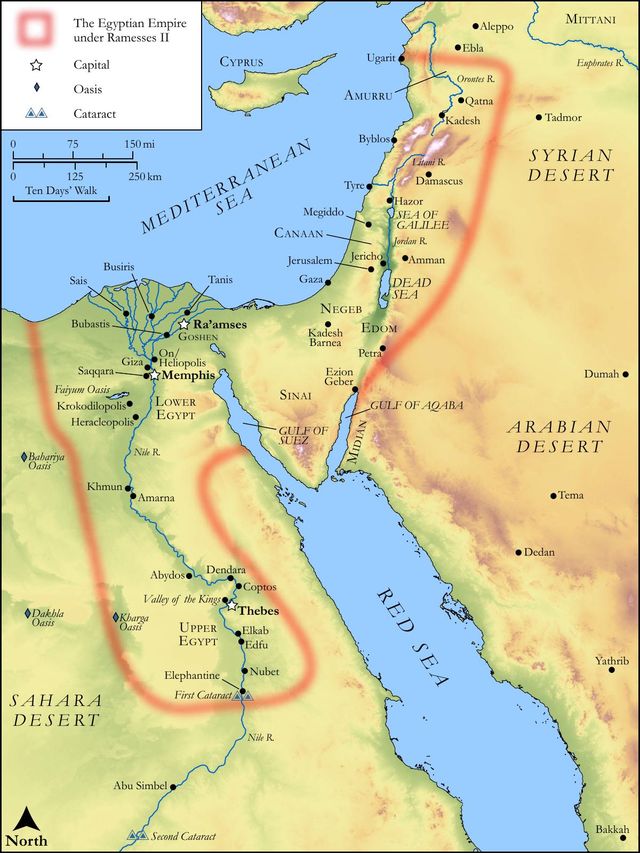
See on the biblical-era map
Study this verse
Public-domain commentary
Matthew Henry
From his Commentary on the Whole Bible. Henry comments on passages, not single verses — this entry covers Exodus 29:1–37. His four-level outline is real structure in the source text, so it is rendered as structure.
Here is, I. The law concerning the consecration of Aaron and his sons to the priest's office, which was to be done with a great deal of ceremony and solemnity, that they themselves might be duly affected with the greatness of the work to which they were called, and that the people also might learn to magnify the office and none might dare to invade it.
1.The ceremonies wherewith it was to be done were very fully and particularly appointed, because nothing of this kind had been done before, and because it was to be a statute for ever that the high priest should be thus inaugurated. Now,
(1.)The work to be done was the consecrating of the persons whom God had chosen to be priests, by which they devoted and gave up themselves to the service of God and God declared his acceptance of them; and the people were made to know that they glorified not themselves to be made priests, but were called of God, Heb 5:4, Heb 5:5. They were thus distinguished from common men, sequestered from common services, and set apart for God and an immediate attendance on him. Note, All that are to be employed for God are to be sanctified to him. The person must first be accepted, and then the performance. The Hebrew phrase for consecrating is filling the hand (Exo 29:9): Thou shalt fill the hand of Aaron and his sons, and the ram of consecration is the ram of fillings, Exo 29:22, Exo 29:26. The consecrating of them was the perfecting of them; Christ is said to be perfect or consecrated for evermore, Heb 7:28. Probably the phrase here is borrowed from the putting of the sacrifice into their hand, to be waved before the Lord, Exo 29:24. But it intimates,
[1.]That ministers have their hands full; they have no time to trifle, so great, so copious, so constant is their work.
[2.]That they must have their hands filled. Of necessity they must have something to offer, and they cannot find it in themselves, it must be given them from above. They cannot fill the people's hearts unless God fill their hands; to him therefore they must go, and receive from his fulness.
(2.)The person to do it was Moses, by God's appointment. Though he was ordained for men, yet the people were not to consecrate him; Moses the servant of the Lord, and his agent herein, must do it. By God's special appointment he now did the priest's work, and therefore that which was the priest's part of the sacrifice was here ordered to be his, Exo 29:26.
(3.)The place was at the door of the tabernacle of meeting, Exo 29:4. God was pleased to dwell in the tabernacle, the people attending in the courts, so that the door between the court and the tabernacle was the fittest place for those to be consecrated in who were to mediate between God and man, and to stand between both, and lay their hands (as it were) upon both. They were consecrated at the door, for they were to be door-keepers.
(4.)It was done with many ceremonies.
[1.]They were to be washed (Exo 29:4), signifying that those must be clean who bear the vessels of the Lord, Isa 52:11. Those that would perfect holiness must cleanse themselves from all filthiness of flesh and spirit, Co2 7:1; Isa 1:16-18. They were now washed all over; but afterwards, when they went in to minister, they washed only their hands and feet (Exo 30:19); for he that is washed needs no more, Joh 13:10.
[2.]They were to be clothed with the holy garments (Exo 29:5, Exo 29:6, Exo 29:8, Exo 29:9), to signify that it was not sufficient for them to put away the pollutions of sin, but they must put on the graces of the Spirit, be clothed with righteousness, Psa 132:9. They must be girded, as men prepared and strengthened for their work; and they must be robed and crowned, as men that counted their work and office their true honour.
[3.]The high priest was to be anointed with the holy anointing oil (Exo 29:7), that the church might be filled and delighted with the sweet savour of his administrations (for ointment and perfume rejoice the heart), and in token of the pouring out of the Spirit upon him, to qualify him for his work. Brotherly love is compared to this oil with which Aaron was anointed, Psa 133:2. The inferior priests are said to be anointed (Exo 30:30), not on their heads, as the high priest (Lev 21:10), the oil was only mingled with the blood that was sprinkled upon their garments.
[4.]Sacrifices were to be offered for them. The covenant of priesthood, as all other covenants, must be made by sacrifice.
First, There must be a sin-offering, to make atonement for them, Exo 29:10-14. The law made those priests that had infirmity, and therefore they must first offer for their own sin, before they could make atonement for the people, Heb 7:27, Heb 7:28. They were to put their hand on the head of their sacrifice (Exo 29:10), confessing that they deserved to die for their own sin, and desiring that the killing of the beast might expiate their guilt, and be accepted as a vicarious satisfaction. It was used as other sin-offerings were; only, whereas the flesh of other sin-offerings was eaten by the priests (Lev 10:18), in token of the priest's taking away the sin of the people, this was appointed to be all burnt without the camp (Exo 29:14), to signify the imperfection of the legal dispensation (as the learned bishop Patrick notes); for the sins of the priests themselves could not be taken away by those sacrifices, but they must expect a better high priest and a better sacrifice.
Secondly, There must be a burnt-offering, a ram wholly burnt, to the honour of God, in token of the dedication of themselves wholly to God and to his service, as living sacrifices, kindled with the fire and ascending in the flame of holy love, Exo 29:15-18. The sin-offering must first be offered and then the burnt-offering; for, till guilt be removed, no acceptable service can be performed, Isa 6:7.
Thirdly, There must be a peace-offering; it is called the ram of consecration, because there was more in this peculiar to the occasion than in the other two. In the burnt-offering God had the glory of their priesthood, in this they had the comfort of it; and, in token of a mutual covenant between God and them, 1. The blood of the sacrifice was divided between God and them (Exo 29:20, Exo 29:21); part of the blood was sprinkled upon the altar round about, and part put upon them, upon their bodies (Exo 29:20), and upon their garments, Exo 29:21. Thus the benefit of the expiation made by the sacrifice was applied and assured to them, and their whole selves from head to foot sanctified to the service of God. The blood was put upon the extreme parts of the body, to signify that it was all, as it were, enclosed and taken in for God, the tip of the ear and the great toe not excepted. We reckon that the blood and oil sprinkled upon garments spot and stain them; yet the holy oil, and the blood of the sacrifice, sprinkled upon their garments, must be looked upon as the greatest adorning imaginable to them, for they signified the blood of Christ, and the graces of the Spirit, which constitute and complete the beauty of holiness, and recommend us to God; we read of robes made white with the blood of the Lamb. 2. The flesh of the sacrifice, with the meat-offering annexed to it, was likewise divided between God and them, that (to speak with reverence) God and they might feast together, in token of friendship and fellowship. (1.) Part of it was to be first waved before the Lord, and then burnt upon the altar; part of the flesh (Exo 29:22), part of the bread, for bread and flesh must go together (Exo 29:23); these were first put into the hands of Aaron to be waved to and fro, in token of their being offered to God (who, though unseen, yet compasses us round on every side), and then they were to be burnt upon the altar (Exo 29:24, Exo 29:25), for the altar was to devour God's part of the sacrifice. Thus God admitted Aaron and his sons to be his servants, and wait at his table, taking the mat of his altar from their hands. Here, in a parenthesis, as it were, comes in the law concerning the priests' part of the peace-offerings afterwards, the breast and shoulder, which were now divided; Moses had the breast, and the shoulder was burnt on the altar with God's part, Exo 29:26-28. (2.) The other part, both of the flesh of the ram and of the bread, Aaron and his sons were to eat at the door of the tabernacle (Exo 29:31-33), to signify that he called them not only servants but friends, Joh 15:15. He supped with them, and they with him. Their eating of the things wherewith the atonement was made signified their receiving the atonement, as the expression is (Rom 5:11), their thankful acceptance of the benefit of it, and their joyful communion with God thereupon, which was the true intent and meaning of a feast upon a sacrifice. If any of it was left, it must be burnt, that it might not be in any danger of putrefying, and to show that it was an extraordinary peace-offering.
2.The time that was to be spent in this consecration: Seven days shalt thou consecrate them, Exo 29:35. Though all the ceremonies were performed on the first day, yet,
(1.)They were not to look upon their consecration as completed till the seven days' end, which put a solemnity upon their admission, and a distance between this and their former state, and obliged them to enter upon their work with a pause, giving them time to consider the weight and seriousness of it. This was to be observed in after-ages, Exo 29:30. He that was to succeed Aaron in the high-priesthood must put on the holy garments seven days together, in token of a deliberate and gradual advance into his office, and that one sabbath might pass over him in his consecration.
(2.)Every day of the seven, in this first consecration, a bullock was to be offered for a sin-offering (Exo 29:36), which was to intimate to them,
[1.]That it was of very great concern to them to get their sins pardoned, and that though atonement was made, and they had the comfort of it, yet they must still keep up a penitent sense of sin and often repeat the confession of it.
[2.]That those sacrifices which were thus offered day by day to make atonement could not make the comers thereunto perfect, for then they would have ceased to be offered, as the apostle argues, Heb 10:1, Heb 10:2. They must therefore expect the bringing in of a better hope.
3.This consecration of the priests was a shadow of good things to come.
(1.)Our Lord Jesus is the great high-priest of our profession, called of God to be so, consecrated for evermore, anointed with the Spirit above his fellows (whence he is called Messiah, the Christ), clothed with the holy garments, even with glory and beauty, sanctified by his own blood, not that of bullocks and rams (Heb 9:12), made perfect, or consecrated, through sufferings, Heb 2:10. Thus in him this was a perpetual statute, Exo 29:9.
(2.)All believers are spiritual priests, to offer spiritual sacrifices (Pe1 2:5), washed in the blood of Christ, and so made to our God priests, Rev 1:5, Rev 1:6. They also are clothed with the beauty of holiness, and have received the anointing, Jo1 2:27. Their hands are filled with work, to which they must continually attend; and it is through Christ, the great sacrifice, that they are dedicated to this service. His blood sprinkled upon the conscience purges it from dead works, that they may, as priests, serve the living God. The Spirit of God (as Ainsworth notes) is called the finger of God (Luk 11:20, compared with Mat 12:28), and by him the merit of Christ is effectually applied to our souls, as here Moses with his finger was to put the blood upon Aaron. It is likewise intimated that gospel ministers are to be solemnly set apart to the work of the ministry with great deliberation and seriousness both in the ordainers and in the ordained, as those that are to be employed in a great work and entrusted with a great charge.
II.The consecration of the altar, which seems to have been coincident with that of the priests, and the sin-offerings which were offered every day for seven days together had reference to the altar as well as the priests, Exo 29:36, Exo 29:37. An atonement was made for the altar. Though that was not a subject capable of sin, nor, having never yet been used, could it be said to be polluted with the sins of the people, yet, since the fall, there can be no sanctification to God but there must first be an atonement for sin, which renders us both unworthy and unfit to be employed for God. The altar was also sanctified, not only set apart itself to a sacred use, but made so holy as to sanctify the gifts that were offered upon it, Mat 23:19. Christ is our altar; for our sakes he sanctified himself, that we and our performances might be sanctified and recommended to God, Joh 17:19.
Continue studying Exodus 29:33 across the web’s major study libraries — every link below opens this exact verse, chapter, or book on the destination site.
Read & Compare
 BibleGatewayThis verse in more than 200 translations and 70 languages.
 Bible.comThe YouVersion reader — hundreds of translations, reading plans, and highlights.
 ESV.orgCrossway's official English Standard Version reader.
 NET BibleThe NET translation with 60,000+ translators' notes on every rendering decision.
 STEP BibleTyndale House's free study tool — original text, vocabulary, and scholarly resources.
 BibliaLogos Bible Software's free web reader.
 USCCBThe New American Bible (Revised Edition) with the U.S. bishops' study notes.
Commentaries
 BibleHub CommentariesDozens of classic commentaries on this verse, gathered on one page.
 StudyLightMore than 100 commentary sets — the largest collection on the web.
 BibleRefPlain-English commentary on what this verse means, verse by verse.
 Enduring WordDavid Guzik's free commentary on this chapter, widely used by Bible teachers.
 Bible Study ToolsVerse commentary alongside Greek and Hebrew study aids.
Original Language & Research
- BibleHub InterlinearThe verse word by word — original language, transliteration, and English.
- BibleHub LexiconEvery word's original-language definition and Strong's entry.
 Blue Letter BibleDeep-study tools — Strong's numbers, concordance, and word studies.
 SefariaThe Hebrew text with Rashi and centuries of Jewish commentary.
Sermons, Hymns & Audio


TrulyRandomVerse is not affiliated with these sites and doesn’t control their content. They’re linked because they’re genuinely useful.
Summary
Exodus 29:33 delineates a critical component of the ordination ceremony for Aaron and his sons as priests, stipulating that only they were permitted to consume specific portions of the consecrated sacrifices used for their atonement and consecration. This act of eating transcended a mere physical meal; it was a profound, sacred participation in the ritual, symbolizing their acceptance of and identification with the atoning work performed, and affirming their unique, divinely appointed status as holy mediators set apart for God's service. The strict prohibition against "strangers" partaking underscored the exclusive nature of the priesthood and the profound holiness of the offerings.
Context
ShowHideLiterary Context
This verse is intricately woven into the meticulous instructions for the ordination of Aaron and his sons as priests, detailed in Exodus 29. The preceding verses (Exodus 29:1-32) meticulously outline the elaborate sequence of sacrifices—a bull for a sin offering and two rams for a burnt offering and an ordination offering. These rituals, encompassing washing, anointing, dressing, and the application of blood, progressively set Aaron and his sons apart for divine service. The consumption of the holy portions of these sacrifices, particularly the ram of ordination, served as the climactic act of this consecration process, sealing their new identity and role. Following this verse, Exodus 29:34-46 continues with instructions for daily offerings and reiterates God's promise to dwell among His people, underscoring the ongoing nature of the priestly ministry established by this pivotal ordination.
Historical & Cultural Context
Among the nations, sacred meals were a common and deeply significant practice, often signifying the sealing of covenants, establishing fellowship with a god, or participating in a sacred act. For ancient Israel, the act of eating a portion of a sacrifice in the presence of God was a profound expression of communion and covenant relationship. The concept of "holiness" (Hebrew: qodesh) was foundational to Israelite religion, denoting that which is set apart for God and thus distinct, pure, and awe-inspiring. Access to that which was holy was meticulously regulated, reflecting God's absolute purity and transcendent nature. Only those ritually purified and divinely appointed could approach God in His sanctuary. The strict exclusion of a "stranger" (Hebrew: zar), meaning anyone not authorized or not belonging to the priestly lineage, reinforced the unique and exclusive nature of the Aaronic priesthood. This distinction was vital for maintaining the sanctity of the Tabernacle and the integrity of the sacrificial system, as tragically illustrated by the fate of Nadab and Abihu who disregarded these boundaries.
Key Themes
ShowHideExodus 29:33 contributes significantly to several overarching themes within the book of Exodus and the broader Pentateuch. The most prominent theme is Holiness and Separation, emphasizing God's absolute purity and the necessity for His people, especially His priests, to be set apart for Him. This verse highlights the Exclusive Nature of Priestly Mediation, showing that only those divinely chosen and consecrated could perform sacred duties and partake in holy offerings, thereby mediating between God and Israel. It also underscores the theme of Atonement and Consecration, demonstrating how the sacrificial system provided a means for sin to be covered and individuals to be made ritually pure and dedicated for divine service. The act of eating the consecrated portions, as outlined in this verse, is a tangible expression of Covenant Participation and Communion, symbolizing the priests' acceptance into God's service and their unique relationship with Yahweh, a theme echoed throughout the instructions for the Tabernacle and its rituals, as seen in Exodus 25:8.
Exposition and Analysis
ShowHideKey Word Analysis
ShowHideThe Hebrew verb H3722 (kâphar) fundamentally means "to cover," "to purge," or "to make propitiation." In the context of the sacrificial system, it refers to the ritual act by which sin is covered, cleansed, and reconciliation with God is achieved. Here, "wherewith the atonement was made" refers to the specific sacrifices (the bull and rams) whose blood and fat were offered to effect purification and reconciliation for Aaron and his sons, making them acceptable to God for priestly service. Their eating of the remaining consecrated portions signified their full identification with and reception of the benefits of this atoning work.
Both "consecrate" (derived from H4390 (mâlêʼ) and H3027 (yâd), meaning "to fill the hand" in a priestly sense) and "sanctify" (from H6942 (qâdash)) are used here. The underlying concept for both, particularly for "sanctify," is H6942 (qâdash), which means "to be set apart," "to be holy," or "to make holy." The dual emphasis on "consecrate" and "sanctify" underscores the thoroughness and divine nature of the process of making Aaron and his sons exclusively God's own. This was not merely a ceremonial act but a transformative one, setting them apart from the common and dedicating them entirely for sacred service, enabling them to approach a holy God on behalf of the people. This highlights both the act of setting apart and the resulting state of holiness.
Verse Breakdown
ShowHide"And they shall eat those things wherewith the atonement was made"
This clause specifies the consecrated portions of the sacrifices, particularly the ram of ordination, which were set apart for the priests. The act of eating these portions was not just a physical intake of food but a symbolic and spiritual participation in the atoning work that had just been performed. By consuming the elements that facilitated their reconciliation with God, the priests affirmed their acceptance of the atonement and their unique position as recipients and administrators of God's grace, now made ritually pure and fit for divine service.
"to consecrate [and] to sanctify them"
This phrase clarifies the profound purpose and effect of the priests' eating. The act of partaking in the holy sacrifices was integral to their consecration (being formally appointed and having their hands "filled" for service) and their sanctification (being made holy and set apart) for their priestly office. It was a physical manifestation of their spiritual transformation and dedication, solidifying their unique status as God's chosen servants, distinct from the rest of the community and uniquely qualified to mediate between God and Israel.
"but a stranger shall not eat [thereof], because they [are] holy"
This strict prohibition underscores the profound sacredness of the offerings and the exclusive nature of the priesthood. A "stranger" (Hebrew: H2114 (zûwr)) refers to anyone not authorized or not belonging to the priestly lineage—anyone outside the consecrated family of Aaron. The reason for this exclusion is explicitly stated: "because they are holy." The holiness of the offerings meant they were exclusively God's property, and only those whom God had set apart and made holy for Himself could partake without incurring divine wrath, reinforcing the idea that access to God's presence and sacred rituals was carefully regulated under the Old Covenant to maintain reverence and order.
Literary Devices
ShowHideThe verse employs several significant literary devices to convey its profound theological message. Exclusion is prominently featured, clearly delineating who can and cannot partake in the holy meal. This creates a stark contrast between the consecrated priests and the "stranger," emphatically highlighting the unique and set-apart status of the Aaronic priesthood and the sacred boundaries God established for worship. Symbolism is central, as the act of eating is not merely sustenance but a profound participation in the atonement and an affirmation of the priests' consecrated state. The food itself symbolizes the holy covenant and the divine acceptance of the priests into their sacred office. Furthermore, the repetition of the concept of "holiness" through the terms "consecrate," "sanctify," and "holy" (all derived from the same Hebrew root, qâdash, or related concepts of setting apart) serves as a powerful form of emphasis, underscoring the absolute purity and divine separation required for those who serve God and for the offerings presented to Him.
Theological and Thematic Connections
ShowHideExodus 29:33 powerfully illustrates the Old Covenant principles of holiness, atonement, and the exclusive nature of priestly mediation. The priests' eating of the consecrated sacrifices was a tangible sign of their identification with the atoning work and their unique covenant relationship with Yahweh. It underscored that access to God's presence and the benefits of His atonement were mediated through a specially appointed, consecrated class. This act of sacred communion symbolized their acceptance into God's service and their role in maintaining the spiritual purity of the community. The exclusion of the "stranger" reinforced the profound reverence due to God's holiness and the strict boundaries He established for approaching Him, emphasizing that only those divinely authorized could participate in the sacred.
Reflection and Application
ShowHideExodus 29:33, while rooted in the specific rituals of the Old Covenant, offers profound principles for contemporary believers. It reminds us of the absolute holiness of God and the reverence required in approaching Him. Just as the priests were set apart through a meticulous process, believers today are called to a life of consecration, set apart for God's purposes through the work of Christ. Our participation in the "holy things" of God, such as the study of His Word, prayer, worship, and the sacraments, should be approached with awe and gratitude, recognizing the immense privilege of communion with a holy God. This verse challenges us to consider how seriously we take our own spiritual consecration and our role as a "royal priesthood" in offering spiritual sacrifices of praise and service. It prompts us to reflect on the boundaries of holiness in our lives and how we distinguish between the sacred and the common, ensuring our lives reflect the set-apart nature of those who belong to Christ.
Questions for Reflection
ShowHideFAQ
ShowHideWhy was it so important that only the priests ate these specific offerings?
ShowHideIt was crucial because the offerings were "holy" (H6944 (qôdesh)), meaning they were set apart for God's exclusive use and were instrumental in making atonement and consecrating the priests. Eating these portions was not just a meal but a sacred act of participation in the atoning work and a profound symbol of the priests' unique, divinely appointed status. Only those consecrated by God could partake without incurring divine wrath, as seen in the tragic example of Nadab and Abihu. Their eating signified their acceptance into a covenant relationship with God and their fitness to serve as mediators for the people, ensuring the sanctity of the ritual and the divine order.
What does "wherewith the atonement was made" mean in practical terms?
ShowHideThis phrase refers to the specific sacrifices—a bull for a sin offering and two rams for burnt and ordination offerings—whose blood was sprinkled and parts were burned on the altar to purify and reconcile Aaron and his sons. The "atonement" (Hebrew: H3722 (kâphar)) involved covering their sins and making them acceptable to God for their priestly duties. The portions they ate were the remaining parts of these very sacrifices, symbolizing their full identification with the atoning work and their reception of its benefits, making them ritually clean and consecrated for service. It was a tangible sign of their purification and divine acceptance.
Christ-Centered Fulfillment
ShowHideExodus 29:33, with its emphasis on priestly consecration through atoning sacrifices and exclusive participation in holy things, finds its ultimate and perfect fulfillment in Jesus Christ. The Old Testament priests, by partaking of the sacrifices, were consecrated to mediate between God and humanity; yet, their atonement was temporary and had to be repeated continually. Jesus, however, is the Great High Priest who offered Himself as the perfect, once-for-all sacrifice for sin, making a complete and eternal atonement. Through His blood, He not only consecrated Himself but also consecrated all who believe, granting them direct access to God's presence, as profoundly declared in Hebrews 10:19-20. We, as believers, are now a "royal priesthood" (1 Peter 2:9), spiritually partaking in Christ's atoning work through faith. Our "eating" is not of animal sacrifices, but of the spiritual nourishment found in Christ, the Bread of Life, and in the sacrament of communion, where we symbolically partake of His body and blood, remembering His ultimate sacrifice that made us holy and brought us into an eternal covenant with God. The exclusion of the "stranger" in the Old Covenant highlighted the profound holiness of God and the strict boundaries for approaching Him; in the New Covenant, through Christ, all who believe are no longer strangers or foreigners but are brought near and made fellow citizens with the saints and members of God's household (Ephesians 2:19-20), consecrated to God by His boundless grace.