


Exodus 23:13
Bible text: King James Version (1769 Blayney text) · Public domain
Bible text: Berean Standard Bible · Public domain
Bible text: American Standard Version (1901) · Public domain
Bible text: World English Bible, Messianic edition · Public domain
Bible text: Geneva Bible (1599) · Public domain
Bible text: Young's Literal Translation · Public domain
- וּבְכֹלu·ve·Kholand to allH3605Conj-w ¦ Prep-b ¦ N-msNoun Singular Masculine Absoluteוּandבְtoכֹלall
- אֲשֶׁר'a·SherthatH834RelParticle Relative
- אָמַרְתִּי'a·Mar·tiI have saidH559V-Qal-Perf-1csVerb Qal Perfect 1st Singular common gender
- אֲלֵיכֶם'a·lei·Khemto youH413Prep ¦ 2mpPreposition Definiteאֲלֵיtoכֶםyou
- תִּשָּׁמֵרוּti·sha·Me·ruyou will take heedH8104V-Niphal-Imperf-2mpVerb Niphal Imperfect 2nd Plural Masculine
- וְשֵׁםve·Shemand [the] name ofH8034Conj-w ¦ N-mscNoun Singular Masculine Constructוְandשֵׁם[the] name of
- אֱלֹהִים'E·lo·HimgodsH430N-mpNoun Plural Masculine Absolute
- אֲחֵרִים'a·che·RimotherH312Adj-mpAdjective Plural Masculine Absolute
- לֹאlo'notH3808NegParticle Negative
- תַזְכִּירוּtaz·Ki·ruyou will bring to remembranceH2142V-Hiphil-Imperf-2mpVerb Hiphil Imperfect 2nd Plural Masculine
- לֹאlo'notH3808NegParticle Negative
- יִשָּׁמַעyi·sha·Ma'it will be heardH8085V-Niphal-Imperf-3msVerb Niphal Imperfect 3rd Singular Masculine
- עַל'alonH5921PrepPreposition
- פִּיךָPi·khayour mouthH6310N-msc ¦ 2msNoun Singular Masculine Constructפִּיmouthךָyour
English is a literal word-by-word gloss of the Hebrew, not the KJV's wording. Why?
This is the original text the KJV's translators worked from — each Hebrew word with its own literal English meaning in this verse, prepared by scholars at Tyndale House, Cambridge. The KJV translates whole sentences, not word by word, so its wording differs: one Hebrew word can become several English words, and the KJV may choose “the LORD” where the gloss reads “Yahweh”. Both are faithful — they answer different questions. For the KJV's own rendering, switch to the KJV text.
Details
See on the biblical-era maps

Study this verse
Public-domain commentary
Matthew Henry
From his Commentary on the Whole Bible. Henry comments on passages, not single verses — this entry covers Exodus 23:10–19. His two-level outline is real structure in the source text, so it is rendered as structure.
Here is, I. The institution of the sabbatical year, Exo 23:10, Exo 23:11. Every seventh year the land was to rest; they must not plough nor sow it at the beginning of the year, and then they could not expect any great harvest at the end of the year: but what the earth did produce of itself should be eaten from hand to mouth, and not laid up. Now this was designed, 1. To show what a plentiful land that was into which God was bringing them - that so numerous a people could have rich maintenance out of the produce of so small a country, without foreign trade, and yet could spare the increase of every seventh year. 2. To remind them of their dependence upon God their great landlord, and their obligation to use the fruit of their land as he should direct. Thus he would try their obedience in a matter that nearly touched their interest. Afterwards we find that their disobedience to this command was a forfeiture of the promises, Ch2 36:21. 3. To teach them a confidence in the divine Providence, while they did their duty - that, as the sixth day's manna served for two day's meat, so the sixth year's increase should serve for two years' subsistence. Thus they must learn not to take thought for their life, Mat 6:25. If we are prudent and diligent in our affairs, we may trust Providence to furnish us with the bread of the day in its day.
II.The repetition of the law of the fourth commandment concerning the weekly sabbath, Exo 23:12.
Even in the year of rest they must not think that the sabbath day was laid in common with the other days, but, even that year, it must be religiously observed; yet thus some have endeavoured to take away the observance of the sabbath, by pretending that every day must be a sabbath day.
III.All manner of respect to the gods of the heathen is here strictly forbidden, Exo 23:13.
A general caution is prefixed to this, which has reference to all these precepts: In all things that I have said unto you, be circumspect. We are in danger of missing our way on the right hand and on the left, and it is at our peril if we do; therefore we have need to look about us. A man may ruin himself through mere carelessness, but he cannot save himself without great care and circumspection: particularly, since idolatry was a sin which they were much addicted to, and would be greatly tempted to, they must endeavour to blot out the remembrance of the gods of the heathen, and must disuse and forget all their superstitious forms of speech, and never mention them but with detestation. In Christian schools and academies (for it is in vain to think of reforming the play-houses), it were to be wished that the names and stories of the heathen deities, or demons rather, were not so commonly and familiarly used as they are, even with intimations of respect, and sometimes with forms of invocation. Surely we have not so learned Christ.
IV.Their solemn religious attendance on God in the place which he should choose is here strictly required, Exo 23:14-17.
1.Thrice a year all their males must come together in a holy convocation, that they might the better know and love one another, and keep up their communion as a dignified and peculiar people.
2.They must come together before the Lord (Exo 23:17) to present themselves before him, looking towards the place where his honour dwelt, and to pay their homage to him as their great Lord, from and under whom they held all their enjoyments.
3.They must feast together before the Lord, eating and drinking together, in token of their joy in God and their grateful sense of his goodness to them; for a feast is made for laughter, Ecc 10:19. O what a good Master do we serve, who has made it our duty to rejoice before him, who feasts his servants when they are in waiting! Never let religion be called a melancholy thing, when its solemn services are solemn feasts.
4.They must not appear before God empty, Exo 23:15. Some free-will offering or other they must bring, in token of their respect and gratitude to their great benefactor; and, as they were not allowed to come empty-handed, so we must not come to worship God empty-hearted; our souls must be filled with grace, with pious and devout affections, holy desires towards him, and dedications of ourselves to him, for with such sacrifices God is well-pleased.
5.The passover, pentecost, and feast of tabernacles, in spring, summer, and autumn, were the three times appointed for their attendance: not in winter, because travelling was then uncomfortable; not in the midst of their harvest, because then they were otherwise employed; so that they had no reason to say that he made them to serve with an offering, or wearied them with incense.
V.Some particular directions are here given about the three feasts, though not so fully as afterwards.
1.As to the passover, it was not to be offered with leavened bread, for at that feast all leaven was to be cast out, nor was the fat of it to remain until the morning, lest it should become offensive, Exo 23:18.
2.At the feast of pentecost, when they were to begin their harvest, they must bring the first of their first-fruits to God, by the pious presenting of which the whole harvest was sanctified, Exo 23:19.
3.At the feast of ingathering, as it is called (Exo 23:16), they must give God thanks for the harvest-mercies they had received, and must depend upon him for the next harvest, and must not think to receive benefit by that superstitious usage of some of the Gentiles, who, it is said, at the end of their harvest, seethed a kid in its dam's milk, and sprinkled that milk-pottage, in a magical way, upon their gardens and fields, to make them more fruitful next year. But Israel must abhor such foolish customs.
Continue studying Exodus 23:13 across the web’s major study libraries — every link below opens this exact verse, chapter, or book on the destination site.
Read & Compare
 BibleGatewayThis verse in more than 200 translations and 70 languages.
 Bible.comThe YouVersion reader — hundreds of translations, reading plans, and highlights.
 ESV.orgCrossway's official English Standard Version reader.
 NET BibleThe NET translation with 60,000+ translators' notes on every rendering decision.
 STEP BibleTyndale House's free study tool — original text, vocabulary, and scholarly resources.
 BibliaLogos Bible Software's free web reader.
 USCCBThe New American Bible (Revised Edition) with the U.S. bishops' study notes.
Commentaries
 BibleHub CommentariesDozens of classic commentaries on this verse, gathered on one page.
 StudyLightMore than 100 commentary sets — the largest collection on the web.
 BibleRefPlain-English commentary on what this verse means, verse by verse.
 Enduring WordDavid Guzik's free commentary on this chapter, widely used by Bible teachers.
 Bible Study ToolsVerse commentary alongside Greek and Hebrew study aids.
Original Language & Research
- BibleHub InterlinearThe verse word by word — original language, transliteration, and English.
- BibleHub LexiconEvery word's original-language definition and Strong's entry.
 Blue Letter BibleDeep-study tools — Strong's numbers, concordance, and word studies.
 SefariaThe Hebrew text with Rashi and centuries of Jewish commentary.
Sermons, Hymns & Audio


TrulyRandomVerse is not affiliated with these sites and doesn’t control their content. They’re linked because they’re genuinely useful.
Summary
Exodus 23:13 stands as a pivotal and emphatic command at the culmination of the Book of the Covenant, demanding Israel's absolute and unreserved devotion to Yahweh. It mandates diligent adherence to all divine instructions previously given and, most strikingly, strictly prohibits the very mention or utterance of the names of other gods. This powerful injunction underscores God's singular sovereignty, His intolerance for any form of syncretism, and His unwavering commitment to safeguarding Israel's spiritual purity and complete separation from the idolatrous practices prevalent among surrounding nations.
Context
ShowHideLiterary Context
Exodus 23:13 serves as a profound concluding statement to the "Book of the Covenant" (Exodus 20:22-23:33), a crucial legislative corpus that immediately follows the foundational Ten Commandments received at Mount Sinai. This section meticulously expands upon the broad ethical and theological principles of the Decalogue, providing specific civil, social, and religious statutes designed to govern Israel's life as a unique covenant nation. The preceding verses detail laws concerning justice, the sanctity of the Sabbath, and the observance of the three annual pilgrimage feasts. This particular verse functions as a solemn, non-negotiable capstone, reinforcing the paramount importance of exclusive loyalty to God before the narrative transitions to divine promises of blessing and guidance for Israel's journey into the Promised Land, as detailed in Exodus 23:20-33. It stands as an ultimate, emphatic reminder that the validity and efficacy of all preceding laws are inextricably linked to and flow from the nation's singular and undivided allegiance to Yahweh, powerfully echoing the First Commandment in Exodus 20:3.
Historical & Cultural Context
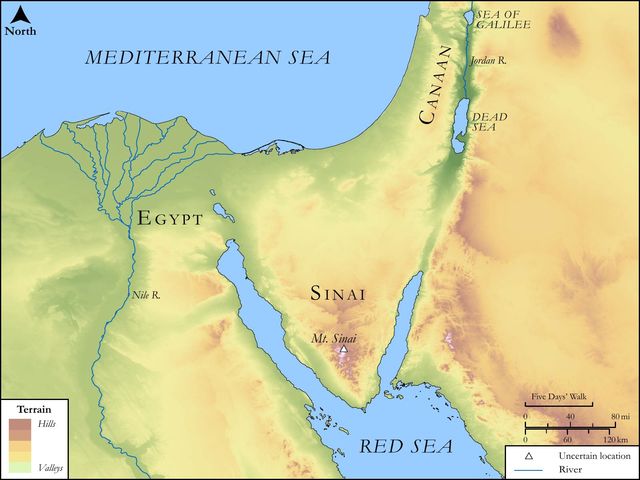
Ancient Israel stood between Egypt and Canaan, geographically and culturally surrounded by polytheistic nations. Surrounding nations, including the Canaanites, Egyptians, and Babylonians, worshipped a vast pantheon of gods and goddesses—deities like Baal (god of storms and fertility), Asherah (consort of Baal), Dagon, and Moloch (to whom child sacrifices were offered). These cults were not merely religious; they were deeply interwoven into the social, economic, and political fabric of their respective societies, often involving practices abhorrent to Yahweh, such as ritual prostitution, child sacrifice, and various forms of divination. God's command in Exodus 23:13 was a radical and counter-cultural call for Israel to be utterly distinct and set apart (holy) from these nations. The prohibition against even mentioning their names transcended mere avoidance of worship; it was a profound theological statement designed to eradicate any acknowledgment of their legitimacy, power, or even their perceived existence, thereby preventing syncretism and safeguarding Israel's unique, exclusive covenant relationship with the one true God. This absolute spiritual separation was indispensable for Israel's identity, purity, and survival as God's chosen people in a spiritually hostile environment.
Key Themes
ShowHideExodus 23:13 powerfully encapsulates several core theological and narrative themes central to the Pentateuch and the broader biblical narrative. Foremost among these is Monotheism and Exclusive Allegiance, asserting Yahweh's singular existence and demanding Israel's undivided loyalty in a polytheistic world. This command is a direct outworking of God's Holiness and Jealousy for His Glory, demonstrating that He will not share His praise or His people's devotion with any false deity. It also highlights the theme of Separation and Purity, calling Israel to be distinct from the idolatrous nations around them, not just in practice but even in thought and speech. Furthermore, the verse underscores the Power of the Spoken Word and the Significance of Names in Hebrew thought, where mentioning a name could signify acknowledgment or invocation, thus emphasizing the need to guard one's speech as an extension of one's worship. This theme of verbal purity is vital for maintaining the integrity of the covenant, as seen throughout the law, particularly in the prohibition against taking God's name in vain in Exodus 20:7.
Exposition and Analysis
ShowHideKey Word Analysis
ShowHideThe King James Version translates the Hebrew verb שָׁמַר (H8104, shâmar') as "be circumspect." This primitive root properly means "to hedge about (as with thorns), i.e., guard." By implication, it extends to "protect, attend to, keep, observe, preserve, or diligently attend to." In this context, it calls for more than passive awareness; it denotes active, careful, and vigilant adherence to all the divine commands previously given. It is a command to proactively guard and preserve the covenant relationship by meticulously observing God's instructions, ensuring no deviation or compromise.
The Hebrew verb זָכַר (H2142, zâkar') is a primitive root meaning "to mark (so as to be recognized), i.e., to remember." By implication, it means "to mention, recount, or bring to remembrance." The negative imperative "make no mention" (לֹא תַזְכִּירוּ) is a potent prohibition. It means not to bring the names of other gods into memory, not to invoke them, and not to speak of them in a way that acknowledges their existence, power, or legitimacy. This command extends beyond merely refraining from worship; it demands a purging of their very names from Israelite consciousness and vocabulary, preventing any subtle legitimization or acknowledgment of their reality.
The phrase אֱלֹהִים אֲחֵרִים (H430, ʼĕlôhîym' H312, ʼachêr') literally translates to "other gods" or "foreign gods." The term ʼĕlôhîym' (H430) refers to "gods in the ordinary sense," though it can also refer to the supreme God or even magistrates. Here, combined with ʼachêr' (H312), meaning "other" or "strange," it consistently refers to the multitude of false deities worshipped by surrounding nations, in stark contrast to Yahweh, the one true God. The command emphasizes that Yahweh is utterly unique and incomparable, and His people are to acknowledge no other divine authority or power. The very existence of "other gods" is negated within the Israelite theological framework, and this command reinforces that negation, demanding exclusive devotion to the Lord alone.
Verse Breakdown
ShowHide"And in all [things] that I have said unto you be circumspect"
This clause functions as a comprehensive summary and concluding exhortation to the entire Book of the Covenant. It demands diligent, careful, and vigilant observance of every statute, ordinance, and principle God has delivered. The imperative to "be circumspect" (from shâmar') indicates that Israel's obedience must be active, watchful, and protective of the covenant relationship. It is a call to guard God's commands in their hearts and minds, ensuring no deviation, compromise, or neglect of His revealed will.
"and make no mention of the name of other gods"
This is a radical and absolute prohibition. In Hebrew thought, a "name" was often believed to embody the very essence, power, and authority of the person or deity it represented. To "mention the name" could imply acknowledgment, invocation, or even a subtle legitimization of that deity's existence or power. God's command here is not just against worshipping other gods, but against even giving them the slightest recognition through speech. It demands a complete erasure of their names from Israel's public and private discourse, preventing any form of syncretism or dual allegiance.
"neither let it be heard out of thy mouth"
This phrase powerfully reinforces the preceding prohibition with an additional layer of emphasis and practical application. It is not enough to simply avoid making mention of these names; one must also ensure that such names are never uttered or heard from their own lips. This highlights the profound power of speech and its potential to either honor or dishonor God. It also implies a personal responsibility to guard one's own speech and perhaps even to avoid environments or conversations where such names are regularly invoked, ensuring a complete and uncompromising separation from idolatrous influence and thought patterns.
Literary Devices
ShowHideExodus 23:13 employs several potent literary devices to convey its absolute and uncompromising command. The most prominent is Emphasis achieved through Negative Parallelism and Repetition. The phrase "make no mention of the name of other gods, neither let it be heard out of thy mouth" uses two distinct yet complementary negative commands to convey a single, unified, and absolute prohibition. This double negation intensifies the command, leaving no room for ambiguity or partial obedience, thereby highlighting the radical nature of God's demand for exclusive devotion. Furthermore, the text utilizes Metonymy, where "name" stands for the entire being, essence, power, and authority of the "other gods." To not mention their name is to deny their very existence and power, effectively rendering them null and void in the Israelite consciousness. The command also borders on Hyperbole to underscore the gravity of idolatry; it's not merely about avoiding physical worship, but about completely purging any linguistic, conceptual, or even auditory acknowledgment of false deities, suggesting an extreme measure to ensure absolute spiritual purity and unwavering loyalty to Yahweh alone.
Theological and Thematic Connections
ShowHideExodus 23:13 encapsulates a core theological truth: the absolute sovereignty, uniqueness, and incomparable nature of Yahweh, the God of Israel. It underscores the foundational principle of biblical monotheism in a world saturated with polytheism, demanding Israel's exclusive allegiance and unequivocally rejecting any form of syncretism. This command is a practical and profound outworking of the First Commandment, emphasizing that God's people must not only refrain from worshipping other gods but also actively purge their influence, their very names, from their consciousness and speech. It speaks to God's inherent holiness and His fierce jealousy for His glory, asserting that He will not share His praise, His people, or His unique status with idols. The purity of speech, therefore, is directly linked to the purity of worship and the integrity of the covenant relationship, serving as a vital safeguard against spiritual compromise.
Reflection and Application
ShowHideWhile contemporary believers may not face literal pagan deities like Baal or Asherah, the profound spiritual principles embedded in Exodus 23:13 remain acutely relevant for our lives today. This verse issues a timeless call to a vigilant, uncompromising, and exclusive devotion to the one true God, ensuring that nothing else usurps His rightful place in our hearts, minds, or speech. Modern "gods" often manifest as subtle idols: the pursuit of wealth, status, self-indulgence, entertainment, political ideologies, or even good things that become ultimate things, subtly demanding our allegiance and attention. The command to "be circumspect" challenges us to actively guard our spiritual purity, discerning and resisting influences that subtly erode our singular allegiance to Christ. This includes a conscious awareness of the media we consume, the conversations we engage in, and the ideas we promote, ensuring they do not inadvertently legitimize or give credibility to values, philosophies, or worldviews contrary to God's revealed truth. Our words, too, must reflect our exclusive devotion, avoiding speech that dishonors God, trivializes His holiness, or gives undue prominence to worldly pursuits. This verse is a powerful and enduring call to holy separation and unwavering loyalty, ensuring our entire being is dedicated to Him alone.
Questions for Reflection
ShowHideFAQ
ShowHideWhy was it so important for the Israelites not to even mention the names of other gods?
ShowHideIn Hebrew thought, a name was often seen as embodying the essence, power, and even presence of the entity it represented. To "mention" a god's name was not merely to utter a word; it could imply acknowledgment of their existence, a tacit legitimization of their power, or even an invocation. God's command in Exodus 23:13 was a radical and comprehensive measure to ensure Israel's absolute separation from idolatry and polytheism. It went beyond prohibiting worship to prevent any form of syncretism—the dangerous blending of Yahweh worship with pagan practices. By not even allowing their names to be spoken, God aimed to purge the very thought and influence of these false deities from Israel's consciousness, safeguarding their unique, exclusive covenant relationship with Him as the one true, incomparable God.
Does this command mean we can't study other religions or mention historical figures who worshipped idols?
ShowHideNo, the command in Exodus 23:13 is primarily concerned with the acknowledgment, legitimization, or invocation of false gods, not with academic study or historical reference. The intent was to prevent Israel from falling into active idolatry or syncretism, which was a constant, pervasive temptation in the lands round about. For contemporary believers, studying other religions or historical contexts where idols were worshipped can be incredibly valuable for understanding history, culture, and even for apologetics, as long as it does not lead to a compromise of one's exclusive devotion to God. The key is the heart's posture and the purpose of the mention: Is it to honor, acknowledge, or legitimize the false god, or is it for informational, analytical, or cautionary purposes within a framework of unwavering monotheistic faith? The emphasis is on guarding one's heart and speech from anything that would subtly diminish God's supreme authority or lead one away from Him.
Christ-Centered Fulfillment
ShowHideExodus 23:13, with its radical demand for exclusive devotion to Yahweh and the purging of all other divine names, finds its ultimate fulfillment and deepest meaning in the person and work of Jesus Christ. The Old Testament command to acknowledge no other god but Yahweh foreshadows the New Testament's call to worship and serve Christ alone, for He is the full and perfect revelation of God in human flesh, "the image of the invisible God". Jesus Himself declared, "No one can serve two masters," demanding a singular and undivided allegiance that transcends all worldly attachments and rival claims. He is the "way, the truth, and the life," the exclusive path to the Father, rendering all other spiritual paths or "gods" utterly void and powerless. Under the New Covenant, the concept of idolatry expands from merely bowing to physical statues to encompass anything that replaces God in our hearts and affections, urging us to "put to death... covetousness, which is idolatry" and to "flee from idolatry" in all its subtle and overt forms. In Christ, the purity of speech and thought demanded in Exodus 23:13 is transformed into a call for our entire lives to be a living testimony to His supremacy, where every word, thought, and action reflects His glory and acknowledges His unique Lordship over all creation. He is the "name above every name," before whom "every knee should bow, in heaven and on earth and under the earth, and every tongue acknowledge that Jesus Christ is Lord, to the glory of God the Father" (Philippians 2:9-11).