


2 Chronicles 36:21
- לְמַלֹּאותle·ma·Lotto fulfillH4390Prep-l ¦ V-Piel-InfVerb Piel Infinitive Constructלְtoמַלֹּאותfulfill
- דְּבַרde·var[the] word ofH1697N-mscNoun Singular Masculine Construct
- יְהוָהYah·wehYahwehH3068N-properNoun Proper Title
- בְּפִיbe·Fiby [the] mouth ofH6310Prep-b ¦ N-mscNoun Singular Masculine Constructבְּbyפִי[the] mouth of
- יִרְמְיָהוּyir·me·Ya·huJeremiahH3414N-proper-mNoun Proper Masculine
- עַד'aduntilH5704PrepPreposition
- רָצְתָהra·tze·Tahit has acceptedH7521V-Qal-Perf-3fsVerb Qal Perfect 3rd Singular Feminine
- הָאָרֶץha·'A·retzthe landH776Art ¦ N-fsNoun Singular Feminine Absoluteהָtheאָרֶץland
- אֶת'et<obj.>H853DirObjMParticle Object Indicator
- שַׁבְּתוֹתֶיהָsha·be·to·Tei·haits sabbathsH7676N-fpc ¦ 3fsNoun Plural Feminine Constructשַׁבְּתוֹתֶיsabbathsהָits
- כָּלkolallH3605N-mscNoun Singular Masculine Construct
- יְמֵיye·Mei[the] days ofH3117N-mpcNoun Plural Masculine Construct
- הָשַּׁמָּהha·sha·Mahthe desolation of itH8074Art ¦ N-fs ¦ 3fsNoun Singular Feminine Absoluteהָtheשַּׁמָּdesolationהof it
- שָׁבָתָהsha·Va·tahit restedH7673V-Qal-Perf-3fsVerb Qal Perfect 3rd Singular Feminine
- לְמַלֹּאותle·ma·Lotto completeH4390Prep-l ¦ V-Piel-InfVerb Piel Infinitive Constructלְtoמַלֹּאותcomplete
- שִׁבְעִיםshiv·'ImseventyH7657N-mpNoun Plural Masculine Absolute
- שָׁנָהsha·Nahyear[s]H8141N-fsNoun Singular Feminine Absolute
English is a literal word-by-word gloss of the Hebrew, not the KJV's wording. Why?
This is the original text the KJV's translators worked from — each Hebrew word with its own literal English meaning in this verse, prepared by scholars at Tyndale House, Cambridge. The KJV translates whole sentences, not word by word, so its wording differs: one Hebrew word can become several English words, and the KJV may choose “the LORD” where the gloss reads “Yahweh”. Both are faithful — they answer different questions. For the KJV's own rendering, switch to the KJV text.
Details
See on the biblical-era maps
Study this verse
Public-domain commentary
Matthew Henry
From his Commentary on the Whole Bible. Henry comments on passages, not single verses — this entry covers 2 Chronicles 36:11–21. His three-level outline is real structure in the source text, so it is rendered as structure.
We have here an account of the destruction of the kingdom of Judah and the city of Jerusalem by the Chaldeans. Abraham, God's friend, was called out of that country, from Ur of the Chaldees, when God took him into covenant and communion with himself; and now his degenerate seed were carried into that country again, to signify that they had forfeited all that kindness wherewith they had been regarded for the father's sake, and the benefit of that covenant into which he was called; all was now undone again. Here we have,
I.The sins that brought this desolation.
1.Zedekiah, the king in whose days it came, brought it upon himself by his own folly; for he conducted himself very ill both towards God and towards the king of Babylon.
(1.)If he had but made God his friend, that would have prevented the ruin. Jeremiah brought him messages from God, which, if he had given due regard to them, might have secured a lengthening of his tranquillity; but it is here charged upon him that he humbled not himself before Jeremiah, Ch2 36:12. It was expected that this mighty prince, high as he was, should humble himself before a poor prophet, when he spoke from the mouth of the Lord, should submit to his admonitions and be amended by them, to his counsels and be ruled by them, should lay himself under the commanding power of the word of God in his mouth; and, because he would not thus make himself a servant to God, he was made a slave to his enemies. God will find some way or other to humble those that will not humble themselves. Jeremiah, as a prophet, was set over the nations and kingdoms (Jer 1:10), and, as mean a figure as he made, whoever would not humble themselves before him found that it was at their peril.
(2.)If he had but been true to his covenant with the king of Babylon, that would have prevented his ruin; but he rebelled against him, though he had sworn to be his faithful tributary, and perfidiously violated his engagements to him, Ch2 36:13. It was this that provoked the king of Babylon to deal so severely with him as he did. All nations looked upon an oath as a sacred thing, and on those that durst break through the obligations of it as the worst of men, abandoned of God and to be abhorred by all mankind. If therefore Zedekiah falsify his oath, when, lo, he has given his hand, he shall not escape, Eze 17:18. Though Nebuchadnezzar was a heathen, an enemy, yet if, having sworn to him, he be false to him, he shall know there is a God to whom vengeance belongs. The thing that ruined Zedekiah was not only that he turned not to the Lord God of Israel, but that he stiffened his neck and hardened his heart from turning to him, that is, he as obstinately resolved not to return to him, would not lay his neck under God's yoke nor his heart under the impressions of his word, and so, in effect, he would not be healed, he would not live.
2.The great sin that brought this destruction was idolatry. The priests and people went after the abominations of the heathen, forsook the pure worship of God for the lewd and filthy rites of the Pagan superstition, and so polluted the house of the Lord, Ch2 36:14. The priests, the chief of the priests, who should have opposed idolatry, were ring-leaders in it. That place is not far from ruin in which religion is already ruined.
3.The great aggravation of their sin, and that which filled the measure of it, was the abuse they gave to God's prophets, who were sent to call them to repentance, Ch2 36:15, Ch2 36:16. Here we have,
(1.)God's tender compassion towards them in sending prophets to them. Because he was the God of their fathers, in covenant with them, and whom they worshipped (though this degenerate race forsook him), therefore he sent to them by his messengers, to convince them of their sin and warn them of the ruin they would bring upon themselves by it, rising up betimes and sending, which denotes not only that he did it with the greatest care and concern imaginable, as men rise betimes to set their servants to work when their heart is upon their business, but that, upon their first deviation from God to idols, if they took but one step that way, God immediately sent to them by his messengers to reprove them for it. He gave them early timely notice both of their duty and danger. Let this quicken us to seek God early, that he rises betimes to send to us. The prophets that were sent rose betimes to speak to them, were diligent and faithful in their office, lost no time, slipped no opportunity of dealing with them; and therefore God is said to rise betimes. The more pains ministers take in their work the more will the people have to answer for if it be all in vain. The reason given why God by his prophets did thus strive with them is because he had compassion on his people and on his dwelling-place, and would by these means have prevented their ruin. Note, The methods God takes to reclaim sinners by his word, by ministers, by conscience, by providences, are all instances of his compassion towards them and his unwillingness that any should perish.
(2.)Their base and disingenuous carriage towards God (Ch2 36:16): They mocked the messengers of God (which was a high affront to him that sent them), despised his word in their mouths, and not only so, but misused the prophets, treating them as their enemies. The ill usage they gave Jeremiah who lived at this time, and which we read much of in the book of his prophecy, is an instance of this. This was an evidence of an implacable enmity to God, and an invincible resolution to go on in their sins. This brought wrath upon them without remedy, for it was sinning against the remedy. Nothing is more provoking to God than abuses given to his faithful ministers; for what is done against them he takes as done against himself. Saul, Saul, why persecutest thou me? Persecution was the sin that brought upon Jerusalem its final destruction by the Romans. See Mat 23:34-37. Those that mock at God's faithful ministers, and do all they can to render them despicable or odious, that vex and misuse them, to discourage them and to keep others from hearkening to them, should be reminded that a wrong done to an ambassador is construed as done to the prince that sends him, and that the day is coming when they will find it would have been better for them if they had been thrown into the sea with a mill-stone about their necks; for hell is deeper and more dreadful.
II.The desolation itself, and some few of the particular so fit, which we had more largely Kg2 25:1.
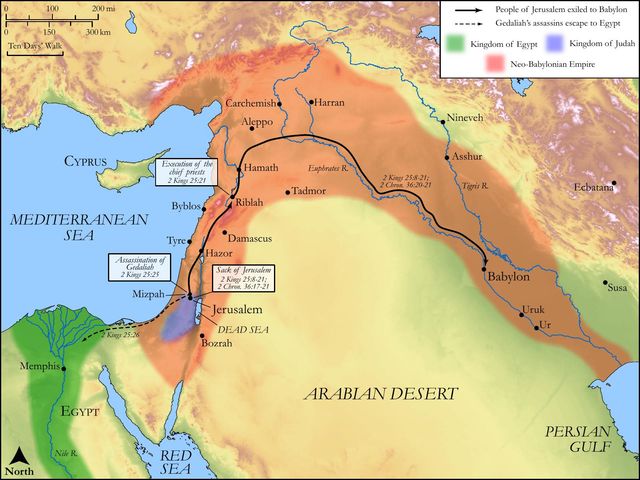
Multitudes were put to the sword, even in the house of their sanctuary (Ch2 36:17), whither they fled for refuge, hoping that the holiness of the place would be their protection. But how could they expect to find it so when they themselves had polluted it with their abominations? Ch2 36:14. Those that cast off the dominion of their religion forfeit all the benefit and comfort of it. The Chaldeans not only paid no reverence to the sanctuary, but showed no natural pity either to the tender sex or to venerable age. They forsook God, who had compassion on them (Ch2 36:15), and would have none of him; justly therefore are they given up into the hands of cruel men, for they had no compassion on young man or maiden. 2. All the remaining vessels of the temple, great and small, and all the treasures, sacred and secular, the treasures of God's house and of the king and his princes, were seized, and brought to Babylon, Ch2 36:18. 3. The temple was burnt, the walls of Jerusalem were demolished, the houses (called here the palaces, as Psa 48:3, so stately, rich, and sumptuous were they) laid in ashes, and all the furniture, called here the goodly vessels thereof, destroyed, Ch2 36:19. Let us see where what woeful havock sin makes, and, as we value the comfort and continuance of our estates, keep that worm from the root of them. 4. The remainder of the people that escaped the sword were carried captives to Babylon (Ch2 36:20), impoverished, enslaved, insulted, and exposed to all the miseries, not only of a strange and barbarous land, but of an enemy's land, where those that hated them bore rule over them. They were servants to those monarchs, and no doubt were ruled with rigour so long as that monarchy lasted. Now they sat down by the rivers of Babylon, with the streams of which they mingled their tears, Psa 137:1. And though there, it should seem, they were cured of idolatry, yet, as appears by the prophet Ezekiel, they were not cured of mocking the prophets. 5. The land lay desolate while they were captives in Babylon, Ch2 36:21. That fruitful land, the glory of all lands, was now turned into a desert, not tilled, nor husbanded. The pastures were not clothed as they used to be with flocks, nor the valleys with corn, but all lay neglected. Now this may be considered, (1.) As the just punishment of their former abuse of it. They had served Baal with its fruits; cursed therefore is the ground for their sakes. Now the land enjoyed her sabbaths; (Ch2 36:21), as God had threatened by Moses, Lev 26:34, and the reason there given (v. 35) is, "Because it did not rest on your sabbaths; you profaned the sabbath-day, did not observe the sabbatical year." They many a time ploughed and sowed their land in the seventh year, when it should have rested, and now it lay unploughed and unsown for ten times seven years. Note, God will be no loser in his glory at last by the disobedience of men: if the tribute be not paid, he will distrain and recover it, as he speaks, Hos 2:9. If they would not let the land rest, God would make it rest whether they would or no. Some think they had neglected the observance of seventy sabbatical years in all, and just so many, by way of reprisal, the land now enjoyed; or, if those that had been neglected were fewer, it was fit that the law should be satisfied with interest. We find that one of the quarrels God had with them at this time was for not observing another law which related to the seventh year, and that was the release of servants; see Jer 34:13, etc. (2.) Yet we may consider it as giving some encouragement to their hopes that they should, in due time, return to it again. Had others come and taken possession of it, they might have despaired of ever recovering it; but, while it lay desolate, it did, as it were, lie waiting for them again, and refuse to acknowledge any other owners.
Continue studying 2 Chronicles 36:21 across the web’s major study libraries — every link below opens this exact verse, chapter, or book on the destination site.
Read & Compare
 BibleGatewayThis verse in more than 200 translations and 70 languages.
 Bible.comThe YouVersion reader — hundreds of translations, reading plans, and highlights.
 ESV.orgCrossway's official English Standard Version reader.
 NET BibleThe NET translation with 60,000+ translators' notes on every rendering decision.
 STEP BibleTyndale House's free study tool — original text, vocabulary, and scholarly resources.
 BibliaLogos Bible Software's free web reader.
 USCCBThe New American Bible (Revised Edition) with the U.S. bishops' study notes.
Commentaries
 BibleHub CommentariesDozens of classic commentaries on this verse, gathered on one page.
 StudyLightMore than 100 commentary sets — the largest collection on the web.
 BibleRefPlain-English commentary on what this verse means, verse by verse.
 Enduring WordDavid Guzik's free commentary on this chapter, widely used by Bible teachers.
 Bible Study ToolsVerse commentary alongside Greek and Hebrew study aids.
Original Language & Research
- BibleHub InterlinearThe verse word by word — original language, transliteration, and English.
- BibleHub LexiconEvery word's original-language definition and Strong's entry.
 Blue Letter BibleDeep-study tools — Strong's numbers, concordance, and word studies.
 SefariaThe Hebrew text with Rashi and centuries of Jewish commentary.
Sermons, Hymns & Audio


TrulyRandomVerse is not affiliated with these sites and doesn’t control their content. They’re linked because they’re genuinely useful.
Summary
Second Chronicles 36:21 provides the Chronicler's definitive theological explanation for the Babylonian exile, presenting this national catastrophe not merely as a historical event but as the precise and inevitable fulfillment of God's prophetic word delivered through Jeremiah. It meticulously details that the seventy-year desolation of the land was a divinely ordained period during which the land "enjoyed her sabbaths," a just consequence for generations of Israel's persistent failure to observe the commanded Sabbath years, thereby profoundly underscoring God's unwavering faithfulness to His covenant, both in His warnings and in His judgments.
Context
ShowHideLiterary Context
This verse serves as the theological climax and interpretive key for the preceding narrative of Judah's decline and fall, culminating in the destruction of Jerusalem, the burning of the Temple, and the deportation to Babylon, as detailed in 2 Chronicles 36. Positioned immediately after the account of these devastating events, it provides the Chronicler's ultimate "why," attributing the catastrophe not to mere geopolitical forces but to divine judgment for covenant infidelity. By explicitly linking the exile to Jeremiah's prophecy and the unobserved land Sabbaths, the Chronicler imbues the historical trauma with profound theological meaning, justifying God's actions and demonstrating His sovereignty. This verse also acts as a crucial bridge, concluding the era of the monarchy and setting the stage for the subsequent decree of Cyrus, which initiates the return from exile, thus framing the entire period within God's meticulously planned redemptive history.
Historical & Cultural Context
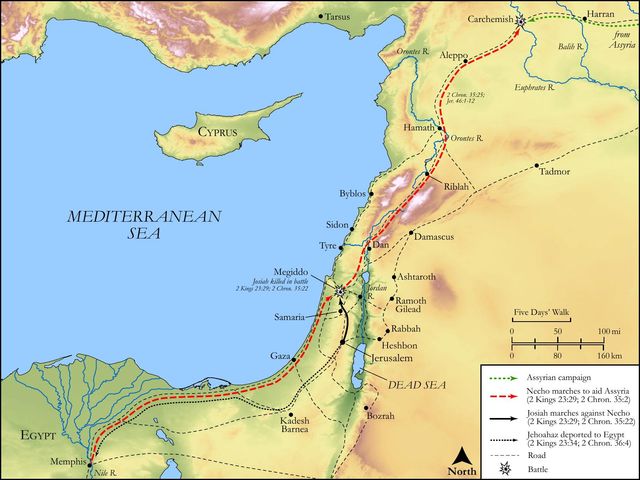
The historical backdrop is the tumultuous late 7th and early 6th centuries BCE, a period marked by the rise of the Neo-Babylonian Empire. Under Nebuchadnezzar, Babylon systematically dismantled the last vestiges of Judah's independence, culminating in the final destruction of Jerusalem and its Temple in 586 BCE and the deportation of its inhabitants. Culturally, the Israelites were bound by the Mosaic Covenant, which included specific land laws, most notably the command for a Sabbath year ( shemitah ) every seventh year, during which the land was to lie fallow (Leviticus 25:1-7). This command was part of a broader theological framework emphasizing God's ownership of the land and Israel's stewardship. The Chronicler's assertion implies that centuries of neglecting these agricultural Sabbaths had accumulated a "debt" of rest owed to the land. The prophet Jeremiah, active from the late 7th century BCE into the early 6th century BCE, consistently warned of impending judgment from Babylon and explicitly prophesied a seventy-year period of desolation and exile for Judah (Jeremiah 25:11-12).
Key Themes
ShowHideThis verse powerfully encapsulates several foundational themes woven throughout 2 Chronicles and the broader biblical narrative. Firstly, it underscores Divine Sovereignty and Justice, demonstrating that God is the ultimate orchestrator of history, even in catastrophic events like national judgment, and that His judgments are righteous and just. Secondly, it highlights the Infallibility of Prophecy, asserting the absolute reliability and certainty of God's spoken word; what God declares through His prophets will inevitably come to pass, providing a strong affirmation of divine truth. Thirdly, the theme of Covenant Obedience and Disobedience is central, as the exile is presented as a direct, divinely ordained consequence of Israel's persistent failure to uphold their covenant obligations, particularly the land's Sabbath rest. Finally, the verse profoundly illustrates the Sabbath Principle, extending the concept of rest beyond individuals to the very land itself, suggesting a cosmic order that demands periods of cessation and renewal. This judgment, though severe, paradoxically contains an implicit Hope in Judgment, as the precise seventy-year duration points towards a finite period of desolation and the ultimate promise of restoration and return, a theme further explored in passages like Jeremiah 29:10.
Exposition and Analysis
ShowHideKey Word Analysis
ShowHideThis verb, meaning "to fill" or "to be full of," is used here in its causative sense of "to accomplish" or "to complete." Its application to "the word of the LORD" emphasizes the divine certainty and meticulous precision with which God's prophetic declarations are brought to pass. The exile was not a random misfortune but the exact completion of a divinely predetermined plan, demonstrating God's unwavering commitment to His word, whether in promise or in judgment.
While literally referring to the physical mouth, in this context, "by the mouth of Jeremiah" signifies the source and authority of the prophetic word. It emphasizes that Jeremiah was God's chosen instrument, a conduit through whom the divine message was faithfully delivered. This highlights the concept of inspired prophecy, where human speech becomes the vehicle for God's authoritative declaration, underscoring the divine origin and binding nature of the warnings given to Judah.
This plural noun refers specifically to the Sabbath years (shemitah), commanded in Leviticus 25:1-7. Every seventh year, the land was to lie fallow, a period of rest and renewal, symbolizing God's ownership and provision. Israel's consistent failure to observe these land Sabbaths over centuries resulted in an accumulated "debt" of rest. The exile, therefore, is presented as God's just and necessary means of ensuring the land finally received its overdue rest, a powerful illustration of divine justice and the profound interconnectedness of covenant obedience, human well-being, and the created order.
Verse Breakdown
ShowHide"To fulfil the word of the LORD by the mouth of Jeremiah"
This opening clause immediately establishes the divine origin and prophetic certainty of the Babylonian exile. The Chronicler asserts that the destruction of Jerusalem and the deportation of its people were not random acts of war or mere historical misfortune, but the direct and precise outworking of God's revealed will, spoken authoritatively through His chosen prophet, Jeremiah. It underscores God's absolute sovereignty over historical events and the unimpeachable reliability of His prophetic word, which always comes to pass.
"until the land had enjoyed her sabbaths"
This phrase provides the primary theological justification for the seventy-year desolation. It personifies the land, suggesting it had been deprived of its commanded Sabbath rests due to the Israelites' disobedience. The exile, therefore, is presented as a period during which the land finally received its due rest, a divine mechanism to restore ecological and covenantal balance. This highlights God's justice in ensuring that even the land, as part of His creation, receives its proper due.
"[for] as long as she lay desolate she kept sabbath"
This clause reinforces and elaborates on the previous one, explicitly stating that the period of the land's desolation was its enforced Sabbath. It underscores the direct correlation between Israel's accumulated failure to observe the land Sabbaths over centuries and the duration and nature of the exile. The land's forced rest directly compensated for the hundreds of years of missed agricultural Sabbaths, demonstrating the precise and retributive nature of God's judgment.
"to fulfil threescore and ten years"
This concluding phrase specifies the exact duration of the exile as seventy years, directly linking it to the precise prophecy given by Jeremiah (Jeremiah 25:11-12; Jeremiah 29:10). This numerical exactness emphasizes the predetermined and meticulously controlled nature of God's judgment, serving as a powerful testament to the accuracy of divine prophecy and the finite, purposeful nature of even severe chastisement, hinting at an eventual end and promised restoration.
Literary Devices
ShowHideThe verse employs several potent literary devices to convey its profound theological message. Personification is strikingly evident in the phrase "the land had enjoyed her sabbaths" and "she kept sabbath," attributing human-like capacities for enjoyment, rest, and observance to the inanimate land. This device vividly portrays the land as a sentient entity with rights, whose divinely ordained rest was violated by Israel's disobedience, thereby necessitating a period of forced recuperation. The entire verse functions as a powerful example of Prophetic Fulfillment, directly linking past divine pronouncements through Jeremiah to the present historical reality of the exile, thereby validating God's word and demonstrating His sovereignty over history. There is also a clear demonstration of Retribution Theology, where the severe punishment (exile and desolation) is directly proportional and conceptually linked to the specific sin (neglect of the land Sabbaths), illustrating God's justice. Finally, the Chronicler's strategic placement of this verse at the very end of his historical narrative, immediately preceding the decree of Cyrus, serves as a form of Inclusio or Framing Device, providing a theological explanation for the end of one era of Israel's history and simultaneously setting the stage for the beginning of another, all meticulously orchestrated within God's overarching redemptive plan.
Theological and Thematic Connections
ShowHide2 Chronicles 36:21 powerfully encapsulates the profound truth of God's unwavering faithfulness to His covenant, demonstrating His commitment both in His warnings and in His judgments. It teaches that divine judgment is never arbitrary but is deeply rooted in justice, serving as a righteous response to the consistent violation of God's revealed will. The seventy-year exile, precisely foretold and meticulously fulfilled, stands as an irrefutable testament to God's absolute sovereignty over history and His unwavering commitment to ensuring that His word, whether of blessing or curse, comes to pass. This period of desolation, framed as the land's forced Sabbath, highlights the intricate interconnectedness of humanity, land, and covenant, underscoring that disobedience has far-reaching consequences, even for the created order. Yet, within this severe judgment, there is also a glimmer of hope, as the finite duration implies a divine plan for eventual restoration and renewal, reflecting God's ultimate redemptive purpose even amidst chastisement.
Reflection and Application
ShowHideThe profound message of 2 Chronicles 36:21 resonates deeply with believers today, offering timeless principles for faith and life. It serves as a powerful reminder that God's word is utterly trustworthy, not only in its promises of blessing and salvation but also in its warnings of consequences for disobedience. The meticulous fulfillment of the seventy-year prophecy should instill in us a profound confidence in the absolute reliability and certainty of all Scripture. Furthermore, the concept of the land "enjoying her sabbaths" challenges us to consider the rhythms of rest and renewal that God has woven into the very fabric of creation and our own lives. Neglecting these divinely ordained patterns, whether in our personal spiritual disciplines, our communal practices, or our stewardship of the earth, can lead to imbalance, exhaustion, and eventual breakdown. Even in judgment, God's ultimate purpose is redemptive; the exile had a definite end, pointing to a future restoration. This encourages us to trust in God's sovereign plan, even when facing difficult seasons of discipline or suffering, knowing that He works all things for His glory and our ultimate good, always leading towards renewal and a deeper relationship with Him.
Questions for Reflection
ShowHideFAQ
ShowHideWhy did God punish the land for the people's sins?
ShowHideThe punishment of the land was not arbitrary but deeply rooted in the covenant relationship between God, Israel, and the land itself. According to the Mosaic Law, the land of Canaan was a unique gift from God, intrinsically linked to Israel's obedience to the covenant (Deuteronomy 11:13-17). The land was considered "holy ground" and was defiled by the people's idolatry, injustice, and bloodshed (Leviticus 18:24-28). Specifically, Israel had failed to observe the Sabbath years, where the land was commanded to lie fallow every seventh year, and the Year of Jubilee every fiftieth year (Leviticus 25:1-7). By neglecting these divine commands, they accumulated a "debt" of missed rests, approximately 70 missed Sabbath years over 490 years of occupation. God, in His perfect justice, ensured the land received its due rest during the period of desolation. This also served as a tangible, inescapable consequence for the people's disobedience, reinforcing the seriousness of their covenant obligations and the holistic nature of God's judgment, affecting both the people and the environment tied to their covenant.
Christ-Centered Fulfillment
ShowHideWhile 2 Chronicles 36:21 details a period of divine judgment and forced rest for the land due to Israel's covenant unfaithfulness, it profoundly points forward to the person and redemptive work of Jesus Christ, who brings the ultimate fulfillment of God's promises and the true Sabbath rest for humanity. The seventy years of exile, a consequence of sin and a period of waiting for restoration, foreshadow a deeper spiritual exile from God that all humanity experiences due to sin, from which only Christ can deliver. Jesus, as the perfect Lamb of God, who takes away the sin of the world, bore the full weight of God's righteous judgment for our disobedience, becoming a curse for us on the cross (Galatians 3:13). Through His atoning sacrifice, He provided the means for true reconciliation and restoration, bringing us out of spiritual darkness and into His glorious kingdom (Colossians 1:13-14). Furthermore, Christ Himself is our ultimate Sabbath rest, the one in whom we find true cessation from our labors and the heavy burden of sin and legalism (Matthew 11:28-30). The exile's end, marked by a return to the land, prefigures the new creation and the eternal dwelling with God that Christ inaugurates, where there will be no more curse, desolation, or separation, but perfect peace, rest, and communion with God for all eternity (Revelation 21:1-4). Thus, the historical fulfillment in 2 Chronicles 36:21 serves as a powerful testament to God's faithfulness, a faithfulness ultimately and perfectly realized in Jesus Christ, who brings us out of spiritual exile into eternal communion with the Father.