


2 Chronicles 36:13
Bible text: King James Version (1769 Blayney text) · Public domain
Bible text: King James Version with Strong's numbers · Public domain
Bible text: Berean Standard Bible · Public domain
Bible text: American Standard Version (1901) · Public domain
Bible text: World English Bible, Messianic edition · Public domain
Bible text: Geneva Bible (1599) · Public domain
Bible text: Young's Literal Translation · Public domain
- וְגַםVe·gamand alsoH1571Conj-w ¦ AdvAdverbוְandגַםalso
- בַּמֶּלֶךְba·Me·lekhagainst the kingH4428Prep-b ¦ N-msNoun Singular Masculine Absoluteבַּagainst theמֶּלֶךְking
- נְבוּכַדְנֶאצַּרne·vu·khad·ne·TzarNebuchadnezzarH5019N-proper-mNoun Proper Masculine
- מָרָדma·Radhe rebelledH4775V-Qal-Perf-3msVerb Qal Perfect 3rd Singular Masculine
- אֲשֶׁר'a·SherwhoH834RelParticle Relative
- הִשְׁבִּיעוֹhish·bi·'Ohe had made swear an oath himH7650V-Hiphil-Perf-3ms ¦ 3msVerb Hiphil Perfect 3rd Singular Masculineהִשְׁבִּיעhe had made swear an oathוֹhim
- בֵּאלֹהִיםbe·lo·Himby GodH430Prep-b ¦ N-mpNoun Plural Masculine AbsoluteבֵּbyאלֹהִיםGod
- וַיֶּקֶשׁvai·Ye·keshand he made stiffH7185Conj-w ¦ V-Hiphil-ConsecImperf-3msVerb Hiphil Consecutive Imperfect 3rd Singular Masculineוַandיֶּקֶשׁhe made stiff
- אֶת'et<obj.>H853DirObjMParticle Object Indicator
- עָרְפּוֹa·re·Pohis neckH6203N-msc ¦ 3msNoun Singular Masculine Constructעָרְפּneckוֹhis
- וַיְאַמֵּץvay·'a·Metzand he made hardH553Conj-w ¦ V-Piel-ConsecImperf-3msVerb Piel Consecutive Imperfect 3rd Singular Masculineוַandיְאַמֵּץhe made hard
- אֶת'et<obj.>H853DirObjMParticle Object Indicator
- לְבָבוֹle·va·Vohis heartH3824N-msc ¦ 3msNoun Singular Masculine Constructלְבָבheartוֹhis
- מִשּׁוּבmi·Shuvfrom turning backH7725Prep-m ¦ V-Qal-InfVerb Qal Infinitive Constructמִfromשּׁוּבturning back
- אֶל'eltoH413PrepPreposition
- יְהוָהYah·wehYahwehH3068N-properNoun Proper Title
- אֱלֹהֵי'e·lo·Hei[the] God ofH430N-mpcNoun Plural Masculine Construct
- יִשְׂרָאֵלYis·ra·'ElIsraelH3478N-properNoun Proper Location
English is a literal word-by-word gloss of the Hebrew, not the KJV's wording. Why?
This is the original text the KJV's translators worked from — each Hebrew word with its own literal English meaning in this verse, prepared by scholars at Tyndale House, Cambridge. The KJV translates whole sentences, not word by word, so its wording differs: one Hebrew word can become several English words, and the KJV may choose “the LORD” where the gloss reads “Yahweh”. Both are faithful — they answer different questions. For the KJV's own rendering, switch to the KJV text.
Details
See on the biblical-era maps
Study this verse
Public-domain commentary
Matthew Henry
From his Commentary on the Whole Bible. Henry comments on passages, not single verses — this entry covers 2 Chronicles 36:11–21. His three-level outline is real structure in the source text, so it is rendered as structure.
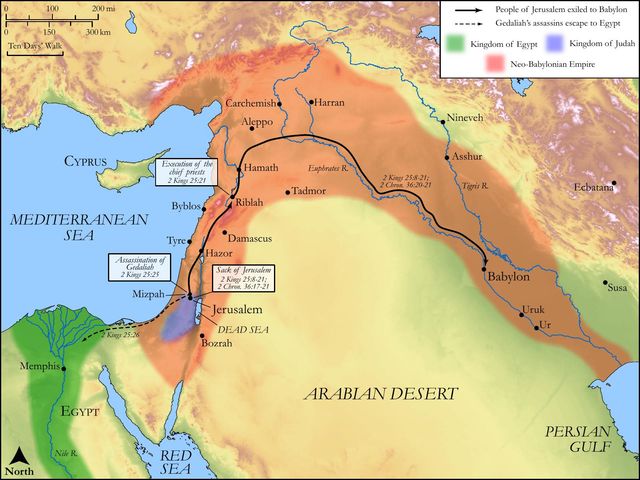
We have here an account of the destruction of the kingdom of Judah and the city of Jerusalem by the Chaldeans. Abraham, God's friend, was called out of that country, from Ur of the Chaldees, when God took him into covenant and communion with himself; and now his degenerate seed were carried into that country again, to signify that they had forfeited all that kindness wherewith they had been regarded for the father's sake, and the benefit of that covenant into which he was called; all was now undone again. Here we have,
I.The sins that brought this desolation.
1.Zedekiah, the king in whose days it came, brought it upon himself by his own folly; for he conducted himself very ill both towards God and towards the king of Babylon.
(1.)If he had but made God his friend, that would have prevented the ruin. Jeremiah brought him messages from God, which, if he had given due regard to them, might have secured a lengthening of his tranquillity; but it is here charged upon him that he humbled not himself before Jeremiah, Ch2 36:12. It was expected that this mighty prince, high as he was, should humble himself before a poor prophet, when he spoke from the mouth of the Lord, should submit to his admonitions and be amended by them, to his counsels and be ruled by them, should lay himself under the commanding power of the word of God in his mouth; and, because he would not thus make himself a servant to God, he was made a slave to his enemies. God will find some way or other to humble those that will not humble themselves. Jeremiah, as a prophet, was set over the nations and kingdoms (Jer 1:10), and, as mean a figure as he made, whoever would not humble themselves before him found that it was at their peril.
(2.)If he had but been true to his covenant with the king of Babylon, that would have prevented his ruin; but he rebelled against him, though he had sworn to be his faithful tributary, and perfidiously violated his engagements to him, Ch2 36:13. It was this that provoked the king of Babylon to deal so severely with him as he did. All nations looked upon an oath as a sacred thing, and on those that durst break through the obligations of it as the worst of men, abandoned of God and to be abhorred by all mankind. If therefore Zedekiah falsify his oath, when, lo, he has given his hand, he shall not escape, Eze 17:18. Though Nebuchadnezzar was a heathen, an enemy, yet if, having sworn to him, he be false to him, he shall know there is a God to whom vengeance belongs. The thing that ruined Zedekiah was not only that he turned not to the Lord God of Israel, but that he stiffened his neck and hardened his heart from turning to him, that is, he as obstinately resolved not to return to him, would not lay his neck under God's yoke nor his heart under the impressions of his word, and so, in effect, he would not be healed, he would not live.
2.The great sin that brought this destruction was idolatry. The priests and people went after the abominations of the heathen, forsook the pure worship of God for the lewd and filthy rites of the Pagan superstition, and so polluted the house of the Lord, Ch2 36:14. The priests, the chief of the priests, who should have opposed idolatry, were ring-leaders in it. That place is not far from ruin in which religion is already ruined.
3.The great aggravation of their sin, and that which filled the measure of it, was the abuse they gave to God's prophets, who were sent to call them to repentance, Ch2 36:15, Ch2 36:16. Here we have,
(1.)God's tender compassion towards them in sending prophets to them. Because he was the God of their fathers, in covenant with them, and whom they worshipped (though this degenerate race forsook him), therefore he sent to them by his messengers, to convince them of their sin and warn them of the ruin they would bring upon themselves by it, rising up betimes and sending, which denotes not only that he did it with the greatest care and concern imaginable, as men rise betimes to set their servants to work when their heart is upon their business, but that, upon their first deviation from God to idols, if they took but one step that way, God immediately sent to them by his messengers to reprove them for it. He gave them early timely notice both of their duty and danger. Let this quicken us to seek God early, that he rises betimes to send to us. The prophets that were sent rose betimes to speak to them, were diligent and faithful in their office, lost no time, slipped no opportunity of dealing with them; and therefore God is said to rise betimes. The more pains ministers take in their work the more will the people have to answer for if it be all in vain. The reason given why God by his prophets did thus strive with them is because he had compassion on his people and on his dwelling-place, and would by these means have prevented their ruin. Note, The methods God takes to reclaim sinners by his word, by ministers, by conscience, by providences, are all instances of his compassion towards them and his unwillingness that any should perish.
(2.)Their base and disingenuous carriage towards God (Ch2 36:16): They mocked the messengers of God (which was a high affront to him that sent them), despised his word in their mouths, and not only so, but misused the prophets, treating them as their enemies. The ill usage they gave Jeremiah who lived at this time, and which we read much of in the book of his prophecy, is an instance of this. This was an evidence of an implacable enmity to God, and an invincible resolution to go on in their sins. This brought wrath upon them without remedy, for it was sinning against the remedy. Nothing is more provoking to God than abuses given to his faithful ministers; for what is done against them he takes as done against himself. Saul, Saul, why persecutest thou me? Persecution was the sin that brought upon Jerusalem its final destruction by the Romans. See Mat 23:34-37. Those that mock at God's faithful ministers, and do all they can to render them despicable or odious, that vex and misuse them, to discourage them and to keep others from hearkening to them, should be reminded that a wrong done to an ambassador is construed as done to the prince that sends him, and that the day is coming when they will find it would have been better for them if they had been thrown into the sea with a mill-stone about their necks; for hell is deeper and more dreadful.
II.The desolation itself, and some few of the particular so fit, which we had more largely Kg2 25:1.
Multitudes were put to the sword, even in the house of their sanctuary (Ch2 36:17), whither they fled for refuge, hoping that the holiness of the place would be their protection. But how could they expect to find it so when they themselves had polluted it with their abominations? Ch2 36:14. Those that cast off the dominion of their religion forfeit all the benefit and comfort of it. The Chaldeans not only paid no reverence to the sanctuary, but showed no natural pity either to the tender sex or to venerable age. They forsook God, who had compassion on them (Ch2 36:15), and would have none of him; justly therefore are they given up into the hands of cruel men, for they had no compassion on young man or maiden. 2. All the remaining vessels of the temple, great and small, and all the treasures, sacred and secular, the treasures of God's house and of the king and his princes, were seized, and brought to Babylon, Ch2 36:18. 3. The temple was burnt, the walls of Jerusalem were demolished, the houses (called here the palaces, as Psa 48:3, so stately, rich, and sumptuous were they) laid in ashes, and all the furniture, called here the goodly vessels thereof, destroyed, Ch2 36:19. Let us see where what woeful havock sin makes, and, as we value the comfort and continuance of our estates, keep that worm from the root of them. 4. The remainder of the people that escaped the sword were carried captives to Babylon (Ch2 36:20), impoverished, enslaved, insulted, and exposed to all the miseries, not only of a strange and barbarous land, but of an enemy's land, where those that hated them bore rule over them. They were servants to those monarchs, and no doubt were ruled with rigour so long as that monarchy lasted. Now they sat down by the rivers of Babylon, with the streams of which they mingled their tears, Psa 137:1. And though there, it should seem, they were cured of idolatry, yet, as appears by the prophet Ezekiel, they were not cured of mocking the prophets. 5. The land lay desolate while they were captives in Babylon, Ch2 36:21. That fruitful land, the glory of all lands, was now turned into a desert, not tilled, nor husbanded. The pastures were not clothed as they used to be with flocks, nor the valleys with corn, but all lay neglected. Now this may be considered, (1.) As the just punishment of their former abuse of it. They had served Baal with its fruits; cursed therefore is the ground for their sakes. Now the land enjoyed her sabbaths; (Ch2 36:21), as God had threatened by Moses, Lev 26:34, and the reason there given (v. 35) is, "Because it did not rest on your sabbaths; you profaned the sabbath-day, did not observe the sabbatical year." They many a time ploughed and sowed their land in the seventh year, when it should have rested, and now it lay unploughed and unsown for ten times seven years. Note, God will be no loser in his glory at last by the disobedience of men: if the tribute be not paid, he will distrain and recover it, as he speaks, Hos 2:9. If they would not let the land rest, God would make it rest whether they would or no. Some think they had neglected the observance of seventy sabbatical years in all, and just so many, by way of reprisal, the land now enjoyed; or, if those that had been neglected were fewer, it was fit that the law should be satisfied with interest. We find that one of the quarrels God had with them at this time was for not observing another law which related to the seventh year, and that was the release of servants; see Jer 34:13, etc. (2.) Yet we may consider it as giving some encouragement to their hopes that they should, in due time, return to it again. Had others come and taken possession of it, they might have despaired of ever recovering it; but, while it lay desolate, it did, as it were, lie waiting for them again, and refuse to acknowledge any other owners.
Continue studying 2 Chronicles 36:13 across the web’s major study libraries — every link below opens this exact verse, chapter, or book on the destination site.
Read & Compare
 BibleGatewayThis verse in more than 200 translations and 70 languages.
 Bible.comThe YouVersion reader — hundreds of translations, reading plans, and highlights.
 ESV.orgCrossway's official English Standard Version reader.
 NET BibleThe NET translation with 60,000+ translators' notes on every rendering decision.
 STEP BibleTyndale House's free study tool — original text, vocabulary, and scholarly resources.
 BibliaLogos Bible Software's free web reader.
 USCCBThe New American Bible (Revised Edition) with the U.S. bishops' study notes.
Commentaries
 BibleHub CommentariesDozens of classic commentaries on this verse, gathered on one page.
 StudyLightMore than 100 commentary sets — the largest collection on the web.
 BibleRefPlain-English commentary on what this verse means, verse by verse.
 Enduring WordDavid Guzik's free commentary on this chapter, widely used by Bible teachers.
 Bible Study ToolsVerse commentary alongside Greek and Hebrew study aids.
Original Language & Research
- BibleHub InterlinearThe verse word by word — original language, transliteration, and English.
- BibleHub LexiconEvery word's original-language definition and Strong's entry.
 Blue Letter BibleDeep-study tools — Strong's numbers, concordance, and word studies.
 SefariaThe Hebrew text with Rashi and centuries of Jewish commentary.
Sermons, Hymns & Audio


TrulyRandomVerse is not affiliated with these sites and doesn’t control their content. They’re linked because they’re genuinely useful.
Summary
Second Chronicles 36:13 powerfully encapsulates the profound spiritual and political defiance of King Zedekiah, Judah's final monarch, against both King Nebuchadnezzar of Babylon and, more critically, the sovereign Lord God of Israel. Despite having entered into a solemn oath "by God" with Nebuchadnezzar, Zedekiah deliberately chose a path of rebellion, characterized by an unyielding refusal to submit to divine will and a heart hardened against turning back to the God of his ancestors, thereby sealing the tragic fate of Jerusalem and Judah for destruction and exile.
Context
ShowHideLiterary Context
This pivotal verse is strategically placed at the dramatic climax of the Chronicler's historical narrative, detailing the final, irreversible decline of the Kingdom of Judah before the devastating Babylonian exile. It immediately follows the account of Zedekiah's installation on the throne by Nebuchadnezzar after the deportation of King Jehoiachin in 597 BCE (2 Chronicles 36:10), and the Chronicler's initial assessment of Zedekiah's wickedness in the sight of the Lord (2 Chronicles 36:12). Verse 13 serves as the crucial explanatory link, elucidating why the subsequent destruction of Jerusalem, the burning of the Temple, and the mass deportation, vividly described from 2 Chronicles 36:14 onwards, became an inevitable divine judgment. It underscores Zedekiah's personal culpability in the nation's downfall, meticulously connecting his spiritual rebellion and covenant unfaithfulness directly to the catastrophic political and military consequences that followed. The Chronicler's emphasis here is not merely on a political misstep but on a profound spiritual transgression against God Himself.
Historical & Cultural Context
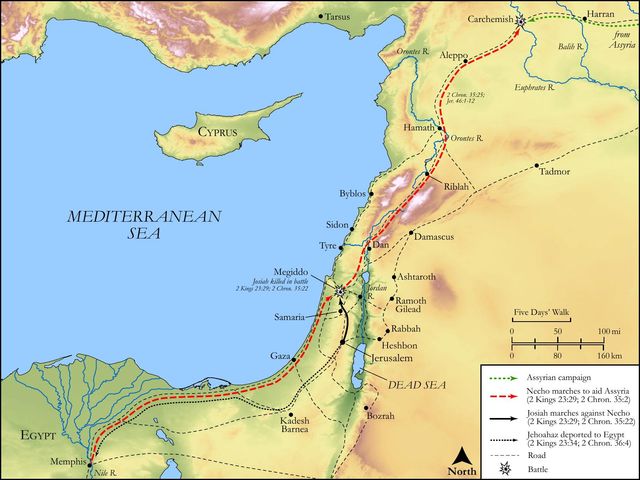
In the tumultuous late 7th and early 6th centuries BCE, Judah found itself precariously positioned as a small, vulnerable kingdom caught between the waning power of Egypt and the ascendant might of the Neo-Babylonian Empire. Following the first Babylonian siege of Jerusalem and the deportation of King Jehoiachin and many prominent citizens in 597 BCE, Nebuchadnezzar installed Zedekiah (originally Mattaniah, Jehoiachin's uncle) as a tributary king. The act of swearing an oath "by God" was a deeply significant and binding covenant, especially when invoked with the name of God, so that the LORD charged Zedekiah through Ezekiel with having "despised the oath by breaking the covenant." Breaking such a sacred oath was not merely a political betrayal but a profound religious offense, believed to invite the wrath of the invoked deity. For Zedekiah, swearing by the Lord God of Israel and then rebelling meant he was directly defying the very God who had established the covenant with Israel and who had repeatedly warned Judah through prophets like Jeremiah to submit to Babylon as God's instrument of judgment (Jeremiah 27:12-15). This act of covenant breaking was considered an act of apostasy against Yahweh Himself.
Key Themes
ShowHideThis verse encapsulates several critical themes prevalent throughout 2 Chronicles and the broader Deuteronomistic history. Firstly, it highlights the severe consequences of covenant unfaithfulness. Zedekiah's broken oath and spiritual rebellion represent the culmination of Judah's long history of rejecting God's covenant and His prophetic warnings. Secondly, the vivid phrases "stiffened his neck" and "hardened his heart" powerfully illustrate the theme of stubborn disobedience and spiritual insensitivity. This imagery, frequently employed in the Old Testament (e.g., Exodus 32:9 concerning Israel in the wilderness, and Nehemiah 9:16-17), signifies a deliberate and unyielding refusal to repent or respond to divine warnings. Zedekiah's actions are presented as a conscious, willful choice to turn away "from turning unto the LORD God of Israel," despite the persistent prophetic calls to repentance (as seen in 2 Chronicles 36:15-16). Finally, the verse underscores the sovereignty of God in judgment, even through foreign powers. Nebuchadnezzar, though a pagan king, is implicitly used by God to bring about the prophesied judgment on a persistently rebellious people, leading to the seventy-year exile foretold in Jeremiah 25:11.
Exposition and Analysis
ShowHideKey Word Analysis
ShowHideThis verb (H4775) signifies an act of open defiance, insubordination, or revolt against a superior authority. In this context, Zedekiah's rebellion was multifaceted: a political act against Nebuchadnezzar, but more profoundly, a spiritual act against God, whose name was invoked in the solemn oath. It implies a deliberate breaking of allegiance and a rejection of the established order, indicating a conscious choice to violate a sacred trust.
This verb (H7185), meaning "to be dense, tough, or severe," is used here idiomatically with "neck" ('oreph, H6203) to depict stubbornness and obstinacy. It evokes the image of an ox refusing to be guided by the yoke, resisting direction and refusing to turn. Spiritually, it signifies an unyielding refusal to submit to God's authority, to heed His warnings, or to follow His commands. It speaks of an internal, unbending resistance to correction and repentance.
This verb (H553), meaning "to be alert, strong, or courageous," is used here in a negative sense with "heart" (lêbâb, H3824) to denote a deliberate and firm resolve not to yield, repent, or be sensitive to God's will. Unlike a passive state of insensitivity, "hardening the heart" implies an active, willful resistance to divine truth and an intentional closing off of one's inner being to God's grace and guidance. It indicates a deep-seated spiritual insensitivity that actively blocks out divine truth and guidance, making genuine repentance impossible.
Verse Breakdown
ShowHide"And he also rebelled against king Nebuchadnezzar"
This opening clause establishes Zedekiah's political defiance. As a king installed by Babylon, his rebellion against Nebuchadnezzar was a direct violation of his sworn allegiance and a challenge to Babylonian authority, setting the stage for inevitable military reprisal and the ultimate downfall of Judah.
"who had made him swear by God"
This crucial phrase elevates Zedekiah's rebellion from a mere political act to a profound spiritual transgression. The oath, sworn in the name of the Lord God of Israel, made Zedekiah's treachery an affront not just to Nebuchadnezzar but directly to God. By breaking a vow made in Yahweh's name, Zedekiah demonstrated contempt for divine authority and covenant faithfulness, implicitly defying the very God whose name he invoked.
"but he stiffened his neck, and hardened his heart"
These two parallel idioms describe the internal, spiritual disposition that fueled Zedekiah's rebellion. "Stiffened his neck" speaks to his stubborn refusal to be led, guided, or corrected by divine instruction or prophetic warnings. "Hardened his heart" points to a deliberate, unyielding resistance to God's influence, a conscious closing off of his inner being to divine grace, and a refusal to repent. This was a willful choice of spiritual insensitivity and obstinacy.
"from turning unto the LORD God of Israel"
This final clause clarifies the ultimate target and consequence of Zedekiah's stubbornness and hardened heart. His defiance was not merely against Nebuchadnezzar, but fundamentally against the God of Israel. His refusal to "turn" signifies a rejection of repentance, a persistent unwillingness to heed the divine warnings delivered through the prophets, and a conscious choice to not align his will with God's. This unrepentant spiritual posture sealed Judah's tragic fate.
Literary Devices
ShowHideThe verse employs several powerful literary devices to convey Zedekiah's profound spiritual state and the gravity of his actions. The most prominent are Metaphor and Parallelism. The phrases "stiffened his neck" and "hardened his heart" are vivid metaphors. "Stiffened his neck" draws an image from animal husbandry, likening Zedekiah to a stubborn, unyielding ox that refuses to be guided by the yoke, symbolizing his deep-seated resistance to divine direction and submission. "Hardened his heart" similarly uses a physical property (hardness) to describe an internal, spiritual state of insensitivity, unresponsiveness, and deliberate resistance to God's word and grace. These two metaphors function in Parallelism, reinforcing each other to emphasize the depth and deliberateness of Zedekiah's spiritual rebellion and his unyielding will. The conjunction "but" introduces a strong Contrast, highlighting the incongruity between the solemn oath Zedekiah swore "by God" and his subsequent, defiant refusal to turn to that very God. This contrast underscores the profound treachery and spiritual blindness at play, making his actions all the more culpable.
Theological and Thematic Connections
ShowHide2 Chronicles 36:13 serves as a poignant theological statement on the devastating consequences of prolonged spiritual rebellion and the breaking of sacred covenants. It vividly illustrates that God's patience, though vast and enduring, is not infinite, and persistent rejection of His revealed will ultimately leads to divine judgment. Zedekiah's actions are presented as the culmination of generations of Judah's unfaithfulness, demonstrating God's unwavering commitment to holding His people accountable for their covenant obligations. The Lord, as the sovereign ruler of history, even uses pagan kings like Nebuchadnezzar as instruments of His righteous judgment, fulfilling His prophetic warnings. This verse underscores the critical importance of a responsive heart to God's voice and the severe spiritual and physical repercussions of deliberate, unrepentant disobedience. It is a stark reminder that true security and national flourishing lie not in political alliances or military strength, but in faithful submission to the Lord God of Israel and adherence to His covenant.
Reflection and Application
ShowHideThe tragic account of King Zedekiah's rebellion and hardened heart in 2 Chronicles 36:13 offers profound and enduring lessons for contemporary believers. It stands as a powerful cautionary tale about the insidious dangers of spiritual apathy, the solemn seriousness of commitments made before God, and the inevitable consequences of persistent disobedience to His revealed will. Zedekiah's catastrophic failure reminds us that true integrity involves not only keeping our word to others but, more importantly, honoring our covenant relationship with God. His "stiffened neck" and "hardened heart" serve as a sobering mirror, prompting us to honestly examine our own responsiveness to the Holy Spirit's promptings and God's Word. Are there areas in our lives where we are resisting God's guidance, refusing to repent, or stubbornly clinging to our own ways and desires? The narrative underscores that while God is merciful, patient, and longs for our repentance, there comes a point where continued rejection of His grace and persistent rebellion leads to severe, often self-inflicted, consequences. Our spiritual vitality and flourishing depend on cultivating a humble, pliable heart that is quick to listen, eager to obey, and ready to "turn unto the LORD God of Israel" at all times.
Questions for Reflection
ShowHideFAQ
ShowHideWhat was the significance of Zedekiah swearing "by God" to Nebuchadnezzar?
ShowHideThe act of swearing "by God" elevated Zedekiah's oath from a mere political agreement to a sacred covenant, binding him not just to Nebuchadnezzar but also to the divine realm. In Israel, invoking God's name in an oath meant placing oneself under His judgment if the oath was broken. For Zedekiah, swearing by the Lord God of Israel meant he was binding himself under the authority and judgment of the very God of his nation. His subsequent rebellion was therefore not just a political betrayal of Nebuchadnezzar, but a profound spiritual offense directly against the Lord, demonstrating a contempt for divine authority and covenant faithfulness. This made his actions far more serious than a simple breach of contract, inviting divine wrath upon himself and his kingdom, as tragically seen in the subsequent destruction of Jerusalem and the Temple (2 Chronicles 36:19).
How does Zedekiah's rebellion relate to earlier kings of Judah and the overall narrative of 2 Chronicles?
ShowHideZedekiah's rebellion is presented by the Chronicler as the culminating act in a long and tragic history of apostasy, disobedience, and covenant unfaithfulness by many of Judah's kings and its people, meticulously documented throughout 2 Chronicles. The book frequently highlights the recurring pattern of kings who "did evil in the sight of the Lord," leading to national decline and divine judgment. Zedekiah's actions, particularly his hardened heart and refusal to turn to God despite persistent prophetic warnings (like those from Jeremiah, e.g., Jeremiah 32:3), represent the final, unrepentant stage of this destructive pattern. The Chronicler emphasizes that God, in His boundless compassion, sent prophets repeatedly to warn His people (2 Chronicles 36:15), but the people and their leaders mocked them and despised His words, leading to a point of no return where divine wrath was fully kindled. Thus, Zedekiah's rebellion is not an isolated incident but the final, decisive act that brought about the prophesied seventy-year Babylonian captivity (Jeremiah 25:11), marking the end of the Davidic monarchy in Judah and fulfilling the covenant curses detailed in Deuteronomy 28.
Christ-Centered Fulfillment
ShowHideThe tragic account of King Zedekiah's rebellion and hardened heart in 2 Chronicles 36:13 powerfully foreshadows humanity's inherent inability to perfectly keep covenant with God and highlights our desperate need for a perfect King and a new covenant. Zedekiah, a descendant of David, failed miserably in his role, breaking a solemn oath and stubbornly resisting the Lord's will. His "stiffened neck" and "hardened heart" are emblematic of fallen humanity's pervasive sinfulness, a spiritual condition that separates us from God and renders us incapable of true obedience. In stark contrast to Zedekiah's profound failure, Jesus Christ, the true and ultimate Son of David, perfectly fulfilled every covenant obligation. He never stiffened His neck against the Father's will but was perfectly obedient, even to the point of death on a cross (Philippians 2:8). His heart was never hardened but was always perfectly aligned with God's redemptive purposes, demonstrating complete submission and love. Through His perfect obedience and atoning sacrifice, Jesus provides the means for our hardened hearts to be made new, replacing our "heart of stone" with a "heart of flesh" (Ezekiel 36:26). He inaugurates the New Covenant, where God's law is written not on tablets of stone, but on our hearts (Jeremiah 31:33), enabling us to truly "turn unto the LORD God of Israel" and walk in His ways. Unlike Zedekiah, whose reign ended in destruction and exile, Jesus' reign is eternal, bringing true restoration, forgiveness of sins, and an everlasting kingdom of peace and righteousness (Luke 1:32-33), ultimately reversing the consequences of humanity's rebellion and offering eternal life to all who believe.