


2 Kings 17:4
Bible text: King James Version (1769 Blayney text) · Public domain
Bible text: King James Version with Strong's numbers · Public domain
Bible text: Berean Standard Bible · Public domain
Bible text: American Standard Version (1901) · Public domain
Bible text: World English Bible, Messianic edition · Public domain
Bible text: Geneva Bible (1599) · Public domain
Bible text: Young's Literal Translation · Public domain
- וַיִּמְצָאvai·yim·Tza'and he foundH4672Conj-w ¦ V-Qal-ConsecImperf-3msVerb Qal Consecutive Imperfect 3rd Singular Masculineוַandיִּמְצָאhe found
- מֶלֶךְMe·lekh[the] king ofH4428N-mscNoun Singular Masculine Construct
- אַשּׁוּר'a·ShurAssyriaH804N-properNoun Proper Location
- בְּהוֹשֵׁעַbe·ho·She·a'in HosheaH1954Prep-b ¦ N-proper-mNoun Proper MasculineבְּinהוֹשֵׁעַHoshea
- קֶשֶׁרKe·shertreasonH7195N-msNoun Singular Masculine Absolute
- אֲשֶׁר'a·SherthatH834RelParticle Relative
- שָׁלַחsha·Lachhe had sentH7971V-Qal-Perf-3msVerb Qal Perfect 3rd Singular Masculine
- מַלְאָכִיםmal·'a·KhimmessengersH4397N-mpNoun Plural Masculine Absolute
- אֶל'eltoH413PrepPreposition
- סוֹאSo'SoH5471N-proper-mNoun Proper Masculine
- מֶלֶךְMe·lekh[the] king ofH4428N-mscNoun Singular Masculine Construct
- מִצְרַיִםmitz·Ra·yimEgyptH4714N-properNoun Proper Location
- וְלֹאve·lo'and notH3808Conj-w ¦ NegParticle Negativeוְandלֹאnot
- הֶעֱלָהhe·'e·Lahhe had brought upH5927V-Hiphil-Perf-3msVerb Hiphil Perfect 3rd Singular Masculine
- מִנְחָהmin·ChahtributeH4503N-fsNoun Singular Feminine Absolute
- לְמֶלֶךְle·Me·lekhto [the] king ofH4428Prep-l ¦ N-mscNoun Singular Masculine Constructלְtoמֶלֶךְ[the] king of
- אַשּׁוּר'a·ShurAssyriaH804N-properNoun Proper Location
- כְּשָׁנָהke·sha·Nahas a yearH8141Prep-k ¦ N-fsNoun Singular Feminine Absoluteכְּasשָׁנָהa year
- בְשָׁנָהve·sha·Nahin a yearH8141Prep-b ¦ N-fsNoun Singular Feminine Absoluteבְinשָׁנָהa year
- וַיַּעַצְרֵהוּvai·ya·'atz·Re·huand he arrested himH6113Conj-w ¦ V-Qal-ConsecImperf-3ms ¦ 3msVerb Qal Consecutive Imperfect 3rd Singular Masculineוַandיַּעַצְרֵhe arrestedהוּhim
- מֶלֶךְMe·lekh[the] king ofH4428N-mscNoun Singular Masculine Construct
- אַשּׁוּר'a·ShurAssyriaH804N-properNoun Proper Location
- וַיַּאַסְרֵהוּvai·ya·'as·Re·huand he confined himH631Conj-w ¦ V-Qal-ConsecImperf-3ms ¦ 3msVerb Qal Consecutive Imperfect 3rd Singular Masculineוַandיַּאַסְרֵhe confinedהוּhim
- בֵּיתbeit[the] house ofH1004N-mscNoun Singular Masculine Construct
- כֶּלֶאKe·le'imprisonmentH3608N-msNoun Singular Masculine Absolute
English is a literal word-by-word gloss of the Hebrew, not the KJV's wording. Why?
This is the original text the KJV's translators worked from — each Hebrew word with its own literal English meaning in this verse, prepared by scholars at Tyndale House, Cambridge. The KJV translates whole sentences, not word by word, so its wording differs: one Hebrew word can become several English words, and the KJV may choose “the LORD” where the gloss reads “Yahweh”. Both are faithful — they answer different questions. For the KJV's own rendering, switch to the KJV text.
Details
See on the biblical-era map
Study this verse
Public-domain commentary
Matthew Henry
From his Commentary on the Whole Bible. Henry comments on passages, not single verses — this entry covers 2 Kings 17:1–6. His three-level outline is real structure in the source text, so it is rendered as structure.
We have here the reign and ruin of Hoshea, the last of the kings of Israel, concerning whom observe,
I.That, though he forced his way to the crown by treason and murder (as we read Kg2 15:30), yet he gained not the possession of it till seven or eight years after; for it was in the fourth year of Ahaz that he slew Pekah, but did not himself begin to reign till the twelfth year of Ahaz, Kg2 17:1. Whether by the king of Assyria, or by the king of Judah, or by some of his own people, does not appear, but it seems so long he was kept out of the throne he aimed at. Justly were his bad practices thus chastised, and the word of the prophet was thus fulfilled (Hos 10:3), Now they shall say We have no king, because we feared not the Lord.
II.That, though he was bad, yet not so bad as the kings of Israel had been before him (Kg2 17:2), not so devoted to the calves as they had been. One of them (that at Dan), the Jews say, had been, before this, carried away by the king of Assyria in the expedition recorded Kg2 15:29, (to which perhaps the prophet refers, Hos 8:5, Thy calf, O Samaria! has cast thee off), which made him put the less confidence in the other. And some say that this Hoshea took off the embargo which the former kings had put their subjects under, forbidding them to go up to Jerusalem to worship, which he permitted those to do that had a mind to it. But what shall we think of this dispensation of providence, that the destruction of the kingdom of Israel should come in the reign of one of the best of its kings? Thy judgments, O God! are a great deep. God would hereby show that in bringing this ruin upon them he designed to punish,
1.Not only the sins of that generation, but of the foregoing ages, and to reckon for the iniquities of their fathers, who had been long in filing the measure and treasuring up wrath against this day of wrath.
2.Not only the sins of their kings, but the sins of the people. If Hoshea was not so bad as the former kings, yet the people were as bad as those that went before them, and it was an aggravation of their badness, and brought ruin the sooner, that their king did not set them so bad an example as the former kings had done, nor hinder them from reforming; he gave them leave to do better, but they did as bad as ever, which laid the blame of their sin and ruin wholly upon themselves.
III.That the destruction came gradually.
They were for some time made tributaries before they were made captives to the king of Assyria (Kg2 17:3), and, if that less judgment had prevailed to humble and reform them, the greater would have been prevented.
IV.That they brought it upon themselves by the indirect course they took to shake off the yoke of the king of Assyria, Kg2 17:4.
Had the king and people of Israel applied to God, made their peace with him and their prayers to him, they might have recovered their liberty, ease, and honour; but they withheld their tribute, and trusted to the king of Egypt to assist them in their revolt, which, if it had taken effect, would have been but to change their oppressors. But Egypt became to them the staff of a broken reed. This provoked the king of Assyria to proceed against them with the more severity. Men get nothing by struggling with the net, but entangle themselves the more.
V.That it was an utter destruction that came upon them.
1.The king of Israel was made a prisoner; he was shut up and bound, being, it is probable, taken by surprise, before Samaria was besieged.
2.The land of Israel was made a prey. The army of the king of Assyria came up throughout all the land, made themselves master of it (Kg2 17:5), and treated the people as traitors to be punished with the sword of justice rather than as fair enemies.
3.The royal city of Israel was besieged, and at length taken. Three years it held out after the country was conquered, and no doubt a great deal of misery was endured at that time which is not particularly recorded; but the brevity of the story, and the passing of this matter over lightly, methinks, intimate that they were abandoned of God and he did not now regard the affliction of Israel, as sometimes as he had done.
4.The people of Israel were carried captives into Assyria, Kg2 17:6. The generality of the people, those that were of any note, were forced away into the conqueror's country, to be slaves and beggars there.
(1.)Thus he was pleased to exercise a dominion over them, and to show that they were entirely at his disposal.
(2.)By depriving them of their possessions and estates, real and personal, and exposing them to all the hardships and reproaches of a removal to a strange country, under the power of an imperious army, he chastised them for their rebellion and their endeavour to shake off his yoke.
(3.)Thus he effectually prevented all such attempts for the future and secured their country to himself.
(4.)Thus he got the benefit of their service in his own country, as Pharaoh did that of their fathers; and so this unworthy people were lost as they were found, and ended as they began, in servitude and under oppression.
(5.)Thus he made room for those of his own country that had little, and little to do, at home, to settle in a good land, a land flowing with milk and honey. In all these several ways he served himself by this captivity of the ten tribes. We are here told in what places of his kingdom he disposed of them - in Halah and Habor, in places, we may suppose, far distant from each other, lest they should keep up a correspondence, incorporate again, and become formidable. There, we have reason to think, after some time they were so mingled with the nations that they were lost, and the name of Israel was no more in remembrance. Those that forgot God were themselves forgotten; those that studied to be like the nations were buried among them; and those that would not serve God in their own land were made to serve their enemies in a strange land. It is probable that they were the men of honour and estates who were carried captive, and that many of the meaner sort of people were left behind, many of every tribe, who either went over to Judah or became subject to the Assyrian colonies, and their posterity were Galileans or Samaritans. But thus ended Israel as a nation; now they became Lo-ammi - not a people, and Lo-ruhamah - unpitied. Now Canaan spued them out. When we read of their entry under Hoshea the son of Nun who would have thought that such as this should be their exit under Hoshea the son of Elah? Thus Rome's glory in Augustus sunk, many ages after, in Augustulus. Providence so ordered the eclipsing of the honour of the ten tribes that the honour of Judah (the royal tribe) and Levi (the holy tribe), which yet remained, might shine the brighter. Yet we find a number sealed of every one of the twelve tribes (Rev. 7) except Dan. James writes to the twelve tribes scattered abroad (Jam 1:1) and Paul speaks of the twelve tribes which instantly served God day and night (Act 26:7); so that though we never read of those that were carried captive, nor have any reason to credit the conjecture of some (that they yet remain a distinct body in some remote corner of the world), yet a remnant of them did escape, to keep up the name of Israel, till it came to be worn by the gospel church, the spiritual Israel, in which it will ever remain, Gal 6:16.
Historical interpretation
Historical reception
1 surviving comment on this verse from the historical church.
At this point it is also appropriate to tell where the Samaritans originated. I say this because the entire region is called Samaria. From what source, then, did they derive this name? The mountain is called Semer from the man who had taken possession of it, as Isaiah also said: “And the head of Samaria, Ephraim.” The inhabitants, however, were called not Samaritans but Israelites. But as time went on, they transgressed against God, and during the reign of Pekah, Tiglath-pileser went up and seized many cities. After attacking and killing Elah, he gave the kingdom over to Hoshea. Later, Shalmaneser came and captured other cities and made them subject and tributary. However, though Hoshea at first yielded, he revolted afterwards from subjection and took refuge in the aid of the Ethiopians. The Assyrian learned this and, having made an expedition and taken them captive, forbade the nation to remain there any longer, because he suspected the possibility of another such revolt. These inhabitants, moreover, he transported to Babylon and Medea and, having brought from various regions the people dwelling in that vicinity, he caused them to dwell in Samaria so that his power might be safeguarded for the future, with loyal inhabitants in possession of the place.When these things had taken place, God, wishing to show his power and that he had given over the Jews not because of any lack of power on his part but because of the sins of those whom he had surrendered to their enemies, sent lions on the barbarians, and these preyed on the entire nation. This was reported to the king, and he sent a certain priest to give to them the laws of God. Nevertheless, not even then were they freed entirely from their impiety, but only partly. However, as time went on they turned away from idols and worshiped God. When things had reached this point, the Jews, finally returning, showed a contentious spirit toward them as foreigners and enemies and named them “Samaritans” after the mountain.
Continue studying 2 Kings 17:4 across the web’s major study libraries — every link below opens this exact verse, chapter, or book on the destination site.
Read & Compare
 BibleGatewayThis verse in more than 200 translations and 70 languages.
 Bible.comThe YouVersion reader — hundreds of translations, reading plans, and highlights.
 ESV.orgCrossway's official English Standard Version reader.
 NET BibleThe NET translation with 60,000+ translators' notes on every rendering decision.
 STEP BibleTyndale House's free study tool — original text, vocabulary, and scholarly resources.
 BibliaLogos Bible Software's free web reader.
 USCCBThe New American Bible (Revised Edition) with the U.S. bishops' study notes.
Commentaries
 BibleHub CommentariesDozens of classic commentaries on this verse, gathered on one page.
 StudyLightMore than 100 commentary sets — the largest collection on the web.
 BibleRefPlain-English commentary on what this verse means, verse by verse.
 Enduring WordDavid Guzik's free commentary on this chapter, widely used by Bible teachers.
 Bible Study ToolsVerse commentary alongside Greek and Hebrew study aids.
Original Language & Research
- BibleHub InterlinearThe verse word by word — original language, transliteration, and English.
- BibleHub LexiconEvery word's original-language definition and Strong's entry.
 Blue Letter BibleDeep-study tools — Strong's numbers, concordance, and word studies.
 SefariaThe Hebrew text with Rashi and centuries of Jewish commentary.
Sermons, Hymns & Audio


TrulyRandomVerse is not affiliated with these sites and doesn’t control their content. They’re linked because they’re genuinely useful.
Summary
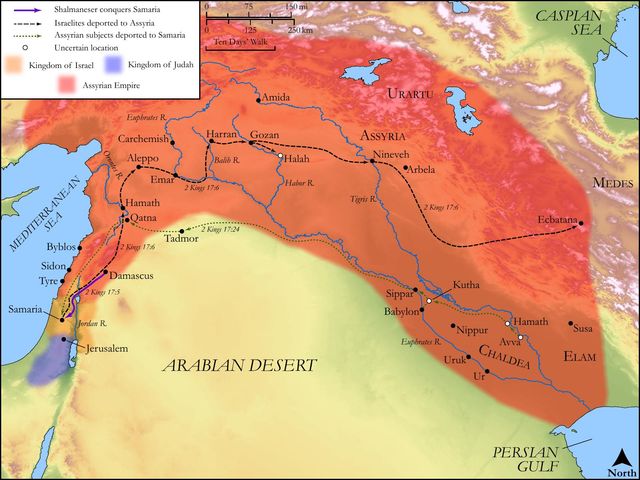
2 Kings 17:4 precisely details the immediate cause for the impending collapse of the northern kingdom of Israel, focusing on the actions of its final king, Hoshea. The verse reveals that the king of Assyria uncovered Hoshea's treacherous conspiracy, which involved secretly dispatching envoys to King So of Egypt and, critically, ceasing the annual tribute payments to Assyria. This overt act of rebellion against the king he served led swiftly to Hoshea's apprehension and imprisonment, thereby setting the stage for the subsequent three-year siege and ultimate exile of Israel.
Context
ShowHideLiterary Context
This verse serves as a critical turning point within the overarching narrative of 2 Kings, which meticulously chronicles the reigns of the kings of both Israel and Judah, often evaluating their faithfulness or unfaithfulness to God's covenant. Immediately preceding this verse, 2 Kings 17:3 establishes Hoshea's initial subservience to Shalmaneser V, the formidable king of Assyria, and his subsequent failure to maintain the required tribute. Following this pivotal verse, the narrative rapidly escalates to the three-year siege of Samaria, Israel's capital (2 Kings 17:5), and the devastating fall of the northern kingdom, culminating in the Assyrian exile of its people (2 Kings 17:6). Thus, 2 Kings 17:4 functions as the direct cause-and-effect link, providing the precise explanation for Assyria's decisive and punitive action against Israel.
Historical & Cultural Context
The late 8th century BCE was profoundly shaped by the Neo-Assyrian Empire, which had firmly established itself as the dominant power among the nations. Smaller kingdoms, including Israel, frequently found themselves reduced to servants and tributaries, compelled to pay substantial annual tribute to Assyria in exchange for a degree of continued autonomy. King Hoshea himself had ascended to the throne of Israel with direct Assyrian backing after assassinating his predecessor, Pekah, as recorded in 2 Kings 15:30. However, the burden of Assyrian tribute was immense, fostering a strong temptation for tributary kingdoms to seek alliances with other regional powers, particularly Egypt, to throw off the Assyrian yoke. "So king of Egypt" is generally identified by historians as Osorkon IV, a relatively weak pharaoh of the 22nd or 23rd Dynasty, whose rule over a fragmented Egypt made him an inherently unreliable ally against the overwhelming might of Assyria. Hoshea's desperate attempt to forge such an alliance was a direct and grave breach of his servitude, for he "brought no present to the king of Assyria, as he had done year by year," and the king of Assyria "found conspiracy in Hoshea."
Key Themes
ShowHideThis verse powerfully contributes to several foundational themes within 2 Kings and the broader Old Testament narrative. Firstly, it underscores the theme of Rebellion and Betrayal. Hoshea's actions—sending messengers to Egypt and withholding the annual "present" (tribute)—constituted a clear and unambiguous breach of his servitude and a direct act of defiance against the king he served. Secondly, it highlights the Consequences of Political Miscalculation. Hoshea's reliance on Egypt proved to be a catastrophic strategic error, as Egypt was consistently an unreliable and ultimately ineffective ally against the formidable Assyrian military machine. This misguided alliance only served to provoke Assyria's wrath, leading directly to Hoshea's imprisonment and, subsequently, the fall of Samaria and the Assyrian exile, as vividly detailed in 2 Kings 17:6. Finally, while not explicitly stated in this verse, the broader narrative of 2 Kings 17 reveals an overarching theme of Divine Judgment (Implied). Israel's persistent idolatry, covenant unfaithfulness, and rejection of God's prophets were the ultimate, underlying reasons for their downfall (2 Kings 17:7-18). Hoshea's political maneuvering was merely the immediate human catalyst through which God allowed His righteous judgment to be executed by Assyria.
Exposition and Analysis
ShowHideKey Word Analysis
ShowHideThis verb signifies to come forth to, to appear, or to discover. In the context of the Assyrian king finding "conspiracy," it indicates that Hoshea's covert actions were not merely suspected but definitively uncovered. This implies an effective intelligence network on the part of Assyria or perhaps a betrayal within Hoshea's own court, providing the Assyrian king with concrete evidence and justification for his immediate and decisive response.
This term, derived from a root meaning "to bind," denotes a secret plot or treacherous alliance, particularly one aimed at rebellion against a legitimate authority. Here, it precisely describes Hoshea's clandestine attempt to form a counter-alliance with Egypt against Assyria. Such an act was considered high political treason by the Assyrian Empire, making its discovery the direct trigger for the subsequent punitive measures.
While minchah can refer to a general gift or offering, in the context of a lesser king serving a greater, it specifically denotes the annual tribute or homage paid by the subordinate king to his overlord. It was a formal, obligatory payment that symbolized submission, loyalty, and acknowledgment of the overlord's authority. Its cessation by Hoshea was not an oversight but a deliberate and unambiguous declaration of rebellion and independence, a direct and public breach of his service to the king of Assyria.
This verb means to enclose, to hold back, or to restrain, often implying imprisonment. It signifies an immediate, decisive, and punitive action taken by the Assyrian king against Hoshea. The swiftness of this act underscores the Assyrian Empire's absolute authority and its zero-tolerance policy for insubordination from its servants and tributaries. Hoshea's personal confinement foreshadows the imminent subjugation of his entire kingdom.
Verse Breakdown
ShowHide"And the king of Assyria found conspiracy in Hoshea"
This opening clause establishes the critical discovery made by the Assyrian king. It highlights that Hoshea's covert actions—his secret plotting against Assyrian authority—were not merely suspected but definitively uncovered. This discovery provided the legal and political justification for Assyria's subsequent, severe actions against Hoshea and, by extension, against the northern kingdom of Israel.
"for he had sent messengers to So king of Egypt"
This clause specifies the precise nature of Hoshea's treacherous conspiracy. By dispatching envoys to Egypt, a rival and often unreliable power, Hoshea was actively seeking to undermine Assyrian authority and forge an alliance that would allow him to throw off the Assyrian yoke. This clandestine communication was a direct violation of the loyalty and exclusive allegiance expected from a tributary king.
"and brought no present to the king of Assyria, as [he had done] year by year"
This describes the overt act of rebellion that accompanied the secret conspiracy. The withholding of the annual tribute (minchâh) was a public and undeniable declaration of independence and a clear breach of his service to Assyria. It signaled Hoshea's intention to cease his submission to Assyria, serving as concrete evidence that confirmed the discovery of his underlying plot.
"therefore the king of Assyria shut him up, and bound him in prison"
This concluding clause states the immediate and direct consequence of Hoshea's actions. The Assyrian king did not hesitate but swiftly apprehended Hoshea, imprisoning him. This personal fate of the king serves as a grim foreshadowing of the imminent doom of the entire kingdom, as the leader's capture often preceded the complete subjugation of his people.
Literary Devices
ShowHideThe verse employs several literary devices to convey its powerful message with clarity and impact. The most prominent is Cause and Effect, as Hoshea's actions (sending messengers to Egypt and withholding tribute) are explicitly presented as the direct cause leading to the Assyrian king's discovery of his conspiracy and subsequent imprisonment. This clear causal chain highlights the inevitable and severe consequences of defiance against a dominant imperial power. Furthermore, the verse utilizes Foreshadowing, as Hoshea's personal imprisonment serves as a grim prelude to the impending doom of the entire northern kingdom of Israel, which will soon fall to Assyria, as detailed in 2 Kings 17:5-6. His individual fate mirrors the national catastrophe. There is also an element of Irony, given that Hoshea himself ascended to the throne with Assyrian backing (2 Kings 15:30), only to be crushed by the very power that installed him, underscoring the futility of his efforts and the overwhelming, inescapable might of the Assyrian Empire.
Theological and Thematic Connections
ShowHideThis pivotal verse, while ostensibly focused on political maneuvering and imperial power dynamics, carries profound theological weight, connecting Hoshea's strategic failure to a deeper spiritual one. The narrative implicitly critiques Israel's consistent pattern of relying on human alliances and military strength rather than placing their trust in the Lord, a theme echoed throughout the prophetic books. Hoshea's desperate appeal to Egypt, an unreliable and ultimately impotent power, stands in stark contrast to the divine call for faithfulness and absolute dependence on God alone for security and deliverance. This misplaced trust is depicted as a form of spiritual adultery, abandoning the covenant Lord for foreign gods and foreign powers, ultimately leading to divine judgment expressed through the very empires Israel sought to manipulate for its own ends.
Reflection and Application
ShowHideThe account of Hoshea's ill-fated rebellion serves as a timeless warning about the profound dangers of misplaced trust and the severe consequences of defying established authority, whether human or, more importantly, divine. For Hoshea, relying on an unreliable foreign power instead of seeking God's guidance and remaining faithful to His covenant led directly to personal calamity and national destruction. For believers today, this narrative underscores the critical importance of discerning where our ultimate trust lies. Are we prone to seeking security in human systems, political alliances, our own strategic prowess, or the shifting currents of worldly power, rather than in the sovereign power and unwavering faithfulness of God? This account challenges us to examine our own lives and communities, asking if we are truly living in humble dependence on the Lord, or if we are, like Hoshea, engaging in "conspiracies" of self-reliance that ultimately lead to spiritual or relational bondage. The ultimate tragedy of Hoshea and the northern kingdom vividly illustrates the biblical principle that genuine security, stability, and freedom are found not in fleeting geopolitical currents or human strength, but in unwavering obedience and faithful reliance upon God.
Questions for Reflection
ShowHideFAQ
ShowHideWho was "So king of Egypt"?
ShowHide"So king of Egypt" is generally identified by historians as Osorkon IV, a pharaoh of the 22nd or 23rd Dynasty who ruled a fragmented Egypt. At this time, Egypt was not a unified, powerful empire but rather a collection of smaller kingdoms, and Osorkon IV's influence was limited. He was not a strong enough ally to pose a serious threat to the formidable Neo-Assyrian Empire, making Hoshea's reliance on him a significant strategic blunder and a testament to his desperation.
Why was Hoshea's act considered "conspiracy" and not just rebellion?
ShowHideHoshea's actions went beyond mere rebellion. "Conspiracy" (Hebrew: qesher) implies a covert, treacherous plot against the king he served, involving secret communications and the breaking of his allegiance. While withholding tribute was the overt sign of rebellion, the underlying act of sending messengers to a rival power like Egypt was a secret, premeditated attempt to undermine Assyrian authority and form a counter-alliance. This made it a deeper act of political treason in the eyes of his Assyrian overlord, justifying the severe and immediate response.
What was the ultimate fate of Hoshea and Israel after this verse?
ShowHideAs stated in 2 Kings 17:4, Hoshea himself was "shut up, and bound him in prison" by the king of Assyria. Following his imprisonment, the Assyrians besieged Samaria, the capital of the northern kingdom, for three years (2 Kings 17:5). Eventually, Samaria fell, and the Israelites were carried away into exile in Assyria (2 Kings 17:6), marking the definitive and tragic end of the northern kingdom of Israel.
Christ-Centered Fulfillment
ShowHideThe tragic narrative of Hoshea and the northern kingdom's fall, precipitated by a king's misplaced trust in human alliances and rebellion against the king he served, powerfully foreshadows the universal human condition and points to the ultimate need for a divine King and a new covenant. Hoshea's desperate attempt to secure freedom from Assyrian bondage through a weak Egyptian alliance only led to greater captivity and destruction, mirroring humanity's futile efforts to find liberation through self-reliance or worldly powers. This broken covenant and the repeated failure of earthly kings underscore the absolute necessity of the perfect, faithful King, Jesus Christ. He is the true King who does not demand tribute as a means of control but offers grace, and His kingdom is not established through political maneuvering or force but through self-sacrificial love and a new covenant inaugurated in His blood (Luke 22:20). Unlike Hoshea's reliance on a fragile Egypt, Christ is the steadfast "Lamb of God who takes away the sin of the world" (John 1:29), the one who truly delivers His people from the bondage of sin and death (Matthew 1:21). His reign offers genuine freedom (John 8:36) and an everlasting kingdom, fulfilling all the broken promises and failed leadership of the Old Testament kings, and establishing a superior covenant built on better promises (Hebrews 8:6).