


Exodus 23:16
Bible text: King James Version (1769 Blayney text) · Public domain
Bible text: King James Version with Strong's numbers · Public domain
Bible text: Berean Standard Bible · Public domain
Bible text: American Standard Version (1901) · Public domain
Bible text: World English Bible, Messianic edition · Public domain
Bible text: Geneva Bible (1599) · Public domain
Bible text: Young's Literal Translation · Public domain
- וְחַגve·Chagand [the] festival ofH2282Conj-w ¦ N-mscNoun Singular Masculine Constructוְandחַג[the] festival of
- הַקָּצִירha·ka·Tzirthe harvestH7105Art ¦ N-msNoun Singular Masculine Absoluteהַtheקָּצִירharvest
- בִּכּוּרֵיbi·ku·Rei[the] first-fruits ofH1061N-mpcNoun Plural Masculine Construct
- מַעֲשֶׂיךָma·'a·Sei·khayour work<s>H4639N-mpc ¦ 2msNoun Plural Masculine Constructמַעֲשֶׂיwork<s>ךָyour
- אֲשֶׁר'a·SherwhichH834RelParticle Relative
- תִּזְרַעtiz·Ra'you will sowH2232V-Qal-Imperf-2msVerb Qal Imperfect 2nd Singular Masculine
- בַּשָּׂדֶהba·sa·Dehin the fieldH7704Prep-b ¦ N-msNoun Singular Masculine Absoluteבַּin theשָּׂדֶהfield
- וְחַגve·Chagand [the] festival ofH2282Conj-w ¦ N-mscNoun Singular Masculine Constructוְandחַג[the] festival of
- הָאָסִףha·'a·Sifthe ingatheringH614Art ¦ N-msNoun Singular Masculine Absoluteהָtheאָסִףingathering
- בְּצֵאתbe·Tzetwhen goes outH3318Prep-b ¦ V-Qal-InfVerb Qal Infinitive Constructבְּwhenצֵאתgoes out
- הַשָּׁנָהha·sha·Nahthe yearH8141Art ¦ N-fsNoun Singular Feminine Absoluteהַtheשָּׁנָהyear
- בְּאָסְפְּךָbe·'a·se·pe·Khawhen gathering youH622Prep-b ¦ V-Qal-Inf ¦ 2msVerb Qal Infinitive Constructבְּwhenאָסְפְּgatheringךָyou
- אֶת'et<obj.>H853DirObjMParticle Object Indicator
- מַעֲשֶׂיךָma·'a·Sei·khayour work<s>H4639N-mpc ¦ 2msNoun Plural Masculine Constructמַעֲשֶׂיwork<s>ךָyour
- מִןminfromH4480PrepPreposition
- הַשָּׂדֶהha·sa·Dehthe fieldH7704Art ¦ N-msNoun Singular Masculine Absoluteהַtheשָּׂדֶהfield
English is a literal word-by-word gloss of the Hebrew, not the KJV's wording. Why?
This is the original text the KJV's translators worked from — each Hebrew word with its own literal English meaning in this verse, prepared by scholars at Tyndale House, Cambridge. The KJV translates whole sentences, not word by word, so its wording differs: one Hebrew word can become several English words, and the KJV may choose “the LORD” where the gloss reads “Yahweh”. Both are faithful — they answer different questions. For the KJV's own rendering, switch to the KJV text.
Details
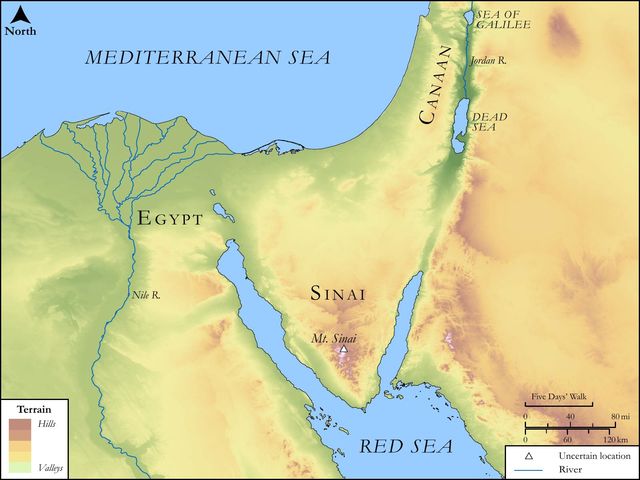
See on the biblical-era maps

Study this verse
Public-domain commentary
Matthew Henry
From his Commentary on the Whole Bible. Henry comments on passages, not single verses — this entry covers Exodus 23:10–19. His two-level outline is real structure in the source text, so it is rendered as structure.
Here is, I. The institution of the sabbatical year, Exo 23:10, Exo 23:11. Every seventh year the land was to rest; they must not plough nor sow it at the beginning of the year, and then they could not expect any great harvest at the end of the year: but what the earth did produce of itself should be eaten from hand to mouth, and not laid up. Now this was designed, 1. To show what a plentiful land that was into which God was bringing them - that so numerous a people could have rich maintenance out of the produce of so small a country, without foreign trade, and yet could spare the increase of every seventh year. 2. To remind them of their dependence upon God their great landlord, and their obligation to use the fruit of their land as he should direct. Thus he would try their obedience in a matter that nearly touched their interest. Afterwards we find that their disobedience to this command was a forfeiture of the promises, Ch2 36:21. 3. To teach them a confidence in the divine Providence, while they did their duty - that, as the sixth day's manna served for two day's meat, so the sixth year's increase should serve for two years' subsistence. Thus they must learn not to take thought for their life, Mat 6:25. If we are prudent and diligent in our affairs, we may trust Providence to furnish us with the bread of the day in its day.
II.The repetition of the law of the fourth commandment concerning the weekly sabbath, Exo 23:12.
Even in the year of rest they must not think that the sabbath day was laid in common with the other days, but, even that year, it must be religiously observed; yet thus some have endeavoured to take away the observance of the sabbath, by pretending that every day must be a sabbath day.
III.All manner of respect to the gods of the heathen is here strictly forbidden, Exo 23:13.
A general caution is prefixed to this, which has reference to all these precepts: In all things that I have said unto you, be circumspect. We are in danger of missing our way on the right hand and on the left, and it is at our peril if we do; therefore we have need to look about us. A man may ruin himself through mere carelessness, but he cannot save himself without great care and circumspection: particularly, since idolatry was a sin which they were much addicted to, and would be greatly tempted to, they must endeavour to blot out the remembrance of the gods of the heathen, and must disuse and forget all their superstitious forms of speech, and never mention them but with detestation. In Christian schools and academies (for it is in vain to think of reforming the play-houses), it were to be wished that the names and stories of the heathen deities, or demons rather, were not so commonly and familiarly used as they are, even with intimations of respect, and sometimes with forms of invocation. Surely we have not so learned Christ.
IV.Their solemn religious attendance on God in the place which he should choose is here strictly required, Exo 23:14-17.
1.Thrice a year all their males must come together in a holy convocation, that they might the better know and love one another, and keep up their communion as a dignified and peculiar people.
2.They must come together before the Lord (Exo 23:17) to present themselves before him, looking towards the place where his honour dwelt, and to pay their homage to him as their great Lord, from and under whom they held all their enjoyments.
3.They must feast together before the Lord, eating and drinking together, in token of their joy in God and their grateful sense of his goodness to them; for a feast is made for laughter, Ecc 10:19. O what a good Master do we serve, who has made it our duty to rejoice before him, who feasts his servants when they are in waiting! Never let religion be called a melancholy thing, when its solemn services are solemn feasts.
4.They must not appear before God empty, Exo 23:15. Some free-will offering or other they must bring, in token of their respect and gratitude to their great benefactor; and, as they were not allowed to come empty-handed, so we must not come to worship God empty-hearted; our souls must be filled with grace, with pious and devout affections, holy desires towards him, and dedications of ourselves to him, for with such sacrifices God is well-pleased.
5.The passover, pentecost, and feast of tabernacles, in spring, summer, and autumn, were the three times appointed for their attendance: not in winter, because travelling was then uncomfortable; not in the midst of their harvest, because then they were otherwise employed; so that they had no reason to say that he made them to serve with an offering, or wearied them with incense.
V.Some particular directions are here given about the three feasts, though not so fully as afterwards.
1.As to the passover, it was not to be offered with leavened bread, for at that feast all leaven was to be cast out, nor was the fat of it to remain until the morning, lest it should become offensive, Exo 23:18.
2.At the feast of pentecost, when they were to begin their harvest, they must bring the first of their first-fruits to God, by the pious presenting of which the whole harvest was sanctified, Exo 23:19.
3.At the feast of ingathering, as it is called (Exo 23:16), they must give God thanks for the harvest-mercies they had received, and must depend upon him for the next harvest, and must not think to receive benefit by that superstitious usage of some of the Gentiles, who, it is said, at the end of their harvest, seethed a kid in its dam's milk, and sprinkled that milk-pottage, in a magical way, upon their gardens and fields, to make them more fruitful next year. But Israel must abhor such foolish customs.
Continue studying Exodus 23:16 across the web’s major study libraries — every link below opens this exact verse, chapter, or book on the destination site.
Read & Compare
 BibleGatewayThis verse in more than 200 translations and 70 languages.
 Bible.comThe YouVersion reader — hundreds of translations, reading plans, and highlights.
 ESV.orgCrossway's official English Standard Version reader.
 NET BibleThe NET translation with 60,000+ translators' notes on every rendering decision.
 STEP BibleTyndale House's free study tool — original text, vocabulary, and scholarly resources.
 BibliaLogos Bible Software's free web reader.
 USCCBThe New American Bible (Revised Edition) with the U.S. bishops' study notes.
Commentaries
 BibleHub CommentariesDozens of classic commentaries on this verse, gathered on one page.
 StudyLightMore than 100 commentary sets — the largest collection on the web.
 BibleRefPlain-English commentary on what this verse means, verse by verse.
 Enduring WordDavid Guzik's free commentary on this chapter, widely used by Bible teachers.
 Bible Study ToolsVerse commentary alongside Greek and Hebrew study aids.
Original Language & Research
- BibleHub InterlinearThe verse word by word — original language, transliteration, and English.
- BibleHub LexiconEvery word's original-language definition and Strong's entry.
 Blue Letter BibleDeep-study tools — Strong's numbers, concordance, and word studies.
 SefariaThe Hebrew text with Rashi and centuries of Jewish commentary.
Sermons, Hymns & Audio


TrulyRandomVerse is not affiliated with these sites and doesn’t control their content. They’re linked because they’re genuinely useful.
Summary
Exodus 23:16 meticulously outlines two of the three essential annual pilgrimage festivals ordained by God for the Israelites: the Feast of Harvest (also known as Weeks or Pentecost) and the Feast of Ingathering (also known as Booths or Tabernacles). These agricultural feasts served as profound, divinely appointed occasions for the nascent nation to express communal gratitude, acknowledge God's sovereign provision over creation, and reaffirm their covenant relationship with Him. They were structured moments for offering the initial and final yields of their agricultural labors, thereby perpetually reminding the Israelites that Yahweh, not their own toil, was the ultimate source of all sustenance and blessing throughout their agrarian year.
Context
ShowHideLiterary Context
Exodus 23:16 is strategically positioned within the "Book of the Covenant," a comprehensive legal and ethical framework given by God to Moses on Mount Sinai immediately following the Ten Commandments. This segment, spanning Exodus 20:22-23:33, meticulously details the statutes and ordinances that would govern Israel's life as a holy nation set apart for God. Specifically, Exodus 23:14-19 mandates the observance of three annual pilgrimage festivals, underscoring their centrality to Israel's worship calendar and national identity. These commands seamlessly integrate spiritual devotion with the practicalities of daily life, particularly within their agrarian society, ensuring that the rhythms of their year were punctuated by acts of worship, remembrance of God's goodness, and covenant fidelity.
Historical & Cultural Context
Ancient Israel operated as an agrarian society, meaning their entire socio-economic and cultural fabric was intricately woven into the cycles of planting, growing, and harvesting. The three annual pilgrimage feasts—Passover/Unleavened Bread, the Feast of Harvest (Weeks), and the Feast of Ingathering (Booths)—were deeply synchronized with this agricultural calendar. Each festival not only celebrated a specific stage of the harvest but also commemorated a pivotal event in Israel's redemptive history. These feasts necessitated that all Israelite males journey to a central sanctuary (initially the Tabernacle, later the Temple in Jerusalem), a practice that profoundly fostered national unity and a shared identity centered on their covenant with Yahweh. The "Feast of Harvest" celebrated the early grain harvest, while the "Feast of Ingathering" marked the final fruit harvest, symbolizing the completion of the agricultural year and serving as a poignant reminder of God's faithful provision during their forty years of wilderness wanderings, as further elaborated in Leviticus 23.
Key Themes
ShowHideExodus 23:16 contributes significantly to several overarching themes within the book of Exodus and the broader Pentateuch. Foremost is the theme of Divine Sovereignty and Provision, highlighting God's absolute control over creation and His faithful sustenance of His people. The feasts serve as tangible expressions of Israel's dependence on God for their very livelihood. Closely related is the theme of Covenant Loyalty and Obedience, as the observance of these feasts was a direct command from Yahweh, a test of their faithfulness. The concept of Thanksgiving and Remembrance is also paramount; these festivals were designed to cultivate a national posture of gratitude and to ensure that future generations would recall God's mighty acts on their behalf. Finally, the emphasis on "firstfruits" introduces the theme of Consecration and Priority, teaching Israel to honor God with the best of their increase, acknowledging His ultimate ownership and blessing over all their endeavors, a principle echoed throughout the wisdom literature, such as in Proverbs 3:9-10.
Exposition and Analysis
ShowHideKey Word Analysis
ShowHideThis term, derived from a root meaning "to move in a circle" or "to dance," refers to a solemn festival or pilgrimage. In the context of Exodus 23:16, chag denotes a divinely appointed time for communal celebration and worship, often involving a pilgrimage to a central sanctuary. It signifies not merely a holiday, but a sacred convocation, emphasizing the religious and communal significance of these agricultural observances.
From the root meaning "to be ripe first," bikkûwr refers to the initial, earliest, and most excellent produce of the harvest. The offering of firstfruits was a foundational principle in Israelite worship, symbolizing God's ownership over all creation and the people's humble acknowledgment that their sustenance came directly from His hand. It was an act of faith and dedication, trusting God to bless the remainder of the harvest. This concept extended beyond agriculture to encompass the firstborn of animals and people, signifying dedication and priority to God.
This word, derived from the verb "to gather," signifies the act of collecting or accumulating, specifically the final collection of crops at the end of the agricultural year. The "Feast of Ingathering" (חַג הָאָסִף, Chag HaAsif) marked the culmination of the grape, olive, and fig harvests. It was a time of immense joy and thanksgiving for the year's full bounty, and it also served as a historical remembrance of Israel's forty years of wandering in the wilderness, living in temporary shelters (booths).
Verse Breakdown
ShowHide"And the feast of harvest, the firstfruits of thy labours, which thou hast sown in the field:"
This clause introduces the "Feast of Harvest," identifying it as a celebration directly linked to the "firstfruits" of the Israelites' "labours." The phrase "which thou hast sown in the field" grounds the feast in the tangible reality of their agrarian existence, emphasizing that the bounty they receive is a direct result of God's favor upon their cultivated land. This feast, later known as Shavuot or Pentecost, was a commanded recognition that God was the giver of the early grain harvest, demanding a tangible expression of His sovereignty through the offering of the very first and best produce.
"and the feast of ingathering, [which is] in the end of the year, when thou hast gathered in thy labours out of the field."
This second clause introduces the "Feast of Ingathering," clearly marking it as the culmination of the agricultural year. The temporal marker "[which is] in the end of the year" precisely places this festival as the final harvest celebration, occurring after all crops—including grapes, olives, and figs—have been brought in. Similar to the Feast of Harvest, it is tied to "thy labours," acknowledging the human effort involved, but ultimately attributing the successful "gathering in" to divine blessing. This feast, later known as Sukkot or Tabernacles, was a joyous celebration of the completed agricultural cycle and a comprehensive expression of gratitude for God's abundant provision throughout the entire year.
Literary Devices
ShowHideExodus 23:16 masterfully employs Parallelism and Repetition to underscore its central message. The verse presents two distinct yet intrinsically related feasts—the "feast of harvest" and the "feast of ingathering"—structured in a balanced, parallel manner. Each feast is explicitly linked to "thy labours" and the "field," highlighting the cyclical nature of the agricultural year and God's consistent provision from its nascent stages (firstfruits) to its completion (ingathering). The Repetition of "thy labours" emphasizes the human effort involved in cultivation, yet by associating these labors with divinely commanded feasts of thanksgiving, the text subtly but powerfully conveys that the success of these endeavors is ultimately a gracious gift from God. Furthermore, the feasts themselves function as potent Symbols of God's covenant faithfulness and His role as the benevolent sustainer of life, transforming mundane agricultural activities into sacred acts of worship, remembrance, and communal celebration.
Theological and Thematic Connections
ShowHideExodus 23:16 articulates a profound theological truth about divine provision and human responsibility within the covenant. These feasts underscore that while humanity engages in diligent "labours" of sowing and gathering, the ultimate blessing, bounty, and very sustenance come solely from God. This fosters a deep sense of gratitude, dependence, and humility, perpetually reminding the Israelites that their prosperity and well-being flowed directly from their covenant relationship with Yahweh. The principle of "firstfruits" is particularly significant, embodying the foundational tenet of honoring God with the best and earliest of one's produce, signifying His priority, ownership, and worthiness of receiving the choicest offerings. These celebrations were far more than mere agricultural holidays; they were sacred convocations designed to cultivate a national identity rooted in thanksgiving, remembrance of God's mighty acts of deliverance and provision, and unwavering trust in His ongoing faithfulness.
Reflection and Application
ShowHideExodus 23:16, though deeply rooted in an ancient agrarian context, offers timeless and universally applicable principles for contemporary believers. It serves as a powerful call to cultivate a profound and consistent posture of gratitude, compelling us to recognize God as the ultimate source of every blessing in our lives—whether it be material provision, spiritual gifts, relational richness, or even the breath we breathe. Just as the Israelites were commanded to bring their "firstfruits" and celebrate the "ingathering," we are invited to prioritize God in our time, talents, and resources, offering Him the very best of what we have and trusting Him implicitly to bless the remainder. This involves intentionally pausing amidst our busy lives to acknowledge His unwavering faithfulness, not merely in times of abundance, but throughout all seasons and circumstances. By embracing this posture, we shift our focus from mere consumption and self-reliance to consecrated living, transforming our daily activities and achievements into acts of worship and humble dependence on our benevolent Creator.
Questions for Reflection
ShowHideFAQ
ShowHideWhat is the significance of the "firstfruits" mentioned in this verse?
ShowHideThe "firstfruits" (Hebrew: bikkûwr) represent the initial, earliest, and best portion of the harvest. Theologically, offering the firstfruits was a profound act of faith and acknowledgment of God's ultimate ownership. By giving Him the first and finest, the Israelites demonstrated their trust that He would bless the rest of their labor and faithfully provide for their needs. It was a tangible expression of prioritizing God and recognizing Him as the ultimate source of all sustenance, a principle echoed in Proverbs 3:9.
Why were these agricultural feasts so important for ancient Israel?
ShowHideThese feasts were crucial for several interconnected reasons. Firstly, they served as vital national reminders of God's faithful provision throughout the agricultural year, continually reinforcing Israel's absolute dependence on Him. Secondly, they provided essential opportunities for communal worship, celebration, and fellowship, thereby fostering national unity and a shared identity centered on their covenant with God. Thirdly, they commemorated significant historical events (e.g., the Feast of Ingathering recalling wilderness wanderings), ensuring that future generations remembered God's mighty acts of deliverance and sustenance. Finally, they were direct expressions of obedience to God's commands, shaping Israel's entire calendar and lifestyle around divine principles, as seen in the broader context of Exodus 23:14-19.
How do the principles of these ancient feasts relate to believers today, even without an agrarian lifestyle?
ShowHideWhile contemporary believers may not live in an agrarian society, the underlying principles of these feasts remain profoundly relevant. We are still called to cultivate a lifestyle of profound gratitude for God's provision in all its myriad forms—material, spiritual, and relational. The concept of "firstfruits" translates into prioritizing God in our time, talents, and finances, offering Him the best of what we have and trusting Him with the rest. The feasts also remind us to intentionally set aside time for worship, remembrance, and communal celebration of God's faithfulness, fostering a deeper relationship with Him and with our fellow believers. This echoes the New Testament call to live lives of thanksgiving and generosity, recognizing that "every good and perfect gift is from above, coming down from the Father of the heavenly lights" (James 1:17).
Christ-Centered Fulfillment
ShowHideThe agricultural feasts commanded in Exodus 23:16 find their profound Christ-centered fulfillment, transitioning from shadows to ultimate reality in the person and redemptive work of Jesus Christ. The "Feast of Harvest" (Shavuot/Pentecost), which celebrated the firstfruits of the grain harvest, points directly to the spiritual harvest inaugurated by Christ. It was precisely on the day of Pentecost, fifty days after Christ's glorious resurrection, that the Holy Spirit was powerfully poured out, leading to the dramatic ingathering of thousands into the nascent church, thereby serving as the spiritual "firstfruits" of God's new covenant people (Acts 2:1-41). Moreover, Jesus Himself is presented as the "firstfruits of those who have fallen asleep" (1 Corinthians 15:20), signifying His resurrection as the irrefutable guarantee and pattern for the future resurrection of all believers. The "Feast of Ingathering" (Sukkot/Tabernacles), commemorating God's dwelling among His people in the wilderness and celebrating the final harvest, powerfully foreshadows Christ's incarnation—God "tabernacling" among us in human flesh (John 1:14). Ultimately, this feast points to the grand eschatological ingathering of all believers into God's eternal presence, where He will dwell with His people forever, a glorious and final harvest of souls gathered into the heavenly kingdom (Revelation 21:3). Thus, what began as agricultural celebrations of God's temporal provision culminates in Christ's comprehensive redemptive work, ensuring eternal spiritual provision and unbroken communion with God.