


Acts 15:37
- ΒαρναβᾶςBarnabasBarnabasG921N-NSM-PNoun Nominative Singular Masculine Individual
- δὲdenowG1161CONJConjunction
- ἐβούλετοebouletowas planningG1014V-INI-3SVerb Imperfect Middle Or Passive Deponent Indicative 3rd Singular
- συμπαραλαβεῖνsumparalabeinto take alongG4838V-2AANVerb 2nd Aorist Active Infinitive
- τὸνton<the>G3588T-ASMDefinite article Accusative Singular Masculine
- ἸωάννηνIōannēnJohnG2491N-ASM-PNoun Accusative Singular Masculine Individual
- τὸνtonwhoG3588T-ASMDefinite article Accusative Singular Masculine
- καλούμενονkaloumenonis being calledG2564V-PPP-ASMVerb Present Passive Participle Accusative Singular Masculine
- Μᾶρκον·MarkonMarkG3138N-ASM-PNoun Accusative Singular Masculine Individual
English is a literal word-by-word gloss of the Greek, not the KJV's wording. Why?
This is the original text the KJV's translators worked from — each Greek word with its own literal English meaning in this verse, prepared by scholars at Tyndale House, Cambridge. The KJV translates whole sentences, not word by word, so its wording differs: one Greek word can become several English words, and the KJV may choose “charity” where the gloss reads “love”. Both are faithful — they answer different questions. For the KJV's own rendering, switch to the KJV text.
Details
See on the biblical-era map
Study this verse
Public-domain commentary
Matthew Henry
From his Commentary on the Whole Bible. Henry comments on passages, not single verses — this entry covers Acts 15:36–41. His three-level outline is real structure in the source text, so it is rendered as structure.
We have seen one unhappy difference among the brethren, which was of a public nature, brought to a good issue; but here we have a private quarrel between two ministers, no less men than Paul and Barnabas, not compromised indeed, yet ending well.
I.Here is a good proposal Paul made to Barnabas to go and review their work among the Gentiles and renew it, to take a circuit among the churches they had planted, and see what progress the gospel made among them. Antioch was now a safe and quiet harbour for them: they had there no adversary nor evil occurrent; but Paul remembered that they only put in there to refit and refresh themselves, and therefore begins now to think of putting to sea again; and, having been in winter quarters long enough, he is for taking the field again, and making another campaign, in a vigorous prosecution of this holy war against Satan's kingdom. Paul remembered that the work appointed him was afar off among the Gentiles, and therefore he is here meditating a second expedition among them to do the same work, though to encounter the same difficulties; and this some days after, for his active spirit could not bear to be long out of work; no, nor his bold and daring spirit to be long out of danger. Observe,
1.To whom he makes this proposal - to Barnabas, his old friend and fellow-labourer; he invites his company and help in this work. We have need one of another, and may be in many ways serviceable one to another; and therefore should be forward both to borrow and lend assistance. Two are better than one. Every soldier has his comrade.
2.For whom the visit is designed: "Let us not presently begin new work, nor break up new ground; but let us take a view of the fields we have sown. Come, and let us get up early to the vineyards, let us see if the vine flourish, Sol 7:12. Let us go again and visit our brethren in every city where we have preached the word of the Lord." Observe, He calls all the Christians brethren, and not ministers only; for, Have we not all one Father? He has a concern for them in every city, even where the brethren were fewest and poorest, and most persecuted and despised; yet let us visit them. Wherever we have preached the word of the Lord, let us go and water the seed sown. Note, Those that have preached the gospel should visit those to whom them have preached it. As we must look after our praying, and hear what answer God gives to that; so we must look after our preaching, and see what success that has. Faithful ministers cannot but have a particular tender concern for those to whom they have preached the gospel, that they may not bestow upon them labour in vain. See Th1 3:5, Th1 3:6.
3.What was intended in this visit: "Let us see how they do," pōs echousi - how it is with them. It was not merely a compliment that he designed, nor did he take such a journey with a bare How do you do? No, he would visit them that he might acquaint himself with their case, and impart unto them such spiritual gifts as were suited to it; as the physician visits his recovering patient, that he may prescribe what is proper for the perfecting of his cure, and the preventing of a relapse. Let us see how they do, that is, (1.) What spirit they are of, how they stand affected, and how they behave themselves; it is probable that they frequently heard from them, "But let us go and see them; let us go and see whether they hold fast what we preached to them, and live up to it, that we may endeavour to reduce them if we find them wandering, to confirm them if we find them wavering, and to comfort them if we find them steady." (2.) What state they are in, whether the churches have rest and liberty, or whether they are not in trouble or distress, that we may rejoice with them if they rejoice, and caution them against security, and may weep with them if they weep, and comfort them under the cross, and may know the better how to pray for them.
II.The disagreement between Paul and Barnabas about an assistant; it was convenient to have a young man with them that should attend on them and minister to them, and be a witness of their doctrine, manner of life, and patience, and that should be fitted and trained up for further service, by being occasionally employed in the present service. Now,
1.Barnabas would have his nephew John, whose surname was Mark, to go along with them, Act 15:37. He determined to take him, because he was his relation, and, it is likely, was brought up under him, and he had a kindness for him, and was solicitous for his welfare. We should suspect ourselves of partiality, and guard against it in preferring our relations.
2.Paul opposed it (Act 15:38): He thought not good to take him with them, ouk ēxiou - he did not think him worthy of the honour, nor fit for the service, who had departed from them, clandestinely as it should seem, without their knowledge, or wilfully, without their consent, from Pamphylia (Act 13:13), and went not with them to the work, because he was either lazy and would not take the pains that must be taken, or cowardly and would not run the hazard. He run his colours just as they were going to engage. It is probable that he promised very fair now that he would not do so again. But Paul thought it was not fit he should be thus honoured who had forfeited his reputation, nor thus employed who had betrayed his trust; at least, not till he had been longer tried. If a man deceive me once, it is his fault; but, if twice, it is my own, for trusting him. Solomon saith, Confidence in an unfaithful man in time of trouble is like a broken tooth, and a foot out of joint, which will hardly be used again, Pro 25:19.
III.The issue of this disagreement:
it came to such a height that they separated upon it. The contention, the paroxysm (so the word is), the fit of passion which this threw them both into, was so sharp that they departed asunder one from the other. Barnabas was peremptory that he would not go with Paul unless they took John Mark with them; Paul was as peremptory that he would not go if John did go with them. Neither would yield, and therefore there is no remedy but they must part. Now here is that which is very humbling, and just matter of lamentation, and yet very instructive. For we see,
1.That the best of men are but men, subject to like passions as we are, as these two good men had expressly owned concerning themselves (Act 14:15), and now it appeared too true. I doubt there was (as usually there is in such contentions) a fault on both sides; perhaps Paul was too severe upon the young man, and did not allow his fault the extenuation it was capable of, did not consider what a useful woman his mother was in Jerusalem (Act 12:12), nor make the allowances he might have made to Barnabas's natural affection. But it was Barnabas's fault that he took this into consideration, in a case wherein the interest of Christ's kingdom was concerned, and indulged it too much. And they were certainly both in fault to be hot as to let the contention be sharp (it is to be feared they gave one another some hard words), as also to be so stiff as each to stick resolutely to his opinion, and neither to yield. It is a pity that they did not refer the matter to a third person, or that some friend did not interpose to prevent its coming to an open rupture. Is there never a wise man among them to interpose his good offices, and to accommodate the matter, and to put them in mind of the Canaanite and the Perizzite that were now in the land, and that not only Jews and heathens, but the false brethren among themselves, would warm their hands at the flames of the contention between Paul and Barnabas? We must own it was their infirmity, and is recorded for our admonition; not that we must make use of it to excuse our own intemperate heats and passions, or to rebate the edge of our sorrow and shame for them; we must not say, "What if I was in a passion, were not Paul and Barnabas so?" No; but it must check our censures of others, and moderate them. If good men are soon put into a passion, we must make the best of it, it was the infirmity once of two of the best men that ever the world had. Repentance teaches us to be severe in reflections upon ourselves; but charity teaches us to be candid in our reflections upon others. It is only Christ's example that is a copy without a blot.
2.That we are not to think it strange if there be differences among wise and good men; we were told before that such offences would come, and here is an instance of it. Even those that are united to one and the same Jesus, and sanctified by one and the same Spirit, have different apprehensions, different opinions, different views, and different sentiments in points of prudence. It will be so while we are in this state of darkness and imperfection; we shall never be all of a mind till we come to heaven, where light and love are perfect. That is charity which never fails.
3.That these differences often prevail so far as to occasion separations. Paul and Barnabas, who were not separated by the persecutions of the unbelieving Jews, nor the impositions of the believing Jews, were yet separated by an unhappy disagreement between themselves. O the mischief that even the poor and weak remainders of pride and passion, that are found even in good men, do in the world, do in the church! Now wonder the consequences are so fatal where they reign.
IV.The good that was brought out of this evil-meat out of the eater, and sweetness out of the strong.
It was strange that even the sufferings of the apostles (as Phi 1:12), but much more strange that even the quarrels of the apostles, should tend to the furtherance of the gospel of Christ; yet so it proved here. God would not permit such things to be, if he knew not how to make them to serve his own purposes.
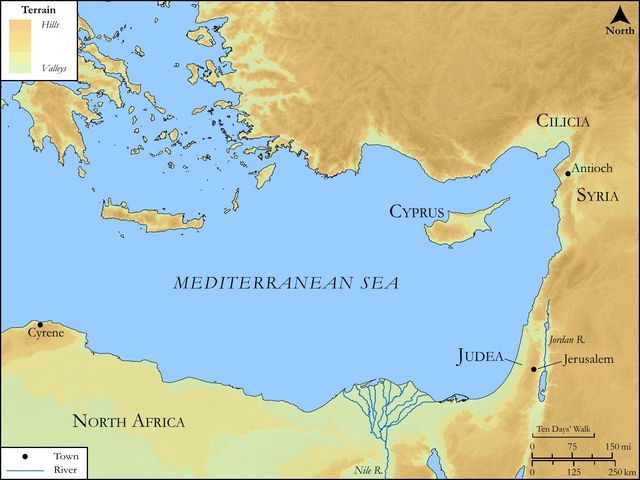
1.More places are hereby visited. Barnabas went one way; he sailed to Cyprus (v. 39), that famous island where they began their work (Act 13:4), and which was his own country, Act 4:36. Paul went another way into Cilicia, which was his own country, Act 21:39. Each seems to be influenced by his affection to his native soil, as usual (Nescio qu natale solum dulcedine cunctos ducit - There is something that attaches us all to our native soil), and yet God served his own purposes by it, for the diffusing of gospel light.
2.More hands are hereby employed in the ministry of the gospel among the Gentiles; for,
(1.)John Mark, who had been an unfaithful hand, is not rejected, but is again made use of, against Paul's mind, and, for aught we know, proves a very useful and successful hand, though many think it was not the same with that Mark that wrote the gospel, and founded the church at Alexandria, and whom Peter calls his son, Pe1 5:13.
(2.)Silas who was a new hand, and never yet employed in that work, nor intended to be, but to return to the service of the church at Jerusalem, had not God changed his mind (Act 15:33, Act 15:34), he is brought in, and engaged in that noble work.
V.We may further observe,
1.That the church at Antioch seem to countenance Paul in what he did. Barnabas sailed with his nephew to Cyprus, and no notice was taken of him, nor a bene discessit - a recommendation given him. Note, Those that in their service of the church are swayed by private affections and regards forfeit public honours and respect. But, when Paul departed, he was recommended by the brethren to the grace of God. They thought he was in the right in refusing to make use of John Mark, and could not but blame Barnabas for insisting upon it, though he was one who had deserved well of the church (Act 11:22) before they knew Paul; and therefore they prayed publicly for Paul, and for the success of his ministry, encouraged him to go on in his work, and, though they could do nothing themselves to further him, they transferred the matter to the grace of God, leaving it to that grace both to work upon him and to work with him. Note, Those are happy at all times, and especially in times of disagreement and contention, who are enabled so to carry themselves as not to forfeit their interest in the love and prayers of good people.
2.That yet Paul afterwards seems to have had, though not upon second thoughts, yet upon further trial, a better opinion of John Mark than now he had; for he writes to Timothy (Ti2 4:11), Take Mark and bring him with thee, for he is profitable to me for the ministry; and he writes to the Colossians concerning Marcus, sister's son to Barnabas, that if he came to them they should receive him, bid him welcome, and employ him (Col 4:10), which teaches us,
(1.)That even those whom we justly condemn we should condemn moderately, and with a great deal of temper, because we know not but afterwards we may see cause to think better of them, and both to make use of them and make friendship with them, and we should so regulate our resentments that if it should prove so we may not afterwards be ashamed of them.
(2.)That even those whom we have justly condemned, if afterwards they prove more faithful, we should cheerfully receive, forgive and forget, and put a confidence in, and, as there is occasion, give a good word to.
3.That Paul, though he wanted his old friend and companion in the kingdom and patience of Jesus Christ, yet went on cheerfully in his work (Act 15:41): He went through Syria and Cilicia, countries which lay next to Antioch, confirming the churches. Though we change our colleagues, we do not change our principal president. And observe, Ministers are well employed, and ought to think themselves so, and be satisfied, when they are made use of confirming those that believe, as well as in converting those that believe not.
Historical interpretation
Historical reception
7 surviving comments on this verse. Each one is dated, so this reads as a timeline rather than a list.
And there seems indeed to be exasperation, but in fact the whole matter is a plan of the Divine Providence, that each should receive his proper place: and it behooved that they should not be upon a par, but the one should lead, and the other be led. "And so Barnabas took Mark, and sailed unto Cyprus; and Paul chose Silas, and departed, being recommended by the brethren unto the grace of God. And he went through Syria and Cilicia, confirming the Churches." And this also is a work of Providence. For the Cyprians had exhibited nothing of the like sort as they at Antioch and the rest: and those needed the softer character, but these needed such a character as Paul's.
"And how is it not amiss, that upon so small a matter there should arise so great an evil?" In the first place then, no evil did come of it, if, sufficing each for whole nations, they were divided the one from the other, but a great good. And besides, they would not readily have chosen to leave each other. But admire, I pray you, the writer, how he does not conceal this either. "But at any rate," say you, "if they must needs part, let it be without exasperation." Nay, but if nothing more, observe this, that in this too is shown what was of man (in the preaching of the Gospel). For if the like behooved to be shown (even) in what Christ did, much more here.
Would to God we too made such separations, as to go forth for preaching. A wonderful man this is; and exceedingly great! To Mark this contest was exceedingly beneficial. For the awe inspired by Paul converted him, while the kindness of Barnabas caused that he was not left behind: so that they contend indeed, but the gain comes to one and the same end. For indeed, seeing Paul choosing to leave him, he would be exceedingly awed, and would condemn himself, and seeing Barnabas so taking his part, he would love him exceedingly: and so the disciple was corrected by the contention of the teachers: so far was he from being offended thereby.
"And some days after Paul said unto Barnabas, Let us go again and visit our brethren in every city where we have preached the word of the Lord, and see how they do. And Barnabas determined to take with them John, whose surname was Mark. But Paul thought not good to take him with them, who departed from them from Pamphylia, and went not with them to the work. And the contention was so sharp between them, that they departed asunder one from the other." And already indeed Luke has described to us the character of the Apostles, that the one was more tender and indulgent, but this one more strict and austere. For the gifts are diverse-(the gifts, I say), for that this is a gift is manifest-but the one befitting one, the other another set of characters, and if they change places, harm results instead of good. In the Prophets too we find this: diverse minds, diverse characters: for instance, Elias austere, Moses meek. So here Paul is more vehement.
The point to be considered, is not that they differed in their opinions, but that they accommodated themselves the one to the other (seeing), that thus it was a greater good their being parted: and the matter took a pretext from this. What then? did they withdraw in enmity? God forbid! In fact you see after this Barnabas receiving many encomiums from Paul in the Epistles. There was "sharp contention," it says, not enmity nor quarrelling. The contention availed so far as to part them. And with reason: for what each supposed to be profitable, he did not forego thereafter, because of the fellowship with the other. Nay, it seems to me that the parting took place advisedly, and that they said one to another "As I wish not, and thou wishest, therefore that we may not fight, let us distribute the places." So that in fact they did this, altogether yielding each to the other: for Barnabas wished Paul's plan to stand, therefore withdrew; on the other hand, Paul wished the other's plan to stand, therefore he withdrew.
This happens even in the case where God and men are the parties: the man requests, God is wroth. For instance, when He saith, "If her father had spit in her face": and again, "Let me alone, and in Mine anger I will blot out this people." And Samuel when he mourns for Saul. For by both, great good is done. Thus also here: the one is wroth, the other not so. The same happens also in matters where we are concerned. And the sharp contention with good reason, that Mark may receive a lesson, and the affair may not seem mere stage-playing. For it is not to be thought that he who bids, "Let not the sun go down upon your wrath," would have been wroth because of such a matter as this: nor that he who on all occasions gave way would not have given way here, he who so greatly loved Paul that before this he sought him in Tarsus, and brought him to the Apostles, and undertook the alms in common with him, and in common the business relating to the decree.
And besides, the contention cannot be said to be evil, when each disputes for such objects (as here) and with just reason. I grant you, if the exasperation were in seeking his own, and contending for his own honor, this might well be (reproved): but if wishing, both the one and the other, to instruct and teach, the one took this way and the other that, what is there to find fault with? For in many things they acted upon their human judgment; for they were not stocks or stones. And observe how Paul impeaches (Mark), and gives the reason. For of his exceeding humility he reverenced Barnabas, as having been partner with him in so great works, and being with him: but still he did not so reverence him, as to overlook (what was necessary).
Continue studying Acts 15:37 across the web’s major study libraries — every link below opens this exact verse, chapter, or book on the destination site.
Read & Compare
 BibleGatewayThis verse in more than 200 translations and 70 languages.
 Bible.comThe YouVersion reader — hundreds of translations, reading plans, and highlights.
 ESV.orgCrossway's official English Standard Version reader.
 NET BibleThe NET translation with 60,000+ translators' notes on every rendering decision.
 STEP BibleTyndale House's free study tool — original text, vocabulary, and scholarly resources.
 BibliaLogos Bible Software's free web reader.
 USCCBThe New American Bible (Revised Edition) with the U.S. bishops' study notes.
Commentaries
 BibleHub CommentariesDozens of classic commentaries on this verse, gathered on one page.
 StudyLightMore than 100 commentary sets — the largest collection on the web.
 BibleRefPlain-English commentary on what this verse means, verse by verse.
 Enduring WordDavid Guzik's free commentary on this chapter, widely used by Bible teachers.
 Bible Study ToolsVerse commentary alongside Greek and Hebrew study aids.
Original Language & Research
- BibleHub InterlinearThe verse word by word — original language, transliteration, and English.
- BibleHub LexiconEvery word's original-language definition and Strong's entry.
 Blue Letter BibleDeep-study tools — Strong's numbers, concordance, and word studies.
 CNTR CollationThe earliest Greek manuscripts of this verse, collated letter by letter.
Sermons, Hymns & Audio


TrulyRandomVerse is not affiliated with these sites and doesn’t control their content. They’re linked because they’re genuinely useful.
Summary
Acts 15:37 records Barnabas's firm decision to include John Mark in the upcoming missionary journey, a choice that would immediately precipitate a significant disagreement with Paul. This seemingly simple statement sets the stage for a pivotal moment in early church history, highlighting themes of grace, mentorship, and the complexities of human relationships within divine service, ultimately leading to the expansion of the Gospel through divergent paths.
Context
ShowHideLiterary Context
This verse immediately follows the momentous Jerusalem Council, where the apostles and elders, guided by the Holy Spirit, affirmed that Gentile converts did not need to be circumcised or adhere to the Mosaic Law for salvation. Paul and Barnabas, having played a central role in this council, were now preparing for their second missionary journey, intending to revisit the churches they had previously established. The decision regarding John Mark, though seemingly a personnel matter, becomes the catalyst for a sharp division, directly preceding the separation of Paul and Barnabas in the very next verses Acts 15:38-39. This internal conflict, while painful, ultimately served to expand the reach of the Gospel, as two distinct missionary teams were formed.
Historical & Cultural Context
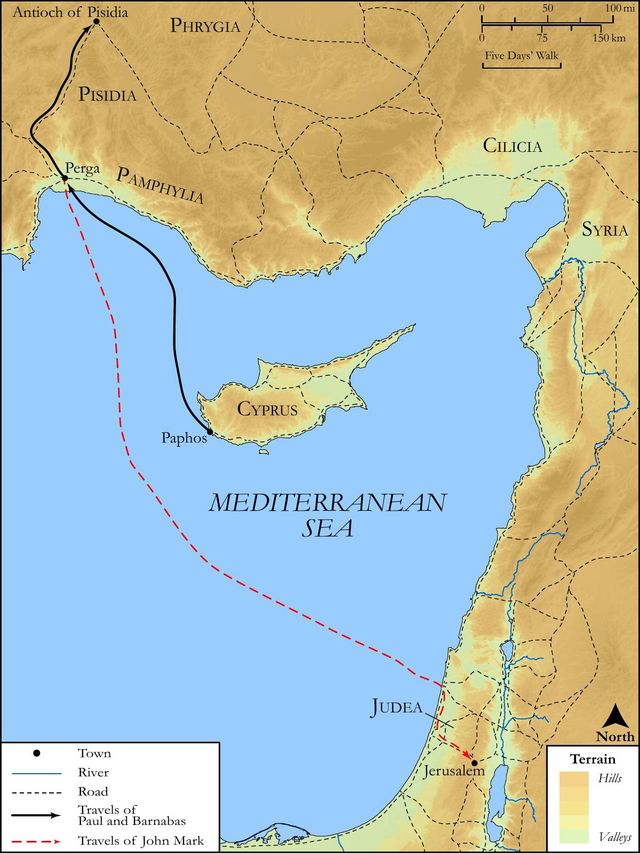
The early church was in a period of rapid expansion, moving beyond its Jewish roots into the wider Roman world. Missionary journeys were crucial for establishing new communities of believers. Travel was arduous and dangerous, requiring resilient and committed individuals. The practice of taking companions, often younger or less experienced, was common for both practical support and training. John Mark, a cousin of Barnabas Colossians 4:10, had previously accompanied Paul and Barnabas on their first journey but had departed from them in Pamphylia and returned to Jerusalem. This earlier departure was clearly a significant event, viewed by Paul as a dereliction of duty, and it forms the historical backdrop to the disagreement in Acts 15:37-39. Dual names, like John (Hebrew) and Mark (Latin), were also common among Jews living in the Greco-Roman world, facilitating interaction across cultural lines.
Key Themes
ShowHideActs 15:37 contributes to several overarching themes in the book of Acts and beyond. It underscores the theme of Mentorship and Discipleship, as Barnabas, known as the "Son of Encouragement" Acts 4:36, demonstrates a profound commitment to nurturing a younger minister, even one who had previously faltered. This highlights the importance of grace and second chances in spiritual formation. The verse also introduces the theme of Disagreement Among Godly Leaders, demonstrating that even Spirit-filled apostles can have honest and intense differences of opinion on matters of strategy and personnel. This conflict, though difficult, ultimately serves God's sovereign plan, leading to the Expansion of the Gospel through two separate missionary endeavors, thereby reaching more regions and people, as seen in the subsequent chapters of Acts.
Exposition and Analysis
ShowHideKey Word Analysis
ShowHideFrom the root boulē (counsel, will), this verb signifies to advise, deliberate, or resolve. Barnabas's decision was not a casual suggestion but a firm, settled purpose. It implies a considered judgment and a strong will to act, indicating his conviction regarding John Mark's inclusion. This word highlights the intentionality and resolve behind Barnabas's advocacy for Mark.
This compound verb combines syn (with) and paralambánō (to take alongside, receive). It means "to take along in company," emphasizing the act of bringing someone into partnership or fellowship for a shared endeavor. Barnabas desired Mark to be an active participant and companion in the missionary work, not merely a passive observer or servant.
Akin to the idea of "calling," this verb is used here to denote the giving of a name or being named. It indicates that "Mark" was John's given surname or cognomen, a common practice for Jews in the Roman world to have both a Hebrew and a Roman name. This detail provides cultural context for John Mark's identity and background.
Verse Breakdown
ShowHide"And Barnabas determined"
This clause establishes Barnabas as the subject of the action, highlighting his agency and strong will in this decision. The use of "determined" (from bouleúō) indicates a firm resolve, not a casual suggestion, setting the stage for the ensuing conflict. Barnabas, known for his encouraging nature, here demonstrates a conviction rooted in his character.
"to take with them John"
This specifies Barnabas's intent: to include John in their missionary party. The phrase "to take with them" (from symparalambánō) implies a desire for John to be a full participant in the shared work, not just an assistant. This reveals Barnabas's commitment to mentorship and his belief in giving John a renewed opportunity.
"whose surname was Mark"
This final clause identifies "John" more fully as "John Mark." The dual naming convention (Hebrew "John," Roman "Mark") was common, indicating his background and potential for ministry in both Jewish and Gentile contexts. This detail is crucial for understanding the individual at the heart of the dispute and his later significance in New Testament history.
Literary Devices
ShowHideThe verse employs Characterization by immediately revealing Barnabas's nature as an encourager and one who believes in second chances, consistent with his earlier portrayal as the "Son of Encouragement" Acts 4:36. There is also clear Foreshadowing, as this seemingly simple decision sets the stage for the intense disagreement between Paul and Barnabas that immediately follows in the narrative Acts 15:38-39. The narrative uses Conciseness to present a pivotal moment, allowing the reader to infer the underlying tension and the profound implications of Barnabas's resolve.
Theological and Thematic Connections
ShowHideActs 15:37 profoundly illustrates the theological principle of grace and the practical outworking of redemption in human relationships. Barnabas's determination to include John Mark, despite Mark's earlier abandonment of the mission, exemplifies a commitment to restoration and a belief in the potential for growth and renewed usefulness even after failure. This act of grace mirrors God's own character, who is always ready to forgive and restore those who stumble. It reminds us that God often uses imperfect people, and that our past mistakes do not necessarily disqualify us from future service. The subsequent disagreement between Paul and Barnabas, while painful, also highlights divine sovereignty, as God can use human differences to expand His kingdom in unforeseen ways, leading to two missionary teams instead of one.
Reflection and Application
ShowHideBarnabas's unwavering resolve to give John Mark a second chance offers a profound lesson in grace, mentorship, and the redemptive power of belief in others. In a world quick to dismiss those who have faltered, Barnabas embodies the spirit of an encourager, looking beyond past failures to see future potential. This challenges us to cultivate a similar heart in our own lives, both in personal relationships and within the church community. Are we quick to extend forgiveness and offer opportunities for restoration to those who have stumbled? Do we see the potential in others, even when their past performance has been less than ideal? This passage also reminds us that even deeply committed followers of Christ can experience significant disagreements, yet God can sovereignly use these very differences to further His purposes. Our focus should be on faithfully pursuing God's call, trusting that He can redeem even our relational tensions for His glory and the advancement of His kingdom.
Questions for Reflection
ShowHideFAQ
ShowHideWhy was John Mark's inclusion a point of contention, and what was his previous history?
ShowHideJohn Mark's inclusion was a point of contention because he had previously abandoned Paul and Barnabas during their first missionary journey, returning to Jerusalem from Pamphylia Acts 13:13. Paul viewed this as a serious dereliction of duty, indicating a lack of commitment or steadfastness, and therefore strongly objected to taking him again Acts 15:38. Barnabas, however, likely saw potential for growth and redemption in his cousin, John Mark, and was determined to give him another opportunity, reflecting his character as the "Son of Encouragement." This disagreement ultimately led to Paul and Barnabas separating and pursuing different missionary routes Acts 15:39.
Christ-Centered Fulfillment
ShowHideBarnabas's unwavering determination to give John Mark a second chance, despite past failure, beautifully foreshadows the boundless grace and restorative power found in Christ. Just as Barnabas believed in Mark's potential for renewed usefulness, so too does Christ extend radical forgiveness and new opportunities to those who have failed Him. Our Lord Jesus does not discard those who have stumbled or even denied Him, as seen in His restoration of Peter after his threefold denial John 21:15-19. He is the ultimate "Son of Encouragement," who takes our brokenness and redeems it for His glory, transforming past weaknesses into future strengths, as He did with Peter, and later, with John Mark, who became a valuable companion to Paul Colossians 4:10 and a Gospel writer. Christ's mission is one of reconciliation and restoration, continually inviting us back into service and fellowship, demonstrating that His grace is always sufficient, even for those who have previously fallen short 2 Corinthians 12:9.