


2 Timothy 2:2
Bible text: King James Version (1769 Blayney text) · Public domain
Bible text: King James Version with Strong's numbers · Public domain
Bible text: Berean Standard Bible · Public domain
Bible text: American Standard Version (1901) · Public domain
Bible text: World English Bible, Messianic edition · Public domain
Bible text: Geneva Bible (1599) · Public domain
Bible text: Young's Literal Translation · Public domain
- καὶkaiAndG2532CONJConjunction
- ἃha[the things] whichG3739R-APNRelative pronoun Accusative Plural Neuter
- ἤκουσαςēkousasyou have heardG191V-AAI-2SVerb Aorist Active Indicative 2nd Singular
- παρ᾽par᾽fromG3844PREPPreposition
- ἐμοῦemoumeG1473S-1SGSNPossessive pronoun Genitive 1st Person Singular Neuter
- διὰdiaamongG1223PREPPreposition
- πολλῶνpollōnmanyG4183A-GPMAdjective Genitive Plural Masculine
- μαρτύρωνmarturōnwitnessesG3144N-GPMNoun Genitive Plural Masculine
- ταῦταtautatheseG3778D-APNDemonstrative pronoun Accusative Plural Neuter
- παράθουparathoudo yourself entrustG3908V-2AMM-2SVerb 2nd Aorist Middle Imperative 2nd Singular
- πιστοῖςpistoisto faithfulG4103A-DPMAdjective Dative Plural Masculine
- ἀνθρώποιςanthrōpoismenG444N-DPMNoun Dative Plural Masculine
- οἵτινεςoitinessuch asG3748R-NPMRelative pronoun Nominative Plural Masculine
- ἱκανοὶhikanoisufficientG2425A-NPMAdjective Nominative Plural Masculine
- ἔσονταιesontaiwill beG1510V-FDI-3PVerb Future Middle Deponent Indicative 3rd Plural
- καὶkaialsoG2532CONJConjunction
- ἑτέρουςheterousothersG2087A-APMAdjective Accusative Plural Masculine
- διδάξαιdidaxaito teachG1321V-AANVerb Aorist Active Infinitive
English is a literal word-by-word gloss of the Greek, not the KJV's wording. Why?
This is the original text the KJV's translators worked from — each Greek word with its own literal English meaning in this verse, prepared by scholars at Tyndale House, Cambridge. The KJV translates whole sentences, not word by word, so its wording differs: one Greek word can become several English words, and the KJV may choose “charity” where the gloss reads “love”. Both are faithful — they answer different questions. For the KJV's own rendering, switch to the KJV text.
Details
See on the biblical-era maps

Study this verse
Public-domain commentary
Matthew Henry
From his Commentary on the Whole Bible. Henry comments on passages, not single verses — this entry covers 2 Timothy 2:1–7. His two-level outline is real structure in the source text, so it is rendered as structure.
Here Paul encourages Timothy to constancy and perseverance in his work: Be strong in the grace that is in Christ Jesus, Ti2 2:1. Observe, Those who have work to do for God must stir up themselves to do it, and strengthen themselves for it. Being strong in the grace that is in Christ Jesus may be understood in opposition to the weakness of grace. Where there is the truth of grace there must be a labouring after the strength of grace. As our trials increase, we have need to grow stronger and stronger in that which is good; our faith stronger, our resolution stronger, our love to God and Christ stronger. Or it may be understood in opposition to our being strong in our own strength: "Be strong, not confiding in thy own sufficiency, but in the grace that is in Jesus Christ." Compare Eph 6:10, Be strong in the Lord, and in the power of his might. When Peter promised rather to die for Christ than to deny him he was strong in his own strength; had he been strong in the grace that is in Christ Jesus, he would have kept his standing better. Observe, 1. There is grace in Christ Jesus; for the law was given by Moses, but grace and truth came by Jesus Christ, Joh 1:17. There is grace enough in him for all of us. 2. We must be strong in this grace; not in ourselves, in our own strength, or in the grace we have already received, but in the grace that is in him, and that is the way to be strong in grace. 3. As a father exhorts his son, so does Paul exhort Timothy, with great tenderness and affection: Thou, therefore, my son, be strong, etc. Observe,
I.Timothy must count upon sufferings, even unto blood, and therefore he must train up others to succeed him in the ministry of the gospel, Ti2 2:2. He must instruct others, and train them up for the ministry, and so commit to them the things which he had heard; and he must also ordain them to the ministry, lodge the gospel as a trust in their hands, and so commit to them the things which he had heard. Two things he must have an eye to in ordaining ministers: - Their fidelity or integrity ("Commit them to faithful men, who will sincerely aim at the glory of God, the honour of Christ, the welfare of souls, and the advancement of the kingdom of the Redeemer among men"), and also their ministerial ability. They must not only be knowing themselves, but be able to teach others also, and be apt to teach. Here we have,
1.The things Timothy was to commit to others - what he had heard of the apostle among many witnesses; he must not deliver any thing besides, and what Paul delivered to him and others he had received of the Lord Jesus Christ.
2.He was to commit them as a trust, as a sacred deposit, which they were to keep, and to transmit pure and uncorrupt unto others.
3.Those to whom he was to commit these things must be faithful, that is, trusty men, and who were skilful to teach others.
4.Though men were both faithful and able to teach others, yet these things must be committed to them by Timothy, a minister, a man in office; for none must intrude themselves into the ministry, but must have these things committed to them by those already in that office.
II.He must endure hardness (Ti2 2:3): Thou therefore, etc.
1.All Christians, but especially ministers, are soldiers of Jesus Christ; they fight under his banner, in his cause, and against his enemies, for he is the captain of our salvation, Heb 2:10.
2.The soldiers of Jesus Christ must approve themselves good soldiers, faithful to their captain, resolute in his cause, and must not give over fighting till they are made more than conquerors, through him that loved them, Rom 8:37.
3.Those who would approve themselves good soldiers of Jesus Christ must endure hardness; that is, we must expect it and count upon it in this world, must endure and accustom ourselves to it, and bear it patiently when it comes, and not be moved by it from our integrity.
III.He must not entangle himself in the affairs of this world, Ti2 2:4.
A soldier, when he has enlisted, leaves his calling, and all the business of it, that he may attend his captain's orders. If we have given up ourselves to be Christ's soldiers, we must sit loose to this world; and though there is no remedy, but we must employ ourselves in the affairs of this life while we are here (we have something to do here), we must not entangle ourselves with those affairs, so as by them to be diverted and drawn aside from our duty to God and the great concerns of our Christianity. Those who will war the good warfare must sit loose to this world. That we may please him who hath chosen us to be soldiers. Observe, 1. The great care of a soldier should be to please his general; so the great care of a Christian should be to please Christ, to approve ourselves to him. The way to please him who hath chosen us to be soldiers is not to entangle ourselves with the affairs of this life, but to be free from such entanglements as would hinder us in our holy warfare.
IV.He must see to it that in carrying on the spiritual warfare he went by rule, that he observed the laws of war (Ti2 2:5):
If a man strive for masteries, yet is he not crowned, except he strive lawfully. We are striving for mastery, to get the mastery of our lusts and corruptions, to excel in that which is good, but we cannot expect the prize unless we observe the laws. In doing that which is good we must take care that we do it in a right manner, that our good may not be evil spoken of. Observe here,
1.A Christian is to strive for masteries; he must aim at mastering his own lusts and corruptions.
2.Yet he must strive according to the laws given to him; he must strive lawfully.
3.Those who do so shall be crowned at last, after a complete victory is obtained.
V.He must be willing to wait for a recompence (Ti2 2:6):
The husbandman that laboureth must be first partaker of the fruits. Or, as it should be read, The husbandman labouring first must partake of the fruits, as appears by comparing it with Jam 5:7. If we would be partakers of the fruits, we must labour; if we would gain the prize, we must run the race. And, further, we must first labour as the husbandman does, with diligence and patience, before we are partakers of the fruit; we must do the will of God, before we receive the promises, for which reason we have need of patience, Heb 10:36.
The apostle further commends what he had said to the attention of Timothy, and expresses his desire and hope respecting him: Consider what I say, and the Lord give thee understanding in all things, Ti2 2:7. Here, 1. Paul exhorts Timothy to consider those thing about which he admonished him. Timothy must be reminded to use his considering faculties about the things of God. Consideration is as necessary to a good conversation as to a sound conversion. 2. He prays for him: The Lord give thee understanding in all things. Observe, It is God who gives understanding. The most intelligent man needs more and more of this gift. If he who gave the revelation in the word does not give the understanding in the heart, we are nothing. Together with our prayers for others, that the Lord would give them understanding in all things, we must exhort and stir them up to consider what we say, for consideration is the way to understand, remember, and practise, what we hear or read.
Historical interpretation
Eight Centuries of Reception
8 surviving comments on this verse. Each one is dated, so this reads as a timeline rather than a list.
Select a marker to jump to its quote. Markers stagger vertically where authors wrote within a few decades of each other.
Wherefore the useless servant "shall be cast into outer darkness." "Thou, therefore, be strong," says Paul, "in the grace that is in Christ Jesus. And the things which thou hast heard of me among many witnesses, the same commit thou to faithful men, who shall be able to teach others also." And again: "Study to show thyself approved unto God, a workman that needeth not to be ashamed, rightly dividing the word of truth."
Nor, again, must the circumstance of his having wished him to "commit these things to faithful men, who should be able to teach others also," be construed into a proof of there being some occult gospel.
What is this deposit? Is it so secret as to be supposed to characterize a new doctrine? or is it a part of that charge of which he says, "This charge I commit unto thee, son Timothy? " and also of that precept of which he says, "I charge thee in the sight of God, who quickeneth all things, and before Jesus Christ who witnessed a good confession under Pontius Pilate, that thou keep this commandment? " Now, what is (this) commandment and what is (this) charge? From the preceding and the succeeding contexts, it will be manifest that there is no mysterious hint darkly suggested in this expression about (some) far-fetched doctrine, but that a warning is rather given against receiving any other (doctrine) than that which Timothy had heard from himself, as I take it publicly: "Before many witnesses" is his phrase. Now, if they refuse to allow that the church is meant by these "many witnesses," it matters nothing, since nothing could have been secret which was produced "before many witnesses.
[Only] see that you do not give these scriptural teachings over to unbelieving and blasphemous tongues, for that is a danger greatly to be avoided. But impart them to pious and faithful men who desire to live in a holy way and righteously with fear. For it is not to no purpose that the blessed apostle exhorts Timothy, and says, “O Timothy, keep that which is committed to your trust, avoiding profane and vain babblings and oppositions of science falsely so called; which some professing have erred concerning the faith.” And again, “You therefore, my son, be strong in the grace that is in Christ Jesus. And the things that you have heard from me in many exhortations, the same you should commit to faithful men, who shall be able to teach others also.” The blessed apostle delivered these things with a pious caution, aware that they could be easily known and distorted by anyone who does not have faith. How much greater will be our danger, if, rashly and without thought, we commit the revelations of God to profane and unworthy men.
One does not speak of the Spirit and of angels as if they were equals. The Spirit is the Lord of life. The angels are our helpers, our fellow servants, faithful witnesses of the truth. It is customary for the saints to deliver God’s commandments in the presence of witnesses. St. Paul says to Timothy: “what you have heard from me before many witnesses entrust to faithful men.” He asks the angels to testify with him, because he knows that angels will be present when the Lord comes in the glory of his father to judge the world in righteousness.
"And the things that thou hast heard of me among many witnesses, the same commit thou to faithful men"; to "faithful" men, not to questioners nor to reasoners, to "faithful." How faithful? Such as betray not the Gospel they should preach. "The things which thou hast heard," not which thou hast searched out. For "faith cometh by hearing, and hearing by the word of God." (Rom. x. 17.) But wherefore, "among many witnesses"? As if he had said: Thou hast not heard in secret, nor apart, but in the presence of many, with all openness of speech. Nor does he say, Tell, but "commit," as a treasure committed is deposited in safety. Again he alarms his disciple, both from things above and things below. But he says not only "commit to faithful men"; for of what advantage is it that one is faithful, if he is not able to convey his doctrine to others? when he does not indeed betray the faith; but does not render others faithful? The teacher therefore ought to have two qualities, to be both faithful, and apt to teach; wherefore he says, "who shall be able to teach others also."
Either “with many persons present I gave you mandates such as you should teach,” or “what I said I have confirmed with many examples and testimonies from the prophets.”
And the things you have heard from me among many witnesses, entrust these to faithful men who will be able to teach others also.
and the things you have heard from me among many witnesses. That is, I did not tell you in secret, but openly in the presence of many. This, however, speaks about preaching. to faithful men, Paul says, not to curious investigators, nor to those reasoning by conflict, but to those who do not betray what is entrusted to them. However, he does not say: Speak, but, entrust. For what profit is it if they are indeed faithful, but not suitable to bring forth to others the things entrusted to them? For teachers must be both faithful and competent to teach.
— [PHOTIUS] to faithful men. That is, to bishops, elders, whom Timothy was about to ordain. among many witnesses, that is, of the law and the prophets. [end of the excerpt by Photius O f. 249v; Q f. 119v] —
— [OECUMENIUS] For indeed, as I think, concerning bishops and elders who are about to be ordained by Paul, these things he commands to him. For he would not have written such things concerning laymen. For how would it be, if he did not find anyone faithful and able to teach, that he would not have brought them into the faith, while Paul himself preached the word without deceit to both murderous Jews and Greeks?
among many witnesses. That is, of the law and the prophets. For the Apostle made them witnesses of his own preaching. Thus, Clement in the seventh book of "Hypotyposes." [end of the excerpt by Oecumenius A f. 178r anonym; B f. 215v; G f.304r] —
On living in the present life without anxiety about food that comes without labor.
Continue studying 2 Timothy 2:2 across the web’s major study libraries — every link below opens this exact verse, chapter, or book on the destination site.
Read & Compare
 BibleGatewayThis verse in more than 200 translations and 70 languages.
 Bible.comThe YouVersion reader — hundreds of translations, reading plans, and highlights.
 ESV.orgCrossway's official English Standard Version reader.
 NET BibleThe NET translation with 60,000+ translators' notes on every rendering decision.
 STEP BibleTyndale House's free study tool — original text, vocabulary, and scholarly resources.
 BibliaLogos Bible Software's free web reader.
 USCCBThe New American Bible (Revised Edition) with the U.S. bishops' study notes.
Commentaries
 BibleHub CommentariesDozens of classic commentaries on this verse, gathered on one page.
 StudyLightMore than 100 commentary sets — the largest collection on the web.
 BibleRefPlain-English commentary on what this verse means, verse by verse.
 Enduring WordDavid Guzik's free commentary on this chapter, widely used by Bible teachers.
 Bible Study ToolsVerse commentary alongside Greek and Hebrew study aids.
Original Language & Research
- BibleHub InterlinearThe verse word by word — original language, transliteration, and English.
- BibleHub LexiconEvery word's original-language definition and Strong's entry.
 Blue Letter BibleDeep-study tools — Strong's numbers, concordance, and word studies.
 CNTR CollationThe earliest Greek manuscripts of this verse, collated letter by letter.
Sermons, Hymns & Audio


TrulyRandomVerse is not affiliated with these sites and doesn’t control their content. They’re linked because they’re genuinely useful.
Summary
2 Timothy 2:2 encapsulates a critical mandate for the perpetuation of the Christian faith across generations, urging Timothy to faithfully transmit the core truths he received from Paul to trustworthy individuals. This verse outlines a four-generational model of discipleship, emphasizing the vital importance of entrusting sound doctrine and practical instruction to qualified leaders who will, in turn, equip and empower others to teach, thereby ensuring the enduring health and expansion of the Gospel message.
Context
ShowHideLiterary Context
This verse is a pivotal command following Paul's exhortation to Timothy in 2 Timothy 2:1 to "be strong in the grace that is in Christ Jesus." Paul transitions from a personal charge to a strategic directive for the future of the church. The subsequent verses in 2 Timothy 2 elaborate on the qualities required for faithful service—endurance, discipline, and a commitment to handling the word of truth accurately—all of which are necessary for those who will fulfill the mandate of 2 Timothy 2:2. The entire chapter is framed by Paul's concern for sound doctrine and resilient leadership in the face of growing apostasy and persecution.
Historical & Cultural Context
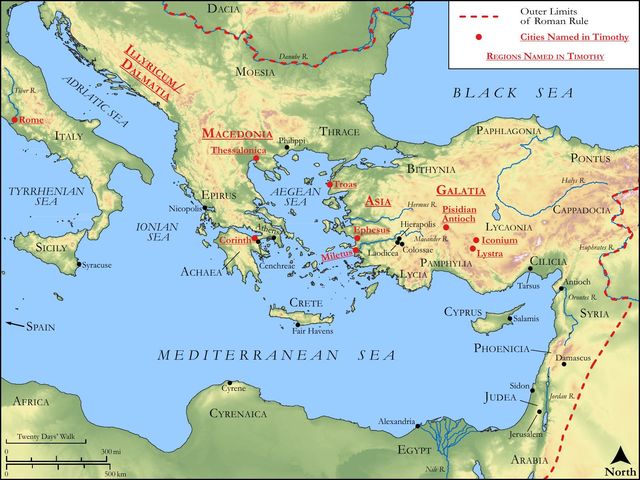
Paul is writing his second letter to Timothy from a Roman prison, likely facing imminent execution (2 Timothy 4:6-8). This letter, often considered Paul's last will and testament, carries a profound sense of urgency and finality. Timothy, as a young leader in Ephesus, faced significant challenges, including false teachers, internal strife, and external persecution. The cultural context of the Roman Empire meant that Christian communities often operated under suspicion, requiring strong, resilient leadership and a clear, uncompromised message. The concept of "witnesses" (Greek: martys) was particularly potent in a time when public testimony and legal proceedings were common, and martyrdom was a real possibility for believers.
Key Themes
ShowHideThe overarching themes in 2 Timothy, and particularly in 2 Timothy 2, include perseverance in suffering, the importance of sound doctrine, the call to faithful ministry, and the necessity of spiritual multiplication. 2 Timothy 2:2 directly addresses the theme of spiritual lineage, establishing a model for how the Gospel message and its accompanying truths are to be preserved and propagated through successive generations. It underscores the responsibility of current leaders to identify, train, and empower future leaders, ensuring the continuity and purity of the Christian faith despite opposition, a concern echoed throughout the Pastoral Epistles (e.g., Titus 1:5-9).
Exposition and Analysis
ShowHideKey Word Analysis
ShowHideA primary verb meaning "to hear" in various senses, including to give audience, come to the ears, or understand. In this context, it signifies Timothy's reception of Paul's teachings, not merely as auditory input, but as comprehensive understanding and assimilation of the Gospel and apostolic instruction. It implies an active, attentive reception of truth.
From pará (alongside) and títhēmi (to place), meaning "to place alongside," "present," or "deposit as a trust or for protection." This word carries the strong connotation of entrusting something valuable to a trusted guardian for safekeeping. It highlights the solemn responsibility Timothy had to guard and transmit the truth without alteration, much like a financial deposit or a sacred trust.
From peíthō (to persuade), meaning "trustworthy" (objectively) or "trustful" (subjectively). Here, it primarily refers to the trustworthiness, reliability, and loyalty of the men to whom the message is committed. It implies integrity of character, adherence to Christ, and fidelity to the truths they have received, making them suitable stewards of the Gospel.
Verse Breakdown
ShowHide"And the things that thou hast heard of me among many witnesses,"
This clause establishes the content and the verifiable nature of the message Timothy is to transmit. "The things" refers to the entire body of apostolic teaching, including the Gospel, sound doctrine, and practical Christian living, which Timothy had personally received from Paul. The phrase "among many witnesses" underscores the public, verifiable, and authoritative nature of these teachings, confirming their authenticity and preventing any claim that they were private or secret doctrines.
"the same commit thou to faithful men,"
This is the core command, an imperative from Paul to Timothy. "The same" refers directly back to the body of truth just mentioned. "Commit thou" (Greek: paratíthēmi) signifies the solemn act of entrusting this precious deposit. The recipients of this trust are specified as "faithful men," emphasizing that character, trustworthiness, and loyalty to Christ and His truth are paramount qualifications for those who will carry on the ministry.
"who shall be able to teach others also."
This final clause defines the essential qualification and the ultimate purpose of the transmission. The "faithful men" must not only be trustworthy but also "able" (Greek: hikanós, meaning competent or fit) to teach. This implies both a thorough understanding of the message and the skill to articulate it clearly and effectively to others. The phrase "others also" completes the four-generational chain (Paul → Timothy → faithful men → others), highlighting the principle of spiritual multiplication and the continuous perpetuation of the Gospel.
Literary Devices
ShowHideThe verse employs Instruction as its primary literary mode, delivering a clear, imperative command from Paul to Timothy. The concept of "commit" functions as a powerful Metaphor of a sacred deposit or trust, emphasizing the immense value and responsibility associated with transmitting the Gospel. This metaphor highlights the need for careful stewardship and protection of the truth. Furthermore, the verse outlines a Generational Transfer model, implicitly creating a chain of spiritual lineage (Paul to Timothy, Timothy to faithful men, faithful men to others). This structural pattern underscores the dynamic, multiplying nature of discipleship and the intentional process required for the enduring health of the church.
Theological and Thematic Connections
ShowHideThis verse is foundational for understanding the biblical mandate for discipleship, leadership development, and the perpetuation of sound doctrine within the Church. It underscores that the Gospel is not merely to be received but to be faithfully transmitted through intentional mentorship and training. The emphasis on "faithful men" who are "able to teach" highlights the dual necessity of character and competence in Christian leadership, ensuring that future generations receive the unadulterated truth. This process safeguards the integrity of the faith and ensures its continuous expansion, reflecting God's design for His kingdom to grow through the multiplication of devoted followers.
Reflection and Application
ShowHide2 Timothy 2:2 provides a timeless blueprint for the health and continuity of the Church, challenging every believer to consider their role in the spiritual lineage. It calls us to move beyond mere consumption of spiritual truth to active participation in its transmission. This means identifying individuals in our spheres of influence who demonstrate faithfulness and a teachable spirit, and intentionally investing in their spiritual growth and equipping them to teach others. It compels us to be diligent stewards of the Gospel, ensuring that the truths we have received are accurately and passionately passed on to the next generation, and the generation after that. This verse is a powerful reminder that discipleship is not an optional program but the very heart of the Church's mission, requiring intentionality, sacrifice, and a long-term vision for the kingdom of God.
Questions for Reflection
ShowHideFAQ
ShowHideWhat does "among many witnesses" signify in this verse?
ShowHideThe phrase "among many witnesses" (Greek: dia pollōn martyron) emphasizes the public and verifiable nature of the teachings Timothy received from Paul. It signifies that these truths were not private revelations or secret doctrines, but were openly taught and affirmed in the presence of numerous observers. This detail lends authority and authenticity to the message, underscoring that the Gospel is a reliable, historically grounded truth that can be confidently passed on. It also serves to validate the content of the teaching against potential distortions or false doctrines, a significant concern in Timothy's ministry in Ephesus (1 Timothy 1:3-7).
Why is it important that the men be "faithful" AND "able to teach"?
ShowHideThe dual qualification of being "faithful" (Greek: pistós) and "able to teach" (Greek: hikanós didáskō) is crucial because both character and competence are essential for effective and godly ministry. "Faithful" speaks to integrity, trustworthiness, loyalty to Christ, and adherence to sound doctrine. Without faithfulness, even great teaching ability can be misused or lead others astray. "Able to teach" speaks to the skill, understanding, and capacity to clearly articulate and communicate truth. Without the ability to teach, even the most faithful individual cannot effectively transmit the message. Paul insists on both because the preservation and propagation of the Gospel require individuals who are both morally sound and intellectually capable of handling and delivering God's word (1 Timothy 3:2 and Titus 1:9).
Christ-Centered Fulfillment
ShowHide2 Timothy 2:2 finds its ultimate fulfillment in the person and ministry of Jesus Christ, who perfectly embodied the principles of receiving, entrusting, and multiplying truth. Jesus Himself was the ultimate teacher, receiving all authority and truth from the Father (John 12:49-50). He then meticulously discipled His apostles, entrusting them with His teachings and the mission of the Gospel (John 17:6-8). The Great Commission in Matthew 28:19-20 is the quintessential command for this multi-generational transfer of truth, where disciples are made by teaching them "to observe all that I have commanded you." The "things that thou hast heard of me" ultimately point to the Gospel of Christ and the entire counsel of God, which Paul received by revelation from the resurrected Lord (Galatians 1:11-12). Thus, the chain of spiritual multiplication initiated by Christ continues through the Holy Spirit's empowerment (Acts 1:8), ensuring that the message of the Lamb of God, who takes away the sin of the world, is faithfully proclaimed until His return.