


2 Samuel 24:20
Bible text: King James Version (1769 Blayney text) · Public domain
Bible text: King James Version with Strong's numbers · Public domain
Bible text: Berean Standard Bible · Public domain
Bible text: American Standard Version (1901) · Public domain
Bible text: World English Bible, Messianic edition · Public domain
Bible text: Geneva Bible (1599) · Public domain
Bible text: Young's Literal Translation · Public domain
- וַיַּשְׁקֵףvai·yash·Kefand he looked downH8259Conj-w ¦ V-Hiphil-ConsecImperf-3msVerb Hiphil Consecutive Imperfect 3rd Singular Masculineוַandיַּשְׁקֵףhe looked down
- אֲרַוְנָה'a·Rav·nahAraunahH728N-proper-mNoun Proper Masculine
- וַיַּרְאvai·Yar'and he sawH7200Conj-w ¦ V-Qal-ConsecImperf-3msVerb Qal Consecutive Imperfect 3rd Singular Masculineוַandיַּרְאhe saw
- אֶת'et<obj.>H853DirObjMParticle Object Indicator
- הַמֶּלֶךְha·Me·lekhthe kingH4428Art ¦ N-msNoun Singular Masculine Absoluteהַtheמֶּלֶךְking
- וְאֶתve·'Etand <obj.>H853Conj-w ¦ DirObjMParticle Object Indicatorוְandאֶת<obj.>
- עֲבָדָיו'a·va·Davhis servantsH5650N-mpc ¦ 3msNoun Plural Masculine Constructעֲבָדָיservantsוhis
- עֹבְרִים'oe·Rimpassing onH5674V-Qal-Prtcpl-mpVerb Qal Participle Plural Masculine Absolute
- עָלָיו'a·Lavto himH5921Prep ¦ 3msPreposition Definiteעָלָיtoוhim
- וַיֵּצֵאvai·ye·Tze'and he went outH3318Conj-w ¦ V-Qal-ConsecImperf-3msVerb Qal Consecutive Imperfect 3rd Singular Masculineוַandיֵּצֵאhe went out
- אֲרַוְנָה'a·Rav·nahAraunahH728N-proper-mNoun Proper Masculine
- וַיִּשְׁתַּחוּvai·yish·Ta·chuand he bowed downH7812Conj-w ¦ V-Hishtaphel-ConsecImperf-3msVerb Hishtaphel Consecutive Imperfect 3rd Singular Masculineוַandיִּשְׁתַּחוּhe bowed down
- לַמֶּלֶךְla·Me·lekhto the kingH4428Prep-l ¦ N-msNoun Singular Masculine Absoluteלַto theמֶּלֶךְking
- אַפָּיו'a·Pavhis faceH639N-mdc ¦ 3msNoun Dual Masculine Constructאַפָּיfaceוhis
- אָרְצָה'A·re·tzah[the] ground towardsH776N-fs ¦ SfxNoun Singular Feminine Absoluteאָרְצָ[the] groundהtowards
English is a literal word-by-word gloss of the Hebrew, not the KJV's wording. Why?
This is the original text the KJV's translators worked from — each Hebrew word with its own literal English meaning in this verse, prepared by scholars at Tyndale House, Cambridge. The KJV translates whole sentences, not word by word, so its wording differs: one Hebrew word can become several English words, and the KJV may choose “the LORD” where the gloss reads “Yahweh”. Both are faithful — they answer different questions. For the KJV's own rendering, switch to the KJV text.
Details
See on the biblical-era maps
Study this verse
Historical interpretation
Historical reception
1 surviving comment on this verse from the historical church.
Notice, brothers, that no place in the land of the Jews was found worthy for the altar of the Lord to be built; but in the land of the Gentiles a place is chosen where the angel is seen and the altar of the Lord is built, and thus the wrath of the almighty Lord is appeased. Then already was prefigured the fact that in the hearts of the Jews no worthy place could be found to offer spiritual victims; the land of the Gentiles, that is, the conscience of Christians, is chosen as the place for the Lord’s temple. This the apostle clearly indicates when he rebukes the Jews and says, “It was necessary that the word of God should be spoken to you first, but since you have judged yourselves unworthy of eternal life, behold, we now turn to the Gentiles.” This means [that] because you have rejected Christ and have not prepared a worthy place on which to set the Lord’s altar, we will put it in the land of the Gentiles, that is, in the hearts of all the people. For this reason the same apostle exclaims to us, “Holy is the temple of God, and you are this temple.” Now notice, dearly beloved, that the land of the Gentile king was chosen at the time when the Jewish people were struck by God’s plague. This we see fulfilled in the Lord’s passion; for when the Jewish people rejected the Lord and crucified him, then his altar was consecrated on the threshing floor of the Gentiles, that is, on every land. That is why the angel of the Lord stood on the threshing floor of the Gentile king; the true angel, Christ, visited the people of the Gentiles.
Continue studying 2 Samuel 24:20 across the web’s major study libraries — every link below opens this exact verse, chapter, or book on the destination site.
Read & Compare
 BibleGatewayThis verse in more than 200 translations and 70 languages.
 Bible.comThe YouVersion reader — hundreds of translations, reading plans, and highlights.
 ESV.orgCrossway's official English Standard Version reader.
 NET BibleThe NET translation with 60,000+ translators' notes on every rendering decision.
 STEP BibleTyndale House's free study tool — original text, vocabulary, and scholarly resources.
 BibliaLogos Bible Software's free web reader.
 USCCBThe New American Bible (Revised Edition) with the U.S. bishops' study notes.
Commentaries
 BibleHub CommentariesDozens of classic commentaries on this verse, gathered on one page.
 StudyLightMore than 100 commentary sets — the largest collection on the web.
 BibleRefPlain-English commentary on what this verse means, verse by verse.
 Enduring WordDavid Guzik's free commentary on this chapter, widely used by Bible teachers.
 Bible Study ToolsVerse commentary alongside Greek and Hebrew study aids.
Original Language & Research
- BibleHub InterlinearThe verse word by word — original language, transliteration, and English.
- BibleHub LexiconEvery word's original-language definition and Strong's entry.
 Blue Letter BibleDeep-study tools — Strong's numbers, concordance, and word studies.
 SefariaThe Hebrew text with Rashi and centuries of Jewish commentary.
Sermons, Hymns & Audio


TrulyRandomVerse is not affiliated with these sites and doesn’t control their content. They’re linked because they’re genuinely useful.
Summary
2 Samuel 24:20 profoundly captures Araunah the Jebusite's immediate and deep reverence upon discerning King David's approach to his threshing floor. This spontaneous act of prostration, bowing "on his face upon the ground," powerfully conveys Araunah's complete submission to royal authority and sets the stage for the pivotal transaction that would establish a sacred site for an altar to the Lord, thereby bringing an end to the devastating plague afflicting Israel.
Context
ShowHideLiterary Context
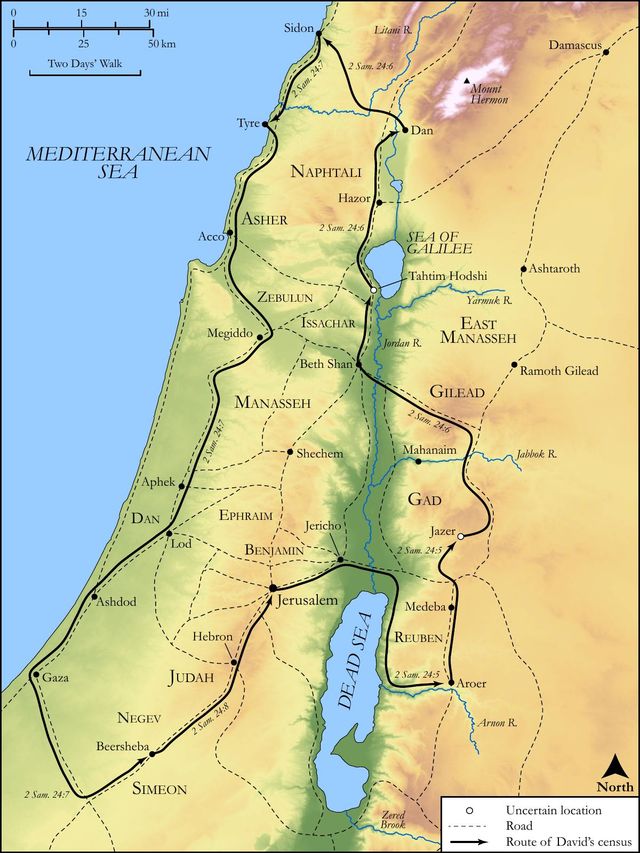
This verse serves as a crucial turning point at the conclusion of 2 Samuel, marking the culmination of David's reign with a narrative arc of sin, divine judgment, and ultimate atonement. Immediately preceding this, David, either incited by the Lord's anger or by Satan as recounted in 1 Chronicles 21:1, conducts a census of Israel, an act of pride that incurs severe divine wrath in the form of a devastating plague. After 70,000 lives are tragically lost, the Lord relents, and the prophet Gad instructs David to construct an altar on the threshing floor of Araunah the Jebusite, as detailed in 2 Samuel 24:18. David's urgent journey to this specific, divinely appointed location, therefore, carries immense theological and national significance, as it is the very site chosen for Israel's atonement and reconciliation with God.
Historical & Cultural Context
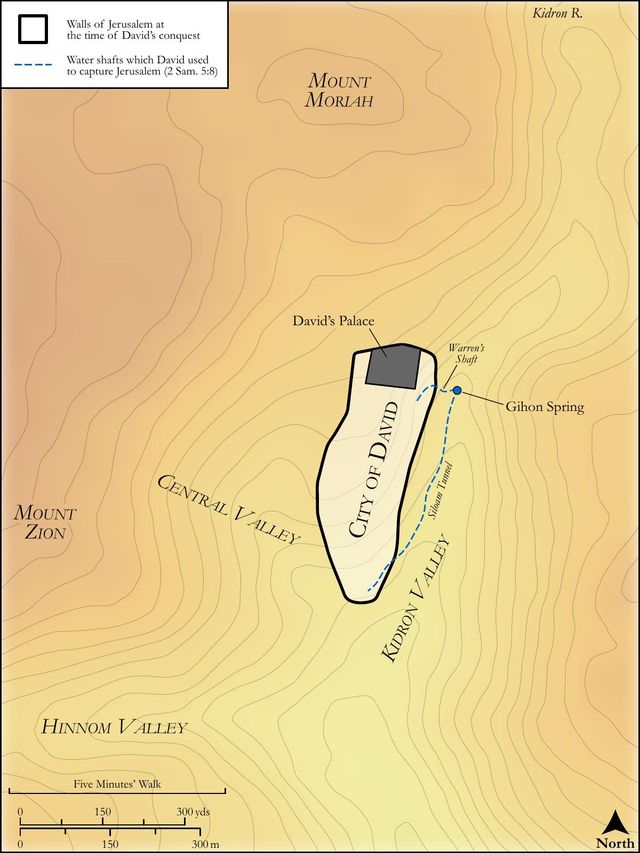
Araunah was a Jebusite, representing the original inhabitants of Jerusalem before its conquest by David. His continued presence and ownership of this strategically vital threshing floor, likely situated on a prominent hill (traditionally Mount Moriah), underscores David's policy of integrating conquered peoples rather than eradicating them. Threshing floors were typically elevated, open-air spaces, crucial for separating grain from chaff by harnessing the wind. Such locations were communal hubs, economically vital, and often served as places for public gatherings or judicial proceedings. The act of "bowing himself before the king on his face upon the ground" was a universal and profound gesture of submission and respect among the nations of that day, reserved for monarchs, high officials, or deities, as when Abigail fell before David on her face and bowed herself to the ground. This posture signified complete deference, acknowledging the superior's authority and status, and would have been the expected protocol when a commoner, even one of Araunah's apparent standing, encountered a king.
Key Themes
ShowHideThis verse significantly contributes to several overarching themes within 2 Samuel and the broader biblical narrative. Firstly, it powerfully illustrates Humility and Reverence in the face of authority, both human (David's kingship as God's anointed) and implicitly divine (as the king's mission is divinely ordained). Secondly, it highlights Divine Sovereignty and Providence, demonstrating how God orchestrates events, even through human sin, to achieve His ultimate purposes—specifically, choosing the precise location for future worship and atonement, which would later become the site of Solomon's Temple (2 Chronicles 3:1). Thirdly, the immediate context emphasizes Atonement and Sacrifice, as David's visit is directly for the purpose of ending the plague through a divinely commanded offering. Finally, Araunah's immediate and generous response exemplifies Obedience and Generosity, setting the stage for his willingness to freely give his property for sacred use, though David insists on paying a price, emphasizing that true worship involves personal cost, as seen in 2 Samuel 24:24.
Exposition and Analysis
ShowHideKey Word Analysis
ShowHideThis primitive root (H7200) signifies "to see, literally or figuratively (in numerous applications, direct and implied, transitive, intransitive and causative)." Araunah's "looking" is not a mere casual glance but an active, discerning observation that immediately registers the king's presence and the gravity of his approach. It implies an immediate recognition of David's identity and the significance of his royal entourage, prompting Araunah's swift and appropriate response of deference.
This primitive root (H7812) means "to depress, i.e. prostrate (especially reflexive, in homage to royalty or God); bow (self) down, crouch, fall down (flat), humbly beseech, do (make) obeisance, do reverence, make to stoop, worship." It is a fundamental term for an act of profound reverence, submission, and adoration. While frequently used for the worship of God, it is also applied to showing extreme respect to human superiors, particularly kings. Here, it denotes Araunah's complete deference and acknowledgment of David's supreme authority.
This word (H639) is derived from a root meaning "to be angry," and properly refers to "the nose or nostril; hence, the face, and occasionally a person." In the context of "on his face upon the ground," it describes the physical posture of prostration, emphasizing the complete abasement of self before a superior. This signifies absolute humility, profound respect, awe, or even fear, as the face, the seat of identity and expression, is brought low to the dust.
Verse Breakdown
ShowHide"And Araunah looked, and saw the king and his servants coming on toward him:"
This initial clause establishes Araunah's immediate and clear awareness of David's arrival. The dual verbs "looked" and "saw" emphasize the certainty and discernment of his perception. He recognizes not merely a group of individuals, but specifically "the king and his servants," indicating his understanding of the royal presence and its inherent authority. The phrase "coming on toward him" signifies David's direct and purposeful approach to Araunah's property, making the encounter personal and unavoidable.
"and Araunah went out,"
This phrase highlights Araunah's proactive and immediate response to the king's approach. He does not passively wait for David to reach him or summon him but takes the initiative to meet the king. This swift action demonstrates his attentiveness, respect, and readiness to engage with the royal party, suggesting an eagerness to honor the king's presence and perhaps to ascertain the reason for such an esteemed visit.
"and bowed himself before the king on his face upon the ground."
This final clause describes the climax of Araunah's immediate reaction: a complete and profound act of prostration. This extreme gesture of humility and submission underscores Araunah's deep respect and awe for David's kingship. It is a public, unmistakable acknowledgment of David's supreme authority and status, setting the tone for their subsequent interaction concerning the sacred transaction that is about to take place, demonstrating Araunah's readiness to yield to the king's will.
Literary Devices
ShowHideThe verse effectively employs several literary devices to convey its meaning and impact. Imagery is strikingly prominent, particularly the vivid picture of Araunah prostrating himself "on his face upon the ground," which immediately communicates an intense sense of deep reverence, humility, and submission. This physical act serves as powerful Symbolism of complete deference to authority and acknowledgment of superior status, transcending mere politeness to signify profound respect. The Repetition of "Araunah" at the beginning of the second and third clauses ("And Araunah looked... and Araunah went out... and bowed himself") emphasizes his personal agency and highlights his immediate, unhesitating response to the king's arrival, underscoring his character. Furthermore, the verse subtly employs Foreshadowing, as Araunah's threshing floor, initially a place of agricultural labor, is about to be transformed into a sacred site for divine atonement, prefiguring its ultimate destiny as the hallowed location for Solomon's Temple, a place of enduring worship.
Theological and Thematic Connections
ShowHideAraunah's immediate and profound act of prostration before King David serves as a powerful theological statement about the nature of submission to authority, both human and divine. His humility, even as a landowner whose property is about to be requisitioned, exemplifies a spirit of deference that honors God's established order and the authority He vests in leaders. The chosen location, Araunah's threshing floor, for the altar of atonement, underscores God's sovereign choice and the unexpected places where divine purposes unfold, transforming the mundane into the sacred. This encounter highlights that true worship and reconciliation often require a costly sacrifice, not merely a convenient offering, as David insists on paying for the site and the animals, refusing to offer to the Lord that which costs him nothing, thereby emphasizing the value of a genuine, costly offering.
Reflection and Application
ShowHideAraunah's response to King David offers a compelling and challenging model for believers today. His immediate recognition and respectful prostration, even before fully understanding David's purpose, call us to cultivate a spirit of profound humility and prompt obedience towards both legitimate human authority (where it aligns with God's will) and, more importantly, divine authority. In a world that often values independence, self-assertion, and challenges established order, Araunah's deference reminds us of the biblical call to honor those in leadership and to yield our personal plans, possessions, and even our comfort to God's greater purposes. His willingness to meet the king and his subsequent generosity in offering his property for sacrifice teach us that true worship and service often involve personal cost and a readiness to make our "threshing floors"—our resources, time, talents, and aspirations—available for God's redemptive work. We are called to be attentive to God's unexpected interruptions in our lives, recognizing them as divinely orchestrated opportunities for encounter and participation in His sovereign plan, even when it requires personal sacrifice and a humble posture.
Questions for Reflection
ShowHideFAQ
ShowHideWho was Araunah?
ShowHideAraunah (also known as Ornan in the book of Chronicles) was a Jebusite, one of the original inhabitants of Jerusalem, who owned a significant threshing floor on Mount Moriah. He is depicted as a man of considerable wealth and standing, known for his immediate respect for King David and his remarkable generosity in offering his land, oxen, and threshing implements for free as a sacrifice to the Lord, as recorded in 2 Samuel 24:22-23.
Why was David at Araunah's threshing floor?
ShowHideKing David came to Araunah's threshing floor to build an altar to the Lord and offer sacrifices. This was in direct obedience to the prophet Gad's instruction, given after the Lord had sent a devastating plague upon Israel as judgment for David's sinful census. The purpose of the altar and sacrifice was to make atonement for the nation's sin and to stop the plague, as detailed in 2 Samuel 24:18.
What is the historical significance of Araunah's threshing floor?
ShowHideAraunah's threshing floor holds immense historical and theological significance as the divinely chosen site for the altar that ended the plague. More profoundly, it became the exact location where King Solomon, David's son, would later build the First Temple of the Lord in Jerusalem, as confirmed in 2 Chronicles 3:1. This makes it one of the most sacred and enduring sites in Israelite and Jewish history, the very place where God's presence would dwell among His people.
Christ-Centered Fulfillment
ShowHideThe encounter at Araunah's threshing floor, culminating in the cessation of the plague through a costly sacrifice, profoundly foreshadows the ultimate redemptive work of Christ. Araunah's spontaneous prostration before David, God's anointed king, points to the universal submission that will one day be rendered to the true King, Jesus Christ, before whom "every knee should bow, in heaven and on earth and under the earth, and every tongue confess that Jesus Christ is Lord, to the glory of God the Father" (Philippians 2:10-11). The threshing floor, a place inherently associated with separation and judgment (where grain is separated from chaff), becomes a place of atonement, mirroring how Christ, through His sacrificial death on the cross, bore the judgment for humanity's sin, transforming the place of condemnation into the place of reconciliation. David's insistence on paying a full price for the sacrifice, refusing to offer to the Lord what cost him nothing (2 Samuel 24:24), powerfully prefigures the costly, unblemished sacrifice of the Lamb of God, who takes away the sin of the world!, Jesus Christ, whose precious blood was the ultimate price for our redemption. Furthermore, the selection of this site as the future location of the Temple, the dwelling place of God's presence among His people, ultimately finds its fulfillment in Christ Himself, who declared, "Destroy this temple, and in three days I will raise it up," referring to the temple of His body (John 2:19). Thus, Araunah's threshing floor, a place of judgment transformed into atonement and a future sanctuary, points directly to Jesus as our ultimate sacrifice, our true Temple, and the rightful object of all worship and submission.