


1 Samuel 29:4
Bible text: King James Version (1769 Blayney text) · Public domain
Bible text: King James Version with Strong's numbers · Public domain
Bible text: Berean Standard Bible · Public domain
Bible text: American Standard Version (1901) · Public domain
Bible text: World English Bible, Messianic edition · Public domain
Bible text: Geneva Bible (1599) · Public domain
Bible text: Young's Literal Translation · Public domain
- וַיִּקְצְפוּvai·yik·tze·Fuand they were angryH7107Conj-w ¦ V-Qal-ConsecImperf-3mpVerb Qal Consecutive Imperfect 3rd Plural Masculineוַandיִּקְצְפוּthey were angry
- עָלָיו'a·Lavtowards himH5921Prep ¦ 3msPreposition Definiteעָלָיtowardsוhim
- שָׂרֵיsa·Rei[the] commanders ofH8269N-mpcNoun Plural Masculine Construct
- פְלִשְׁתִּיםfe·lish·Tim[the] PhilistinesH6430N-mpNoun Gentilic Plural Masculine Absolute
- וַיֹּאמְרוּvai·Yo·me·ruand they saidH559Conj-w ¦ V-Qal-ConsecImperf-3mpVerb Qal Consecutive Imperfect 3rd Plural Masculineוַandיֹּאמְרוּthey said
- לוֹloto <the> himPrep-l ¦ 3msSuffix Personal 3rd Singular Masculineלto <the>וֹhim
- שָׂרֵיsa·Rei[the] commanders ofH8269N-mpcNoun Plural Masculine Construct
- פְלִשְׁתִּיםfe·lish·Tim[the] PhilistinesH6430N-mpNoun Gentilic Plural Masculine Absolute
- הָשֵׁבha·Shevsend backH7725V-Hiphil-Imp-2msVerb Hiphil Imperative 2nd Singular Masculine
- אֶת'et<obj.>H853DirObjMParticle Object Indicator
- הָאִישׁha·'Ishthe manH376Art ¦ N-msNoun Singular Masculine Absoluteהָtheאִישׁman
- וְיָשֹׁבve·ya·Shoso may he returnH7725Conj-w ¦ V-Qal-Imperf-3msVerb Qal Imperfect 3rd Singular Masculineוְsoיָשֹׁבmay he return
- אֶל'eltoH413PrepPreposition
- מְקוֹמוֹme·ko·Mohis placeH4725N-msc ¦ 3msNoun Singular Masculine Constructמְקוֹמplaceוֹhis
- אֲשֶׁר'a·SherwhereH834RelParticle Relative
- הִפְקַדְתּוֹhif·kad·Toyou assigned himH6485V-Hiphil-Perf-2ms ¦ 3msVerb Hiphil Perfect 2nd Singular Masculineהִפְקַדְתּyou assignedוֹhim
- שָׁםShamthereH8033AdvAdverb
- וְלֹאve·lo'and notH3808Conj-w ¦ NegParticle Negativeוְandלֹאnot
- יֵרֵדye·Redhe will go downH3381V-Qal-Imperf-3msVerb Qal Imperfect 3rd Singular Masculine
- עִמָּנוּ'i·Ma·nuwith usH5973Prep ¦ 1cpPreposition Definiteעִמָּwithנוּus
- בַּמִּלְחָמָהba·mil·cha·Mahin the battleH4421Prep-b ¦ N-fsNoun Singular Feminine Absoluteבַּin theמִּלְחָמָהbattle
- וְלֹאve·lo'and notH3808Conj-w ¦ NegParticle Negativeוְandלֹאnot
- יִהְיֶהyih·yehhe will becomeH1961V-Qal-Imperf-3msVerb Qal Imperfect 3rd Singular Masculine
- לָּנוּLa·nuof usPrep-l ¦ 1cpSuffix Personal 1st Plural common genderלָּofנוּus
- לְשָׂטָןle·sa·Tan<into> an adversaryH7854Prep-l ¦ N-msNoun Singular Masculine Absoluteלְ<into>שָׂטָןan adversary
- בַּמִּלְחָמָהba·mil·cha·Mahin the battleH4421Prep-b ¦ N-fsNoun Singular Feminine Absoluteבַּin theמִּלְחָמָהbattle
- וּבַמֶּהu·va·Mehand <in> how?H4100Conj-w ¦ Prep-b ¦ InterrogPronoun Interrogativeוּandבַ<in>מֶּהhow?
- יִתְרַצֶּהyit·ra·Tzehwill he make himself acceptableH7521V-Hithpael-Imperf-3msVerb Hithpael Imperfect 3rd Singular Masculine
- זֶהzehthis oneH2088PrtParticle Demonstrative
- אֶל'eltoH413PrepPreposition
- אֲדֹנָיו'a·do·Navhis master<s>H113N-mpc ¦ 3msNoun Plural Masculine Constructאֲדֹנָיmaster<s>וhis
- הֲלוֹאha·Lo'¿ notH3808Interrog ¦ NegParticle Negativeהֲ¿לוֹאnot
- בְּרָאשֵׁיbe·ra·Sheiby [the] heads ofH7218Prep-b ¦ N-mpcNoun Plural Masculine Constructבְּbyרָאשֵׁי[the] heads of
- הָאֲנָשִׁיםha·'a·na·Shimthe menH582Art ¦ N-mpNoun Plural Masculine Absoluteהָtheאֲנָשִׁיםmen
- הָהֵםha·Hem<the> thoseH1992Art ¦ Pro-3mpPronoun Personal 3rd Plural Masculineהָ<the>הֵםthose
English is a literal word-by-word gloss of the Hebrew, not the KJV's wording. Why?
This is the original text the KJV's translators worked from — each Hebrew word with its own literal English meaning in this verse, prepared by scholars at Tyndale House, Cambridge. The KJV translates whole sentences, not word by word, so its wording differs: one Hebrew word can become several English words, and the KJV may choose “the LORD” where the gloss reads “Yahweh”. Both are faithful — they answer different questions. For the KJV's own rendering, switch to the KJV text.
Details
See on the biblical-era map
Study this verse
Public-domain commentary
Matthew Henry
From his Commentary on the Whole Bible. Henry comments on passages, not single verses — this entry covers 1 Samuel 29:1–5.
Here is, I. The great strait that David was in, which we may suppose he himself was aware of, though we read not of his asking advice from God, nor of any project of his own to get clear of it. The two armies of the Philistines and the Israelites were encamped and ready to engage, Sa1 29:1. Achish, who had been kind to David, had obliged him to come himself and bring the forces he had into his service. David came accordingly, and, upon a review of the army, was found with Achish, in the post assigned him in the rear, Sa1 29:2. Now, 1. If, when the armies engaged, he should retire, and quit his post, he would fall under the indelible reproach, not only of cowardice and treachery, but of base ingratitude to Achish, who had been his protector and benefactor and had reposed a confidence in him, and from whom he had received a very honourable commission. Such an unprincipled thing as this he could by no means persuade himself to do. 2. If he should, as was expected from him, fight for the Philistines against Israel, he would incur the imputation of being an enemy to the Israel of God and a traitor to his country, would make his own people hate him, and unanimously oppose his coming to the crown, as unworthy the name of an Israelite, much more the honour and trust of a king of Israel, when he had fought against them under the banner of the uncircumcised. If Saul should be killed (as it proved he was) in this engagement, the fault would be laid at David's door, as if he had killed him. So that on each side there seemed to be both sin and scandal. This was the strait he was in; and a great strait it was to a good man, greater to see sin before him than to see trouble. Into this strait he brought himself by his own unadvisedness, in quitting the land of Judah, and going among the uncircumcised. It is strange if those that associate themselves with wicked people, and grow intimate with them, come off without guilt, or grief, or both. What he himself proposed to do does not appear. Perhaps he designed to act only as keeper to the king's head, the post assigned him (Sa1 28:2) and not to do any thing offensively against Israel. But it would have been very hard to come so near the brink of sin and not to fall in. Therefore, though God might justly have left him in this difficulty, to chastise him for his folly, yet, because his heart was upright with him, he would not suffer him to be tempted above what he was able, but with the temptation made a way for him to escape, Co1 10:13.
II.A door opened for his deliverance out of this strait.
God inclined the hearts of the princes of the Philistines to oppose his being employed in the battle, and to insist upon his being dismissed. Thus their enmity befriended him, when no friend he had was capable of doing him such a kindness. 1. It was a proper question which they asked, upon the mustering of the forces, "What do these Hebrews here? Sa1 29:3. What confidence can we put in them, or what service can we expect from them?" A Hebrew is out of his place, and, if he has the spirit of a Hebrew, is out of his element, when he is in the camp of the Philistines, and deserves to be made uneasy there. David used to hate the congregation of evil doers, however he came now to be among them, Psa 26:5. It was an honourable testimony which Achish, on this occasion, gave to David. He looked upon him as a refugee, that fled from a wrongful prosecution in his own country, and had put himself under his protection, whom therefore he was obliged, in justice, to take care of, and thought he might in prudence employ; "for (says he) he has been with me these days, or these years," that is, a considerable time, many days at his court and a year or two in his country, and he never found any fault in him, nor saw any cause to distrust his fidelity, or to think any other than that he had heartily come over to him. By this it appears that David had conducted himself with a great deal of caution, and had prudently concealed the affection he still retained for his own people. We have need to walk in wisdom towards those that are without, to keep our mouth when the wicked is before us, and to be upon the reserve. 3. Yet the princes are peremptory in it, that he must be sent home; and they give good reasons for their insisting on it. (1.) Because he had been an old enemy to the Philistines; witness what was sung in honour of his triumphs over them: Saul slew his thousands, and David his ten thousands, Sa1 29:5. "It will be a reproach to us to harbour and trust so noted a destroyer of our people; nor can it be thought that he will now act heartily against Saul who then acted so vigorously with him and for him." Who would be fond of popular praise or applause when, even that may, another time, be turned against a man to his reproach? (2.) Because he might be a most dangerous enemy to them, and do them more mischief then all Saul's army could (Sa1 29:4): "He may in the battle be an adversary to us, and surprise us with an attack in the rear, while their army charges us in the front; and we have reason to think he will do so, that, by betraying us, he may reconcile himself to his master. Who can trust a man who, besides his affection to his country, will think it his interest to be false to us?" It is dangerous to put confidence in a reconciled enemy.
Continue studying 1 Samuel 29:4 across the web’s major study libraries — every link below opens this exact verse, chapter, or book on the destination site.
Read & Compare
 BibleGatewayThis verse in more than 200 translations and 70 languages.
 Bible.comThe YouVersion reader — hundreds of translations, reading plans, and highlights.
 ESV.orgCrossway's official English Standard Version reader.
 NET BibleThe NET translation with 60,000+ translators' notes on every rendering decision.
 STEP BibleTyndale House's free study tool — original text, vocabulary, and scholarly resources.
 BibliaLogos Bible Software's free web reader.
 USCCBThe New American Bible (Revised Edition) with the U.S. bishops' study notes.
Commentaries
 BibleHub CommentariesDozens of classic commentaries on this verse, gathered on one page.
 StudyLightMore than 100 commentary sets — the largest collection on the web.
 BibleRefPlain-English commentary on what this verse means, verse by verse.
 Enduring WordDavid Guzik's free commentary on this chapter, widely used by Bible teachers.
 Bible Study ToolsVerse commentary alongside Greek and Hebrew study aids.
Original Language & Research
- BibleHub InterlinearThe verse word by word — original language, transliteration, and English.
- BibleHub LexiconEvery word's original-language definition and Strong's entry.
 Blue Letter BibleDeep-study tools — Strong's numbers, concordance, and word studies.
 SefariaThe Hebrew text with Rashi and centuries of Jewish commentary.
Sermons, Hymns & Audio


TrulyRandomVerse is not affiliated with these sites and doesn’t control their content. They’re linked because they’re genuinely useful.
Summary
1 Samuel 29:4 vividly captures the intense opposition of the Philistine princes to David joining their forces against Israel, demanding his immediate dismissal. Their vehement distrust stemmed from a pragmatic fear that David, a celebrated Israelite commander and King Saul's son-in-law, would betray them during battle to reconcile with his own people. This pivotal moment, born of human suspicion and military foresight, providentially spared David from the morally compromising position of fighting against Israel, thereby preserving his integrity and setting the stage for subsequent divine interventions in his life and his eventual ascension to the throne.
Context
ShowHideLiterary Context
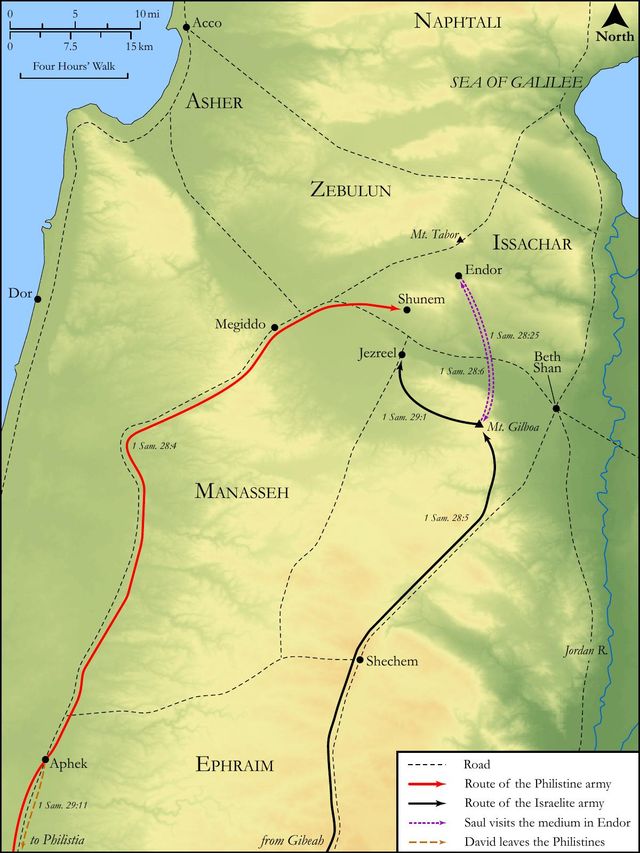
This verse is strategically placed at a critical juncture in David's prolonged and often desperate flight from King Saul. Having exhausted his options within Israel, David made the controversial decision to seek refuge with Achish, the Philistine king of Gath, a move detailed in 1 Samuel 27:1-7. For approximately sixteen months, David and his 600 men resided in Ziklag, a town granted to him by Achish. During this time, David skillfully deceived Achish, leading him to believe he was raiding Israelite towns, when in reality he was attacking the Geshurites, Girzites, and Amalekites, traditional enemies of Israel (1 Samuel 27:8-12). Achish, convinced of David's loyalty and military effectiveness, intended for David and his contingent to accompany the Philistine army as they mustered for a decisive confrontation with Israel at Aphek (1 Samuel 28:1-2). However, as the Philistine forces gathered, the other "princes" or commanders of the Philistine city-states voiced their strong and unified objections, leading directly to the confrontation and demand described in this verse.
Historical & Cultural Context
The Philistines were a dominant military and political force in the land of Canaan, organized as a confederation of five major city-states. Their superior military technology, including iron weaponry and chariots, frequently gave them a strategic advantage over the nascent Israelite kingdom, which was still developing its military infrastructure. In this era, it was a common practice for powerful kings to offer asylum to political exiles or fugitives, who would then serve as mercenaries or as the king's servants in exchange for protection and land. However, the loyalty of such individuals was inherently precarious, especially when their former allegiances conflicted with the interests of their new patrons. The Philistine princes' concern, articulated in their rhetorical question about how David might "reconcile himself unto his master," reflects a pragmatic and brutal understanding of ancient warfare, where defection, double-crossing, and acts of treachery (such as presenting the heads of enemies as proof of allegiance) were real and ever-present threats. Their suspicion was rooted in a realistic assessment of the potential for betrayal from a former enemy of David's caliber.
Key Themes
ShowHideThis verse powerfully illustrates several major theological and narrative themes within the book of 1 Samuel and the broader biblical narrative. Firstly, Divine Providence is profoundly evident; though the Philistine princes act out of worldly suspicion and military pragmatism, their decision is clearly a divinely orchestrated intervention. This prevents David, God's anointed future king of Israel (1 Samuel 16:13), from being forced to fight against his own people, a morally and spiritually catastrophic scenario. This intervention protects David's integrity and preserves his legitimacy in the eyes of Israel. Secondly, the theme of Suspicion and Distrust is central, highlighted by the Philistine princes' "wroth" reaction. Despite Achish's personal confidence in David, the other commanders harbor deep-seated skepticism about David's true allegiance, correctly perceiving the inherent conflict of interest for a former Israelite hero. Finally, the verse probes the complexities of Loyalty and Allegiance, particularly in compromised circumstances. David's position was ethically ambiguous; while he had been deceiving Achish about his raids, he was now placed in a situation where his true loyalties were on the verge of being tested on the battlefield, forcing a resolution that God ultimately provided through the Philistines' own fears. This incident underscores God's ability to work through human decisions, even those driven by self-interest, to accomplish His sovereign will, as seen throughout the narrative of 1 Samuel.
Exposition and Analysis
ShowHideKey Word Analysis
ShowHideThis verb, derived from a root meaning "to crack off" or "to burst out in rage," conveys intense anger, indignation, or displeasure. When applied to the Philistine princes, it emphasizes the vehemence and depth of their opposition to David's presence. Their anger was not merely a mild disagreement but a fiery, passionate rejection, indicating a strong conviction that David's inclusion posed a significant threat to their military campaign.
This word carries the meaning "to be pleased with," "to accept," "to be favorable," or "to make amends." In this context, it implies David needing to regain favor or make peace with his former master, King Saul. The princes cynically suggest that the only way for David to achieve this reconciliation would be through an extreme act of betrayal against the Philistines, effectively buying back Saul's favor with the lives of the Philistine commanders. It highlights the transactional and often brutal nature of political reconciliation among the kings of that day, where loyalty could be demonstrated through acts of violence against former allies.
Verse Breakdown
ShowHide"And the princes of the Philistines were wroth with him; and the princes of the Philistines said unto him"
This opening clause immediately establishes the intense conflict and the unified opposition David faced. The repetition of "princes of the Philistines" underscores their collective authority and their direct confrontation with Achish, who had vouched for David. Their "wroth" reaction signifies deep-seated anger and distrust, indicating a profound disagreement beyond mere strategic debate.
"Make this fellow return, that he may go again to his place which thou hast appointed him"
The princes issue a direct, non-negotiable command to Achish, demanding David's immediate removal from the battle formation. The dismissive term "this fellow" highlights their contempt and lack of respect for David, despite his military renown. They insist he return to Ziklag, the town Achish had granted him, effectively sidelining him from the main conflict and removing him as a potential liability.
"and let him not go down with us to battle, lest in the battle he be an adversary to us"
This is the core of their objection, explicitly forbidding David from joining them in the impending battle. They articulate their clear and present fear that he would become an enemy (an "adversary") during the fight. This reveals their astute military and political insight, recognizing the inherent risk of having a former enemy, especially one as skilled and influential as David, within their ranks when facing his own people.
"for wherewith should he reconcile himself unto his master? [should it] not [be] with the heads of these men?"
This powerful rhetorical question lays bare their cynical yet realistic assessment of David's loyalty. They believe that David's only path to reconciliation with King Saul would be by committing an act of treacherous violence against the Philistines, specifically by killing their commanders ("the heads of these men") and presenting them as a peace offering or proof of renewed allegiance to Saul. This statement not only highlights their profound suspicion but also the brutal political realities of the time, where such acts of betrayal were understood as a means of shifting loyalties.
Literary Devices
ShowHideThe passage makes effective use of several literary devices. Irony is prominent, as the Philistine princes, acting out of self-preservation and deep distrust, unwittingly become instruments of divine providence, preventing God's anointed king from fighting against his own people. Their worldly wisdom and pragmatic fears serve a higher, spiritual purpose. The use of a Rhetorical Question ("for wherewith should he reconcile himself...?") serves to emphasize their conviction and to make their argument against David's participation seem self-evident and unassailable to Achish. This device also underscores the perceived inevitability of David's betrayal in their minds. The Dialogue between the princes and Achish reveals the internal dynamics and power struggles within the Philistine leadership, while also exposing the deep-seated suspicion that David's ambiguous allegiance had fostered. The princes' dismissive term "this fellow" is an example of Derogatory Language, underscoring their disdain and lack of trust in David, effectively dehumanizing him to justify their demand for his removal.
Theological and Thematic Connections
ShowHide1 Samuel 29:4 powerfully illustrates the theme of divine providence, where God orchestrates events, even through the suspicions and actions of unbelievers, to protect His chosen instruments and advance His sovereign plan. David was in a morally compromising position, having sought refuge with the Philistines and engaging in deception to maintain his cover. Yet, God, in His faithfulness, used the very distrust of David's enemies to extricate him from a situation that would have severely damaged his reputation and spiritual standing as the future king of Israel. This event providentially prevented David from participating in the battle where King Saul and his sons would ultimately die (1 Samuel 31:1-6), thus preserving David's innocence in Saul's demise and paving the way for his uncontested ascension to the throne. It is a profound reminder that God's ways are higher than our ways, and He can redeem even our missteps and complex circumstances for His glory and our good, demonstrating His unwavering commitment to His covenant promises.
Reflection and Application
ShowHideThis passage offers a profound lesson in God's sovereign oversight, even when our own choices lead us into morally ambiguous or difficult situations. David, by seeking refuge with the Philistines and engaging in deception, had placed himself in a precarious position, facing the unthinkable prospect of fighting against his own people. Yet, God, in His unfathomable wisdom and grace, used the very suspicion and self-interest of David's adversaries to deliver him from this ethical dilemma. This reminds us that even when we stray or find ourselves in circumstances beyond our control, God remains actively involved, working behind the scenes to guide us, protect His purposes, and ultimately lead us back to His path. It encourages us to trust in His unseen hand, knowing that He can turn human opposition into divine intervention, and that His faithfulness extends even to our compromised moments. We are called to live with integrity, but also to rest in the assurance that God's plan will prevail, often through unexpected and seemingly negative means. Our responsibility is to seek His will, and our comfort is in His unwavering sovereignty.
Questions for Reflection
ShowHideFAQ
ShowHideWhy were the Philistine princes so suspicious of David?
ShowHideThe Philistine princes were deeply suspicious of David primarily because of his identity as a renowned Israelite warrior and the son-in-law of King Saul, the very king they were about to fight. They correctly deduced that David's ultimate loyalty would lie with his own people, despite his current service to Achish. Their concern was a pragmatic military one: if David were to fight alongside them against Israel, he would have a powerful incentive to betray them to reconcile with Saul. They feared he might turn his sword against the Philistine commanders during the heat of battle, using their "heads" as a peace offering to regain favor with his former master. This fear, though rooted in worldly wisdom, was a realistic assessment of the high stakes of allegiance and potential treachery in ancient warfare.
How did this event ultimately benefit David?
ShowHideThis event proved to be a profound and providential benefit to David, acting as a divine intervention that spared him from a catastrophic moral and spiritual dilemma. Firstly, it prevented him from fighting against his own people, the Israelites, which would have severely damaged his reputation and legitimacy as God's anointed future king. Such an act would have been an indelible stain on his character and reign. Secondly, by sending him back to Ziklag, God positioned David to deal with the Amalekite raid on his city (1 Samuel 30:1-20), allowing him to demonstrate his leadership, reliance on God, and ultimately recover all that was lost. Thirdly, and most significantly, it ensured David was not present at the Battle of Gilboa, where King Saul and his sons were killed (1 Samuel 31:1-6). This preserved David's innocence in Saul's death, preventing any accusation that he had a hand in it, and cleared the path for his eventual, divinely appointed ascension to the throne of Israel, fulfilling God's promise to him.
Christ-Centered Fulfillment
ShowHideThe narrative of 1 Samuel 29:4, where God sovereignly intervenes through the suspicions of David's enemies to preserve His anointed king from a morally compromising situation, profoundly foreshadows the perfect, unblemished life and redemptive work of Jesus Christ. David, though God's chosen, was flawed and found himself in a position of ethical ambiguity, yet God's providence protected him for His greater purposes. Jesus, the ultimate Anointed One, the true Son of David (Matthew 1:1), faced no such moral compromises, for He was without sin and perfectly righteous in all His ways (Hebrews 4:15). While David was spared from fighting against his own people, Jesus willingly entered into the ultimate battle against sin and death, not as an adversary to His own, but as the sacrificial Lamb who takes away the sin of the world (John 1:29). God's sovereign hand, which guided David's path, is perfectly revealed in His sending of Jesus to fulfill all righteousness (Matthew 3:15), to live a life of perfect obedience, and to offer Himself as the ultimate reconciliation, not through the heads of men, but through His own shed blood on the cross (Colossians 1:20). Thus, the divine providence at work in 1 Samuel 29:4 points forward to the even greater, perfect, and redemptive providence of God in Christ, who perfectly accomplished the Father's will and secured eternal salvation for all who believe (Hebrews 10:14).