


1 Samuel 29:3
Bible text: King James Version (1769 Blayney text) · Public domain
Bible text: King James Version with Strong's numbers · Public domain
Bible text: Berean Standard Bible · Public domain
Bible text: American Standard Version (1901) · Public domain
Bible text: World English Bible, Messianic edition · Public domain
Bible text: Geneva Bible (1599) · Public domain
Bible text: Young's Literal Translation · Public domain
- וַיֹּאמְרוּvai·yo·me·Ruand they saidH559Conj-w ¦ V-Qal-ConsecImperf-3mpVerb Qal Consecutive Imperfect 3rd Plural Masculineוַandיֹּאמְרוּthey said
- שָׂרֵיsa·Rei[the] commanders ofH8269N-mpcNoun Plural Masculine Construct
- פְלִשְׁתִּיםfe·lish·Tim[the] PhilistinesH6430N-mpNoun Gentilic Plural Masculine Absolute
- מָהmahwhat?H4100InterrogPronoun Interrogative
- הָעִבְרִיםha·'iv·Rim[are] the HebrewsH5680Art ¦ N-mpNoun Gentilic Plural Masculine Absoluteהָ[are] theעִבְרִיםHebrews
- הָאֵלֶּהha·'E·leh<the> theseH428Art ¦ PrtParticle Demonstrativeהָ<the>אֵלֶּהthese
- וַיֹּאמֶרvai·Yo·merand he saidH559Conj-w ¦ V-Qal-ConsecImperf-3msVerb Qal Consecutive Imperfect 3rd Singular Masculineוַandיֹּאמֶרhe said
- אָכִישׁ'a·KhishAchishH397N-proper-mNoun Proper Masculine
- אֶל'eltoH413PrepPreposition
- שָׂרֵיsa·Rei[the] commanders ofH8269N-mpcNoun Plural Masculine Construct
- פְלִשְׁתִּיםfe·lish·Tim[the] PhilistinesH6430N-mpNoun Gentilic Plural Masculine Absolute
- הֲלוֹאha·lo'¿ notH3808Interrog ¦ NegParticle Negativeהֲ¿לוֹאnot
- זֶהzeh[is] thisH2088PrtParticle Demonstrative
- דָוִדda·VidDavidH1732N-proper-mNoun Proper Masculine
- עֶבֶד'E·ved[the] servant ofH5650N-mscNoun Singular Masculine Construct
- שָׁאוּלsha·'UlSaulH7586N-proper-mNoun Proper Masculine
- מֶלֶךְMe·lekh[the] king ofH4428N-mscNoun Singular Masculine Construct
- יִשְׂרָאֵלYis·ra·'ElIsraelH3478N-properNoun Proper Location
- אֲשֶׁר'a·SherwhoH834RelParticle Relative
- הָיָהha·Yahhe has beenH1961V-Qal-Perf-3msVerb Qal Perfect 3rd Singular Masculine
- אִתִּי'i·Tiwith meH854Prep ¦ 1csPreposition Definiteאִתִּwithיme
- זֶהzehthisH2088PrtParticle Demonstrative
- יָמִיםya·MimdaysH3117N-mpNoun Plural Masculine Absolute
- אוֹ'ovorH176ConjConjunction
- זֶהzehthisH2088PrtParticle Demonstrative
- שָׁנִיםsha·NimyearsH8141N-mpNoun Plural Masculine Absolute
- וְלֹאve·lo'and notH3808Conj-w ¦ NegParticle Negativeוְandלֹאnot
- מָצָאתִיma·Tza·tiI have foundH4672V-Qal-Perf-1csVerb Qal Perfect 1st Singular common gender
- בוֹvoin <the> himPrep-b ¦ 3msSuffix Personal 3rd Singular Masculineבin <the>וֹhim
- מְאוּמָהme·'U·mahanythingH3972N-fsNoun Singular Feminine Absolute
- מִיּוֹםmi·Yomfrom [the] dayH3117Prep-m ¦ N-mscNoun Singular Masculine Constructמִfromיּוֹם[the] day
- נָפְלוֹna·fe·Lohe fellH5307V-Qal-Inf ¦ 3msVerb Qal Infinitive Constructנָפְלfellוֹhe
- עַד'aduntilH5704PrepPreposition
- הַיּוֹםhai·Yomthe dayH3117Art ¦ N-msNoun Singular Masculine Absoluteהַtheיּוֹםday
- הַזֶּהha·Zeh<the> thisH2088Art ¦ PrtParticle Demonstrativeהַ<the>זֶּהthis
English is a literal word-by-word gloss of the Hebrew, not the KJV's wording. Why?
This is the original text the KJV's translators worked from — each Hebrew word with its own literal English meaning in this verse, prepared by scholars at Tyndale House, Cambridge. The KJV translates whole sentences, not word by word, so its wording differs: one Hebrew word can become several English words, and the KJV may choose “the LORD” where the gloss reads “Yahweh”. Both are faithful — they answer different questions. For the KJV's own rendering, switch to the KJV text.
Details
See on the biblical-era map
Study this verse
Public-domain commentary
Matthew Henry
From his Commentary on the Whole Bible. Henry comments on passages, not single verses — this entry covers 1 Samuel 29:1–5.
Here is, I. The great strait that David was in, which we may suppose he himself was aware of, though we read not of his asking advice from God, nor of any project of his own to get clear of it. The two armies of the Philistines and the Israelites were encamped and ready to engage, Sa1 29:1. Achish, who had been kind to David, had obliged him to come himself and bring the forces he had into his service. David came accordingly, and, upon a review of the army, was found with Achish, in the post assigned him in the rear, Sa1 29:2. Now, 1. If, when the armies engaged, he should retire, and quit his post, he would fall under the indelible reproach, not only of cowardice and treachery, but of base ingratitude to Achish, who had been his protector and benefactor and had reposed a confidence in him, and from whom he had received a very honourable commission. Such an unprincipled thing as this he could by no means persuade himself to do. 2. If he should, as was expected from him, fight for the Philistines against Israel, he would incur the imputation of being an enemy to the Israel of God and a traitor to his country, would make his own people hate him, and unanimously oppose his coming to the crown, as unworthy the name of an Israelite, much more the honour and trust of a king of Israel, when he had fought against them under the banner of the uncircumcised. If Saul should be killed (as it proved he was) in this engagement, the fault would be laid at David's door, as if he had killed him. So that on each side there seemed to be both sin and scandal. This was the strait he was in; and a great strait it was to a good man, greater to see sin before him than to see trouble. Into this strait he brought himself by his own unadvisedness, in quitting the land of Judah, and going among the uncircumcised. It is strange if those that associate themselves with wicked people, and grow intimate with them, come off without guilt, or grief, or both. What he himself proposed to do does not appear. Perhaps he designed to act only as keeper to the king's head, the post assigned him (Sa1 28:2) and not to do any thing offensively against Israel. But it would have been very hard to come so near the brink of sin and not to fall in. Therefore, though God might justly have left him in this difficulty, to chastise him for his folly, yet, because his heart was upright with him, he would not suffer him to be tempted above what he was able, but with the temptation made a way for him to escape, Co1 10:13.
II.A door opened for his deliverance out of this strait.
God inclined the hearts of the princes of the Philistines to oppose his being employed in the battle, and to insist upon his being dismissed. Thus their enmity befriended him, when no friend he had was capable of doing him such a kindness. 1. It was a proper question which they asked, upon the mustering of the forces, "What do these Hebrews here? Sa1 29:3. What confidence can we put in them, or what service can we expect from them?" A Hebrew is out of his place, and, if he has the spirit of a Hebrew, is out of his element, when he is in the camp of the Philistines, and deserves to be made uneasy there. David used to hate the congregation of evil doers, however he came now to be among them, Psa 26:5. It was an honourable testimony which Achish, on this occasion, gave to David. He looked upon him as a refugee, that fled from a wrongful prosecution in his own country, and had put himself under his protection, whom therefore he was obliged, in justice, to take care of, and thought he might in prudence employ; "for (says he) he has been with me these days, or these years," that is, a considerable time, many days at his court and a year or two in his country, and he never found any fault in him, nor saw any cause to distrust his fidelity, or to think any other than that he had heartily come over to him. By this it appears that David had conducted himself with a great deal of caution, and had prudently concealed the affection he still retained for his own people. We have need to walk in wisdom towards those that are without, to keep our mouth when the wicked is before us, and to be upon the reserve. 3. Yet the princes are peremptory in it, that he must be sent home; and they give good reasons for their insisting on it. (1.) Because he had been an old enemy to the Philistines; witness what was sung in honour of his triumphs over them: Saul slew his thousands, and David his ten thousands, Sa1 29:5. "It will be a reproach to us to harbour and trust so noted a destroyer of our people; nor can it be thought that he will now act heartily against Saul who then acted so vigorously with him and for him." Who would be fond of popular praise or applause when, even that may, another time, be turned against a man to his reproach? (2.) Because he might be a most dangerous enemy to them, and do them more mischief then all Saul's army could (Sa1 29:4): "He may in the battle be an adversary to us, and surprise us with an attack in the rear, while their army charges us in the front; and we have reason to think he will do so, that, by betraying us, he may reconcile himself to his master. Who can trust a man who, besides his affection to his country, will think it his interest to be false to us?" It is dangerous to put confidence in a reconciled enemy.
Historical interpretation
Historical reception
4 surviving comments on this verse. Each one is dated, so this reads as a timeline rather than a list.
And Achish said to the princes of the Philistines, etc. Achish praising the friendship of David, the angry princes of the Philistines avoid his companionship in battle, fearing his fighting prowess as fame spreads. Finally, among other things they say:
And Achish called David, and said to him, etc. Achish himself indeed declares David to be upright, innocent, and good, as an angel of God; but so as not to offend the eyes of the Philistine princes, he orders him to withdraw from the battle, in peace, with anger. The crowd of believers from the nations praises, loves, and proclaims Christ's justice, mercy, and holiness, as of Him who was sent by God for the salvation of the nations, but prays that the word should not be entrusted to blasphemous and proud leaders of idolatry, lest by hearing and not believing they incur a greater judgment; and it urges the Lord, as it were, to be content to rest in the calm and serene hearts of believers, rather than offering Himself to the non-believing by preaching, thus providing a cause for scandals and persecutions.
Is this not David? etc. While the Church of the nations praises the faith in Christ, through which eternal life is deserved, angry philosophers and priests of idols fear to believe in Him, whose word they mourn has destroyed their worship and wisdom; they see His triumph over the ancient enemy being celebrated in the unanimous chorus of the holy Church, one which no other could have merited, they refuse to unite themselves to His members, to be subject to His rule by receiving faith.
The princes of the Philistines said: What do these Hebrews want? The pagans despise the life, society, and doctrine of the faithful of Christ, who are justly called Hebrews, that is, those who pass over; because they now know how to transit from vices to virtues, in the future to hope for a passage from death to life, to transcend the low desires of the flesh, and likewise all the adversities of the world, the soaring heights of a humble mind.
Continue studying 1 Samuel 29:3 across the web’s major study libraries — every link below opens this exact verse, chapter, or book on the destination site.
Read & Compare
 BibleGatewayThis verse in more than 200 translations and 70 languages.
 Bible.comThe YouVersion reader — hundreds of translations, reading plans, and highlights.
 ESV.orgCrossway's official English Standard Version reader.
 NET BibleThe NET translation with 60,000+ translators' notes on every rendering decision.
 STEP BibleTyndale House's free study tool — original text, vocabulary, and scholarly resources.
 BibliaLogos Bible Software's free web reader.
 USCCBThe New American Bible (Revised Edition) with the U.S. bishops' study notes.
Commentaries
 BibleHub CommentariesDozens of classic commentaries on this verse, gathered on one page.
 StudyLightMore than 100 commentary sets — the largest collection on the web.
 BibleRefPlain-English commentary on what this verse means, verse by verse.
 Enduring WordDavid Guzik's free commentary on this chapter, widely used by Bible teachers.
 Bible Study ToolsVerse commentary alongside Greek and Hebrew study aids.
Original Language & Research
- BibleHub InterlinearThe verse word by word — original language, transliteration, and English.
- BibleHub LexiconEvery word's original-language definition and Strong's entry.
 Blue Letter BibleDeep-study tools — Strong's numbers, concordance, and word studies.
 SefariaThe Hebrew text with Rashi and centuries of Jewish commentary.
Sermons, Hymns & Audio


TrulyRandomVerse is not affiliated with these sites and doesn’t control their content. They’re linked because they’re genuinely useful.
Summary
1 Samuel 29:3 captures a pivotal moment in David's life, vividly portraying the Philistine princes' deep-seated suspicion concerning his presence among their ranks, starkly contrasted with King Achish's profound, yet ultimately misguided, trust in him. This verse not only highlights the precariousness of David's position as a fugitive seeking refuge among Israel's enemies but also sets the stage for a providential intervention that will prevent him from engaging in battle against his own people, thereby preserving his integrity and ensuring the fulfillment of God's sovereign plan for his future kingship.
Context
ShowHideLiterary Context
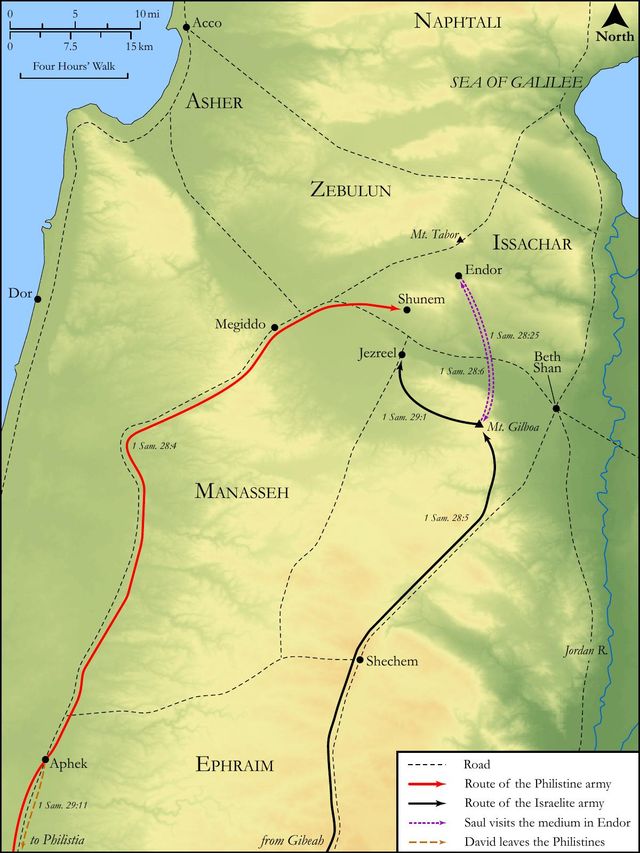
This verse is strategically placed within a critical narrative arc detailing David's extended period as a fugitive from King Saul. Following his desperate flight, David sought refuge with Achish, the Philistine king of Gath, as elaborated in 1 Samuel 27. For "a full year and four months" (1 Samuel 27:7), David and his men had resided in Ziklag, ostensibly serving Achish. The immediate context of 1 Samuel 29 sees the Philistines mobilizing their entire army for a decisive confrontation with Israel at Jezreel, a battle that will culminate in the tragic deaths of King Saul and his sons on Mount Gilboa, as narrated in 1 Samuel 31. David, having pledged feigned allegiance to Achish, finds himself in the deeply compromising position of being expected to join the Philistine forces, a predicament that poses an immense moral and political dilemma for the future king of Israel. The preceding verses (1 Samuel 29:1-2) describe the Philistine army assembling, with David and his men marching in the rear guard alongside Achish.
Historical & Cultural Context
The "princes of the Philistines" (Hebrew: seranim) were the powerful, independent rulers of the five principal Philistine city-states (Gaza, Ashkelon, Ashdod, Gath, and Ekron), wielding significant military and political authority. Their pointed question, "What [do] these Hebrews [here]?", reflects not merely a general xenophobia but a deeply entrenched historical animosity between the Philistines and the Israelites, a conflict that had defined much of the period of the Judges and the early monarchy. David himself was the celebrated Israelite warrior who had famously vanquished their champion, Goliath, in the Valley of Elah (1 Samuel 17:49), and was the subject of the popular, yet politically inconvenient, song: "Saul has struck down his thousands, and David his ten thousands" (1 Samuel 18:7). Their concern was a legitimate strategic apprehension about David's true loyalties in a battle of such magnitude against his own people. King Achish, however, had been systematically deceived by David. While David had been raiding non-Israelite towns (such as the Geshurites, Girzites, and Amalekites), he had skillfully reported to Achish that he was attacking Israelite or allied territories (1 Samuel 27:8-12). This elaborate deception had earned Achish's complete trust, making his staunch defense of David understandable from his perspective, though entirely based on a false premise.
Key Themes
ShowHideThis verse powerfully illustrates several profound themes. Firstly, it highlights the tension between suspicion and misplaced trust. The Philistine princes, drawing upon their historical experience and sound strategic judgment, express a well-founded suspicion regarding David's loyalty. In stark contrast, King Achish demonstrates a deep, almost naive, trust in David, a trust cultivated by David's deceptive reports and apparent loyalty. Secondly, the passage underscores the theme of divine providence. David is caught in an morally compromising situation, poised to fight against his own nation, a choice that would have catastrophic implications for his future. However, God's sovereign hand is unmistakably evident in the objections raised by the Philistine princes, which ultimately lead to David's dismissal from the campaign (1 Samuel 29:6). This providential intervention preserves David's integrity, prevents him from committing an act that would have severely damaged his future kingship, and ensures he is absent from Saul's tragic defeat. Thirdly, the narrative reveals David's moral dilemma and the consequences of compromise. His desperate flight from Saul compelled him to seek refuge among Israel's traditional enemies, necessitating a life of deception to survive. This verse vividly portrays the immediate and uncomfortable consequence of that choice, placing him in a position where his integrity was deeply challenged, and where God's direct intervention became essential for the continuation of His plan for David.
Exposition and Analysis
ShowHideKey Word Analysis
ShowHideVerse Breakdown
ShowHide"Then said the princes of the Philistines, What [do] these Hebrews [here]?"
This opening clause immediately establishes the central conflict and the source of objection. The Philistine military leaders, portrayed as astute and wary, directly challenge the presence of David and his Israelite contingent. Their pointed use of "Hebrews" underscores David's foreign identity and their inherent distrust of an Israelite warrior, especially one of David's formidable reputation, being integrated into their forces against Israel. This question reveals their strategic acumen and deep-seated historical antagonism.
"And Achish said unto the princes of the Philistines, [Is] not this David, the servant of Saul the king of Israel,"
Achish, acting as David's patron and staunch protector, immediately rises to his defense. His identification of David as "the servant of Saul the king of Israel" is a calculated rhetorical move, designed to legitimize David's presence by framing him as a loyal servant who has merely fallen out of favor with his former master and has now honorably transferred his allegiance to Achish. This phrasing attempts to portray David as a political refugee rather than a potential spy or turncoat.
"which hath been with me these days, or these years,"
Achish further bolsters his argument by emphasizing the significant duration of David's stay. The phrase "these days, or these years" suggests a considerable, though perhaps imprecisely recalled, length of time, reinforcing the idea that David has had ample opportunity to prove his loyalty and has consistently done so. This appeal to established history is intended to assuage the princes' fears by demonstrating David's sustained commitment.
"and I have found no fault in him since he fell [unto me] unto this day?"
This is the crux of Achish's defense, a ringing endorsement of David's character and loyalty. He unequivocally asserts David's blamelessness, claiming that David has exhibited no defect, disloyalty, or treacherous behavior since he sought refuge with him. This statement, while undoubtedly sincere on Achish's part, is tragically ironic from the reader's perspective, given David's consistent and successful deception regarding his raids, which Achish genuinely believed were against Israelite territory. Achish's trust in David is absolute, yet it is built entirely upon a foundation of lies.
Literary Devices
ShowHideThe passage is replete with Irony, particularly in Achish's emphatic declaration of David's blamelessness, which stands in stark contrast to David's calculated and ongoing deception of the Philistine king. This Dramatic Irony allows the reader to perceive the true, morally ambiguous situation (David's duplicity) while Achish remains entirely oblivious, creating narrative tension. The scene also employs Contrast between the shrewd, discerning Philistine princes, who correctly identify the inherent risk in David's presence, and the credulous Achish, highlighting the dangers of misplaced trust and the ease with which a powerful leader can be deceived. Furthermore, there is a powerful element of Foreshadowing as the princes' objections, born of their strategic suspicion, providentially lead to David's dismissal, thereby protecting him from a catastrophic moral and political dilemma. The dialogue itself serves as a potent means of Characterization, revealing Achish's gullibility, the princes' strategic acumen and historical awareness, and David's desperate, morally compromised, yet divinely protected, position.
Theological and Thematic Connections
ShowHideThis pivotal moment in David's life profoundly illustrates God's sovereign hand working through complex and morally ambiguous circumstances. Even when David finds himself in a compromised position, having resorted to deception and seeking refuge among Israel's enemies, God's providential care ensures that His ultimate purposes for David as the future king of Israel are not thwarted. The objections of the Philistine princes, though rooted in their own strategic concerns and historical enmity, become the divine mechanism by which David is spared from the catastrophic act of fighting against his own people, an act that would have severely undermined his legitimacy and spiritual standing. This narrative serves as a powerful reminder that God can use unexpected means, even the suspicions and actions of unbelievers, to guide and protect His chosen servants and to advance His redemptive plan, demonstrating that His purposes will prevail despite human failings, difficult choices, or seemingly insurmountable obstacles.
Reflection and Application
ShowHide1 Samuel 29:3 offers profound and multifaceted lessons for believers navigating the complexities and moral ambiguities of life. It serves as a powerful reminder that God's sovereignty is not limited by our mistakes, our difficult circumstances, or even the desperate, sometimes deceptive, paths we might take out of perceived necessity. David's predicament highlights the inherent dangers and uncomfortable consequences of compromising one's integrity, even when faced with immense pressure or what appears to be an unavoidable situation. While David's deception was morally questionable, God's unwavering faithfulness to His covenant promises to David shines through, utilizing the Philistine princes' discernment and strategic concerns to miraculously extricate David from an impossible situation. This passage encourages us to cultivate a deep trust in God's overarching plan, even when our immediate choices are imperfect or our path seems unclear. It also underscores the vital importance of spiritual discernment, as seen in the Philistine princes, and warns against the perils of misplaced trust, as tragically exemplified by Achish. Ultimately, it reassures us that God can orchestrate events, even through human opposition or the consequences of our own flawed decisions, to protect His people and faithfully advance His kingdom purposes.
Questions for Reflection
ShowHideFAQ
ShowHideWas David truly loyal to Achish, or was he deceiving him?
ShowHideDavid was actively and systematically deceiving Achish. While he did serve Achish and participated in military actions, he consistently attacked non-Israelite peoples—such as the Geshurites, Girzites, and Amalekites—but meticulously reported to Achish that he had raided Israelite territories or their allies, like Judah or the Jerahmeelites (1 Samuel 27:8-12). This elaborate deception allowed David to maintain Achish's trust and protection while avoiding any direct conflict with his own people. Achish's declaration in 1 Samuel 29:3 that he found "no fault" in David was entirely based on this carefully constructed ruse.
Why was it so important for David not to fight against Israel?
ShowHideFighting alongside the Philistines against Israel would have been a catastrophic and morally ruinous act for David, severely compromising his future kingship and utterly undermining his legitimacy in the eyes of the Israelite people. David had been divinely anointed by Samuel to be the next king of Israel (1 Samuel 16:13), and engaging in battle against his own nation would have been an act of profound betrayal, potentially forfeiting his divine calling, alienating the very people he was destined to rule, and bringing shame upon the name of God. God's providential intervention, orchestrated through the objections of the Philistine princes, mercifully spared David from this morally and politically impossible situation, thereby preserving his integrity and ensuring the faithful fulfillment of God's covenant promises to him.
Christ-Centered Fulfillment
ShowHideThe narrative of 1 Samuel 29:3, with David caught in a morally compromising web of deception and forced alliances, powerfully highlights humanity's desperate need for a perfect King—one who would never be found with "fault" or blemish. David, though chosen and anointed by God, was a flawed human leader, prone to cunning and half-truths in his desperate attempts to navigate precarious circumstances. This stands in stark contrast to Jesus Christ, the ultimate Son of David, who lived a life of absolute integrity, perfect obedience, and unwavering faithfulness, even in the face of immense opposition, temptation, and the ultimate sacrifice (Hebrews 4:15). While David was providentially spared from the unthinkable act of fighting against his own people, Christ willingly laid down His perfect life for His people, enduring the ultimate betrayal and suffering on the cross to secure their eternal salvation (John 10:11). The Philistine princes' suspicion, though rooted in earthly strategy, subtly foreshadows the world's rejection of Christ, yet God used that very rejection and the sin of humanity to accomplish His redemptive purposes, according to His predetermined plan (Acts 2:23). Jesus, the Lamb of God, was truly without "fault" or "blemish" (1 Peter 1:19), offering Himself as the perfect, unblemished sacrifice, a role David, in his compromised state, could never fulfill. In Christ, we find the King whose loyalty is absolute, whose integrity is flawless, and whose reign brings perfect justice, unwavering truth, and eternal salvation.