


1 Kings 9:12
- וַיֵּצֵאvai·ye·Tze'and he came outH3318Conj-w ¦ V-Qal-ConsecImperf-3msVerb Qal Consecutive Imperfect 3rd Singular Masculineוַandיֵּצֵאhe came out
- חִירָםchi·RamHiramH2438N-proper-mNoun Proper Masculine
- מִצֹּרmi·Tzorfrom TyreH6865Prep-m ¦ N-properNoun Proper LocationמִfromצֹּרTyre
- לִרְאוֹתlir·'Otto seeH7200Prep-l ¦ V-Qal-InfVerb Qal Infinitive Constructלִtoרְאוֹתsee
- אֶת'et<obj.>H853DirObjMParticle Object Indicator
- הֶעָרִיםhe·'a·Rimthe citiesH5892Art ¦ N-mpNoun Plural Masculine Absoluteהֶtheעָרִיםcities
- אֲשֶׁר'a·SherwhichH834RelParticle Relative
- נָתַןna·tanhe had givenH5414V-Qal-Perf-3msVerb Qal Perfect 3rd Singular Masculine
- לוֹloto himPrep-l ¦ 3msSuffix Personal 3rd Singular Masculineלtoוֹhim
- שְׁלֹמֹהshe·lo·MohSolomonH8010N-proper-mNoun Proper Masculine
- וְלֹאve·Lo'and notH3808Conj-w ¦ NegParticle Negativeוְandלֹאnot
- יָשְׁרוּya·she·Ruthey were pleasingH3474V-Qal-Perf-3cpVerb Qal Perfect 3rd Plural common gender
- בְּעֵינָיוbe·'ei·Navin his viewH5869Prep-b ¦ N-fdc ¦ 3msNoun Dual Feminine Constructבְּinעֵינָיviewוhis
English is a literal word-by-word gloss of the Hebrew, not the KJV's wording. Why?
This is the original text the KJV's translators worked from — each Hebrew word with its own literal English meaning in this verse, prepared by scholars at Tyndale House, Cambridge. The KJV translates whole sentences, not word by word, so its wording differs: one Hebrew word can become several English words, and the KJV may choose “the LORD” where the gloss reads “Yahweh”. Both are faithful — they answer different questions. For the KJV's own rendering, switch to the KJV text.
Details
See on the biblical-era map
Study this verse
Public-domain commentary
Matthew Henry
From his Commentary on the Whole Bible. Henry comments on passages, not single verses — this entry covers 1 Kings 9:10–14.
What agreement was made between Solomon and Hiram, when the building-work was to be begun, we read before, ch. 5. Here we have an account of their fair and friendly parting when the work was done. 1. Hiram made good his bargain to the utmost. He had furnished Solomon with materials for his buildings, according to all his desire (Kg1 9:11), and with gold, Kg1 9:15. So far was he from envying Solomon's growing greatness and reputation, and being jealous of him, that he helped to magnify him. Solomon's power, with Solomon's wisdom, needs not be dreaded by any of his neighbours. God honours him; therefore Hiram will. 2. Solomon, no doubt, made good his bargain, and gave Hiram food for his household, as was agreed, Kg1 5:9. But here we are told that, over and above that, he gave him twenty cities (small ones we may suppose, like those mentioned here, Kg1 9:19) in the land of Galilee, Kg1 9:11. It should seem, these were not allotted to any of the tribes of Israel (for the border of Asher came up to them, Jos 19:27, which intimates that it did not include them), but continued in the hands of the natives till Solomon made himself master of them, and then made a present of them to Hiram. It becomes those that are great and good to be generous. Hiram came to see these cities, and did not like them (Kg1 9:12): They pleased him not. He called the country the land of Cabul, a Phoenician word (says Josephus) which signifies displeasing, Kg1 9:13. He therefore returned them to Solomon (as we find, Ch2 8:2), who repaired them, and then caused the children of Israel to inhabit them, which intimates that before they did not; but, when Solomon received back what he had given, no doubt he honourably gave Hiram an equivalent in something else. But what shall we think of this? Did Solomon act meanly in giving Hiram what was not worth his acceptance? Or was Hiram humoursome and hard to please? I am willing to believe it was neither the one nor the other. The country was truly valuable, and so were the cities in it, but not agreeable to Hiram's genius. The Tyrians were merchants, trading men, that lived in fine houses, and became rich by navigation, but knew not how to value a country that was fit for corn and pasture (that was business that lay out of their way); and therefore Hiram desired Solomon to take them again, he knew not what to do with them, and, if he would please to gratify him, let it be in his own element, by becoming his partner in trade, as we find he did, Kg1 9:27. Hiram, who was used to the clean streets of Tyre, could by no means agree with the miry lanes in the land of Cabul, whereas the best lands have commonly the worst roads through them. See how the providence of God suits both the accommodation of this earth to the various dispositions of men and the dispositions of men to the various accommodations of the earth, and all for the good of mankind in general. Some take delight in husbandry, and wonder what pleasure sailors can take on a rough sea; others take as much delight in navigation, and wonder what pleasure husbandmen can take in a dirty country, like the land of Cabul. It is so in many other instances, in which we may observe the wisdom of him whose all souls are and all lands.
Continue studying 1 Kings 9:12 across the web’s major study libraries — every link below opens this exact verse, chapter, or book on the destination site.
Read & Compare
 BibleGatewayThis verse in more than 200 translations and 70 languages.
 Bible.comThe YouVersion reader — hundreds of translations, reading plans, and highlights.
 ESV.orgCrossway's official English Standard Version reader.
 NET BibleThe NET translation with 60,000+ translators' notes on every rendering decision.
 STEP BibleTyndale House's free study tool — original text, vocabulary, and scholarly resources.
 BibliaLogos Bible Software's free web reader.
 USCCBThe New American Bible (Revised Edition) with the U.S. bishops' study notes.
Commentaries
 BibleHub CommentariesDozens of classic commentaries on this verse, gathered on one page.
 StudyLightMore than 100 commentary sets — the largest collection on the web.
 BibleRefPlain-English commentary on what this verse means, verse by verse.
 Enduring WordDavid Guzik's free commentary on this chapter, widely used by Bible teachers.
 Bible Study ToolsVerse commentary alongside Greek and Hebrew study aids.
Original Language & Research
- BibleHub InterlinearThe verse word by word — original language, transliteration, and English.
- BibleHub LexiconEvery word's original-language definition and Strong's entry.
 Blue Letter BibleDeep-study tools — Strong's numbers, concordance, and word studies.
 SefariaThe Hebrew text with Rashi and centuries of Jewish commentary.
Sermons, Hymns & Audio


TrulyRandomVerse is not affiliated with these sites and doesn’t control their content. They’re linked because they’re genuinely useful.
Summary
First Kings 9:12 details a significant moment in the alliance between King Solomon of Israel and King Hiram of Tyre, chronicling Hiram's personal visit to inspect the twenty Galilean cities Solomon had presented to him as compensation for his extensive contributions to Solomon's monumental building projects. The verse succinctly captures Hiram's profound disappointment with these cities, stating that "they pleased him not," a reaction that highlights a critical misjudgment on Solomon's part regarding the value and suitability of the payment, and subtly foreshadows the complexities and eventual decline of Solomon's celebrated reign.
Context
ShowHideLiterary Context
This verse is strategically placed immediately following a comprehensive account of Solomon's twenty-year building program, which included the construction of the magnificent Temple in Jerusalem and his own opulent royal palace. The preceding verses, specifically 1 Kings 9:1-9, recount God's reaffirmation of the Davidic covenant with Solomon, contingent upon his unwavering obedience, alongside a solemn warning against the perils of idolatry. Subsequent to this divine encounter, the narrative pivots to Solomon's practical state affairs, particularly his long-standing obligations to King Hiram of Tyre. Hiram had provided an immense supply of essential timber (cedar and fir) and highly skilled labor for these ambitious projects over two decades, as initially stipulated in their agreement found in 1 Kings 5:1-12. The transfer of these twenty cities was Solomon's intended final payment, rendering Hiram's negative reaction in 1 Kings 9:12 a pivotal moment that not only reveals a significant flaw in Solomon's otherwise celebrated wisdom but also signals a potential strain in a vital international alliance.
Historical & Cultural Context
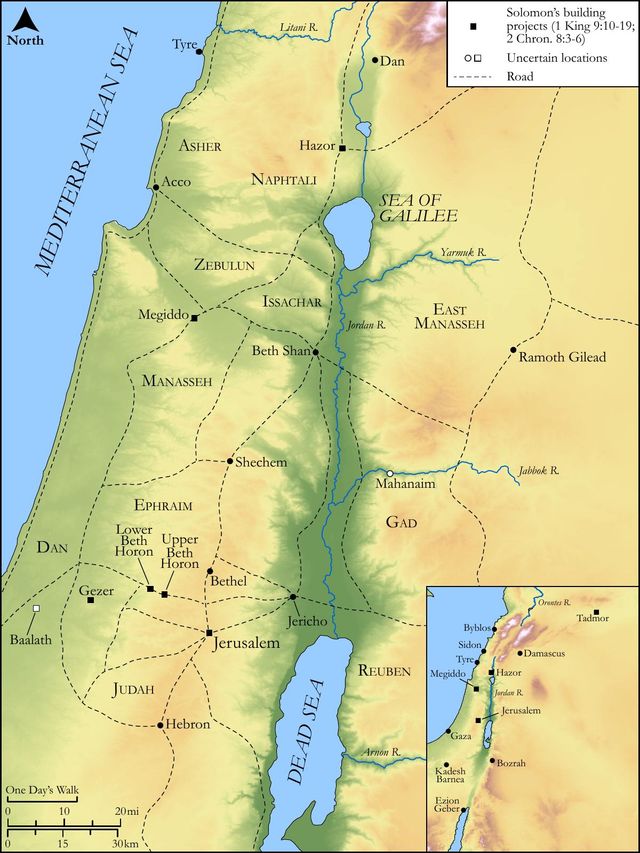
The alliance forged between Solomon and Hiram was a strategic imperative for both kingdoms, born out of mutual need and complementary resources. Israel, while agriculturally rich, lacked the specialized timber and skilled artisans necessary for large-scale, sophisticated construction, resources that Tyre, a preeminent Phoenician city-state, possessed in abundance due to its extensive maritime trade and craftsmanship. Tyre, in turn, greatly benefited from Israel's abundant agricultural produce and access to crucial inland trade routes. The exchange of goods, services, and even territory was a well-established and common practice in ancient Near Eastern diplomacy and commerce. The "twenty cities in the land of Galilee" were likely situated in a region bordering Tyre, possibly characterized by less fertile land or strategic importance compared to other areas within Israel. For a powerful maritime king like Hiram, whose wealth and influence were tied to trade routes, port cities, and valuable resources, agricultural land—especially if underdeveloped or sparsely populated—might have held little perceived value or appeal when weighed against the immense resources and skilled labor his kingdom had provided. This incident vividly illustrates the cultural disparities in valuing assets and the inherent potential for misunderstanding and dissatisfaction even between close, long-standing allies.
Key Themes
ShowHideThe profound disappointment expressed in 1 Kings 9:12 contributes significantly to several overarching themes woven throughout the book of Kings. Firstly, it powerfully underscores the theme of unmet expectations and human fallibility, demonstrating that even a king renowned for his unparalleled wisdom can make practical misjudgments. Despite Solomon's divine gift of wisdom, as detailed in 1 Kings 4:29-34, this specific transaction reveals either a practical oversight or perhaps a deliberate attempt to offload less desirable territory, which was clearly perceived as inequitable by his partner. Secondly, it delves into the nature of agreements and compensation, emphasizing that genuine satisfaction in an exchange necessitates a mutual perception of equitable value, extending beyond the mere technical fulfillment of a contractual obligation. This event subtly foreshadows the later economic and social strains that would ultimately contribute to the tragic division of the kingdom after Solomon's reign, as vividly recounted in 1 Kings 12. Finally, it introduces the theme of worldly limitations and the pursuit of earthly grandeur, suggesting that even the most impressive human achievements and meticulously crafted alliances can be marred by imperfections and ultimately fail to deliver complete or lasting satisfaction. The parallel account in 2 Chronicles 8:1-2 offers a crucial resolution, indicating that Hiram subsequently returned these cities, and Solomon then rebuilt and settled them himself, further highlighting their initial inadequacy.
Exposition and Analysis
ShowHideKey Word Analysis
ShowHideKing of Tyre, a pivotal ally to both King David and his son Solomon. His name, derived from a root meaning "noble brother" or "exalted brother," appropriately reflects his royal status and his significant role as a partner in Israel's monumental building projects. Hiram's indispensable contributions of timber and skilled labor for the construction of the Temple and Solomon's palace made his dissatisfaction a major diplomatic incident, highlighting the importance of his relationship with Israel.
A powerful and prominent Phoenician city-state situated on the Mediterranean coast. Tyre was renowned throughout the ancient world for its vast maritime trade network, immense wealth, and highly skilled artisans, particularly those excelling in timber work and metal craftsmanship. Its economic and political influence rendered its king, Hiram, an essential and formidable partner for Solomon's ambitious and extensive building endeavors.
This phrase, lōʾ yāšərû bəʿênāyw, literally translates to "they were not straight/right in his eyes" or "they did not seem good in his eyes." The Hebrew root yâshar (H3474) conveys the idea of being straight, right, pleasant, or fitting, while ʿayin (H5869) refers to the eye, often used idiomatically to express perception, opinion, or favor. Therefore, the combined idiom implies more than mere personal dislike; it signifies a judgment of inadequacy, unsuitability, or a profound lack of fairness and proportionality. Hiram likely found the cities to be strategically unimportant, economically unproductive, or simply not commensurate with the immense value of the resources, gold, and labor he had generously provided over two decades. This conveys a strong sense of disappointment, rejection, and a perceived imbalance in the exchange.
Verse Breakdown
ShowHide"And Hiram came out from Tyre to see the cities which Solomon had given him;"
This initial clause establishes the setting and the personal involvement of King Hiram, underscoring the gravity and significance of the transaction. Hiram's journey from his powerful city-state of Tyre to personally inspect the ceded cities highlights the importance of the agreement and his desire to directly assess the value and condition of the compensation. It marks the culmination of a long-standing, mutually beneficial alliance, now reaching a critical juncture of payment and evaluation, where the true nature of the exchange would be revealed.
"and they pleased him not."
This concise yet impactful statement delivers the crucial outcome of Hiram's detailed inspection. The Hebrew idiom, conveying that the cities were "not right in his eyes," communicates a profound sense of dissatisfaction and rejection. This implies that the cities were found wanting in some significant aspect—perhaps they were agriculturally poor, strategically insignificant, sparsely populated, or simply did not represent a value commensurate with the immense resources and skilled labor Hiram had supplied over two decades. This explicit rejection signals a notable diplomatic setback for Solomon and reveals a potential miscalculation in his judgment, or perhaps even a deliberate attempt to offload less desirable territory, which was clearly perceived as an inadequate return by his powerful ally.
Literary Devices
ShowHideThe verse subtly employs several literary devices to convey its profound meaning. The primary device is Irony, as Solomon, a king divinely renowned for his unparalleled wisdom, makes a practical decision concerning a significant international agreement that results in profound dissatisfaction for his key ally. This outcome stands in stark contrast to the grand descriptions of his wisdom and wealth found elsewhere in 1 Kings 4. The phrase "pleased him not" also functions as a powerful Understatement, as it likely represents a significant diplomatic and economic disappointment for Hiram, rather than a mere mild displeasure. This understated reaction from a powerful king suggests a deeper level of dissatisfaction and a perceived imbalance in the exchange. Furthermore, the event serves as Foreshadowing, subtly hinting at the eventual decline and moral compromises of Solomon's reign, where his immense wealth and carefully cultivated alliances would ultimately prove insufficient to prevent internal strife and divine judgment, as tragically outlined in 1 Kings 11. The stark contrast between the magnificent Temple and palace built with Hiram's aid and the disappointing cities offered in return also highlights Juxtaposition, underscoring the gap between Solomon's spiritual achievements and his practical, sometimes flawed, dealings in the earthly realm.
Theological and Thematic Connections
ShowHideThe dissatisfaction of King Hiram with the cities given by Solomon serves as a poignant and enduring reminder of the inherent limitations of human wisdom and the transient nature of earthly transactions, even when conducted by a divinely blessed and exceptionally wise king. It profoundly underscores the biblical truth that ultimate satisfaction and lasting value are not to be found in material possessions, shrewd human agreements, or even the grandest earthly achievements, but rather in divine provision and righteous, equitable dealings. This incident highlights the inherent imperfection of all human endeavors and the potential for even the most powerful and insightful individuals to fall short of perfect justice, foresight, or generosity. It invites deep reflection on the nature of true wealth, the ultimate source of contentment, and the necessity of integrity in all relationships, pointing beyond the fleeting arrangements of earthly kingdoms to a higher, more enduring standard of value and satisfaction.
Reflection and Application
ShowHideHiram's palpable disappointment in 1 Kings 9:12 offers profound and enduring lessons for contemporary life, extending far beyond ancient diplomacy. It serves as a potent reminder that even with the best intentions and in our most significant endeavors, human imperfection, misjudgment, or a lack of complete empathy can lead to outcomes that fall far short of expectations or generate deep dissatisfaction in others. This incident powerfully underscores the critical importance of clear, unambiguous communication, genuine mutual understanding, and a steadfast commitment to fairness and equity in all our dealings, whether they be personal relationships, professional collaborations, or communal projects. It challenges us to actively consider the other party's perspective, their unique needs, and their perceived value, striving diligently for truly equitable value rather than merely fulfilling a technical or minimal obligation. When we engage in any form of exchange—be it time, resources, effort, or even emotional investment—the ultimate goal should be mutual satisfaction, the strengthening of relationships, and the cultivation of trust, not merely the transactional completion of a task. Ultimately, this verse functions as a cautionary tale against the perilous assumption that what is inherently valuable or convenient to us will be equally valuable or desirable to another, urging us to cultivate profound empathy, unwavering integrity, and a spirit of true generosity in all our interactions.
Questions for Reflection
ShowHideFAQ
ShowHideWhy was Hiram displeased with the cities Solomon gave him?
ShowHideWhile the biblical text does not explicitly detail the precise reasons for Hiram's displeasure, the concise phrase "they pleased him not" (Hebrew: lōʾ yāšərû bəʿênāyw – literally, "they were not right in his eyes") strongly suggests a significant inadequacy or perceived injustice. Scholars propose several plausible reasons: the cities might have been agriculturally poor, strategically unimportant, sparsely populated, lacking in valuable resources, or simply not commensurate with the immense value of the timber, gold, and highly skilled labor Hiram had provided over two decades for Solomon's ambitious building projects. For a powerful maritime king like Hiram, whose wealth and influence were tied to trade routes and port cities, landlocked or underdeveloped agricultural regions would likely hold considerably less appeal or strategic value than the immense contributions he had made. The gift was likely perceived as disproportionate to his contributions, leading to his strong and evident dissatisfaction.
What happened to the cities after Hiram rejected them?
ShowHideThe parallel account in 2 Chronicles 8:1-2 provides crucial additional information regarding the fate of these cities. It explicitly states that Hiram returned the cities to Solomon. Subsequently, Solomon took possession of them, rebuilt and fortified them, and then settled Israelites there. This indicates that the diplomatic issue was ultimately resolved, with Solomon accepting the unwanted territory back and investing in its development himself. This resolution, though not detailed in 1 Kings, suggests that a working, albeit perhaps strained, alliance between the two kings continued.
Does this event diminish Solomon's reputation for wisdom?
ShowHideThis event serves as a nuanced and realistic portrayal of Solomon's wisdom, rather than an outright diminishment. While Solomon was indeed divinely gifted with extraordinary wisdom, as described in 1 Kings 4:29-34, this incident reveals that even divine wisdom does not negate human fallibility, the complexities of international relations, or the potential for practical misjudgments. It suggests that Solomon, despite his great insight, could still make decisions that were perceived as unfair or inadequate by others, or that he might have prioritized his own interests in a way that led to dissatisfaction. It serves as a powerful reminder that even the wisest human leaders are imperfect and that true, lasting, and infallible wisdom ultimately resides in God alone. This subtle flaw in Solomon's judgment also subtly foreshadows his later, more significant moral and spiritual failures documented in 1 Kings 11, which ultimately led to the division of his kingdom.
Christ-Centered Fulfillment
ShowHideThe narrative of King Hiram's profound dissatisfaction with the cities Solomon offered, where "they pleased him not," serves as a poignant Old Testament shadow that powerfully points to the ultimate and perfect satisfaction found exclusively in Christ. Solomon, despite being divinely granted unparalleled wisdom and possessing immense earthly wealth, could only offer an earthly inheritance—a collection of cities—that ultimately proved inadequate, disappointing, and "not right" in the eyes of his key ally. This human failing highlights the inherent limitations and transient nature of all earthly provisions, agreements, and covenants, no matter how grandly conceived. In stark and glorious contrast, Jesus Christ offers an inheritance and a new covenant that perfectly fulfills every expectation, provides eternal and unblemished satisfaction, and knows no disappointment. He is the true and greater King, far surpassing Solomon in wisdom, glory, and power, as affirmed in Matthew 12:42. Christ does not offer a flawed or disappointing gift, but rather offers Himself—the perfect and spotless Lamb of God who takes away the sin of the world, as proclaimed in John 1:29. Through His perfect sacrifice on the cross and His glorious resurrection, Christ secures for His people an "inheritance incorruptible, and undefiled, and that fadeth not away, reserved in heaven," as beautifully described in 1 Peter 1:4. Unlike the Galilean cities, which were "not right in Hiram's eyes," the spiritual blessings, eternal life, and perfect righteousness offered by Christ are not merely "right" but are eternally satisfying, perfectly just, and infinitely valuable to all who receive them by faith. He is the ultimate fulfillment of all divine promises, the one who truly "pleases" God perfectly, and the only one who can eternally satisfy the deepest longings of the human heart, offering a kingdom that cannot be shaken, as promised in Hebrews 12:28, and an eternal dwelling where there will be no more sorrow, disappointment, or tears, as envisioned in Revelation 21:4.